There are newer slot releases with louder effects, busier screens or a bigger push behind them. Gates of Olympus still comes up because it gets something right: people return to games that are easy to read and good at building tension.
That matters on a site like GameTyrant, where readers care about how a game feels as much as what genre it sits in. A slot does not have to look like a console game to use some of the same ideas. It still needs anticipation, a rhythm the player can learn and rounds that are worth watching.
Gates of Olympus gets there with a simple structure, a clear theme and a bonus loop that does not get hard to follow. New players can read it quickly, and there is still enough swing in the feature to keep regular slot players interested.
It still comes up a lot when people talk about mythology-themed slots.
A strong hook from the first screen
The first thing Gates of Olympus gets right is clarity. The 6x5 grid is clean, the symbols are easy to tell apart and the game does not hide its main idea under clutter. You quickly see that it is a tumbling slot, that multipliers matter and that free spins are where the real tension is.
A lot of slot games pile on motion and make the playfield harder to follow. Gates of Olympus is more careful with color and contrast. The gold trim, jewel-toned symbols and big Zeus figure give it presence without making the grid feel messy.
The main mechanic is also easy to read. Winning symbols disappear and new ones fall into place. You do not need much time to understand what the game is doing. It teaches itself through repetition, which helps both casual players and regulars.
Why the mythology theme still lands
Greek mythology is an old theme in games and it is easy to overuse. Gates of Olympus keeps it simple. It does not try to turn the theme into a history lesson or a pile of lore. It uses a few familiar symbols and one strong central figure, and that is enough.
Zeus is still one of the best-known figures in Greek myth, and Mount Olympus is still easy to recognise. Britannica’s entry on Zeus calls him the king of the gods, and its Mount Olympus overview shows why the setting still reads quickly. The game does not need much more than that.
The game also avoids a problem a lot of themed slots have: it does not lean too hard on novelty. Some games burn through the theme in the first minute and then start to feel generic. Gates of Olympus stays together because the theme and the mechanics are pulling in the same direction. The lightning, the big multipliers and the free-spin reveal all fit.
It feels more focused than a lot of mythology slots that throw in statues, columns and random gods and hope that is enough. Anyone who wants a quick look at the symbols, bonus structure and basic game flow can use the Gates of Olympus slot page at BetandPlay before getting into how it plays.
The bonus loop is the real reason people stay

The visual theme helps, but the free spins round is what gives Gates of Olympus its reputation. The base game is quick and easy to read, and the feature round is still the main draw. That is normal for slots. What stands out here is how cleanly the game builds toward it.
Each tumble keeps a round alive a little longer. Each multiplier can turn a small sequence into something much bigger. The feature does not bury the player inside rules. It takes the same core mechanic and pushes it further. By the time free spins start, the rhythm already makes sense, so the tension comes from the jump in stakes, not from confusion.
In gaming terms, it feels a bit like a boss phase that uses the same controls with higher stakes. The player is not learning a second game. The game is asking for closer attention because the payoff window is open.
That is part of why the slot still shows up in roundups and streamer clips. There is a clear build and release, and people watching can follow it without needing a spreadsheet.
It understands pace better than many imitators
Some slot games fade because each spin feels cut off from the last one. There is no sense of movement inside a short session, just isolated results. Gates of Olympus handles pace better because the tumbles and multiplier reveals create small arcs inside each round.
Not every spin is dramatic. The point is that the game gives people a reason to keep watching instead of skipping straight to the final total. Feedback matters here. Timing matters. So does the order the information comes in.
Pragmatic Play’s official game page puts the tumble structure and free-spin mechanic near the front, and that makes sense. Those are the parts people remember. The game does not need a pile of systems fighting for attention. It needs a few systems that work well together.
Compared with a lot of newer releases, Gates of Olympus is less interested in overwhelming the player. It leaves room for anticipation. That helps it hold up after the first session, when flashy presentation on its own does not do much.
Mobile play is a bigger part of the story than it used to be
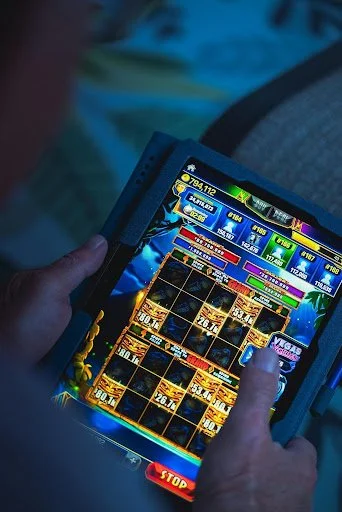
A modern slot has to work on a phone. If the screen feels cramped, if the text is hard to read or if the bonus round gets muddy on a smaller display, players notice fast. Gates of Olympus benefits from a layout that scales down fairly well because the playfield is simple and the important moments are easy to spot.
That may not sound exciting, but it matters. People are not always sitting at a desk with time to study every detail. They check a game on a short break, between matches or while half-watching something else. A game that communicates quickly has an advantage.
This is one place where it lines up with the wider direction of video game design. Mobile-first thinking has changed a lot of digital entertainment. Games that are easy to read and steady with feedback tend to travel well across devices. Gates of Olympus fits that without losing what made it popular on desktop.
Why it still earns space in slot conversations
Gates of Olympus is not new anymore, and that may help it. Players already know what it is trying to do. The talk around it is less about novelty now and more about execution.
This is usually where weaker games fall away. After the launch window, not much keeps a title alive besides a recognisable identity, mechanics that stay readable under pressure and enough volatility in the right spots to create stories players want to retell. Gates of Olympus still has those things.
It sits in a useful middle ground. It is not stripped down so far that it feels plain, and it is not so overloaded that every round feels forced. The theme is familiar, the mechanics are easy to follow and the bonus round creates the kind of tension people remember.
It still feels relevant for simple reasons. It is not the loudest mythology slot and it does not need a big backstory. It gives players a clear idea, builds momentum around it and leaves enough uncertainty to keep them leaning forward.