Lorwyn Eclipsed was an exciting return to a beloved plane for Magic fans, but now it’s time to head back to Archavios—and honestly, Secrets of Strixhaven feels even more like what an in-universe Magic set should be. Lorwyn Eclipsed was great, but Secrets of Strixhaven delivers that classic Magic feeling in a way that really stands out.
This set brings a lot to the table. There are powerful new cards, fresh mechanics, exciting build-arounds, Limited bombs, strong Commander options, and cards that could easily make an impact in Standard. There really feels like there’s something here for every kind of Magic player.
New mechanics in Secrets of Strixhaven
Secrets of Strixhaven is a mechanically rich set. Alongside its broader set mechanics, each of the five schools has its own signature mechanic tied to the set’s spells-matter identity. Silverquill has Repartee, Prismari has Opus, Witherbloom has Infusion, Lorehold has Flashback, and Quandrix has Increment.
I’ll go over the set’s general mechanics here first, then dive deeper into each school’s mechanic when I get into the archetype breakdowns.
Set Mechanics
As mentioned above, these are the mechanics you may run into throughout the set regardless of color pair or archetype.
Converge
Converge is a returning mechanic from Battle for Zendikar, and it cares about how many different colors of mana were used to cast a spell, ironic as it mainly appears on Colorless cards. It has a bit of a similar feel to Vivid in Lorwyn Eclipsed, but instead of being a passive check, Converge actively scales based on the number of colors you spent.
That means Converge cards are at their best in decks that are splashing a third color or going even deeper. If you’re in a straightforward two-color deck, you may not get the full value out of them, but in Sealed especially, where splashing is more common, these cards can become much more appealing.
Prepared
One of the first things you’ll notice about Secrets of Strixhaven is just how heavily it leans into instants and sorceries. Some sets revolve around creature types, like Lorwyn Eclipsed, while others are more focused on artifacts, like Edge of Eternities. Secrets of Strixhaven, fittingly for a Magic academy setting, is all about casting spells.
That does raise an obvious question for Limited: how do you make a spells-focused set work without cutting too deeply into creature count? The answer is Prepared, which effectively builds spells directly into creatures.
Prepared appears on creature cards in a way that feels somewhat similar to Omen in Tarkir: Dragonstorm. However, instead of casting that spell from your hand and shuffling it back into your deck, creatures with Prepared can cast their built-in spell as long as they are prepared. Some creatures enter the battlefield prepared right away, while others need a condition to be met before they become prepared.
That also means not every Prepared creature works the same way. Some will only get to cast their spell once because they only become prepared a single time, while others can keep doing it repeatedly. It’s a really cool mechanic, and it creates a lot of synergy both within this set and with older spells-matter strategies.
Paradigm
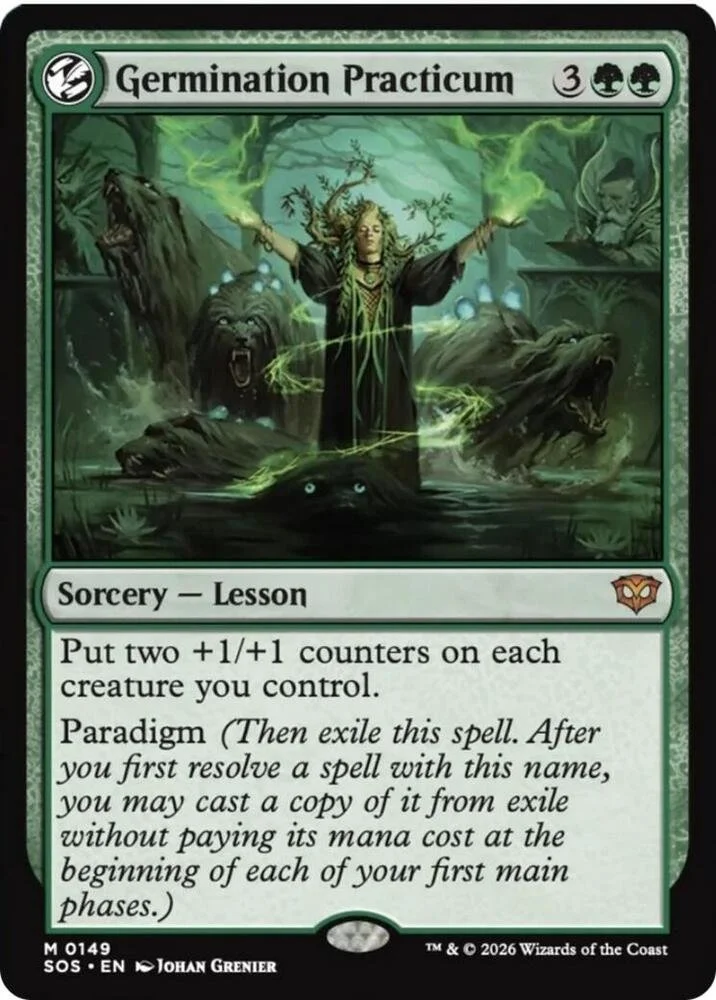
Paradigm is a new keyword mechanic that only appears on five mythic rare sorceries in the set—one in each color—so it won’t come up often in Limited, but when it does, it can absolutely take over a game.
When you cast a spell with Paradigm, if it resolves, you exile it from your graveyard. Then, at the start of your first main phase on each of your future turns, you may cast a copy of it. Those future copies can still be countered or interacted with, but stopping one copy doesn’t solve the problem permanently. The spell is still waiting to come back again on the next turn.
That makes Paradigm feel like a looming, inevitable threat. If your opponent resolves one, you need to either have an answer ready for the repeated value or close the game quickly before it snowballs out of control. The good news is that all of these cards cost five mana or more, so they aren’t early-game problems. The bad news is that if one comes down on curve and you’re not prepared for it, it can take over fast.
Personally, I think this mechanic is awesome. It creates a ton of pressure without feeling like an instant win, and it gives these mythics a really memorable identity.
Archetype-Locked Mechanics
Now that we’ve covered the set-wide mechanics, it’s time to look at the mechanics tied directly to each school archetype.
Flashback - Lorehold
Lorehold is one of the biggest reasons I’m so excited about this set. It feels incredibly fitting that the School of History is the one bringing back a classic mechanic from Magic’s past.
Flashback originally appeared in Odyssey back in 2001, and it has returned several times since then. It remains one of Magic’s best graveyard mechanics, especially in sets that want spells to matter beyond the first time they’re cast.
If you’re new to Magic or just unfamiliar with the mechanic, Flashback gives a spell an alternate casting cost that lets you cast it again from your graveyard. After that second use, the card gets exiled. It’s a great way to get extra value out of your spells, and it fits Lorehold perfectly since that school already cares about cards leaving your graveyard.
Increment - Quandrix
With the returning mechanic out of the way, we can move into the new school-specific keywords, starting with Quandrix’s mechanic: Increment.
Three of the four new school mechanics care about instants and sorceries in some way, while Lorehold stands as the odd one out thanks to Flashback. Increment works somewhat like Evolve, but with a spells-matter twist. A creature with Increment gets a +1/+1 counter whenever you cast a spell with mana value greater than that creature’s power or toughness.
One important thing to note is that Increment checks when the spell is cast, not when it resolves. That means the counter gets added before the spell itself finishes resolving. So if you cast a spell that would also put a +1/+1 counter on that creature, Increment checks first.
It also works well with the stack. If you cast multiple spells in succession, Increment checks each one individually, and even if one of those spells gets countered, the Increment trigger will still happen because the spell was still cast. Bigger spells—and especially X-cost spells—seem like they’ll be especially strong in this archetype.
Infusion - Witherbloom
Witherbloom is the school most tied to life, decay, and natural essence, so it makes perfect sense that its signature mechanic cares about gaining life.
Cards with Infusion have an ability that checks at your end step to see whether you gained life that turn. It does not care how much life you gained, only whether you gained any at all. That means even the smallest life gain can be enough to turn these cards on.
Food tokens, lifelink, and even Pest tokens dying can all help trigger Infusion. You do not need a huge life swing to make this mechanic work—gaining just one life is enough.
Opus - Prismari
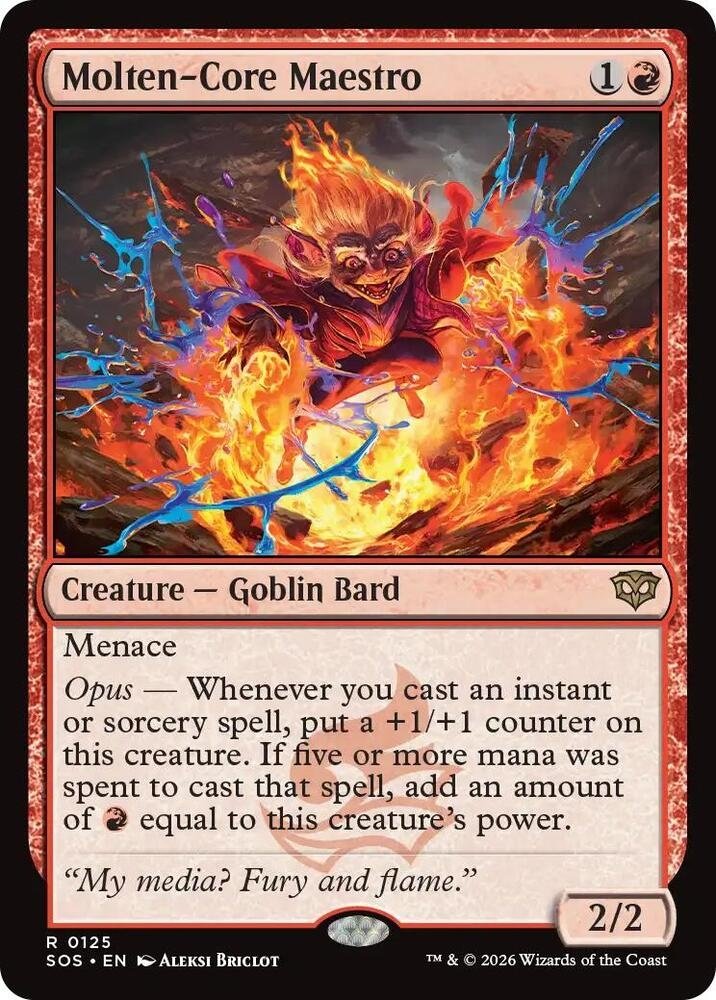
Opus is Prismari’s school mechanic, and like Increment, it triggers whenever you cast an instant or sorcery. The difference is that Opus comes with an additional reward for going big.
Each Opus card has its normal trigger for casting an instant or sorcery, but it also has a second condition: if five or more mana was spent to cast that spell, you get an additional effect or upgraded trigger depending on the card.
That extra layer gives the mechanic a much splashier feel, which is perfect for Prismari. Instead of just being another generic spells-matter archetype, Opus pushes you toward bigger, more dramatic plays, which feels very on-brand for the school.
Repartee - Silverquill
Finally, we have Silverquill’s mechanic: Repartee.
Repartee is another ability that triggers whenever you cast an instant or sorcery, but it has a more specific requirement than the other school mechanics. It only triggers when that instant or sorcery targets a creature, whether it’s your own creature or an opponent’s.
That makes Repartee a strong fit for Silverquill’s aggressive playstyle. Combat tricks, protection spells, pump effects, and removal can all help trigger it, so the mechanic naturally rewards the kind of gameplay this archetype already wants. If you’re planning to stay proactive and constantly interact in combat, Repartee looks like it could be very strong.
Limited Archetypes in Secrets of Strixhaven
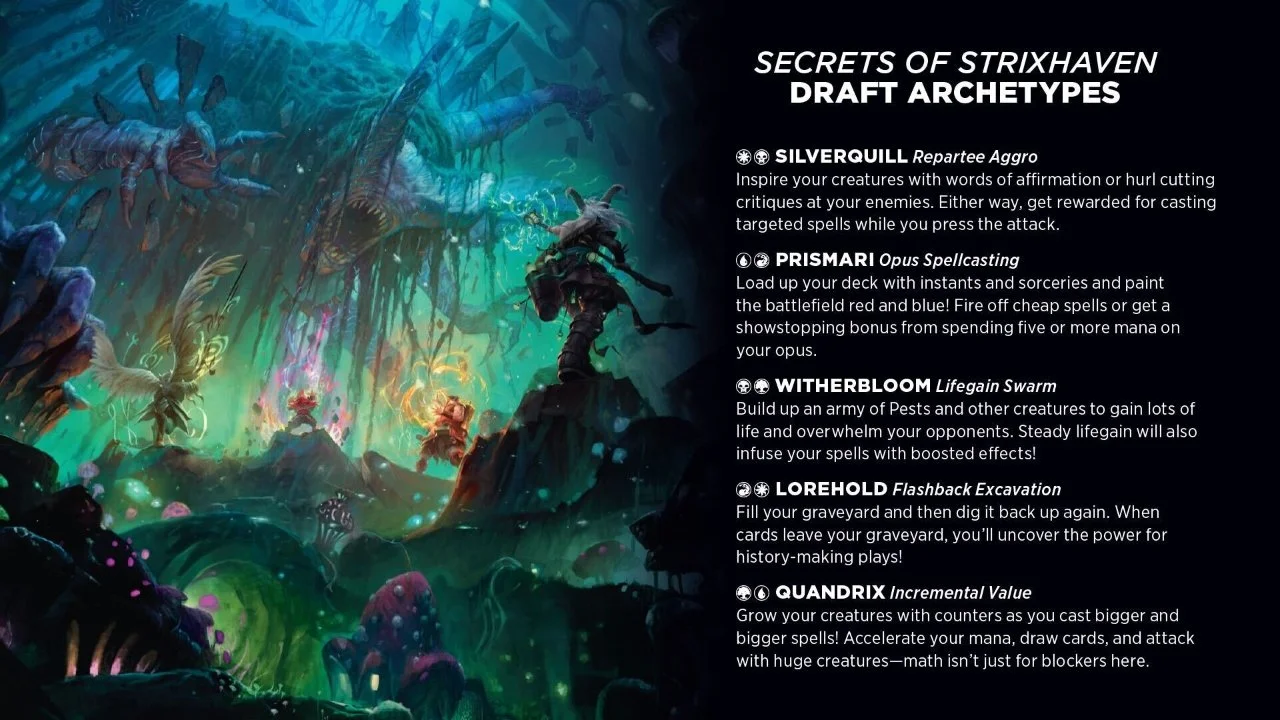
Secrets of Strixhaven marks the third set in a row to focus on fewer two-color archetypes instead of building out all ten color pairs. In this case, that choice makes perfect sense. Strixhaven is built around its five schools, and each school naturally lines up with one of the set’s featured archetypes.
What I really like here is that these archetypes are not always doing the most obvious thing for their color pair. Some still feel familiar, but even then there is enough of a twist to make them stand out. That goes a long way in making the format feel fresh.
Important Note: I’ll be including key multicolor cards in each archetype section, but I’m leaving out the five Elder Dragons. Those cards are absolute bombs, and nine times out of ten they are going to be automatic includes if you can cast them.
Lorehold (Red/White) - Flashback Excavation
Lorehold is the school of history, so it makes perfect sense that its strategy is all about digging up the past. Rather than playing like a traditional aggressive red-white deck, Lorehold leans into graveyard recursion. This archetype wants cards in the graveyard, and more importantly, it wants those cards to keep moving.
With Lorehold, you’ll be filling your graveyard, replaying spells with Flashback, returning permanents, exiling cards for value, and gaining payoffs whenever cards leave your graveyard. The exact destination does not matter nearly as much as the movement itself. If a card leaves your graveyard, Lorehold is happy.
Game Plan
The basic plan with Lorehold is pretty straightforward:
Fill your graveyard with cards
Play creatures and enchantments that reward cards leaving your graveyard
Keep moving cards out of the graveyard through Flashback, recursion, or exile effects
This is a grindy archetype, and it is definitely one that rewards careful sequencing. If you start dumping cards into your graveyard without thinking through your payoffs, you can easily mill away the wrong resources and leave yourself spinning your wheels. Because of that, Lorehold feels like one of the archetypes that will reward more experienced Limited players the most.
Draft Priorities
When drafting Lorehold, these are the effects you want to value highly:
Cards that help with recursion
Discard or self-mill effects
Flashback cards
Token generation, since you may be using your graveyard as an extension of your hand more often than simply curving out normally
The biggest thing to keep in mind is balance. You need enough ways to stock your graveyard, but you also need enough ways to actually use those cards once they get there. If you load your deck with enablers and not enough payoffs, you can end up filling your graveyard and doing nothing meaningful with it.
Win Condition
Lorehold usually is not trying to end the game with one huge swing. Instead, this deck wants to outlast and outvalue the opponent. Your graveyard becomes a second resource engine, letting you keep generating value turn after turn through recursion, Flashback, token creation, and cards that care about graveyard movement.
If the deck comes together, your opponent will eventually struggle to keep up. Lorehold wins by being persistent, not explosive.
Lorehold key multi-color cards
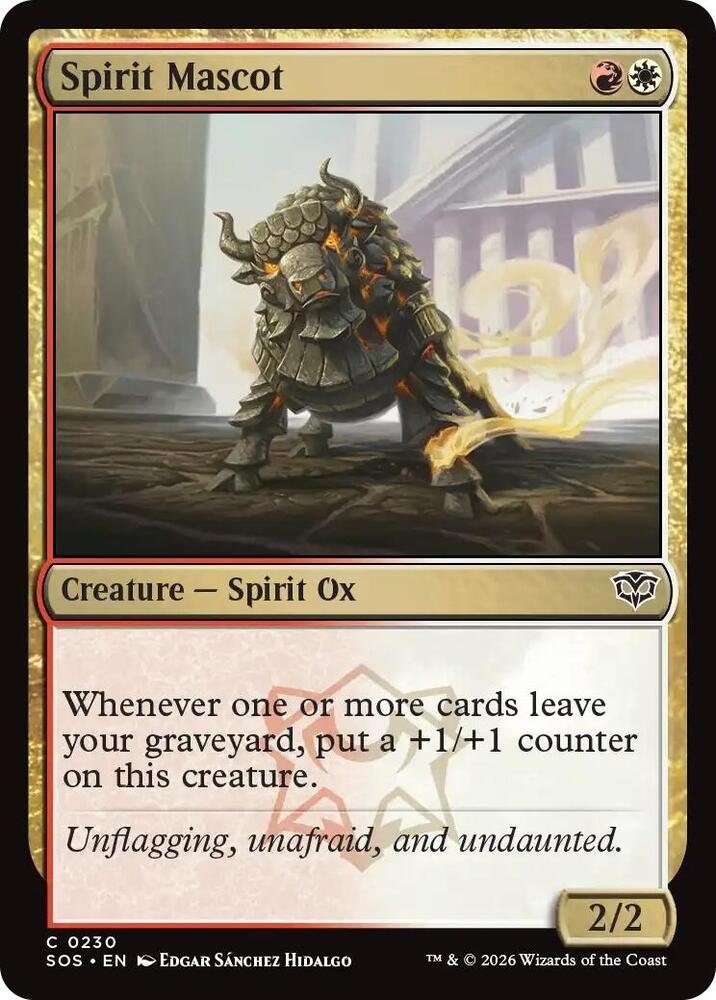
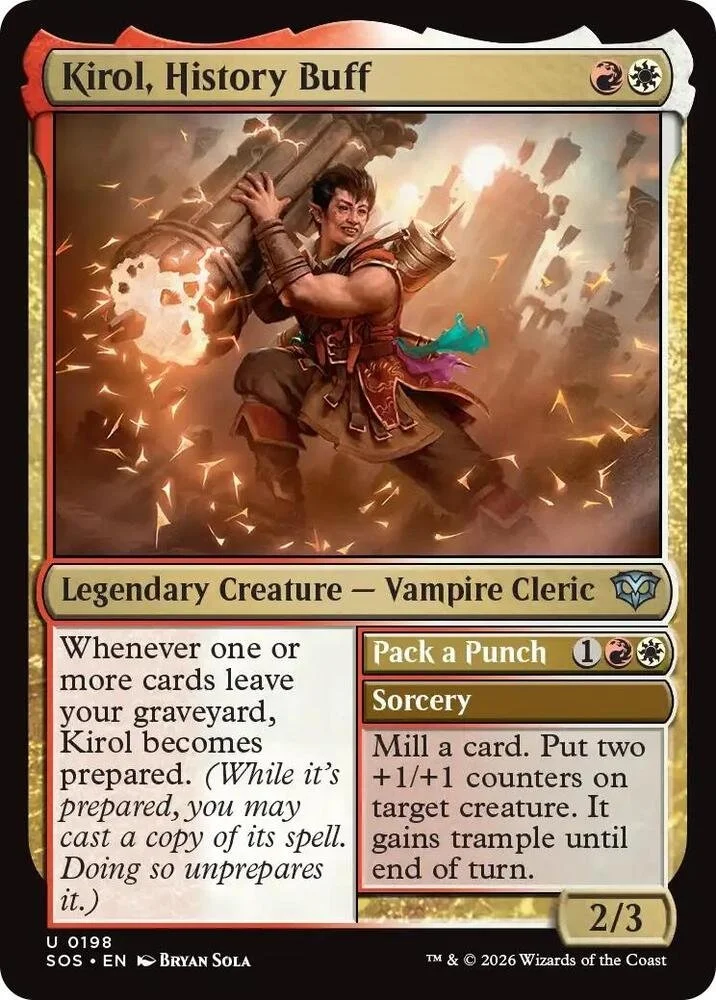
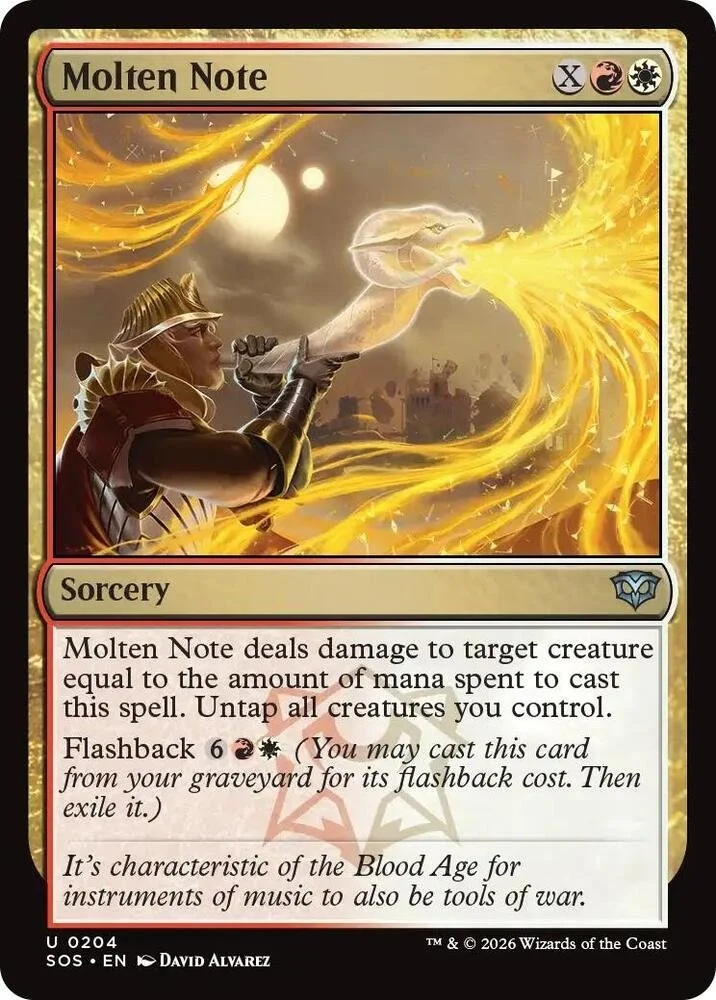
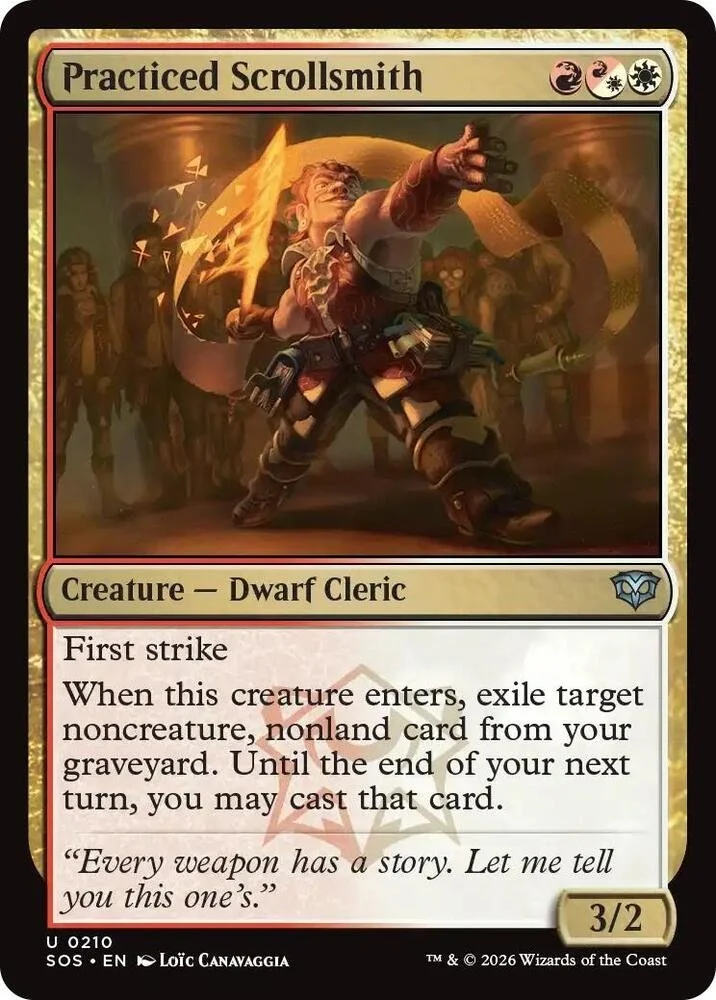
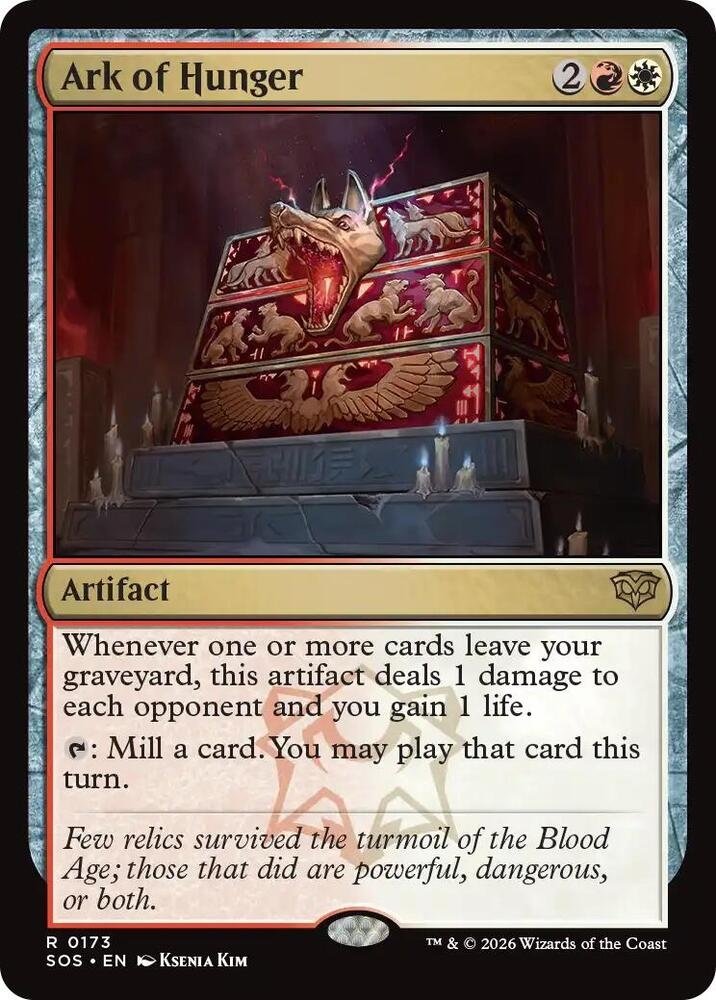
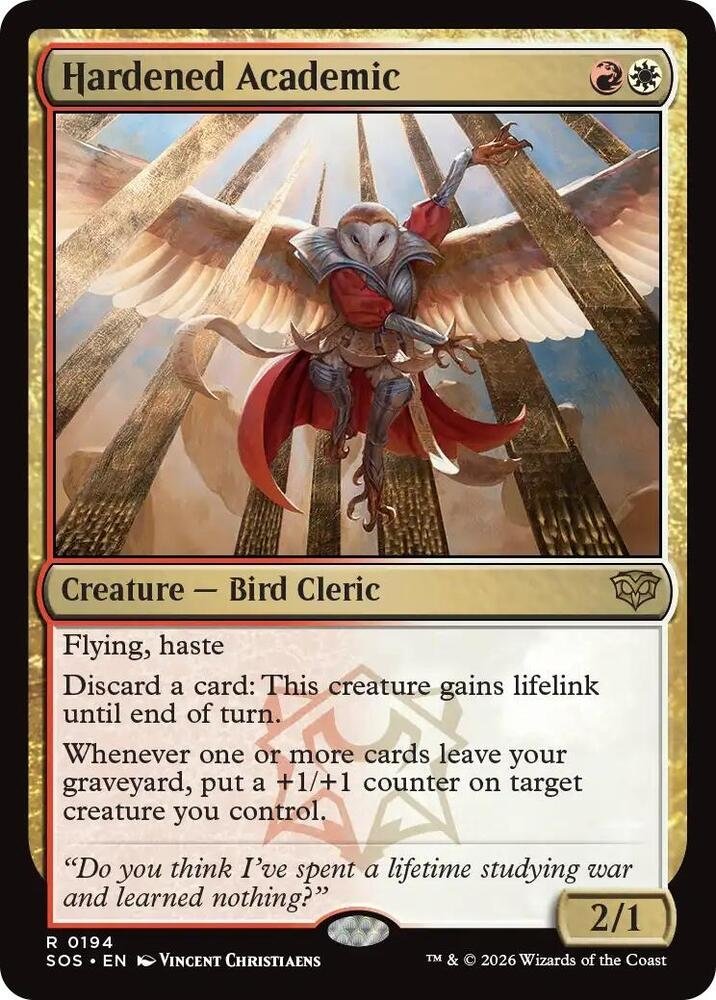
Most of the multicolor cards in Lorehold are doing one of three things: helping you put cards into your graveyard, helping you move cards back out, or rewarding you when those cards leave. In general, the red-white gold cards are exactly what this deck wants, but these are the ones that especially stand out as reasons to move into the archetype.
Spirit Mascot (Common) - It is fitting that Lorehold’s mascot works so well with the deck’s core strategy. Every time a card leaves your graveyard, Spirit Mascot gets a +1/+1 counter. In the right deck, this can quickly turn into a sturdy blocker or a legitimate threat. If you end up with multiple copies, they can become a real problem for your opponent.
Kirol, History Buff // Pack a Punch (Uncommon) - This signpost uncommon does a great job of showing what Lorehold is all about while also highlighting the Prepared mechanic. Kirol rewards you whenever a card leaves your graveyard by preparing again, which then lets you cast Pack a Punch. That spell mills a card, puts a counter on a creature, and gives it trample until end of turn. It helps fuel your graveyard while also turning your growing board into real pressure.
Molten Note (Uncommon) - This is already a strong sorcery, dealing damage equal to X and untapping all your creatures, but the real reason it shines in Lorehold is the Flashback cost of 6RW. That second cast gives you another graveyard trigger and another burst of removal and tempo. Since it is sorcery speed, it feels especially strong as a post-combat or second-main-phase play.
Practiced Scrollsmith (Uncommon) - This is a great value piece for Lorehold. When it enters the battlefield, you exile a creature card and a noncreature spell from your graveyard, and you may cast them that turn. That gives you multiple graveyard-leaving triggers without needing Flashback specifically, and it helps keep your engine running.
Ark of Hunger (Rare) - This might be the best multicolor card you can open for Lorehold. Being an artifact already makes it harder for many decks to answer, and it gives you value every time a card leaves your graveyard by dealing 1 damage to an opponent and gaining you 1 life. On top of that, it can tap to mill a card and let you play it that turn, which is basically extra card access plus more graveyard movement. This card does everything Lorehold wants.
Hardened Academic (Rare) - Ark of Hunger may be the flashier payoff, but Hardened Academic is still a strong pickup. It helps fill your graveyard and rewards you when cards leave it, which makes it a solid engine piece for the archetype even if it does not provide quite as much direct utility.
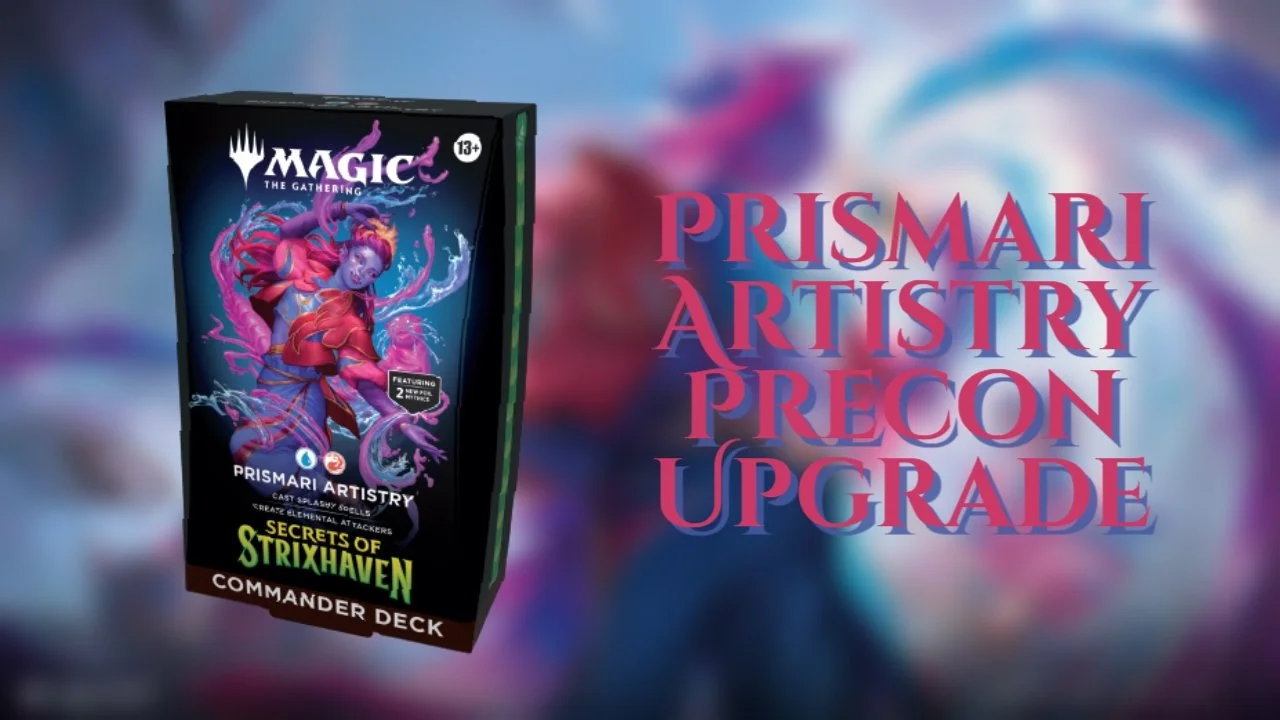
Prismari (Red/Blue) - Opus Spellcasting
In classic red-blue fashion, Prismari wants you to cast spells. The difference here is that Prismari is the school of artistic expression, so it does not just want you to cast spells—it wants you to do it with flair. The Opus mechanic rewards you for casting instants and sorceries, but it gets even better when you spend five or more mana on them. You still get the base Opus trigger for casting the spell, but if you hit that five-mana threshold, you unlock the upgraded effect instead.
That makes Prismari feel a little different from the usual Izzet spells deck. This is not just about chaining together as many cheap spells as possible. Prismari still wants early interaction and setup, but it really shines when you start curving into bigger, more dramatic turns.
Game Plan
Prismari plays a bit differently than the average red-blue spells deck. Your goal is not to flood the board or play like a pure tempo deck. Instead, you want to build toward explosive midgame and late-game turns where your spells generate maximum value.
The general plan looks like this:
Trigger Opus consistently throughout the game
Use cheaper spells early to get value and stay on curve
Shift into bigger spells by turn five and beyond to unlock upgraded Opus effects
You do not want to fill your deck with only expensive spells. That would make the deck too clunky and leave you falling behind early. At the same time, you also do not want to lean too hard on low-cost spells, because eventually you will run out of gas and miss out on what makes Prismari special. The deck works best when it balances early spellcasting with bigger payoff turns later on.
If you have X-cost spells, those become especially important here. They let you stay flexible early while also giving you a reliable way to trigger upgraded Opus effects once you have enough mana. During the MTG Arena early access, Prismari Opus was one of the more frustrating archetypes to play against, especially because of cards like Exhibition Tidecaller.
Draft Priorities
Prismari is fairly straightforward to draft once you know what the deck is trying to do. The main things you want to prioritize are:
Strong Opus payoff cards
X-cost spells or other strong five-plus mana spells
Creatures or artifacts that help ramp into your bigger turns
The biggest thing to watch for is balance. If you draft too many expensive spells, your hand can clog up while you wait to hit enough mana. If you draft too many cheap spells, your deck may start strong but fail to keep up once the game goes long. Prismari needs both ends of that curve to function properly.
Win Condition
Prismari wins by building toward explosive turns that overwhelm the opponent with spell value. Your deck wants to keep the pressure on, control the board where needed, and then cash in once your best Opus creatures are online.
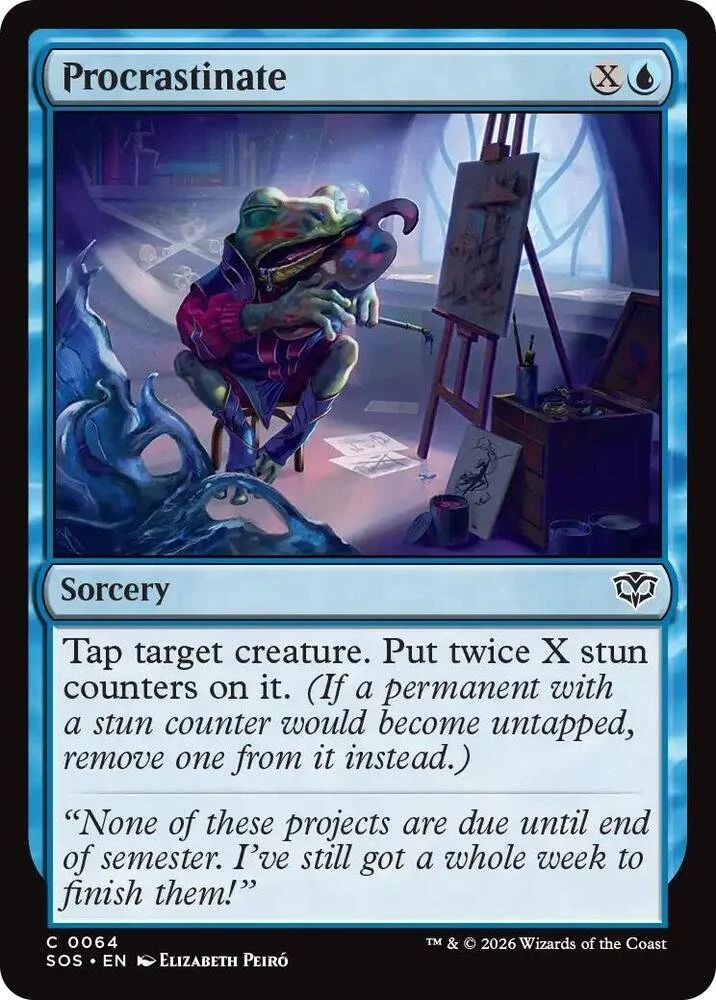
In many games, that means setting up a turn where you untap with your payoff creatures, cast a spell that triggers upgraded Opus, and suddenly swing the game in your favor. A card like Procrastinate can tap down an opposing creature while also giving you a big Opus turn, and cards like Mathemagics can even turn into alternate win conditions if the game goes long enough. Prismari is flashy, fast, and dangerous when it gets rolling, but if your big turn does not land, the deck can stall out quickly.
Prismari key multi-color cards
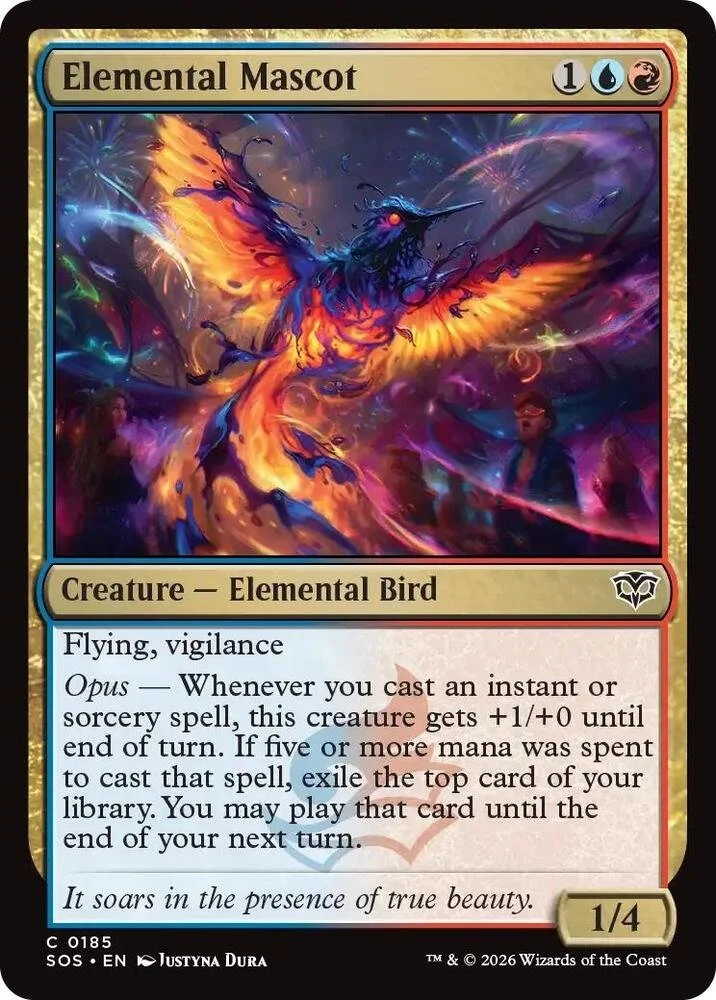
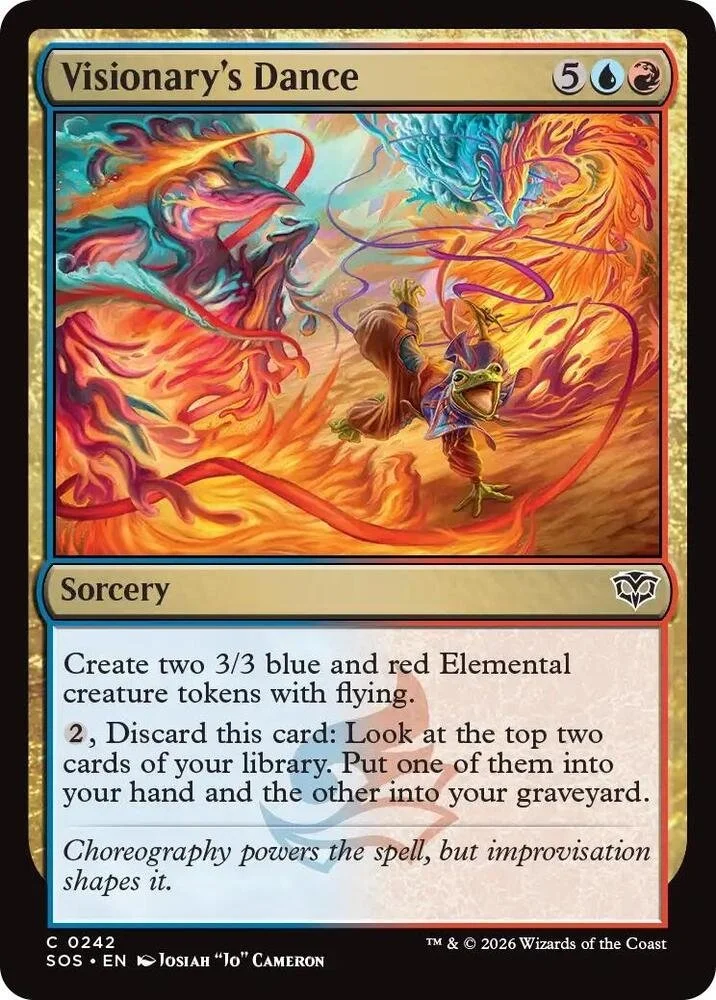
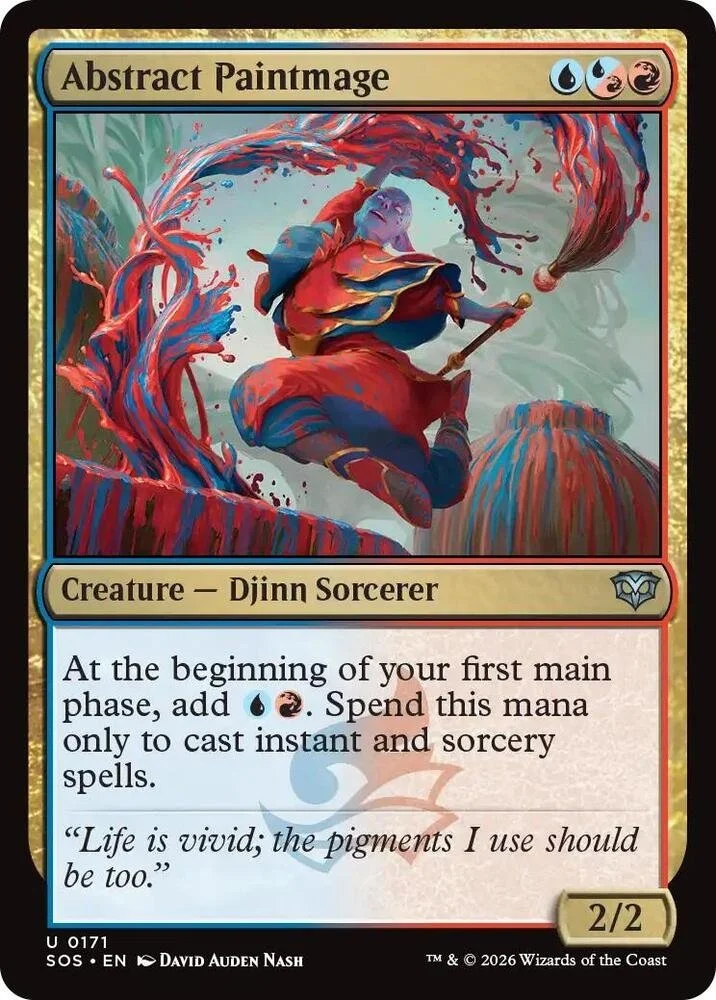
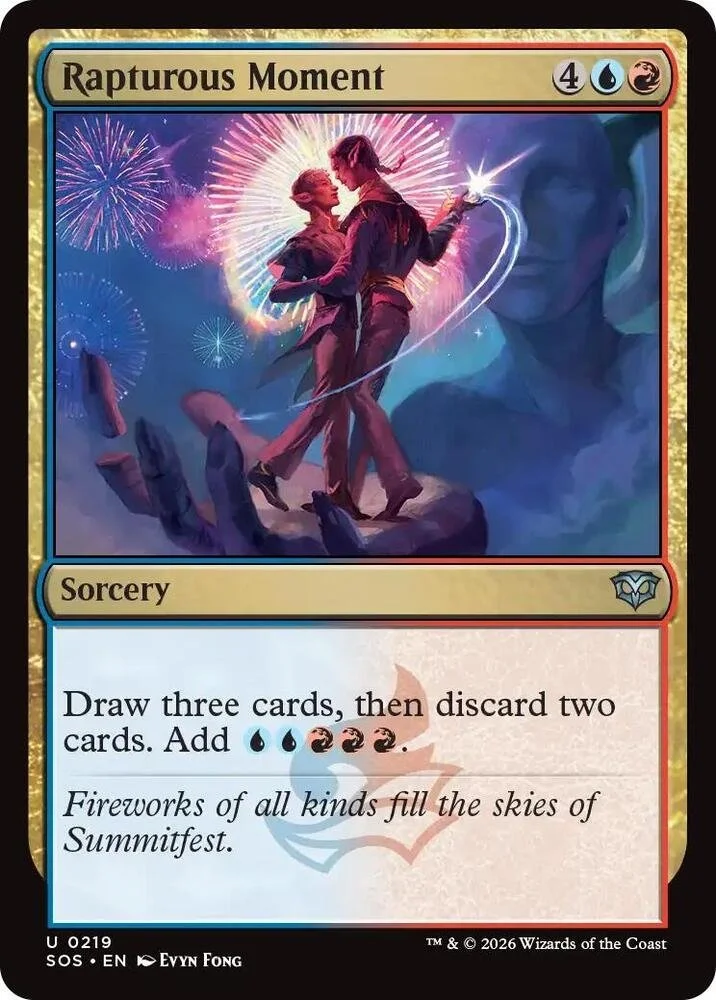
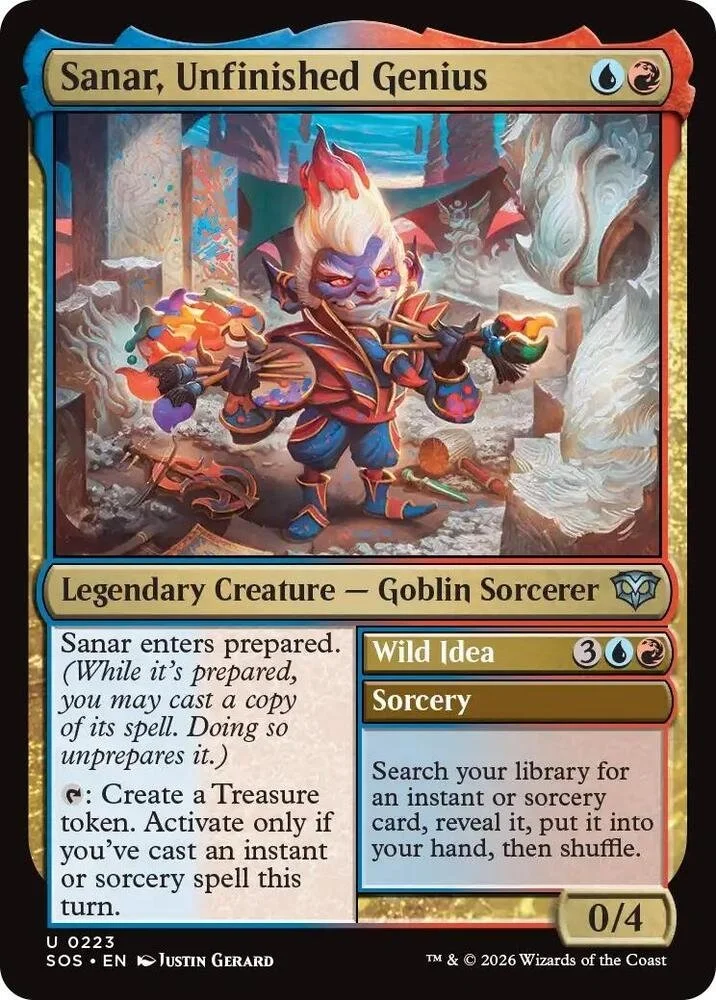
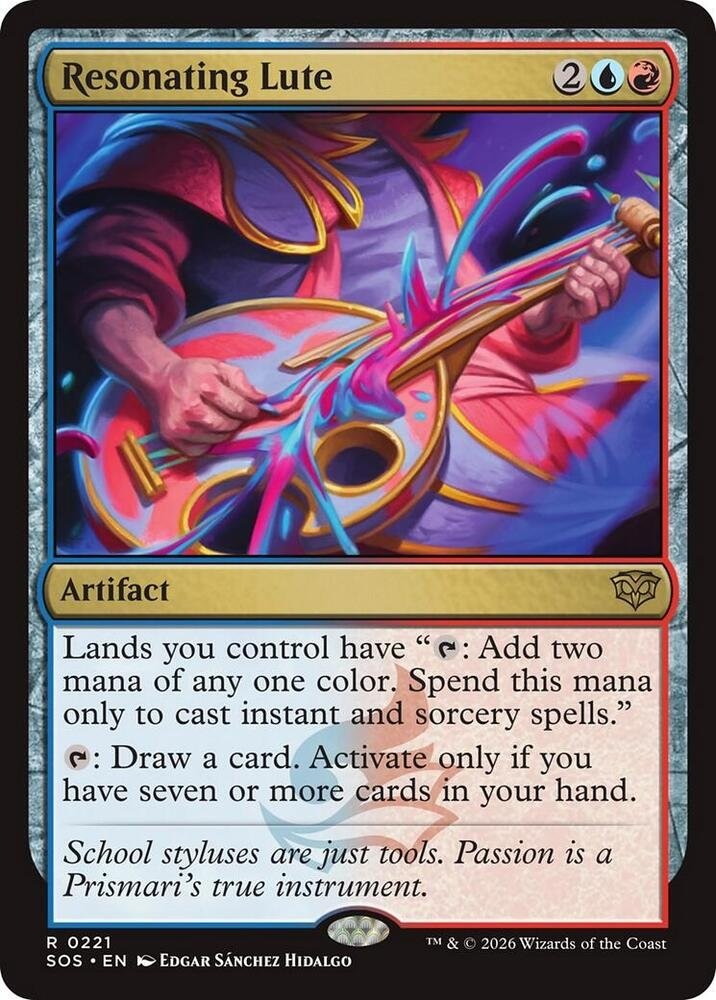
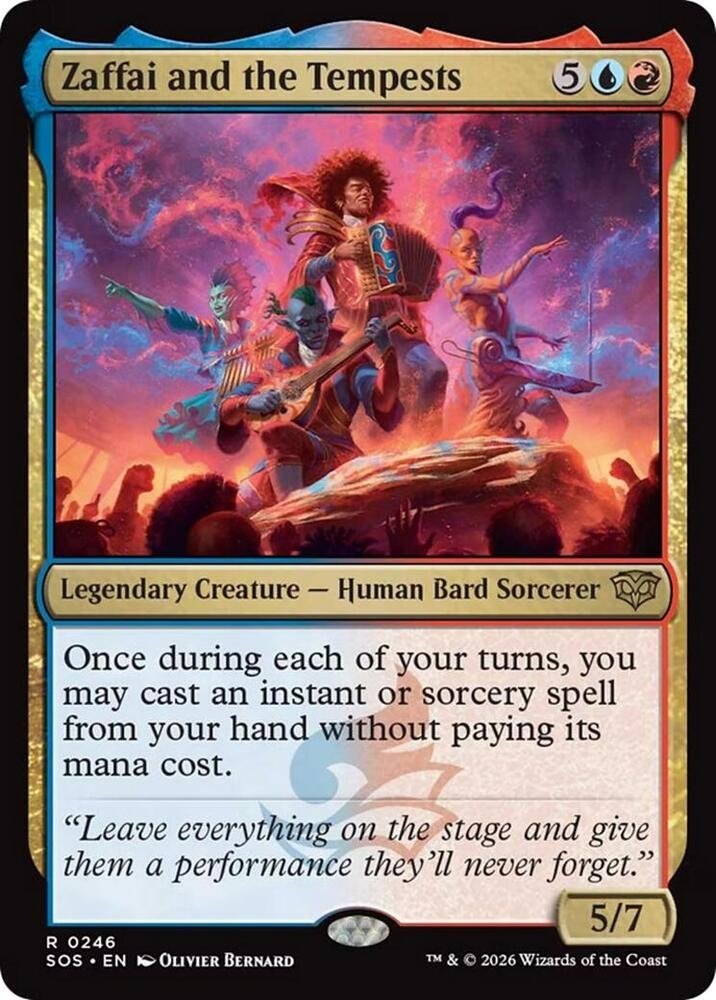
Prismari’s multicolor cards are some of the most varied in the set. Some reward spellcasting directly, some help ramp, some provide card draw, and others just hit incredibly hard. Because of that, it can be harder to tell which cards are true priorities and which ones are simply fine role-players. These are the red-blue cards I would most want to see when drafting or building a sealed Prismari deck.
Elemental Mascot (Common) - Prismari’s mascot fits the deck nicely. This flying 1/4 has an Opus ability that can either give it a temporary buff or, if you spent five or more mana, help with card advantage. I think it plays a bit better in Sealed than in Draft, but even there, having at least one copy seems perfectly reasonable since it helps you stabilize early and still scales into the late game.
Visionary’s Dance (Common) - This is a really flexible common. Early in the game, you can cycle it away for card advantage, and later on you can cast it for seven mana to make two 3/3 flying Elementals while also triggering upgraded Opus effects. That kind of flexibility is exactly what Prismari wants. If you end up with multiple copies, the card gets even better because you can use some early and still rely on others as big late-game plays.
Abstract Paintmage (Uncommon) - This is an excellent ramp creature for Prismari. It gives you two extra mana during your first main phase that can only be spent on instants and sorceries, which is exactly what this deck wants. It helps you jump into upgraded Opus turns earlier and makes it easier to hold up tricks or interaction. Multiple copies in Sealed or Draft would be especially strong.
Rapturous Moment (Uncommon) - This is one of the better upgraded Opus enablers because it does so much at once. It gives you strong card draw, even with the discard drawback, and then refunds four mana that can be used to keep the turn going. That means one spell can potentially lead into another upgraded Opus trigger right away. In the late game, this can absolutely become the kind of card that swings or wins the game, especially if you are copying spells.
Sanar, Unfinished Genius // Wild Idea (Uncommon) - Sanar is another strong uncommon for the archetype. He helps generate Treasure tokens, which makes ramping into your more expensive spells much easier, and his Prepared spell can tutor for an instant or sorcery while also costing enough to trigger upgraded Opus effects. He does not naturally re-prepare himself, but if you open or draft Skycoach Waypoint, Sanar becomes an especially strong target.
Resonating Lute (Rare) - This is one of the best ramp artifacts Prismari could ask for. It lets your lands tap for two mana of any color as long as that mana is being used to cast an instant or sorcery. That is an incredible effect for this archetype. It helps smooth out your mana in the midgame and can make Prismari turns downright terrifying once you hit the late game.
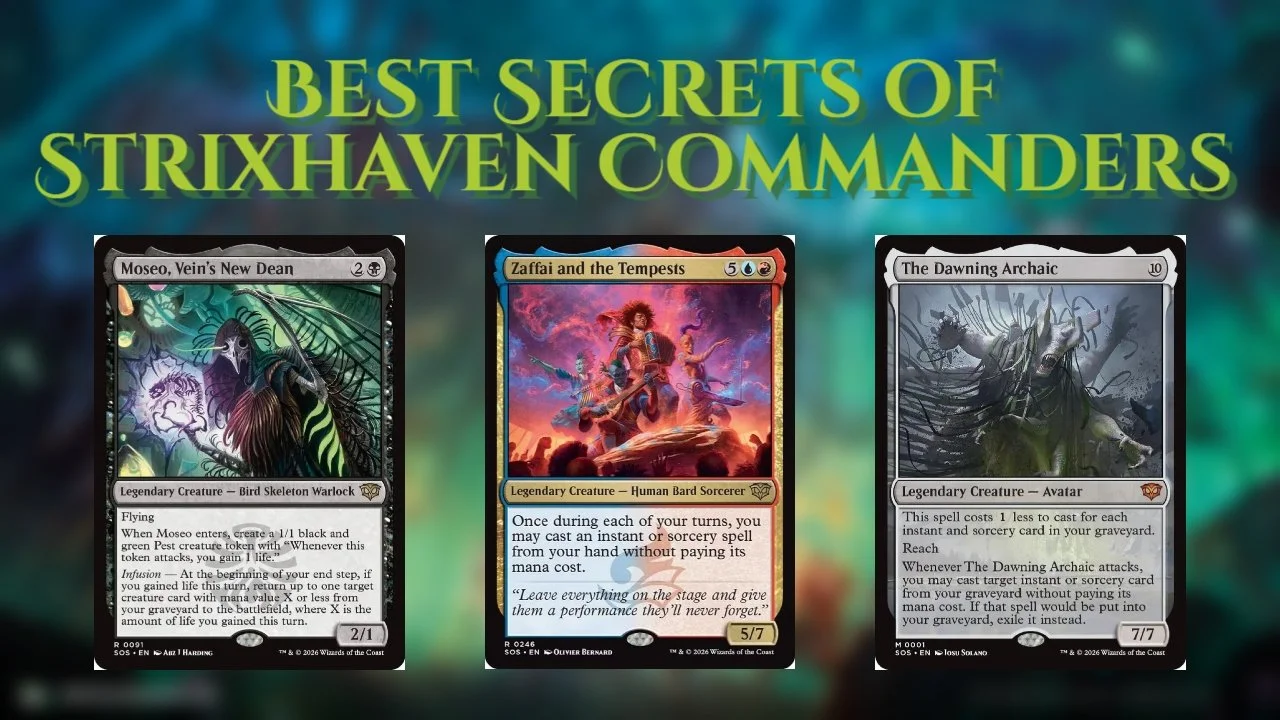
Zaffai and the Tempests (Rare) - Zaffai is a very strong rare for Prismari because it lets you cast a spell for free each turn, which helps you conserve mana for your bigger plays. The important thing to remember is that free spells do not help you hit upgraded Opus triggers unless you are actually spending five or more mana, so Zaffai is best used to cast your cheaper spells while you save your mana for the spells that will trigger the upgraded payoff. Later in the game, once you have more mana available, Zaffai can help you stack multiple spells in a single turn. Just do not waste this effect on X-cost spells.
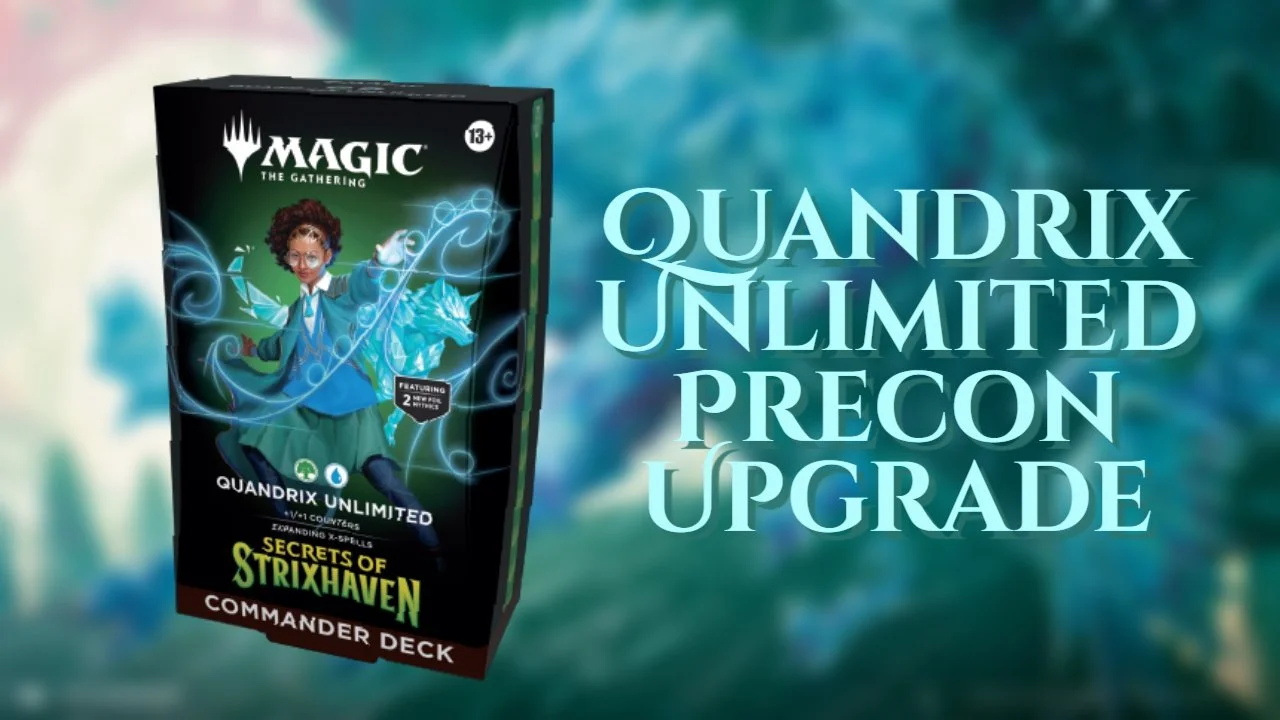
Quandrix (Blue/Green) - Incremental Value
Quandrix is the school of numbers, logic, and mathematical manipulation, so it makes sense that this archetype is all about counting. Whether you’re scaling up X-cost spells, tracking Increment triggers, or just trying to squeeze maximum value out of your counters, Quandrix asks you to pay attention to the numbers at every stage of the game.
At its core, though, this deck is a lot more straightforward than it first appears. Quandrix is basically classic green beatdown with a blue spells-matter twist. You’re building creatures up over time, creating oversized Fractals, and turning all of that accumulated value into a lethal board state.
Game Plan
Quandrix has one of the simpler overall plans in the set, but that does not mean it is weak. In fact, its game plan is very direct and effective.
The deck generally wants to:
Cast cheap Increment creatures early
Follow them up with spells that help grow those creatures
Use Fractals and X-cost spells to build a board that can close the game through combat
Unlike some of the grindier or trickier archetypes in the format, Quandrix is usually trying to win with damage. You are not setting up some huge value engine just for the sake of it—you are building a board that gets bigger and bigger until your opponent cannot keep up. If your creatures keep growing and your Fractals keep multiplying, eventually your opponent is going to be forced into bad blocks or simply get run over.
Draft Priorities
Quandrix and Prismari do overlap a bit when it comes to draft priorities, which can make this archetype a little trickier to navigate at a busy table. Blue spells are going to be in demand, so you have to be a little more mindful about what you take and when.
The main things you want to prioritize are:
X-cost spells that help trigger Increment and scale into the late game
Increment creatures that can keep growing throughout the game
Protection spells or counterspells to keep your best threats alive
The biggest thing to watch out for is competition. If someone else at the table is drafting Prismari, some of the blue spell support may disappear quickly. That means you need to draft your synergy pieces carefully and not assume key cards will wheel back around.
Win Condition
Quandrix has a pretty simple win condition: hit hard and keep hitting hard.
Unlike Prismari, which often wants one huge spell-heavy turn, Quandrix usually wins by building up steady board pressure until the damage becomes overwhelming. That can mean a wide board full of Fractals, one giant creature enhanced by Increment, or a combat step pushed through with trample or a well-timed trick.
At the end of the day, twenty life is not that much when your creatures are constantly growing. One thing worth keeping in mind, though, is that Witherbloom can be a rough matchup. If your opponent is gaining life and grinding well, you may need to lean more heavily on removal or sideboard options to keep them from stabilizing.
Quandrix key multi-color cards
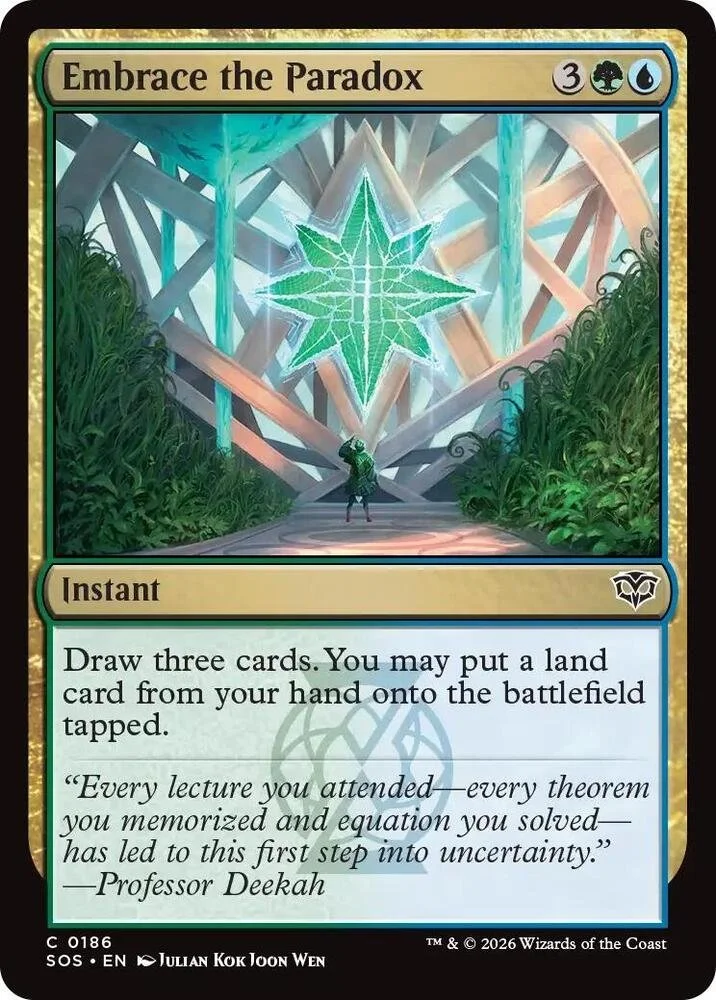
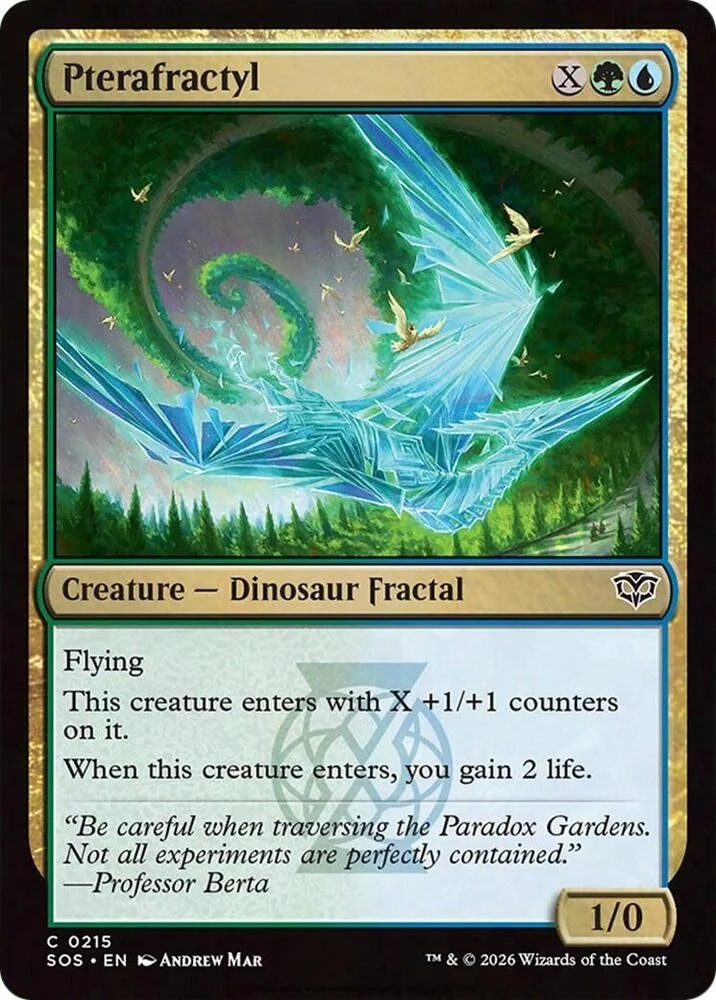
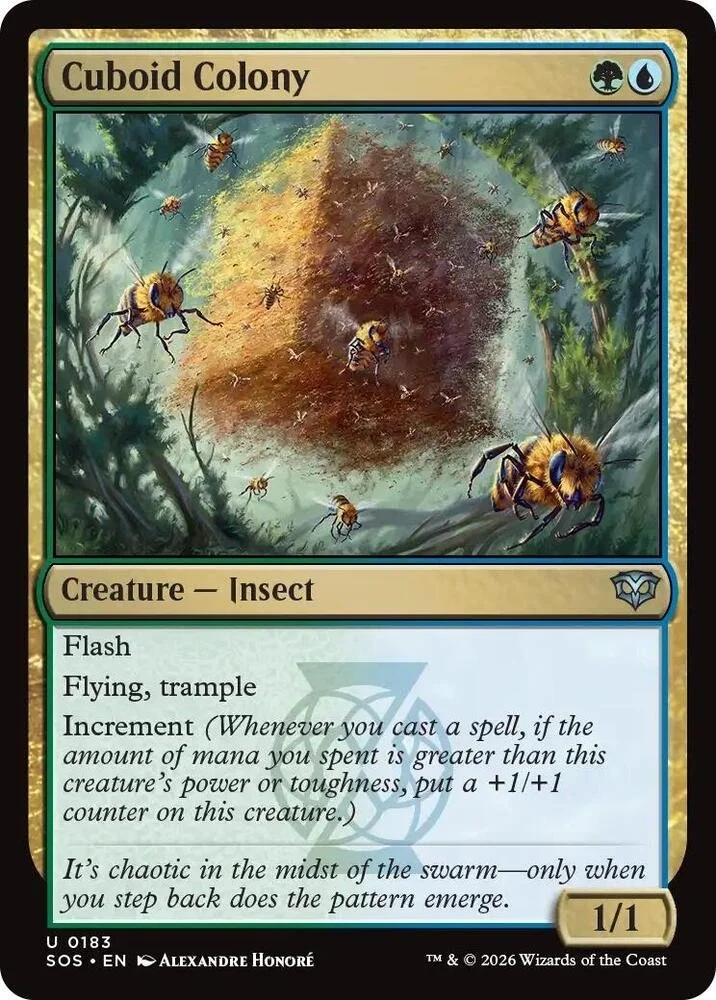
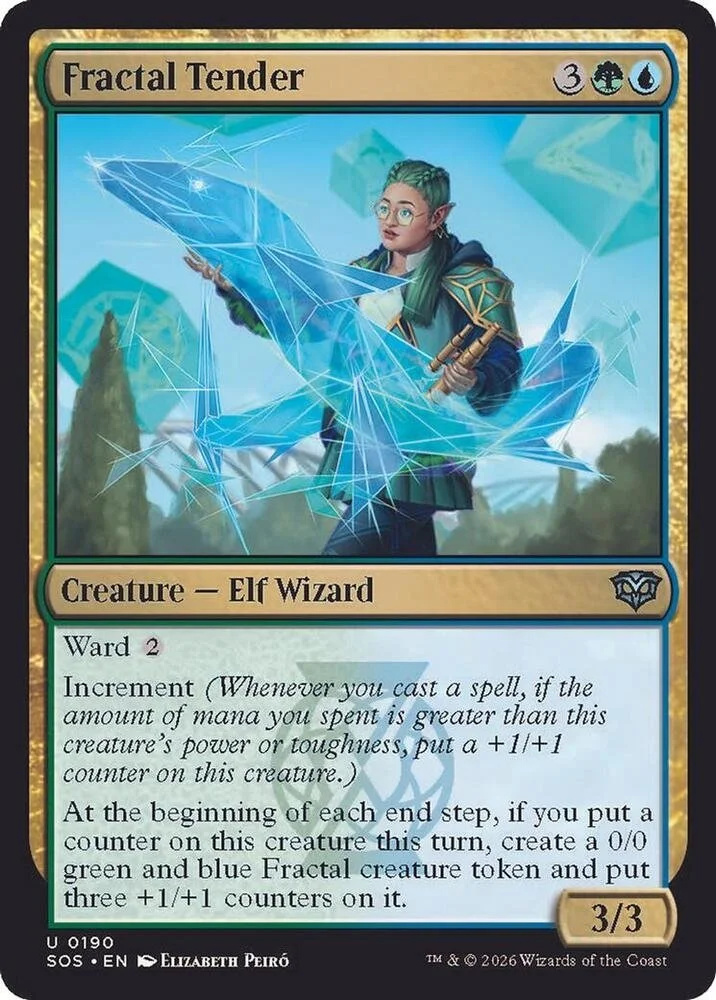
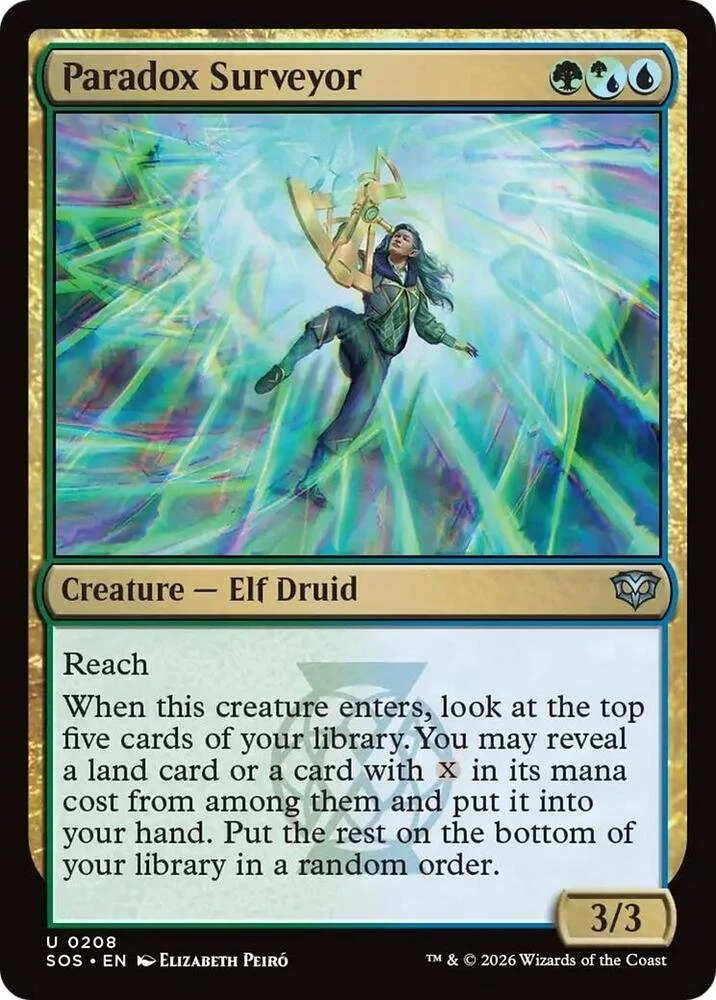
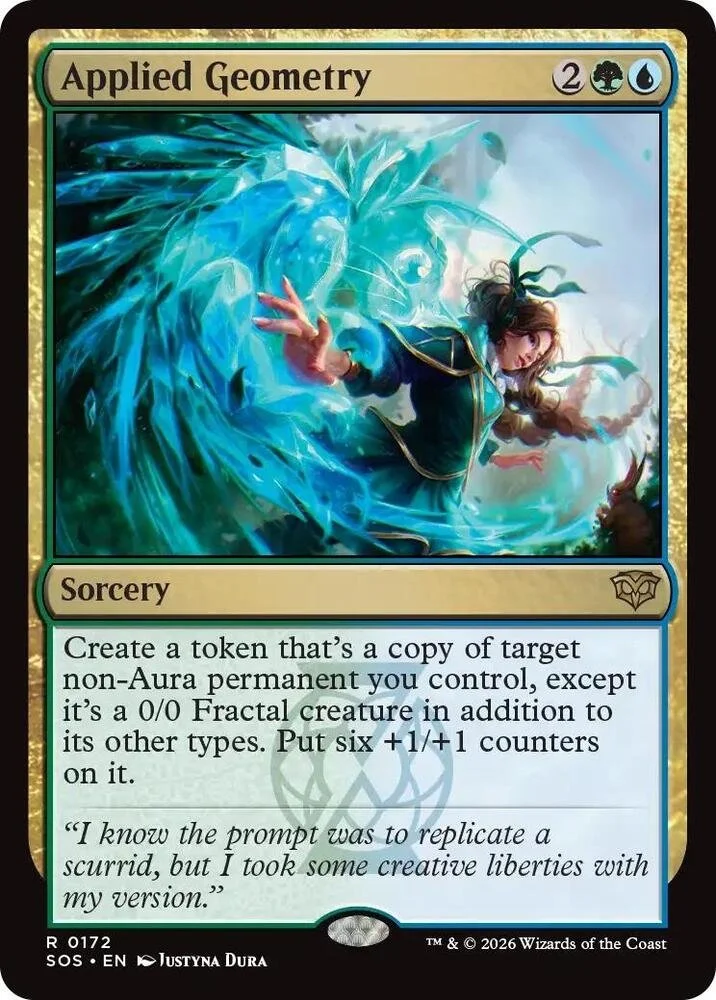
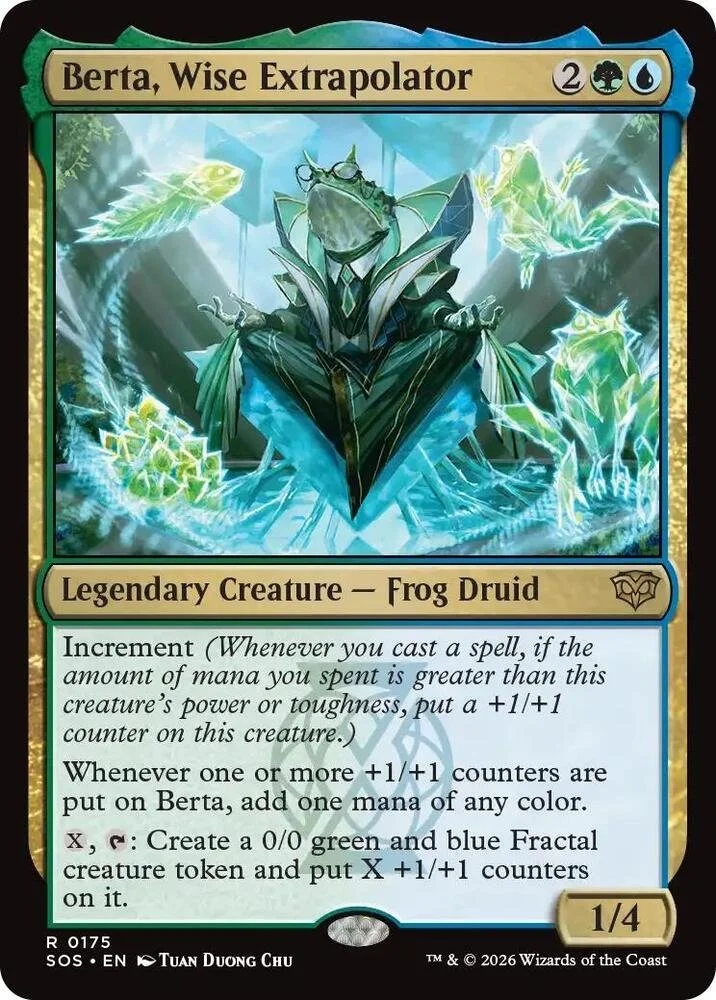
Quandrix probably has the least diverse group of multicolor cards among the schools, but that is not a bad thing. Most of its best cards are doing exactly what the archetype wants: scaling with X, making Fractals, or helping your board grow over time.
Embrace the Paradox (Common) - This card is a little more expensive than I would normally want, but it makes up for that with solid utility. You get card draw and an extra land drop, which helps smooth out your mana and keeps you from stalling in the midgame. At five mana, it is not the most efficient spell in the world, but it does trigger Increment nicely and helps keep the deck moving.
Pterafractyl (Common) - This is exactly the kind of common Quandrix wants. As an X-cost 1/0 that enters with X +1/+1 counters, it stays relevant at every stage of the game. Early on, it can come down as a reasonable body, and later it can scale into a serious flying threat. That flexibility is great in Limited, and it also naturally works with the archetype’s Increment plan. This is the kind of common I would be very happy to have multiple copies of.
Cuboid Colony (Uncommon) - This card is absurdly good for an uncommon. It already has an impressive keyword package with trample, flying, and flash, and then it also comes with Increment. Because it starts small, it is easy to trigger Increment on it, and flash lets you keep your options open before committing it to the board. Being able to leave mana up for interaction and then deploy this at the end of your opponent’s turn is fantastic. Once it starts growing, it becomes a serious threat very quickly.
Fractal Tender (Uncommon) - If your goal is to build a Fractal army, Fractal Tender can do a huge amount of work on its own. At the beginning of each end step, if you put a counter on a creature that turn, it creates a 0/0 Fractal with three +1/+1 counters on it. In a deck built around Increment and other counter synergies, that is going to happen often. This can snowball fast if left unanswered, and it is also the kind of card that can draw removal away from your other threats.
Paradox Surveyor (Uncommon) - This is a nice card advantage piece for Quandrix. If your hand is running low or your available spells are not lining up well with Increment, Paradox Surveyor helps you dig deeper and find the higher-value spells you need. Ideally, it helps you find an X-cost spell, but even when it does not, filtering through the top of your deck is still useful.
Applied Geometry (Rare) - This is a very strong rare for the archetype. It can potentially trigger Increment, but the real payoff is that it lets you copy one of your non-Aura permanents and turn it into a creature with six +1/+1 counters if it was not already one. That gives you a ton of flexibility. It is especially strong when you already have a powerful permanent and want another version of it without needing to rely on drawing duplicates.
Berta, Wise Extrapolator (Rare) - Berta is one of the coolest creatures in the set and a strong Limited card on top of that. She helps generate Fractals with X +1/+1 counters and can also turn counters placed on her into mana. That makes her a powerful bridge between Quandrix’s counter theme and its bigger spell turns. If you have other cards that can place counters consistently, Berta becomes an excellent payoff and one of the best creatures to build around.
Silverquill (Black/White) - Repartee Aggro
Silverquill is the set’s aggressive archetype, and that is a pretty major departure from what we usually expect out of black-white. Instead of leaning into slower sacrifice, life drain, or grindy value, Silverquill wants to play fast, apply pressure, and use clever spell timing to keep opponents off balance.
This is not just a simple attack-every-turn aggro deck, though. Silverquill is built around Repartee, which means your combat tricks and removal spells can become much more than one-for-one interactions. When the deck works, it feels sharp, stylish, and incredibly punishing.
Game Plan
Silverquill wants to force awkward combat situations. You are attacking often, holding up tricks, and making your opponent question every block they make.
The deck generally wants to:
Attack frequently
Use combat tricks and removal spells to trigger Repartee
Force your opponent into uncomfortable blocks or hesitant attacks
Keep creatures on board that can pressure while surviving combat
This is one of the more specific archetypes in the set. The aggressive plan can be very fun, but it depends heavily on having the right mix of creatures, tricks, and payoffs. If you do not pull enough of those pieces, Silverquill can hit a wall much faster than some of the other archetypes.
Draft Priorities
When drafting Silverquill, you need to be very intentional. This is not a deck where you can just grab any black and white cards and expect the synergies to carry themselves.
You want to prioritize:
Combat tricks that target creatures
Repartee payoffs that punish your opponent or push damage
Efficient creatures that can attack consistently and survive combat
Removal spells that also trigger Repartee
Drafting Silverquill can be tricky because the deck really wants specific support. More often than not, you may find yourself splashing another color if your pool does not give you enough clean aggressive pieces. The key is making sure your deck can stay proactive without running out of meaningful plays.
Win Condition
Silverquill wins by controlling the pace of combat. Your goal is to trick your opponent into blocking when they should not, attacking when they should not, or holding back when they actually need to act.
I like to think of this archetype almost like fencing. It is about timing, pressure, and knowing when to step back before striking. You are not just brainlessly turning creatures sideways like a stompy green deck. You are attacking with purpose, waiting for the right moment, and punishing your opponent when they are on the back foot.
If Silverquill gets ahead early, Repartee can make it very difficult for the opponent to stabilize.
Silverquill key multi-color cards
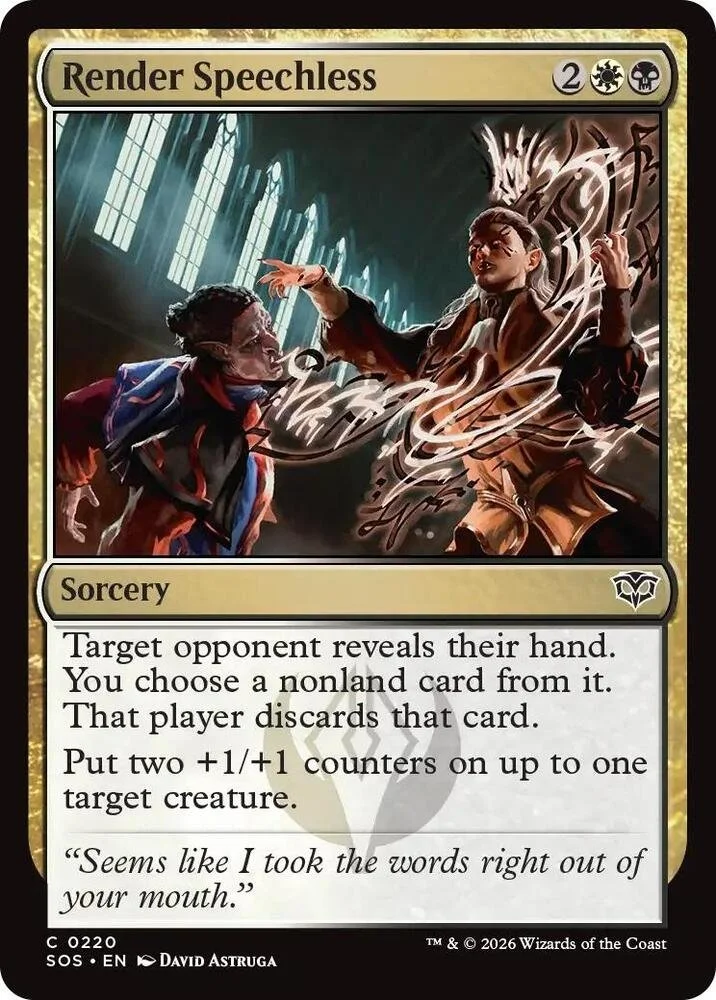
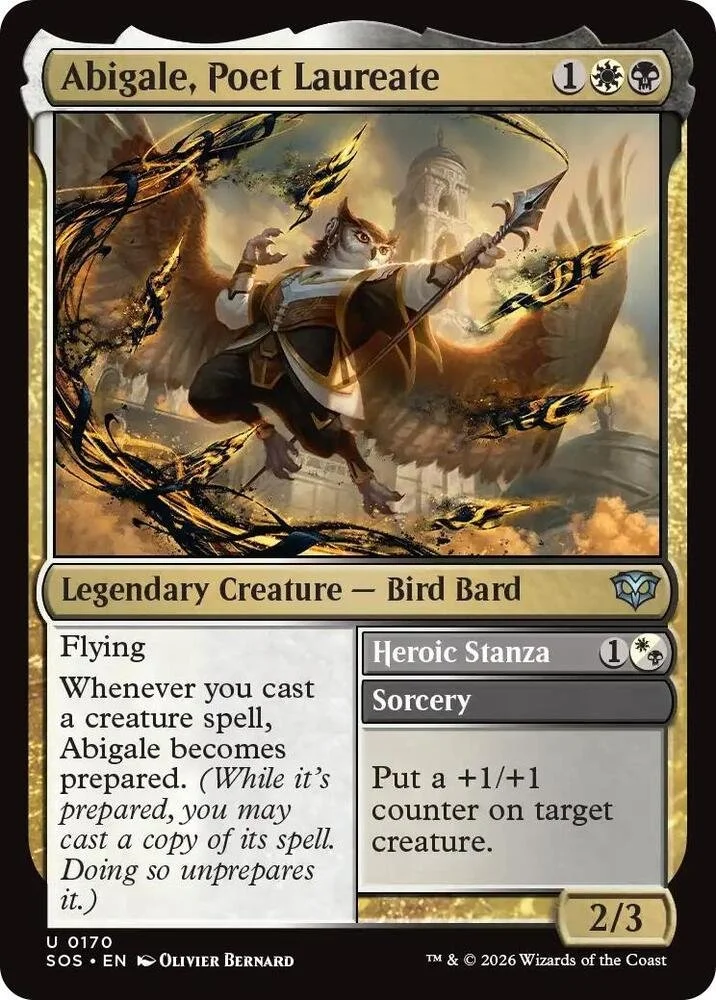
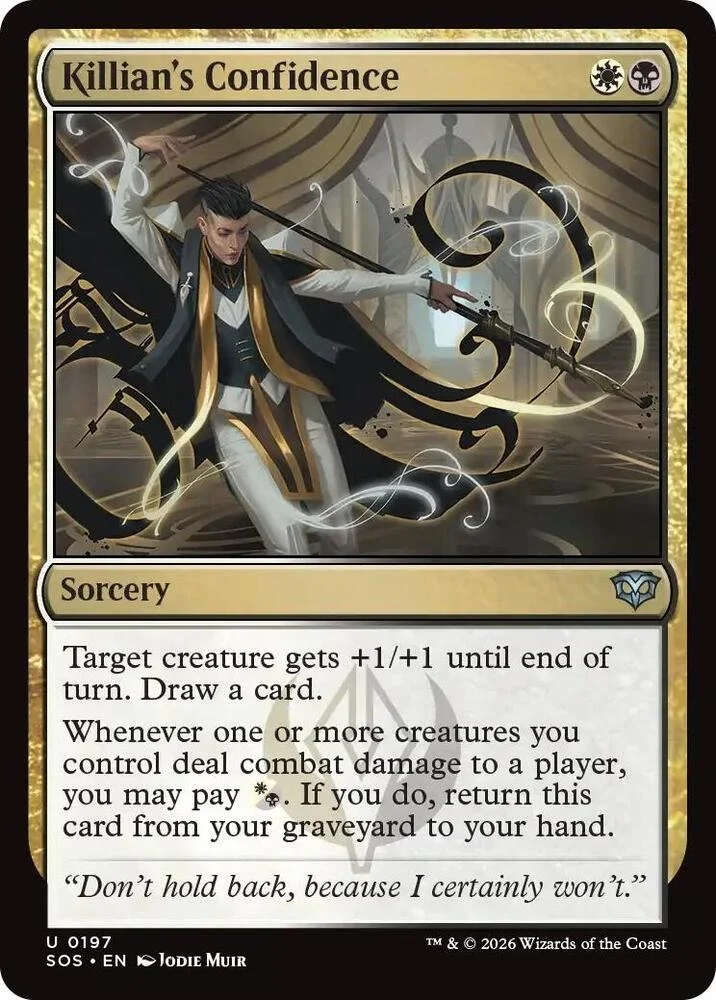
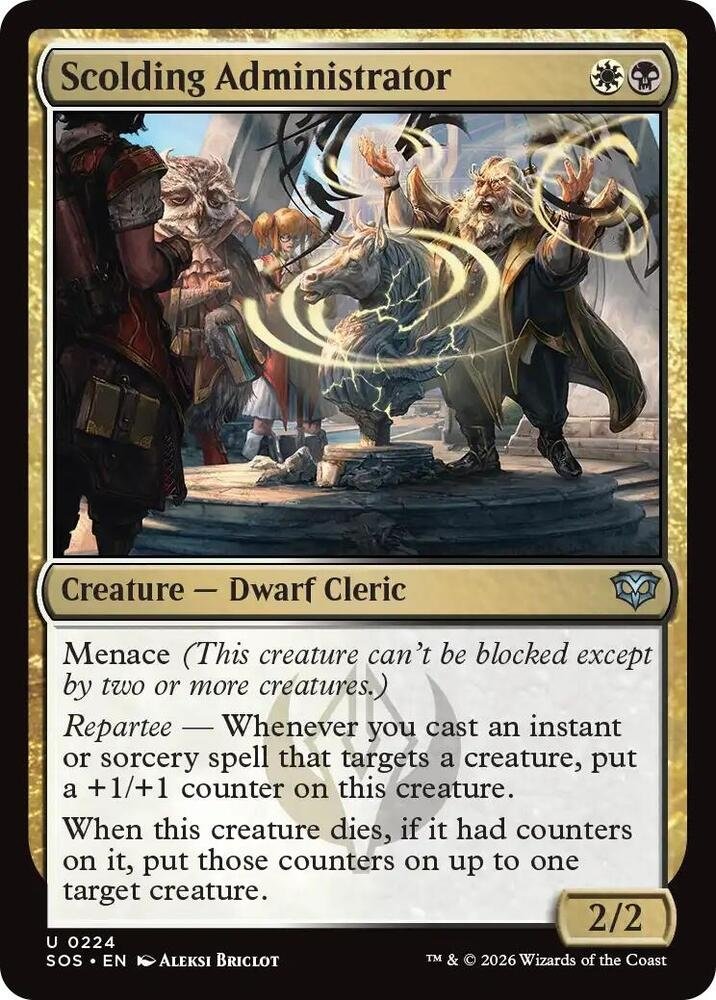
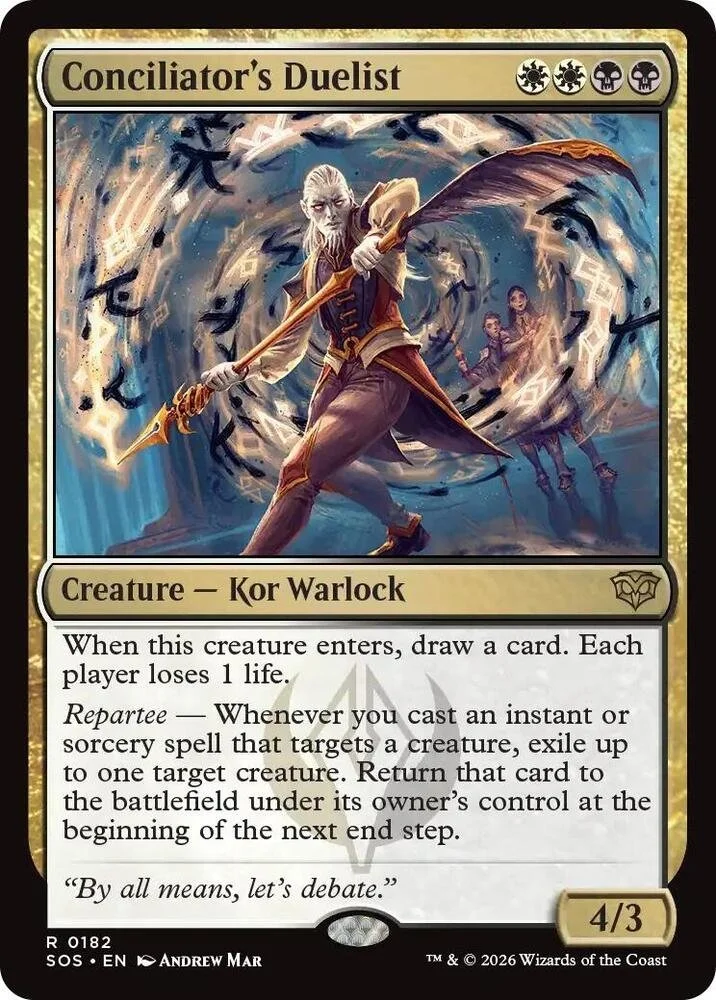
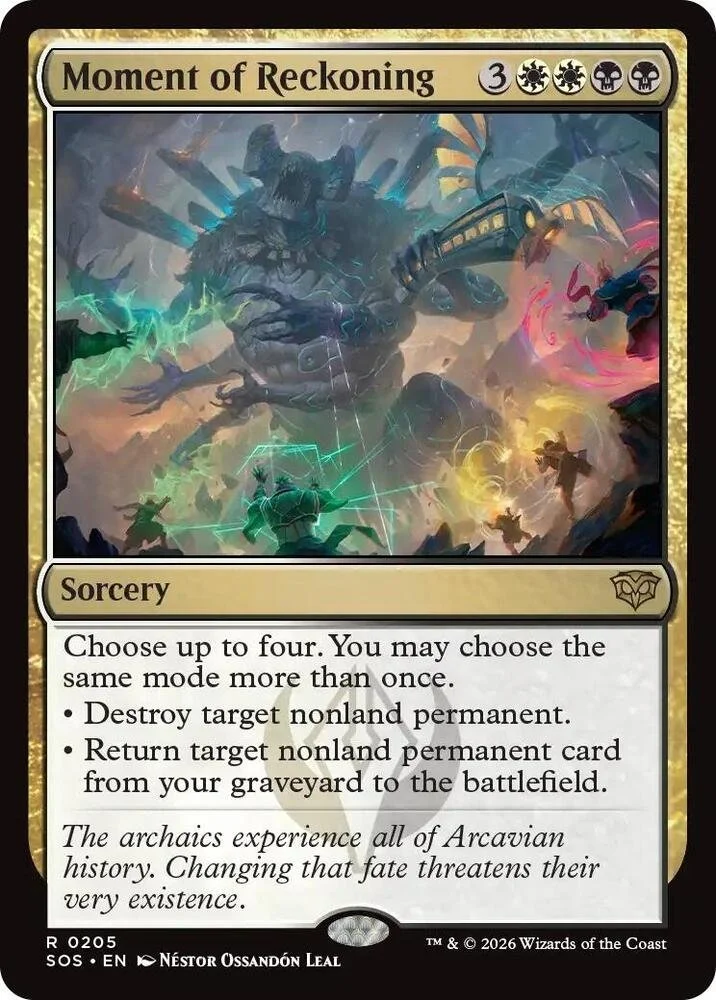
Silverquill’s best multicolor cards help keep the pressure on while making every targeted spell feel more valuable. These are the cards that can push you into the archetype or reward you for already being there.
Render Speechless (Common) - This is a nice two-purpose spell for Silverquill. It can disrupt your opponent by making them discard a card, but because it targets a creature, it also triggers Repartee. Putting two +1/+1 counters on a creature while disrupting your opponent’s hand is exactly the kind of tempo play this archetype wants.
Abigale, Poet Laureate // Heroic Stanza (Uncommon) - Abigale is an important character in Strixhaven, and she also looks important for this archetype. Her Prepared spell gives you a consistent way to target creatures, which means consistent Repartee triggers. That kind of repeatable support is exactly what Silverquill wants in Limited.
Killian’s Confidence (Uncommon) - This card gives Silverquill card draw and another way to trigger Repartee, which already makes it valuable. The best part, though, is that you can return it from your graveyard to your hand as long as a creature dealt combat damage. In an aggressive deck that wants to keep attacking, that recursion can help you stay fueled instead of running out of tricks.
Scolding Administrator (Uncommon) - This is a strong Repartee payoff attached to a creature with menace. It buffs itself whenever a creature is targeted, which makes it a natural fit for the deck’s combat trick plan. Even better, when it dies, you get to move those counters onto another creature, so the pressure does not completely disappear.
Conciliator’s Duelist (Rare) - Conciliator’s Duelist gives Silverquill a really interesting Repartee payoff. Depending on the board, it can either retrigger your own powerful enter-the-battlefield effects or slow your opponent down by bouncing their creatures and forcing them to come back in summoning sick. That flexibility can be very annoying for opponents trying to stabilize.
Moment of Reckoning (Rare) - This card is disgusting in the best way. Moment of Reckoning is strong enough to be a reason to move into Silverquill on its own, or at the very least splash for it if your deck can support the mana. Being able to destroy creatures or return creatures from your graveyard up to four times in any combination is absolutely wild. In Limited, that kind of swing can completely take over a game.
Witherbloom (Green/Black) - Lifegain Swarm
Witherbloom is the grindiest archetype in the set, and that fits the school perfectly. This is the school of natural essence, life, death, decay, and pests, so it makes sense that its Limited strategy is all about gaining life, sacrificing creatures, draining opponents, and surviving longer than anyone else at the table.
This is not the deck you draft if you want to win quickly. Witherbloom is here to outlast.
Game Plan
Witherbloom is a survival deck. Your goal is to make the game go long, build up your life total, and slowly drain your opponent while recycling your resources.
The deck generally wants to:
Gain life consistently
Slowly drain your opponent’s life total
Sacrifice creatures for value
Return creatures from the graveyard
Use Pest tokens and other small creatures as repeatable resources
With Infusion, you’re rewarded just for gaining life during the turn. It does not matter whether you gain one life or ten — as long as your life total went up, your Infusion cards can start paying you off. That makes small lifegain effects much more important than they may look at first glance.
In a good Witherbloom deck, you probably are not staying at 20 life for long. Your life total should keep climbing, which lets you absorb bigger attacks while your opponent starts running out of profitable options. Eventually, they may be forced to hold creatures back as blockers while you keep grinding them down.
Draft Priorities
Witherbloom shares black with Silverquill, but luckily the two archetypes want very different things. Silverquill is trying to pressure early with tricks and aggression, while Witherbloom wants engines, lifegain, and recursion.
When drafting Witherbloom, you want to prioritize:
Reliable lifegain effects
Infusion payoffs
Pest token makers
Sacrifice outlets
Reanimation or recursion cards
The biggest thing to remember is that this deck needs repeatable value. One lifegain spell is fine, but Witherbloom really comes together when you have multiple ways to gain life, sacrifice creatures, and keep bringing threats or resources back.
Win Condition
Witherbloom wins by outlasting the opponent. Your early game is about stabilizing, gaining life, and setting up your value engines. Once your life total is high enough and your board is stable, you can start pressuring your opponent while still having enough life to take hits when needed.
This deck does not usually win with one massive attack. It wins by making every exchange annoying for your opponent. They attack, you gain life. They remove a creature, you bring something back. They try to race, and suddenly your life total is too high for that plan to work.
If Witherbloom gets its engine online, it can become one of the hardest archetypes to push through.
Witherbloom key multi-color cards
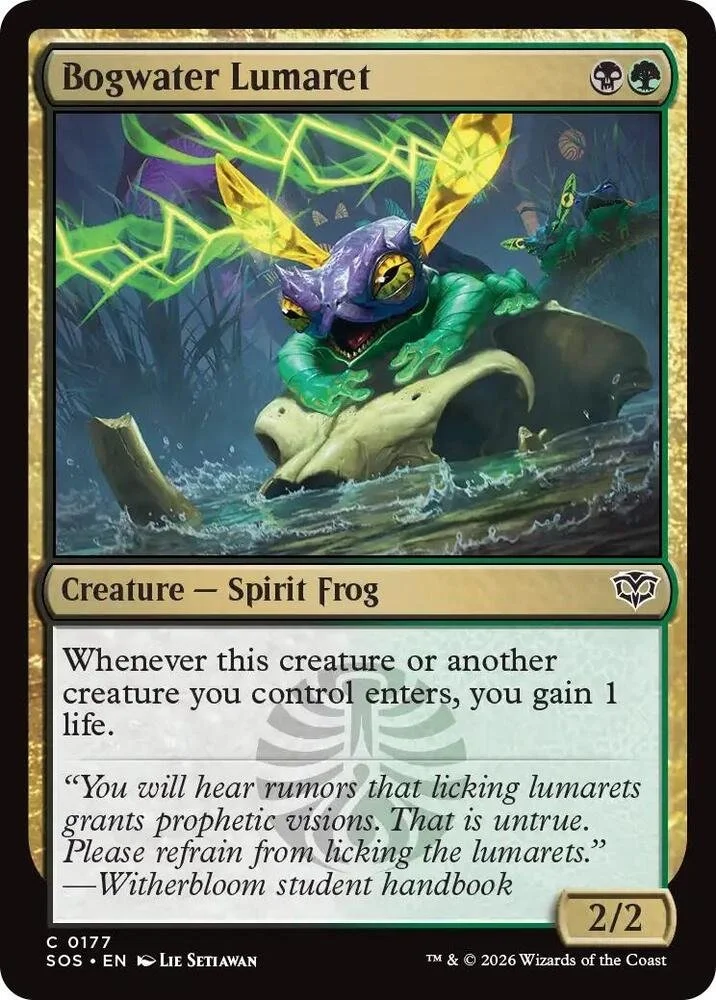
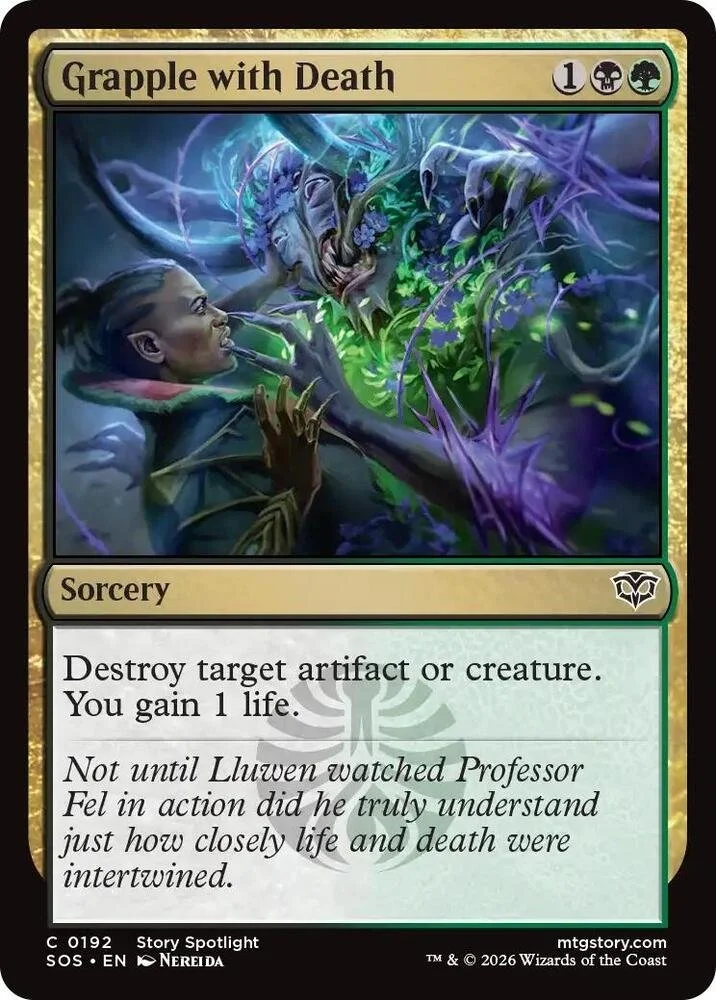
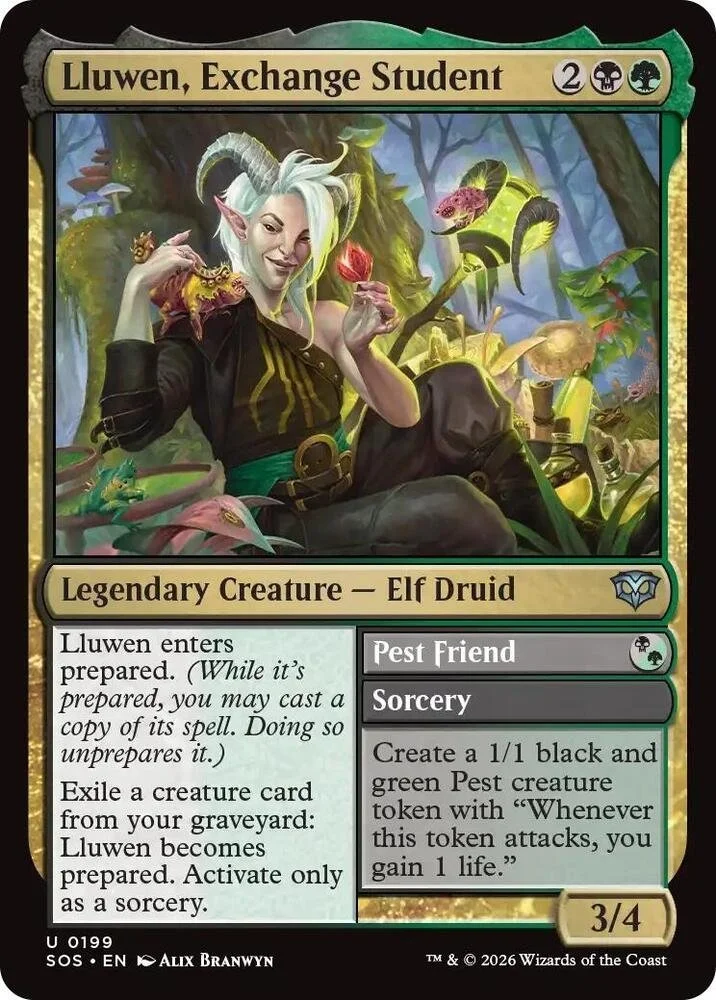
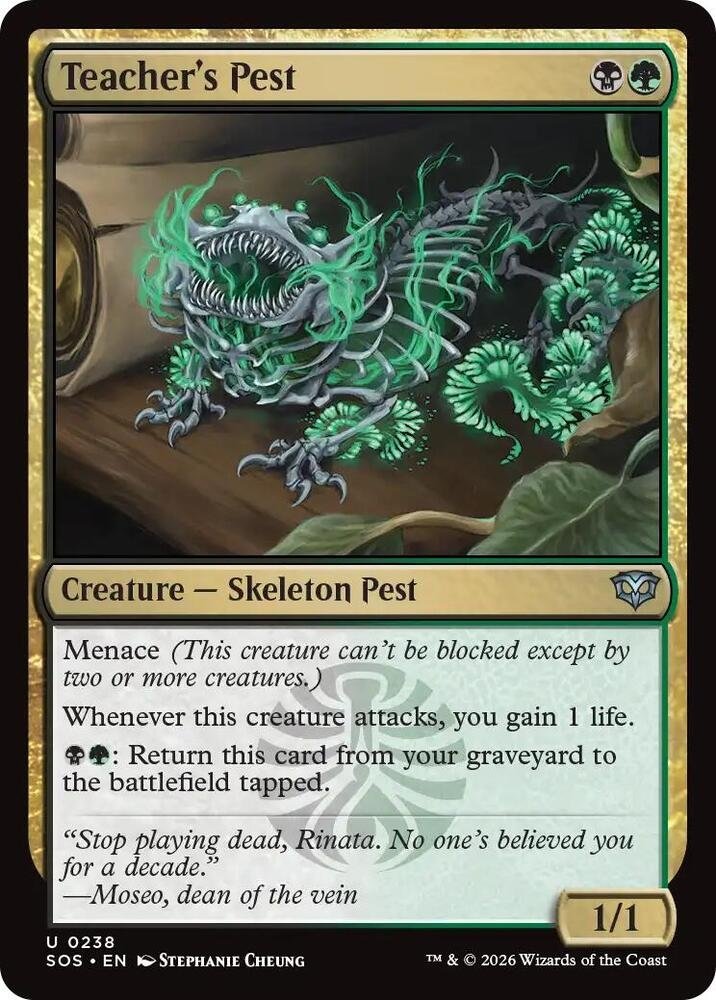
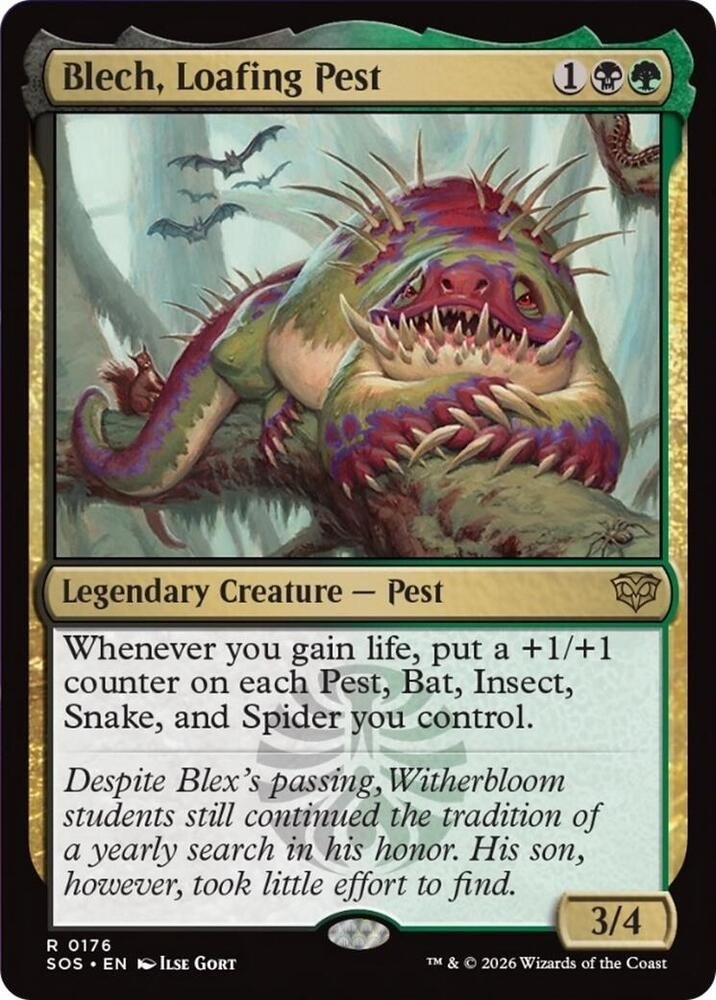
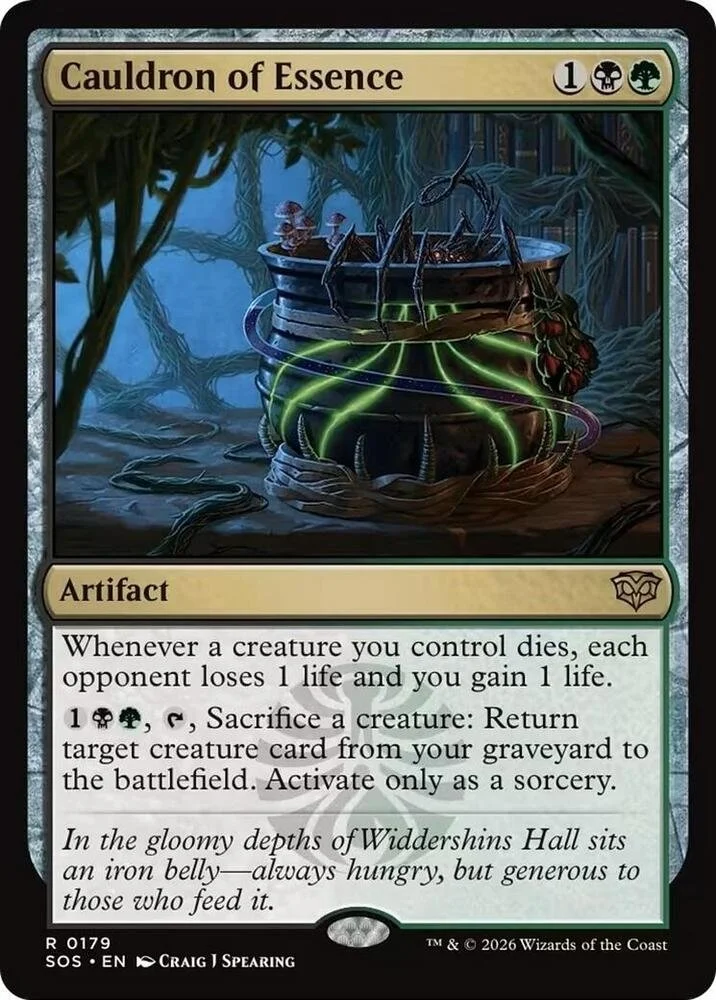
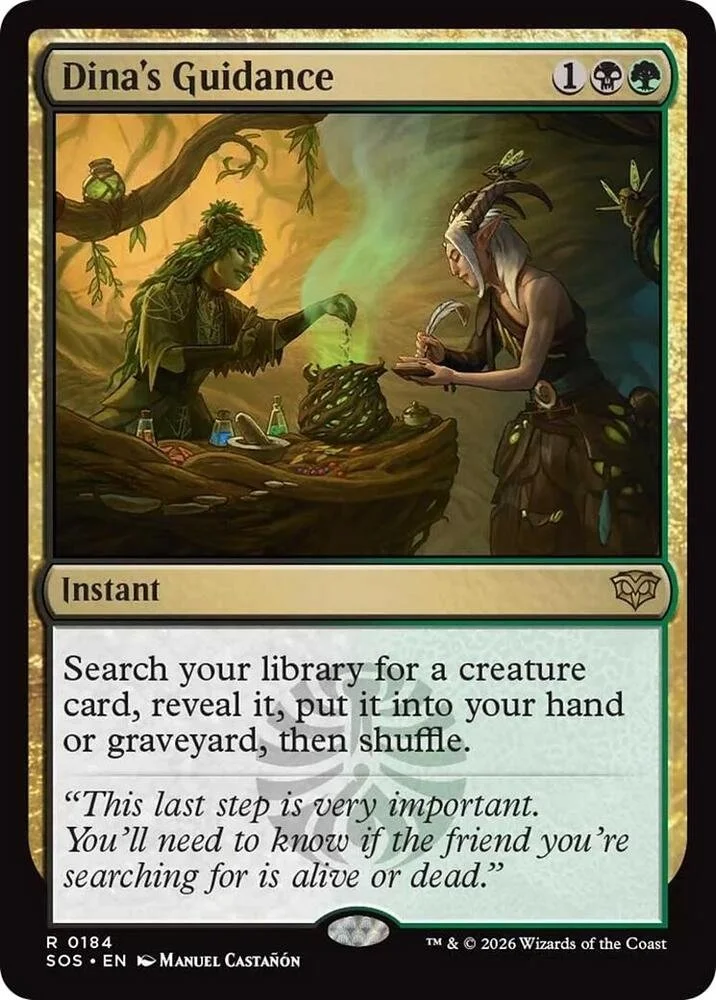
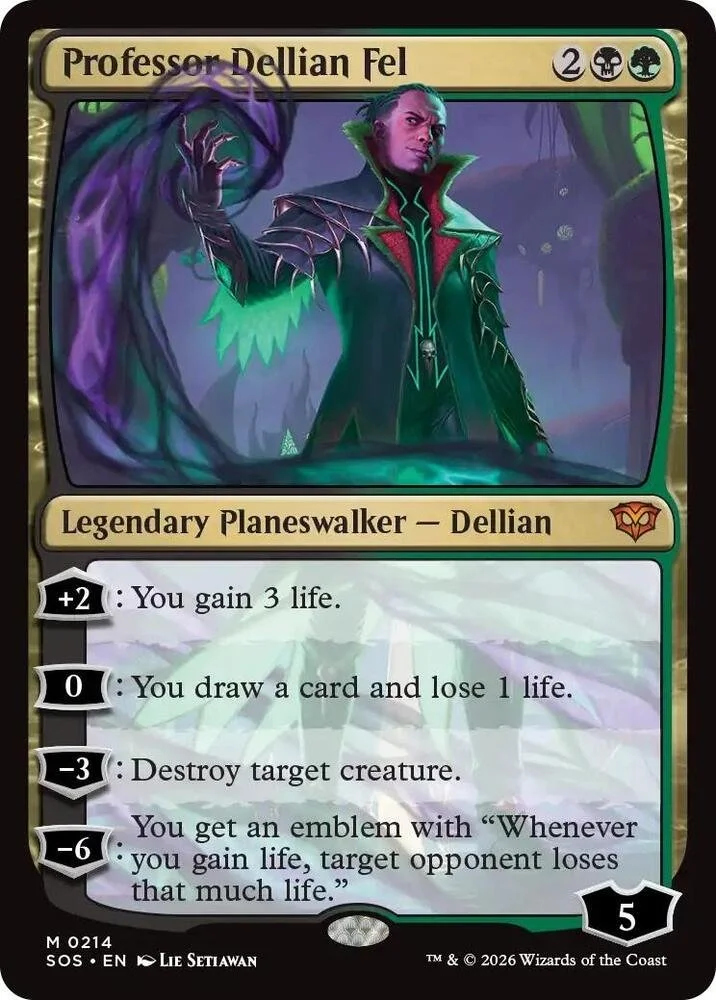
Witherbloom’s best multicolor cards all support the archetype’s core plan in some way. They either gain life, create sacrifice fodder, drain the opponent, recur creatures, or reward you for playing the long game.
Bogwater Lumaret (Common) - This is a great common for the archetype because it gives you a reliable lifegain trigger whenever a creature enters the battlefield. In a deck that wants Pest tokens and repeatable life gain, that can turn into a steady Infusion enabler very quickly.
Grapple with Death (Common) - This is a strong removal spell that also gains life, which is exactly what Witherbloom wants. The ability to hit artifacts is a nice bonus, especially in a Limited environment where certain utility artifacts can become major problems.
Lluwen, Exchange Student // Pest Friend (Uncommon) - Lluwen is a strong synergy piece because Pest Friend helps create the kind of bodies Witherbloom wants. Pest tokens are great in this deck because they gain life when they die, work well with sacrifice effects, and help keep your Infusion cards active.
Teacher’s Pest (Uncommon) - Teacher’s Pest is another excellent Pest synergy card, but what really makes it stand out is its ability to come back from the graveyard multiple times. That kind of recursion is perfect for Witherbloom. It gives you a repeatable resource for sacrifice effects, blocking, or simply keeping the board stocked.
Blech, Loafing Pest (Rare) - Blech is an awesome payoff for Pest-focused builds. If you have enough Pest token support, being able to mass-buff them can turn your board from a pile of small creatures into a real threat. This is the kind of rare that can quickly change the direction of a game if your deck is built to support it.
Cauldron of Essence (Rare) - Cauldron of Essence gives Witherbloom exactly what it wants: a sacrifice outlet that drains your opponent while gaining you life. That checks multiple boxes at once, triggering Infusion while also pushing your opponent closer to death. In the right deck, this can become a very frustrating engine to play against.
Dina’s Guidance (Rare) - Dina’s Guidance is a useful creature tutor that helps you find your best payoff or the exact creature you need for a given situation. In Sealed especially, where your strongest cards can matter a lot, having a way to search for them can be incredibly valuable.
Professor Dellian Fel (Mythic) - Professor Dellian Fel is a very scary planeswalker and a major reason to be in Witherbloom if you open him. Being able to destroy creatures immediately gives him strong board impact, and his -6 emblem can become a serious long-term problem for your opponent. If he sticks around, he can completely take over the game.
Best common cards for limited in Secrets of Strixhaven
The commons in Secrets of Strixhaven may not define the entire Limited format on their own, but there are still plenty of important role-players that help each archetype function. These are the cards that fill in the cracks, smooth out your game plan, and make your sealed or draft deck feel more consistent.
Some of these cards are strong because they directly support a school mechanic, while others are just good Limited cards that you will be happy to play in most decks. At prerelease especially, where your pool may not perfectly line up with one archetype, these commons can help bridge the gap.
White
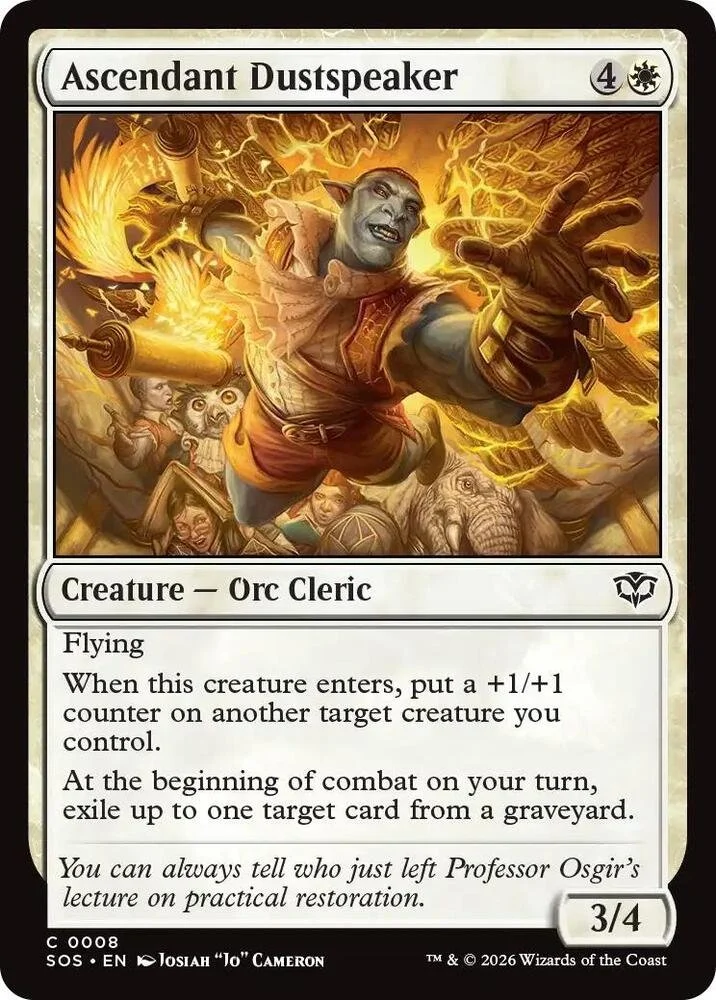
Ascendant Dustspeaker - Strong for Lorehold, giving you a repeatable way to exile cards from your graveyard and trigger graveyard-movement payoffs.
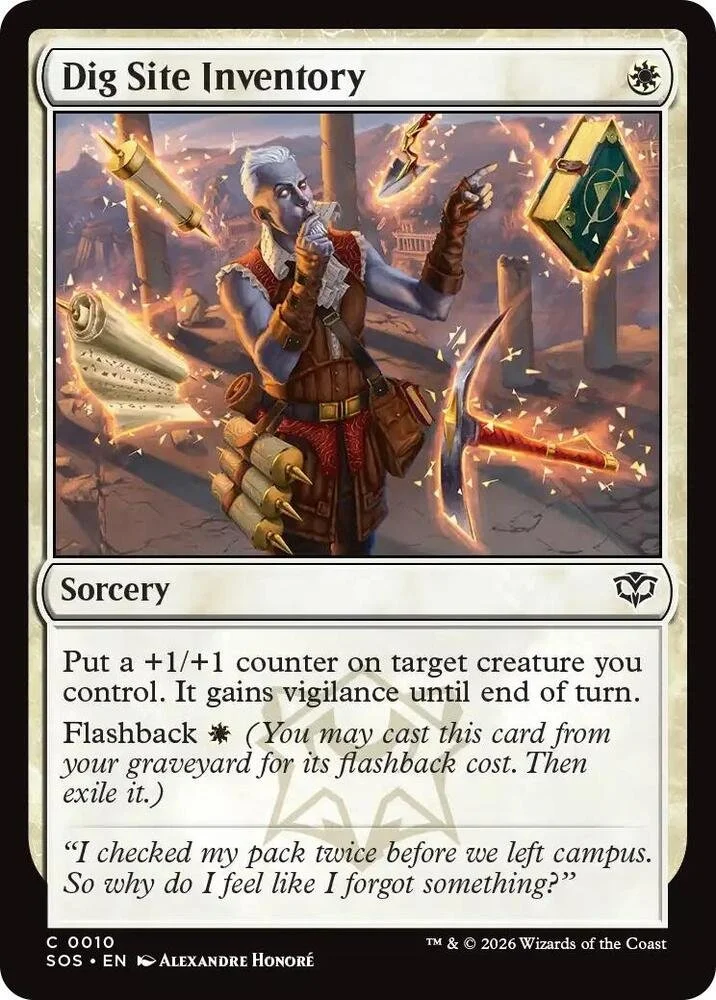
Dig Site Inventory - Great for both Lorehold and Silverquill. It targets a creature for Repartee, adds a counter, grants vigilance, and has Flashback for graveyard triggers.
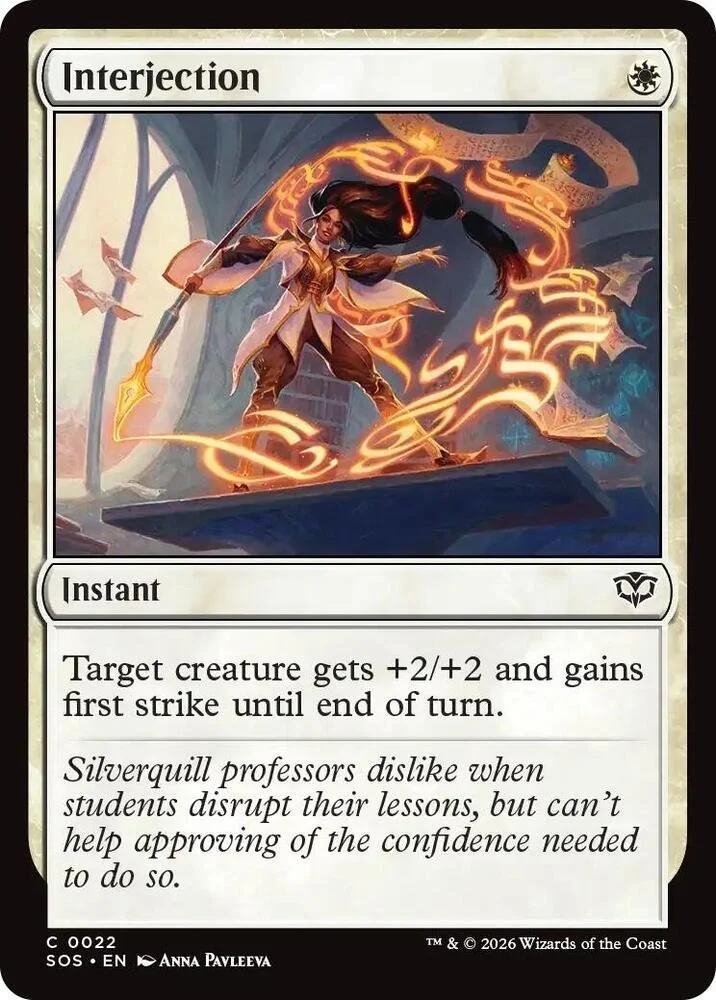
Interjection - A solid one-mana combat trick. It can protect a creature, push damage, or trigger Repartee in Silverquill.
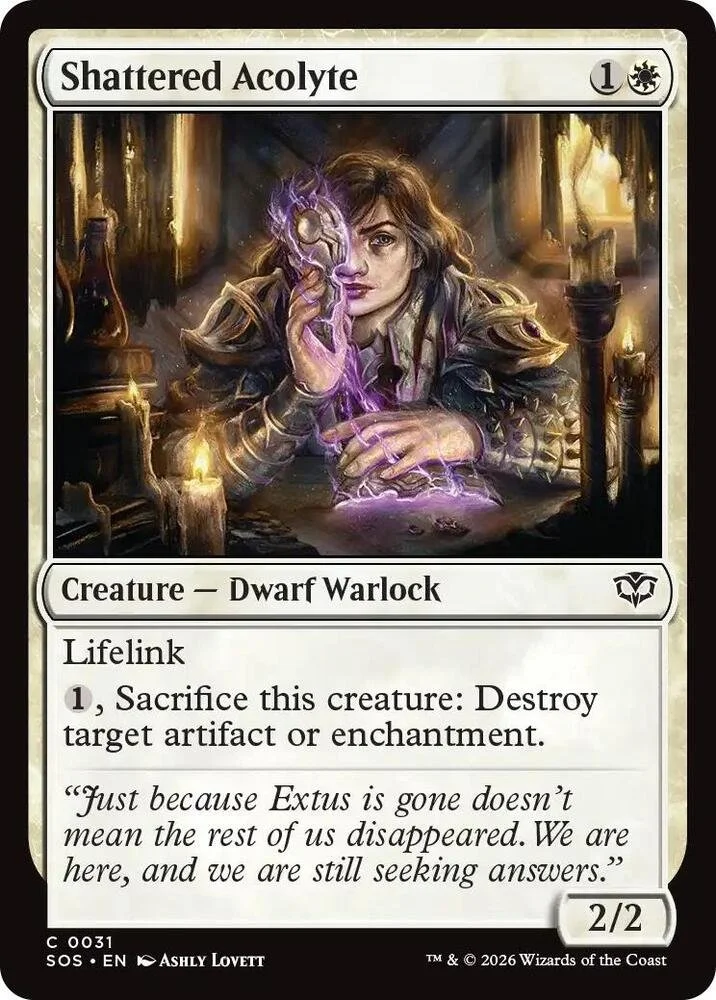
Shattered Acolyte - A useful creature that can be sacrificed to destroy artifacts or enchantments. Great sideboard card, and sometimes worth main-decking.
Blue
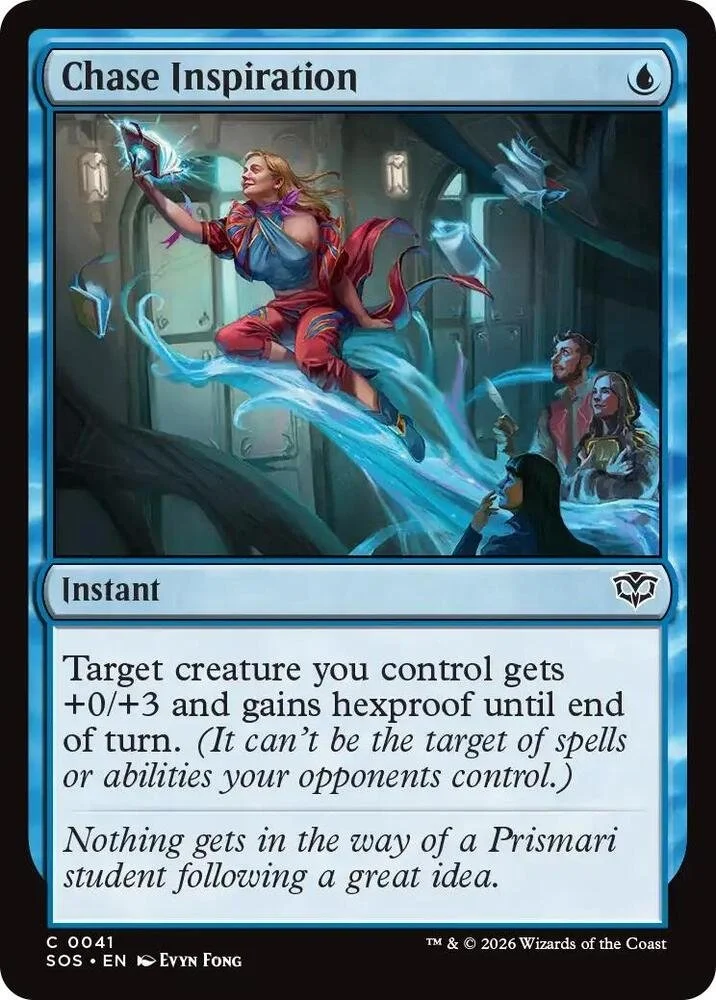
Chase Inspiration - A cheap protection spell or combat trick. Good for saving key creatures and triggering spell-based synergies.
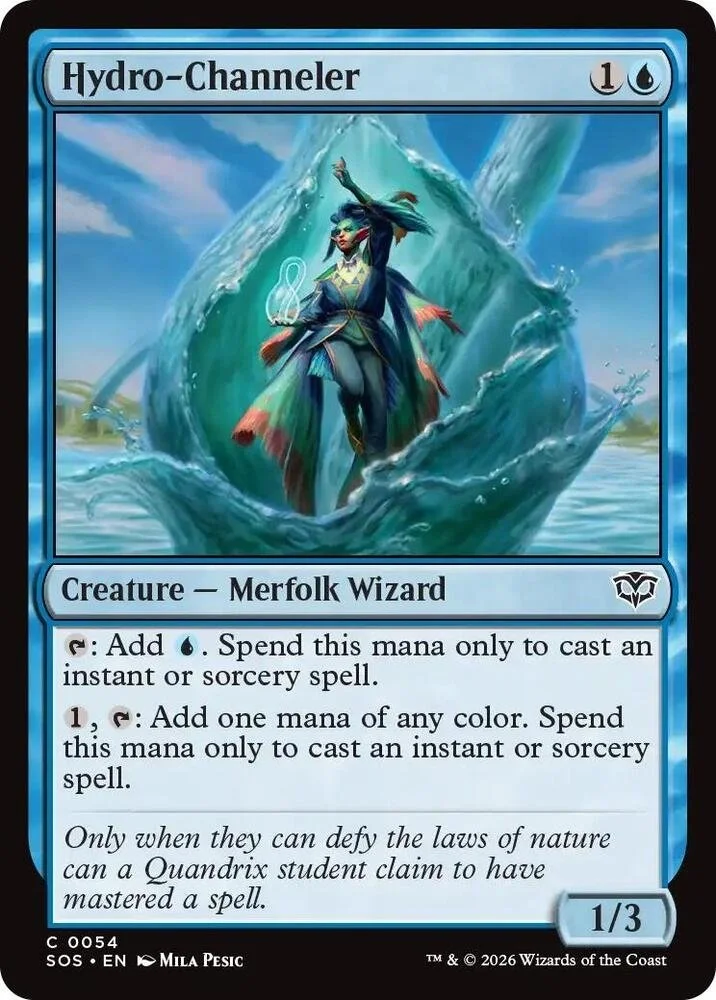
Hydro-Channeler - Strong for Prismari and Quandrix, giving you mana specifically for instants and sorceries.
Procrastinate - A flexible X-cost spell that works well with Prismari’s upgraded Opus triggers and Quandrix’s Increment creatures.
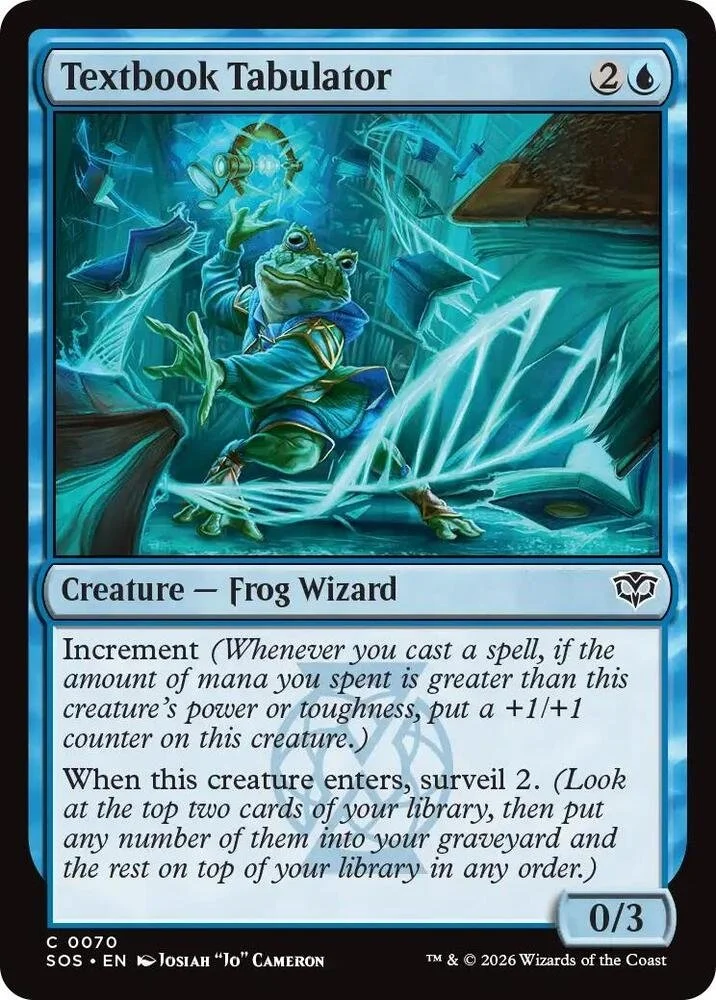
Textbook Tabulator - A good early Quandrix creature. Its low stats make Increment easy to trigger, and it can grow into a real threat.
Black
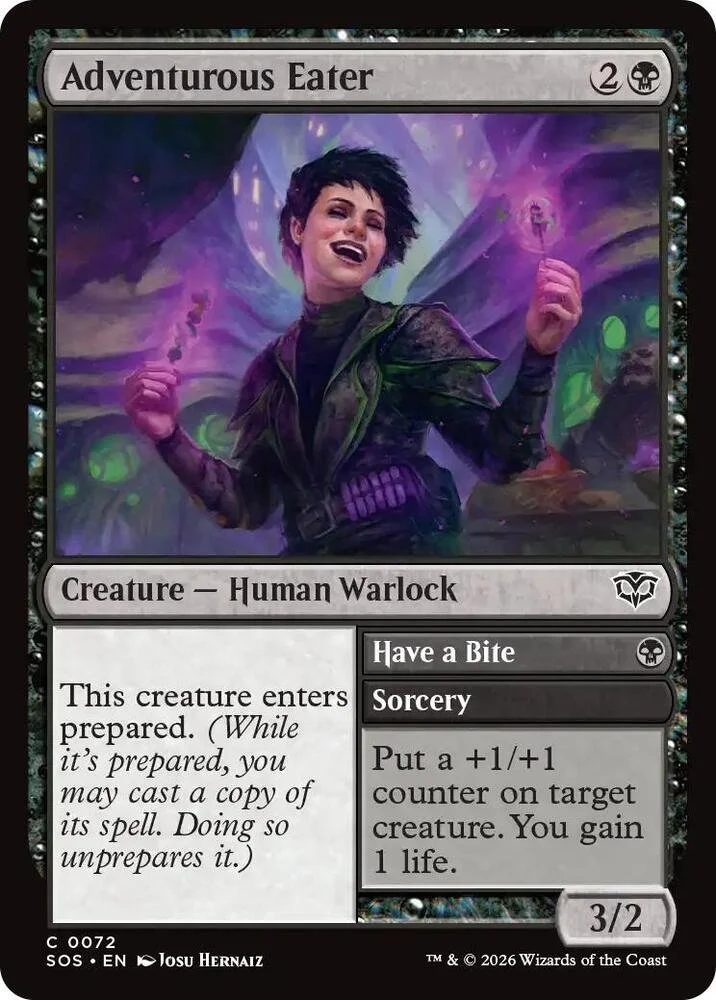
Adventurous Eater - Good for both Silverquill and Witherbloom. It targets a creature for Repartee and gains life for Infusion.
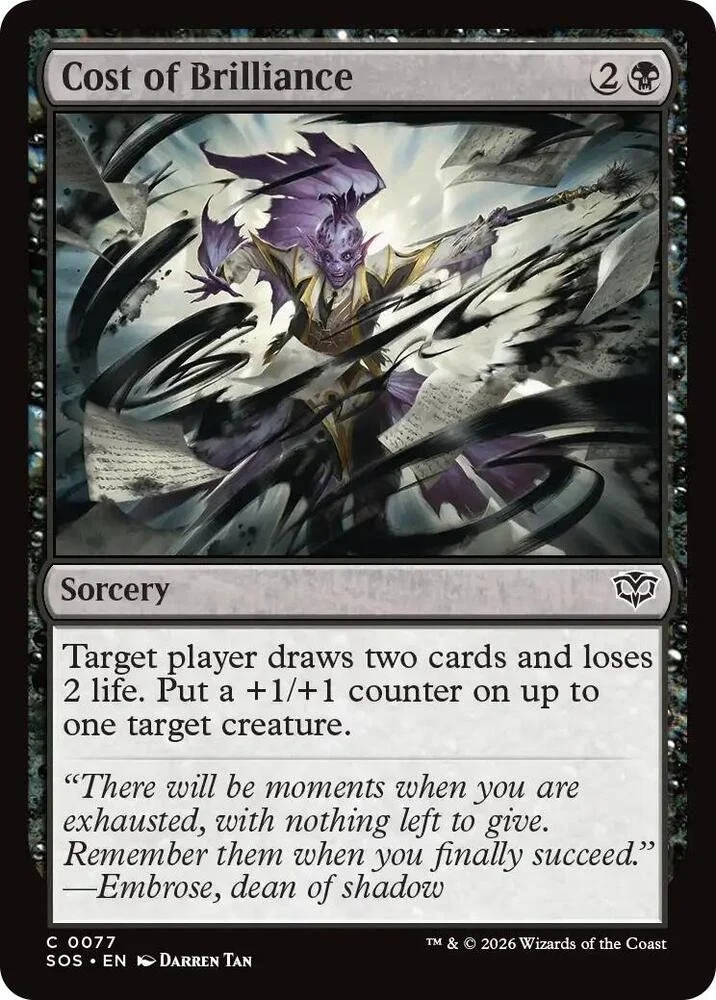
Cost of Brilliance - A nice Silverquill card that draws cards while also triggering Repartee.
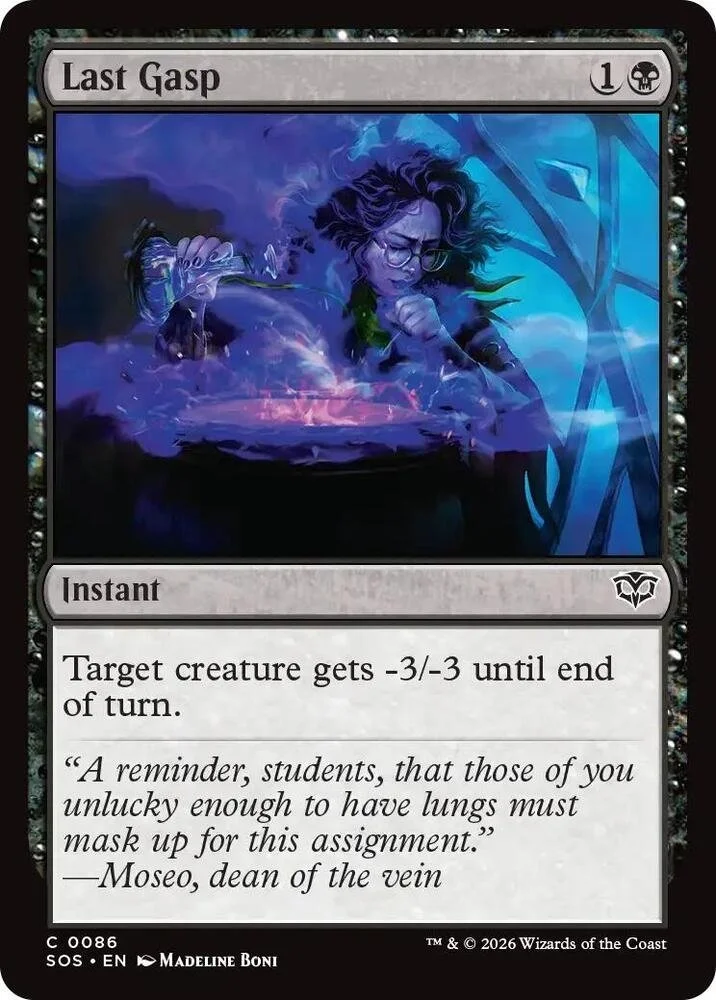
Last Grasp - A flexible black trick that can win combat, protect a creature, or function as removal.
Wander Off - Useful instant-speed exile removal, especially against Lorehold and other graveyard-focused decks.
Red
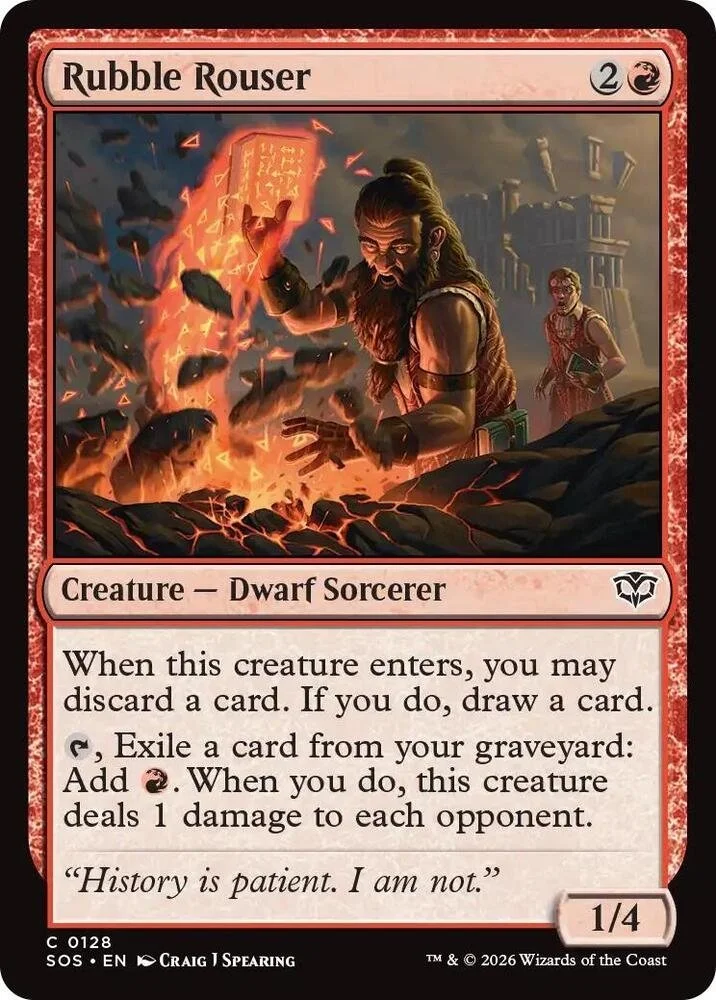
Rubble Rouser - Good for Prismari and Lorehold, offering ramp while also helping trigger graveyard-movement payoffs.
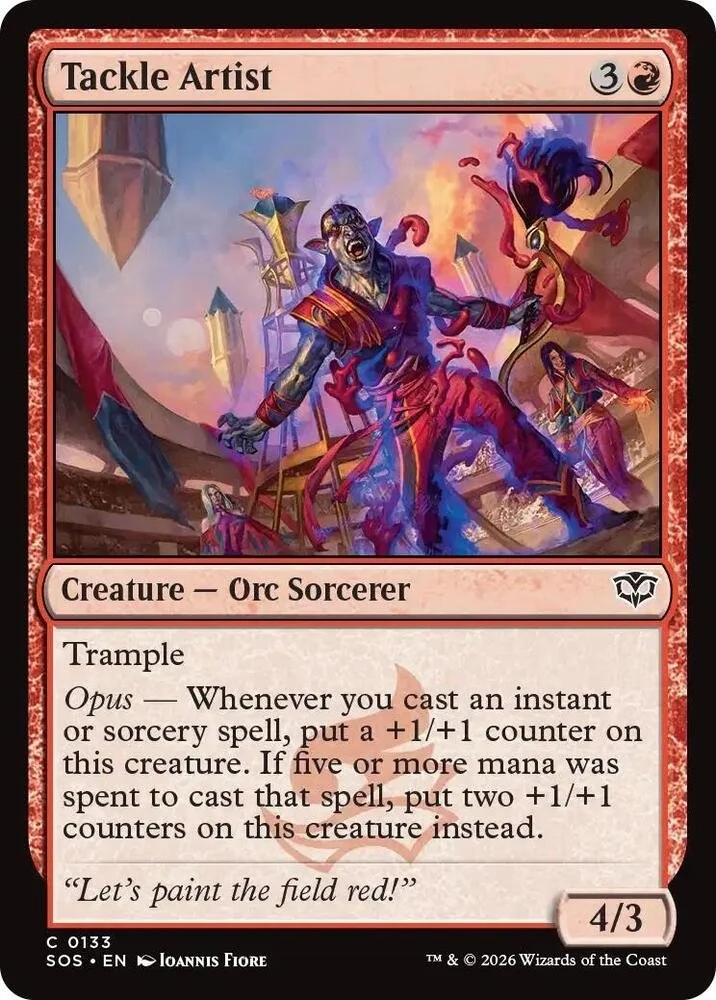
Tackle Artist - A strong Prismari creature that grows as you cast spells, making it a solid threat if left unanswered.
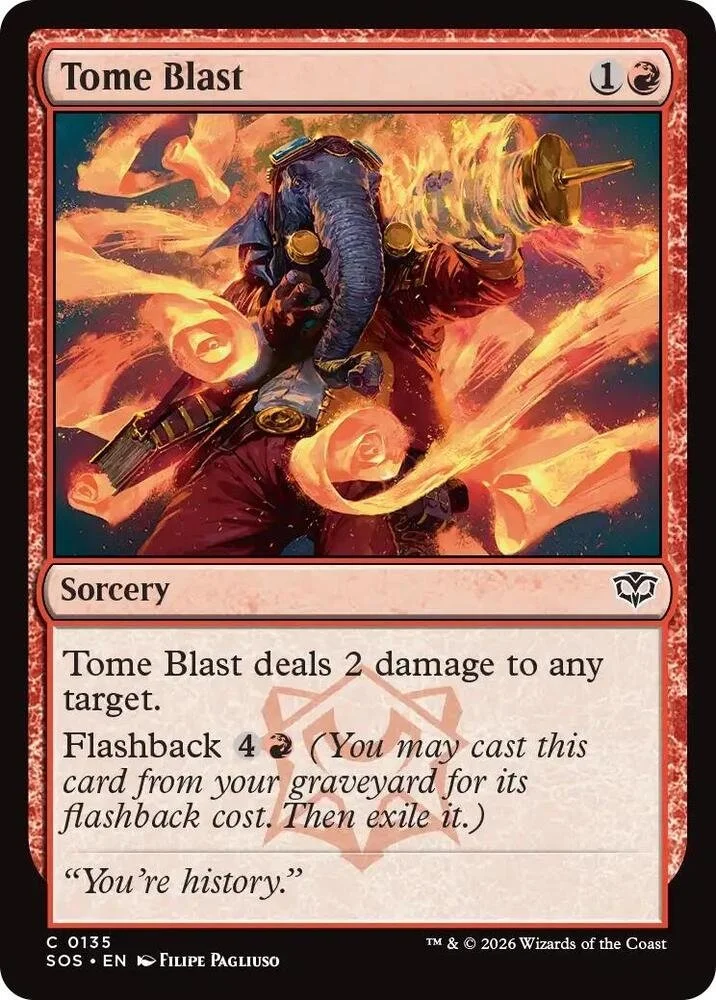
Tome Blast - Good Lorehold support thanks to Flashback, giving you both repeated value and a graveyard trigger.
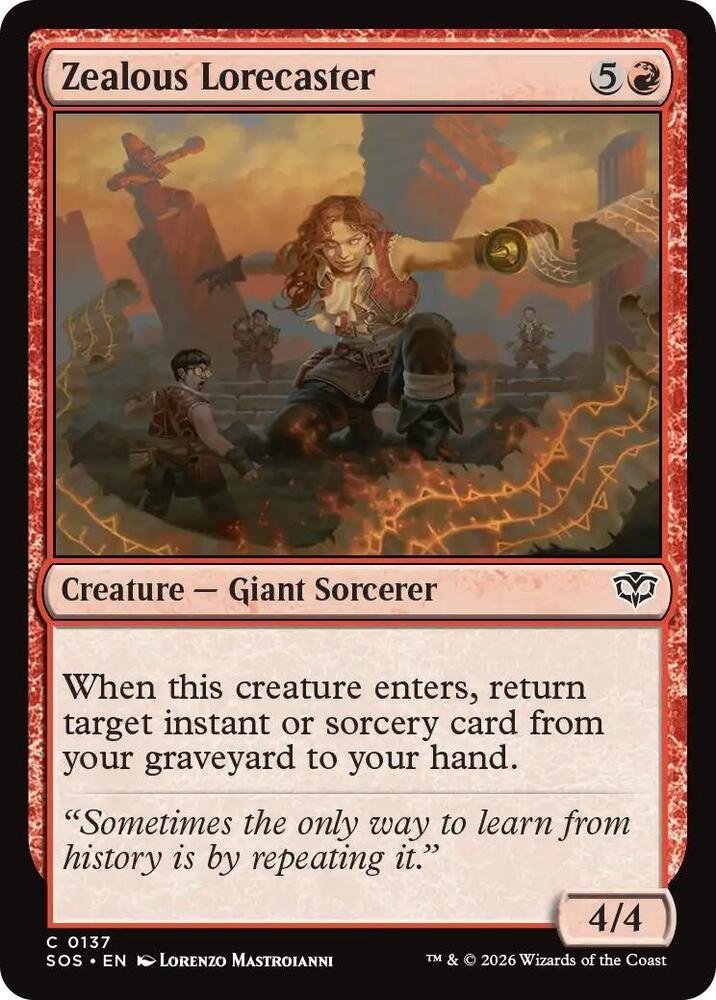
Zealous Lorecaster - A useful Lorehold card that brings back instants or sorceries while triggering graveyard movement.
Green
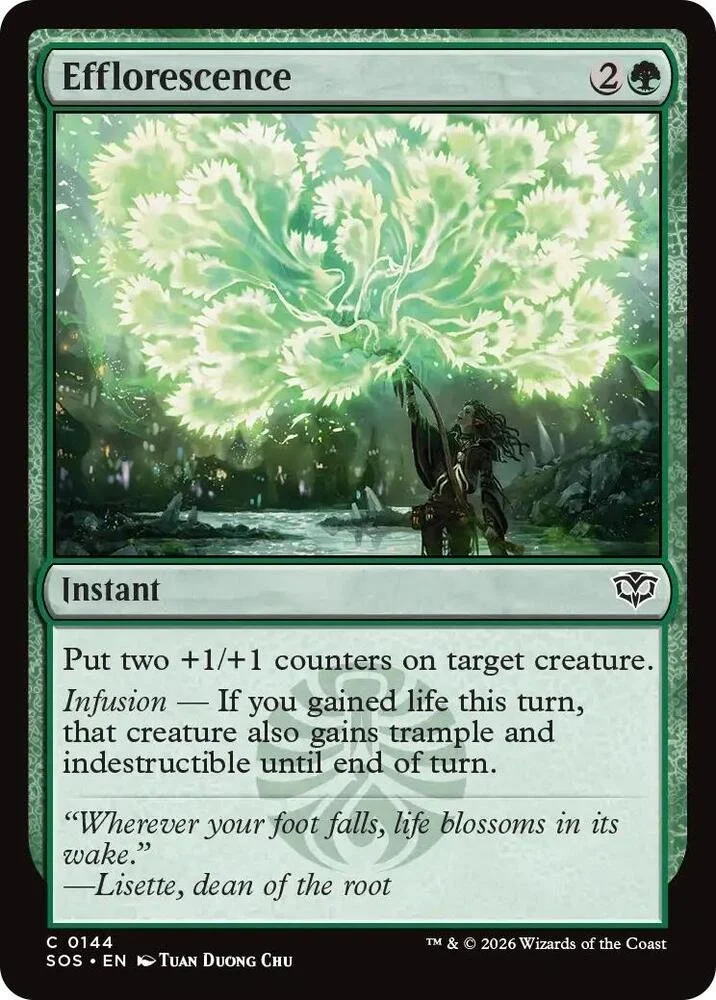
Efflorescence - A strong Witherbloom combat trick that can help win combat while also turning on Infusion.
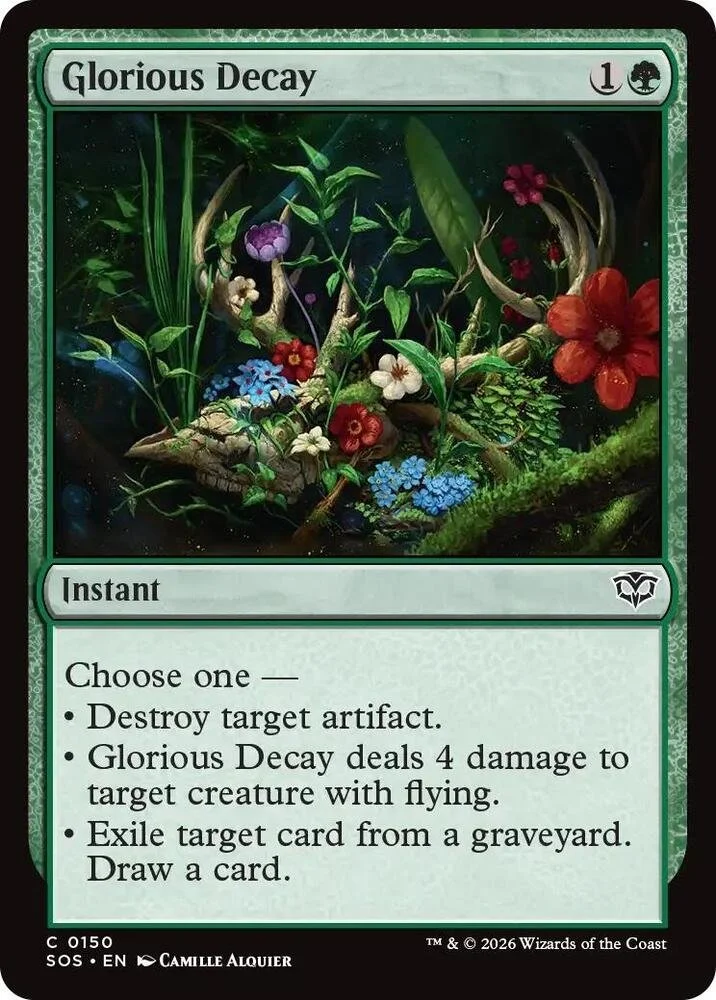
Glorious Decay - A flexible green answer that can remove artifacts, deal with flyers, or draw a card.
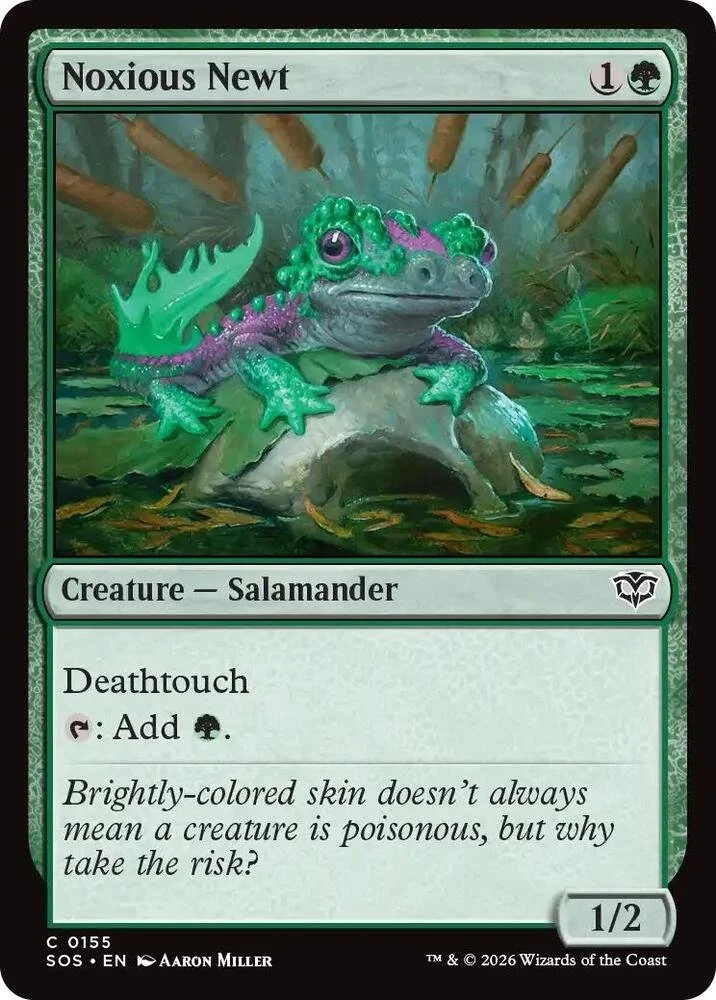
Noxious Newt - A great generic common. Deathtouch makes it annoying in combat, and the mana ability helps ramp.
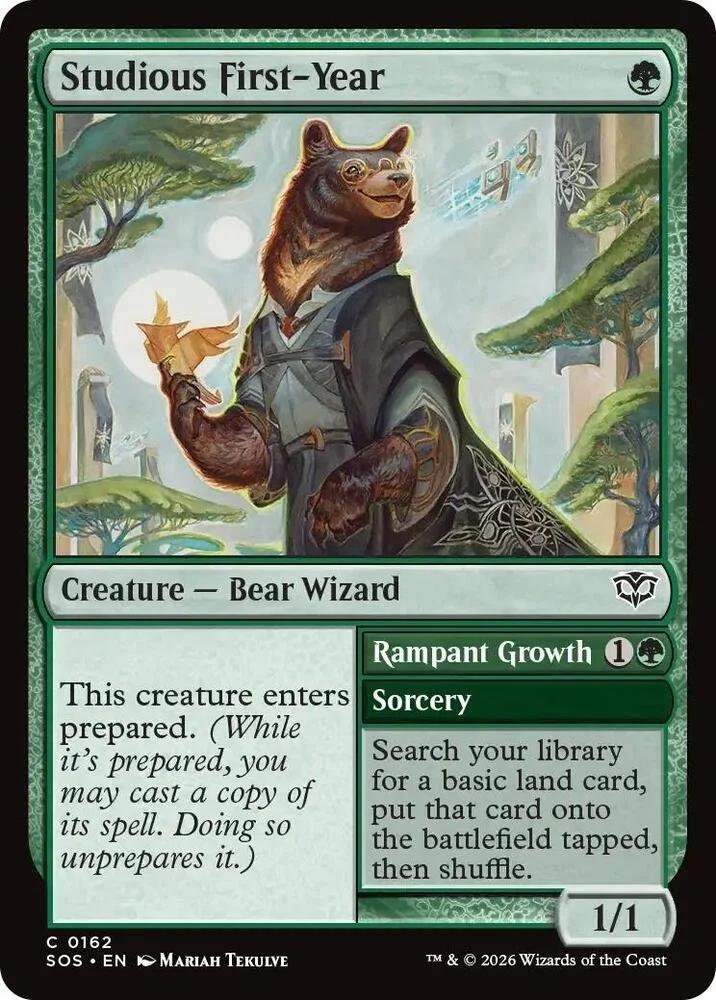
Studious First-Year - A solid Prepared creature that can ramp or fix your mana with a Rampant Growth-style effect.
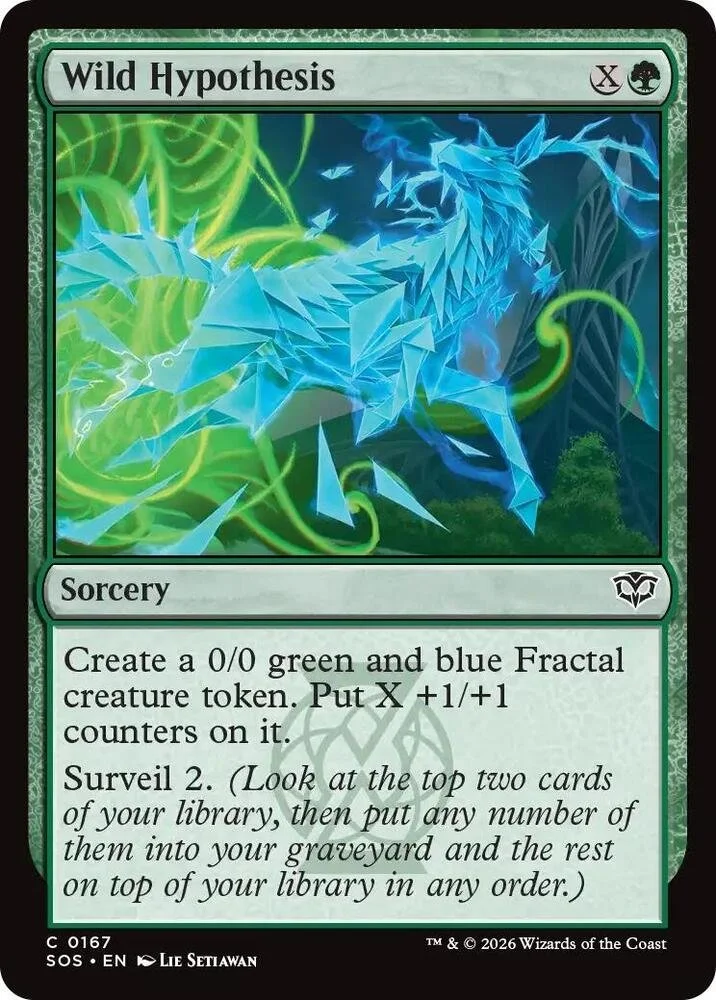
Wild Hypothesis - Good for Quandrix as a scalable X-cost spell that can trigger Increment and create a solid threat.
Best uncommon cards for limited in Secrets of Strixhaven
Uncommon cards are where the archetype mechanics really start to show up and where your Limited deck can begin to take a clearer shape. While commons usually help fill out your curve and support your basic game plan, uncommons are more likely to give you stronger payoffs, repeatable synergy, or cards that actively pull you toward one of the five schools.
These cards can benefit from the other spells you cast, support your main strategy, and often help push you one way or another during draft or sealed deckbuilding. If you open a strong uncommon early, it may be worth building around, especially if it lines up with one of the set’s major mechanics like Flashback, Opus, Increment, Infusion, or Repartee.
White
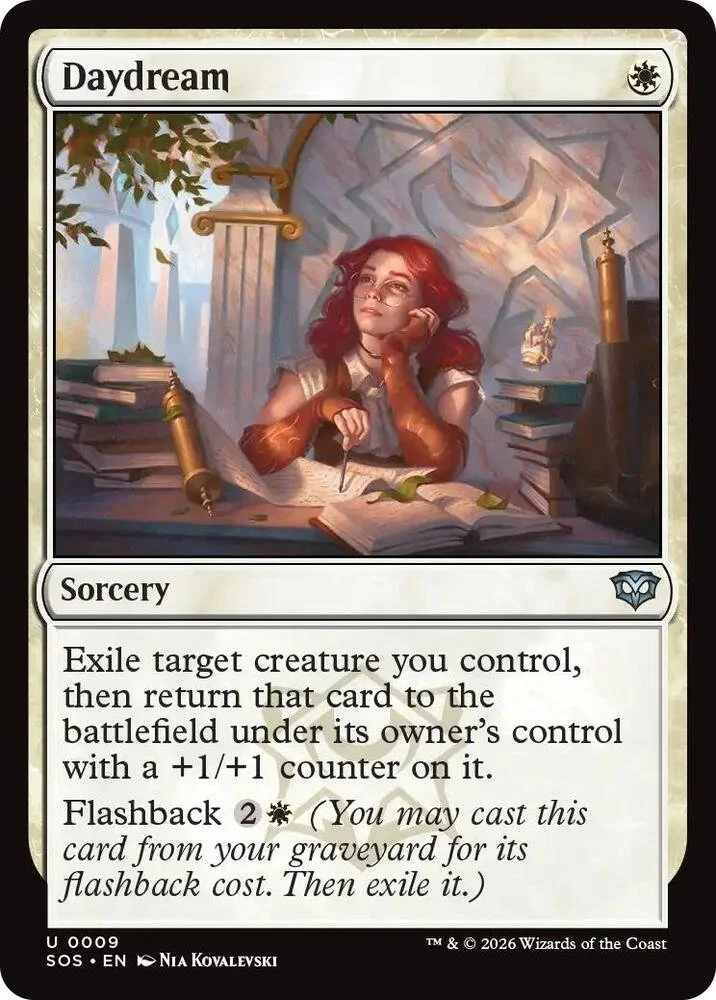
Daydream - Good for both Lorehold and Silverquill. A cheap creature blink spell that can retrigger ETB effects, trigger Repartee, and later use Flashback for graveyard movement.
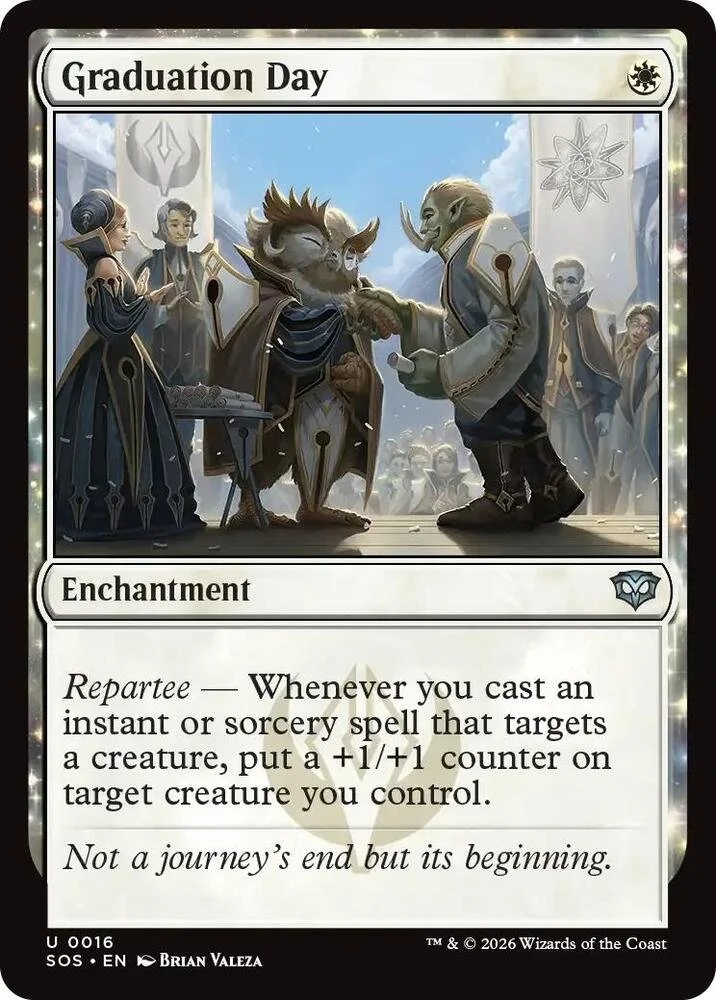
Graduation Day - Generic good uncommon. It can trigger Repartee, but even outside Silverquill, your instants and sorceries are often targeting creatures anyway, making the free +1/+1 counters useful.
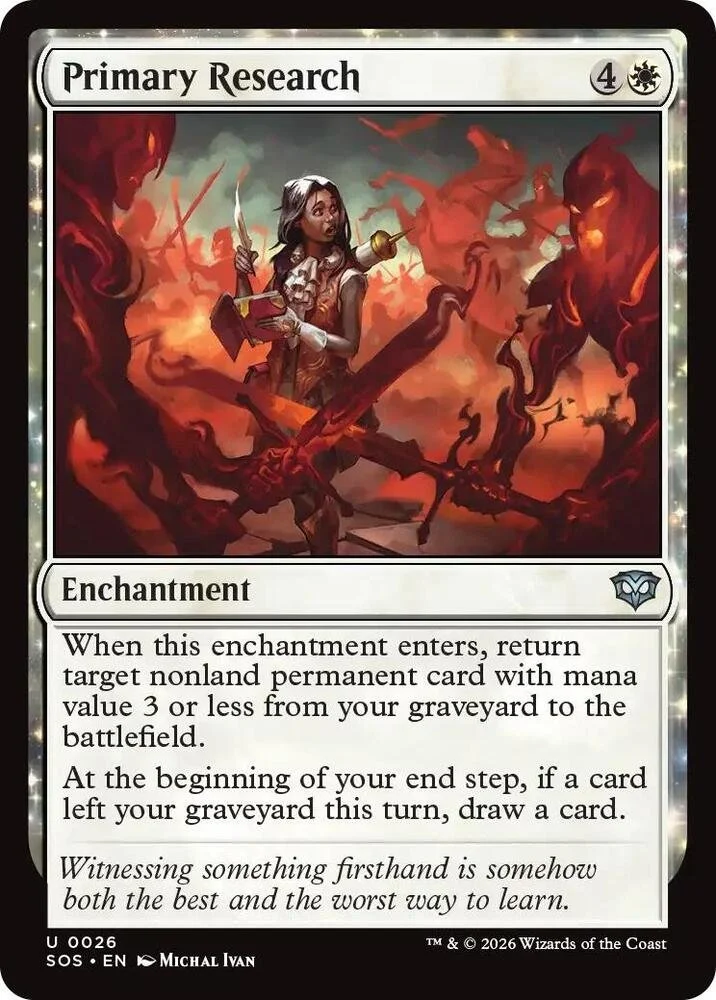
Primary Research - Strong for Lorehold as a graveyard-movement payoff. If you’re already exiling, flashing back, or recurring cards, this helps reward that plan.
Blue
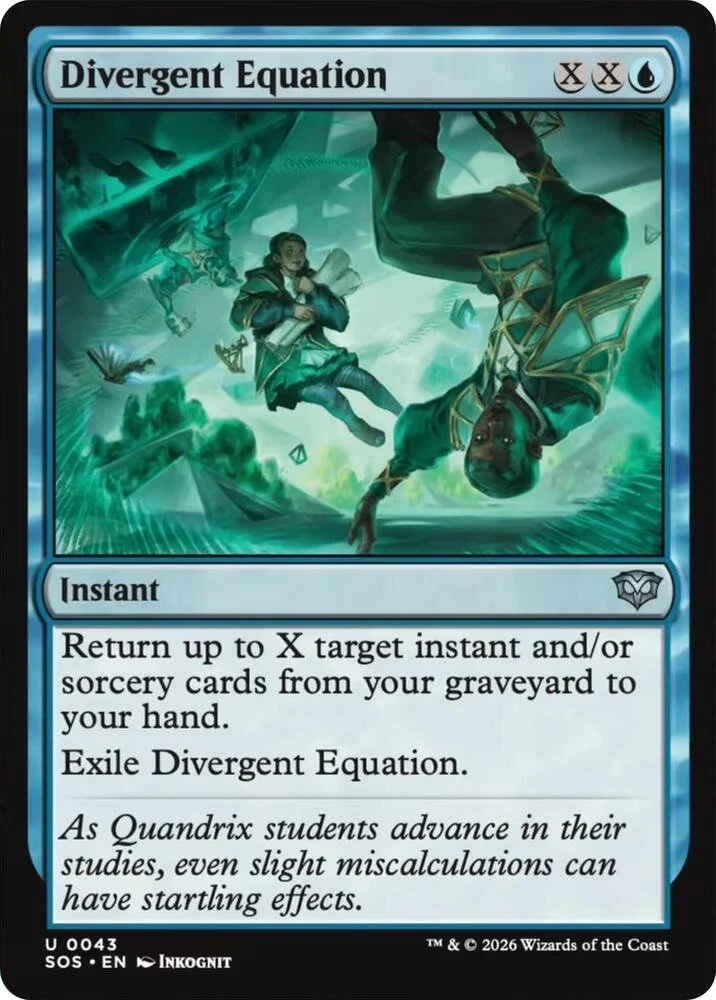
Divergent Equation - Good for Prismari and Quandrix. The X-cost helps trigger upgraded Opus or Increment, while returning instants and sorceries to your hand keeps the value going.
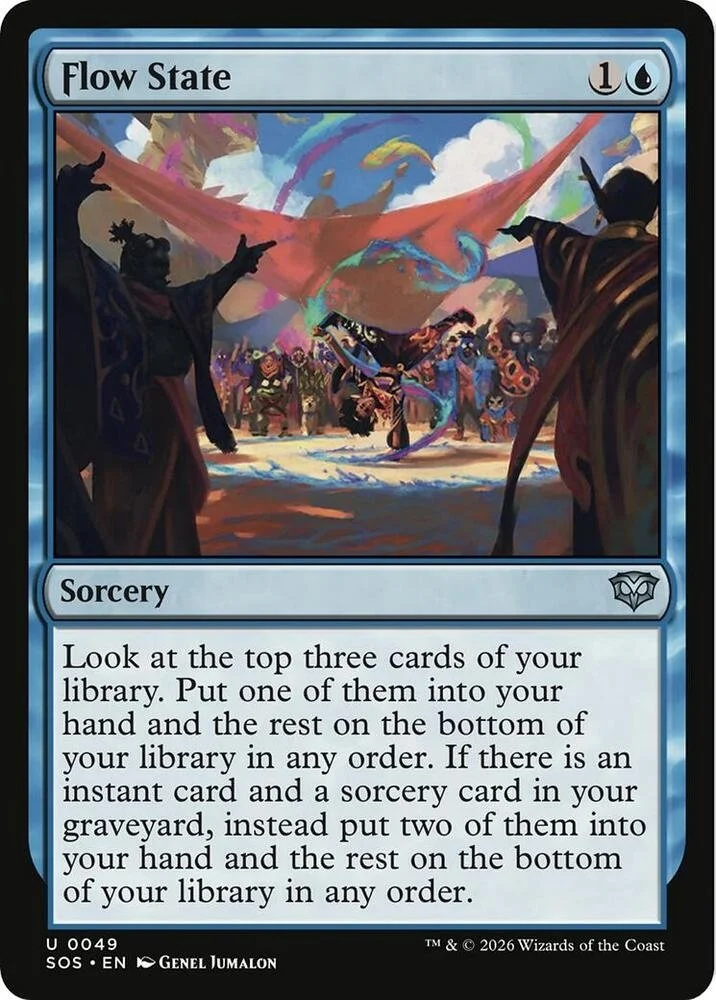
Flow State - Generic good, but better in Prismari. It gives card advantage and has an Opus-style payoff that rewards you for casting bigger spells.
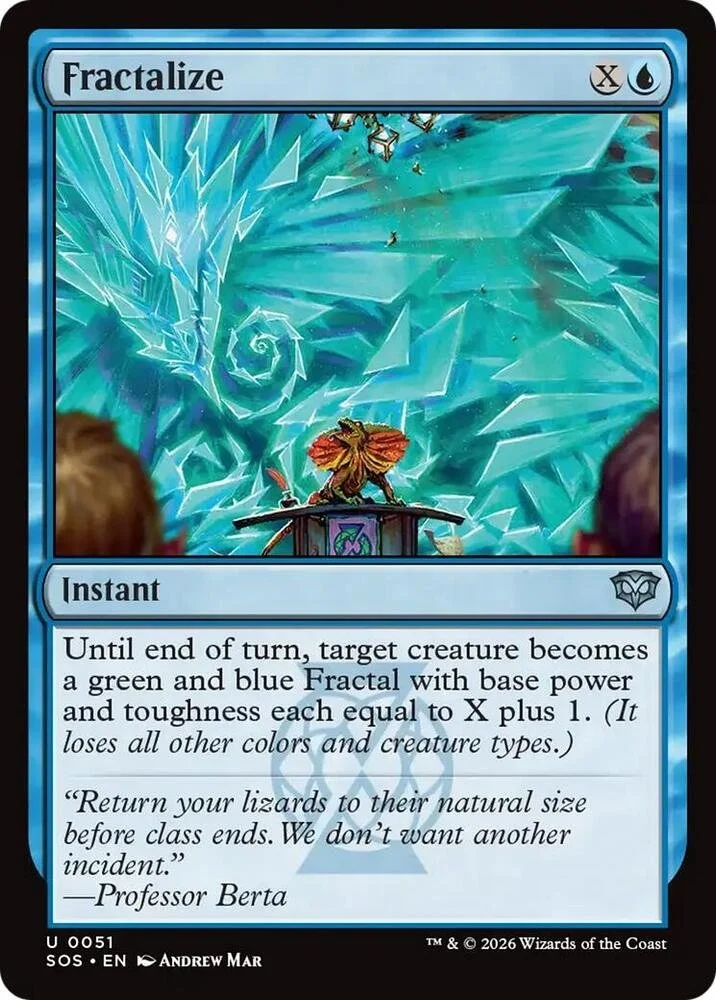
Fractalize - Good for Quandrix. The X-cost can trigger Increment, and turning a creature into a Fractal can help push damage or create a surprise threat.
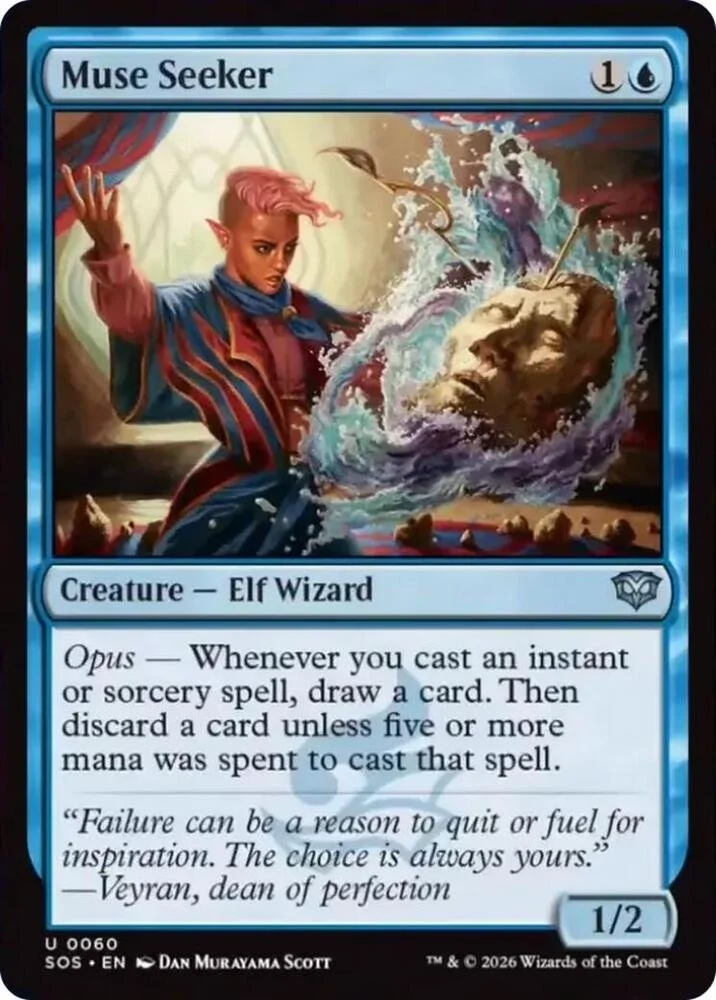
Muse Seeker - Good for Prismari. A clean Opus payoff that helps turn your spellcasting into card draw.
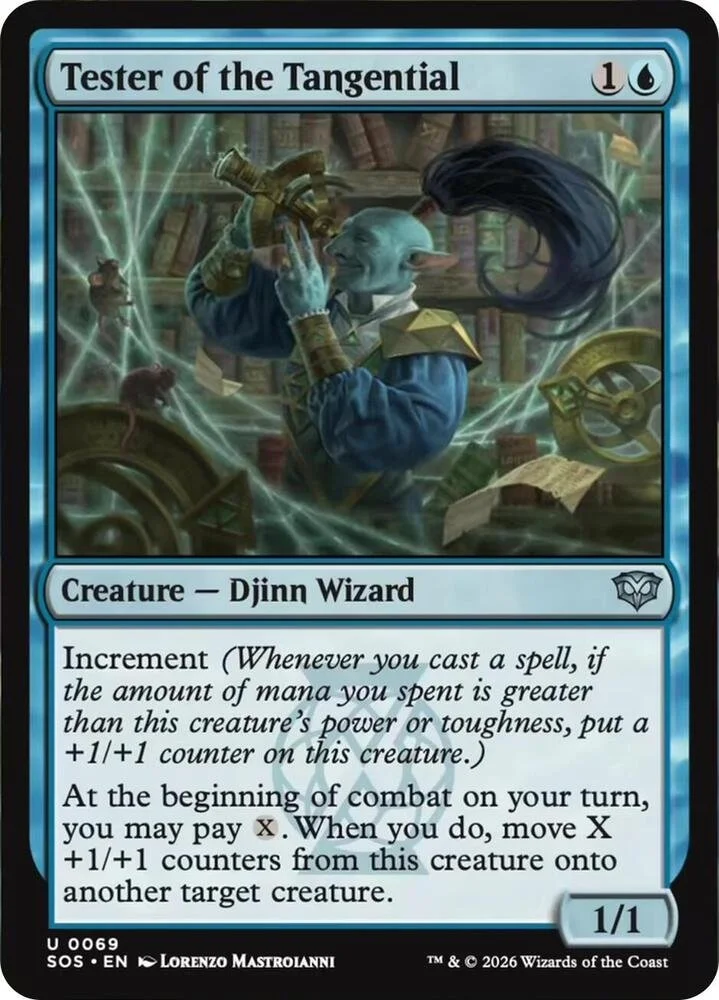
Tester of the Tangenital - Good for Quandrix. It has an easy Increment trigger early, and once it gets too big, you can move counters off it to reset its Increment value.
Black
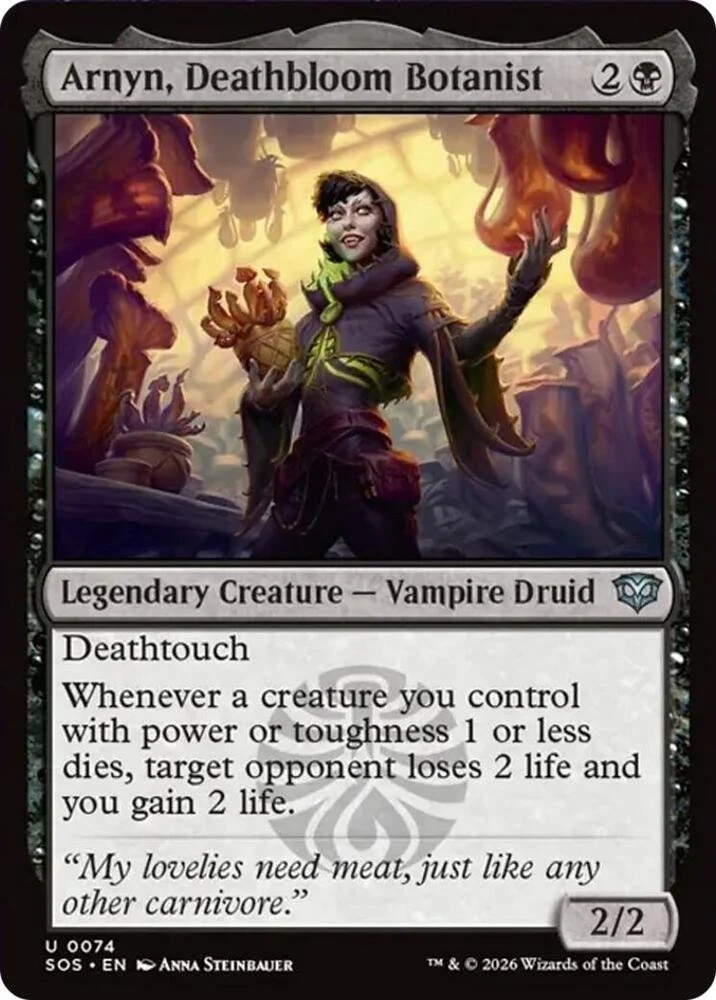
Arnyn, Deathbloom Botanist - Good for Witherbloom. With Pest tokens and other small creatures, you should have plenty of 1-toughness creatures dying to drain your opponent and gain life.
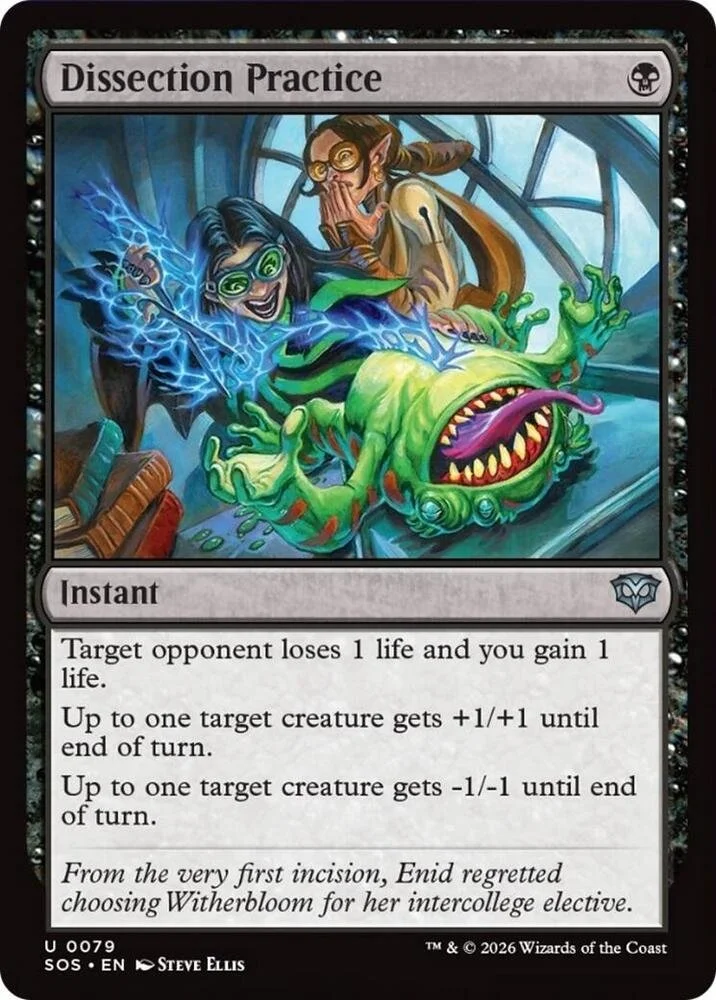
Dissection Practice - Good for Witherbloom and Silverquill. It targets two creatures for Repartee and gains life to help turn on Infusion.
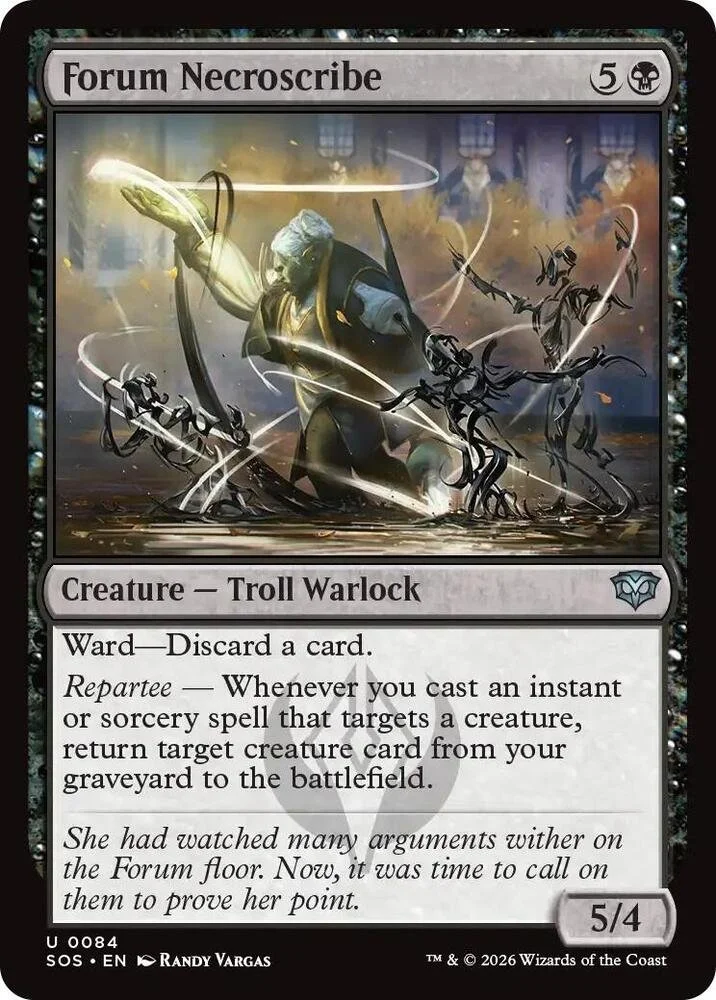
Forum Necroscribe - Good for Silverquill. Its Repartee trigger can return cards from your graveyard, helping the deck keep resources flowing.
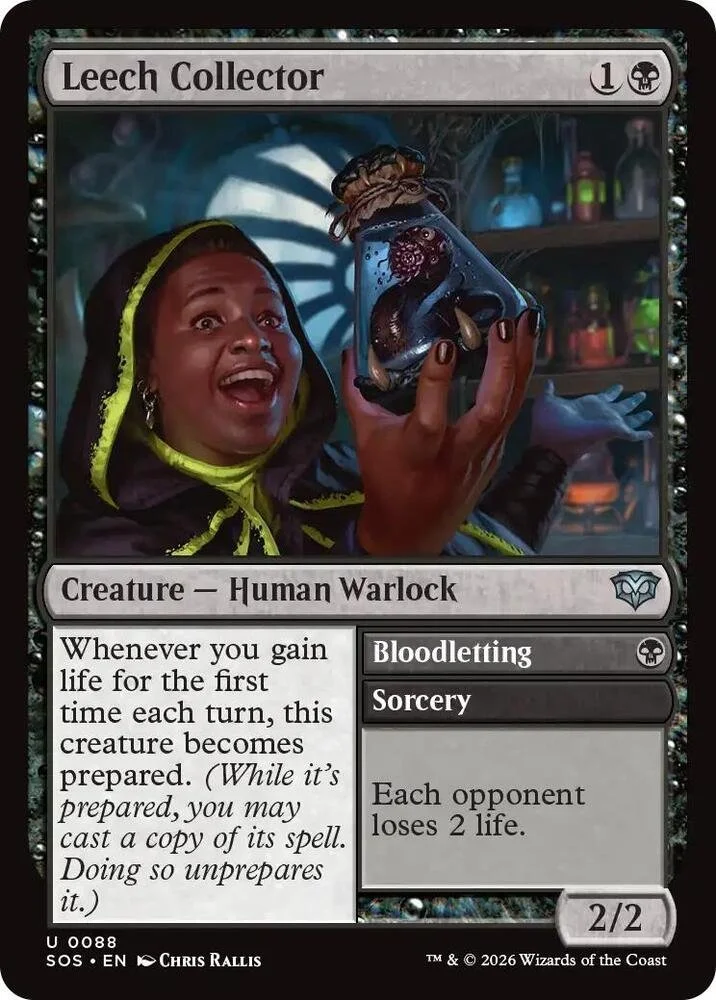
Leech Collector // Bloodletting - Good for Witherbloom. It prepares whenever you gain life, and its Prepared spell helps drain your opponent out over time.
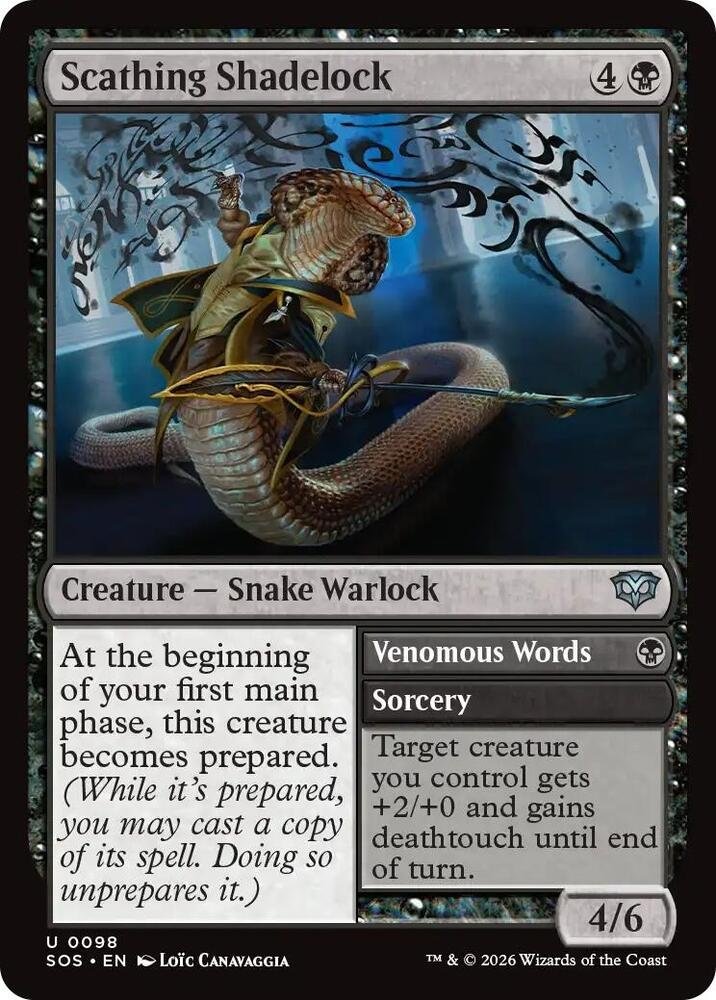
Scathing Shadelock // Venomous Words - Good for Silverquill. Its one-mana Prepared spell makes Repartee easy to trigger, and it prepares for free every turn.
Red
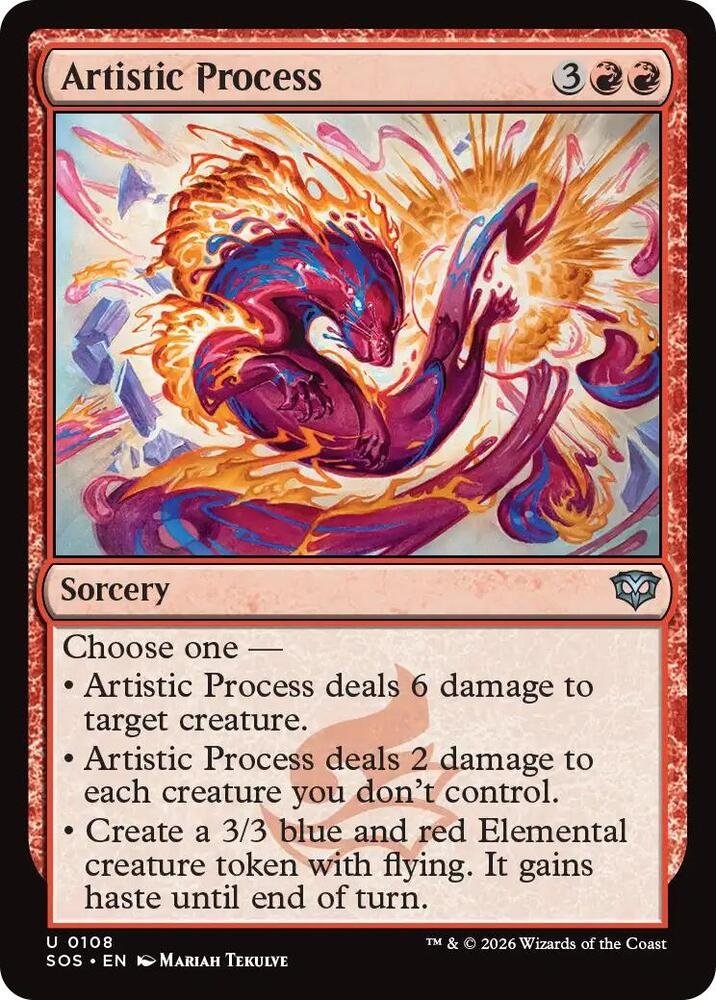
Artistic Process - Good for Prismari. It helps trigger upgraded Opus and can create a strong board advantage when timed well.
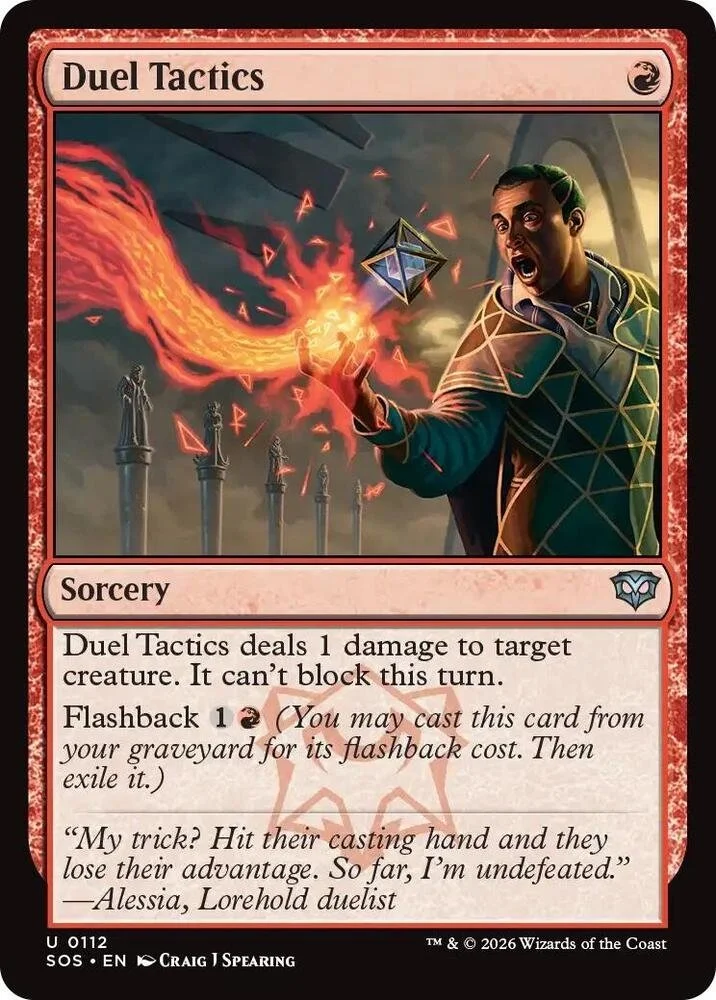
Duel Tactics - Good for Lorehold. A control spell that stops a creature from blocking, with Flashback to give you extra value and a graveyard trigger.
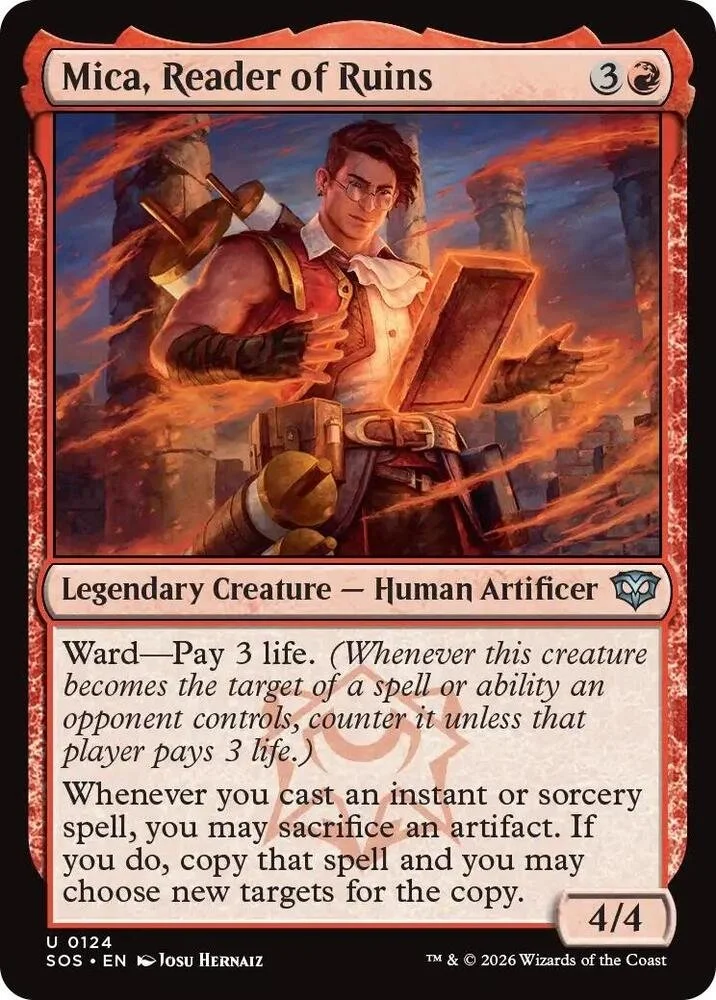
Mica, Reader of Runes - Good for Lorehold and Prismari. Copying an instant or sorcery is strong, and sacrificing an artifact can help fill the graveyard if it isn’t a token.
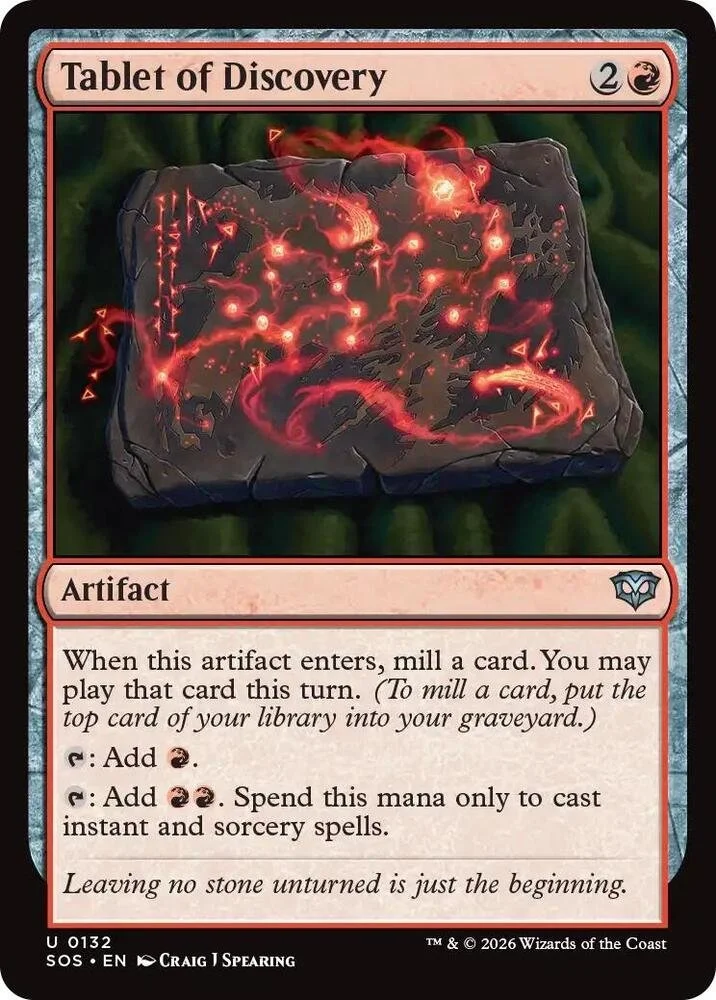
Tablet of Discovery - Generic good, but best for Lorehold. It mills a card, lets you play it from your graveyard, triggers graveyard payoffs, and also taps for mana.
Green
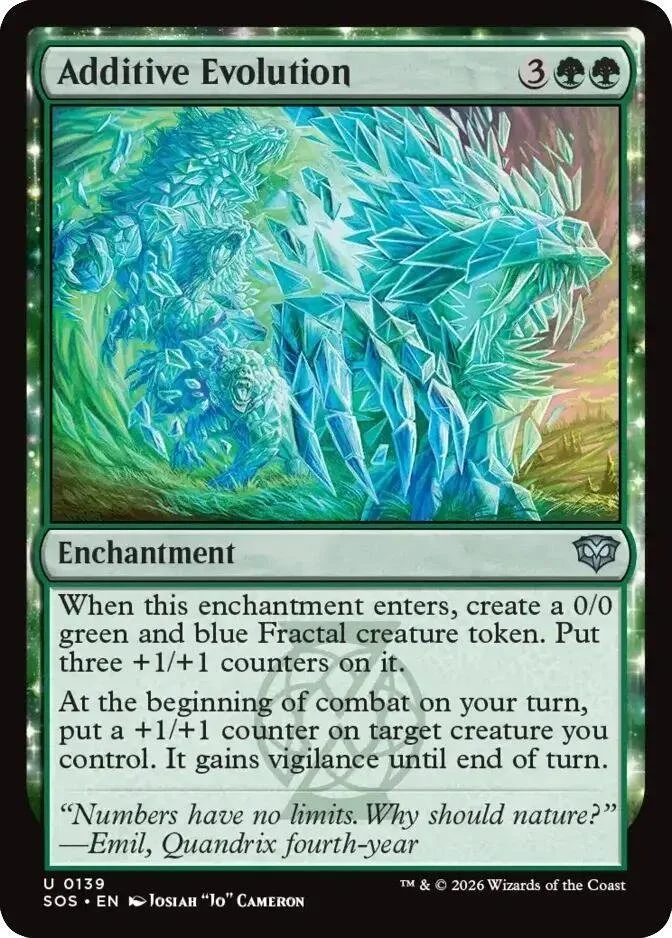
Additive Evolution - Good for Quandrix. It creates a Fractal, triggers Increment, and can put a counter on a creature every turn.
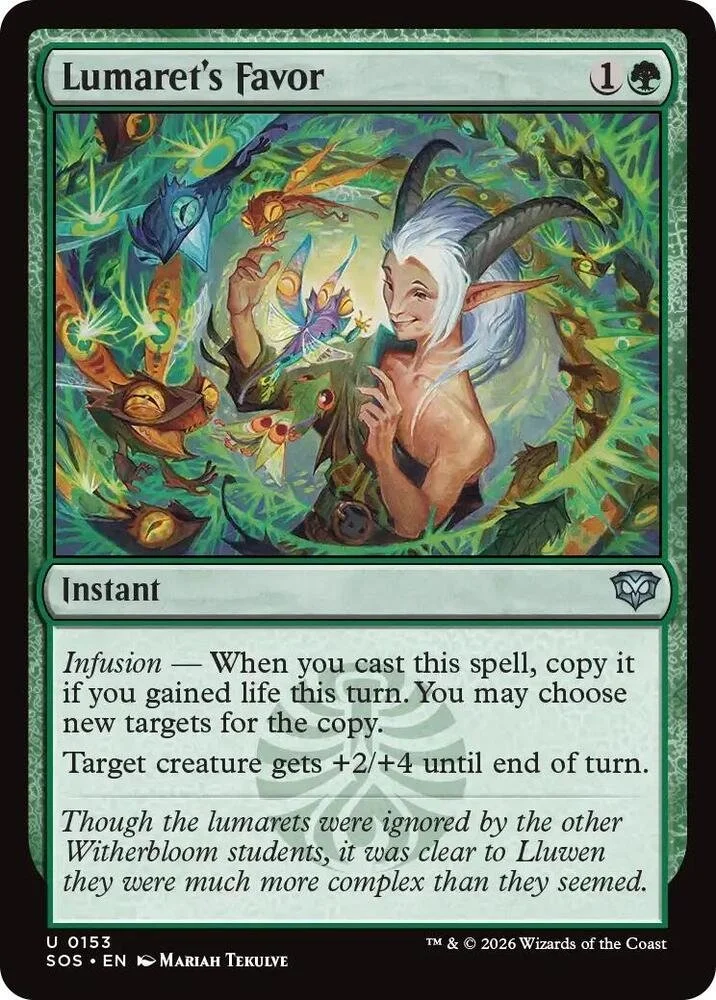
Lumaret’s Favor - Good for Witherbloom. A useful combat trick with an Infusion ability that rewards you for gaining life.
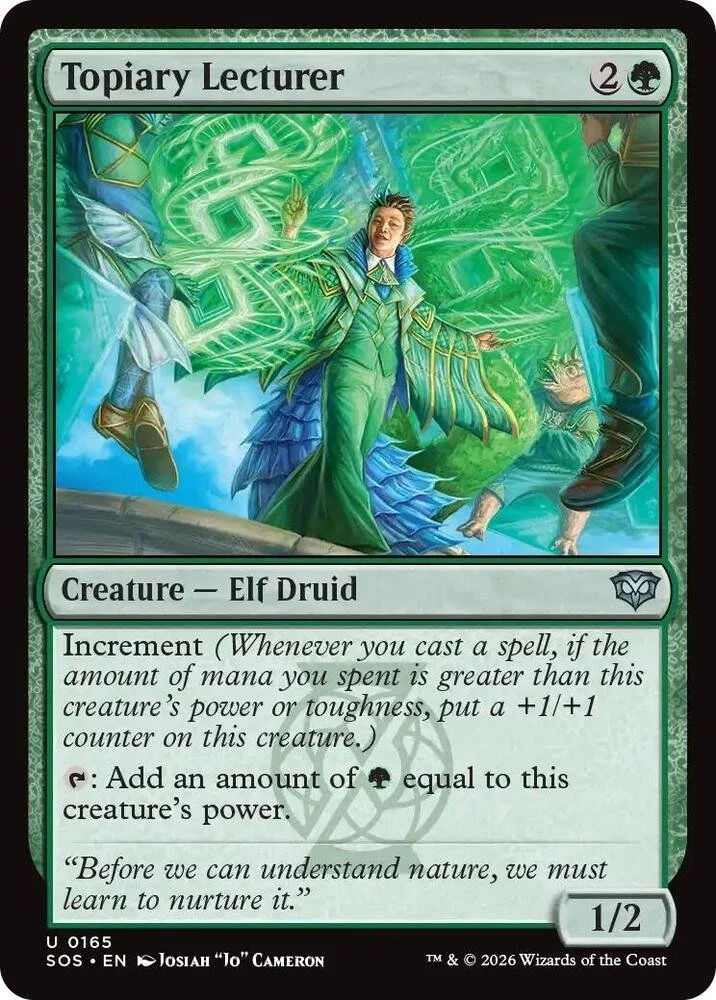
Topiary Lecturer - Good for Quandrix. It combines Increment with ramp, which is exactly what the archetype wants.
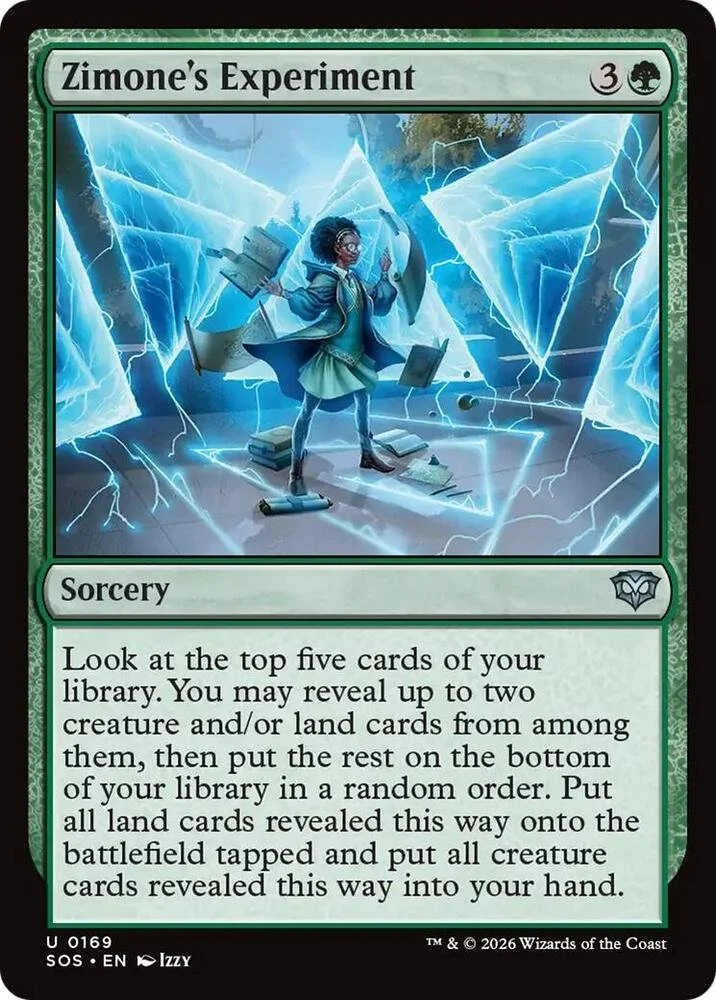
Zimone’s Experiment - Generic good uncommon. Solid card advantage that helps you find more gas and keep your deck moving.
Best rare and mythic cards for limited in Secrets of Strixhaven
Rare and mythic rare cards are where you’ll find the biggest Limited bombs in the set. These are the cards that can completely change the direction of a draft, pull you into a specific color, or give your sealed pool a clear build-around.
Rares and mythics have become more and more important in Limited over the last few years, and Secrets of Strixhaven is no different. If you open one of the Paradigm spells, you should absolutely consider moving into that color or at least splashing for it if your mana allows. Those cards can take over games quickly once they resolve.
White
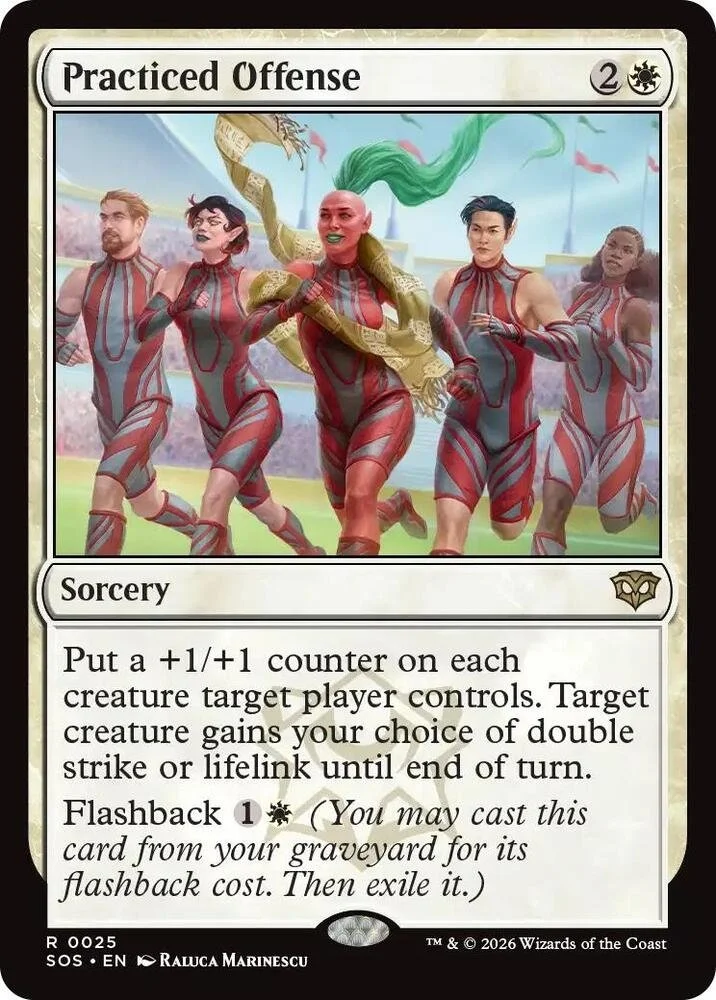
Practiced Offense - Generic good rare. A board-wide buff is already strong, but giving one creature double strike or lifelink can completely swing combat. Flashback also gives Lorehold another graveyard trigger.
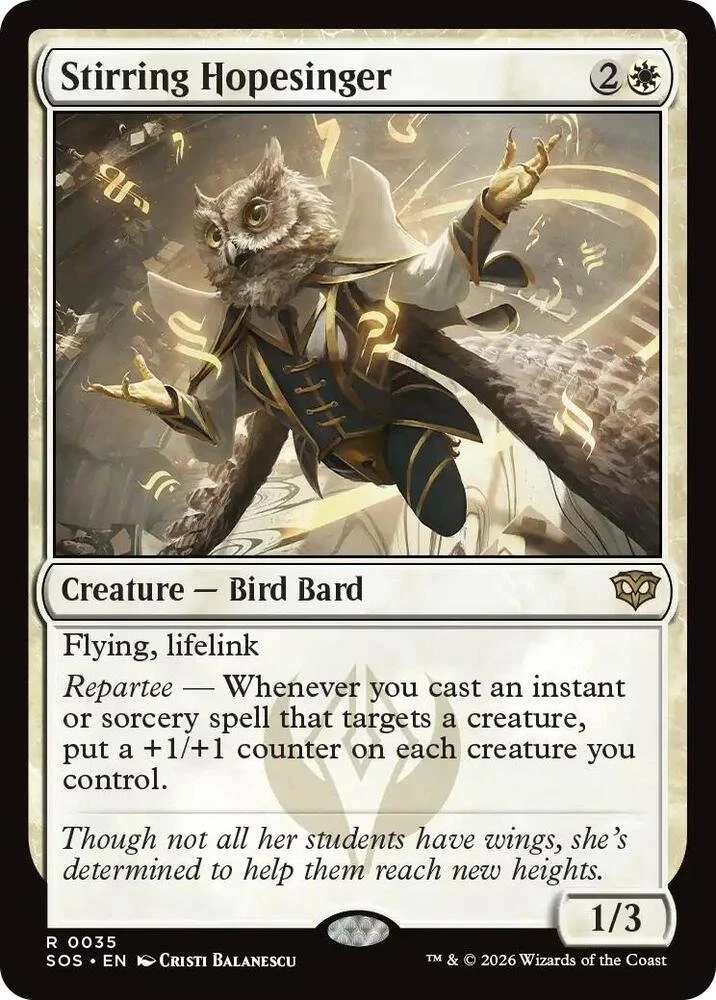
Stirring Hopesinger - Best for Silverquill. This feels like one of the cards Silverquill needs to run as aggressively as it wants to. Its Repartee trigger puts a +1/+1 counter on each creature you control, which can snowball very quickly.
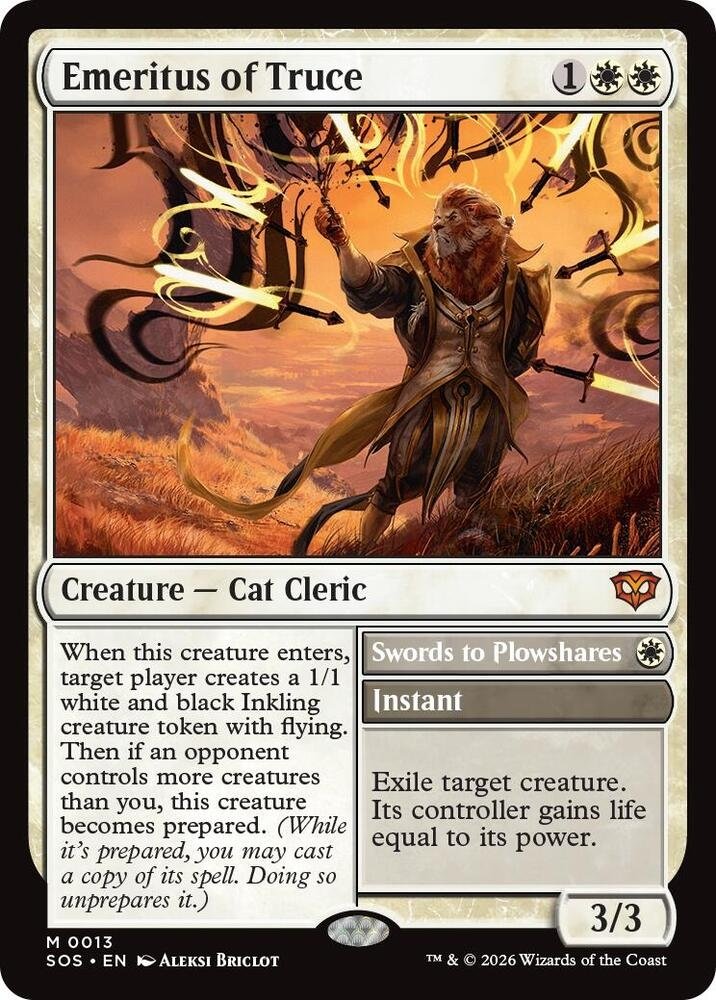
Emeritus of Truce // Swords to Plowshares - Generic good rare. Built-in removal on a creature is already excellent, and being able to re-prepare means you may get access to that removal more than once.
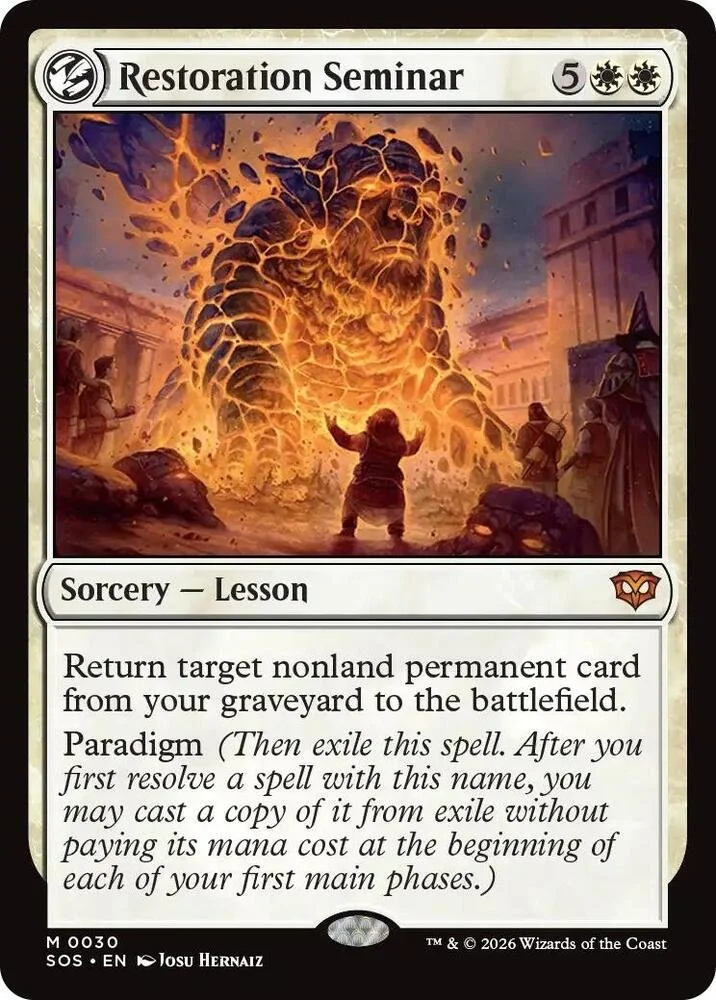
Restoration Seminar - Generic good and an absolute bomb. This Paradigm spell turns your graveyard into a long-term resource by letting you return a creature every turn. If this resolves, it can completely take over a grindy game.
Blue
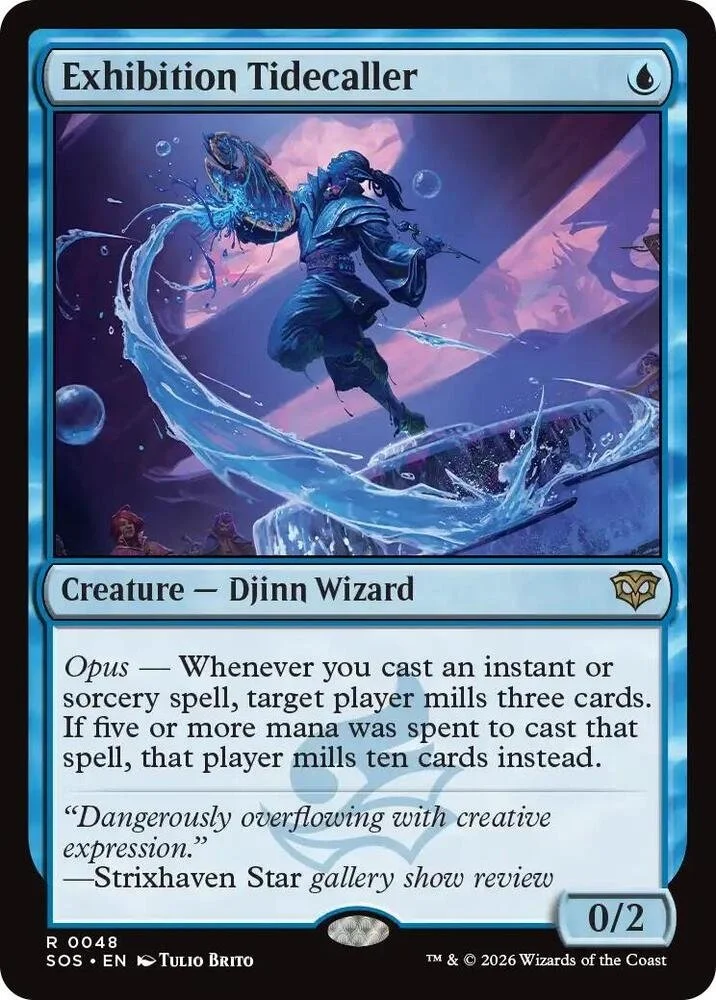
Exhibition Tidecaller - Best for Prismari. This card can become a serious combo problem. During early access Draft on Arena, I was milled out by this card multiple times, so it is absolutely something to watch for.
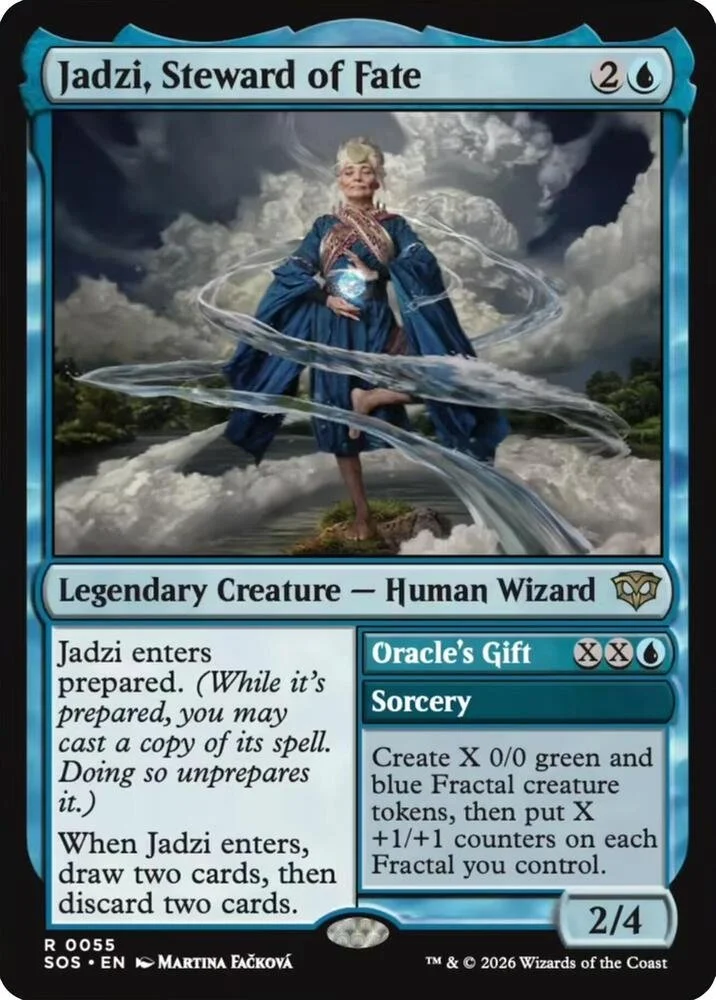
Jadzi, Steward of Fate // Oracle’s Gift - Best for Quandrix. Her Prepared spell creates X-cost Fractals, which is exactly what Quandrix wants, and she can re-prepare to keep the value going.
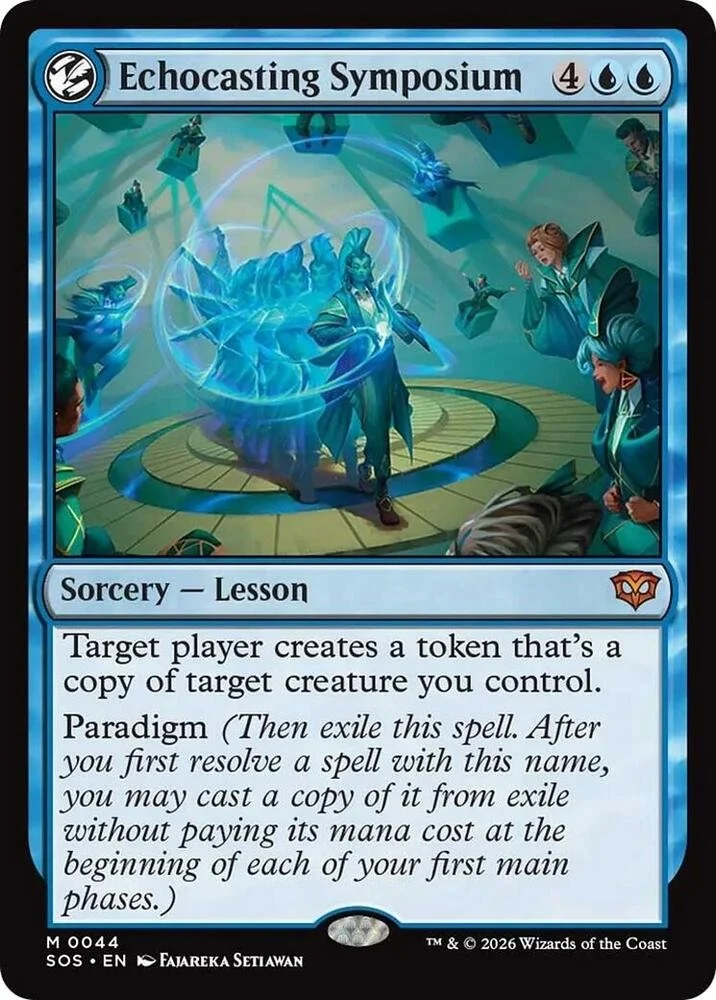
Echocasting Symposium - Generic good and an absolute bomb. This mythic Paradigm spell creates a copy of a creature every turn, which can bury your opponent in value if they cannot end the game quickly.
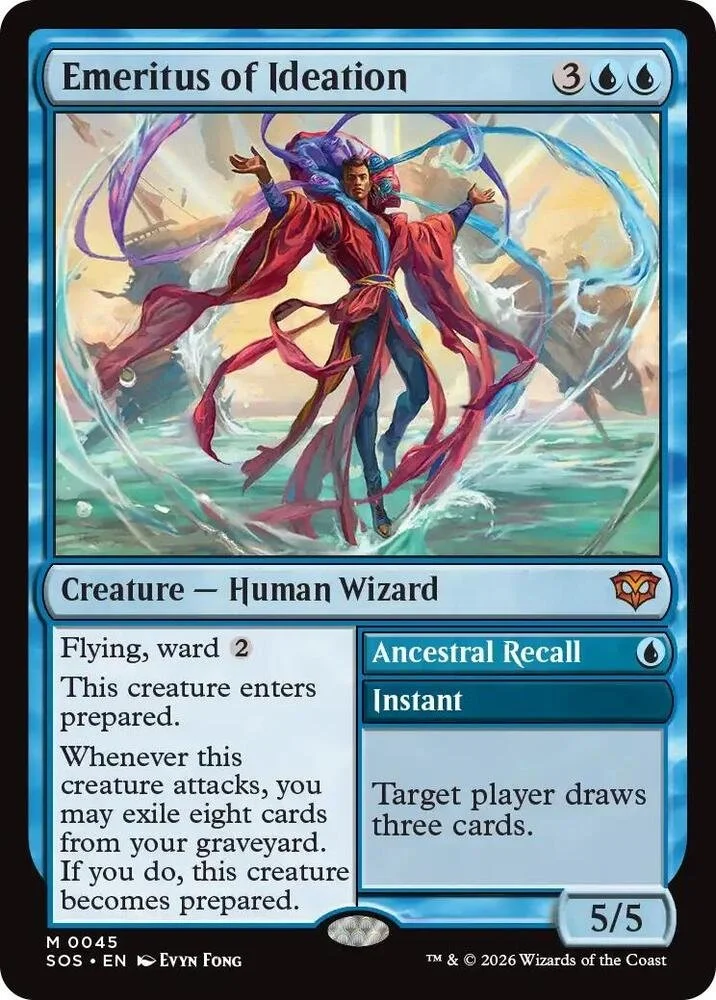
Emeritus of Ideation // Ancestral Recall - Generic good and an absolute bomb. A creature with a banned spell as its Prepared spell is completely wild. This card is insane, and it makes sense that this is the serialized card of the set.
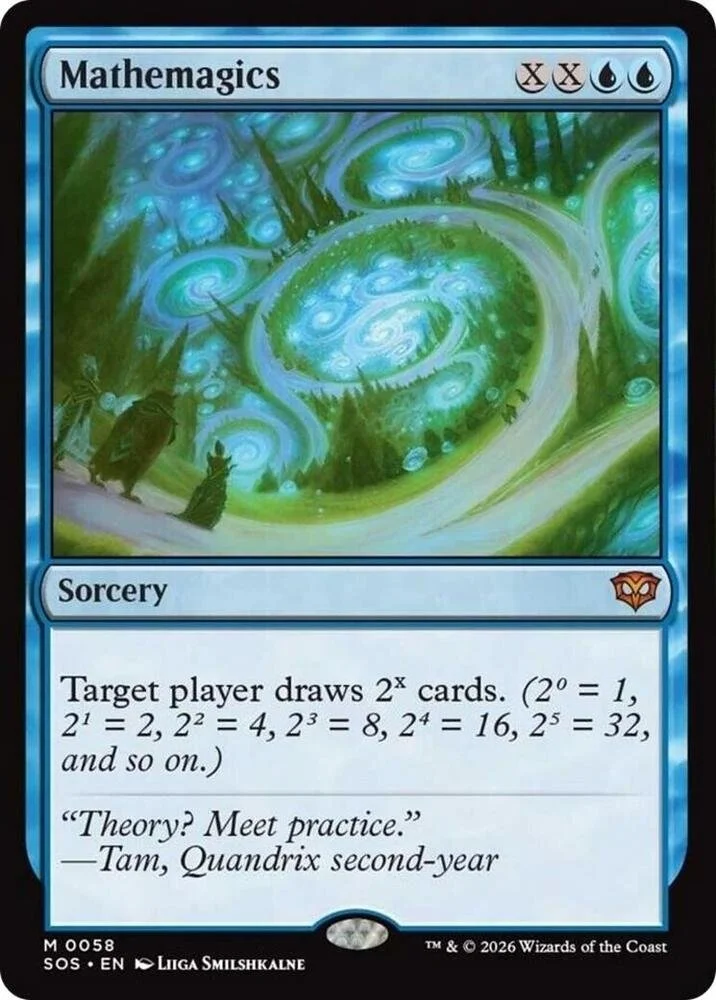
Mathemagics - Best for Quandrix. This card does not need much explanation. As one of the earliest cards revealed, it already looked scary, and in Limited it can easily become an alternate win condition once deck counts get lower.
Black
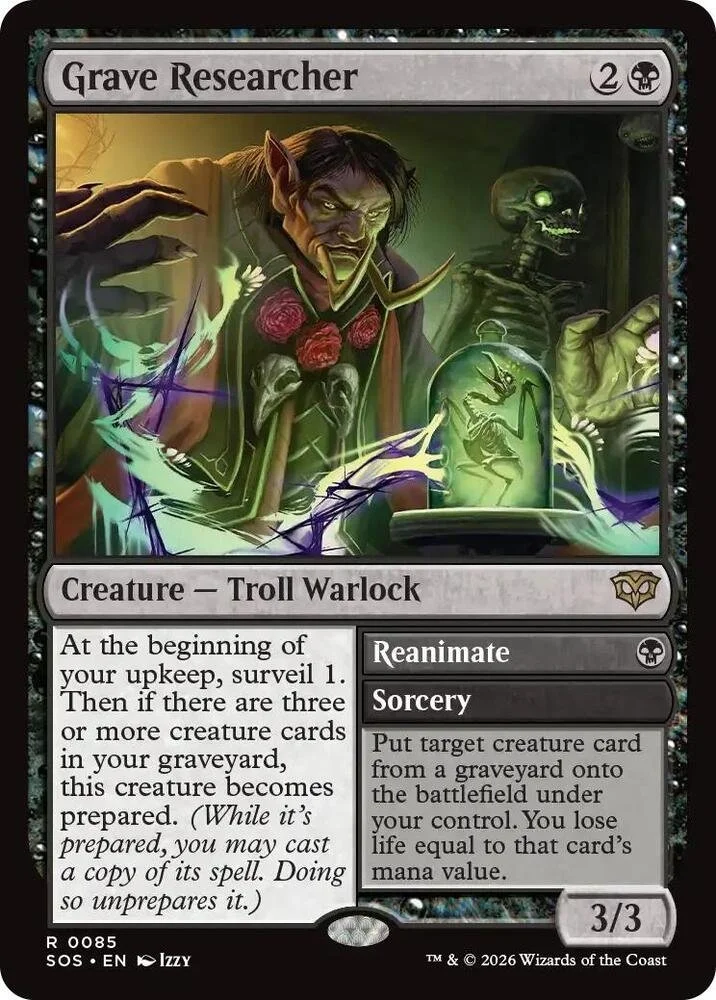
Grave Researcher // Reanimate - Good for Witherbloom. Reanimate is obviously powerful, but paying life matters, so Witherbloom’s lifegain helps balance the drawback. It can work in other decks too, but Witherbloom uses it best.
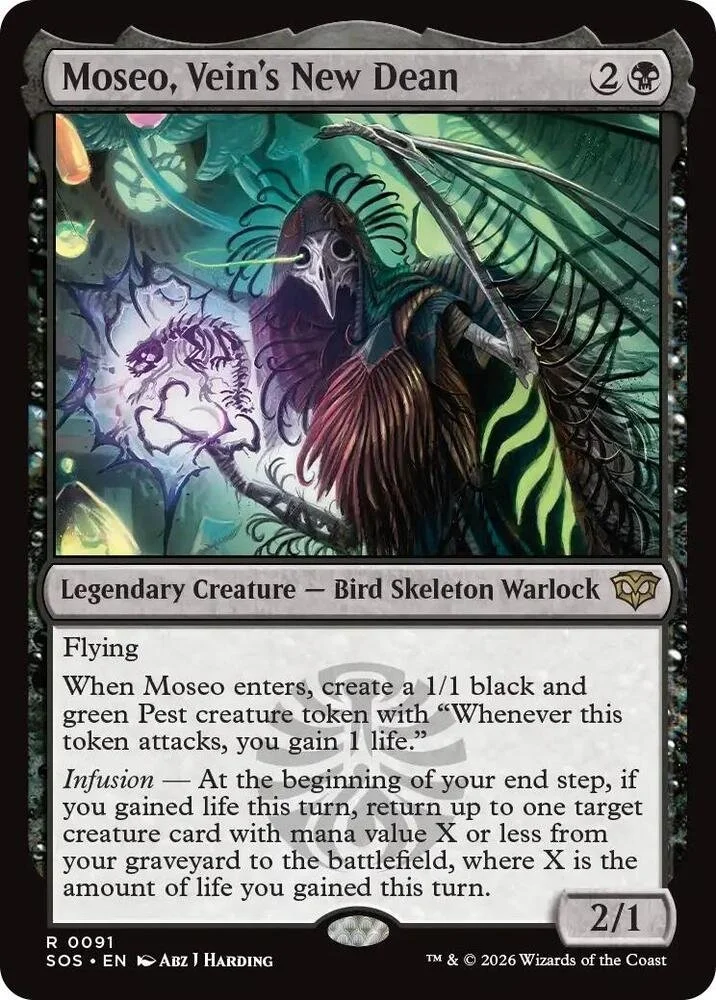
Moseo, Vein’s New Dawn - Good for Witherbloom. A strong Infusion payoff that can return cards from your graveyard, helping the deck grind and keep resources flowing.
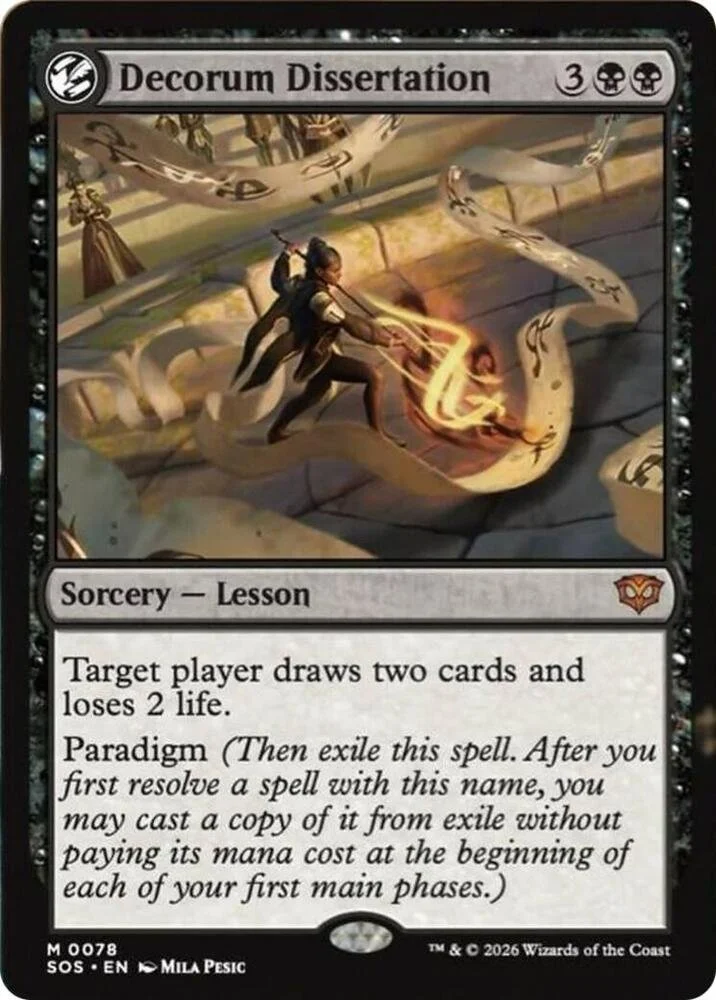
Decorum Dissertation - Generic good bomb. This Paradigm sorcery can draw you two extra cards every turn, which is a ridiculous amount of long-term card advantage if your opponent cannot close the game.
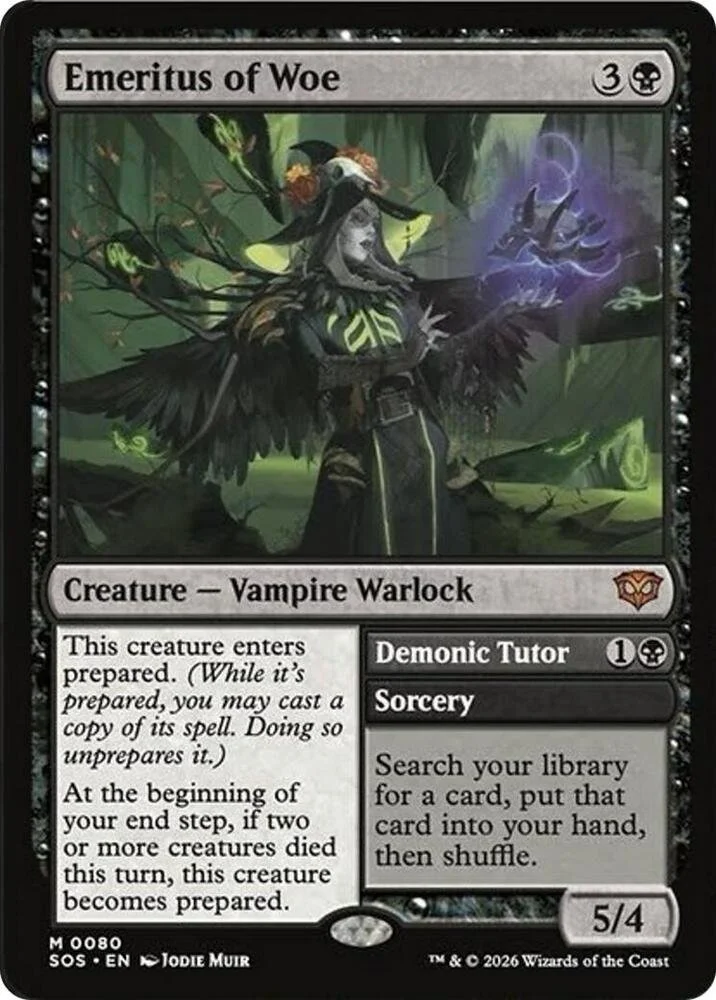
Emeritus of Woe // Demonic Tutor - Generic good and an absolute bomb. Having Demonic Tutor as a Prepared spell is ridiculous, especially with the card already being on the Game Changers list. This might be my favorite card in the set, and if I pull it, it’s going straight into my Vampire deck.
Red
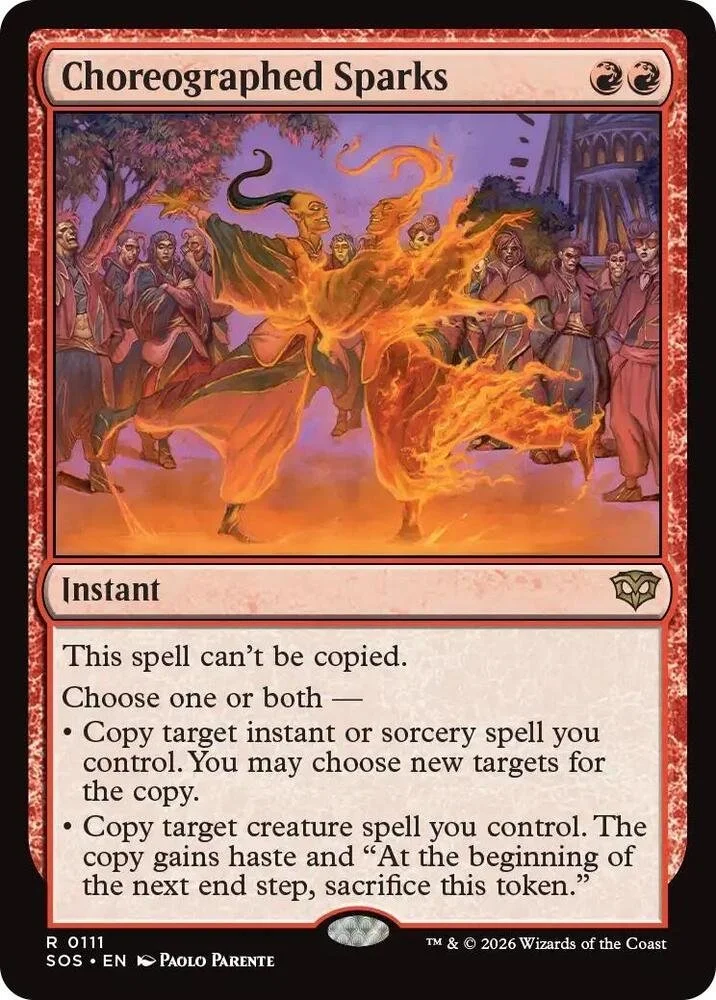
Choreographed Sparks - Good for Prismari. Copying spells is exactly the kind of effect Prismari wants, especially when you are already trying to get extra value out of your bigger instants and sorceries.
Flashback - Great for Lorehold. Giving any instant or sorcery Flashback is a huge deal for the archetype and can turn your best spell into a repeatable source of value.
Molten-Core Maestro - Good for Prismari. Its Opus trigger can either add a +1/+1 counter or, with the upgraded trigger, generate mana to help keep your spell-heavy turns going.
Improvisation Capstone - Best for Prismari and an absolute bomb. This mythic Paradigm sorcery can keep casting at least one free spell every turn for the rest of the game, which is exactly as scary as it sounds.
Green
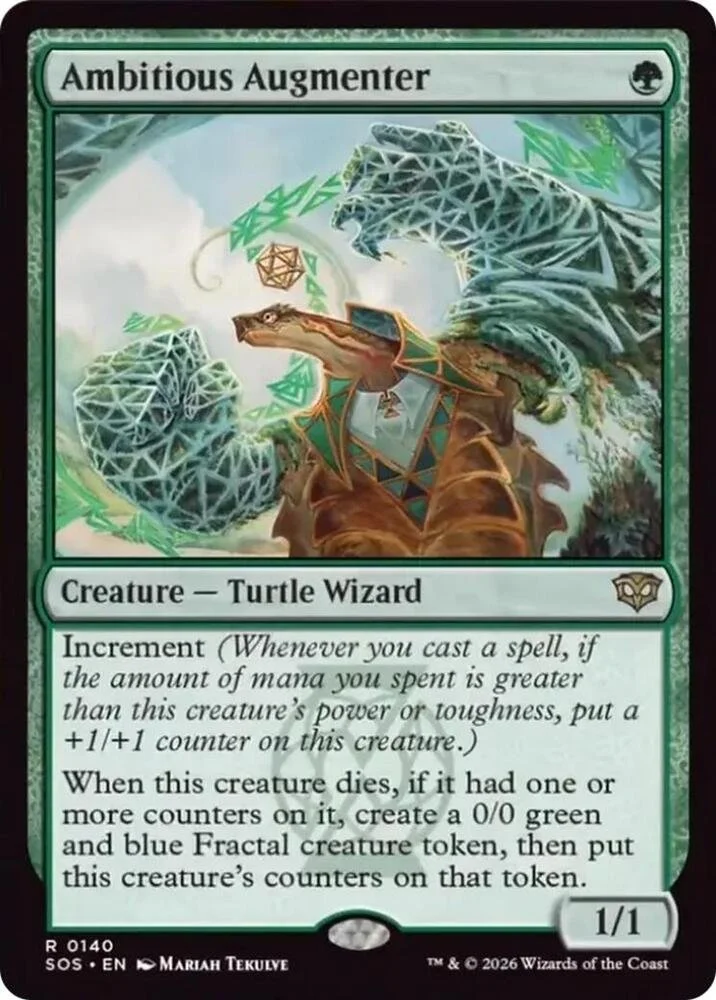
Ambitious Augmentor - Good for Quandrix. It has an easy Increment trigger, and when it dies, it leaves behind a Fractal with its counters, making it difficult for opponents to answer cleanly.
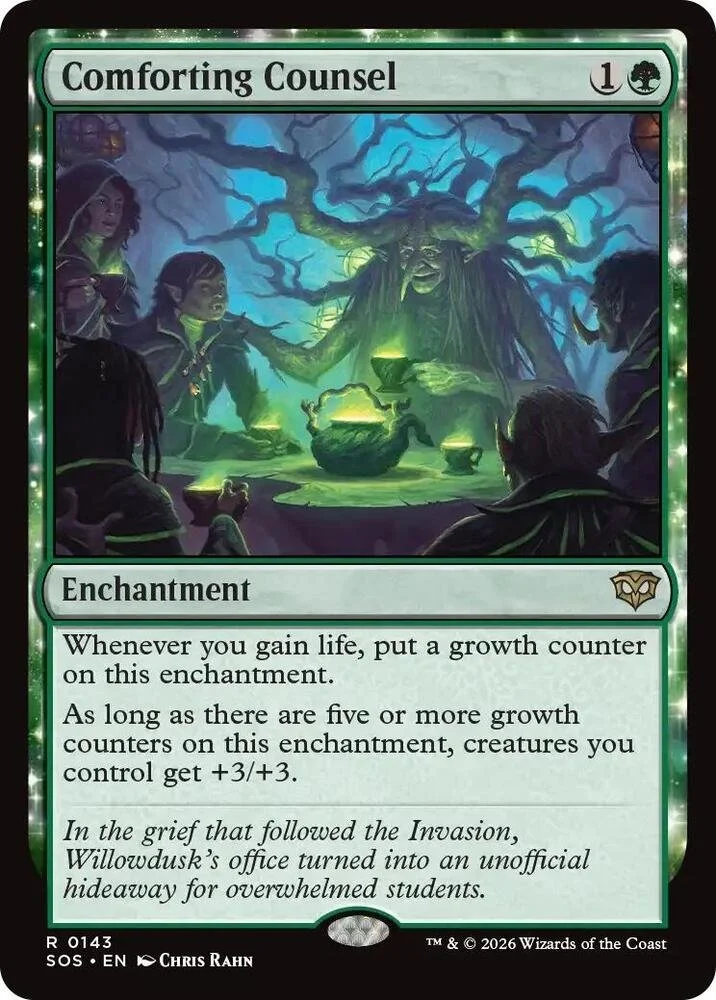
Comforting Counsel - Good for Witherbloom. Once this card is online, giving your creatures +3/+3 is a massive swing, and the lifegain synergy fits perfectly into Witherbloom’s plan.
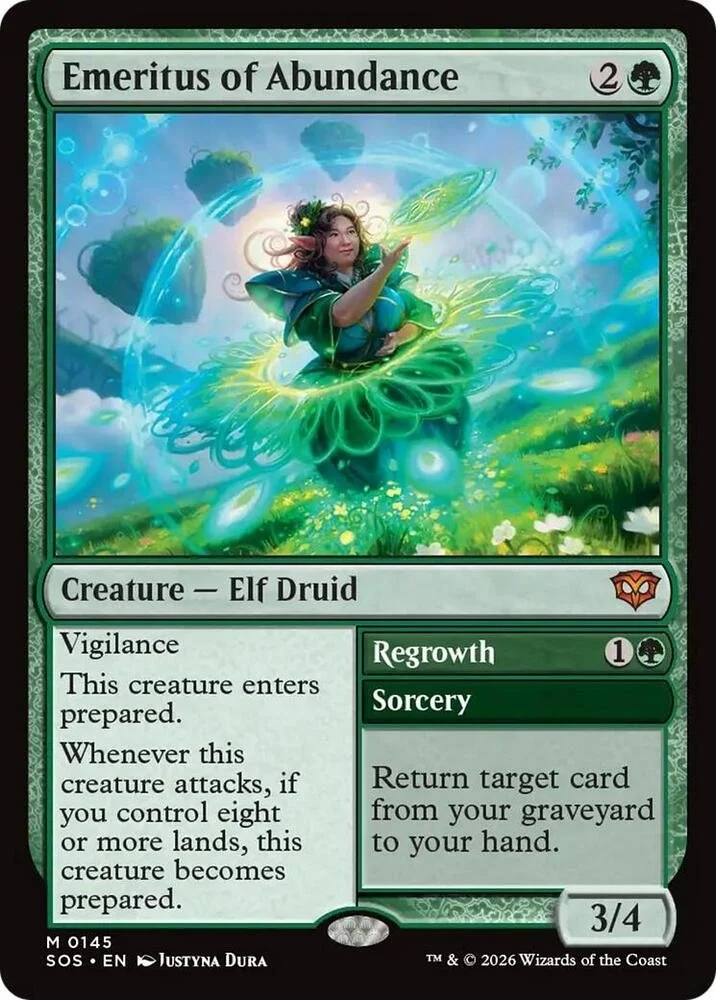
Emeritus of Abundance // Regrowth - Great creature for almost any deck. It can re-prepare itself, and its Prepared spell helps return cards from the graveyard, making it a strong value piece.
Germination Practicum - Generic good and an absolute bomb. This mythic Paradigm sorcery puts two +1/+1 counters on each creature you control every turn for the rest of the game. Once this resolves, it can feel like the game is basically over.
Best removal and interaction cards for limited in Secrets of Strixhaven
Limited formats are exactly that: limited. Because you only have access to the cards you open or draft, good removal and interaction become extremely valuable. Luckily, Secrets of Strixhaven has a decent amount of interaction across all five colors, from clean kill spells and combat tricks to counterspells and board wipes.
Below are some of the best removal and interaction cards to look out for in Limited.
White
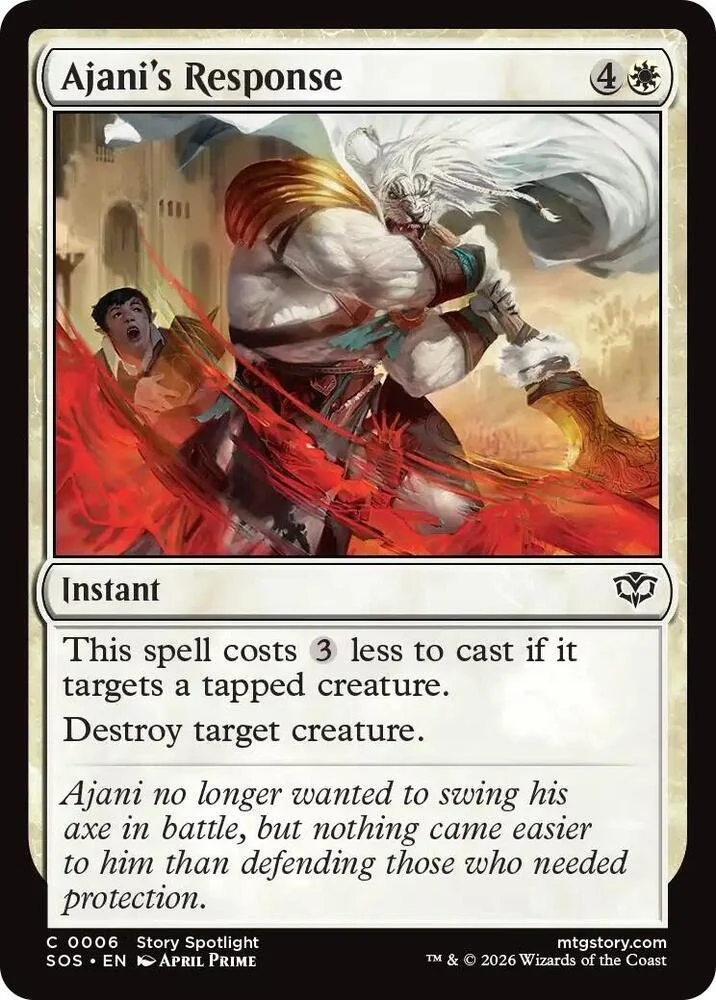
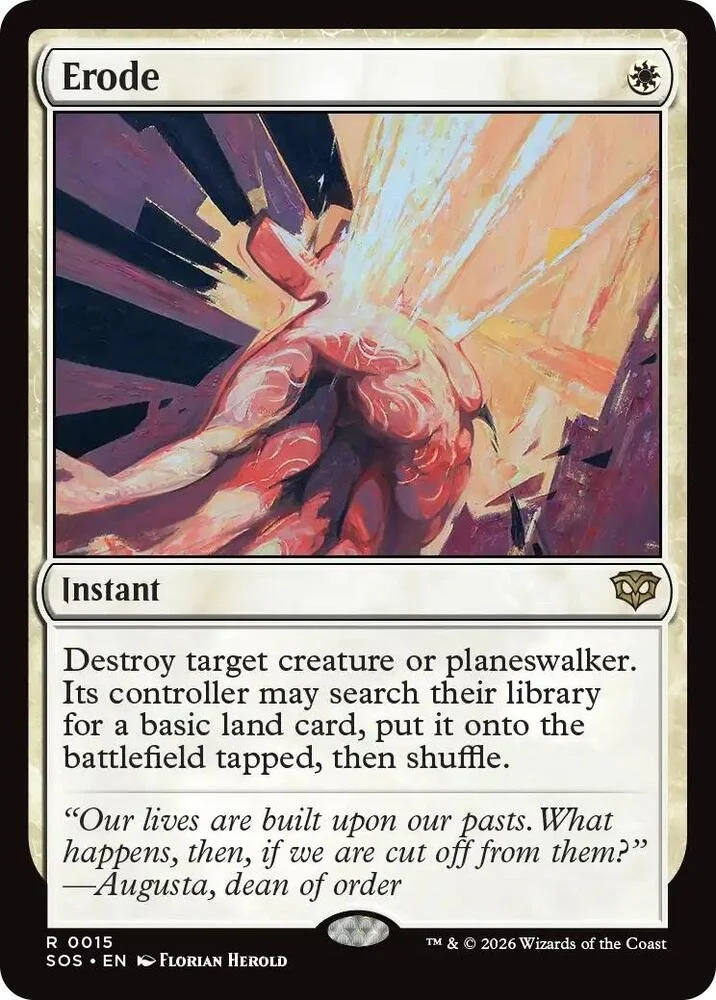
White has some solid creature removal in this set. There are other interactive spells available, but for their mana value and usefulness, these are the two that stand out most.
Ajani’s Response - Yes, the mana value looks high at first, but at instant speed, this becomes much better when a creature is attacking you. If the cost gets reduced by 3 mana, it turns into a 2-mana kill spell.
Erode - Cheap and efficient removal. For just 1 mana, you can deal with one of your opponent’s problem creatures, making this an easy card to include.
Blue
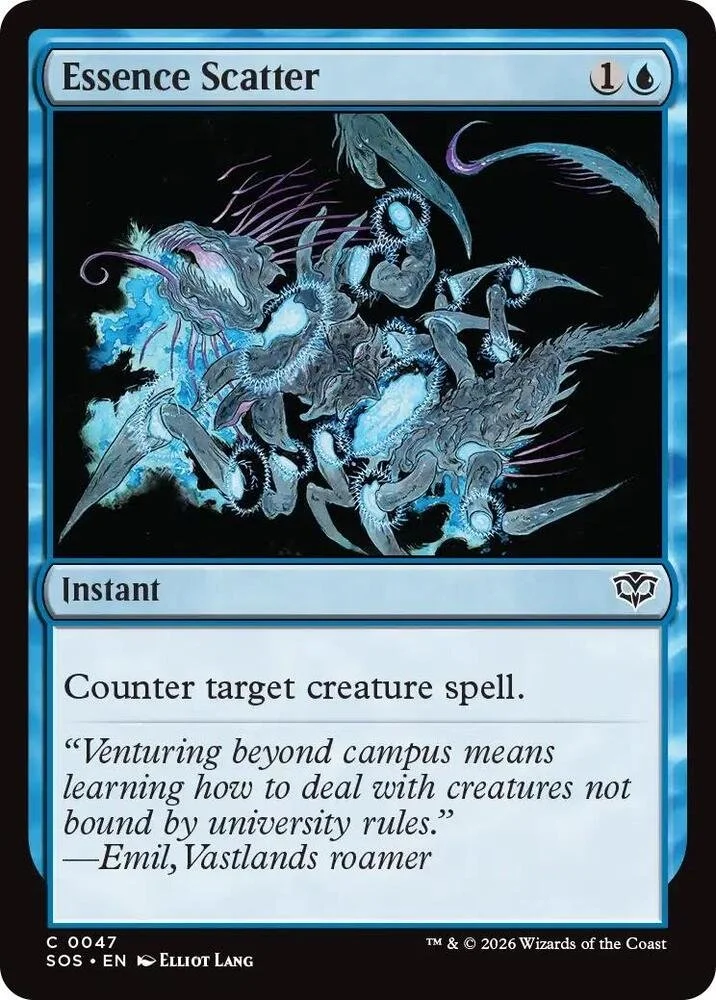
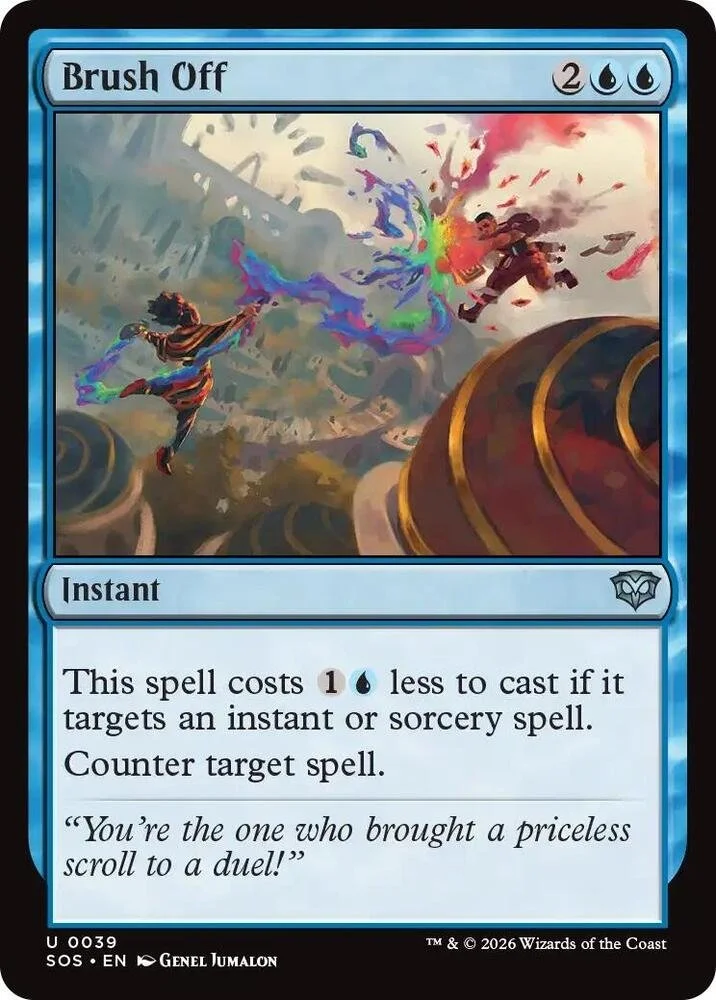
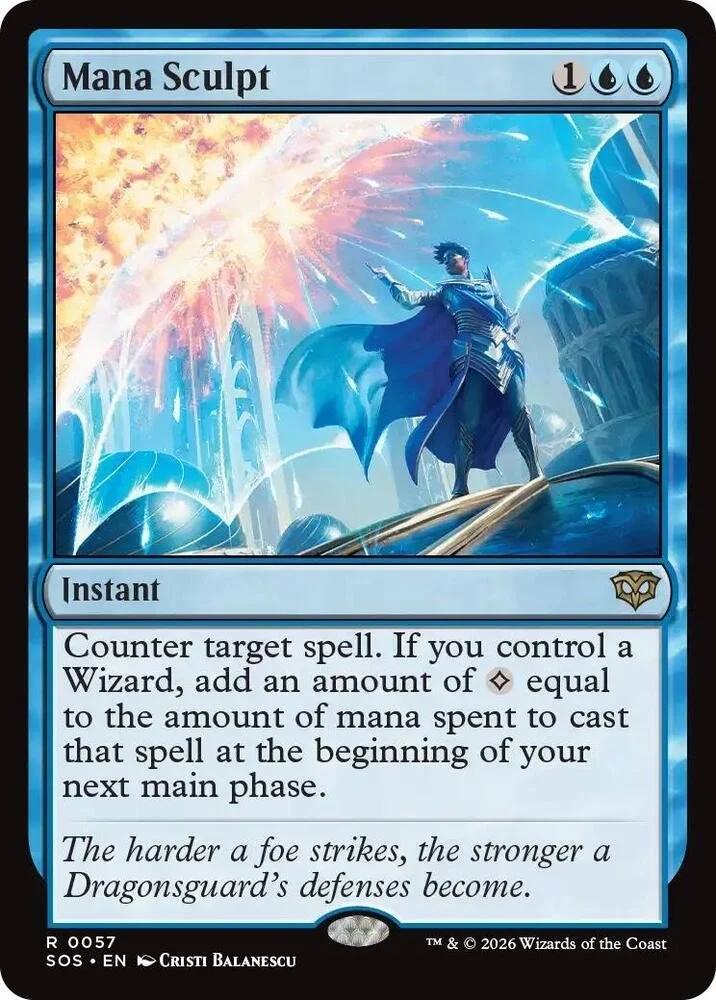
As expected, blue brings the counterspells. There are plenty of them in this set, so be ready for some frustration if your opponent is holding up mana.
Essence Scatter - Simple and effective. Countering a creature spell is always useful in Limited, especially against creature-heavy archetypes.
Brush Off - A flexible counterspell that can hit any spell, but it becomes cheaper when countering an instant or sorcery. That makes it especially useful in a spells-heavy set like this.
Mana Sculpt - A powerful counterspell that also generates mana equal to the countered spell’s cost. This can completely swing tempo in your favor and help set up a big follow-up play.
Black
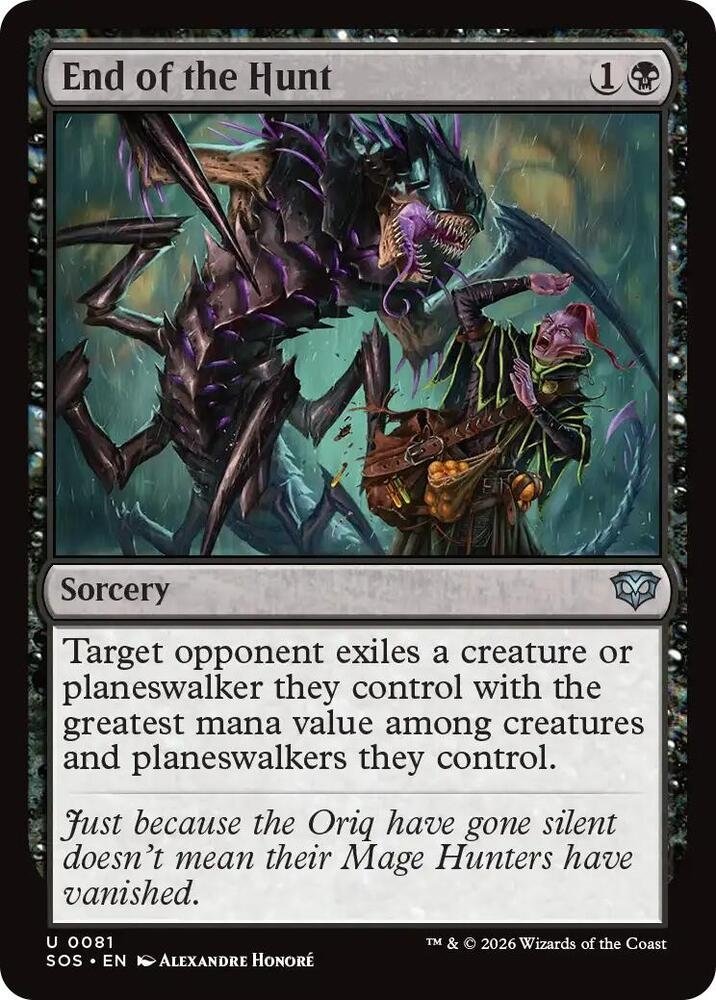
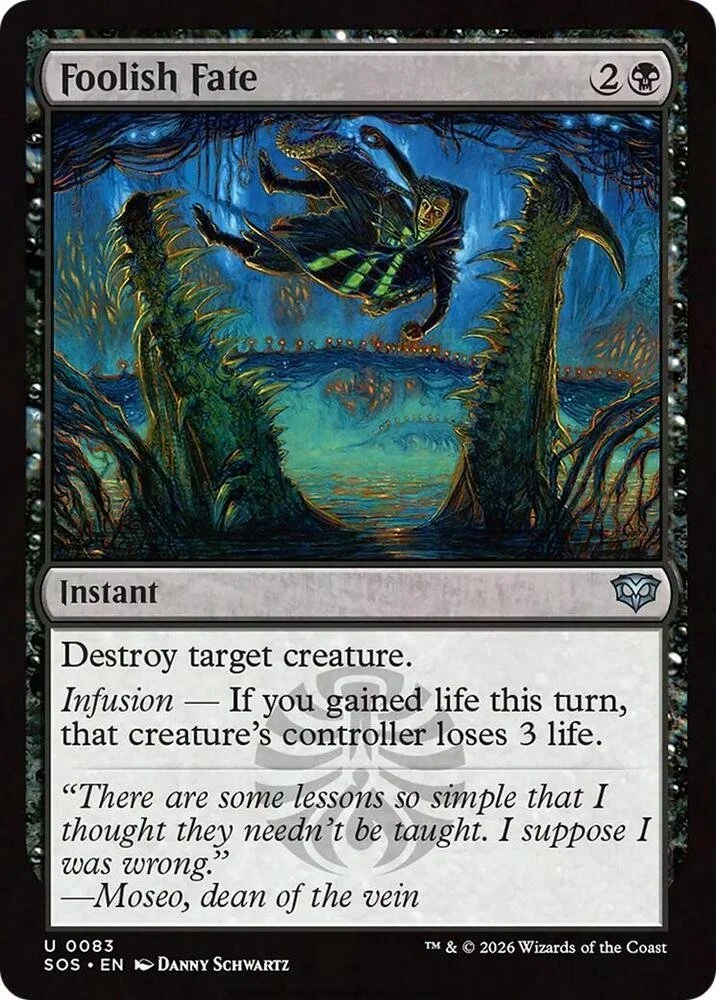
Black has plenty of ways to punish opponents, whether that means killing creatures, forcing sacrifices, or draining resources.
End of Hunt - Forces your opponent to sacrifice their highest-cost creature or planeswalker. This is especially useful if you know they have a major bomb like Professor Dellian Fel.
Foolish Fate - Straightforward creature removal with extra upside in Witherbloom. If you are already gaining life, this can punish your opponent while helping your game plan.
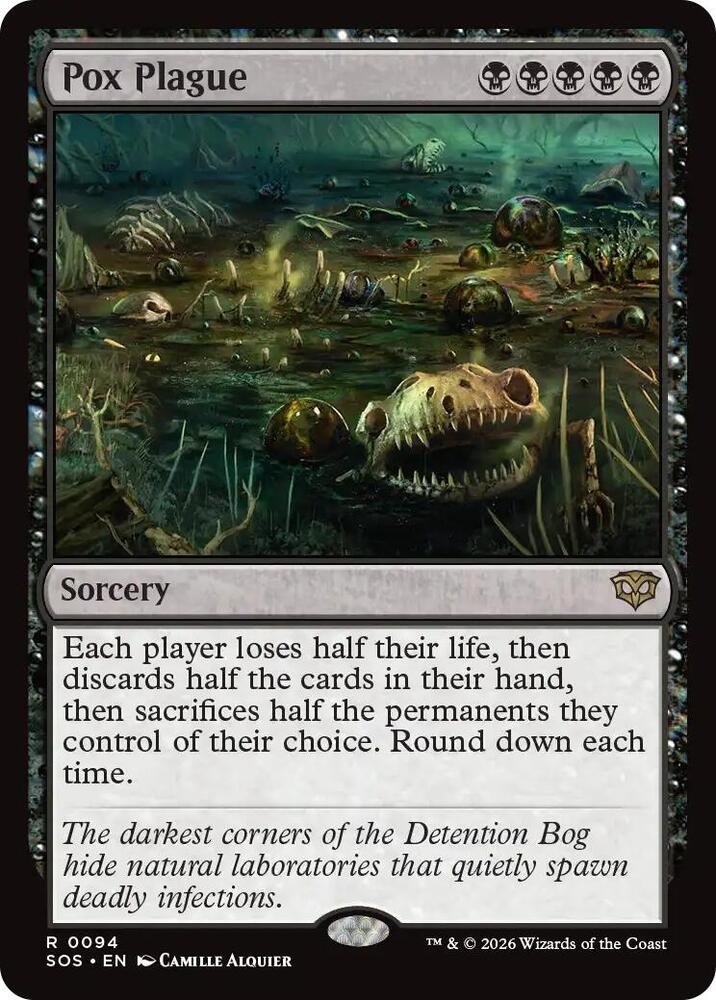
Pox Plague - A brutal rare that can cut down your opponent’s life total, hand size, and board state all at once. This is the kind of card that can completely reset a game in your favor.
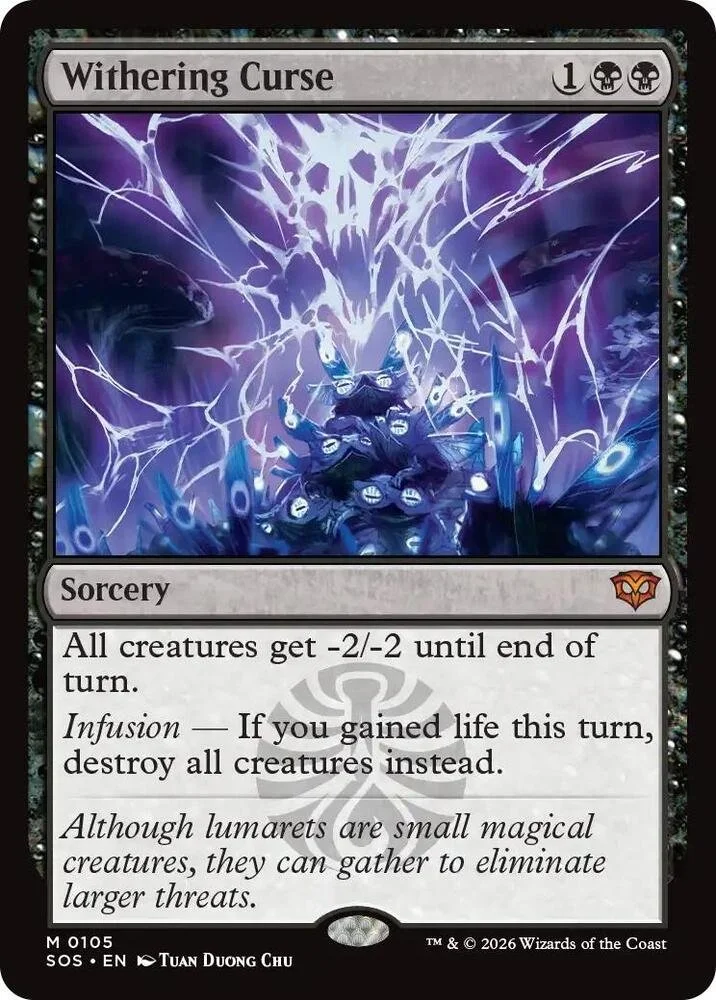
Withering Curse - A mythic-level interaction spell that can function as either a board wipe or a major debuff depending on whether Infusion is active. Either way, it can be a massive swing.
Red
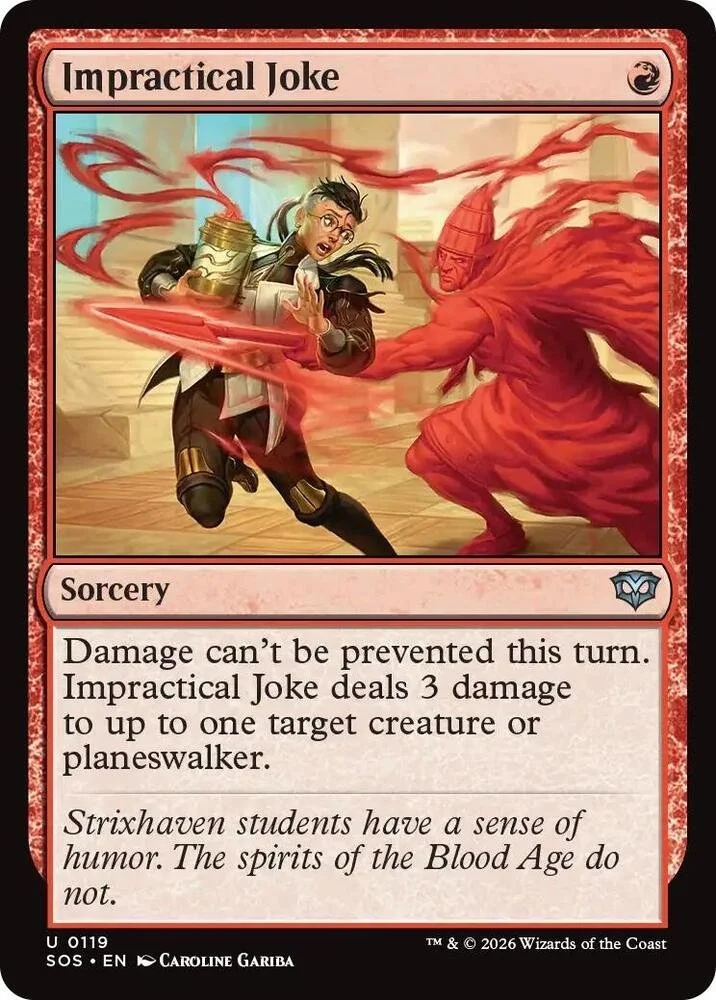
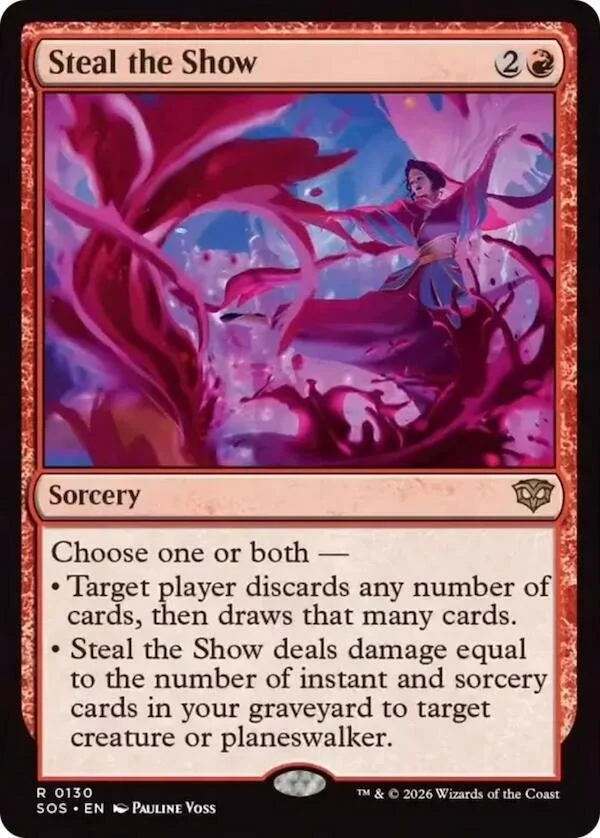
Red usually handles creatures by dealing damage rather than outright destroying them, and Secrets of Strixhaven gives it some valuable interaction. Red is especially useful when dealing with planeswalkers hiding behind blockers.
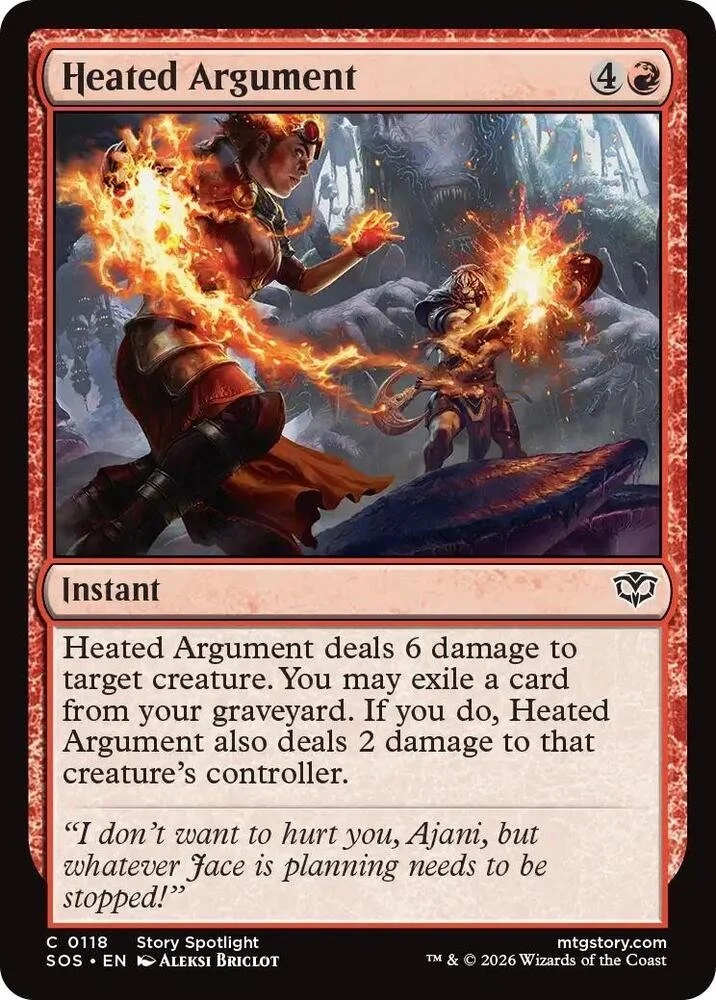
Heated Argument - Six damage to a creature plus 2 damage to its controller is a strong Limited removal spell. It also has Flashback, giving Lorehold another graveyard trigger.
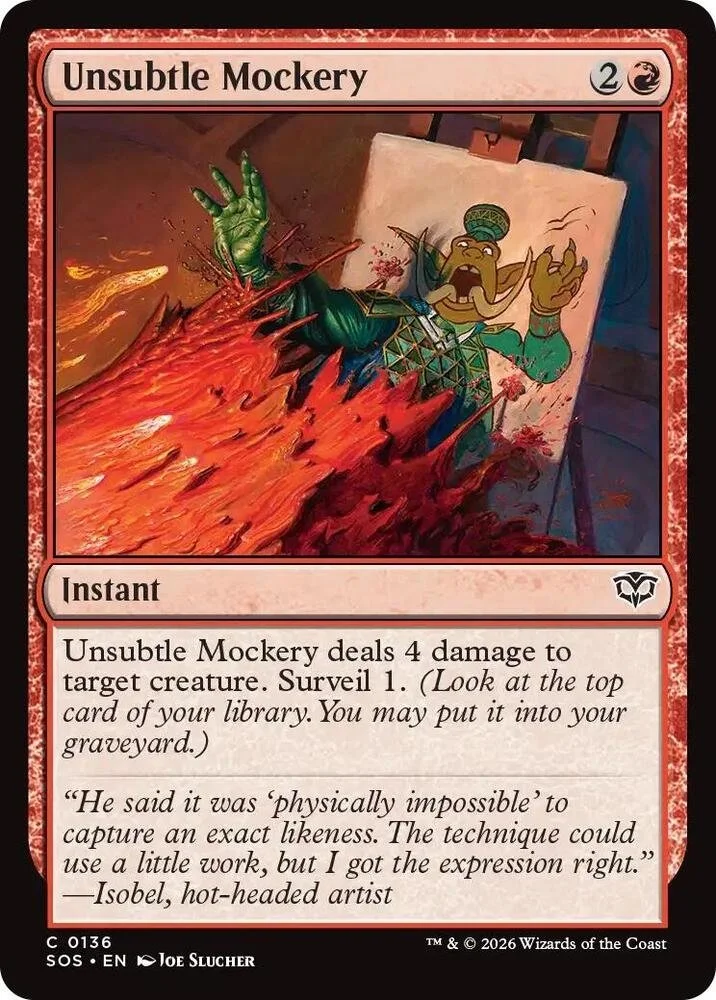
Unsubtle Mockery - Four damage to a creature plus Surveil makes this a strong common. It removes a threat while helping smooth out your next draw.
Impractical Joke - Cheap interaction that deals 3 damage to a creature or planeswalker. This is a good way to pressure planeswalkers when your opponent has too many blockers.
Steal the Show - Explosive damage to a creature or planeswalker with the bonus of potentially forcing your opponent to discard a strong revealed card. This can be a huge swing when timed well.
Green
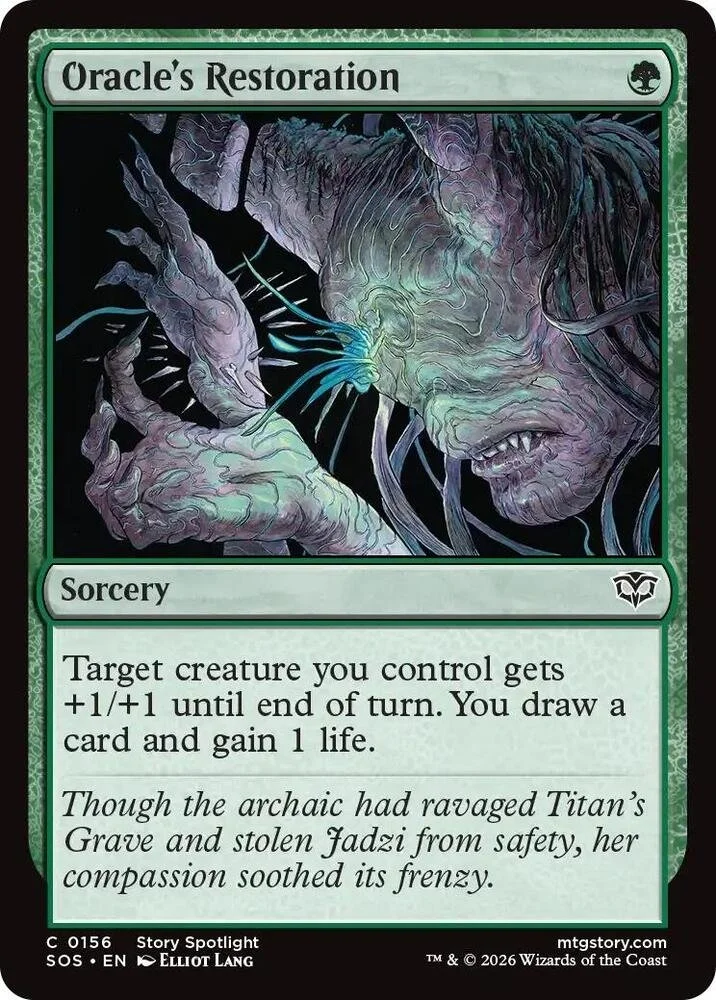
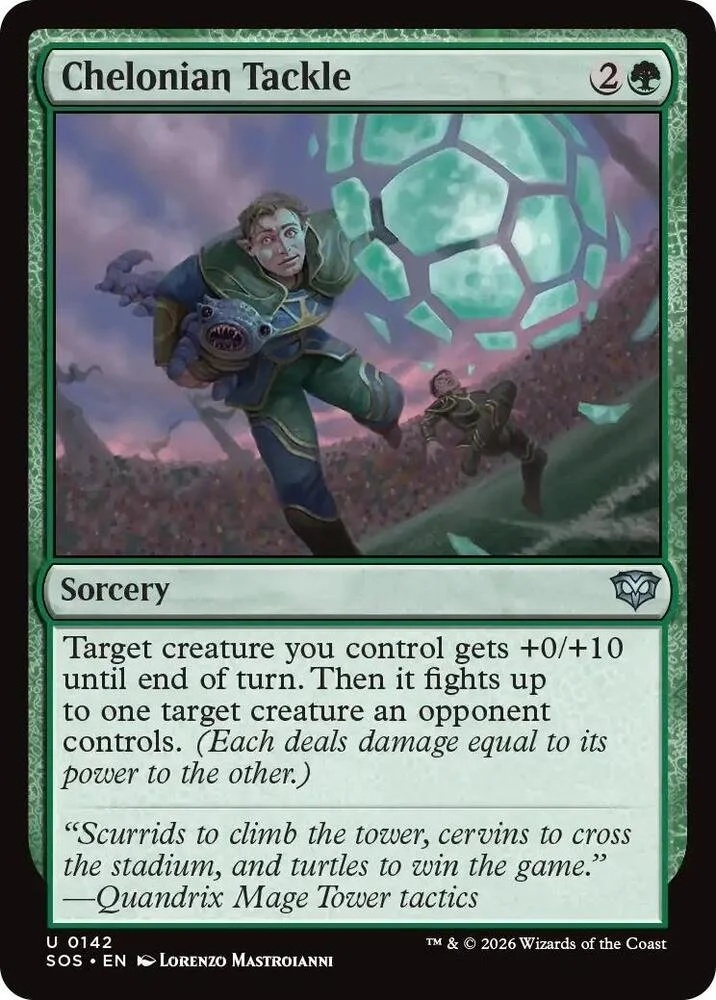
Green usually does not get much traditional removal, so it relies more on combat tricks, buffs, and fight spells. These cards help green decks interact while still playing to their creature-focused strengths.
Oracle’s Restoration - A useful instant-speed buff that also draws a card. It can win combat while replacing itself, which is always valuable in Limited.
Chelonian Tackle - A major buff and fight spell in one card. This gives green a way to remove creatures while also pushing one of your threats into a much larger body.
What archetype is best in Secrets of Strixhaven?
Picking the best archetype in Secrets of Strixhaven is a little tricky because the “best” deck is going to depend heavily on your playstyle and the cards you open. This set has some very distinct archetypes, and each one asks you to approach the game in a different way.
If you want the easiest archetype to put together, I think Quandrix is probably the safest choice. The game plan is straightforward, the cards work well together, and you are mostly focused on building a board, growing your creatures, and pushing damage with Fractals and Increment triggers. For newer players, Quandrix is likely the cleanest archetype to understand and pilot.
Prismari probably has the biggest payoff turns in the set. When the deck works, it can feel explosive, flashy, and almost impossible to stop. The downside is that you need to balance your curve carefully. If you have too many expensive spells, you may fall behind early. If you have too many cheap spells, you may miss out on the upgraded Opus triggers that make the deck so powerful. Because of that, I would recommend Prismari more for experienced players who are comfortable sequencing spells and planning turns ahead.
Witherbloom is also extremely viable, especially if you enjoy grindy decks. This archetype is not trying to win quickly. Instead, it wants to gain life, drain the opponent, sacrifice creatures, and slowly take over the game. If you like outlasting your opponent and making every exchange feel miserable for them, Witherbloom might be the best pick for you.
Lorehold and Silverquill feel a little more dependent on pulling the right pieces. Lorehold needs the right balance of graveyard enablers and payoffs, while Silverquill needs enough aggressive creatures, combat tricks, and Repartee triggers to keep pressure on the opponent. Both archetypes can absolutely work, but they may be harder to force compared to Quandrix, Prismari, or Witherbloom.
Overall, my recommendation for prerelease is pretty simple: newer players should lean toward Quandrix, experienced players should look closely at Prismari, and anyone who loves grindy value decks should not overlook Witherbloom. Lorehold and Silverquill can still be strong, but I would only move into them if your pool clearly supports the strategy.
Deck building tips for Secrets of Strixhaven limited formats
Building a strong Limited deck in Secrets of Strixhaven is going to come down to balance. This set has a lot of exciting mechanics, splashy spells, and archetype-specific payoffs, but you still need to make sure your deck can function from turn to turn. It is easy to get distracted by all the cool synergies, but if your deck does not have a solid curve or enough early plays, you may fall behind before those bigger cards ever matter.
The biggest tip is to make sure you follow your curve. In Limited, playing something meaningful each turn is incredibly important. You want enough cheap cards to survive the early game, but you also need enough impactful midgame and late-game cards to actually close things out. If your deck is too low to the ground, you may run out of gas. If your deck is too expensive, you may spend the first few turns doing nothing while your opponent builds a board.
This is especially important in a set like Secrets of Strixhaven, where several archetypes care about casting instants and sorceries at different points of the game. Prismari wants cheaper spells early but bigger spells later to trigger upgraded Opus abilities. Quandrix wants scalable X-cost spells that can grow with the game. Lorehold wants enough cards going into and out of the graveyard to keep its engine moving. Every archetype has a different rhythm, but they all still need a playable curve.
If you are building Lorehold or Silverquill, do not be afraid to splash a third color if your pool supports it. These two archetypes can be strong, but they also feel more dependent on pulling the right combination of cards. A light splash can help fill in gaps or open up stronger combo lines. For Silverquill, I would look at splashing green since it can give you more combat tricks, buffs, and creature-based support. For Lorehold, blue seems like a strong splash option because it can add more spell value, card selection, and graveyard-friendly interaction.
That said, do not splash just because you can. Splashing is only worth it if the card you are adding is strong enough to justify the risk or if it meaningfully improves your deck’s plan. If you are splashing, make sure you have the mana fixing to support it. This is where multicolored lands become very important, especially because they can also help with Converge costs. If you have Converge cards in your pool, dual lands or other fixing can make those cards much better.
I also would not prioritize colorless cards too highly in Draft. Some colorless cards may still be playable, especially if they support your archetype, but Secrets of Strixhaven is built heavily around the five schools and their color identities. In most cases, you are better off drafting cards that actively support your school’s strategy rather than taking generic colorless cards too early.
Overall, your goal should be to build a deck with a clear plan. Know what your archetype wants to do, make sure your curve supports that plan, and only splash when the payoff is worth it. Secrets of Strixhaven has a lot of synergy, but the best Limited decks will still be the ones that can play consistently while taking advantage of their school’s strongest mechanics.
Gameplay tips for Secrets of Strixhaven limited formats
Secrets of Strixhaven is a very spell-heavy Limited format, which means your turns are going to involve a lot of sequencing, timing, and reading what your opponent might have. You do not need to play scared, but you do need to pay attention. A lot of games can swing based on when you cast your best spell, when you hold it, and whether you can bait out interaction before committing to your real payoff.
Don’t be afraid of open mana. In this set, your spells are going to get countered sometimes. That is just part of playing in a format with this many instants, sorceries, and blue interaction. If your opponent is clearly representing a counterspell, think about what you can afford to lose. Sometimes it is better to cast a spell that looks scary but is not essential to your plan, just to see if they bite. Once the counterspell is out of their hand, you may have a much safer window for the card that actually matters.
Use Treasures and dual lands wisely for Converge costs. If you have Converge cards in your deck, your mana sources matter a lot more. A Treasure token or multicolored land can be the difference between getting a small effect and getting the full payoff. Before casting a Converge spell, double-check your mana and see if there is a better way to tap so you can maximize the number of colors spent.
Focus on ramp early. Several archetypes in this set benefit from reaching higher mana quickly. Prismari wants to hit five or more mana for upgraded Opus triggers, Quandrix wants to scale X-cost spells, and Witherbloom or Lorehold may want to start using recursion and value engines earlier. If your deck has ramp or fixing, prioritize setting that up in the early game so your bigger turns can happen sooner.
Don’t waste all your cheap spells too early. Cheap spells are important for surviving the early game, but they can also become valuable later when you already have payoff creatures on the board. In Prismari, a cheap spell can still trigger Opus. In Silverquill, a cheap targeted spell can trigger Repartee. In Quandrix, cheap interaction can help protect an Increment creature after you’ve built it up. If you burn through every cheap spell as soon as you draw it, you may not have enough fuel when your engine cards finally hit the battlefield.
Cast Paradigm spells as soon as you safely can. These cards are designed to take over long games, and the sooner they resolve, the sooner they start creating repeated value. If you have a Paradigm spell in hand and the mana to cast it, you should usually be looking for the first safe opportunity to get it online.
On the other side, if your opponent casts a Paradigm spell and you have a way to counter or stop it the first time, do it. Once it resolves, it can become your problem for the rest of the game. Even if you answer one future copy, the next one can come back again. Stopping the original spell before the engine starts is usually your best chance.
Final Thoughts
Secrets of Strixhaven looks like a fun Limited set because each school has a clear identity. Quandrix grows a board and pushes damage, Prismari builds toward explosive spell turns, Witherbloom outlasts opponents, Lorehold grinds through graveyard movement, and Silverquill controls combat with pressure and tricks.
For prerelease, don’t force a favorite school too early. Let your pool guide you, especially if you open strong Paradigm spells, efficient removal, or clear archetype payoffs. The best decks will balance synergy with consistency, so make sure your curve, interaction, and mana all support your game plan.
Overall, Quandrix feels like the easiest entry point, Prismari may have the highest ceiling, and Witherbloom is a great pick for grindy players. Lorehold and Silverquill may need more support, but they can still be very rewarding when they come together.
For more upcoming releases, set coverage, and tabletop guides, be sure to check out our 2026 TCG and Tabletop Release Calendar to keep up with everything coming throughout the year.