Most Counter-Strike 2 players don't think of their inventory as something worth caring about. You play your matches, maybe open a case when a new collection drops, and whatever skins you end up with just kind of sit there. But here's the thing — the CS2 economy doesn't care whether you spent money or not. A skin is worth what the market says it's worth, and free drops, smart timing, and a bit of patience can quietly build an inventory worth hundreds of dollars.
This isn't a get-rich-quick guide. Nobody's turning a week of casual play into a knife. But if you actually understand how value accumulates in CS2, a player who spends nothing — or close to nothing — can realistically build a $500 inventory within a year. Here's how.
Step 1: Stop Opening Your Weekly Drops
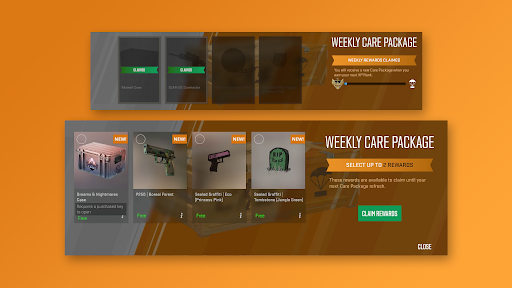
Every week, CS2 gives active players a free item drop — either a skin from the active collection pool or a weapon case. Most players glance at whatever they received, shrug, and move on. The collectors open it immediately or just leave it sitting in their inventory without a second thought.
This is where the first mindset shift happens: your weekly drop is not a random piece of junk. It's free inventory with real market value.
Cases are the easiest example. A freshly dropped case might only be worth $0.10-$0.30 on the Steam Market right now, but that same case two years from now — once it's out of the active drop pool — could be worth $2, $5, or more. The Bravo Case was once a random weekly drop. Today it sells for over $20. Revolution and Kilowatt cases follow the same trajectory as they age out.
The move: never open your weekly case drops. List them for sale on the Steam Market when the price feels right, or hold them if you're patient enough to wait for the supply to dry up. Either way, you're converting zero-cost drops into real balance.
Skin drops work the same way, just less predictably. Most weekly skin drops are low-tier Consumer or Industrial Grade items worth a few cents. But some collections contain skins that hold surprising value in Factory New condition. Before selling or discarding any drop, take 10 seconds to check what it's actually going for.
Step 2: Understand What Makes a Cheap Skin Secretly Valuable
Not all $0.50 skins are created equal. Some are dead inventory that will never appreciate. Others are sitting at the bottom of a pricing curve that's about to shift. The difference comes down to a few key factors.
Collection status matters more than rarity. A Mil-Spec skin from a discontinued collection will almost always outperform a Restricted skin from a collection that's still actively dropping. Once Valve removes a collection from the drop pool, supply freezes while demand continues — and prices climb. This is why keeping an eye on which collections are active and which have been retired is one of the easiest edges a budget player can have.
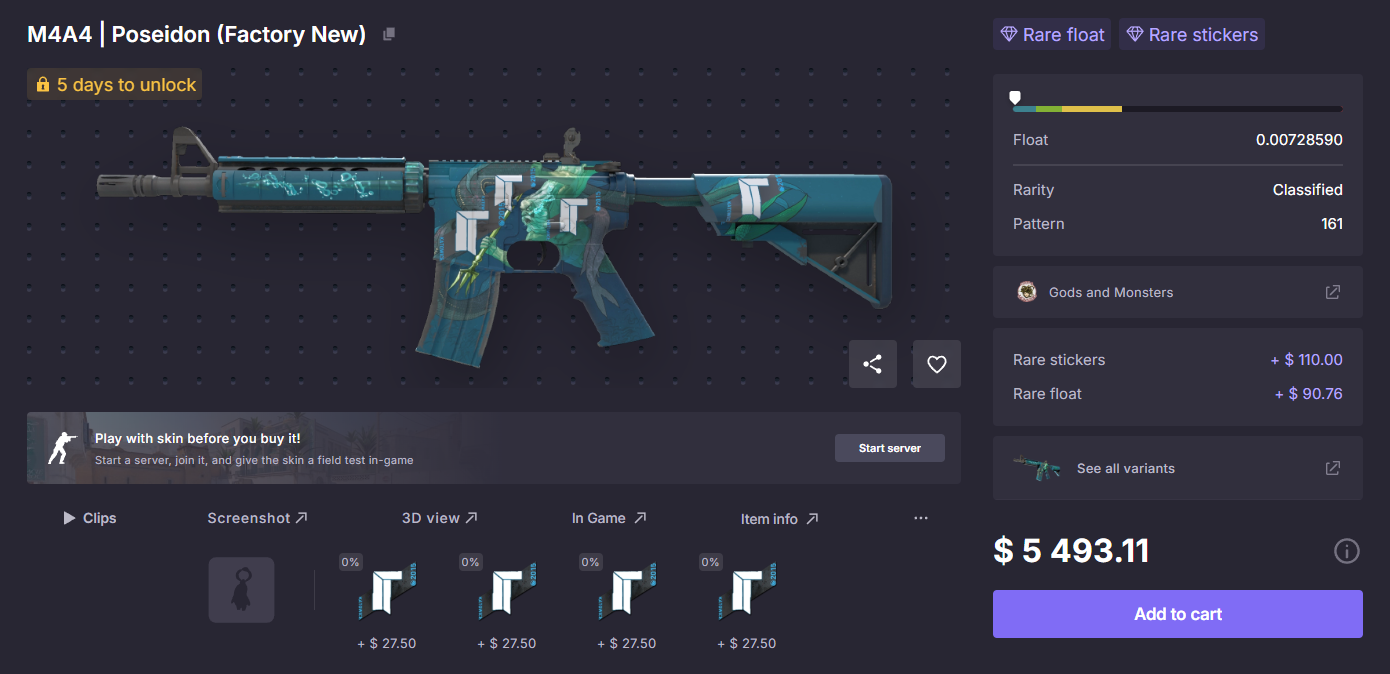
Float value is your friend at the low end. A $0.50 skin with a 0.001 float (nearly perfect Factory New) can sell for $3-$5 to collectors who care about condition rankings. Most players don't check their floats — they just see "Factory New" and assume every FN skin is equal. They're not. If you get a drop with an exceptionally low float, you're holding something worth more than the default listing price suggests.
Sticker and charm combos can multiply base value. This applies more to buying than dropping, but it's worth knowing. A cheap skin with a Katowice 2014 sticker applied is worth significantly more than the same skin without it. Scanning marketplace listings for these kinds of overlooked combos is one way budget players find skins listed below their actual value.
The core habit here is simple: before you sell, trade, or ignore any skin, check what it's actually worth across different marketplaces. CS2 skin prices vary between platforms more than most players realize — the same skin can be listed at $3 on one platform and $5 on another. Selling on the right platform or buying from the cheapest one is free money that most players leave on the table.
Step 3: Use Trade-Up Contracts Strategically
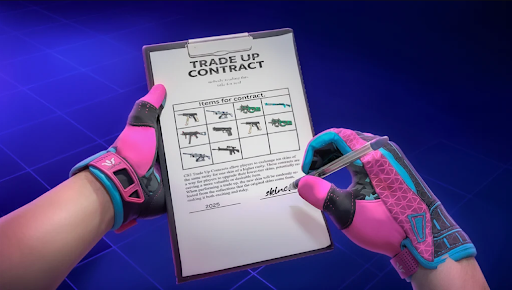
Trade-up contracts are CS2's built-in upgrade mechanic. You feed in 10 skins of the same rarity, and the game gives you one skin of the next tier up. Most players treat this like a slot machine — throw in whatever they have and hope for the best.
That's the wrong approach. Trade-ups are math problems, not lottery tickets.
The output skin is pulled from the collections your inputs belong to, weighted by how many skins you contributed from each collection. If seven of your inputs come from Collection A and three from Collection B, there's a 70% chance the result comes from Collection A. This means you can heavily weight the odds toward a specific high-value outcome by choosing your inputs carefully.
Float value also carries through. The output's float is calculated from the average float of your inputs, scaled to the output skin's float range. With the right combination of input floats, you can guarantee a Factory New result — which, as we covered earlier, can be worth significantly more than the same skin in Minimal Wear or Field-Tested condition.
The budget play is to focus on low-cost trade-ups where the math is clearly in your favor. Find 10 skins that cost $0.30-$0.50 each (a $3-$5 total investment) where the potential outputs include at least one skin worth $10+. If the expected value — accounting for every possible outcome and its probability — is higher than your input cost, you have a profitable trade-up. Run it enough times, and the wins outpace the losses.
The key is to always simulate the contract before committing. Tools exist that let you input your planned skins and see every possible outcome with exact probabilities and expected profit or loss. This takes trade-ups from gambling into calculated decision-making — and that's where the value builds up over time.
Step 4: Play the Seasonal Cycles
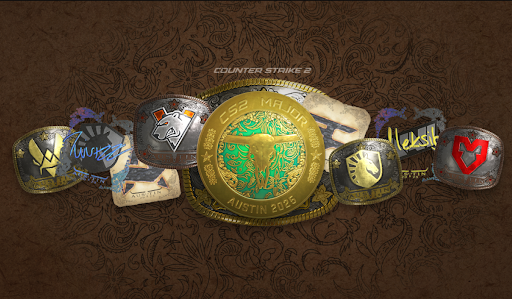
CS2's economy doesn't move randomly. It follows patterns tied to Valve's event calendar, and budget players who recognize these cycles can time their buys and sells for maximum value.
Major tournaments are the biggest recurring event. Every CS2 Major comes with team stickers and capsules. During the Major, sticker capsules are available at their cheapest (around $0.99 for regular capsules), and player stickers often sell for pennies on the Steam Market. After the Major ends and the capsules leave the store, prices gradually climb as supply dries up. Buying stickers during a Major and holding them for 6-12 months is one of the most reliable appreciation plays in CS2.
Summer and winter sales create temporary price dips across the entire Steam Market. Players liquidate skins to fund game purchases, flooding the market with supply and pushing prices down. Smart buyers pick up skins during these windows and hold until prices normalize.
Valve updates are the wild card. The October 2025 knife trade-up update crashed skin prices across the board, but it also created buying opportunities for players who recognized that the panic was overblown. Within months, many items recovered significantly from their crash lows. Players who bought during the dip locked in value that passive holders had to wait much longer to regain.
The pattern is consistent: buy when others are panic-selling, sell when demand peaks. This doesn't require insider knowledge or huge capital — even $10-$20 spent at the right moment can generate meaningful returns.
Step 5: Track Everything
Here's where most casual inventory builders fall short. They accumulate skins, make occasional trades, but never actually quantify what they have or whether their strategy is working.
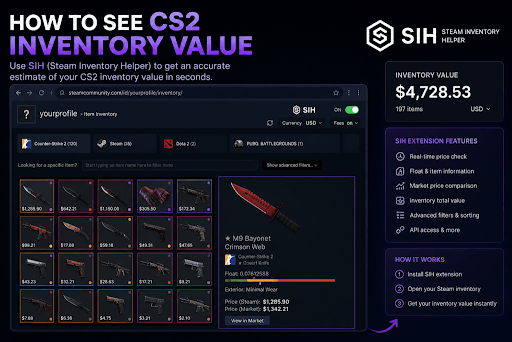
Get in the habit of checking your total inventory value regularly. A CS2 inventory checker lets you paste your Steam profile URL and get an instant valuation of everything you own — every skin, case, sticker, and charm — based on current market prices. This is your scoreboard.
Tracking does two things. First, it shows you whether your inventory is actually growing in value or just growing in item count (not the same thing). A hundred skins worth $0.03 each is not progress. Five skins worth $20 each is. Second, it helps you spot items that have appreciated without you noticing. That $2 skin you picked up during a sale might quietly be worth $8 now — and you'd never know unless you checked.
Set a simple routine: check your inventory value once a month. Note which items gained, which lost, and whether your overall trajectory is heading up. This turns inventory building from a vague hobby into a measurable process with clear feedback.
Step 6: Reinvest, Don't Cash Out Too Early
The difference between a $50 inventory and a $500 inventory usually isn't luck — it's compounding. When a trade-up hits and you land a $15 skin, the temptation is to sell it and pocket the cash. But if you're building toward a goal, that $15 is better spent as fuel for the next trade-up, or reinvested into undervalued skins during a market dip.
Think of your inventory like a small portfolio. Early on, every dollar you reinvest accelerates growth. A $15 skin becomes the input for a trade-up that could yield a $40 skin. That $40 skin funds two more trade-ups. The math compounds faster than most players expect, especially if you're consistently identifying positive expected-value opportunities rather than gambling blindly.
The cash-out point is personal, but the principle is universal: the longer you let value compound inside your inventory, the faster it grows. Players who resist the urge to sell every small win are the ones who end up with inventories that actually mean something.
The Realistic Timeline
Let's be honest about expectations. You're not going from zero to $500 in a month. Here's a rough trajectory for a player who follows this approach consistently:
Months 1-3: Weekly drops accumulate. You sell cases and low-value skins, building a starting balance of $5-$15. You run your first few calculated trade-ups, winning some and losing some but trending positive.
Months 4-6: Your balance reaches $30-$60. You start buying undervalued skins during seasonal dips and holding Major stickers. Your trade-ups move from the $3-$5 input range into the $10-$15 range, where the potential outputs get more interesting.
Months 7-12: Compounding kicks in. Sticker investments from earlier Majors have appreciated. A few well-timed trade-ups have landed mid-tier skins worth $30-$50 each. Your total inventory value crosses $200, then $300, with momentum building.
Beyond month 12: If you've been consistent, $500 is within reach. At this point, your inventory generates its own opportunities — you have enough capital to take advantage of market dips, run higher-value trade-ups, and hold items through appreciation cycles.
The players who get there aren't the ones with the best luck. They're the ones who treated their inventory like it mattered from the very first free drop.