Skins are a massive part of multiplayer games, and Counter-Strike 2 is no exception. CS2 skins are not attached to the account. They can be resold, and this feature alone created a huge market around them. However, their prices are set by players, and the factors that affect a skin’s value aren’t always obvious. Today, we’ll talk about three not so obvious, yet key factors to accurately estimate the value of a CS2 skin — things Steam won’t tell you.
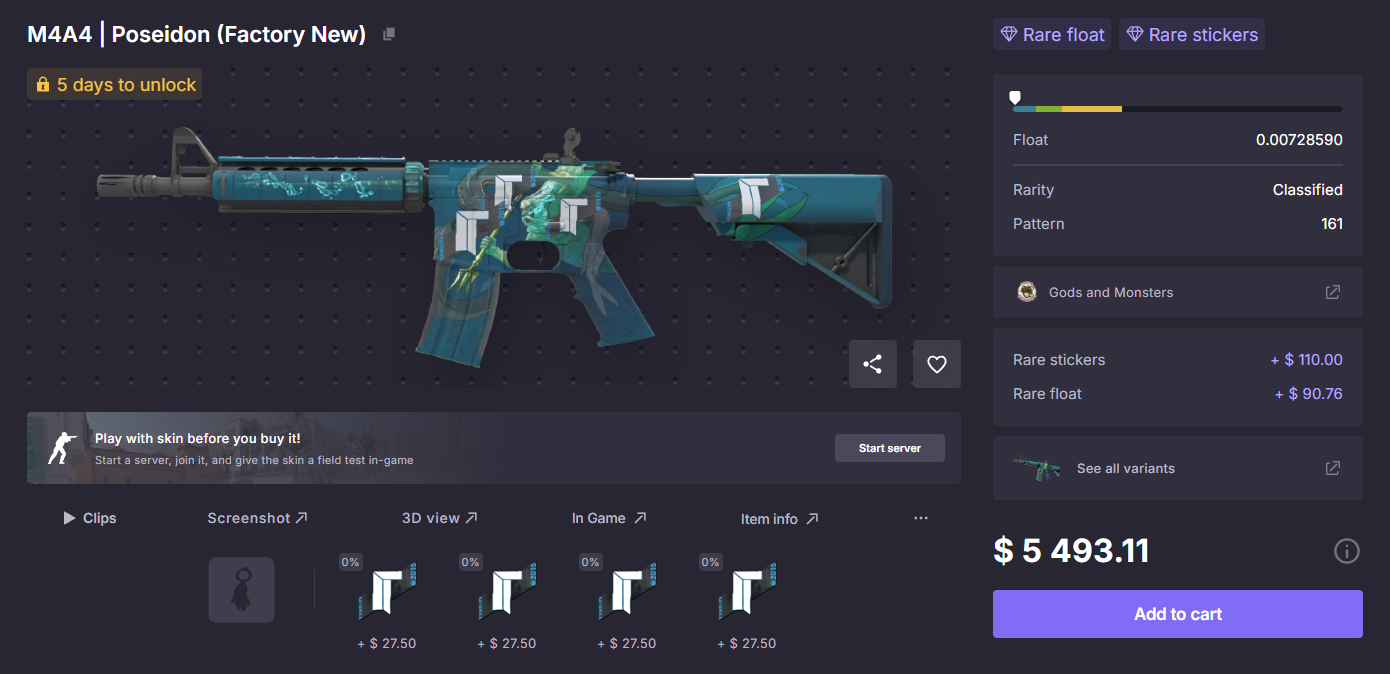
Factor number one: Float of CS2 skins
Every skin in CS2 has its own float value, which affects how skins look (scratched or shiny new). Wear levels (aka Float Value) range from 0 to 1. The Steam Marketplace sorts skins into the following categories:
Factory New: 0.00 – 0.07
Minimal Wear: 0.07 – 0.15
Field-Tested: 0.15 – 0.37
Well-Worn: 0.37 – 0.44
Battle-Scarred: 0.44 – 1.00
While these categories are enough for basic understanding, they fail to provide a more nuanced approach in skin evaluation. A skin with a float of 0.15 might look much cleaner than one with 0.36 — but both will still be listed under the same category on Steam.
Things get even more interesting the closer the float number to its possible extremes. Skin collectors are eager to pay a premium for the best of the best. For an ultra-rare float, the price can skyrocket. For example, a MAC-10 Bronzer skin that usually costs less than 10 cents was once sold for over $45,000 because it had the lowest float value in the world.
Third-party platforms can help you estimate your skin’s real value. For example, CS.MONEY, as its algorithms take rare floats into account, which means you can sell your skin for a fair price without getting low-balled.
Factor number two: Pattern of CS2 skins
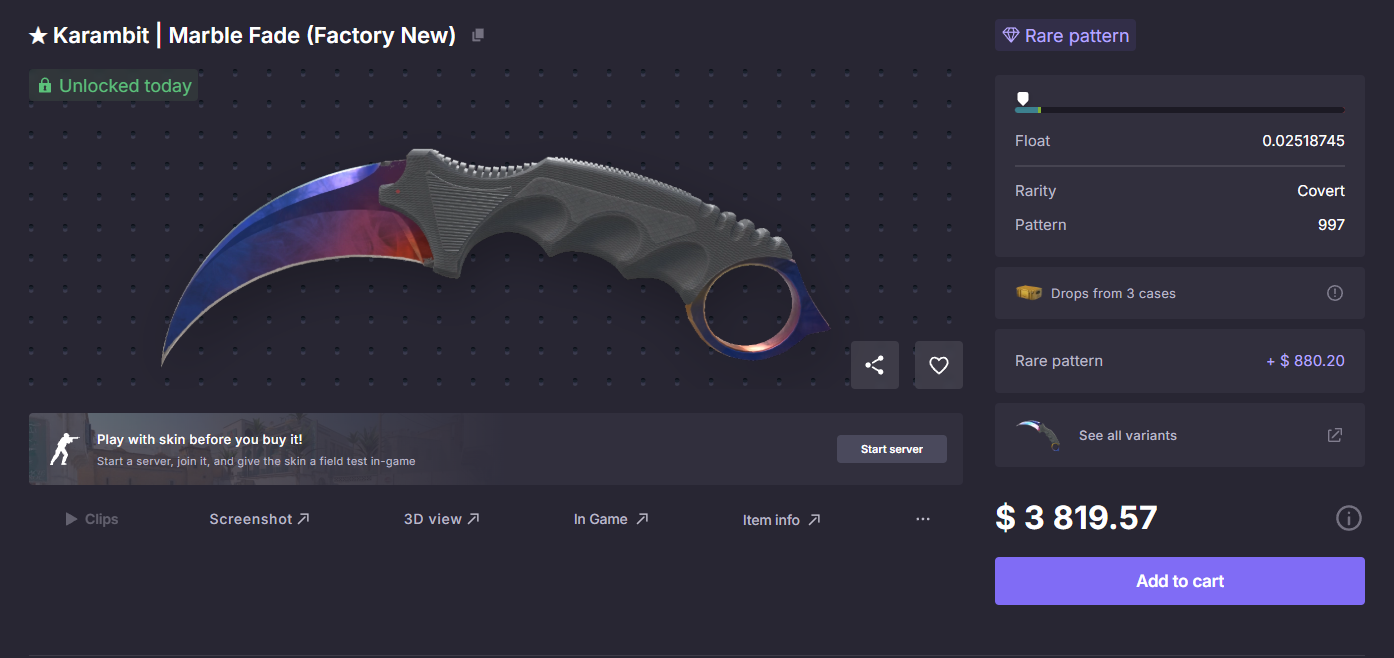
Not all skins look the same and it’s not just about the float. In CS2, appearance of two similar skins may differ, even if they have similar wear levels. For example, Doppler knives can have red, blue, black, or multicolor blades, depending on the pattern number. There are 1000 different patterns in total.
For most skins, the pattern doesn’t change much, but in some cases, it directly affects the price. For example, an AK-47 Case Hardened StatTrak Factory New can sell for just over a thousand dollars, but if it has the pattern 661, its value jumps to over a million dollars!
You won’t get this information on Steam Market. However, trading websites like CS.MONEY take rare patterns into account when estimating prices. Moreover, it is possible to filter the exact pattern among similar skins to easily find the best ones. The site’s user interface is simple and intuitive, so you won’t get lost.
Factor number three: Stickers on CS2 skins
Stickers have become just as important in Counter-Strike 2 as skins themselves. They let you customize your weapon and make it look unique which is a great way to express yourself. But on Steam Market, skins with stickers are mixed together with skins without them, so it’s hard to find certain options
Moreover, not all stickers are equal. Obviously, a skin with rare stickers worth thousands of dollars will cost more than one with cheap 3-cent stickers. But Steam doesn’t reflect that difference so you might overpay for skins just because of stickers on it, or sell for too low as well. Meanwhile on third-party trading platforms, like for example CS.MONEY, you can tell which stickers are applied and how much they cost (to avoid under- or overpaying). This platform not only considers rare stickers in its pricing but also lets you see how any skin looks in-game directly in your browser. Its preview tool helps you check your skin’s appearance without even launching the game, which is super convenient.
Summary
So, there are three factors that help you accurately estimate the value of your inventory and avoid getting scammed: float value, patterns, and stickers. Main CS2 trading mistakes to avoid in 2025 originate from ignorance. Learning this basic information will help you in almost all casual cases. To know the true worth of your CS2 skins and sell them quickly and safely, it is better to use reliable services like CS.MONEY, rated 4.7/5 on TrustPilot.