Well, that’s two sets down and five to go.
Magic: The Gathering – Universes Beyond: Teenage Mutant Ninja Turtles kicks off what is shaping up to be a very Universes Beyond–heavy year. It arrives immediately after what might be my favorite set in quite a while: Lorwyn Eclipsed. That contrast makes evaluating TMNT a little tricky.
I’ve always been an advocate for Universes Beyond. I think bringing new franchises into Magic can introduce new players and create exciting design space. That said, not every UB set hits the same mark. So the real question is: how does Teenage Mutant Ninja Turtles stack up against other Universes Beyond releases, and does it justify the same level of presence in Magic?
Table of Contents
What is Universes Beyond: Teenage Mutant Ninja Turtles?
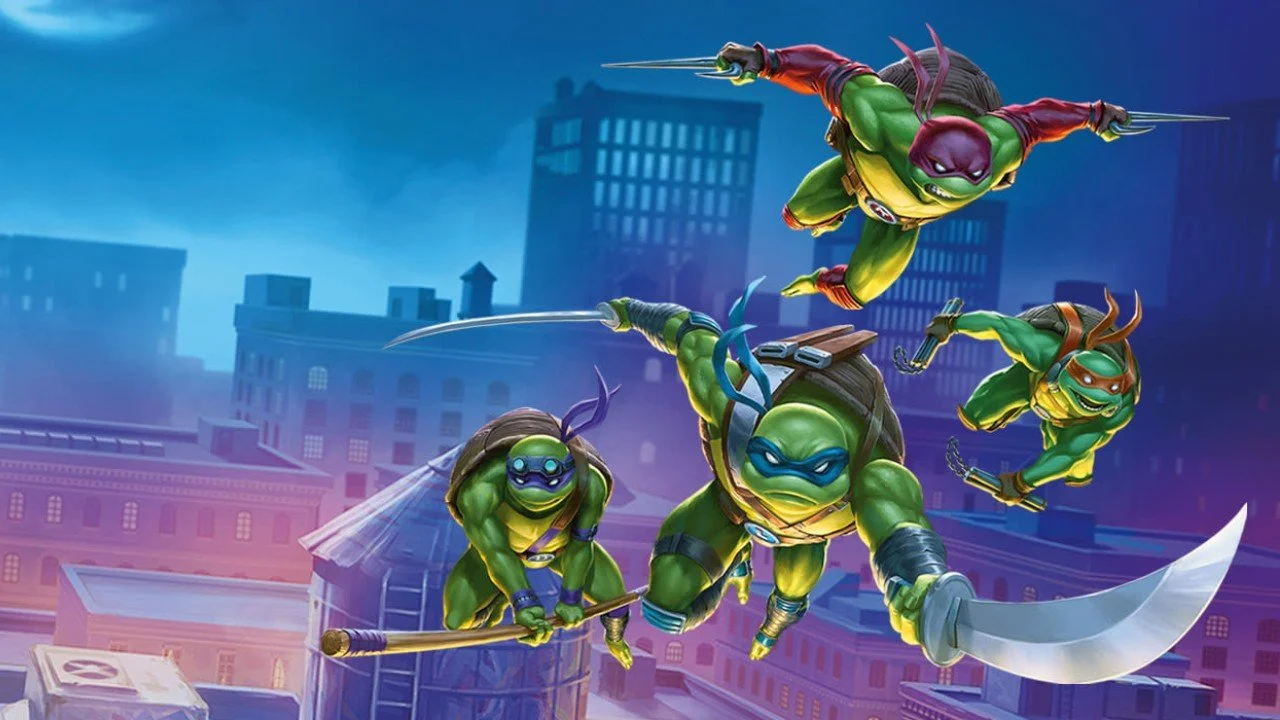
Universes Beyond: Teenage Mutant Ninja Turtles is the first of four UB sets releasing this year. After visiting New York previously with the Spider-Man set, Magic returns to the city — this time focusing on the iconic quartet of turtle brothers: Leonardo, Raphael, Donatello, and Michelangelo.
But the set isn’t just about the turtles themselves. We also see characters like Master Splinter, Shredder, and many of the franchise’s villains and henchmen. The goal appears to be representing TMNT across its many forms of media — comics, cartoons, movies, and video games.
Ironically, that ambition might also be the set’s biggest weakness.
Because TMNT is a smaller set, the card pool is much tighter than a typical Magic release. That means every card has to pull double duty — either supporting a mechanic or filling a limited archetype slot. There simply isn’t much room for cards that exist purely for flavor or storytelling.
In my opinion, the set might have benefited from committing to one specific TMNT era or style. The Commander precon, for example, is themed around the video games and feels much more cohesive because of that focus. If the main set had leaned fully into one comic run or one animated series, the theming likely would have landed harder.
Instead, the design philosophy feels similar to the Spider-Man set: “Look at all these characters!” It’s still fun — and I do think TMNT lands better overall than Spider-Man — but the thematic identity feels a bit diluted.
Key mechanics in Teenage Mutant Ninja Turtles
Mechanically, TMNT mirrors the Spider-Man set more than I expected.
Both sets feature a returning mechanic from Streets of New Capenna and a mechanic that cares about returning permanents to your hand. While there are other overlaps, those are the most obvious similarities.
The set focuses heavily on Ninjas, Mutants, and Artifacts, and introduces four main mechanics:
Sneak
Alliance
Disappear
Mutagen tokens
Sneak
Sneak is the standout mechanic in the set. It’s essentially an upgraded version of Ninjutsu.
Unlike Ninjutsu, Sneak doesn’t specify that the creature must come from your hand. As long as the card can legally be played, Sneak can put it directly into combat attacking. That means cards can potentially be Sneaked in from the command zone, exile, or even the graveyard depending on your deck’s strategy.
This flexibility makes Sneak one of the most fun mechanics in the limited environment, and it also opens up interesting possibilities in Commander.
Alliance
Alliance returns from Streets of New Capenna and functions as the classic “creaturefall” ability, triggering whenever a creature enters the battlefield.
It’s a strong mechanic with several powerful cards built around it, but it also feels very familiar. Alliance works well, but it doesn’t introduce anything particularly new to the game.
Disappear
Disappear is the opposite of Alliance.
Instead of triggering when permanents enter the battlefield, Disappear cares about permanents leaving the battlefield. Mechanically, it’s reminiscent of Void from Edge of Eternities.
While the concept is interesting, Disappear ends up feeling somewhat similar to Alliance in practice—except its effects trigger during the end step, which slows the gameplay pacing slightly.
Mutagen Tokens
Mutagen tokens are the new token type introduced in the set.
These tokens can be sacrificed by paying one mana and tapping them to place a +1/+1 counter on a creature. It’s a flexible mechanic that works across multiple archetypes and could easily find homes in many Commander decks.
Overall, Mutagen tokens are simple but effective — and likely the mechanic from this set that will see the most widespread use outside the set itself.
What is available for Universes Beyond: Teenage Mutant Ninja Turtles?
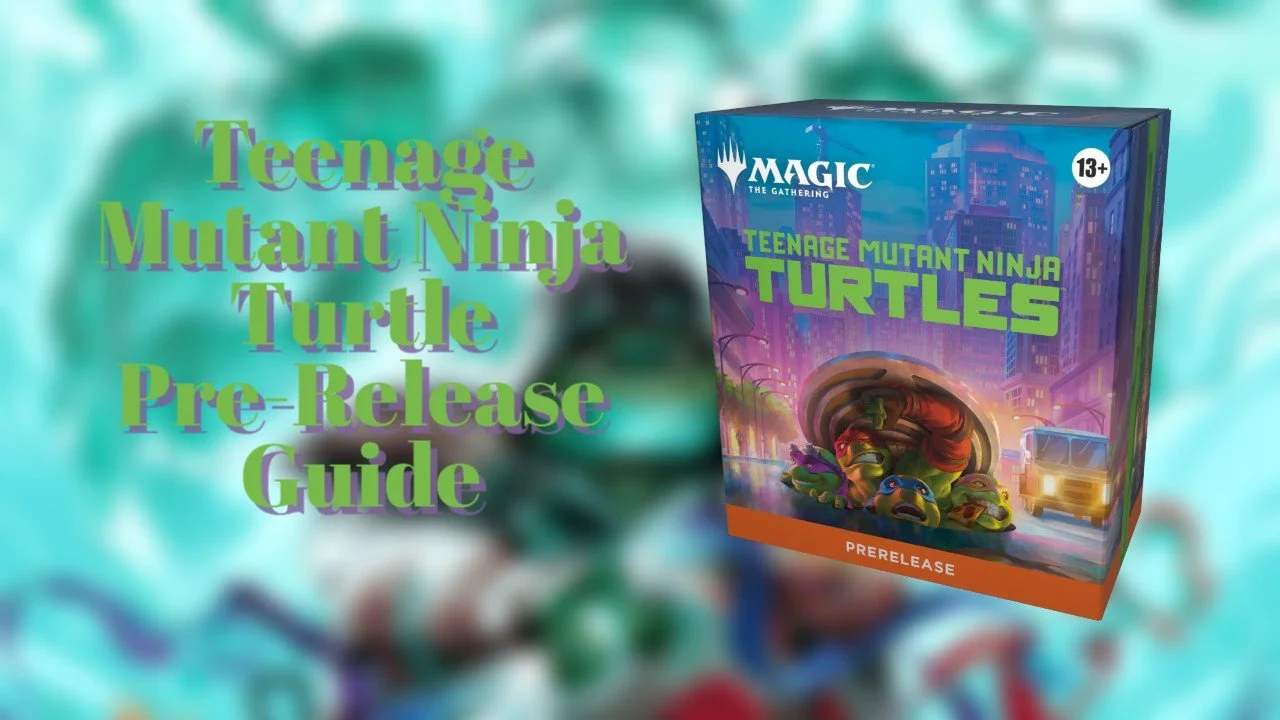
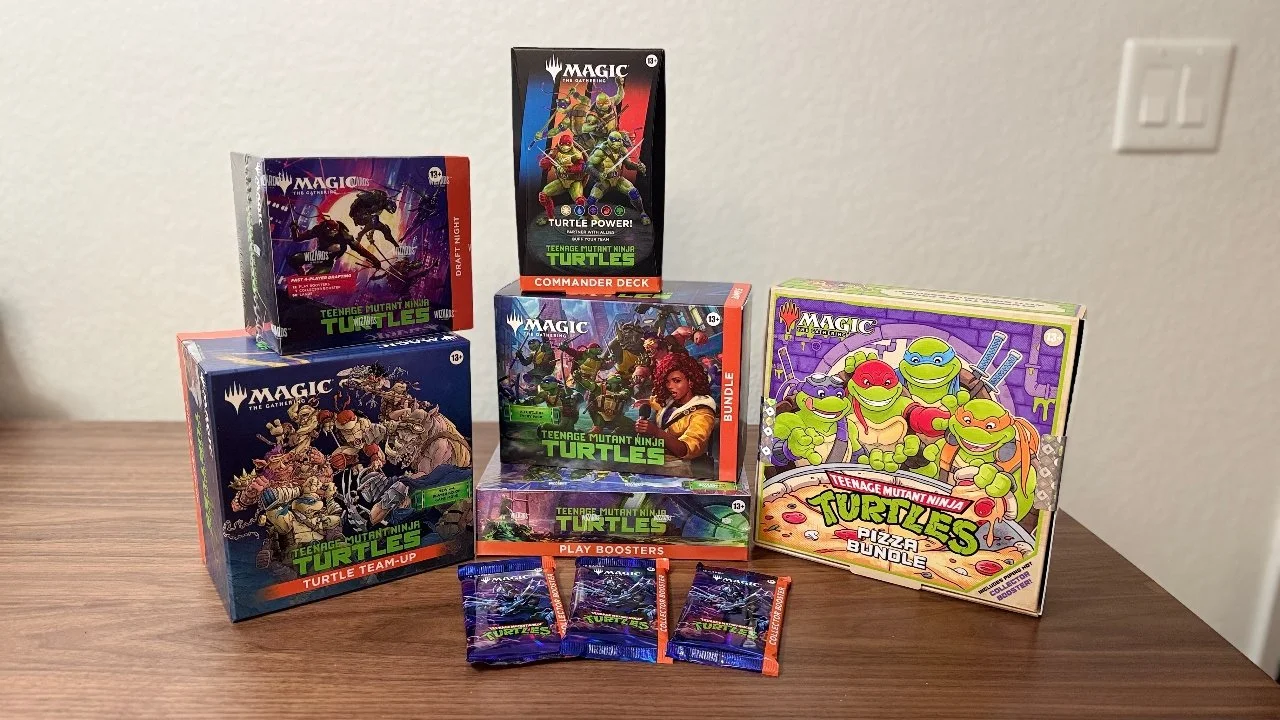
Universes Beyond: Teenage Mutant Ninja Turtles includes the typical lineup of UB products:
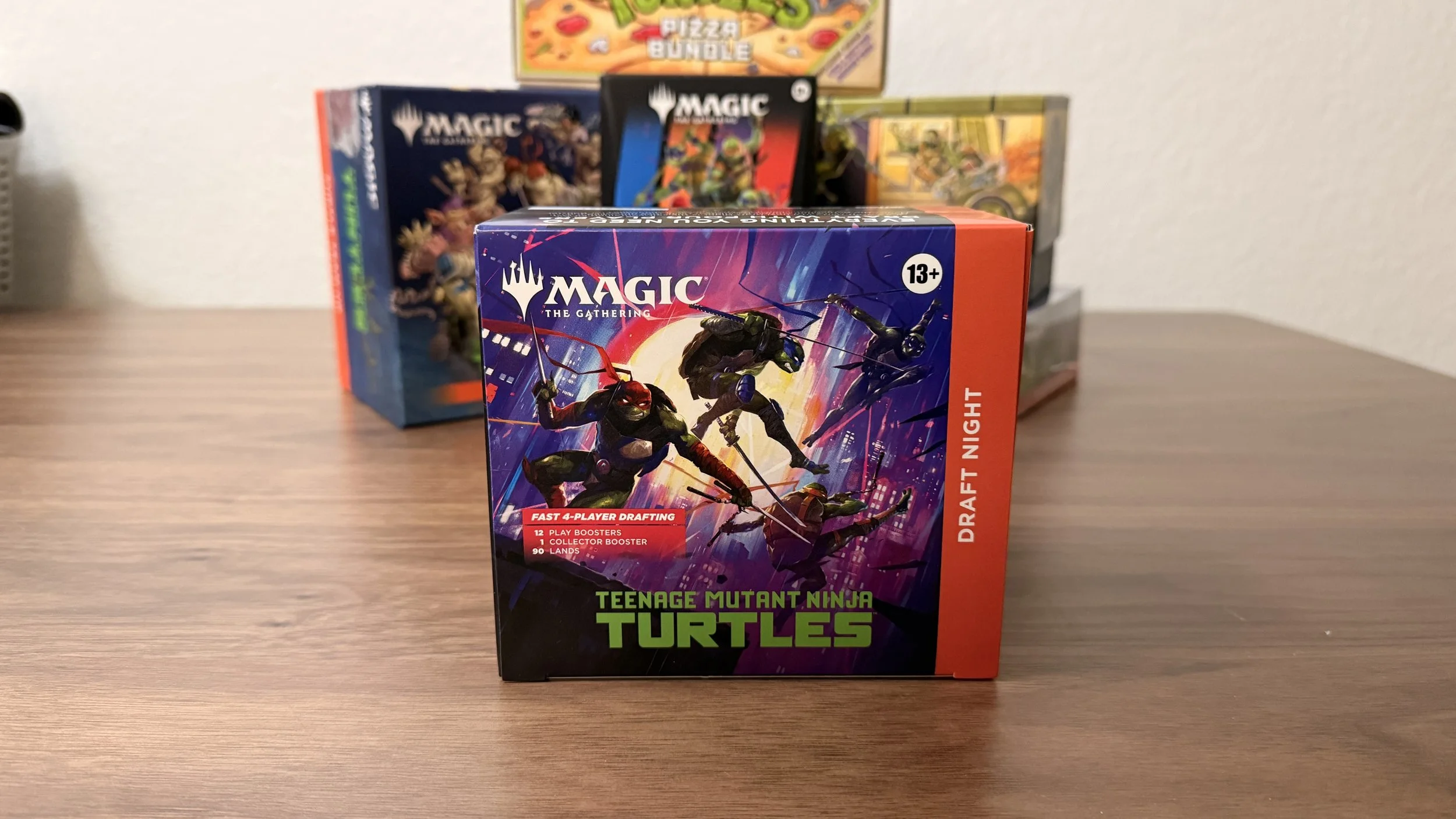
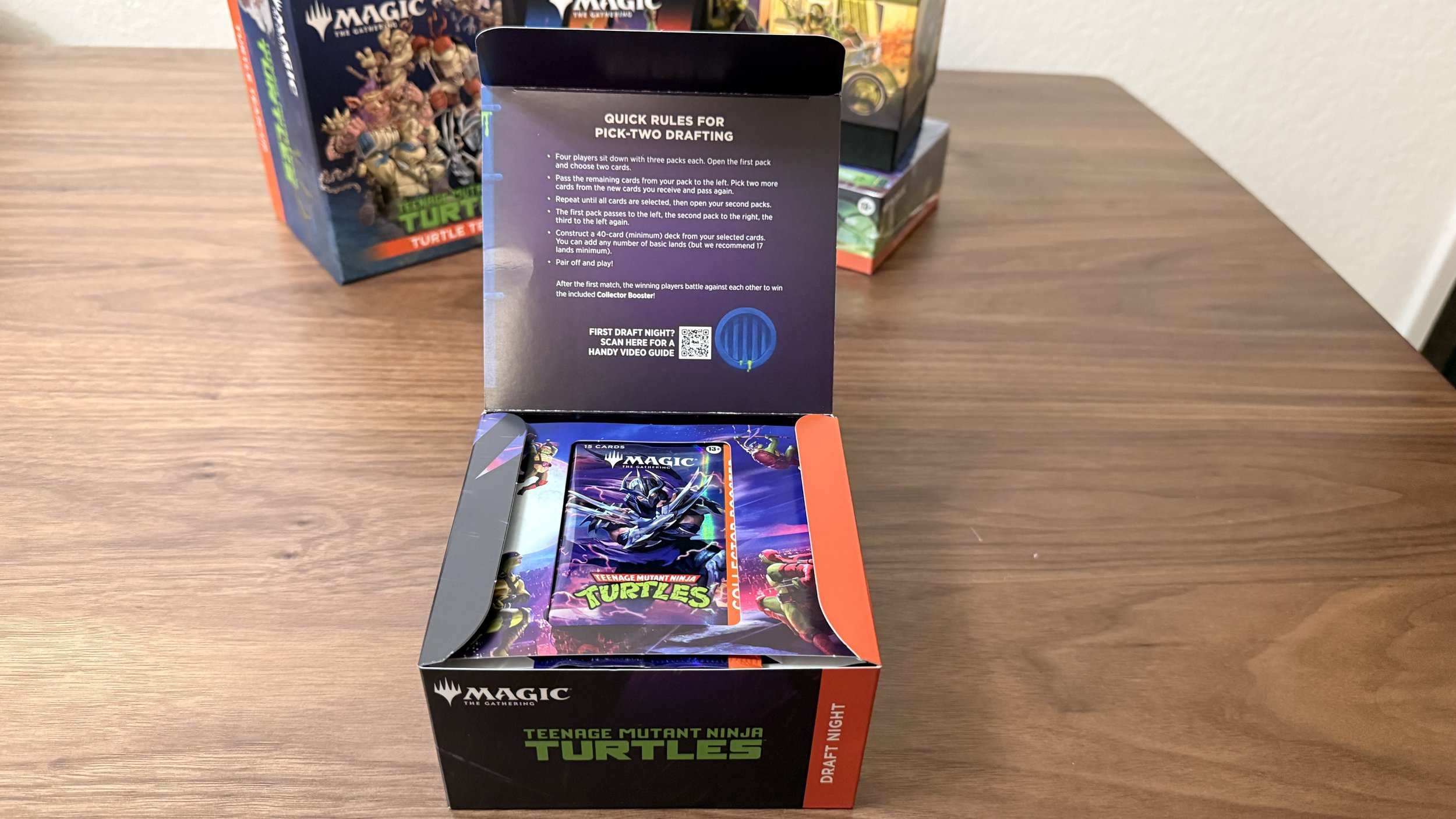
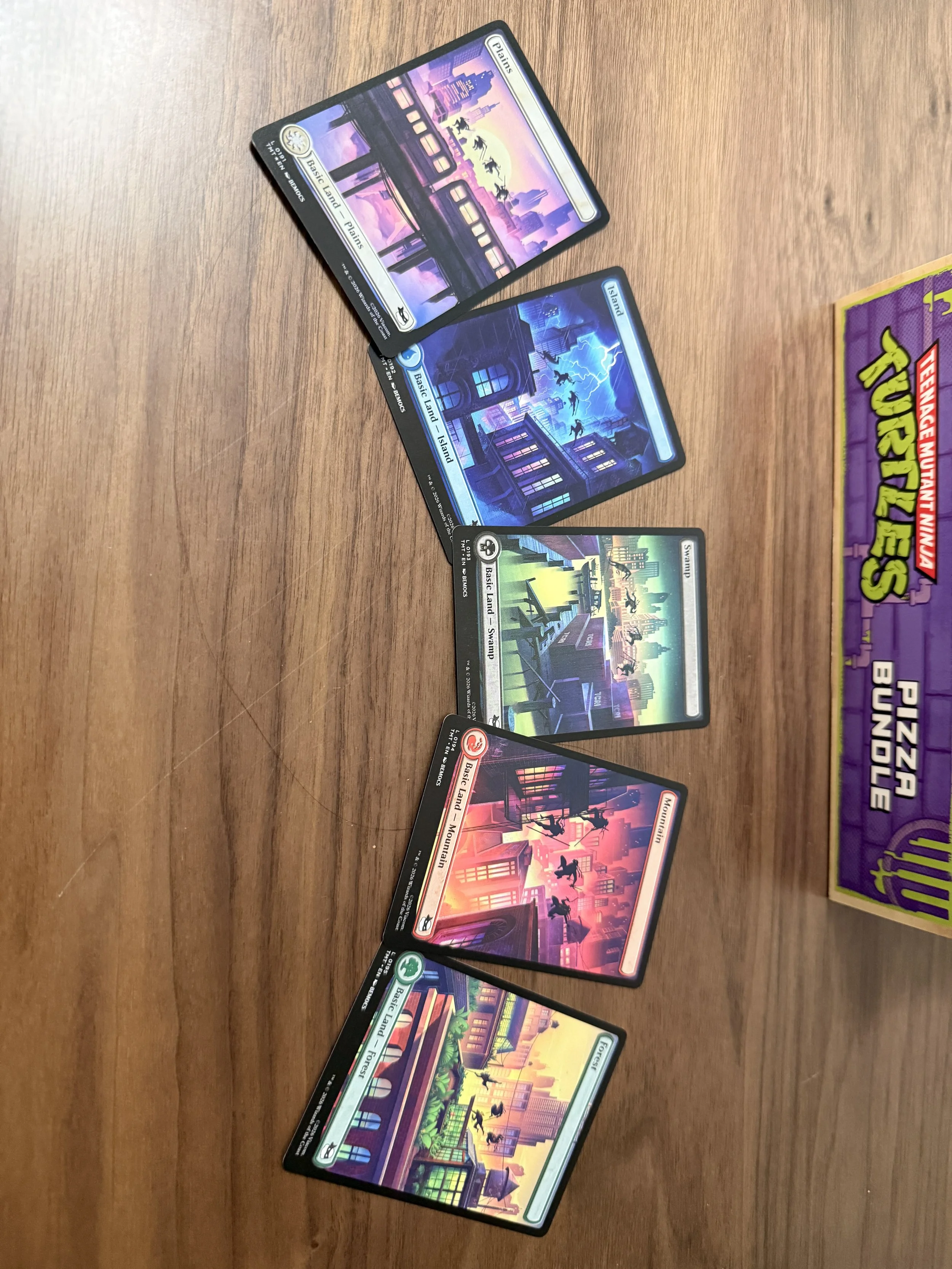
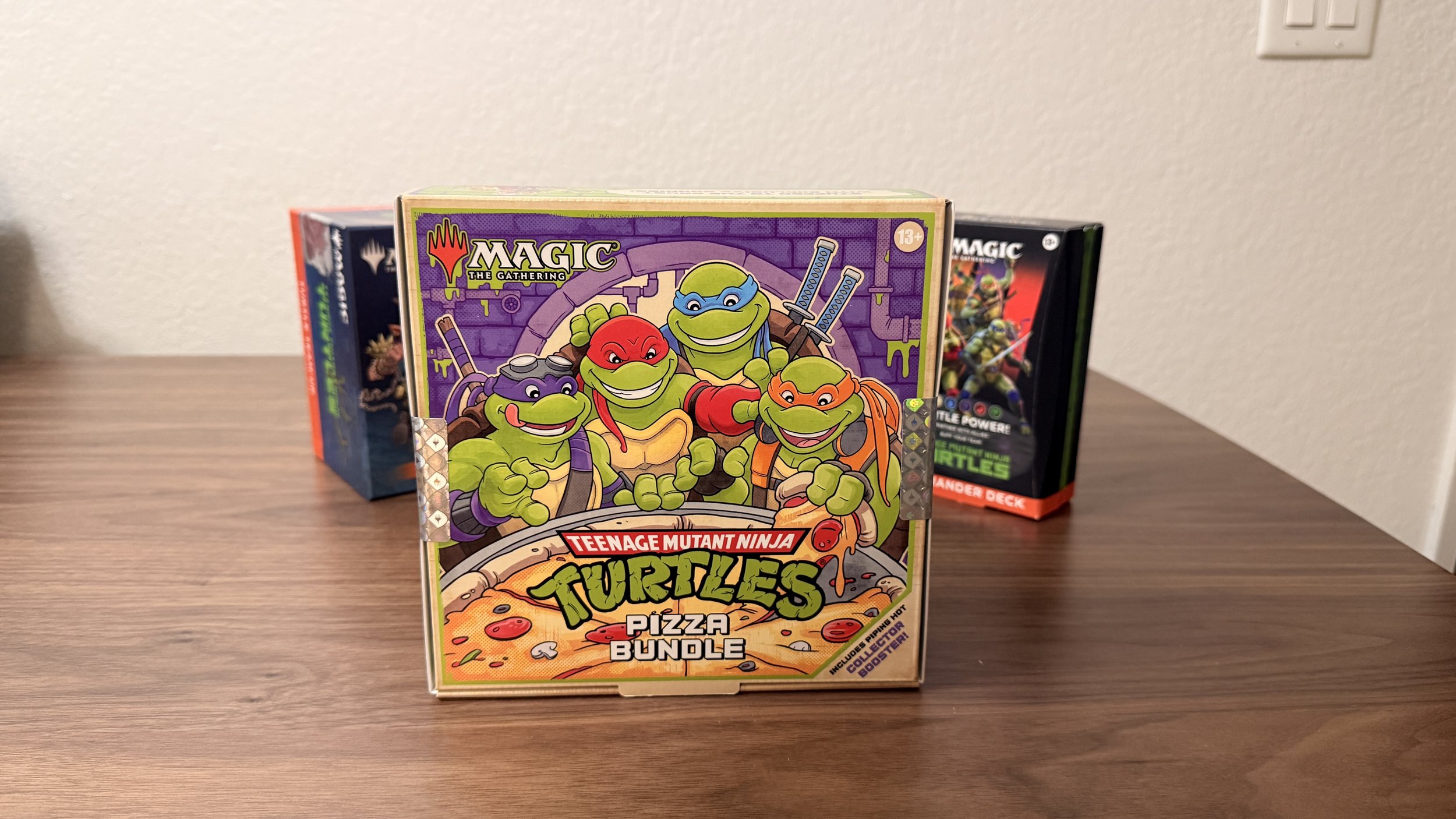
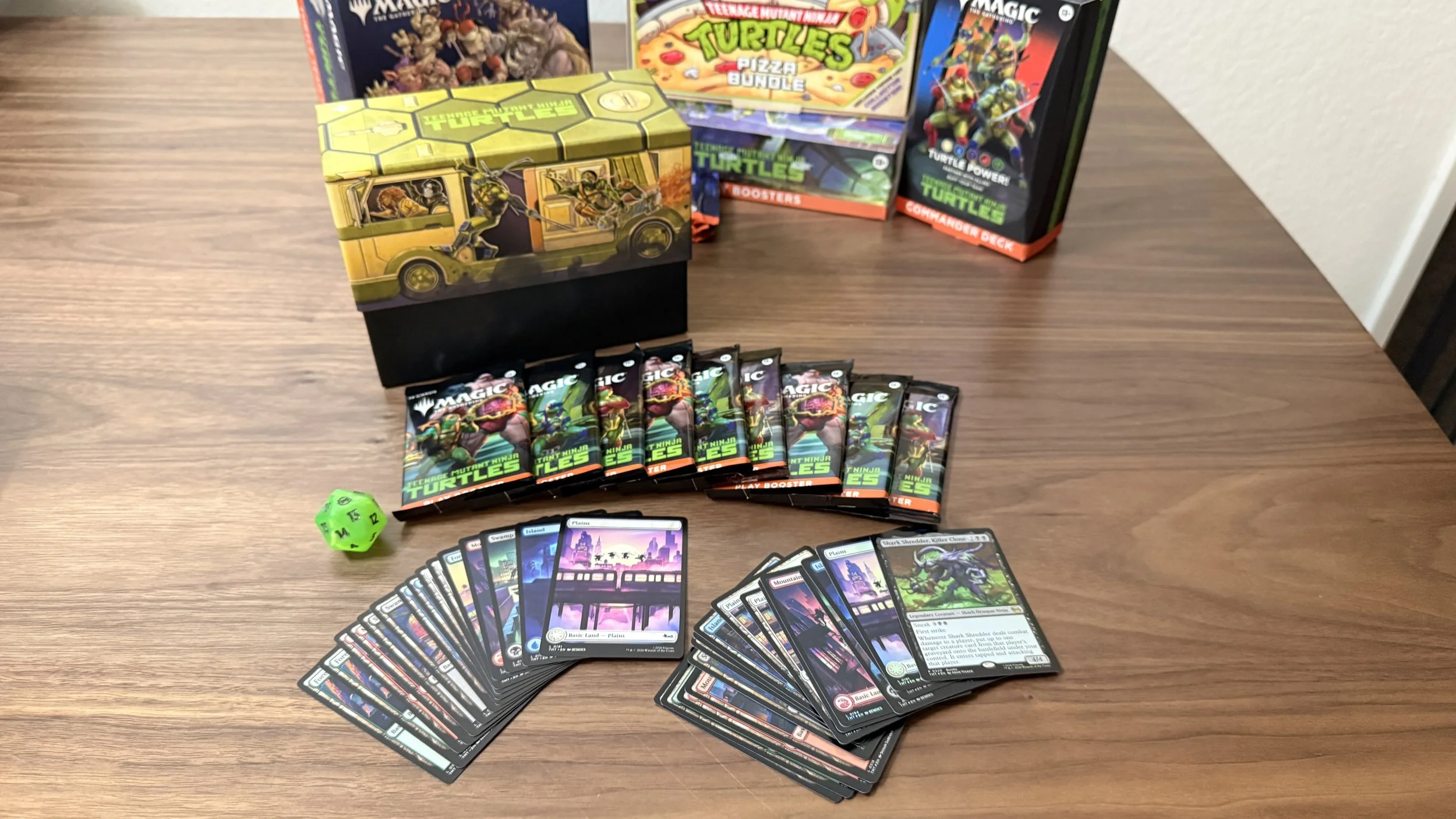
Play Boosters
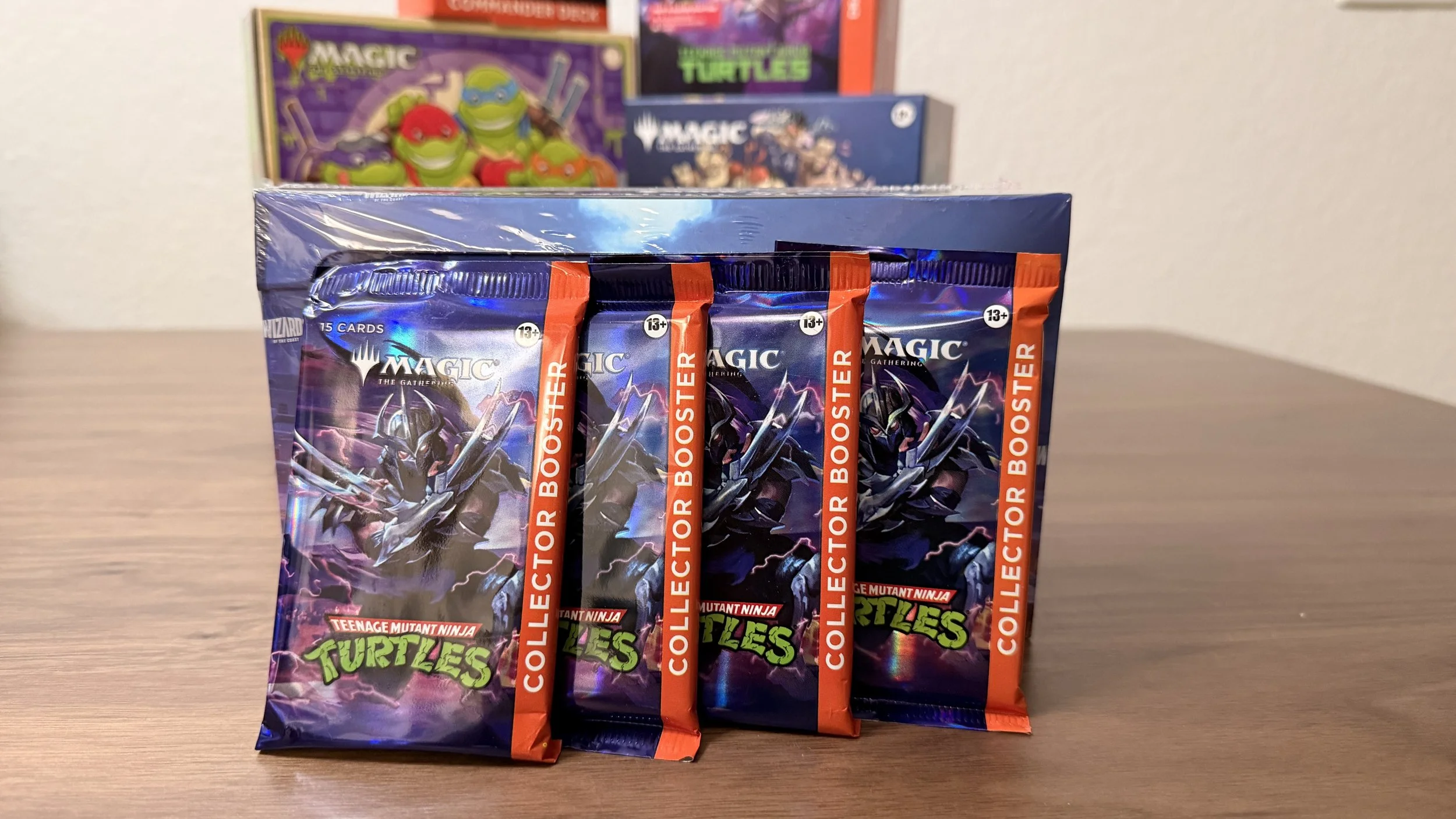
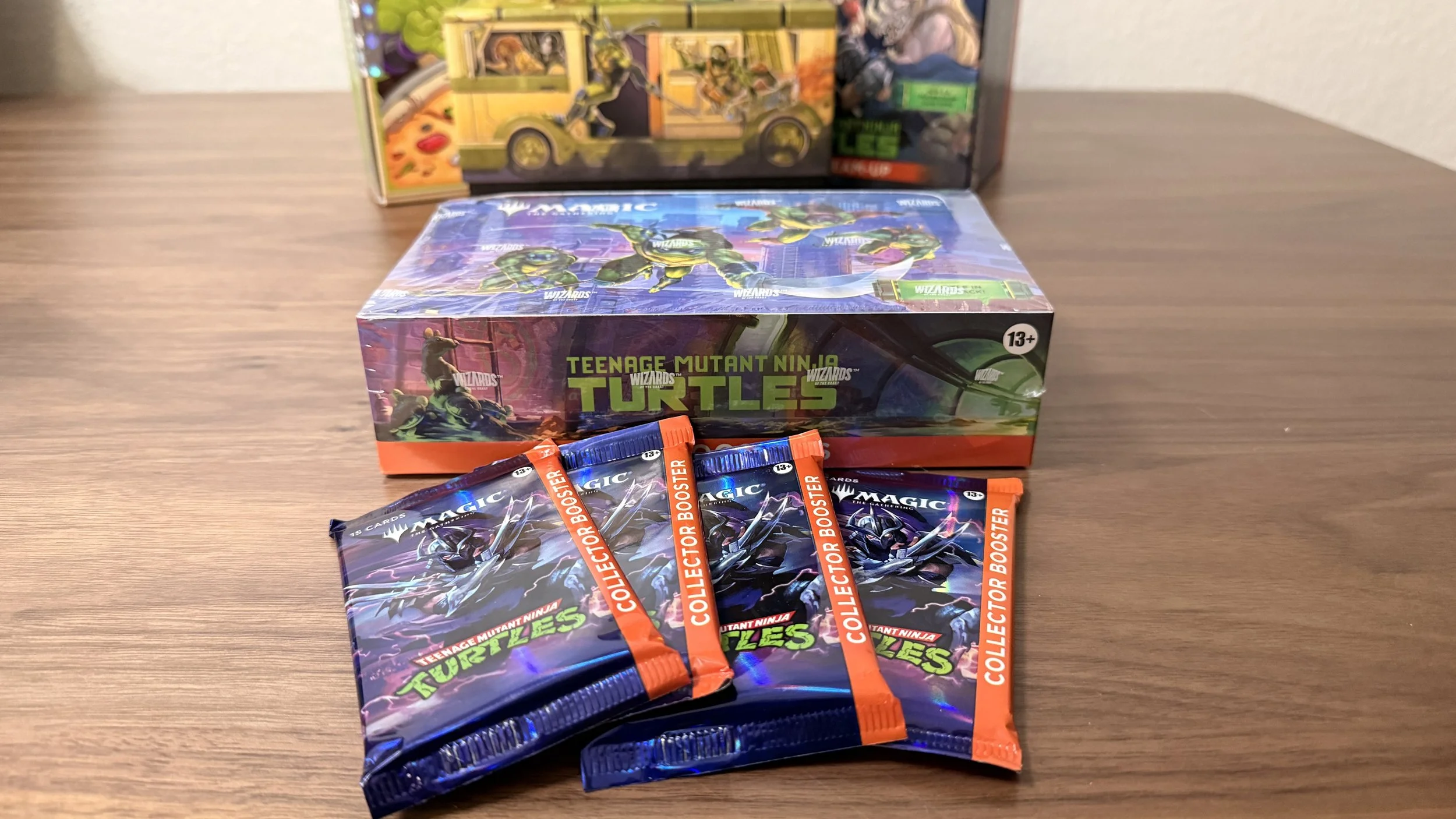
Collector Boosters
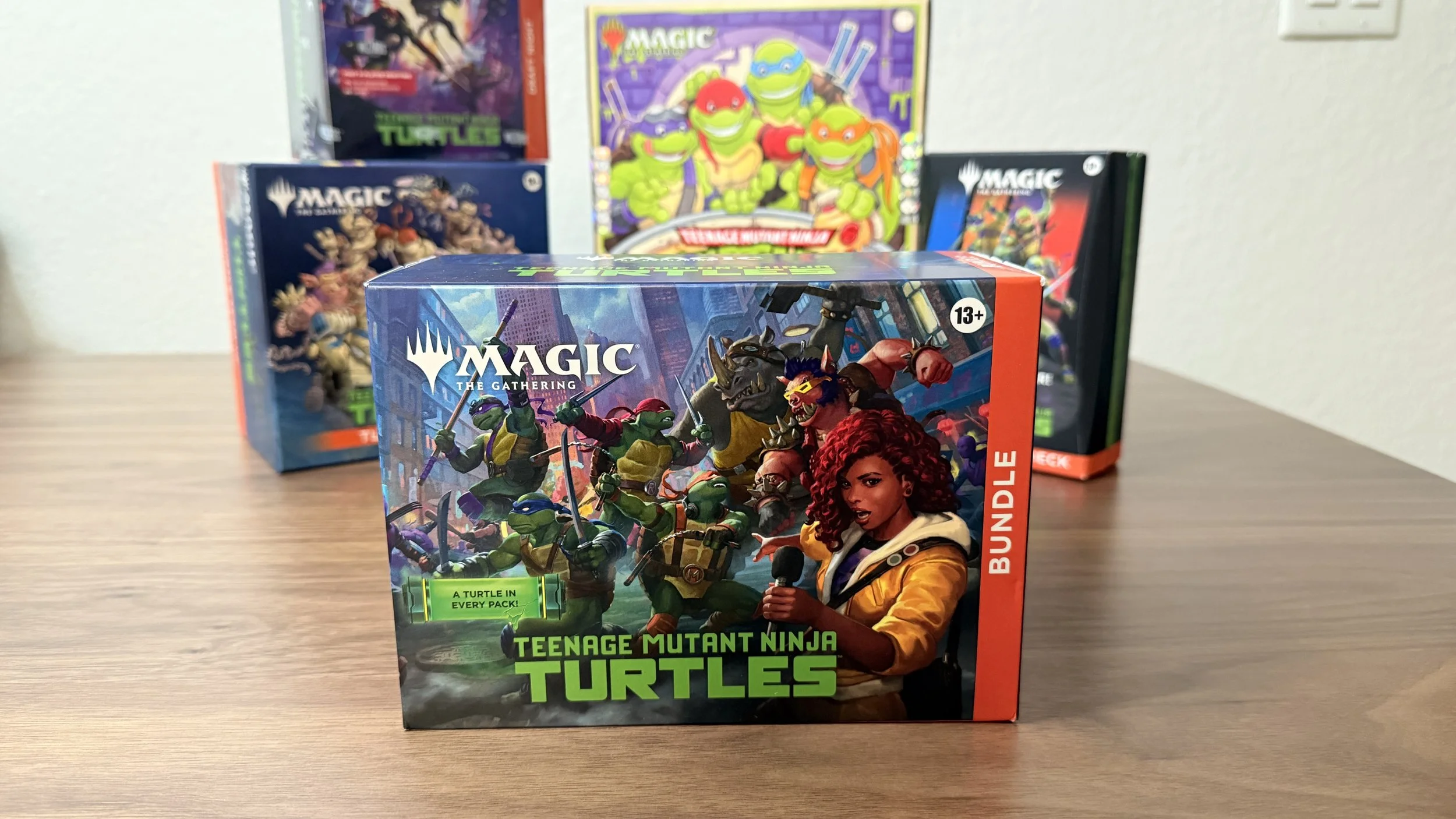
Traditional Bundle
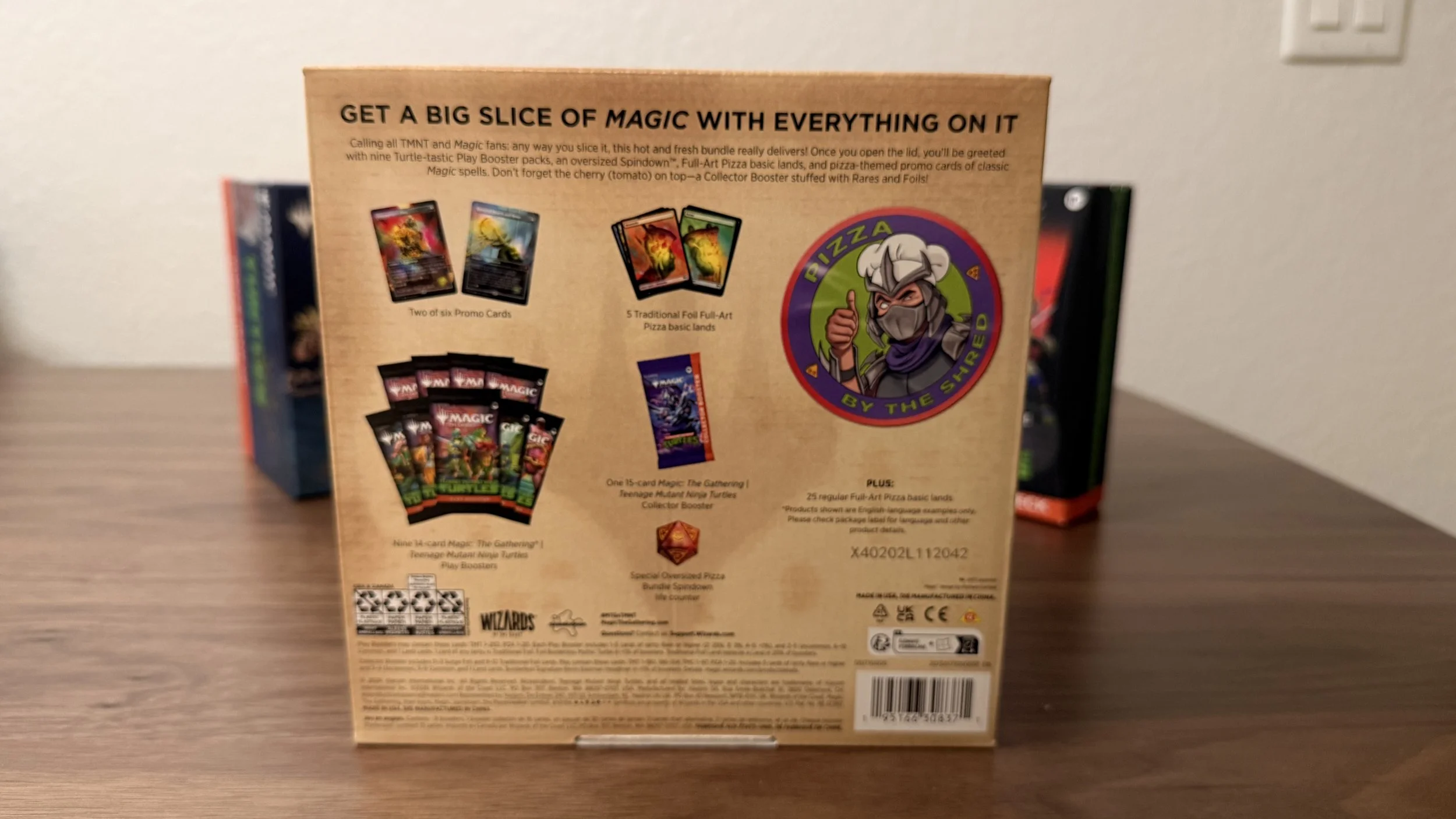
Pizza Bundle
Draft Night Box
Commander Precon
Turtle Team-Up (new product)
The Pizza Bundle is essentially a cosmetic variation of the normal bundle. The major difference is that it includes pizza-themed lands, a Collector Booster, and a couple of pizza-themed reprints, while the traditional bundle features silhouette lands instead.
What is the best product to buy?
As always, the answer depends on what you’re looking for. But in my opinion, the Turtle Power! Commander precon is easily the best purchase in the product lineup. From a financial perspective alone, the deck is currently selling below MSRP, while the value of the cards inside is already higher than the deck’s retail price. But even ignoring value, it’s simply one of the most interesting Commander precons released in a while.
On the opposite end of the spectrum is the Draft Night Bundle, which is difficult to justify at its current price point. While the Lorwyn Eclipsed Draft Night bundle had a clearer purpose, the TMNT version costs nearly as much as a full booster box while containing significantly fewer packs. Even worse, my copy didn’t include the draft archetype overview sheet that appeared in the Lorwyn bundle. For those reasons, it’s hard to recommend the Draft Night bundle unless the price drops significantly.
Teenage Mutant Ninja Turtles pre-con analysis
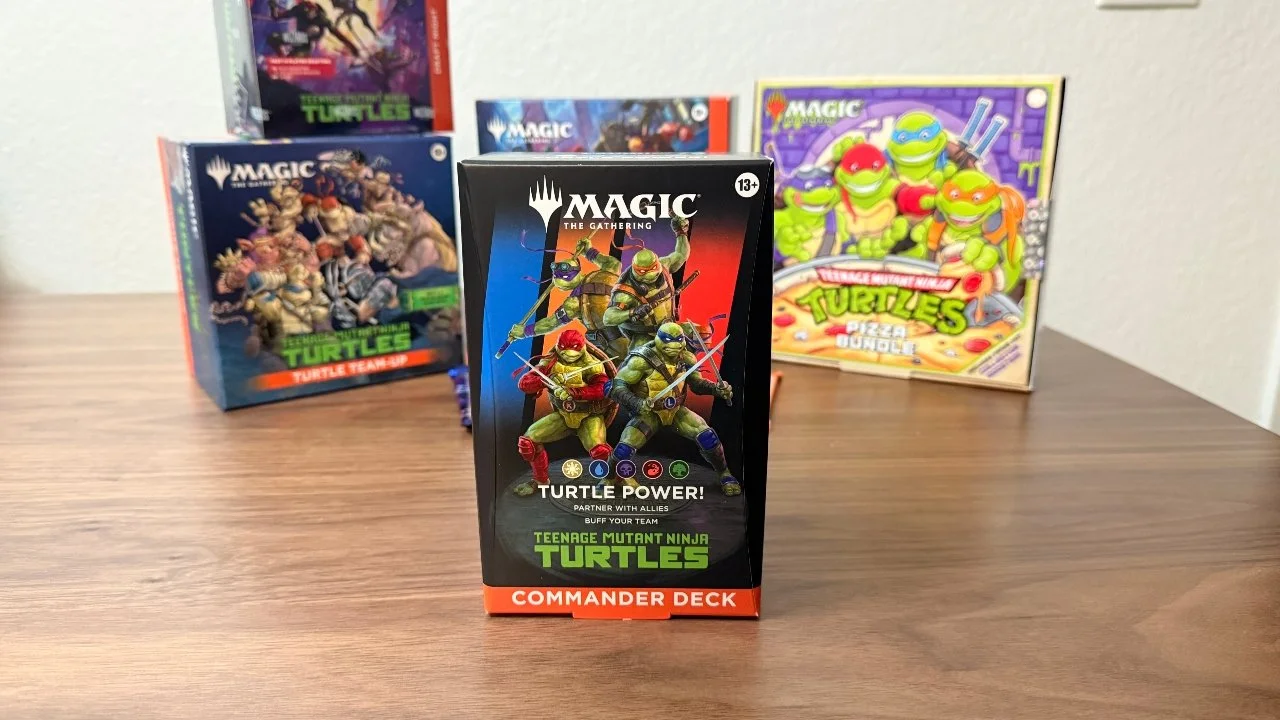
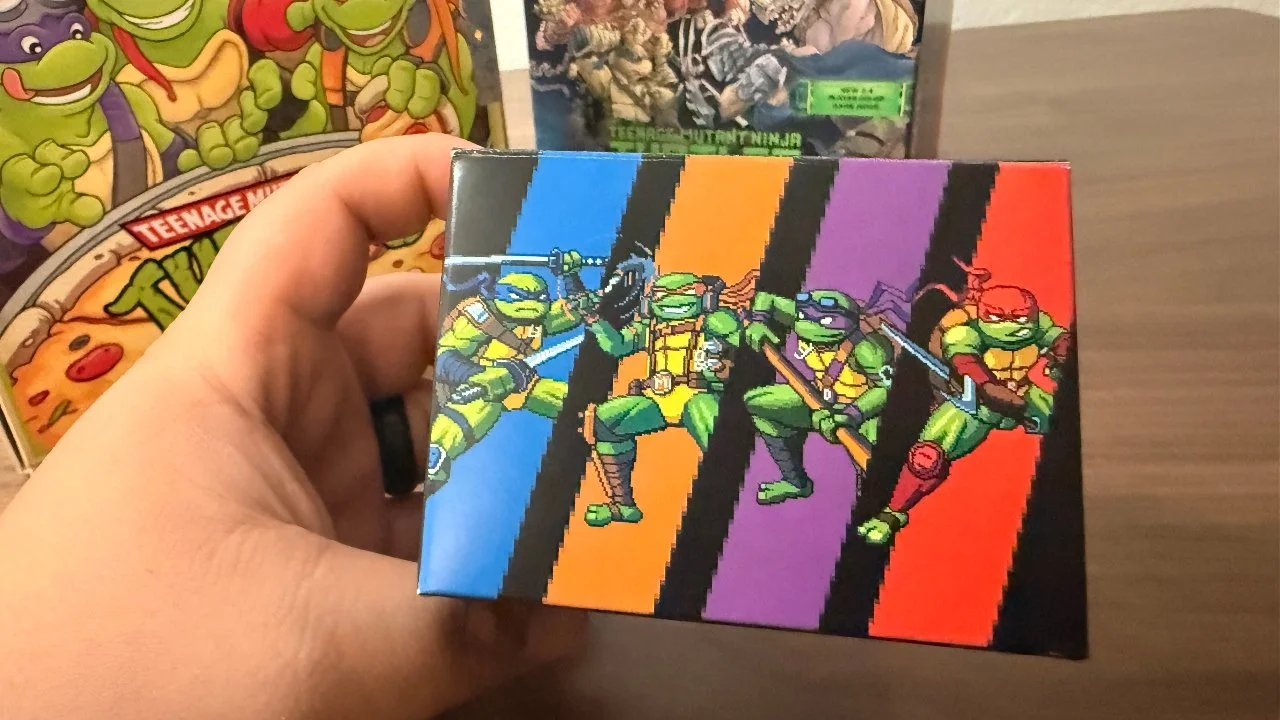
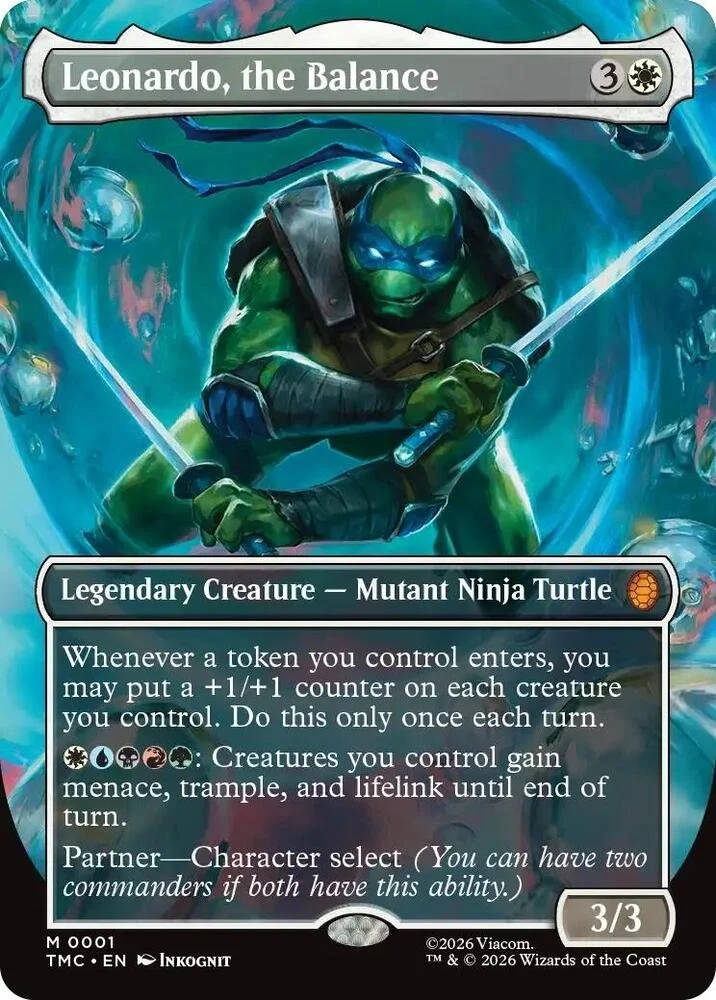
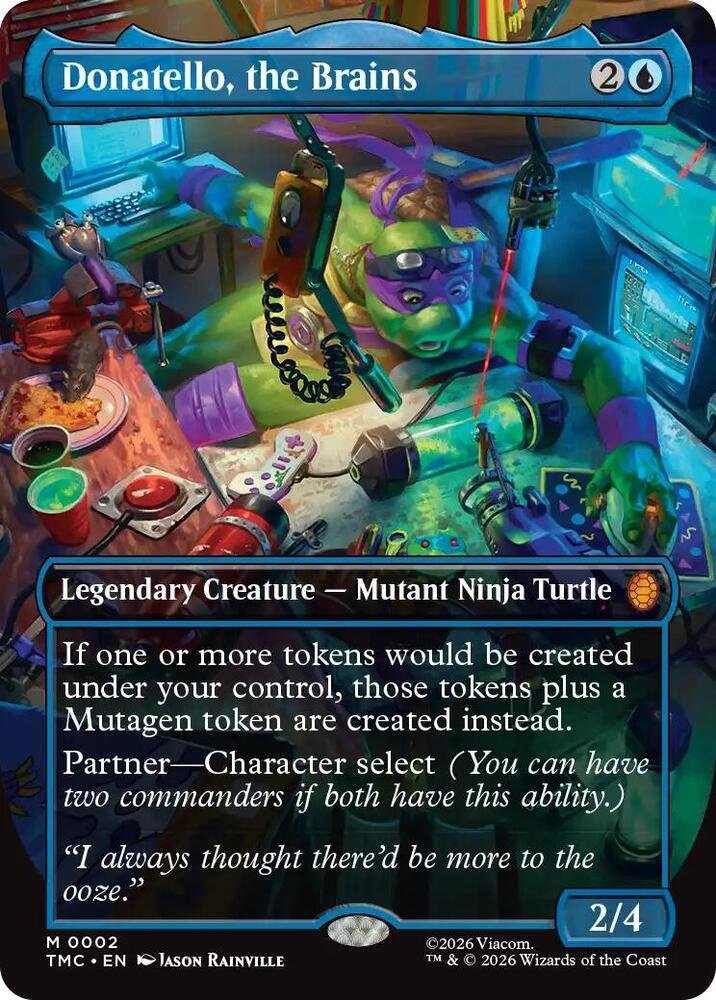
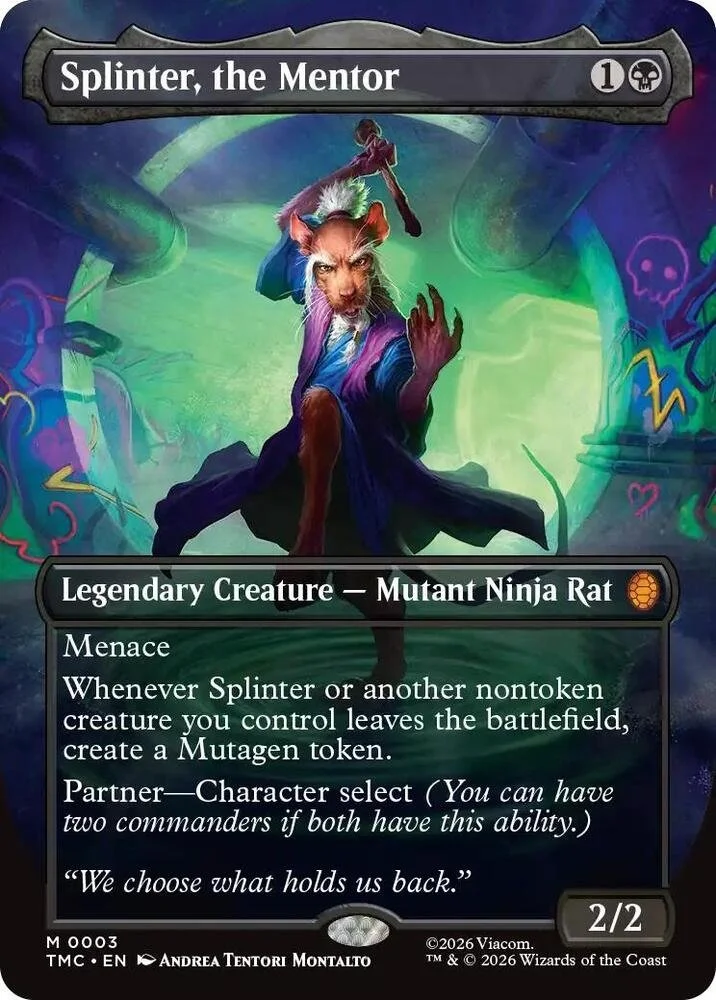
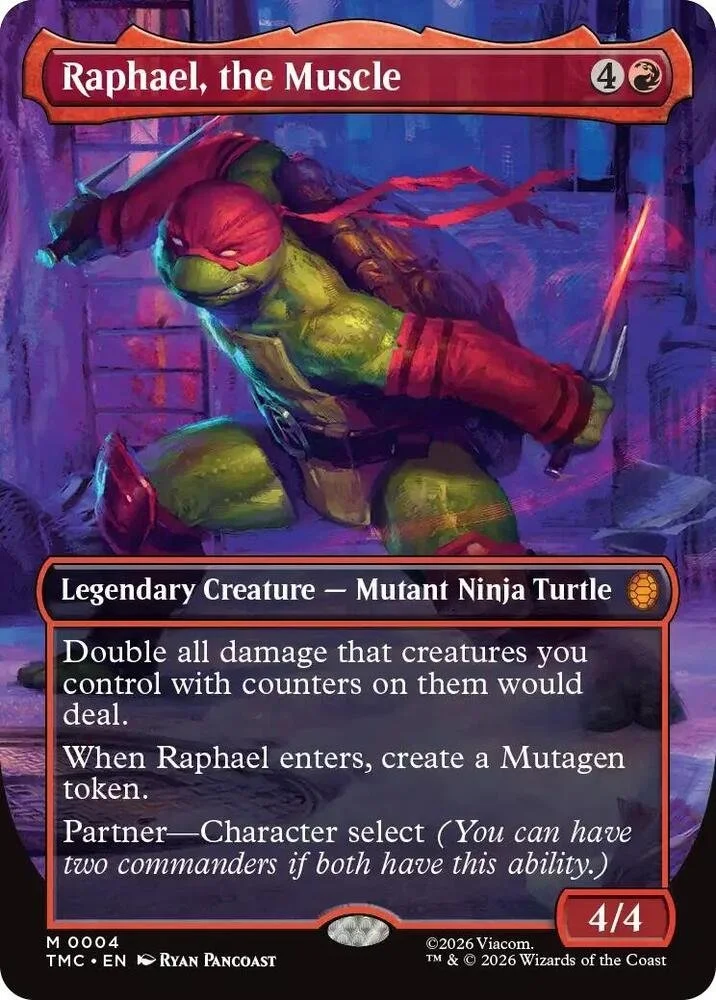
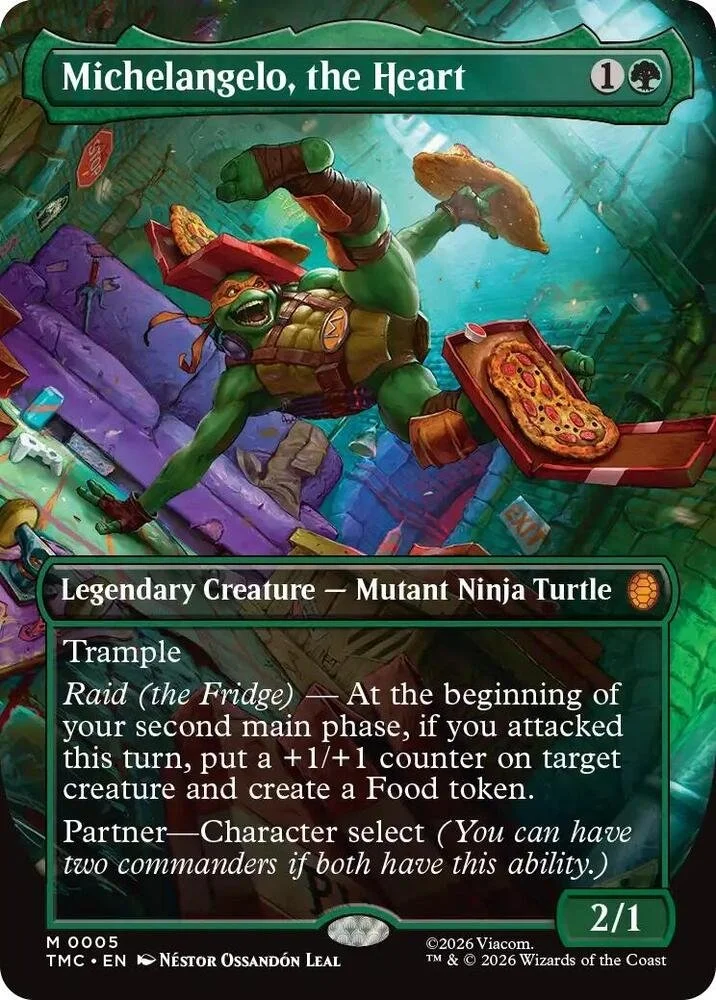
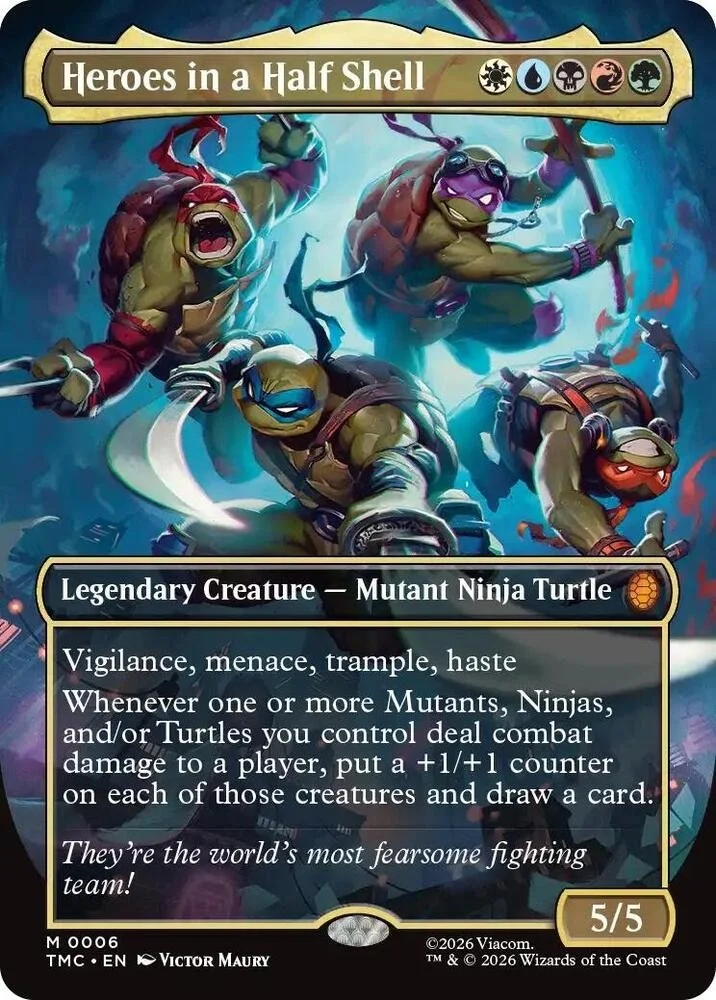
Universes Beyond: Teenage Mutant Ninja Turtles has all but one precon—which is actually one more precon than the previous two Universes Beyond sets combined. Spider-Man had none, Avatar had none, and TMNT comes in with one lonely precon saying, “Don’t worry guys, I’ve got this.”
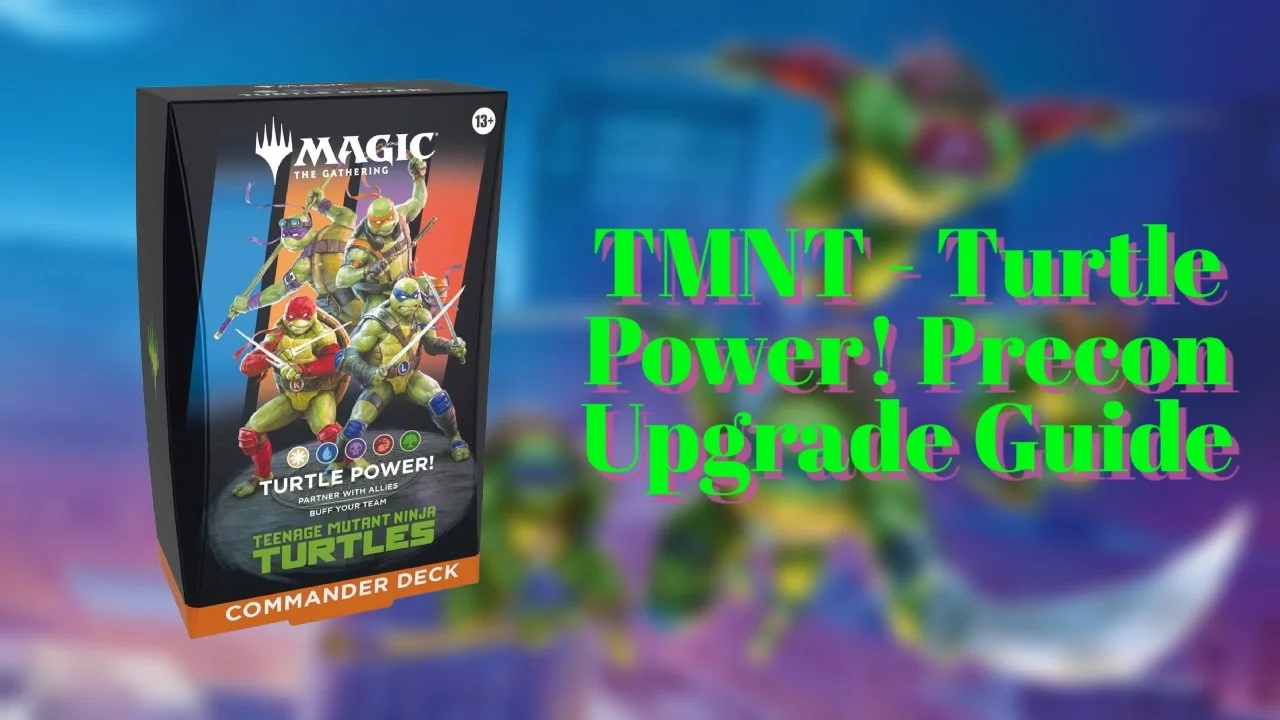
That precon is Turtle Power!, a five-color (WUBRG) Commander deck themed primarily around the Teenage Mutant Ninja Turtles video games. Right away that focus helps the deck feel a lot more cohesive than the main set, which pulls from multiple eras of TMNT. The precon embraces the arcade-style chaos and cooperative energy of the classic games, and mechanically that translates into a board-building strategy centered around Mutagen tokens and +1/+1 counters.
At its core, the strategy is fairly straightforward. You generate Mutagen tokens, use them to distribute +1/+1 counters across your board, and slowly build a battlefield that becomes overwhelming for opponents to deal with. It’s not the most groundbreaking strategy we’ve ever seen in Commander — counter-based decks have existed for years — but the way this deck approaches that strategy is what makes it interesting.
What really sets Turtle Power! apart is the sheer amount of flexibility built into the command zone.
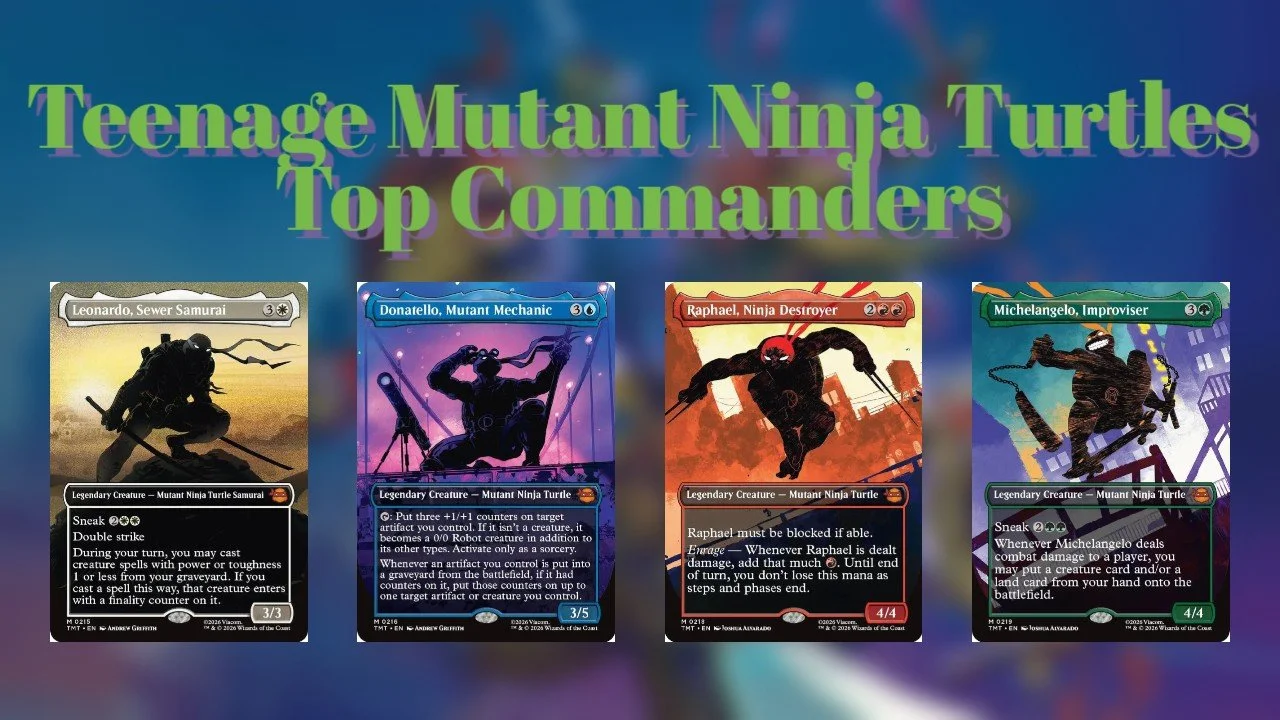
There is one traditional five-color commander option, but the deck also includes five different creatures with Partner that can be mixed and matched to create different gameplay styles. That means the deck doesn’t really have just one intended build — it has several possible directions depending on which commanders you choose to pair together.
For example, in my upgrade guide I suggested pairing Leonardo with Donatello, which turns the deck heavily toward token generation. Leonardo rewards you whenever tokens enter the battlefield by distributing +1/+1 counters across your board, while Donatello creates additional Mutagen tokens whenever tokens enter. That interaction effectively doubles up on triggers, meaning every token you create helps fuel the deck’s counter engine even further. When built around Food tokens, Mutagen tokens, and other token generators, that pairing can snowball extremely quickly.
But that’s only one approach.
You could also run Leonardo with Raphael, which pushes the deck toward a much more aggressive strategy focused on stacking counters quickly and attacking with large creatures. Swap Raphael out for Michelangelo, and suddenly the deck leans deeper into the Food token theme, creating a slightly grindier engine that can sustain itself longer in multiplayer games. And if you want to change things up entirely, pairing Master Splinter opens the door to a much more Ninja-focused strategy built around Sneak and combat trickery. Turtle Power! feels more like a toolbox or sandbox, where the deck is giving you pieces and letting you decide what kind of strategy you want to build.
Another pleasant surprise is the mana base. Preconstructed decks are infamous for cutting corners here, but Turtle Power! actually includes a very respectable mana foundation for a five-color deck. It won’t compete with fully optimized Commander lists, but for a precon it’s more than serviceable and gives players a strong starting point if they want to upgrade the deck over time.
Because of that, Turtle Power! works well on multiple levels. It’s a solid deck right out of the box, it offers a lot of room for upgrades and experimentation, and it provides useful staples that can easily be repurposed for other Commander builds. Whether you’re a TMNT fan, a Commander player looking for a new project, or someone who just wants a flexible five-color shell to build from, this precon does a lot of things right.
Teenage Mutant Ninja Turtles Turtle Team-Up analysis
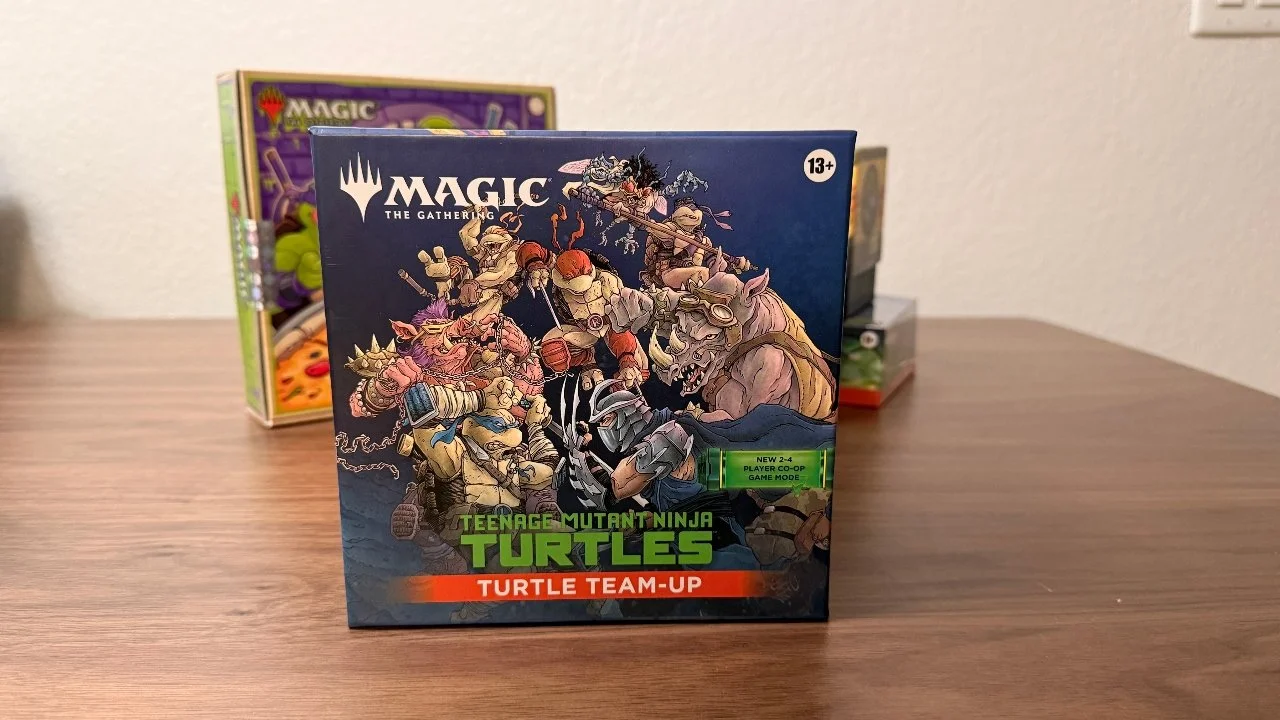
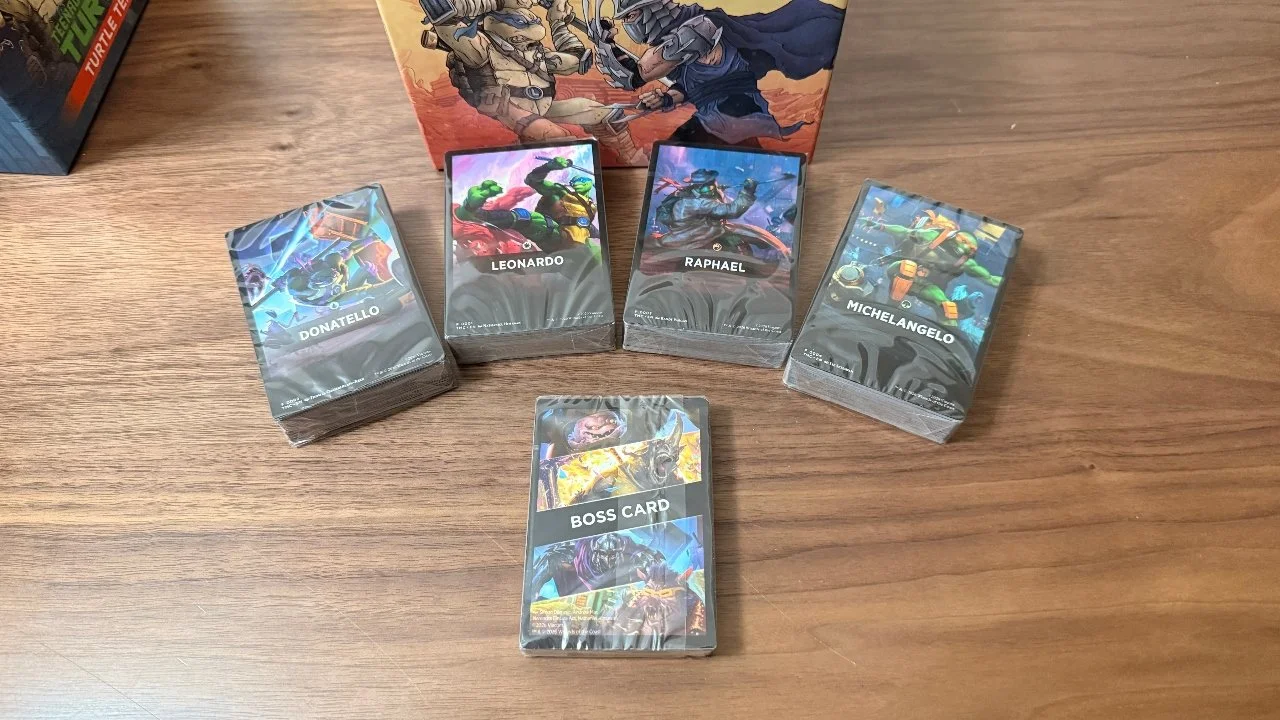
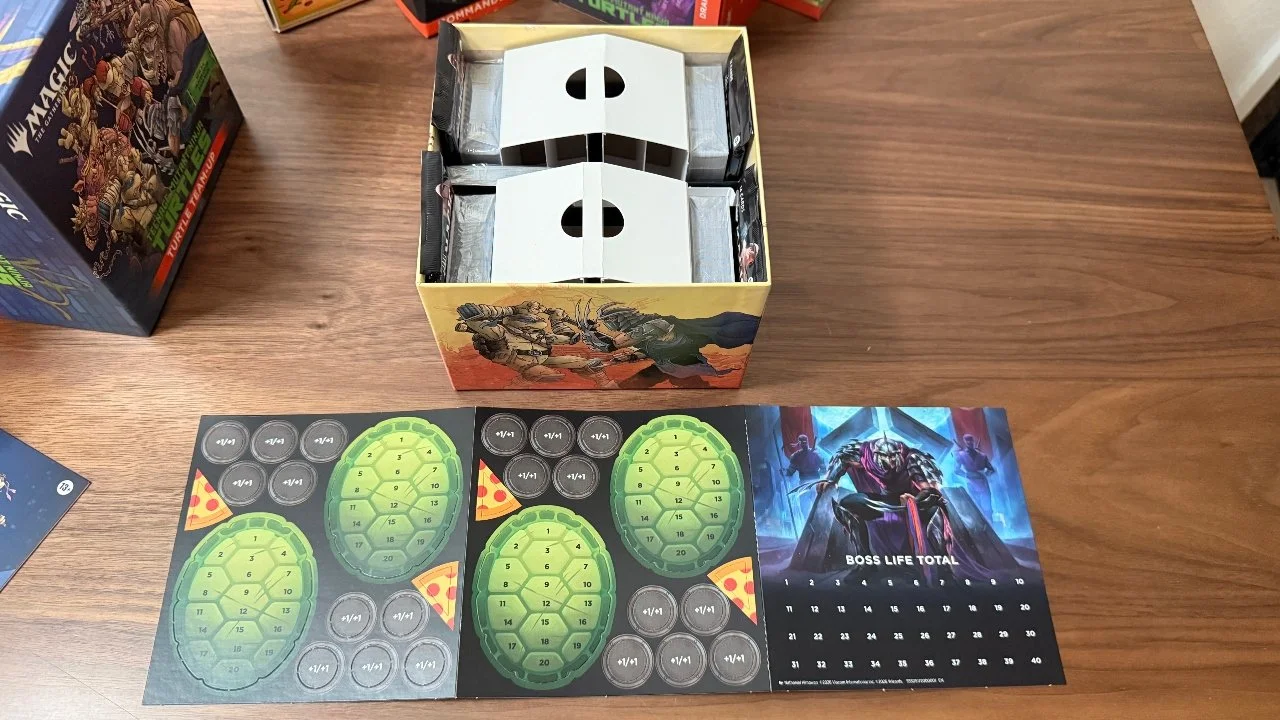
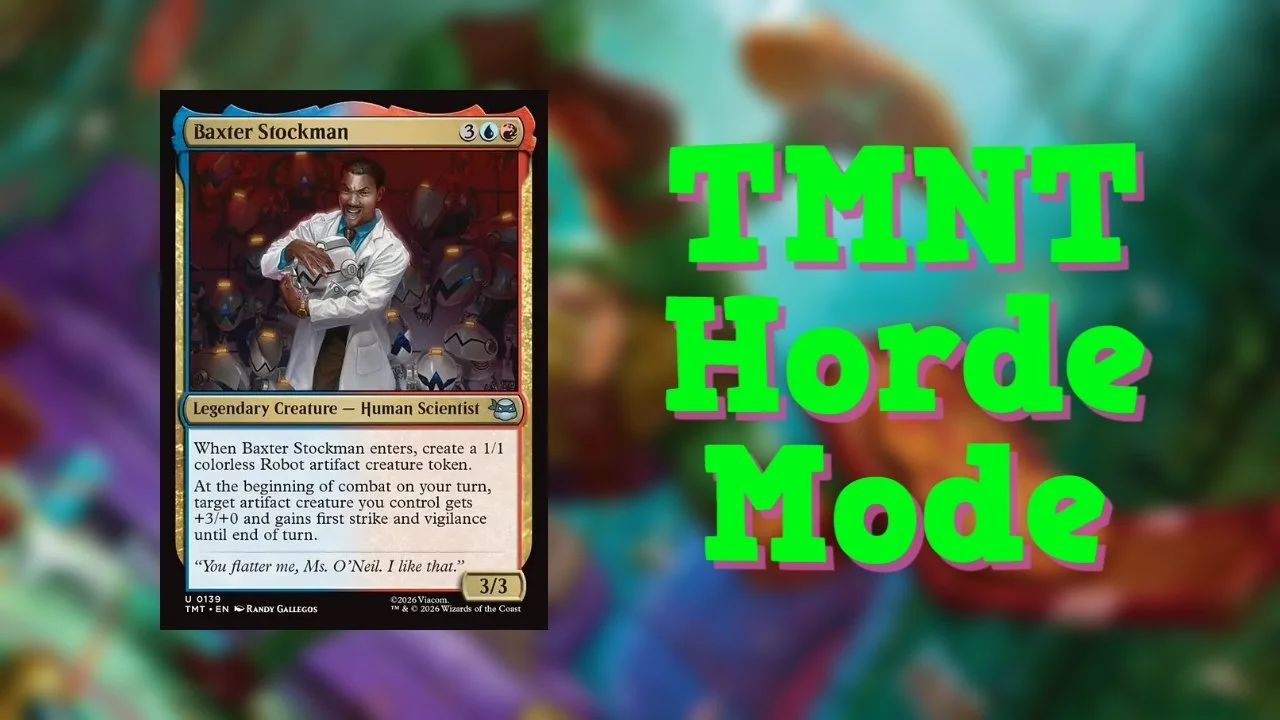
experimental things Wizards of the Coast has tried in a while. The idea behind Turtle Team-Up is to introduce a cooperative style of play to Magic, something the game has only really explored in unofficial formats like Horde mode or Archenemy variants.
The box comes with four mono-colored player decks, each representing one of the turtle brothers, and a separate boss deck that acts as the enemy players are fighting against. The boss deck represents Shredder and his army of Foot Clan members, and it plays automatically in a similar fashion to a Horde deck. You and up to three friends take control of the turtle decks and work together to defeat Shredder before the boss deck overwhelms you.
If that sounds familiar, that’s because it essentially is Magic’s official take on Horde mode.
As someone who already enjoys Horde mode quite a bit, I was immediately interested in this product. I’ve built several Horde decks myself, including a Lorwyn Eclipsed Horde deck that I’ve shared before, so seeing Wizards acknowledge and experiment with cooperative gameplay felt really exciting.
The good news is that the core concept works. Having a boss deck with its own unique cards, event triggers, and gameplay flow is really fun, and the cooperative nature of the format makes it extremely approachable for newer players who might not feel comfortable jumping into competitive multiplayer games right away.
However, after playing through Turtle Team-Up a few times, one issue became pretty clear: it’s very easy.
That’s not necessarily a bad thing—especially if the product is meant to introduce casual players to Magic—but experienced players will probably find themselves winning most games without much resistance. Fortunately, the rulebook does include some optional ways to increase the difficulty, such as adding additional boss cards or adjusting how the Shredder deck operates.
The boss cards themselves are actually one of my favorite parts of the product. Wizards designed specific event cards and boss effects just for this mode, which helps the experience feel more unique rather than just throwing a random pile of creatures at players.
Even with its flaws, I still really like the direction Turtle Team-Up is going. Magic has always been a flexible game, and seeing Wizards experiment with cooperative formats opens the door for a lot of interesting possibilities in the future.
Personally, I’d love to see this idea expanded in future sets — especially in-universe Magic sets where the boss deck could represent things like invading armies, planeswalker villains, or world-ending threats.
For now, Turtle Team-Up isn’t perfect, but it’s a promising first step into cooperative Magic design.
Best cards from Teenage Mutant Ninja Turtles
I’ve already gone over what I think are the best 16 commanders in the set in a separate article, and I’ve also written a limited guide highlighting some of the top draft priorities and archetype-defining cards. Because of that, I don’t want to completely retread that ground here.
Instead, I want to focus on cards that I think have the best chances of seeing play across constructed formats.
One thing that surprised me about Teenage Mutant Ninja Turtles is that the set doesn’t seem to demand competitive attention quite the same way some other Universes Beyond sets have. For example, the Avatar set had Badgermole Cub, which immediately sparked discussions in multiple competitive formats, and the Spider-Man set had The Soul Stone, which players began experimenting with almost immediately in a variety of decks.
TMNT, by comparison, feels a bit more restrained in terms of raw power. That doesn’t necessarily mean the cards are weak — just that they feel more like role players and synergy pieces rather than immediate format-defining staples.
That said, there are still several cards that stand out as strong candidates for constructed play.
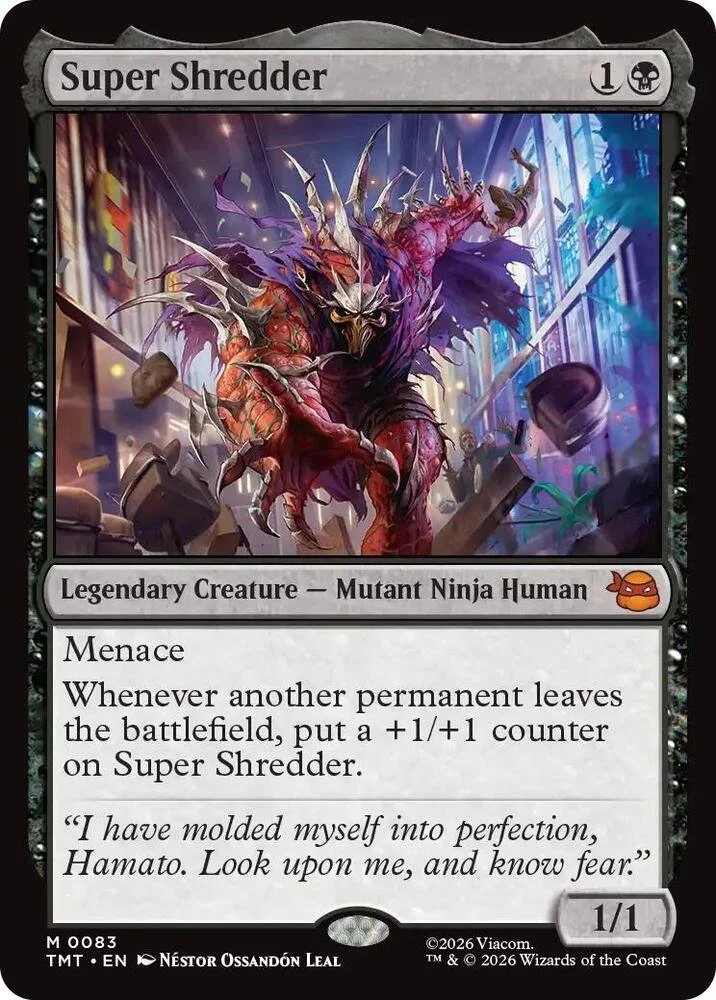
Super Shredder is one of the first cards that caught my attention. The card is flexible enough to slot into a wide variety of decks, especially strategies that revolve around sacrifice effects, token generation, or recurring creatures. Decks that regularly create expendable permanents or that already benefit from death triggers can get a lot of value from Super Shredder. Because of that versatility, I wouldn’t be surprised to see this card pop up across multiple formats over time as players experiment with different synergies.
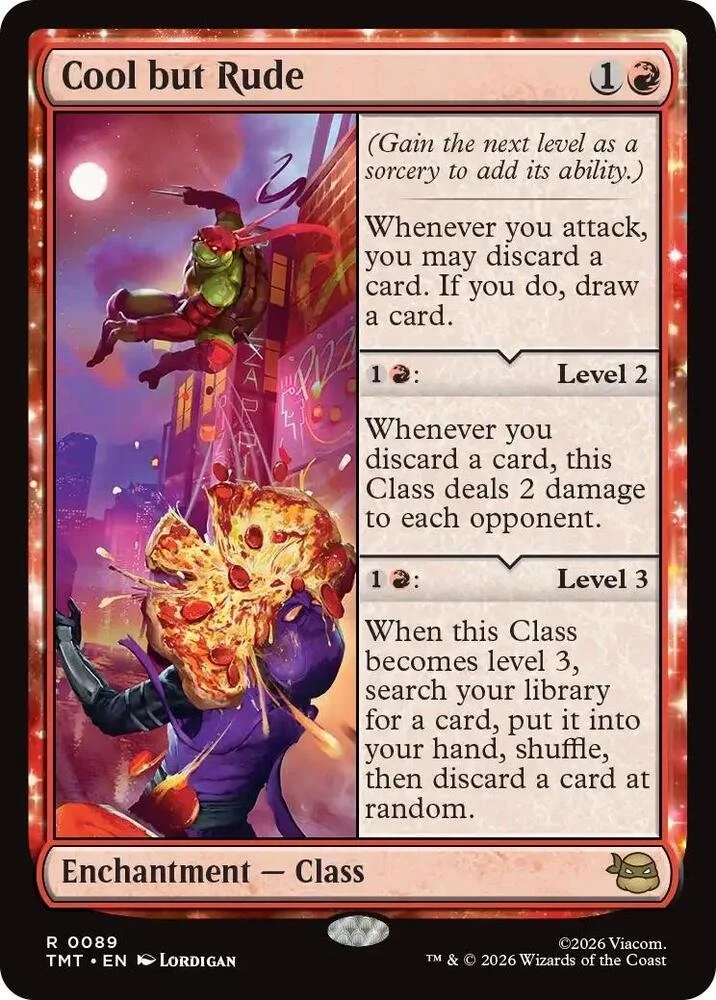
Another interesting card is Cool But Rude, which is a red class enchantment. Class enchantments have historically had mixed success in constructed formats, but the level three ability acting as a tutor effect makes this card particularly intriguing. It may not become a staple across competitive decks, but I can absolutely see it finding niche applications in certain archetypes that want repeatable value or a way to dig for specific pieces.
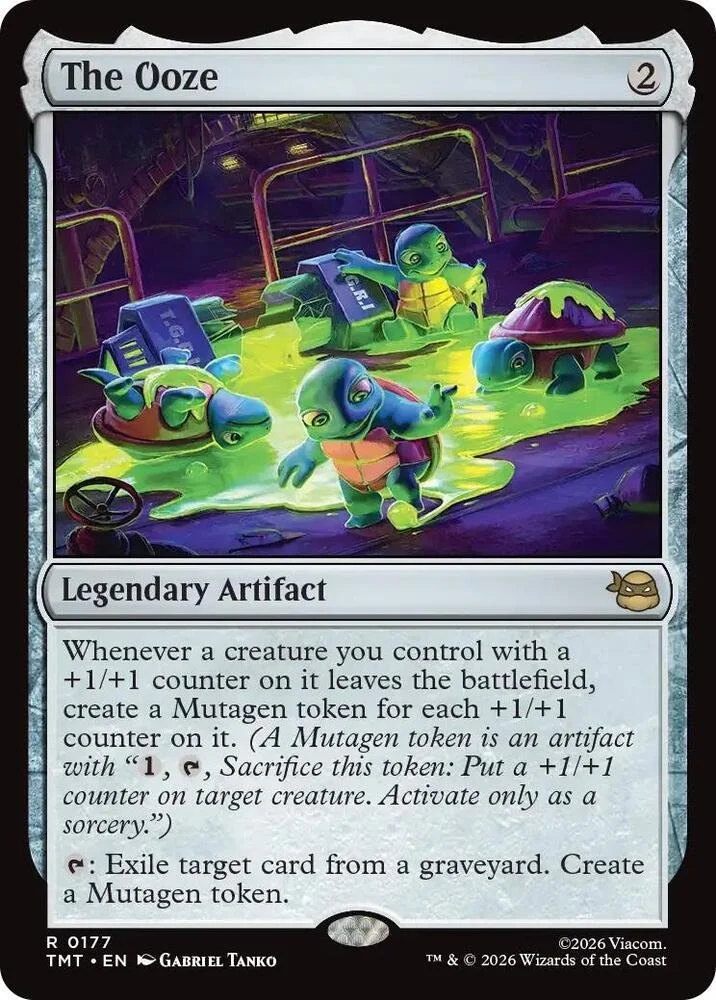
Then there’s The Ooze, which is a colorless artifact that interacts particularly well with +1/+1 counters. Because it’s colorless, the card has a huge advantage in constructed play — it can slot into almost any deck that cares about counters or incremental board growth. Cards like this often start out as interesting curiosities before gradually becoming staples in decks that can consistently take advantage of them.
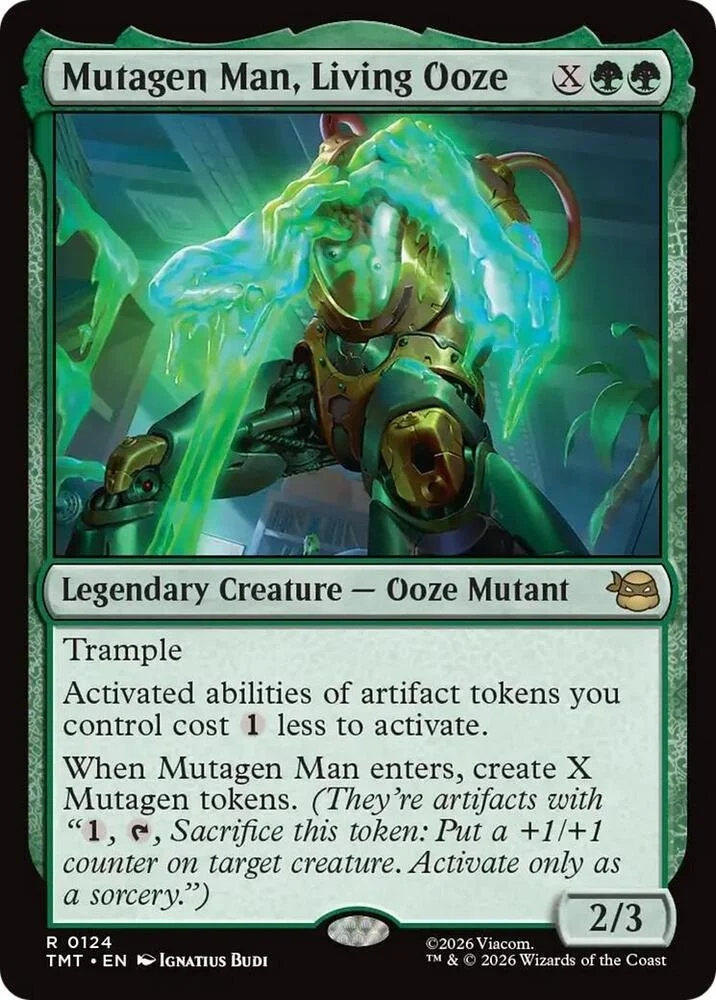
Finally, Mutagen Man, Living Ooze is another card that stands out. Reducing the cost of token abilities might not seem huge at first glance, but when you consider how many different token types exist in constructed formats — Clues, Food, Treasures, Maps, Blood tokens, and now Mutagen tokens — that cost reduction starts to become very relevant. Decks built around token generation or artifact synergies could potentially get a lot of value out of Mutagen Man.
Overall, Teenage Mutant Ninja Turtles doesn’t appear to introduce any immediately obvious format-warping cards, but it does offer a solid collection of tools that players will likely continue experimenting with across multiple constructed formats. Sometimes those kinds of cards end up having the most interesting long-term impact, because they slowly find homes in strategies that players didn’t initially expect.
Limited and draft environment of Teenage Mutant Ninja Turtles
One of the biggest challenges smaller Magic sets face is creating a balanced and interesting limited environment. With fewer cards available, the designers have less room to support archetypes and ensure that every strategy has enough tools to function properly.
Unfortunately, Teenage Mutant Ninja Turtles feels that limitation pretty clearly.
Out of the five draft archetypes in the set, two of them feel strong and well-supported, one feels decent if you draft the right cards, one feels extremely narrow, and one honestly feels like it exists mostly because the designers needed a fifth archetype.
The two archetypes that stand out the most are Sneaky Ninjas and Alliance.
Sneak is easily the most enjoyable mechanic to play with in limited. It creates interesting combat scenarios, rewards clever timing, and allows players to surprise their opponents in ways that feel very thematic for a Ninja-focused set.
Alliance, on the other hand, is a very straightforward creature-based archetype. It’s aggressive, it snowballs quickly, and it’s probably the easiest archetype for newer players to understand while drafting.
Then there’s Golgari Disappear, which is a deck that can be extremely strong when it comes together correctly. The problem is that it requires a very specific set of cards in order to function properly. If you manage to draft those pieces, the deck can be incredibly fun and powerful. But if you miss one or two key cards, the strategy falls apart much more quickly than some of the other archetypes.
Next is Simic Mutagen Tokens, which unfortunately feels a bit underwhelming. The archetype technically works, but the gameplay ends up feeling very generic. Instead of doing something unique or exciting with Mutagen tokens, the deck often ends up feeling like standard creature-based Magic with a few counters sprinkled in.
Personally, I found that Mutagen tokens often worked better when paired with other strategies rather than trying to build an entire deck around them. In fact, I’ve had better success turning Simic Mutagen into something closer to Sultai Disappear, where the tokens help support other synergies rather than acting as the main focus.
Finally, there’s Izzet Artifacts, which is the archetype I struggled with the most in this set.
Part of the problem is that we just recently saw a very strong execution of the Izzet artifact archetype in Edge of Eternities. That set showed how powerful and exciting the strategy can be when it’s fully supported. Unfortunately, the version in TMNT feels noticeably weaker by comparison.
In many cases, if you find yourself drafting red artifact cards, you’re often better off pivoting into Boros Alliance with an artifact sub-theme rather than trying to force the Izzet deck.
So the real question becomes: is Teenage Mutant Ninja Turtles a good draft set?
Calling it “good” might be a stretch, but calling it “bad” also feels unfair. The format is playable and can still produce some fun games, especially when Sneak or Disappear decks come together.
But if you’re the one choosing the set for your next draft night, there are definitely stronger limited environments out there. Personally, if someone asked me to recommend a recent set for drafting, I’d probably point them toward Lorwyn Eclipsed instead.
Who is Universes Beyond: Teenage Mutant Ninja Turtles good for?
As I’ve said before, I’m generally an advocate for Universes Beyond.
That doesn’t mean I prefer it over traditional in-universe Magic sets, but I also don’t think there’s anything wrong with bringing outside franchises into the game. Magic is a hobby where the more people who are interested in playing, the better it is for everyone involved.
If someone gets into Magic because they love Teenage Mutant Ninja Turtles, that’s a win. Maybe they start with this set, and later they dive deeper into the broader lore of the game. That kind of crossover appeal can only help grow the community.
Beyond that, Universes Beyond sets almost always provide a large number of new toys for Commander players, and TMNT is no exception.
When I was putting together my list of the best commanders from the set, I actually had a difficult time narrowing it down because there are so many interesting options available. I usually try to limit my lists to one commander per color combination, but that was harder than usual this time because several of the commanders enable genuinely different playstyles.
Personally, I’m currently working on building a Raphael, Ninja Destroyer Commander deck, which has been a lot of fun to experiment with so far.
Collectors also have quite a bit to look forward to in this set. The showcase frames look fantastic, including the cartoon-style artwork, the partner product reprints, and the Kevin Eastman gold-stamped cards.
Between the gameplay options and the collectible treatments, there’s something here for both Magic collectors and longtime TMNT fans.
What does Universes Beyond: Teenage Mutant Ninja Turtles need to be better?
Even though there are plenty of enjoyable aspects of this set, there are also a few areas where it could have been improved.
If I could sit in on the design process and make a few changes, there are three main things I would focus on:
Increasing the size of the set
Narrowing the thematic focus
Strengthening the limited archetypes
Interestingly, all three of those issues tie back to the same core problem: the set is simply too small.
If Teenage Mutant Ninja Turtles had been a larger release, the designers would have had more room to explore the theme in greater detail. Instead of trying to represent every version of TMNT at once, they could have built a deeper narrative around one specific era or storyline.
A larger card pool would also have helped the limited environment significantly. With more cards available, each archetype could have received stronger support and the draft format would likely feel more balanced overall.
That being said, the set does show some improvements compared to Spider-Man. The addition of the Commander precon is a huge step in the right direction, and some of the mechanics — particularly Sneak — are genuinely fun to play with.
But I still think the set would have benefited from a little more room to breathe.
Final Thoughts
Universes Beyond: Teenage Mutant Ninja Turtles ends up being a bit of a mixed bag. There are definitely things to like here—Sneak is a genuinely fun mechanic, Mutagen tokens are flexible enough to see play in a variety of decks, and the Turtle Power! precon offers a surprisingly solid and flexible Commander experience. But the set never quite feels like it reaches its full potential. Being a smaller set hurts it in several areas, from the diluted theming that tries to pull from too many versions of TMNT at once, to a limited environment that feels uneven across its archetypes. It’s not a bad set, and it certainly has its moments, but it also feels like one that could have benefited from a larger card pool and a more focused design direction.
Looking for more upcoming TCG releases? Be sure to check out our 2026 TCG Release Calendar, where we’re tracking every major Magic: The Gathering set, Disney Lorcana expansion, Riftbound release, and more throughout the year.