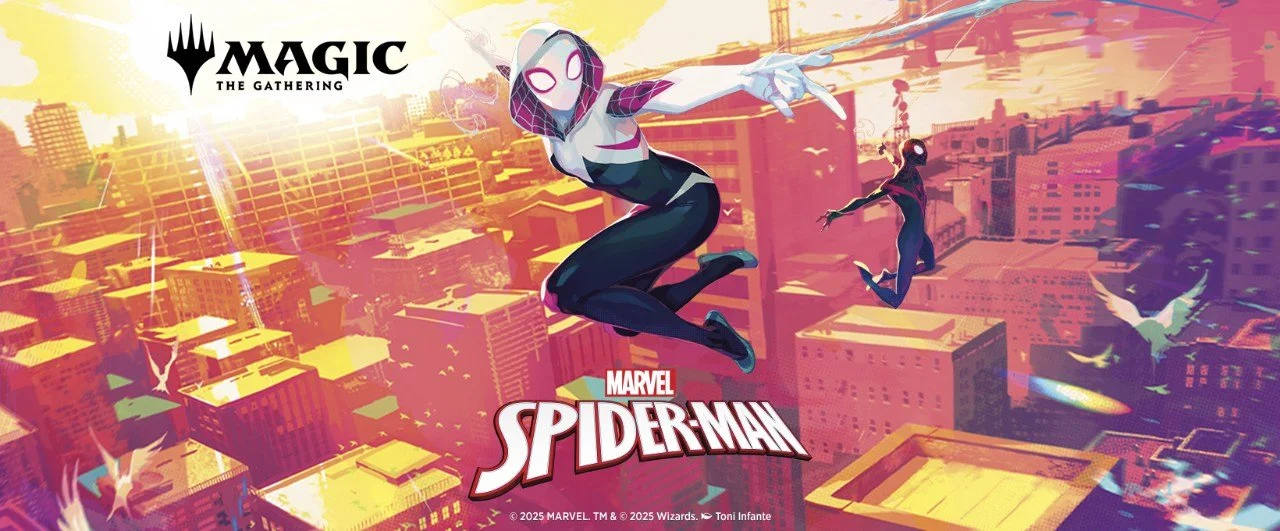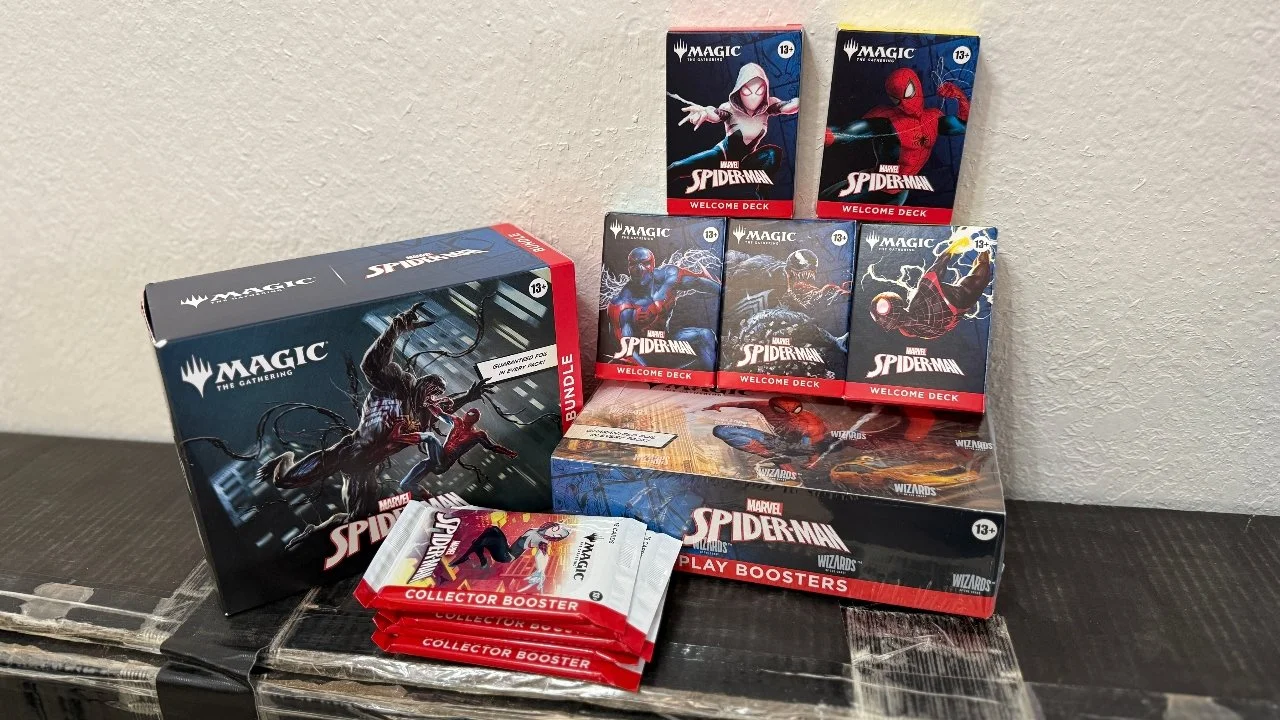
This year’s Magic: The Gathering lineup has included three Universes Beyond sets, and Spider-Man swings in as the second release. Like every Universes Beyond product so far, it’s been met with a lot of mixed reactions. Many fans argue that these sets don’t quite “feel” like Magic, and honestly, I tend to agree more with that sentiment when it comes to this one. Spider-Man is probably my least favorite Universes Beyond set so far—not because it’s outright bad, but because it feels less cohesive than the others. That said, I don’t think it deserves the level of negativity it’s getting online. There are still positives to find here, even if they don’t always outweigh the flaws.
What is Universes Beyond: Spider-Man?
Spider-Man might be the most recognizable superhero of all time. Between decades of comics, animated shows, blockbuster films, and video games, he’s one of the most enduring figures in pop culture. If Marvel was going to headline a Universes Beyond set, Spider-Man makes sense as the starting point.
The challenge, though, is that Spider-Man doesn’t naturally slot into the tone or world of Magic the way some past Universes Beyond sets did. Warhammer 40K and The Lord of the Rings felt more at home in the multiverse, whereas Spider-Man’s New York backdrop and comic book energy clash more with Magic’s usual fantasy identity. I don’t dislike the idea of Spider-Man joining Magic, but compared to other Universes Beyond releases, this one feels like the weakest fit. It’s not without merit—there are clever mechanics and some great card designs—but it definitely leans more on novelty than synergy.
What is available for Universes Beyond: Spider-Man?
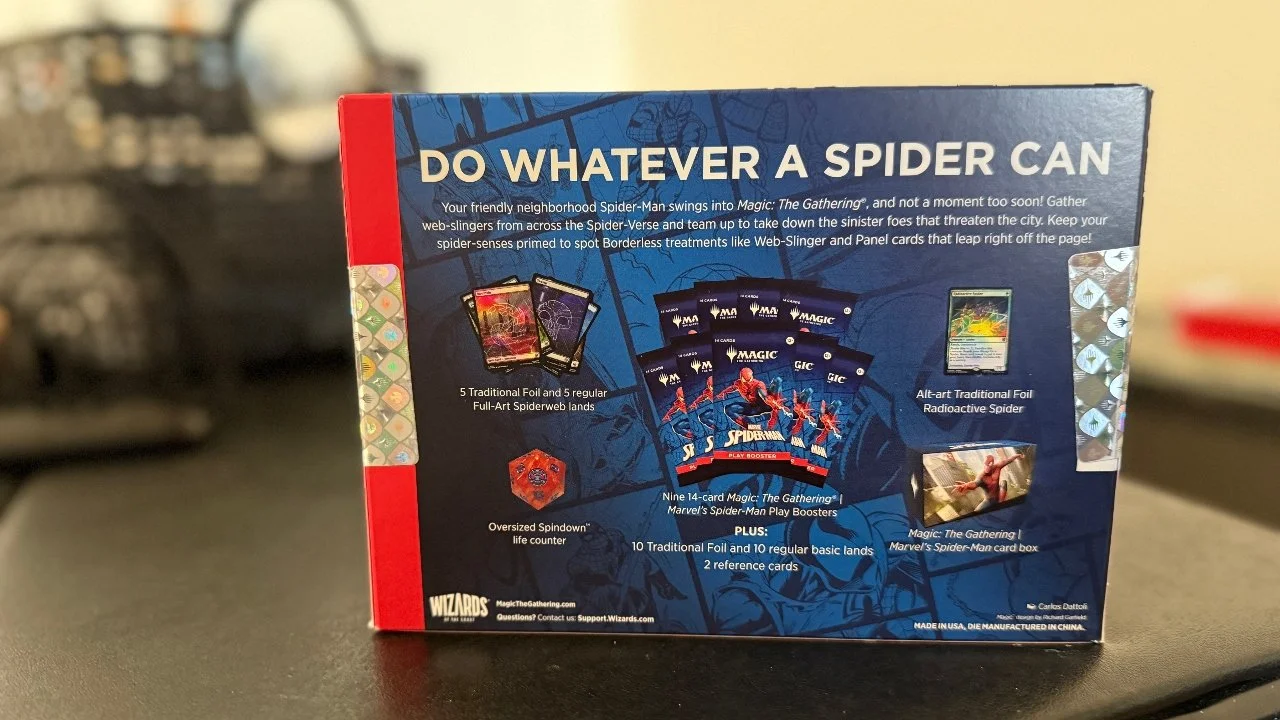
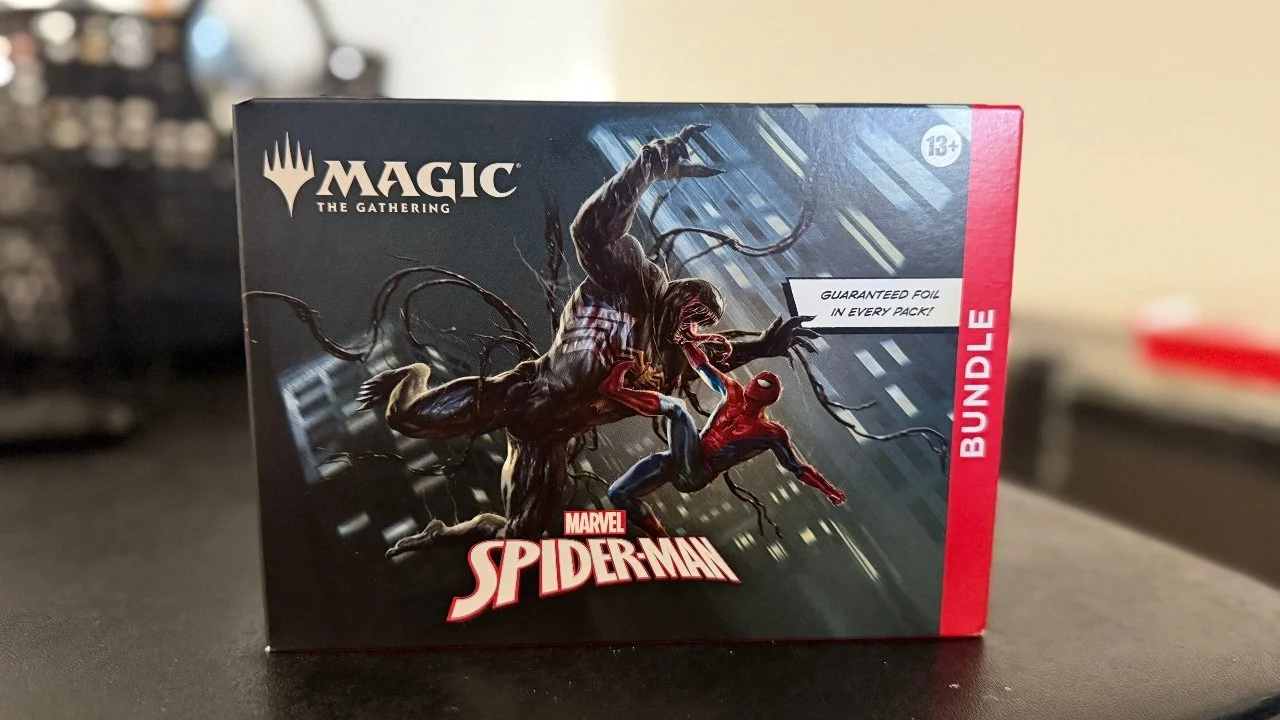
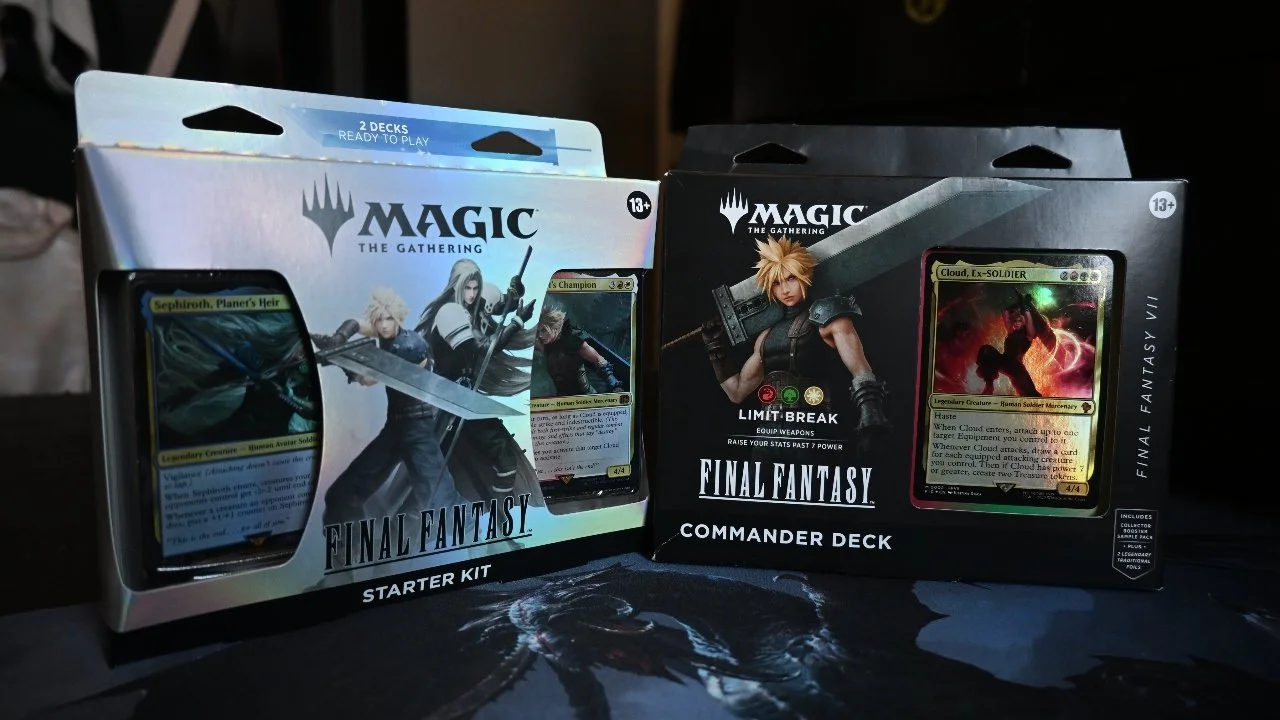
Unlike some past Universes Beyond releases, Spider-Man is standard legal. That puts it in the same category as the recent Final Fantasy set. However, Spider-Man breaks from tradition by not launching with Commander precons. Instead, players get the usual range of booster packs (collector and play), bundles with nine play packs, promo cards, and lands, as well as prerelease kits. A Scene Kit offers six interconnected cards forming one larger artwork, which is a neat collectible twist.
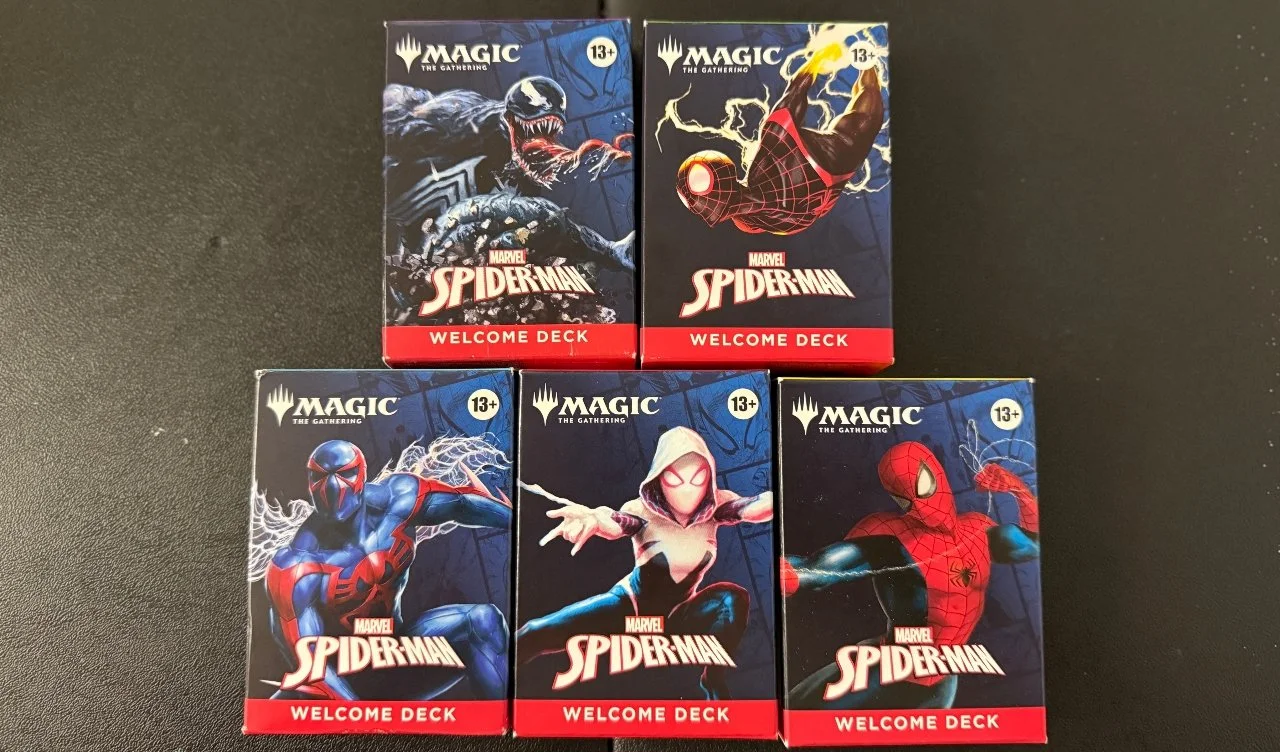
The biggest shake-up comes from the introduction of five Welcome Decks instead of Commander products. Each Welcome Deck contains two twenty-card mini-decks designed to be shuffled together, giving new players an easy way to jump into the game. The color pairings point toward five clear archetypes: Azorius (Modified), Dimir (Villains with Connive), Rakdos (Mayhem), Gruul (Big Spells), and Selesnya (Web-Slinging).
While I like the beginner-friendly angle, I can’t help but wish the decks leaned harder into their archetypes. As it stands, the random secondary mini-deck means you might end up with a color mismatch that dilutes the intended synergy. Still, the mechanical themes themselves are solid introductions to how Magic archetypes function.
Welcome Deck Ranking (Archetype Ranking)
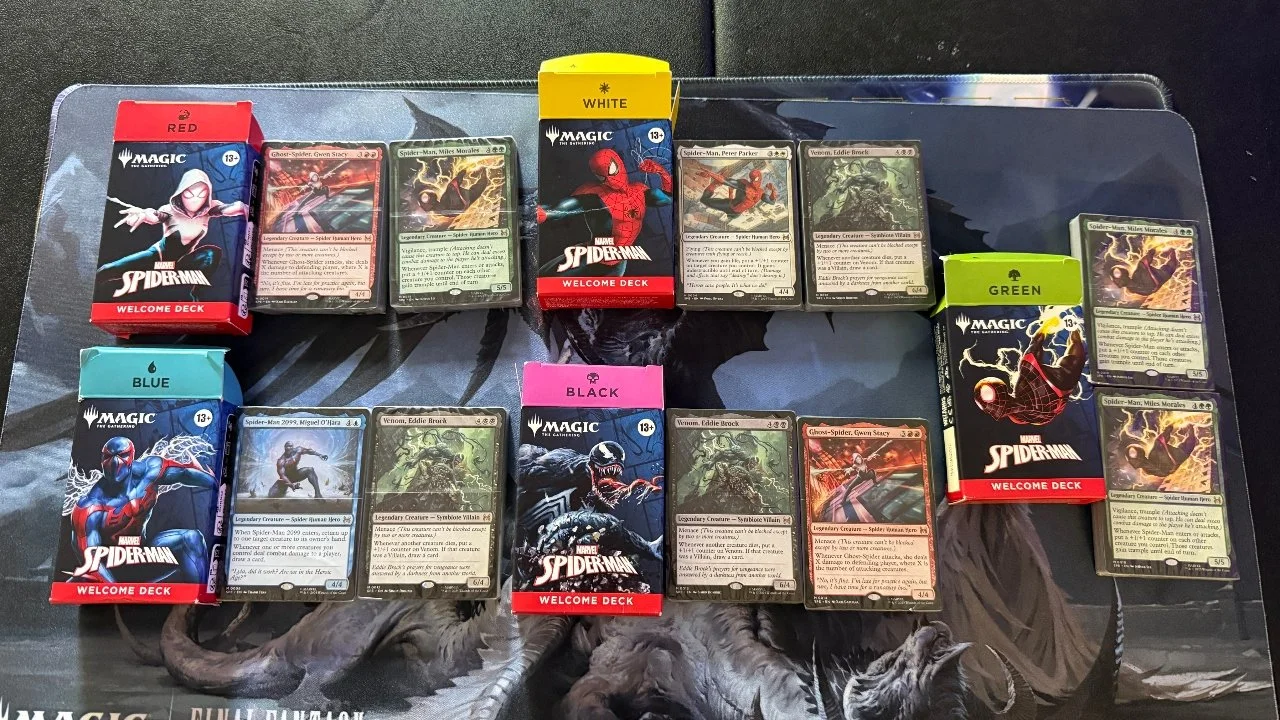
Like I said before, the playability of your Welcome Deck truly depends on the second pack you get. That being said, I want to rank the archetypes here based on how they play when their intended pairings come together. The randomness of the second pack means you could end up with an awkward mono-color deck, but for this ranking, I’m assuming the archetypes click as designed.
Blue (Black) - Dimir Villains
This archetype feels like the strongest of the bunch. Built around the returning Connive mechanic, it rewards you for looting—drawing and then discarding cards—to sculpt your hand while making your creatures stronger. It’s flexible, it fuels graveyard strategies, and it fits into plenty of established decks. Mechanically, it’s smooth and rewarding, and thematically it ties into the scheming side of Spider-Man’s rogues gallery. I already run an Izzet Discard deck, and I can easily see myself pulling in cards from this archetype. Even if the larger “Heroes vs. Villains” theme doesn’t matter much outside of this set, Connive on its own is enough to put Dimir at the top.
Black (Red) - Rakdos Mayhem
Aggressive Rakdos decks have always been powerful, and Mayhem is a mechanic that only adds to their toolkit. When you discard a card with Mayhem, you can cast it for an alternate cost—often cheaper than the regular mana value—during that turn. This makes cards that would normally feel clunky in hand far more playable. Mechanically, it’s a great way to keep the pressure on your opponent while taking advantage of discard strategies. Thematically, I’m a little less convinced—Spider-Man’s world doesn’t exactly scream “graveyard recursion”—but the raw gameplay strength of Mayhem makes this archetype a standout.
Red (Green) - Gruul Big Spells
Gruul is always about ramping into big creatures and smashing faces, and the Spider-Man set keeps that tradition alive. Here, the archetype focuses on rewarding you for casting spells with mana values of four or more. Cards like Rhino, Barreling Brute showcase this well—if you’ve cast a big spell, Rhino not only attacks as a large body but can also draw you cards. It’s a satisfying payoff that keeps you rolling once you’ve hit that midgame mana sweet spot. The downside is that the mana ramp in this set feels a little slower than usual, which means you sometimes stumble before reaching those big plays. Still, Gruul’s raw power and synergy with Mayhem cards (which keep their mana value even when cast for cheaper) give this archetype a solid place in the rankings.
White (Blue) - Azorius Modified
Azorius leans on the Modified archetype, which rewards you for enhancing creatures with auras, equipment, or counters. This is a tried-and-true strategy in Magic, and the Spider-Man set leans into it with plenty of options to upgrade your creatures. Mechanically, it’s reliable and can snowball into overwhelming board states, especially in limited formats. The catch, though, is that it doesn’t feel fresh—it’s a very common archetype that doesn’t bring much new to the table. Outside of limited play, the equipment and aura package here won’t likely be my first choice, but it’s still functional and strong enough for what it is.
Green (White) - Selesnya Web-Slinging
Flavor-wise, Web-Slinging is one of the coolest mechanics in the set. It’s reminiscent of Convoke, but with a twist: instead of tapping creatures to reduce a spell’s cost, you bounce a tapped creature back to your hand to pay the Web-Slinging cost, which is usually cheaper than the original casting cost. It creates this nice thematic image of Spider-Man pulling himself along with his webs. Unfortunately, the mechanic is clunkier in practice. Because it requires already tapped creatures, you either need to attack safely or rely on tap abilities, and then you lose board presence by returning a creature to your hand. It ends up feeling like a “buy now, pay later” system—sure, you save mana upfront, but you’ll pay the full cost later to replay that bounced creature. It’s fun in theory and flavorful in execution, but it doesn’t hold up as a strong competitive strategy.
What is Universes Beyond: Spider-Man good for?
Despite mixed reactions, Universes Beyond: Spider-Man introduces some genuinely interesting tools. Connive’s return, paired with Mayhem, opens up new discard strategies that will absolutely find homes in existing strategies. A few of the new legendary creatures also have strong potential as commanders. Leading a deck with your favorite Spider-Variant or iconic villain feels like a fun idea, even if official Commander decks weren’t included this time around. I’ll talk about them more in depth in another article but being able to headline a commander deck with your favorite Spider-Man variant, or Spider-Man Villain is a cool idea.
What does Universes Beyond: Spider-Man need to work on?
The biggest weakness of the set lies in Limited play. With only five central archetypes, the draft and sealed environments feel too narrow. Players risk pulling a mix of cards that don’t mesh, leaving them with awkward builds. On top of that, the set includes too many legendary creatures for its size, throwing off the balance of creature-to-spell ratios that Limited thrives on.
Another point of frustration is the split between MTG Arena and physical cards. On Arena, the cards use different names and art compared to their Spider-Man counterparts, which makes it confusing when moving between digital and paper play. I’ve built some really fun Arena decks with these cards, but then having to constantly look up the matching Spider-Man version in physical Magic can break the flow and make the set feel less streamlined.
In short, while Spider-Man is fun to collect and tinker with, it’s not going to stand out as a Limited format favorite in the way recent sets like Edge of Eternities did.
Final Thoughts
In the end, Universes Beyond: Spider-Man is a set that tries a lot of things but doesn’t quite stick the landing. It’s probably my least favorite of the Universes Beyond sets so far, mostly because it feels less cohesive and less rewarding in Limited than others. The absence of Commander precons also makes it feel a bit lighter than expected.
That said, I don’t think it deserves to be written off entirely. Connive’s return is a real highlight, Mayhem is an exciting new mechanic that will find homes in existing strategies, and a handful of legendary creatures here could inspire fun Commander decks. Plus, for Spider-Man fans who also play Magic, there’s undeniable appeal in seeing iconic heroes and villains reimagined in card form.
It might not be the most graceful crossover, but there’s still something here for players willing to look past the rough edges.
Magic: The Gathering Universes Beyond - Spider-Man is available now!