MelBet allows users to access a list of football tournaments held in Argentina, South America, and worldwide. MelBet uses a common arrangement for listing its football section by major tournaments and competitions and by the global football calendar. Most football gambling websites arrange their football section in a similar manner to MelBet. Each of the tournaments and competitions described in detail below represents a type of football competition that serves as the basis for the section(s) on football gambling websites.
Domestic Football Competitions in Argentina
Domestic football in Argentina is administered by the Asociación del Fútbol Argentino (AFA), which governs all football in Argentina. The AFA oversees all football competitions in Argentina, including the Liga Profesional de Fútbol, which is the first tier and is the replacement for the former Superliga in Argentina. The Liga Profesional de Fútbol consists of 28 clubs that compete in a round-robin format. At the conclusion of the season, the clubs will be ranked by league position and awarded spots in the various continental competitions.
In addition to the professional football league, MelBet also offers information regarding the national cup competitions that have official status in Argentina and, therefore, are historically relevant. Typically, the national cup competitions will be televised and/or streamed concurrently with league matches. MelBet’s organizational structure includes league and cup competitions, both categorized by type of competition and match day; in addition, they are interrelated through the official calendar and available historical data for cup matches.
The Copa Argentina is one of the two national cups that exist in Argentina (the other being the Copa de la Liga Profesional) and was reinstated in 2011 as a way to allow all professional teams in Argentina a chance to participate in a tournament regardless of their division. A team that wins the Copa Argentina receives a qualifying spot in the Copa Libertadores, which is South America’s most prestigious club competition. Additionally, the Copa de la Liga Profesional is another national cup that was recently added to the calendar in Argentina to assist with the very congested schedules of professional teams in Argentina. If Estudiantes de La Plata were to win the 2024 edition of the Copa de la Liga Profesional, it could potentially affect how they are able to compete in international competitions.
South American Club Tournaments
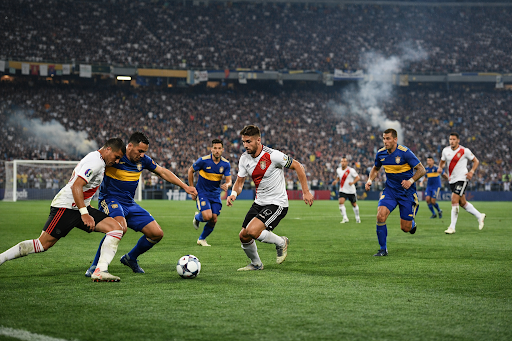
The South American area of the competition has its own distinct continental governing organization in CONMEBOL. The Copa Libertadores is the largest club competition on the South American continent and serves as a strong foundation for elite clubs across South America, as well as draws an enormous television audience in Argentina.
These two competitions, the Copa Libertadores and Copa Sudamericana, provide both a top tier of South American clubs competing against each other in the Copa Libertadores, and a competitive balance for those that do not make it into the Libertadores, providing additional opportunities for clubs to compete domestically, such as Argentine teams Defensa y Justicia and Independiente have taken home titles of previous years. MelBet football will show you all the necessary data about the competitions (match start time, group tables, etc.), as well as the competition format established by CONMEBOL. In addition, MelBet football will generally divide group stages from knock-out stages, so users can navigate through the competition stages easily.
Qualification for these tournaments is directly linked to domestic league performance, making their inclusion in football sections a logical extension of Argentine competitions. CONMEBOL sets the competition timetable, typically spanning from February to November.
European Leagues and International Club Football
The structure of the European Football Calendar, with the governing bodies of the gam,e has created the largest football fanbase in the world, drawing fans from all over the world into the football culture. These leagues are the top watched in the world, and therefore have the most exposure; the top five leagues include England's Premier League, Spain's La Liga, Italy's Serie A, Germany's Bundesliga, and France's Ligue 1.
On top of the leagues of Europe, there are also two additional elements to the football culture that include the UEFA Champions League and UEFA Europa League. These competitions are considered second to none within the football culture, and they attract fans from all over the world. The UEFA Champions League was first held in 1955, and it remains today the most prestigious football competition and the number one viewed annual club competition in the world. The knockout stage of the UEFA Champions League runs from late February until early May, which is why this competition is generally regarded as the best of the best for the year in football, because the UEFA Champions League is always televised at the same time.
The format of the European competitions is provided in a standardized manner, such as group standings, progression rules, and matchday numbers, as opposed to platform-specific versions of the competitions. The format of the European competitions matches those used by UEFA rather than those created by each individual platform.
| Competition | Governing body | Typical season period | Participating clubs |
|---|---|---|---|
| English Premier League | The Football Association / Premier League | August–May | 20 |
| La Liga | Real Federación Española de Fútbol | August–May | 20 |
| Serie A | Federazione Italiana Giuoco Calcio | August–May | 20 |
| Bundesliga | Deutscher Fußball-Bund | August–May | 18 |
| Ligue 1 | Fédération Française de Football | August–May | 18 |
| UEFA Champions League | UEFA | September–June | 32 (group stage) |
| UEFA Europa League | UEFA | September–May | 32 (group stage) |
These events are grouped together because they have been subject to the same rules by UEFA, such as centralised refereeing of matches, club licensing, and coordinated matchday schedules. Due to these factors, consistent European tournaments are presented as an independent and special part of the football calendar, away from the other national and international tournaments of the other confederations.
International Tournaments and National Teams
It appears that the international game is centred upon FIFA and the regional confederations' championships. Following a victory by Argentina at the FIFA World Cup in Qatar, there will likely be an increased level of interest in the tournament, as it is the most prestigious. The CONMEBOL World Cup qualifiers for the 2026 World Cup commenced in January 2023. The inclusion of these matches stems from the fact that they take place regularly, have a high degree of importance, and a competitive nature.
Additionally, the Copa America is organised by CONMEBOL. Interest was reignited in the region prior to the 2024 Copa America, being staged in the United States, when defending champions Argentina announced their participation. This interest is further evidenced by FIFA introducing friendly matches and official international windows, the same structure as shown in the team selections.
International competitions typically organized in football sections are:
FIFA World Cup and qualifiers
Copa América
International friendlies during FIFA windows
Taking FIFA and CONMEBOL restrictions into account, these tournaments have fixed dates for international windows and scheduling of matches. Since these tournaments can only be included in sanctioned matches that align with national team activities, there is even more consideration to be taken in regard to domestic league scheduling.

Data Sources, Scheduling, and Regulatory Alignment
Data feeds obtained from regulatory bodies (e.g., AFA, CONMEBOL, UEFA, and FIFA) for football divisions provide a basis to identify accurate and official tournament status' and standing's as well as the tournament schedules for each division.
The use of official AFA, CONMEBOL, UEFA, and FIFA data tables eliminates errors in scheduling for the respective divisions, as the match-ups and scheduling can be matched against the publicly available data.
Argentine football regulations are subject to local police enforcement and, as such, many sports (mainly football) have to contend with issues related to transparency and data collection.
In response to this circumstance, as well as the fact that all tournaments that have official sanction from the governing body of football in Argentina appear in the football section of the website, only officially sanctioned tournaments, as well as other unofficial and exhibition-style tournaments, will be excluded.
While the structural format of the tournament formats provides a legal basis for a regulated tournament environment, they also present a broad perspective on the world of football and exclude speculative and/or unverified tournament information.