Disclosure: This is a paid guest post. The author or an affiliated third party paid for its publication, and the article may contain promotional links. The views and opinions expressed are those of the author and do not necessarily reflect those of GameTyrant or its editorial staff.
Disclaimer: The following content contains references to gambling, casinos, and related topics.
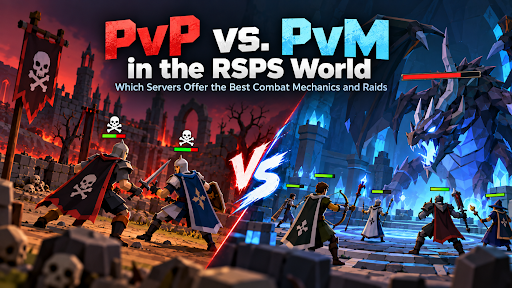
Two players can log into the same RuneScape private server and leave with completely different opinions. One spends hours PKing in the Wilderness and can't wait to return. The other gets bored halfway through a raid. Same server, two very different experiences.
PvP and PvM have their own appeal, and each demands something different from a server. Fast-paced fights, unpredictable opponents, challenging bosses, team coordination - there's plenty to enjoy on both sides. But having the content available is one thing. Making it worth playing is another. So which RSPS servers actually deliver?
PvP and PvM Test Different Parts of a Server
PvP pits players against opponents who change plans halfway through a fight. You can predict common combos, but you can't script the other person's next switch. In PvM, the enemy follows programmed rules, and the challenge comes from recognizing patterns, executing mechanics, and handling mistakes before they snowball.
That difference changes what a good server needs to deliver. PvP players notice delayed inputs, broken freezes, unusual attack timings, and awkward movement almost immediately. PvM players may forgive a quiet hub, but they'll notice when a boss ignores its own animations or a raid skips an entire phase.
An RSPS server list may label both under broad features, but that says little about how the combat plays. A server can excel at PK tournaments while offering shallow raids, or run excellent encounters with an empty Wilderness.
Read Server Listings as Leads, Not Combat Reviews
The RSPS list on MoparScape brings different combat-focused projects together. You can spot listings that emphasize PKing, raids, bosses, or a mixture, then visit their individual pages to learn what they claim to offer. It's a good place to assemble a shortlist without assuming that a prominent listing means flawless mechanics.
Notice the verbs in a description. Includes Theatre of Blood tells you the content is advertised. Hosts automated tournaments tells you the format is promoted. Neither tells you if movement resolves correctly under pressure or if a boss teaches you its patterns through readable cues.
Fifteen fast duels call for something different from a weekend spent practicing one raid with friends. Start there.
PvP Is Won and Lost in Tiny Windows
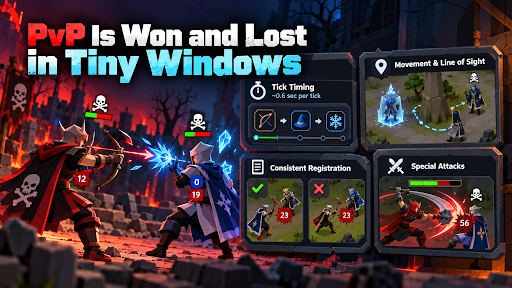
A duel can swing between two combat ticks. You fake a ranged attack, switch to magic, land a freeze, then try to capitalize before the other player recovers. When inputs register inconsistently, the outcome can feel random rather than earned.
Rewards and promotional offers are more visible than underlying mechanics. Players browsing the best CS2 gambling sites with free codes also have to look beyond a headline perk to understand its conditions. In an RSPS fight, the less obvious detail is far more fundamental: whether the game registers the move you actually made.
Tick Timing Has to Feel Consistent
Old School-style combat runs in game ticks of roughly 0.6 seconds. Attack speeds and movement depend on that rhythm, but private servers may change how it works.
A missed switch should have an understandable cause. Getting caught off prayer is fair; seeing an active prayer while the server processes the hit differently is frustrating. So are drifting attack delays.
Movement, Freezes, and Line of Sight
Good PKing depends on where characters actually stand, not just what their models appear to do. Pathfinding around obstacles, frozen movement, and the ability to attack around corners all affect the outcome.
Imagine a fight around a tree. One player freezes the other and steps behind cover. If attacks pass through obstacles or freezes end unpredictably, positioning becomes meaningless.
A Quick Fight That Reveals the Problem
Fight a friend with familiar equipment. Move around an obstacle, change attack styles, and watch where both characters stand when damage registers. Repeat it. Consistency matters more than winning.
Special Attacks Need Predictable Rules
A finishing combo should feel dangerous because your opponent planned it well. Prayer protection, special-attack energy, delays, and damage all matter. Custom rules can work when players understand them.
Beware of custom weapons that make every fight a race to land one enormous hit. They may produce spectacular clips while leaving little room for defense, counterplay, or adaptation. A strong combat system lets a good opponent respond.
PvP Formats Reward Different Skills
There isn't one universally ideal PK server. The best format depends on whether you like controlled duels, improvised escapes, or large-scale fights where teammates can turn the result.
| PvP format | Main attraction | Mechanics that matter most |
|---|---|---|
| Edge-style or organized duels | Fast rematches and individual execution | Attack timing, switches, consistent damage, fair presets |
| Deep Wilderness singles | Chases, escapes, and unpredictable encounters | Freeze behavior, pathfinding, combat restrictions, teleports |
| Multi-combat clan fights | Coordination and target selection | Targeting, area restrictions, server performance under load |
| Safe PK and tournaments | Practice without the same item-loss pressure | Reliable rules, balanced equipment, predictable match handling |
Singles: Timing and Mind Games
One-on-one combat exposes mechanical problems quickly. Players juggle food, prayer, specs, and gear while reading an opponent. Responsive switches make even a close loss understandable.
Multi-Combat: Communication Under Pressure
Multi-combat introduces target calling, coordinated freezes, and crowded movement. Performance matters as much as balance. A server that feels smooth in a duel can struggle when several teams converge on the same tile-heavy area. Try multi-combat during an actual event instead of judging it from an empty arena.
Tournaments: Fair Access Matters
Preset loadouts lower the barrier to entry, especially for people who want to practice before risking earned equipment. Rules should be obvious, equipment should work as described, and winners should be decided by the fight rather than an unexplained bug or inconsistent arena boundary.
A well-run small tournament tells you more than an enormous advertised prize pool.
PvM Difficulty Should Teach You Something
PvM is at its best when a failed attempt gives you useful information. Maybe you stood on the wrong tile, switched protection too early, or ignored an enemy that needed to die first. The next run should feel more manageable because you learned something.
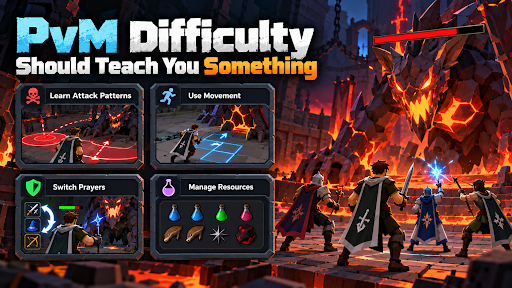
Increasing boss damage doesn't automatically create depth. Neither does giving every encounter three times as much health. Interesting fights create decisions through attack patterns, movement, changing phases, and limited supplies.
Readable Attacks Beat Surprise Damage
Players need to read danger through an animation, projectile, sound, or floor effect. The warning can be brief, but it must match when damage lands.
Some official-style encounters rely on precise timing, while others encourage reaction to clearer warnings. A private-server adaptation has to respect that distinction. When the animation and damage calculation disagree, players learn to distrust what they see.
Mechanics Should Change the Fight
Picture a boss with two phases. In the first, you manage incoming ranged attacks and move out of marked areas. In the second, the boss summons enemies that force you to change targets and conserve supplies. Those changes require a different plan without turning the encounter into chaos.
Now compare that with a boss that simply hits harder at half health. It's more dangerous, perhaps, but not necessarily more interesting. Good phases test a fresh skill or make the team use an existing skill differently.
Solo Encounters and Group Raids Need Different Balance
Solo bosses reward individual positioning and preparation. Raids should make cooperation meaningful. If one geared player ignores mechanics while everyone else watches, the team has little to do.
Simple responsibilities - handling adds, positioning, or coordinating an attack - give everyone a reason to communicate.
The Three OSRS Raid Styles Present Different Design Challenges
Chambers of Xeric, Theatre of Blood, and Tombs of Amascut are useful reference points. Seeing a name on a server page doesn't tell you how closely it reproduces the raid.
Chambers of Xeric: Keeping Variety Meaningful
Chambers of Xeric is associated with varied encounters and the need to adapt across a longer raid. In a private-server version, the important question is whether different rooms demand different tactics or merely resemble one another with changed enemy models.
Supplies, scaling, and boss mechanics should connect the rooms. If every enemy is a damage sponge, the format loses its variety.
Theatre of Blood: Precision and Team Coordination
Theatre of Blood is a stronger test of execution. Familiar encounters, including the Verzik fight, involve positioning, specific attack patterns, and team awareness. Players should be able to improve through practice rather than relying on unusually forgiving damage or broken safe spots.
Some servers simplify ToB intentionally for casual players. Find out before joining if you want something closer to OSRS.
Tombs of Amascut: Difficulty Players Can Adjust
Tombs of Amascut stands out for its invocation system in official OSRS, allowing participants to modify the challenge. For private servers that borrow this approach, the design challenge is making difficulty settings meaningful rather than just raising enemy health.
A convincing implementation lets players understand what each modifier changes. A harder setting might demand better movement, tighter timing, or more careful resource management. Those differences make repeat runs engaging, especially for groups improving together.
Which RSPS Servers Are Worth Testing?
A second look at the RSPS list can help narrow the search to specific projects. The servers below advertise relevant combat features on MoparScape, but listings are not independent tests of performance. Try the mechanics yourself.
For PKing and Tournaments
Roat Pkz promotes preset kits, Wilderness activity, and tournament play. That makes it a sensible candidate for anyone who wants to examine fast-access PvP mechanics. Test switches and freezes before deciding how well its combat suits you.
RuneWild describes both PKing and PvM, including clan combat and raid content. It may appeal to players who alternate between fights and bossing. The important test is whether its PvP remains responsive in crowded areas, not just during quiet duels.
For Raids and Boss Encounters
PkHonor advertises Chambers of Xeric, Theatre of Blood, the Gauntlet, and several major bosses alongside PKing activities. It's a relevant candidate for checking how familiar PvM content has been adapted.
Alora lists major OSRS raids and additional boss content, making it another project to investigate if your interest lies in encounter mechanics and group runs. An advertised feature is a starting point; ask active raiders what feels accurate and what has been changed.
Try one PvP-led project, one raid-led project, and one hybrid. None needs to win every category.
The Wilderness Blurs the Line Between PvP and PvM
Some of the most tense RSPS moments happen when players hunt a boss while other players can attack them. Your gear has to serve two purposes at once: help you survive the monster and leave a way out if a PKer appears.
Better equipment shortens a boss fight but puts more value at risk. Traveling light means staying longer. Bringing a lookout helps, though you may end up splitting the rewards.
This hybrid content works only when its rules are understandable. Players need to know the combat zone, whether it permits single or multi-combat, and which escape options are available. When boundaries are inconsistent or mechanics behave differently from their descriptions, the risk stops feeling deliberate.
Risk Can Create Tension Without Creating Good Combat
The risk of losing gear makes the heart race. It won't repair bad pathfinding or inconsistent freezes. Good hybrids leave room for smart escapes and understandable mistakes.
How to Tell Whether Combat Feels Right
Videos are useful for seeing what content exists. For testing mechanics, there is no substitute for repetition. You don't need to max an account to learn whether basic combat holds up.
For PvP, pay attention to a few repeatable moments:
A prayer switch before impact. Check whether the visible action and registered result line up consistently.
A freeze near an obstacle. Watch pathfinding, line of sight, and the moment movement becomes possible again.
A special-attack sequence. Compare the energy cost, timing, and follow-up behavior with the server's stated rules.
A busy fight. Observe how controls respond when several characters and effects occupy the same area.
A loss and immediate rematch. Balanced presets and easy re-entry help separate skill improvement from equipment advantages.
None of those checks needs to produce a perfect win rate. You're testing whether the fight behaves in a way you can learn.
For PvM, Revisit the Same Encounter
One successful kill can hide a lot. Repeat a boss with the same equipment and see whether attacks, phase changes, and movement rules behave consistently. If you fail, pay attention to whether you can identify the mistake. Then test a group encounter with friends and notice whether everyone has a useful role.
Ask experienced players about mechanic changes rather than relying only on claims of faithful recreation. A custom raid may be excellent precisely because it changes the original. You just want those changes to be deliberate and understandable.
Choose the Server That Rewards Your Kind of Skill
An RSPS server list can point you toward projects that advertise the modes you like, but the best combat is the kind that makes improvement noticeable. PvP should reward reads, switches, positioning, and nerve. PvM should reward pattern recognition, preparation, and coordinated execution. A hybrid server has to make both work without sacrificing one for the other.
After trying a few worlds, those labels become more useful. You know whether you want precise singles, lively clan battles, demanding raids, or a boss trip where another player might appear at any moment.
The difference is easy to feel. In a good fight, you can explain why you won or lost. And that makes you want another attempt.