Back in my younger days, I spent countless hours playing beloved Flash games—especially tower defense and management sims. Drillcore, from Hungry Couch, taps into that nostalgia beautifully while blending in modern roguelite mechanics to create something both familiar and fresh.
Though the game has plenty going for it, a few areas could benefit from additional polish.
The Good
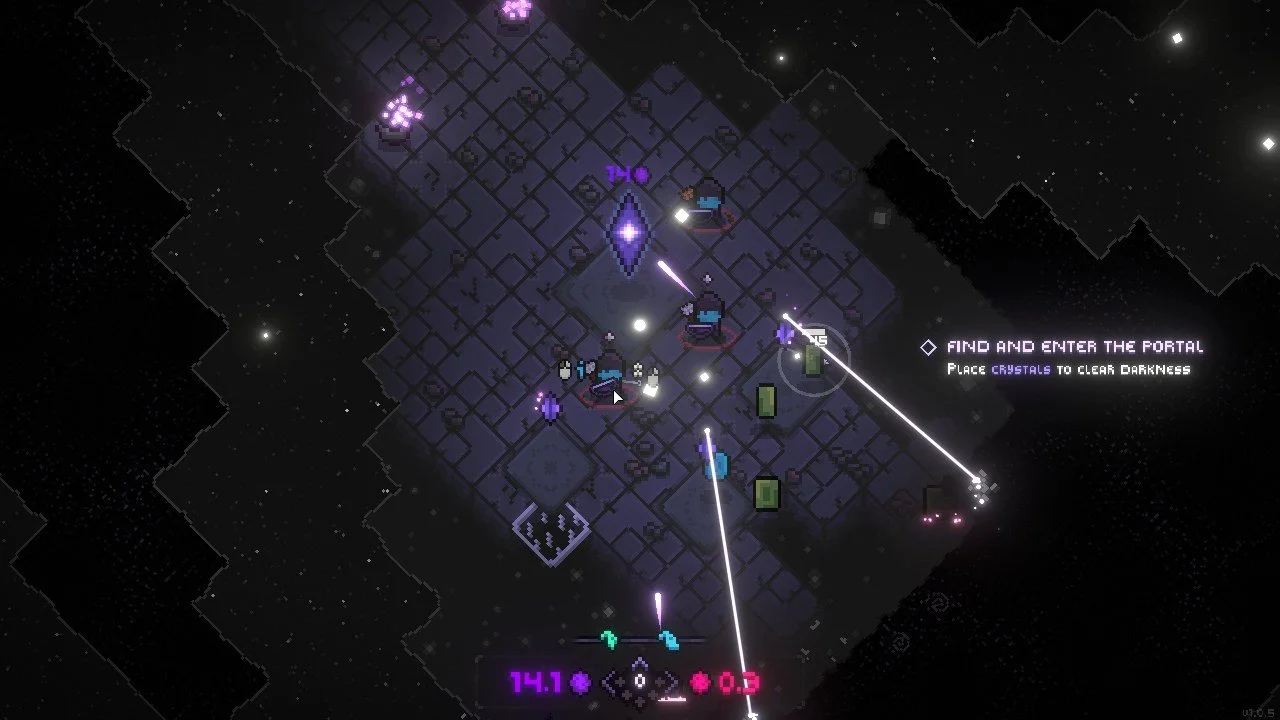
Drillcore’s biggest strength lies in its diverse and engaging gameplay loop. You control a team of drillers, collectors, and guards whose main task is to gather raw materials and fuel for a massive drill rig. The goal? Reach the core of various planets to adjust their magnetic fields or climates.
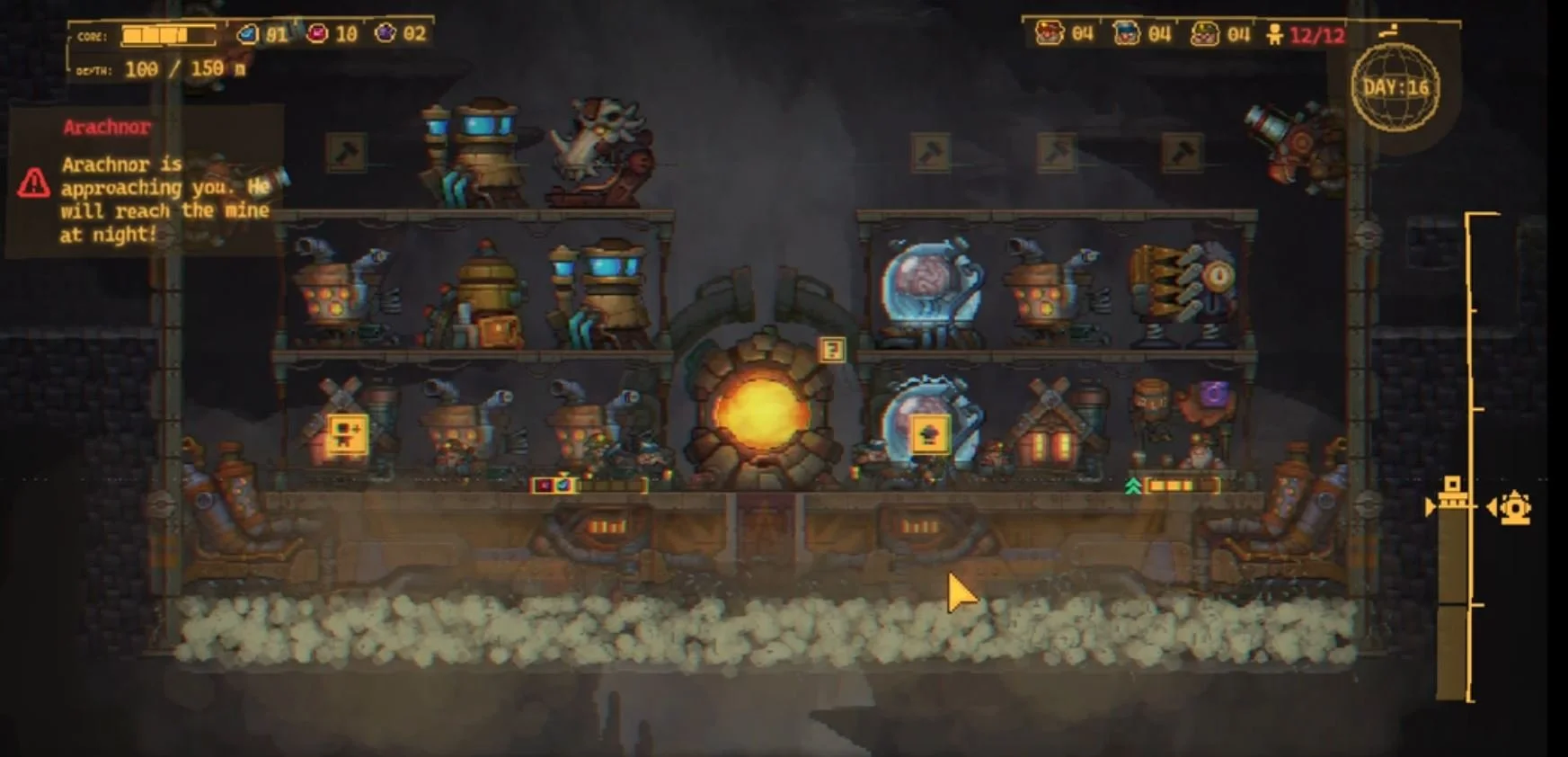
During the day, you direct your team to mine for resources and build up your platform—adding upgrades, structures, and defensive turrets. But once night falls, the tone shifts: your workers must retreat as monstrous aliens emerge from the tunnels to attack. At this point, it becomes a tower defense game, where your turrets do their best to protect the drill core. If it takes too much damage, your entire rig explodes, and you lose everything you collected.

If you survive long enough to reach the target depth and gather enough fuel, you can evacuate and complete the contract. Doing so allows you to bring back materials for permanent upgrades, giving your next run a better chance at success.
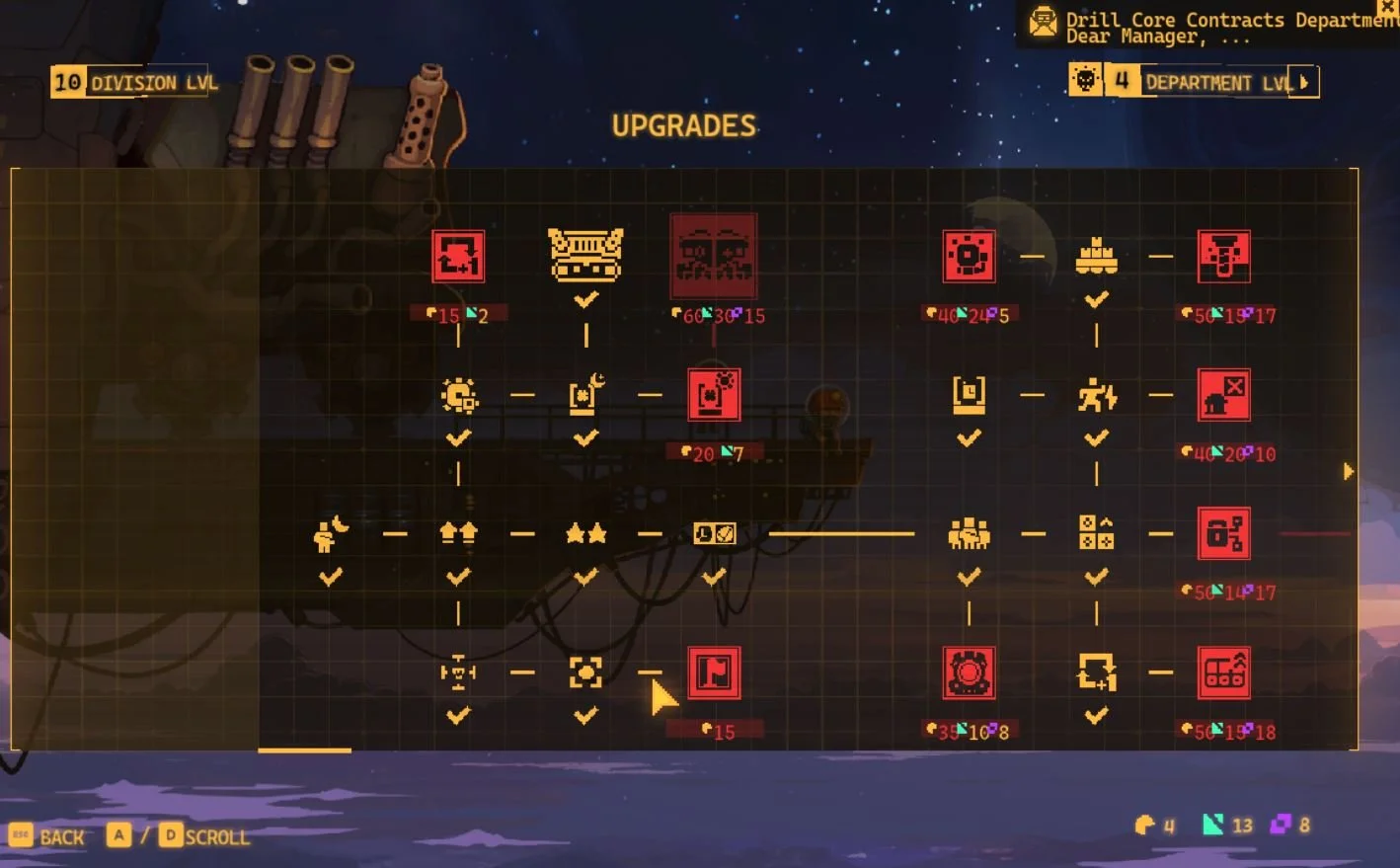
Switching between efficient daytime management and intense nighttime defense is genuinely fun. The game features both short-term upgrades within each contract and long-term progression between runs, offering strong incentives to gather as much ore as possible.
There’s also a great variety of planets, each with unique hazards, enemies, and random events that keep the gameplay fresh. All of this is wrapped in a crisp, charming pixel art style that completes the retro-modern vibe.
The Bad
Despite its strengths, Drillcore stumbles in a couple of key areas.
First and foremost is the lack of in-depth tutorials. What little instruction the game provides is vague, leaving new players to figure things out on their own. There are numerous block types, hazards, and enemies—but without proper guidance, learning what they do can be frustrating. While you can hover over elements for descriptions, the game rarely gives you enough breathing room to do that comfortably. A simple pause-and-explain feature whenever you encounter something new would go a long way, as would a more comprehensive tutorial system overall.
Secondly, the upgrade system, while robust, feels overly grindy. Unlocking meaningful improvements requires significant time and effort, often bordering on tedious. Either shortening contracts or increasing the per-contract rewards could help alleviate this grind and make progression feel more rewarding rather than like a chore.
The Ugly
While the visuals are generally solid, the UI has some rough edges. Font colors can be hard to read, some interface elements feel awkwardly arranged, and in certain cases, text overlaps or crowds the screen. These issues become even more noticeable when not playing in full-screen mode, where the layout struggles to scale properly.
Conclusion
Despite a few flaws, Drillcore offers a satisfying blend of genres that feels both nostalgic and new. Its core gameplay loop is rewarding and strategic, and the game has a strong foundation that could become something special with a bit more polish.

If the developers take the time to address the tutorial shortcomings, smooth out the grind, and fine-tune the UI, Drillcore could truly shine—especially on handheld platforms where its gameplay loop would feel right at home.