Stardew Valley has sold over thirty million copies. Animal Crossing: New Horizons sold twelve million copies in its first twelve days, a figure that would be extraordinary for any game in any genre. A visit to any gaming platform's bestseller list will show a consistent cluster of games characterised not by action, competition, or dramatic challenge but by gentle aesthetics, farming loops, creature collecting, and small-community storytelling.
The cosy game is not a niche. It is one of the fastest-growing categories in gaming, it has an audience that crosses every demographic boundary, and its continued commercial success against genres with dramatically higher production budgets suggests it is meeting a genuine need that mainstream game design had been leaving unmet for a long time.
What Defines a Cosy Game
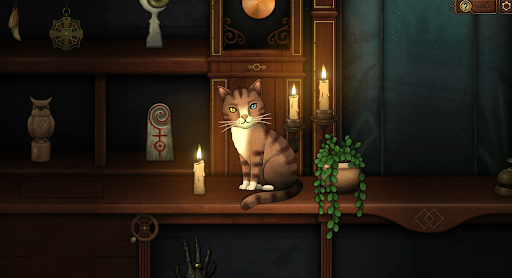
The cosy game genre has identifiable design characteristics, though they are defined as much by what is absent as by what is present. No fail states — or fail states without meaningful consequence — is perhaps the most fundamental. A cosy game does not end because you made an error, does not punish mistakes with loss of progress, and does not create anxiety through the possibility of failure. The relationship between the player and the game is structurally collaborative rather than adversarial.
Aesthetic warmth is a consistent feature: colour palettes that lean toward muted natural tones or bright pastels, sound design that emphasises ambient natural sounds and gentle music, visual environments that communicate safety and habitation rather than threat. The world of a cosy game looks and sounds like a place you would want to be.
Community and relationship systems feature heavily — the cast of recurring characters who inhabit the game's world, who have personalities and preferences and small ongoing storylines, who appreciate being given gifts and who remember being spoken to. And the gameplay loops themselves tend toward cultivation and accumulation: planting and harvesting, building and decorating, collecting and cataloguing. Progress is visible, incremental, and entirely user-paced.
This broader preference for low-pressure, comfort-oriented engagement is increasingly shaping digital entertainment culture beyond traditional gaming spaces. Platforms such as 7 Gear casino login reflect the same wider demand for accessible, friction-light experiences that prioritise continuity, familiarity, and ongoing participation over punishment or competitive intensity.
Stardew Valley as the Genre's Defining Text
Stardew Valley, released in 2016 after four years of solo development by ConcernedApe (Eric Barone), is the text through which the cosy game genre became self-conscious and commercially validated. The game is a farming RPG set in a small rural community, tasking the player with restoring an inherited farm while building relationships with the town's inhabitants. It borrowed its template from the earlier Harvest Moon series but refined and deepened every system — the relationship mechanics, the seasonal farming rhythm, the mine crawling that provides the game's modest action sequence.
What Stardew Valley got exactly right is the texture of its loop. Each day in the game provides a finite amount of time and energy, a clear set of pending tasks, and a consistent sense of tangible progress without external pressure. The game never tells you what you should be doing. It presents possibilities and lets you spend your day as you choose. The accumulation of small decisions across hundreds of in-game days produces a relationship with the virtual farm that many players describe in terms that sound more like ownership than entertainment.
The commercial success of Stardew Valley — particularly the fact that a single developer with no marketing budget outperformed major studio releases — demonstrated unambiguously that there was enormous unmet demand for this type of game, and that demand was not being served by an industry focused primarily on action, competition, and spectacle.
The Pandemic Effect
The cosy game market was already growing before 2020, but the lockdown period produced an acceleration that permanently reshaped the genre's commercial and cultural position. Animal Crossing: New Horizons launched in March 2020, precisely as populations globally were entering their first lockdowns, and its sales figures were unlike anything the series — or its developer, Nintendo — had previously produced.
The alignment between the game's content and the moment was not coincidental. Animal Crossing offered a calm, beautiful, social island world at a time when the real world felt threatening and isolated. The ability to visit friends' islands, exchange gifts, and share in the ongoing gentle project of a community felt specifically valuable when in-person social contact was restricted. The game served not just as entertainment but as a social space and an emotional anchor.
The cosy game surge of 2020 and 2021 did not retreat when lockdowns ended. Players who discovered the genre during that period continued playing and continued seeking new titles that delivered similar experiences. The pandemic provided the on-ramp; the experience of the genre provided the reason to stay.
Who Plays Cosy Games
The audience demographics of cosy games challenge the stereotypes that the gaming industry has long projected about who plays games and what they want. Research consistently shows that the cosy game audience is disproportionately female, disproportionately older than the 18-to-34 male demographic that mainstream game marketing has historically targeted, and disproportionately likely to be playing games for the first time or returning to games after years away.
This is not incidental. Cosy games are, in part, a response to years of design decisions that prioritised the preferences of a specific demographic at the expense of a much larger potential audience. The genre did not create a new type of player. It made visible an audience that had always existed and had never been well-served by the dominant design vocabulary of mainstream gaming.
The Psychology of Comfort Play
The psychological function that cosy games serve is well-described by the research on what people need from leisure when they are stressed, depleted, or anxious. Effortful leisure — activities that require concentration, competition, or the management of failure — can feel rewarding when the person has cognitive resources to spare. When those resources are depleted, effortful leisure increases rather than reduces fatigue.
Cosy games are low-effort leisure with genuine engagement — they provide the sense of agency, progress, and accomplishment that makes an activity feel meaningful, without the cognitive demands that make effortful games unappealing when you are tired. The loop of planting crops, waiting, and harvesting them is not intellectually demanding. But it produces a clear causal chain from action to outcome, a visible record of progress, and a sense of stewardship over a world that responds to care.
This is not a lesser form of engagement. It is a different form of engagement that serves specific psychological needs — the needs of people at the end of a difficult day, people recovering from illness or stress, people who need to feel capable and purposeful without the risk of failure. The cosy game is not a simplified game. It is a game that has been designed around different needs than the ones mainstream gaming has historically prioritised.
The Cosy Game Ecosystem in 2026
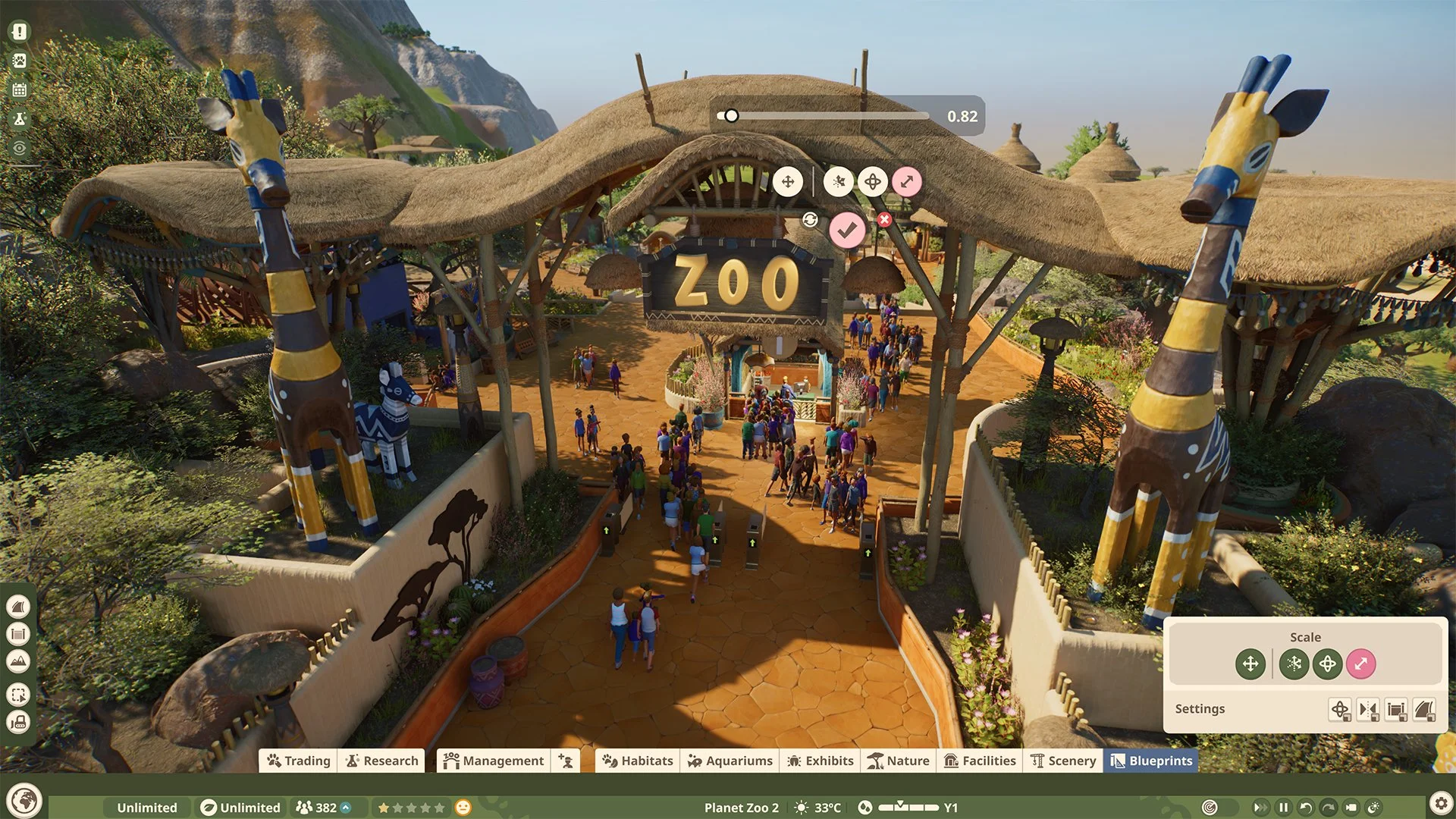
The genre has grown considerably in both quantity and quality since Stardew Valley established the commercial template. Palia, a free-to-play MMO cosy game that launched to significant community interest, attempted to add a social and multiplayer dimension to the cosy formula at scale. Coral Island expanded the Stardew template with increased visual ambition and a conservation narrative that gave its farming loops additional meaning. Spirittea brought village management and spirit-appeasing mechanics into the cosy genre with distinctively East Asian aesthetic influences.
The genre's design ambitions have grown alongside its audience. Where early cosy games were content to refine a narrow formula, contemporary developers are importing mechanics from other genres — light RPG progression, narrative branching, crafting complexity — while preserving the essential cosy qualities of low stakes, aesthetic warmth, and player-paced progress. The result is a genre that has earned the attention of major publishers without yet losing the independent sensibility that gave it its identity.
What Cosy Games Reveal About Why People Play
The success of cosy games is a useful corrective to the narrower narratives about what games are for. If games were primarily about challenge, mastery, and competition, the cosy genre's commercial dominance would be inexplicable. What cosy games demonstrate is that games are primarily about agency — the experience of being the cause of something, of having choices that matter in a world that responds to them — and that the specific form that agency takes, whether it is defeating a difficult enemy or planting a successful harvest, is secondary to the feeling itself.
People play cosy games for the same reason people play any game: to feel capable, purposeful, and engaged in a world that makes sense. The cosy game's specific achievement is delivering that feeling without the anxiety, frustration, or time pressure that mainstream gaming often packages alongside it.