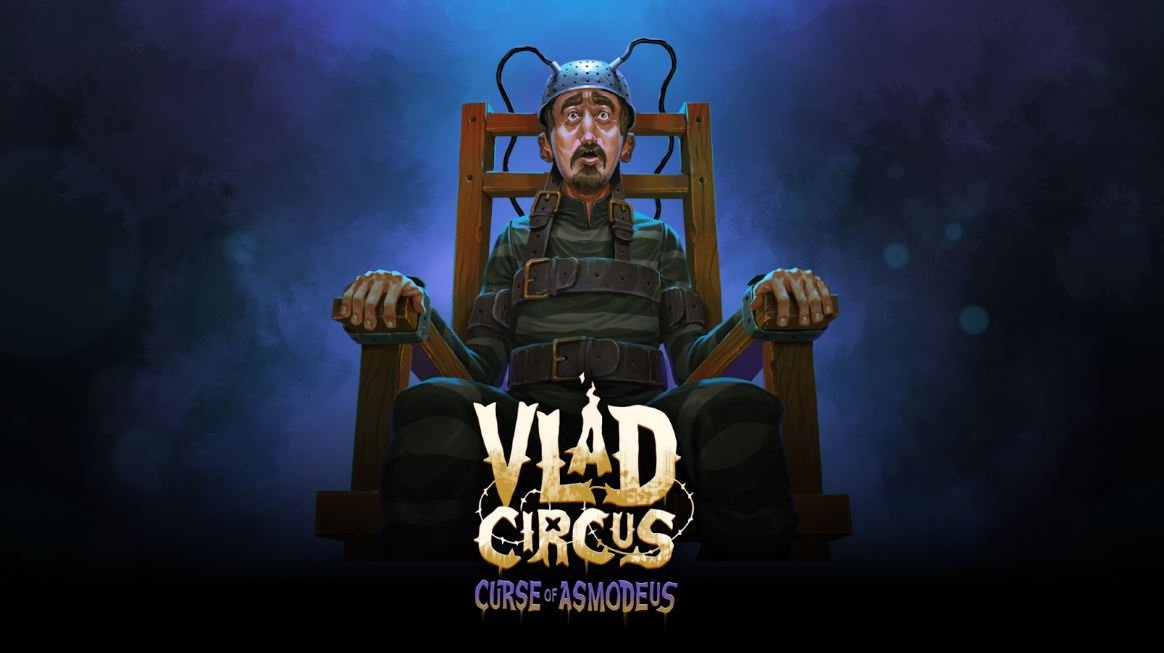
Horror games have long captivated players, especially as modern graphics have improved. Many rely on gruesome visuals and sudden jump scares, which make them fun to play and entertaining to watch. Vlad Circus: Curse of Asmodeus, however, takes a different approach. It may not use spectacle or constant shocks, but it delivers a deeply unsettling atmosphere that keeps players on edge at every turn.
Character Driven Plot
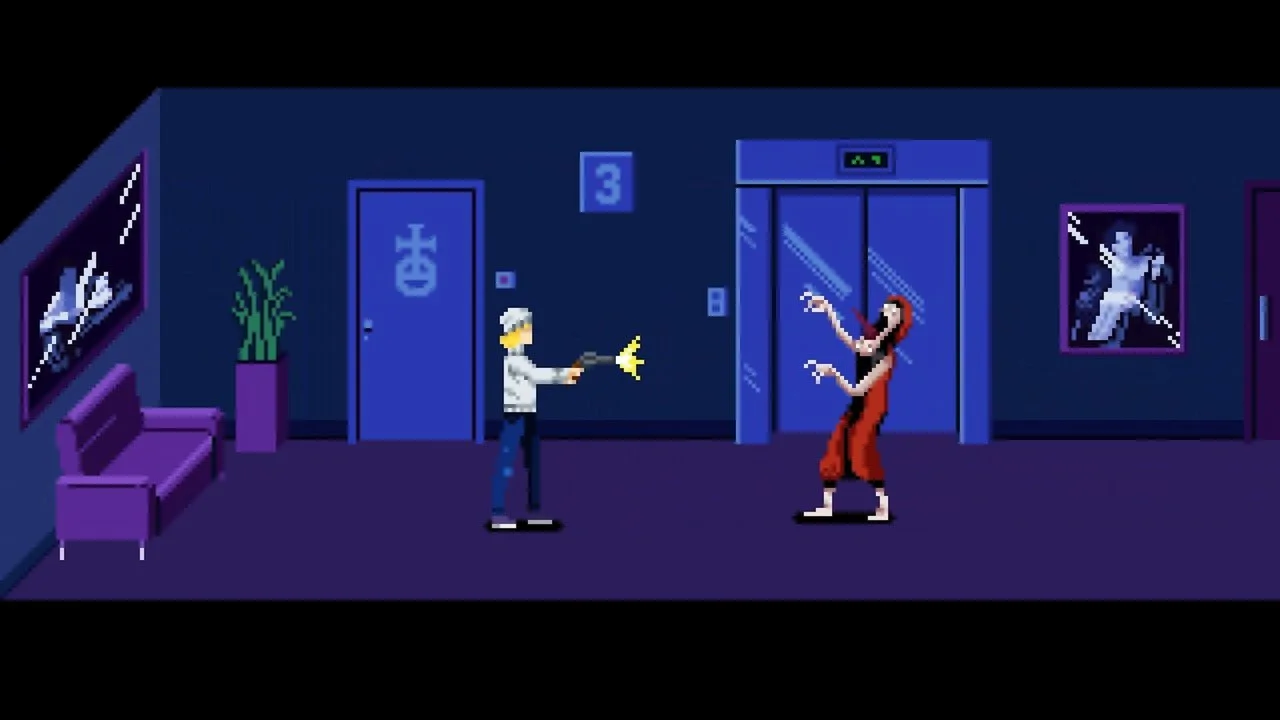
Blowfish Studios’ Vlad Circus: Curse of Asmodeus has an intriguing pacing, splitting gameplay between two timelines while following the protagonist, Josef. In the present, Josef finds himself in a dark, decaying building, badly wounded and surrounded by others in similar states, in rooms filled with disturbing religious images. Interspersed with these moments are flashbacks to the recent past, gradually revealing how Josef ended up in this horrific place.
These flashbacks serve as brief pauses from immediate terror, providing insight into Josef, his character flaws, vices, and struggles. This understanding makes the horrors of his present situation even more compelling and disturbing, keeping players both anxious and eager to uncover the full story. Though the game includes supernatural elements, the horror is largely grounded in Josef’s very human fears, suffering, and moral failings, giving the story a gritty and realistic core.
Ambience Driven Horror
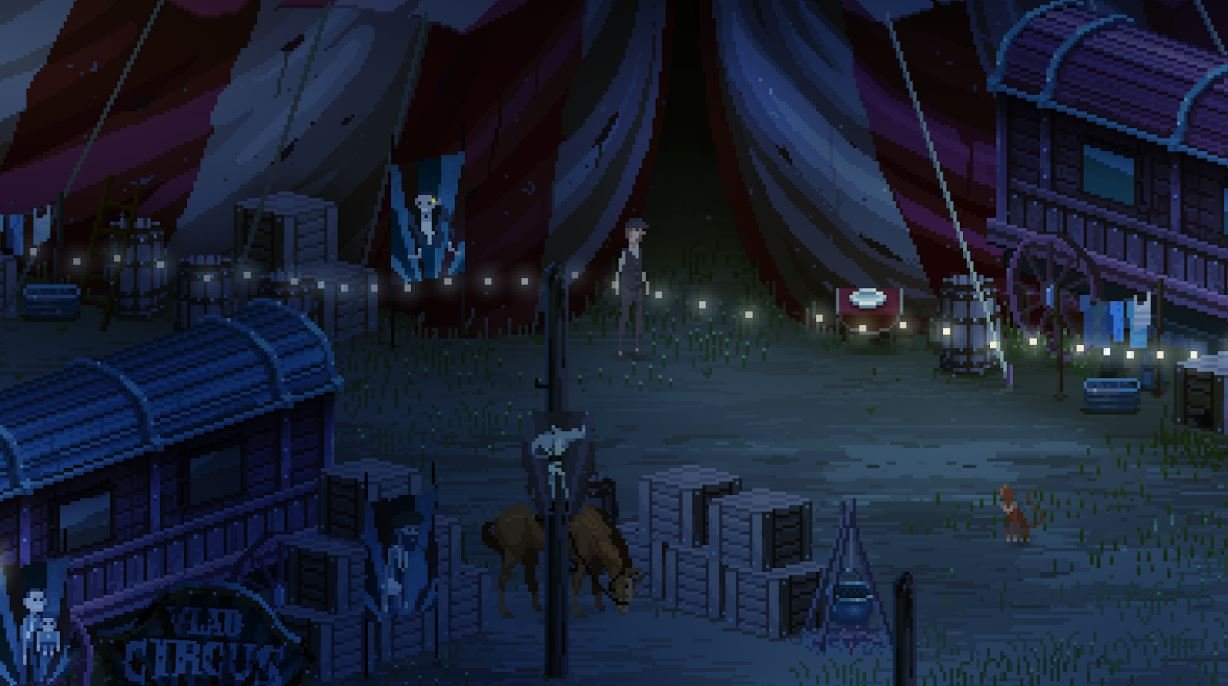
The game’s simple pixel art style sets it apart from modern realistic horror titles. This visual simplicity works with its psychological approach. Unlike games focused on jump scares, Curse of Asmodeus builds tension through mystery and anticipation. Players are often left in the dark, both literally and figuratively, about what is happening in the game world.
Each room provides disturbing details, but more often than not, it raises additional questions. This balance of revelation and uncertainty keeps players engaged, wanting to discover the truth while fearing what they might find. Along the way, players must solve creative puzzles using only the environment, which increases immersion and tension.
While supernatural aspects are present, the game’s horror comes primarily from Josef’s real-world suffering, the consequences of his choices, and the violence and decay around him. These realistic, human-centered fears make the experience more unsettling than a standard ghost story.
Beyond the atmosphere, players become invested in Josef himself, his difficult family relationships, his search for meaning, and his struggle for survival.
Effective With Some Flaws
While the gameplay is not fast-paced or action-packed, the story is compelling and the tension and dread are skillfully maintained. There are minor areas for improvement. Some dialogue can feel awkward, possibly due to translation quirks. Certain gameplay elements, such as encounters with rats or shards of glass, occasionally feel out of place within the otherwise consistent narrative and environment.
Conclusion
Despite minor flaws, Blowfish Studios succeeds in creating a game with excellent pacing, a chilling atmosphere, and rewarding puzzle-based progression. Whether navigating the present or the flashback sequences, I was consistently engaged and eager to see what came next. Overall, Vlad Circus: Curse of Asmodeus earns a solid 8.5 out of 10.