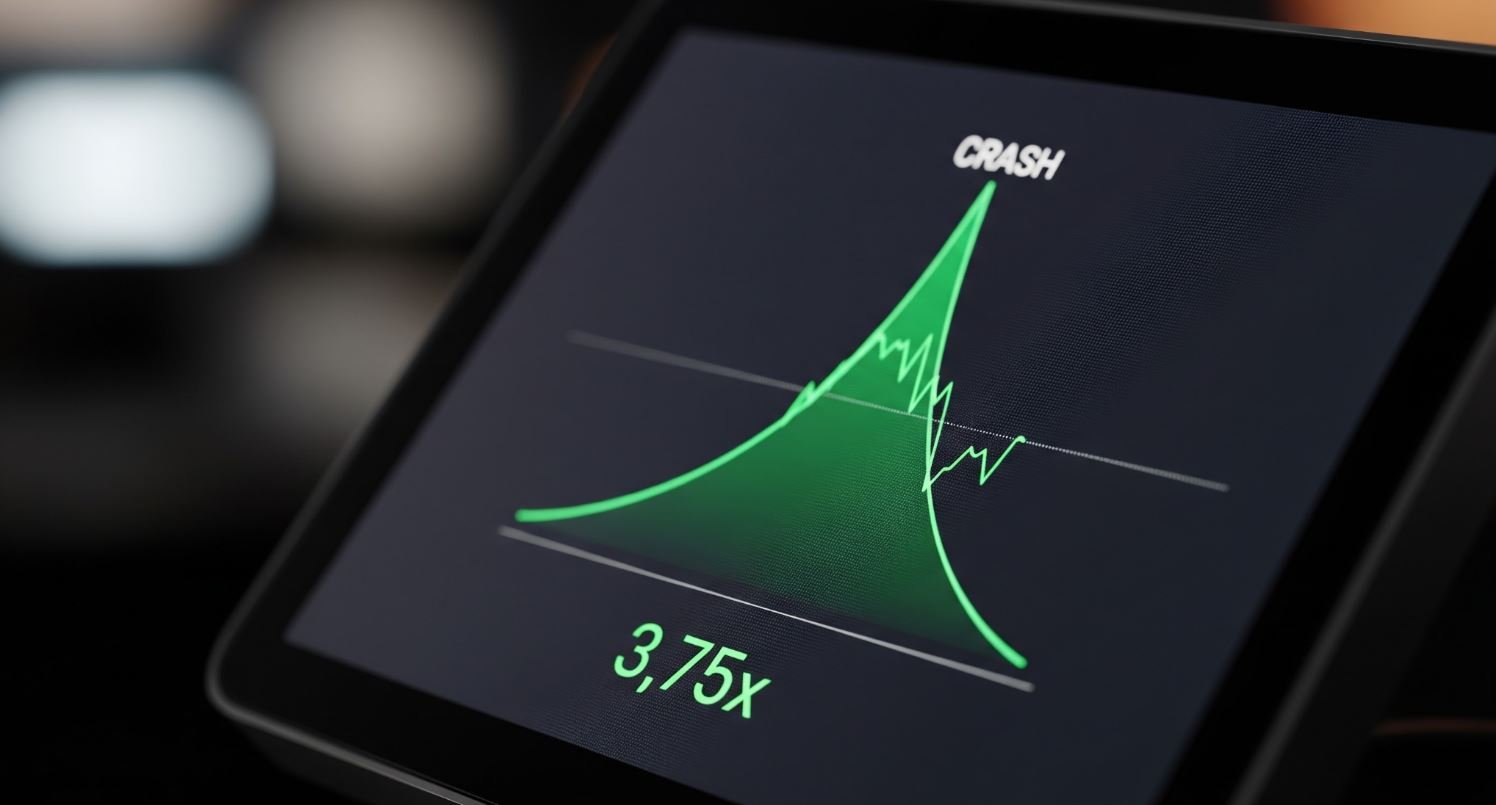
If you've spent any time around gaming lately, you've seen crash games. A multiplier ticks upward, a little plane climbs, and the whole round comes down to one nervy decision: cash out now, or hold for more? Aviator is the poster child, and the format has spread fast because it's dead simple to understand and absolutely brutal on your nerves.
And every player eventually asks the same suspicious question: is this thing rigged? It feels like it should be. The house always wins, right? So surely someone behind a server is nudging that plane to crash the exact second you place a big bet.
The interesting answer is no — and the way these games prove it is genuinely clever. It's worth understanding, because the same idea shows up anywhere trust has to be earned instead of assumed.
"Random" Is Trickier Than It Looks
Computers can't actually be random. They're deterministic machines: feed them the same input and they return the same output every time. So game "randomness" is really pseudo-randomness — a starting value (a "seed") gets expanded into a long, statistically-random-looking sequence. Same seed, same sequence. Which means the whole thing hinges on one question: can anyone see or control that seed?
That's exactly the trapdoor a shady operator would exploit — if the system let them. Provably-fair games are built specifically so they can't.
The Commit-and-Reveal Trick
Here's the core of it. Before a round even starts, the server generates a secret server seed and immediately publishes a scrambled fingerprint of it — a SHA-256 hash. SHA-256 is a one-way function: you can turn the seed into the hash in an instant, but you can't work backwards from the hash to the seed. Publishing that hash is a public promise — the server has locked in its secret value and can no longer change it, yet you still can't read what it is.
Then you, the player, add your own ingredient: a client seed (plus a per-round counter). The actual result is computed by hashing everything together:
result = SHA-256(server_seed + client_seed + round_number)
A chunk of that output becomes your multiplier — the number the plane flies to before it crashes.
The beauty is the standoff. The server can't rig the outcome, because it committed to its seed before you bet. You can't predict the outcome, because the server seed stays hidden until the round ends. Neither side has to trust the other — the math referees the whole thing. If you want the full walkthrough inside a real product, how Aviator's provably-fair system actually works lays out the seeds, the reveal, and the in-game verification step by step.
So Why Can't "Predictor" Apps Work?
This is where the scams live. Because the result is calculated, it feels like it ought to be predictable — which is why YouTube and Telegram are drowning in "Aviator predictor" apps promising 95% accuracy. They cannot work, and that's not an opinion. The one value that decides the round — the server seed — isn't revealed until the round is already over. There's nothing to read ahead of time, so there's nothing to predict. Any app claiming otherwise is showing you cherry-picked wins or quietly installing malware; one team put eight of these predictor apps to the test with real money, and every single one performed no better than a coin flip.
Fair Doesn't Mean Profitable
Here's the honest catch. Provably fair means the game isn't cheating you — it does not mean you'll win. There's still a built-in house edge (crash games typically run around a 97% return to player), and short sessions swing wildly around that average. Fairness is about the dice being clean, not about the odds tilting your way. The smart play isn't chasing a magic multiplier; it's treating the game as entertainment with a known cost, setting a limit before you start, and cashing out on a plan instead of on adrenaline.
The takeaway for anyone curious about the tech under the hood: crash games are a neat, real-world demo of cryptographic fairness — commit, reveal, verify. The plane is silly. The math holding it up is not.
Written by Vikram Singh, a crash-games specialist at CrashBetAdvisor, where the team tests Aviator and other crash games hands-on with real bankrolls.