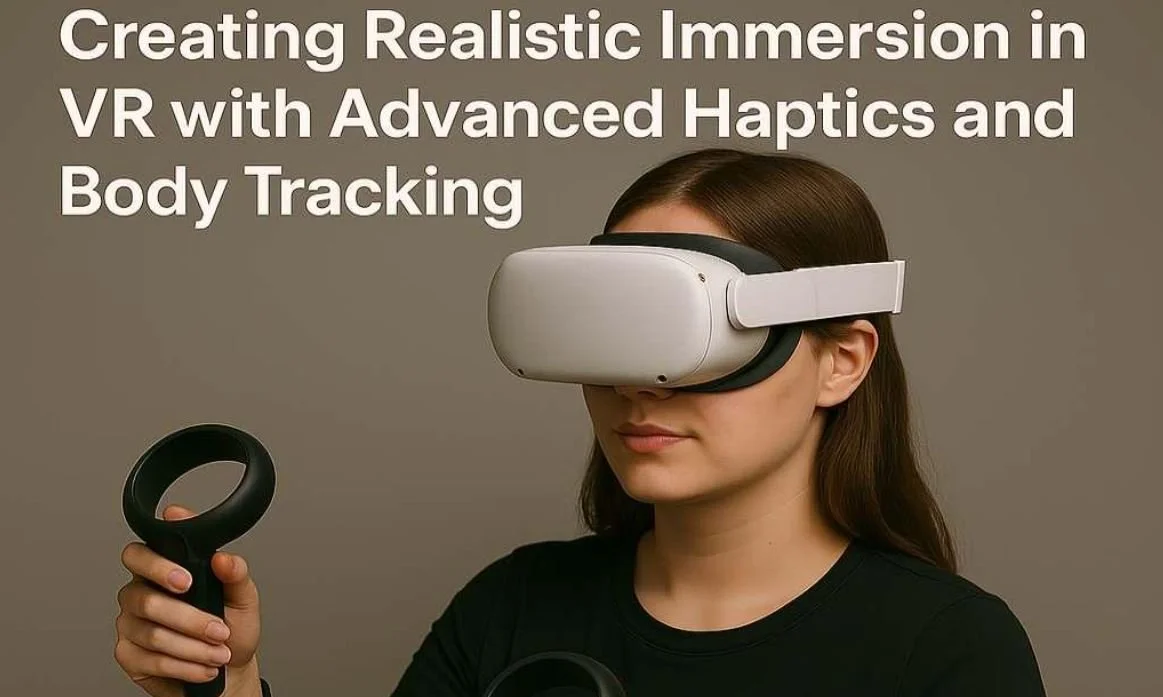
Virtual reality (VR) has become a transformative force within the gaming industry, offering unprecedented levels of immersion and interaction. As VR technology evolves, the quest for realism becomes ever more pressing. Developers are now leveraging advanced haptics and body tracking to create more authentic experiences, marking significant progress in virtual reality application development. In this article, we will explore how these technologies are reshaping VR and their implications for game developers, journalists, and content strategists.
The Quest for Realistic Virtual Reality
The ultimate goal of VR is to create environments where the boundary between the virtual and the real is blurred. Realistic virtual reality isn't just about stunning graphics; it's about engaging all the senses. This is where advanced haptics and body tracking come into play.
Advanced Haptics: Touching the Untouchable
Haptics technology simulates the sense of touch through tactile feedback. In VR, this means users can "feel" textures, resistances, and even temperatures. By incorporating advanced haptics, developers can significantly enhance the realism of virtual environments, allowing players to interact with objects as they would in the real world.
The Mechanics of Haptics
Haptics relies on actuators to create vibrations and movements that mimic the sensation of touch. These actuators can be integrated into controllers or wearable devices like gloves and suits, providing users with feedback that corresponds to in-game actions.
For instance, when a player touches a virtual object, the haptic device can produce sensations that replicate the texture and weight of the object. This feedback can range from the softness of a fabric to the impact of a punch, adding a layer of depth to the gaming experience.
Body Tracking: Becoming the Avatar
Body tracking technology captures the movements of a user's body and translates them into the virtual environment. By enabling full-body tracking, developers can create avatars that move in sync with the player, enhancing the feeling of presence within the game world.
Implementing Body Tracking in VR
Body tracking can be achieved through various methods, including external sensors, cameras, and inertial measurement units (IMUs) attached to the body. These systems track the user's position, orientation, and movement, allowing for natural interactions within the game.
With body tracking, actions such as walking, jumping, and gesturing can be accurately represented in VR, making the experience more intuitive and immersive. This technology not only enhances gameplay but also opens up new possibilities for storytelling and character development.
Implications for VR Game Developers
For VR game developers, integrating advanced haptics and body tracking offers a competitive edge. By creating more lifelike experiences, developers can attract a wider audience and push the boundaries of what is possible in virtual reality.
Designing with Realism in Mind
Developers must consider how these technologies can be seamlessly integrated into their games. This involves designing interactions that feel natural and intuitive, as well as ensuring that haptic and tracking systems are responsive and reliable.
Challenges and Opportunities
While the potential of these technologies is immense, there are challenges to overcome. Developers must address technical limitations, such as latency and the need for high-fidelity feedback, to ensure a smooth and convincing experience.
Additionally, creating content that fully utilizes these technologies requires a deep understanding of both the hardware and the intricacies of game design. Developers must balance realism with playability, ensuring that the added sensory feedback enhances rather than detracts from the experience.
When to Hire a VR Developer
To make the most of advanced haptics, full-body tracking, and immersive environments, it’s often essential to hire VR developer with hands-on experience in these technologies. Skilled VR developers understand how to bridge the gap between innovative hardware and engaging gameplay. Whether you’re building a full-scale VR game or a prototype experience, hiring a specialist ensures you get the technical precision and creative insight necessary to craft something truly immersive.
By bringing in the right talent, studios can overcome common development hurdles and bring their vision to life faster and more efficiently.
Insights for Video Game Journalists
Video game journalists have the unique opportunity to explore and critique these emerging technologies. By delving into the nuances of advanced haptics and body tracking, journalists can provide readers with in-depth analyses of how these innovations impact gameplay and storytelling.
Crafting Engaging Narratives
Journalists can craft compelling narratives that not only describe the mechanics of these technologies but also explore their implications for the future of gaming. This includes examining how realistic interactions can influence player engagement and emotional investment.
Sparking Debates and Discussions
The integration of advanced haptics and body tracking raises important questions about the direction of VR development. Journalists can foster discussions about the ethical and practical implications of these technologies, engaging the gaming community in meaningful debates.
Strategies for Content Managers
Content strategy managers at gaming companies can leverage content focused on these technologies to captivate and educate their audience. By providing detailed and engaging articles, managers can enhance their brand's reputation as a thought leader in the gaming industry.
Building a Knowledgeable Audience
By curating content that explains and explores advanced haptics and body tracking, content managers can attract a knowledgeable audience interested in the cutting edge of gaming technology. This not only drives engagement but also fosters a community of informed and passionate gamers.
Fostering Interaction and Engagement
Interactive content, such as interviews with developers and demonstrations of technology, can further engage the audience. By providing platforms for discussion and collaboration, content managers can create a dynamic community that thrives on shared knowledge and experiences.
Technical Architecture Behind Haptics & Tracking
To truly understand the impact of haptics and body tracking in virtual reality, it's essential to examine the underlying technical architecture that enables these advancements. This involves the interplay of various technologies, hardware components, and software algorithms that work together to create a seamless immersive experience.
1. Haptic Feedback Systems
Haptic feedback systems are composed of several key components:
Actuators: These are the devices that generate the tactile sensations users feel. There are different types of actuators, including:Linear Resonant Actuators (LRAs): Provide vibrations that simulate touch sensations.Voice Coil Actuators: Allow for more complex feedback such as directional sensations.Pneumatic Actuators: Use air pressure to create varying sensations, mimicking the feeling of textures.
Controllers: Devices such as VR controllers or gloves that are equipped with haptic feedback technology. They are designed to provide real-time feedback based on user interactions within the virtual environment.
Software Algorithms: These algorithms determine how and when to trigger haptic feedback. They take into account the game’s physics engine, allowing for responsive, context-appropriate sensations.
2. Body Tracking Systems
Body tracking technology consists of multiple methodologies that allow for accurate movement capture:
Inertial Measurement Units (IMUs): Small, embedded sensors that measure acceleration, rotation, and magnetic orientation. This data is used to track the user’s movements in real-time, crucial for body tracking.
Optical Tracking Systems: Utilize cameras and computer vision algorithms to analyze the user's movements. By using markers or feature recognition, these systems create a digital model of the user's body, allowing for precise tracking in a spatial environment.
Depth Sensors: Devices like Microsoft’s Kinect or Intel’s RealSense use infrared or laser technology to capture depth information, enabling them to create a 3D map of the user’s movements.
3. Data Processing & Integration
The data collected from haptic and tracking systems must be processed in real-time to ensure a seamless user experience. This involves:
Latency Minimization: To prevent delays that would break immersion, developers focus on optimizing data transmission and processing speeds. This is critical for both haptic feedback and body tracking systems.
Calibration: Proper calibration of sensors and devices is essential for accurate tracking. This ensures that the system can translate real-world movements into the virtual environment correctly.
Unity of Feedback: Successful integration requires synchronization between visual feedback (what the user sees) and haptic feedback (what the user feels), creating a holistic immersive experience.
Popular Devices and SDKs for Developers
As VR technology advances, several devices and SDKs have emerged that empower developers to create immersive experiences. Below, we highlight some of the most popular options available in the market.
Popular VR Devices
Oculus Quest 2: A widely used standalone VR headset that offers a balance of affordability and performance. It supports both room-scale and seated experiences and includes hand tracking capabilities.
Valve Index: Known for its high-quality visuals and precise tracking, the Valve Index offers a premium VR experience with finger-tracking controllers and a high refresh rate for smoother gameplay.
HTC Vive Pro: Designed for professionals and developers, the Vive Pro provides high-resolution visuals and advanced tracking capabilities. It's suitable for both gaming and enterprise applications.
PlayStation VR: A popular choice among console gamers, PlayStation VR integrates well with the PlayStation ecosystem, providing an accessible option for developers targeting console users.
Microsoft HoloLens: Unlike traditional VR headsets, HoloLens provides a mixed-reality experience, allowing developers to create applications that blend digital content with the real world.
Essential SDKs and Frameworks
Unity: A leading game development platform that offers robust support for VR development. Its XR Interaction Toolkit provides tools and components specifically for haptics, body tracking, and immersive interactions.
Unreal Engine: Known for its photorealistic graphics capabilities, Unreal Engine is widely used in the gaming industry. It features Blueprints, a visual scripting language, which helps developers create interactive VR experiences without deep programming knowledge.
SteamVR: An SDK provided by Valve that enables developers to create VR experiences compatible with a wide range of VR hardware. SteamVR's flexible API allows for easy integration of haptic feedback and body tracking.
Vive SDK: Tailored for HTC Vive devices, this SDK offers developers tools and libraries for leveraging the full capabilities of the Vive hardware, including haptics and tracking.
Oculus SDK: A comprehensive set of tools for developers targeting Oculus devices. It includes features for optimizing performance and enhancing user experience through haptic feedback and rich interactions.
ARKit and ARCore: While primarily focused on augmented reality, these frameworks from Apple and Google respectively allow developers to integrate spatial mapping and tracking, which can enhance VR applications.
Latency and Bandwidth Optimization Techniques
In virtual reality, minimizing latency and optimizing bandwidth are essential for delivering smooth and immersive experiences. High latency can disrupt user immersion, while inefficient bandwidth usage can lead to performance issues and diminished quality. Here are some key techniques developers can employ to address these challenges:
1. Network Optimization
Compression Techniques: Use data compression algorithms to reduce the amount of bandwidth required for transmitting data. This can involve compressing textures, audio, and other assets to minimize the load on the network.
Adaptive Bitrate Streaming: Implement adaptive bitrate streaming to dynamically adjust the quality of the video stream based on current network conditions. This ensures a smoother experience even if the user's connection fluctuates.
2. Reducing Latency
Edge Computing: Utilize edge computing to process data closer to the user. By minimizing the distance between the user and the server, you can significantly reduce latency and improve response times.
Predictive Modeling: Incorporate predictive algorithms to anticipate user movements and render frames before the user executes the action. This can create a feeling of instant responsiveness, even if the actual data transmission takes some time.
3. Efficient Asset Management
Level of Detail (LOD): Implement Level of Detail techniques to adjust the complexity of 3D models based on their distance from the user. By reducing detail for distant objects, you can save bandwidth while maintaining visual fidelity for objects that are in focus.
Asset Streaming: Instead of loading all assets at once, use asset streaming to load only the necessary elements required for immediate gameplay. This approach reduces initial load times and alleviates bandwidth strain.
4. Optimizing Rendering Techniques
Foveated Rendering: Utilize foveated rendering techniques, which reduce the rendering workload by only rendering high-resolution graphics in the area where the user is looking. Peripheral vision can be rendered at a lower resolution, saving processing power.
Batch Rendering: Group similar objects or draw calls together to reduce the overhead associated with rendering multiple items. This can improve performance by minimizing the number of state changes required by the GPU.
5. Testing and Monitoring
Network Simulation Tools: Use network simulation tools to test and optimize VR applications under various network conditions. This enables developers to identify and address potential latency and bandwidth issues before deployment.
Performance Metrics: Continuously monitor performance metrics such as frame rates, latency, and bandwidth usage during gameplay. This data can help identify bottlenecks and inform future optimization efforts.
Cross-Platform Compatibility for VR Immersion
Wider Audience Reach: Cross-platform compatibility allows developers to attract players on different devices, increasing the potential user base and enhancing community interaction.
Seamless Experience: Ensures users have a consistent VR experience regardless of the hardware, leading to improved immersion and engagement.
Shared Content Libraries: Facilitates sharing of content and updates across platforms, allowing users to access the same VR environments and experiences.
Enhanced Multiplayer Features: Cross-platform capability strengthens multiplayer functionality, enabling players on various devices to interact in real-time.
Unity and Unreal Engine Support: Popular game engines provide tools for developing cross-platform VR applications, simplifying the integration process.
Standardized Protocols: Utilizing standardized frameworks and protocols ensures compatibility between different VR hardware and software, enhancing performance and user experience.
Reduced Fragmentation: Minimizes the challenges posed by hardware variations, ensuring users have access to similar features and functionalities.
Community Building: Encourages the formation of a larger, more diverse gaming community where players can share experiences, tips, and content across different platforms.
Long-term Sustainability: Cross-platform capabilities contribute to the longevity of VR titles as they remain relevant across evolving hardware landscapes.
Developer Flexibility: Provides developers with the freedom to innovate and create immersive experiences tailored to various systems while maintaining a unified vision.
Use Cases Beyond Gaming (e.g., Rehab, Education, Military)
Virtual reality (VR) goes beyond gaming and has many important uses. In rehab, VR can create engaging environments for patients. This allows them to do physical therapy in a way that keeps them motivated and helps them recover faster. In schools, VR offers interactive learning experiences. Students can explore complex topics through simulations that make it easier to understand and remember. The military uses VR for training, providing realistic scenarios that prepare personnel for tough situations without the dangers of real-life training. These examples show how VR technology can improve learning, recovery, and readiness in different fields.
The Role of AI in Adaptive Haptic Feedback
Personalized Experiences: AI can analyze user interactions to tailor haptic responses, enhancing immersion based on individual preferences and reactions.
Real-Time Adaptation: AI algorithms can adjust haptic feedback dynamically during gameplay, responding to the user's movements and in-game actions for a seamless experience.
Context-Aware Feedback: AI can determine the context of a virtual interaction, providing appropriate haptic sensations based on the environment and the object being interacted with.
Enhanced Realism: By utilizing AI, developers can create more nuanced and realistic haptic sensations that mimic real-world experiences, increasing immersion.
Learning Patterns: AI can learn from user behaviors and preferences over time, improving the accuracy and effectiveness of haptic feedback in response to different scenarios.
Reducing Latency: AI can help predict user actions, enabling faster and more responsive haptic feedback that enhances the sense of immediacy in interactions.
Integration with Other Technologies: AI can synergize with body tracking systems to deliver synchronized haptic feedback, enriching the overall virtual reality experience.
Cost Efficiency: AI-driven solutions can optimize the design and deployment of haptic feedback systems, making it more cost-effective for developers to implement advanced features.
User Engagement: By providing adaptive haptic feedback, AI can keep users engaged and motivated, leading to longer and more enjoyable gameplay sessions.
Future Innovations: AI is poised to drive future advancements in haptic technology, opening new possibilities for interaction design and user experience in VR.
Data Privacy in Full-Body Tracking Systems
In virtual reality, full-body tracking systems raise important privacy issues. These systems use sensors and cameras to collect sensitive user information, like physical movements and personal data. To build trust with users, developers need to focus on strong data protection. This means using encryption to secure data and anonymizing information when it is sent or stored.
Developers should also create clear privacy policies that explain how user data will be used, shared, and kept. By following these privacy practices, developers can boost user confidence and create a secure virtual space that respects people’s rights and keeps their data safe.
Future Roadmap: Where Haptics and Tracking Are Headed
The future of haptics and body tracking in virtual reality looks very promising. As technology improves, we can expect better haptic systems that provide realistic feedback, making users feel real-world sensations. This means developers can create virtual environments where users feel truly engaged.
Additionally, advancements in body tracking will allow for more accurate movement capture. This will lead to lifelike avatars and more natural interactions. When combined with artificial intelligence, these systems will be able to adjust in real time to how users behave and what they like.
As these technologies come together, we can look forward to new immersive experiences that make it hard to tell what's real and what's virtual. This will change gaming, training, and storytelling for years to come.
Frequently Asked Questions (FAQs)
1. What are advanced haptics in virtual reality?
Advanced haptics refer to technologies that simulate the sense of touch through tactile feedback, allowing users to feel textures, resistances, and other sensations while interacting in a virtual environment.
2. How does body tracking enhance the VR experience?
Body tracking captures a user’s movements and translates them into the virtual environment, enabling full-body avatars and more intuitive interactions, making the gameplay feel more immersive and natural.
3. What benefits do VR game developers gain from using advanced haptics and body tracking?
By integrating these technologies, developers can create more realistic and engaging experiences, attracting a wider audience and pushing the boundaries of gaming realism.
4. Are there any challenges in implementing advanced haptics and body tracking?
Yes, challenges include technical limitations such as latency, the need for high-fidelity feedback, and ensuring seamless integration into game design to maintain playability and user engagement.
5. How can video game journalists cover advancements in VR technology?
Journalists can explore the implications of advanced haptics and body tracking, providing in-depth analysis, crafting compelling narratives, and sparking discussions on ethical and practical considerations in VR development.