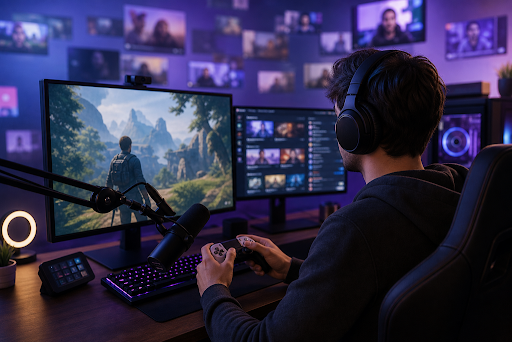
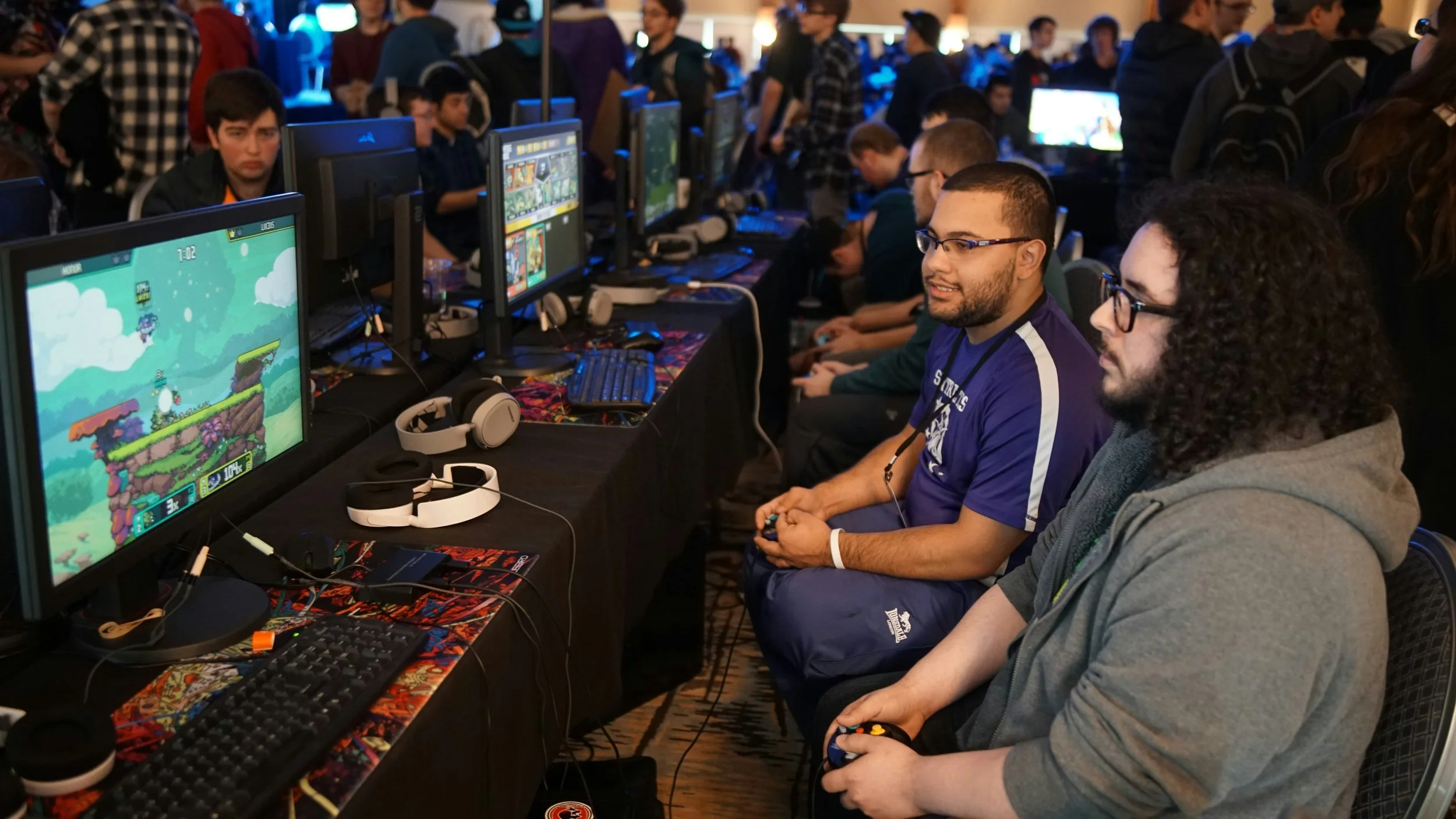
Esports didn’t go worldwide just because the prize pools grew. It spread because creators made technical games feel human: a streamer pausing a clutch to explain the angle, a former pro translating a draft into plain language, a personality turning a long bracket into a nightly routine. Influencers sit between the game and the audience like guides. Their value is not only reach; it’s interpretation. When they react, chat reacts.
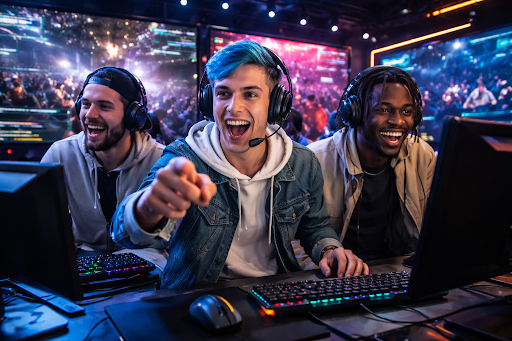
The new front row fits in your pocket
Traditional sports sell the seats. Esports sells the session, and creators make that session feel intimate. At Fortnite’s peak, Tyler “Ninja” Blevins showed how hype can double as instruction, pulling casual viewers into the rhythm of competitive play. Michael “shroud” Grzesiek did it with calm precision, turning aim mechanics into something you could learn while laughing. In League of Legends, voices like Marc “Caedrel” Lamont bring dense matches down to earth with timing, context, and the kind of blunt honesty that a studio desk rarely risks. The influencer becomes a front-row seat you can carry, available between tournaments, not only on finals day.
Co-streaming made the broadcast a shared stage
Publishers once treated creators as pirates; now many treat them as partners. Riot Games has leaned into formal co-streaming and broadcast-partner lineups for major leagues, letting approved creators add commentary while the official feed provides the spine. On the Valorant side, independent viewership analysis for Champions 2025 found that co-streamers generated a majority of total hours watched. The result is not a single “correct” broadcast, but a family of broadcasts: the official one, plus creator-led versions tuned to different humour, pacing, and expertise. This helps newcomers because a creator can slow the game down, replay key moments, and answer the questions the studio never hears. It helps veterans, too, because the co-stream can be sharper, more tactical, and culturally specific.
The clip economy accelerates attachment
Influencers don’t only stream; they compress. A ten-minute sequence becomes a twenty-second clip, then a meme, then a reason to tune in live tomorrow. A Lee “Faker” Sang-hyeok outplay or an Oleksandr “s1mple” Kostyliev highlight can jump across platforms before the match has even ended, pulling in people who weren’t watching in the first place. Short-form video lowers the entry price of fandom: you don’t need to watch every map to feel invested; creators deliver the emotional peaks and the “here’s what mattered” summary.
The digital fan platform
Big events now come with parallel calendars of watch parties, community streams, and group chats that keep fans together even when they’re alone. Riot has actively promoted large numbers of in-person Worlds watch parties, but the daily version is smaller: Discord servers, Twitch chat, YouTube live comments, and group threads that flare up with every draft and timeout. Some viewers download MelBet (Arabic: تحميل melbet) while they watch, keeping match schedules, statistics, and live markets close enough to check without leaving the stream. Attention stops being linear and becomes layered: the map, the bracket, the chat, and the numbers all competing for the same thumb. When fans learn to track context in real time, esports becomes easier to follow and harder to abandon.
Where betting culture fits
Influencers amplify prediction culture even when they never sell predictions. Patch notes, tier lists, “who wins this matchup” debates, and roster news train audiences to think in likelihoods, not certainties. Esports betting markets mirror that logic: odds can shift after a line-up announcement, a map veto, or a sudden momentum swing in live play. The same creators who teach what a draft means also teach what information matters, which can make fan discussion more disciplined and less myth-driven. Casino-style suspense sits nearby in digital entertainment, but the common engine is the same: tension, timing, and the social pleasure of reacting together.
Creators as translators
Organizations have stopped treating influencers as optional publicity. They use them as translators who can make competitive narratives feel personal and sponsors feel native to the scene. In 2026, LoL Esports’ published co-streamer lists include creators like Ibai Llanos as team-linked co-streamers, showing how personalities and clubs now share the same distribution lanes. Esports orgs follow the pattern with creator rosters, behind-the-scenes series, and co-stream-friendly talent that keeps attention alive between tournaments. The business reason is blunt: creators don’t only sell tickets; they sell retention, and retention is what makes a league sustainable.
Esports is still built on players, coaches, and teams. But its worldwide growth is increasingly narrated by people who aren’t on the server. Influencers teach the rules, frame the drama, and keep the conversation running when the stage lights are off. In a medium where the audience already lives online, the loudest venue is not an arena. It’s the stream.