At first glance, gaming and healthcare don’t seem to have much in common. In fact, one can hardly find two practices that are any more different, with one promoting entertainment and the other being concerned with the provision of medical products and services. There’s a well-known negative correlation between these sectors, which highlights them as a contrasting pairing. This stems from the general perception that playing video games is an unhealthy habit, which might not be entirely true.
The only times we hear about gaming and health in the same context is when people talk about how harmful they are and lay out all the negative effects they may produce on the mind and body. Various studies have linked this common pastime with a greater risk of developing certain health problems such as sleep deprivation, insomnia, physical atrophy, circadian rhythm disorders, depression, aggression, obesity, or anxiety.
However, these studies can sometimes be misleading, in the sense that they only look at very specific situations and don’t offer the full picture of how gaming influences health and well-being. While video games can indeed have a detrimental impact on people’s physical and psychological states, this only happens when played in excess. When played in moderation, they can have the exact opposite effect and contribute to improved health outcomes, being quite helpful for both patients and medical practitioners.
So, it’s time to overcome this limiting perspective and realize that when it comes to gaming and health, thins are not black or white. And the emergence of healthcare games provides the best argument in this respect.
The emergence of healthcare games
For those who have only ever played video games for fun, health games might not ring any bells. These types of games are nowhere near as popular as their action-packed and thrill-inducing counterparts that are enjoyed by billions of players from all across the world. Besides, gaming is certainly not the first thing to come to mind when you think about improving your health or exploring health-related topics, such as what qualifies as medical negligence or the latest medical advancements.
However, healthcare games are as real as can be and their utility cannot be denied. These are digital products and tools that incorporate gaming elements and are applied in clinical settings with the purpose of supporting health professionals in the delivery of medical services and improving health outcomes in patients.
The gamification of healthcare can look like integrating gameplay principles and features such as challenges, quests, avatars, points, rewards, leaderboards, or feedback systems into different healthcare processes in order to make them smoother, more exciting and engaging, and therefore drive better results overall.
Health-related games can cover various areas, from education and training to diagnosis and recovery, benefiting both patients and medical providers. Although they have been used in the medical industry for years in one form or another, it’s only recently that they’ve started gaining mainstream traction due to tech advances and the rise of mobile technology, which has increased their prevalence and facilitated accessibility.
The health-related benefits of gameplay
There are plenty of studies examining the benefits of employing video game elements in a healthcare context. So far, research has found that dedicated health games can improve 69% of psychological therapy outcomes, 59% of physical therapy outcomes, and 50% of physical activity outcomes. The rates of improvement were also high for outcomes in clinician skills (46%), health education (42%), pain distraction (42%), and disease self-management (37%).
This proves that video games can indeed make a positive difference in patients’ lives and make healthcare professionals’ jobs easier and more effective. But how exactly can health games lead to such impressive results? To start with, games have the ability to simulate real-world scenarios and enable experimentation. This creates a controlled environment where users can test out different solutions and learn from experience without facing any risks.
Therefore, health games serve as a great training tool, allowing medical students and professionals to develop and improve various skills safely and then apply these skills in real-life situations. Games also promote a data-driven approach to healthcare since the data they collect can be used to monitor patients’ health over time and lead to more informed decision-making.
Moreover, the integration of gaming in the medical environment can make healthcare more accessible and affordable. With more people becoming aware of the immense potential that gamification holds, this can result in more innovative applications that have the power to transform the world of healthcare.
The different types of health games available
Health games can take on many forms and target different areas, being applied in various medical settings and situations, as needed.
Promoting healthier lifestyles
Health games aimed at wellness are designed for both patients and the general public. These tools encourage better daily habits, like regular physical activity, quality sleep, and reducing risky behaviours such as smoking or alcohol consumption, by making healthy choices more engaging and sustainable through interactive gameplay.
Professional training and medical simulations
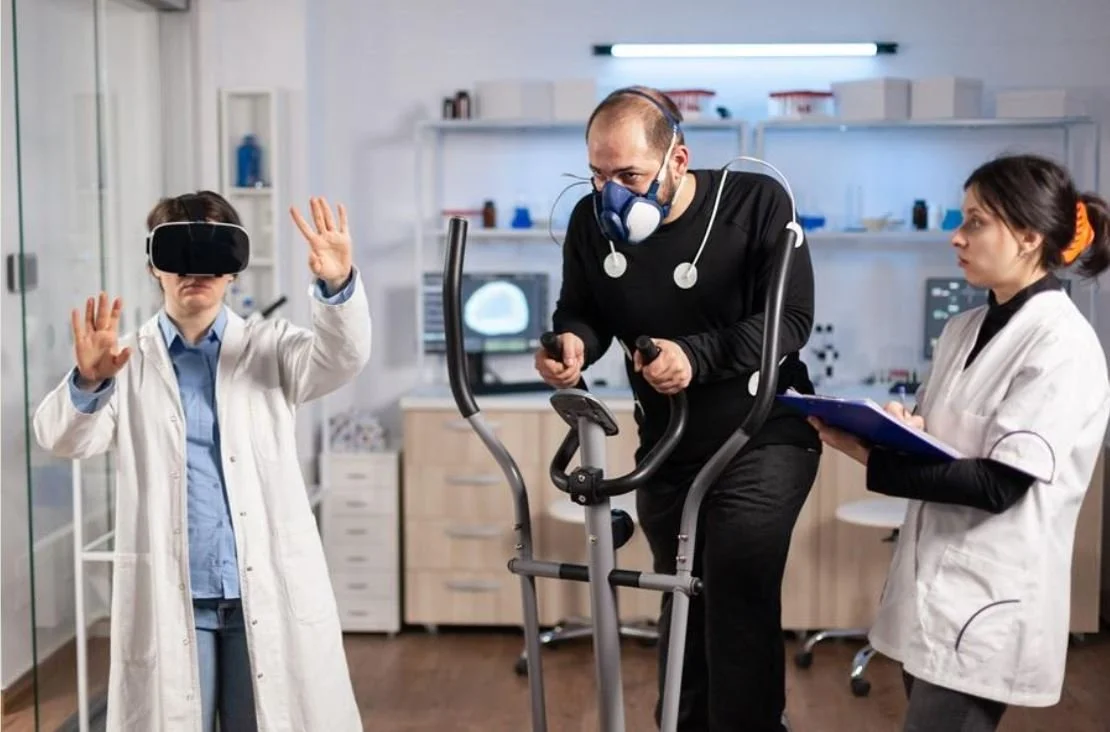
In clinical and hospital environments, serious games are used to train healthcare professionals. By simulating real-life medical scenarios, these games offer a safe, practical way to develop procedural skills, enhance decision-making, and reinforce theoretical learning without putting patients at risk.
Diagnostic support tools
Certain games are tailored specifically to aid in the early detection of neurological or cognitive disorders, such as ADHD. These gamified diagnostic tools turn clinical assessments into interactive experiences, making them more approachable and often more accurate, especially for children or individuals who may find traditional testing intimidating.
Therapy and rehabilitation
For patients undergoing rehabilitation or post-operative recovery, games can serve as prescribed therapeutic tools. These applications are often customised to match individual needs and can transform the recovery process into a more motivating and enjoyable experience, improving adherence to treatment plans and fostering better outcomes.
Health education and awareness
Some health games are developed solely with educational intent. These games aim to inform users about health topics in a fun, immersive way—whether it’s teaching anatomy, raising awareness about disease prevention, or improving health literacy among the general public or specific populations like students.
To sum it up, gameplay can be a lot more than just a pleasant pastime; it can also be used as a force for good, changing people’s lives for the better and contributing to the continuous development of healthcare systems all across the world.