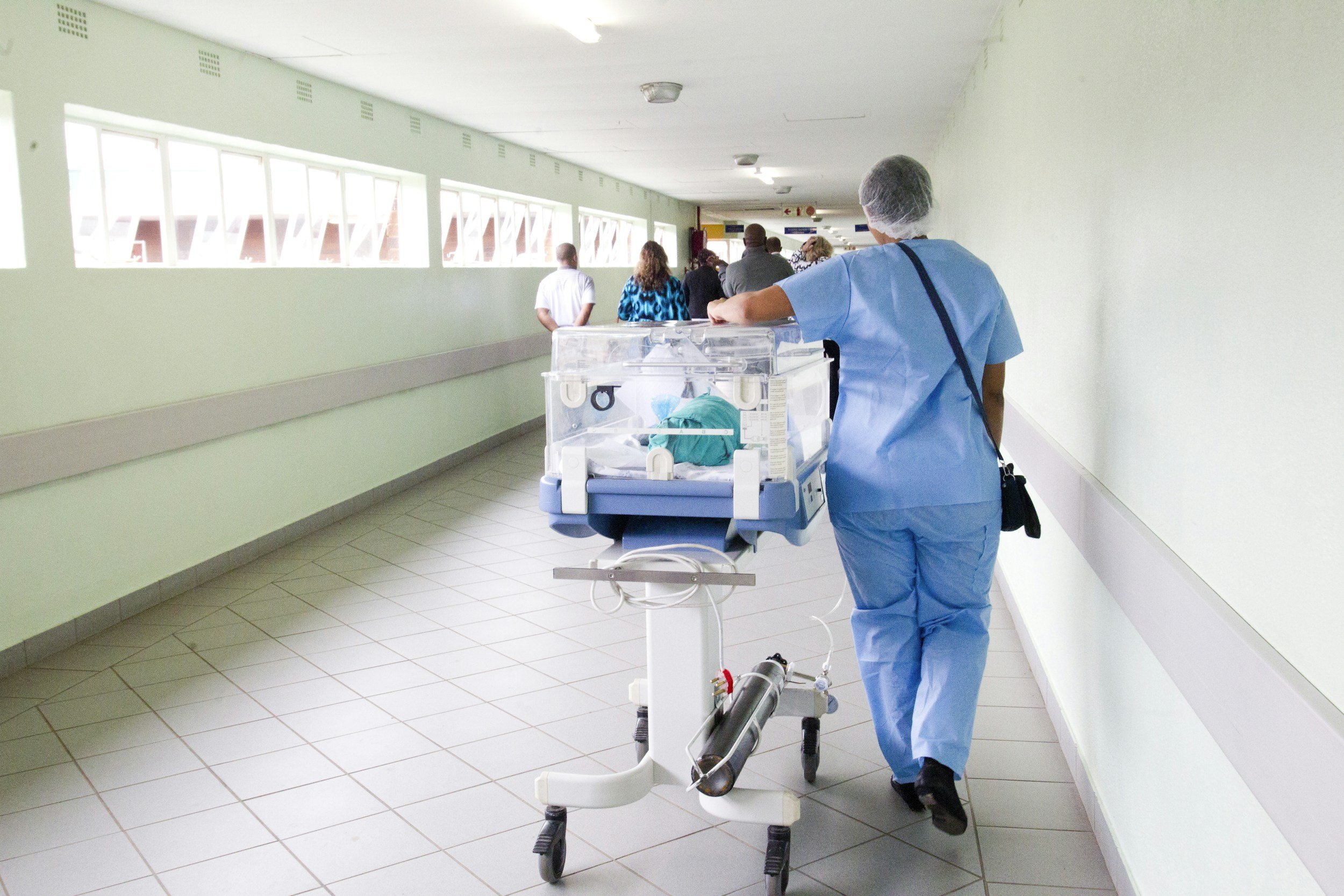
In a busy workplace, a person often has to choose between several urgent tasks with limited time and incomplete information. The decision usually relies on the most relevant facts, immediate risks and available support from teammates or tools. A 2024 report by the American Management Association found that 62% of mid-level managers face at least three simultaneous high-priority decisions per working day — and the majority report having under five minutes to act on each one.
Why Pressure Changes How Decisions Are Made
Workplace pressure compresses the decision window without reducing the complexity of the choice. When time is limited, the brain shifts from analytical processing toward pattern-based shortcuts — a mechanism that works well when experience is deep but can misdirect when the situation is genuinely new. Luckystart Casino teams that operate in fast-cycle environments consistently report that pre-defined decision frameworks reduce reaction time by an average of 40% compared to ad hoc reasoning under the same conditions.
The quality of a time-sensitive choice depends less on the quantity of information available and more on the relevance of what is used. A 2023 study published in the Journal of Applied Psychology found that professionals who applied a “three-fact rule” — identifying the three most decision-relevant data points before acting — made choices rated as higher quality by independent reviewers 54% more often than those who attempted to gather comprehensive information first. Speed and accuracy are not opposites when the right filtering mechanism is in place.
Pressure also shifts accountability dynamics. Decisions made quickly in high-stakes environments are more likely to be scrutinized after the fact, which means fast action must still be traceable. Professionals who document the rationale behind urgent work decisions — even in a single sentence logged immediately after acting — show measurably stronger accountability records according to a 2024 Deloitte workplace behavior study covering 3,800 respondents across 14 industries.
Priorities in Time-Sensitive Choices
Priority setting is the single most powerful lever in rapid problem solving. When a busy workplace presents several urgent tasks at once, the decision is not about which task is most important in isolation — it is about which task, completed now, unlocks the greatest forward momentum for everything else. That distinction requires a pre-built mental or documented hierarchy, not real-time negotiation between competing demands.
The following table compares three common priority frameworks used in time-sensitive workplace decision making:
| Framework | Core Logic | Best Used When | Decision Speed |
|---|---|---|---|
| Eisenhower Matrix | Urgent vs. important sorting | Multiple competing tasks | Under 2 minutes |
| OODA Loop | Observe, Orient, Decide, Act | Rapidly changing conditions | Seconds to minutes |
| Three-Fact Rule | Minimum relevant data threshold | Limited information available | Under 5 minutes |
| Impact-Effort Mapping | Output value vs. resource cost | Resource-constrained environments | 5 to 10 minutes |
Using Limited Information to Make Reliable Choices
Limited information is not an obstacle to good decision making — it is the standard operating condition in most workplaces. The difference between effective and ineffective decision makers under time pressure is not access to more data; it is the ability to extract the highest-signal facts from whatever is available and act on those with confidence. An anonymous operations manager interviewed in a 2025 Harvard Business Review feature described her approach: “I stopped waiting to feel ready. I ask myself what the three most important things I know right now are, and I move. Waiting for certainty in my role is just a slower way of deciding nothing.”
Identifying Immediate Risks Before Acting
Risk assessment in a time-constrained environment does not mean conducting a full analysis — it means identifying the one or two conditions that could make a fast decision significantly harder to recover from. Immediate risks are those that compound quickly if ignored and cannot be easily reversed once the chosen action is taken. Flagging them takes less than 60 seconds when the habit is trained but can prevent outcomes that cost hours or days to correct.
Professionals who practice rapid risk identification develop a consistent internal checklist they apply automatically under pressure. The following attributes define what an effective immediate-risk scan should cover before any urgent workplace decision is executed:
Whether the decision can be reversed if new information surfaces within the next hour
Which teammate or stakeholder is directly affected by the choice and needs to be informed
Whether any tool or system dependency could delay execution of the chosen action
The fastest visible signal that confirms the decision is producing the intended result
Leveraging Team Support and Available Tools
Team support is a decision resource, not just an emotional one. In a high-pressure workplace, a single well-placed question to a colleague with relevant context can replace 20 minutes of independent analysis. Work efficiency under time pressure improves measurably when decision-makers know in advance which teammates hold which expertise — a clarity that allows them to delegate sub-decisions rather than carrying the entire cognitive load alone. A 2024 MIT Sloan Management Review study found that teams with clearly mapped expertise networks resolved urgent cross-functional decisions 33% faster than those without structured role visibility.
Available tools matter equally. Dashboards, pre-built templates and documented decision trees reduce the cognitive setup cost of each urgent choice. Organizations that provide decision support tools calibrated to their most frequent high-pressure scenarios report 28% higher decision satisfaction scores among employees according to a 2023 Gallup workplace effectiveness survey.
Practical Process for Fast Action with Accountability
Fast action without accountability creates a pattern of decisions that cannot be learned from or improved upon. Accountability does not require lengthy documentation — it requires a minimal but consistent record that captures what was decided, on what basis and with what expected outcome. That record becomes the foundation for refining priority setting and risk assessment over time.
The following sequence outlines a repeatable process for making quick, accountable workplace decisions under pressure:
Pause for no more than 30 seconds to identify the single most urgent task requiring a decision right now.
Apply the three-fact rule — name the three most relevant pieces of information currently available.
Run a rapid risk scan covering reversibility, stakeholder impact and tool dependencies.
Consult one teammate with relevant context if the decision affects others — limit the exchange to 60 seconds.
Commit to the highest-priority action and begin execution without waiting for full certainty.
Log the decision rationale in one sentence immediately after acting to support accountability and future review.
Quick decision making under pressure is a trainable system, not a personality trait. Professionals who combine clear priorities, disciplined information filtering and pre-mapped team support consistently outperform those who rely on instinct alone — and the data confirms the gap widens with every high-pressure cycle they navigate deliberately.