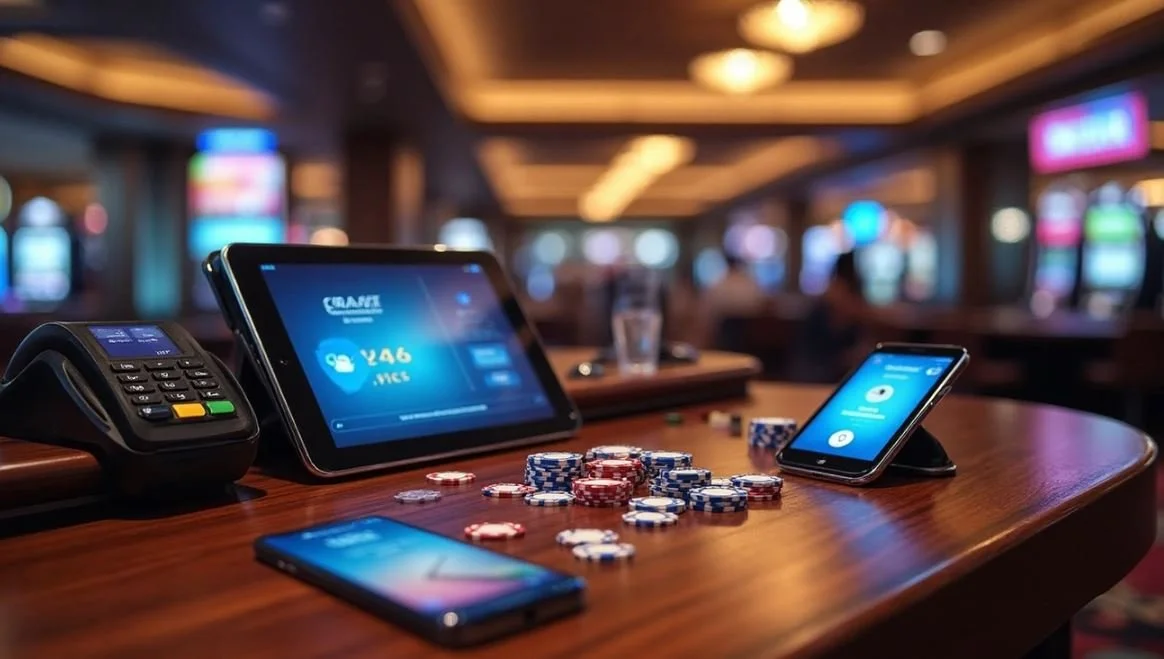
How Casino Apps are Transforming Mobile Gaming
In a world where digital change is influencing every facet of our existence, the casino gaming sector has changed significantly. The year 2025 finds the whole gambling environment being led by mobile casino apps, which have changed the way players interact with their favorite games completely. These changes in technology are no longer only for the sake of easy access – they not only mean a change of the player’s behavior, the design of the user’s experience and the way the industry earns its revenues but also signify an enormous gaming arena transformation that has jammed the mobile gaming market forever.
Explosive Growth of Mobile Casino Applications
As per the most recent market assessment by GamingTech Insights, the number of mobile casino apps like UniBet Suomi downloads shot up by 43% just in the last year and the average user session duration rose by 22% to 67 minutes. Such a boost mirrors not only the broader trust in mobile gambling but also the giant leaps these platforms have made in providing:
The worldwide mobile casino market has a valuation of $112 billion in 2025, with a compound annual growth rate of 18.7% over the last five years. The increase in market size is three times larger than that of traditional casinos, thereby indicating a trend where consumers are opting for the mobile casino experience over going to a physical location.
Immersive Reality Integration
The most successful casino applications have transcended simple game mechanics to offer truly immersive experiences. The integration of augmented and virtual reality technologies has created unprecedented levels of engagement. Players can now:
Walk through virtual casino floors designed to mimic famous establishments
Interact with live dealers through holographic projections
Experience spatial audio that replicates the ambience of physical casinos
Use haptic feedback technology to “feel” chips and cards
Leading applications like RoyalFlush VR and ImmersiCasino have pioneered these technologies, with the latter reporting a 78% increase in player retention after implementing full sensory integration features.
Blockchain and Cryptocurrency Integration
The marriage between blockchain technology and mobile casino applications has addressed longstanding concerns around fairness and transparency. Key developments include:
Provably fair gaming algorithms verifiable through public ledgers
Smart contract-based instant payouts
Cryptocurrency wallet integration eliminating traditional banking delays
Tokenized loyalty programs offering tangible ownership of rewards
AI-Powered Personalization
Perhaps the most significant revolution has been the implementation of sophisticated AI systems that learn and adapt to individual player preferences. These systems analyze:
Betting patterns and risk tolerance
Game selection tendencies
Playing time preferences
Reaction to wins and losses
Comparative Analysis of Leading Casino Apps in 2025
| Application | User Base (Millions) | Unique Features | Average Session Time (mins) | Revenue Model |
|---|---|---|---|---|
| Vegas Pocket | 78.3 | Haptic card dealing, Location-based tournaments | 72 | Freemium with microtransactions |
| LuckyStream | 64.7 | Live streamed tables with social interaction | 81 | Subscription-based plus house edge |
| CryptoSpin | 42.9 | Full blockchain integration, NFT rewards | 58 | Transaction fees, NFT marketplace |
| RoyalFlush VR | 38.5 | Full-body immersion, Virtual environment creation | 93 | Premium subscription, Hardware sales |
| BetGenius | 31.8 | AI coaching, Predictive analytics for players | 65 | Freemium, Premium strategy tools |
Regulatory Responses and Ethical Considerations
The rapid evolution of these technologies has prompted significant regulatory responses worldwide. The International Gaming Authority (IGA) established the Mobile Gaming Ethics Framework in late 2024, addressing concerns around:
Addiction prevention mechanisms
Age verification technologies
Data privacy protection standards
Algorithmic transparency requirements
Biometric Safeguards
Progressive casino applications have implemented advanced biometric safeguards that represent a significant improvement over traditional security measures:
Facial recognition login systems
Heart rate monitoring to detect stress levels
Playing time limiters with mandatory cooling periods
Multi-factor authentication including voice pattern recognition
Way of Developing
As we look toward the latter half of the decade, several emerging trends suggest further transformation of the mobile casino ecosystem:
Neural Interface Gaming
Experimental applications already in beta testing are utilizing non-invasive neural interfaces to create thought-responsive gaming environments. Players can place bets, select cards and spin wheels using directed thoughts, creating an unprecedented level of immersion.
Decentralized Autonomous Casinos
The concept of the DAO (Decentralized Autonomous Organization) has begun entering the casino space, with applications like CasinoDAO allowing token holders to collectively own and operate virtual establishments with no central authority.
Environmental Gaming
Addressing concerns about digital carbon footprints, new-generation applications are implementing energy-efficient algorithms and carbon offset programs. GreenSpin, launched in early 2025, plants a tree for every thousand spins on their platform.
Mobile Casino Revolution
The revolution in mobile casino applications has fundamentally reshaped not just how people gamble, but how they conceptualize digital entertainment. The convergence of immersive technologies, blockchain transparency and AI personalization has created a new paradigm that extends well beyond simple games of chance.
As these technologies continue to evolve, the line between physical and digital gambling experiences continues to blur. For players, developers and regulators alike, understanding this new landscape has become essential in navigating the complex intersection of entertainment, technology and responsible gaming practices.