Disclosure: This is a paid guest post. The author or an affiliated third party paid for its publication, and the article may contain promotional links. The views and opinions expressed are those of the author and do not necessarily reflect those of GameTyrant or its editorial staff.
Disclaimer: The following content contains references to gambling, casinos, and related topics.
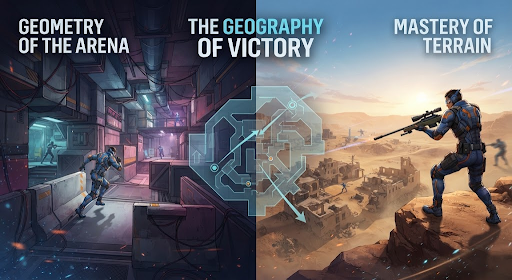
Maps change everything. You can master every mechanic, practice your aim until your fingers cramp, and still get completely humiliated the second the lobby loads into a stage that counters your entire playstyle. Competitive gaming is brutal that way. A team looking unstoppable on a wide-open, long-range tactical layout suddenly looks like absolute amateurs the moment they step into tight, claustrophobic corridors. The geometry dictates the rhythm. Winners adapt on the fly while everyone else scrambles for cover.
Reading the Terrain
Every competitive map has a personality. Some encourage slow, methodical chess matches where holding a single pixel angle wins rounds. Others turn into absolute meat grinders from the second the barriers drop. Players must completely rewrite their habits depending on where they spawn.
Long sightlines punish anyone caught moving without information.
Chokepoints demand precise utility management or you walk straight into a blender.
Verticality turns standard crosshair placement completely upside down.
That constant calculation of risk, timing, and shifting odds mirrors other fast-paced environments where quick reads matter. When gamers want to channel that same analytical mindset away from the server, exploring interactive options over at TonyBet casino delivers a brilliant avenue to test predictive instincts. It captures that exact tension of evaluating probabilities on the fly, keeping competitors fully engaged in strategic forecasting long after the match lobby closes down.
Specialists Versus Flex Players
Certain competitors look like absolute gods on specific arenas. Give them their favorite map and they drop thirty kills without breaking a sweat. Force them onto a stage that rewards chaotic flanks and rapid target switching, and they completely vanish.
Rosters live and die by their flex players. These rare individuals understand how to alter their positioning, switch weapons mid-match, and squeeze value out of positions they utterly despise. They do not rely on raw muscle memory alone. They read the architectural flow of the arena and bend it to their will.
The Mental Trap of Familiarity
Comfort breeds complacency. Teams spend weeks practicing standard setups on their preferred maps, carving out automated routines for every single round. Then they run into an opponent who completely throws out the rulebook, inventing wacky new flanks and unorthodox pushes that turn conventional geometry on its head. Panic sets in immediately. Communication breaks down. The mini-map becomes a maze of confusion. Overcoming that psychological shock separates tournament champions from early round exits.
Simple Layouts Win Matches
Complex maps confuse everyone. When a gaming stage is packed with confusing corridors and hidden corners, players get lost instantly. Simple designs let everyone focus on pure shooting skills instead of memorizing a maze. Good maps make the action fast and easy to follow.
Knowing Every Single Corner
Winning comes down to simple practice. Pro players spend hours running through empty maps just to find every single hiding spot.
They learn where to aim before rounding a corner.
They memorize the fastest routes to the middle.
They practice throwing items over walls without looking.
When you know the terrain by heart, your brain stops guessing. You react on pure instinct while your opponents are still trying to figure out where they are.
The Final Verdict on Map Design
At the end of the day, a great map makes every single match feel completely different. It punishes lazy players and rewards teams that communicate properly. Good design keeps the game fresh and exciting for months on end.
Keeping It Simple Under Pressure
Complex tactics often fall apart the second the match gets hectic. When teams try to execute overly complicated map rotations, communication usually shatters into a million pieces. Simplicity wins games. Sticking to clear, straightforward plans lets players focus entirely on their mechanics and teamwork instead of second-guessing where their teammates are heading.
The Power of High Ground
Holding the elevated position changes the entire flow of a round. Teams on higher ground dictate the pace of every engagement.
You get cleaner angles to spot incoming pushes.
Enemies have to waste precious seconds looking up while exposed.
Retreating to cover happens instantly when things get too hot.
Controlling those key vantage points transforms an average defense into an absolute brick wall. Attackers have to expend massive amounts of utility just to dislodge a well-positioned defender.
Why Practice Beats Raw Talent
Natural aim only takes you so far in competitive gaming. Knowing the map inside and out gives smart players a massive edge over flashier opponents. When you understand every nook, cranny, and line of sight, you never get caught off guard by unexpected flanks. That deep environmental awareness turns chaotic matches into predictable wins.