Disclosure: This is a paid guest post. The author or an affiliated third party paid for its publication, and the article may contain promotional links. The views and opinions expressed are those of the author and do not necessarily reflect those of GameTyrant or its editorial staff.
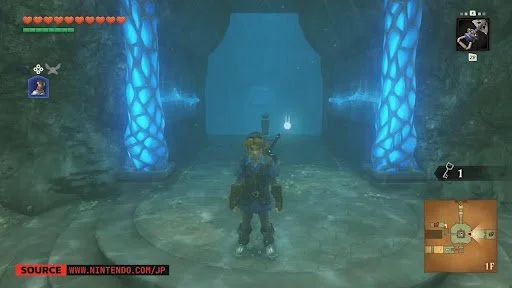
You know where you want to go. You have spotted a passage beneath the water, worked out how to reach it, and lined up your next move. Then you pause, open the equipment screen, put on the Iron Boots, and resume. A little later, you repeat the process to take them off.
For many players, that rhythm is inseparable from memories of Ocarina of Time’s Water Temple. It also captures the remake’s most interesting challenge. Understanding a complicated dungeon can be deeply satisfying. Repeatedly interrupting your train of thought to manage equipment adds a different kind of difficulty.
The distinction matters because Ocarina’s dungeons are where its exploration, combat, and problem solving come together. New lighting can make their stone corridors beautiful. Their lasting appeal, however, depends on what happens when a player stops admiring the scenery and starts asking how to reach the other side.
A good Zelda dungeon gradually teaches you how to read it. You enter a room, notice something you cannot reach, and try to understand what is missing. A distant ledge might suggest a future route. An unusual switch might invite experimentation. Even when you cannot solve the problem immediately, you begin building an explanation.
Finding a new item changes that explanation. The room you dismissed earlier becomes interesting again because your abilities have changed. You remember a target, a gap, or an obstacle and suddenly have a reason to return. The reward includes both the equipment and the realization that you now understand something about the space.
That process gives backtracking a purpose. Returning to a familiar room can demonstrate progress without requiring a new location. You recognize the architecture, remember your earlier limitations, and apply what you have learned. The dungeon becomes more legible as you work through it.
A remake needs to preserve that sequence of observation, uncertainty, and discovery. If an important clue disappears beneath elaborate decoration, players may struggle to form a useful theory. If every destination receives an obvious marker, they may never need to form one. The environment has to provide enough information to support thought while leaving the connections for the player to make.
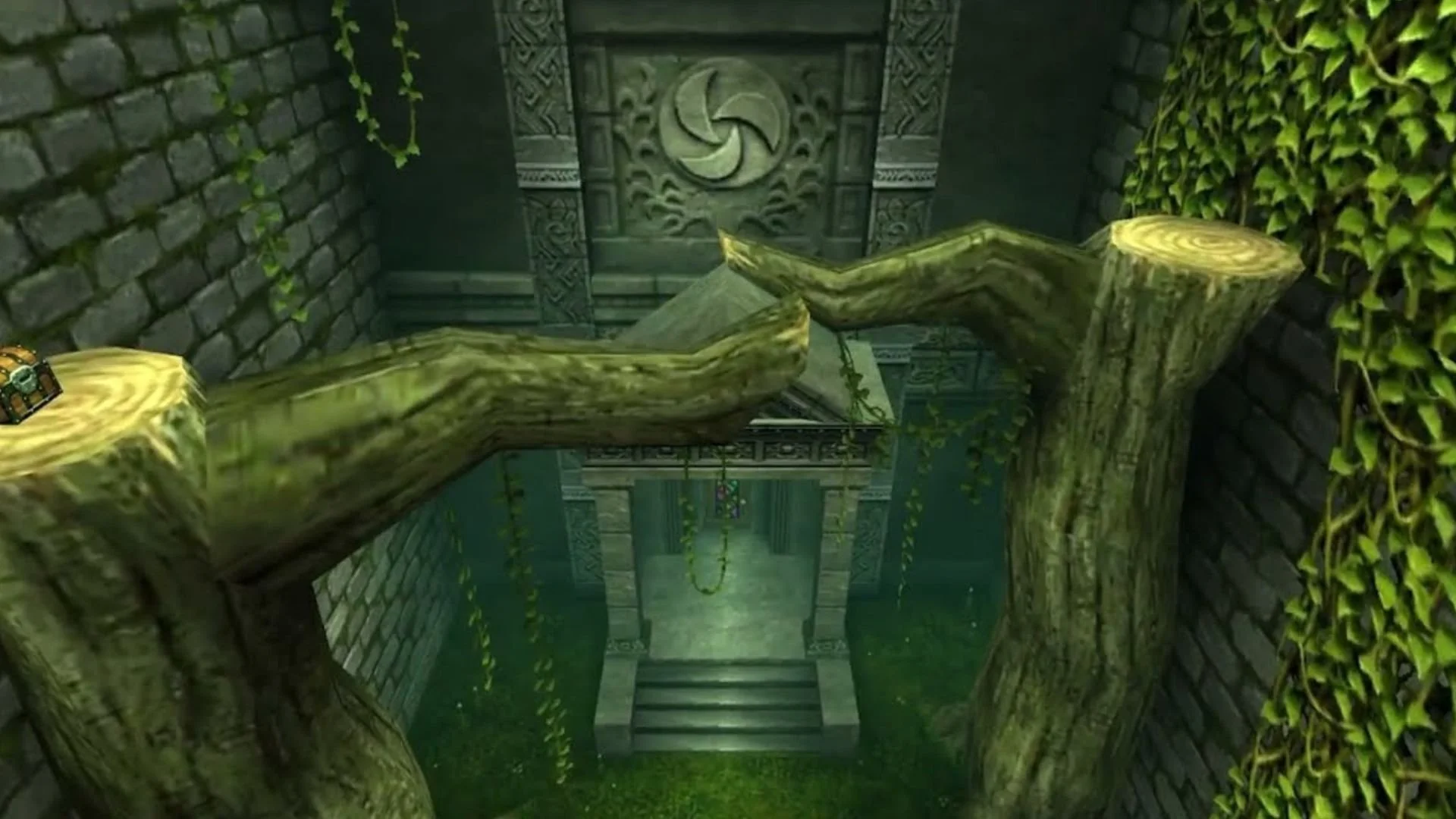
The Water Temple puts this balance under unusual pressure. Its changing water levels ask you to consider the building as a connected structure. A decision in one place affects access elsewhere. You must keep track of vertical relationships, revisit routes, and reconsider what an earlier room might contain under different conditions.
There is considerable satisfaction in finally understanding that structure. There is also room for confusion, particularly when a player overlooks an opening and cannot identify what they missed. Those experiences deserve careful attention individually. Treating every frustrating moment as evidence that the entire dungeon should be simplified would discard much of what makes it distinctive.
Nintendo had already confronted part of this problem when developing Ocarina of Time 3D. In an Iwata Asks discussion about revisiting the Water Temple, Eiji Aonuma described his concern about players giving up there. He highlighted faster Iron Boots changes as a benefit of the 3DS’s two screens, while the team discussed improvements to item management and map access.
The useful lesson is how directly an interface improvement can support a puzzle. Faster equipment changes reduce the effort required to test an idea. Players still have to decide where to go and understand what they find, but they can spend more of their attention on those decisions.
That principle should guide modern controls throughout the remake. Item selection should be quick enough that trying an unlikely solution feels worthwhile. Aiming should communicate where a tool will land. Movement should make it clear whether a failed attempt reflects a mistaken idea or an execution error. Zelda Central’s overview of the Ocarina of Time remake changes provides a reference for following those updates; their real value will emerge in how comfortably players can investigate a dungeon.
Camera control deserves the same scrutiny. Being able to inspect a room from a useful angle affects far more than screenshots. Looking upward can reveal a ledge. Turning around can establish how two entrances connect. Keeping an enemy in view can help a player judge whether there is time to cross a room or examine an object.
Greater freedom also changes the designer’s job. A carefully composed view can direct attention toward something important. Once players control that view, the environment needs other ways to communicate. Lighting, movement, sound, and distinctive shapes can help a clue remain discoverable from several positions.
Visual detail introduces another complication. Cracked masonry, hanging vegetation, reflections, and scattered objects can make a temple feel convincing, but they also compete for attention. Players need some basis for distinguishing an interactive object from background decoration. Otherwise, searching a room becomes a matter of testing everything indiscriminately.
Readable environments can still be atmospheric. A doorway can emerge from shadow without glowing. A repeated architectural feature can suggest a relationship between rooms. A sound can encourage investigation without identifying the solution. These details reward attention and allow a dungeon to feel mysterious while remaining understandable.
Hints require equally careful timing. A player who pauses at a puzzle may be confused, but they may also be comparing possibilities. Walking through the same room several times can mean being lost or deliberately checking a theory. An automatic prompt cannot always tell the difference.
The most useful assistance would let players choose how much help they receive. A first hint could direct attention toward an overlooked feature. A second could remind them of a relevant ability. A more explicit explanation could remain available for someone who wants to move on. Each step would address a different need.
That flexibility matters for returning players, too. Remembering a dungeon’s atmosphere does not guarantee remembering its route. Someone resuming a save after a week might need a reminder of their current objective, while another player might want uninterrupted time to solve the same problem. Optional support can accommodate both without assuming that everyone shares the same patience, memory, or familiarity.
Ultimately, the remake’s dungeons should be judged by three connected qualities. First, their spaces must be readable: players should be able to notice useful information and develop a working understanding of the layout. Second, experimentation should remain uninterrupted: controls and menus should make it comfortable to test possibilities, including incorrect ones. Third, discoveries should feel earned: the player should retain a meaningful role in connecting the clues.
Those standards leave plenty of room for difficult puzzles, wrong turns, and moments of uncertainty. They also give Nintendo room to improve the experience without preserving every inconvenience. The ideal result is a dungeon that welcomes closer investigation and gives something back each time the player understands it better.
The Water Temple will be a revealing test. When a player spots a possible route beneath its surface, the remake should make it easy to follow that thought. The moment worth protecting comes afterward, when they reach the passage, recognize where it leads, and finally understand the room they have been circling.