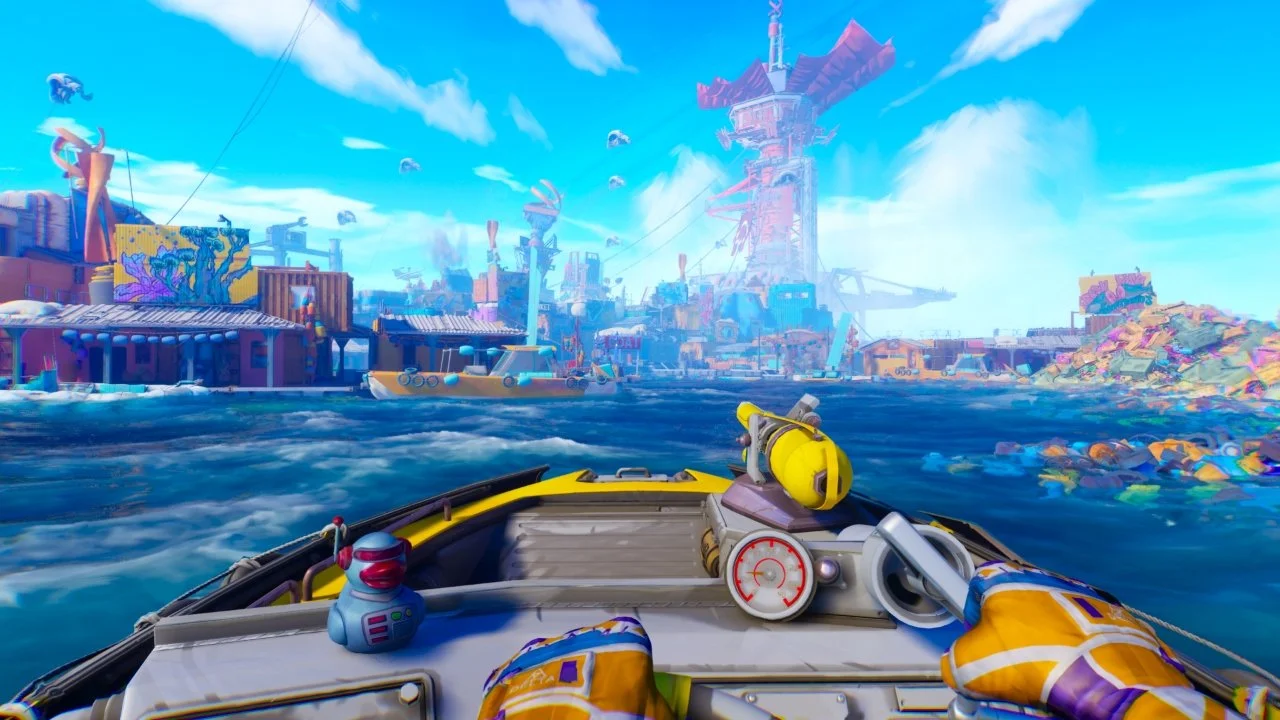
Tides of Tomorrow is a single-player narrative adventure with a very unique hook: it is built around community-driven decisions. Your choices can influence the paths of the players who follow after you, which immediately gives the game an interesting identity. I first played it during Steam Next Fest, and after finishing the first chapter I was curious enough to see where the full game would go. That concept remains one of the strongest things about Tides of Tomorrow, even if the overall experience does not always stay as captivating as its premise suggests.
Gameplay and Story
At its core, Tides of Tomorrow is a narrative-heavy experience. There are some light adventure elements throughout, but for the most part you are exploring its world, making choices, and piecing together the story of a dying future shaped by environmental collapse. Humanity has let the plastic crisis spiral completely out of control, leading to an affliction called Plastemia, where plastic overtakes the brain and body. To stop it from fully consuming them, many people rely on Ozen to keep the condition at bay.

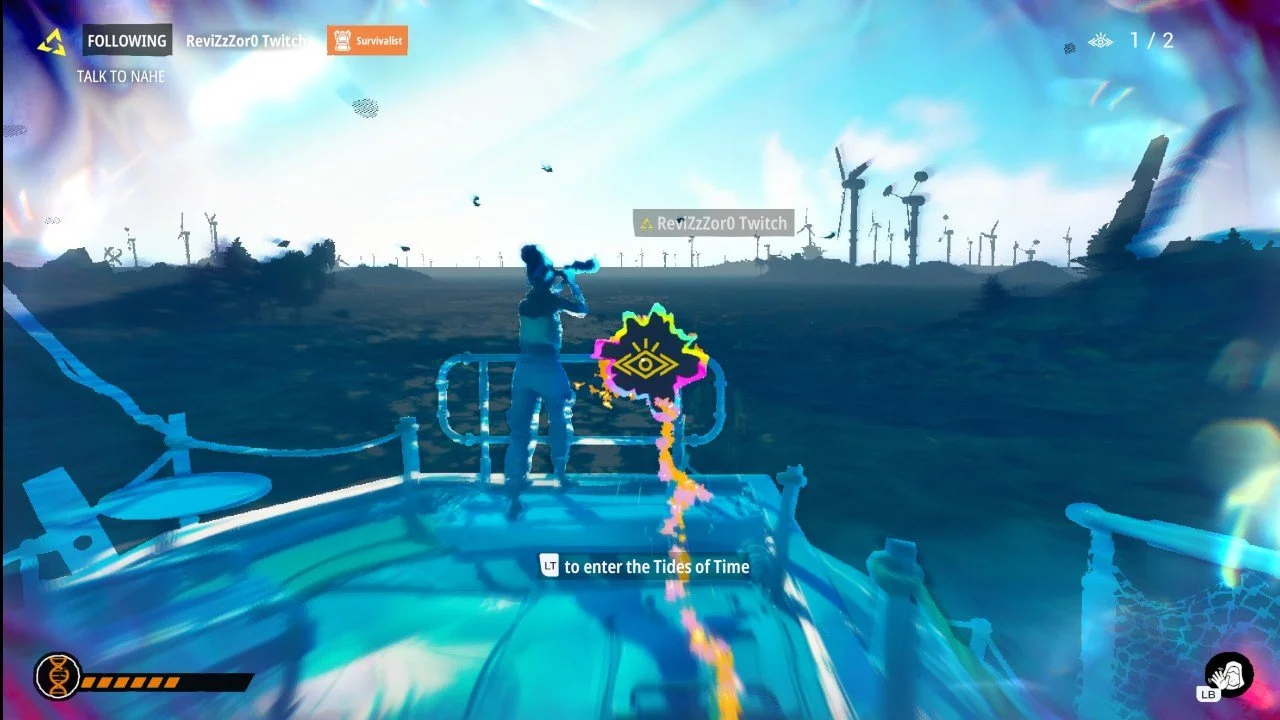
It is a genuinely chilling setup because it does not feel impossible to imagine our world heading in that direction. That environmental horror gives the story a strong foundation, and the concept of playing as a Tidewalker helps deliver it in a memorable way. As a Tidewalker, you are able to witness visions left behind by other Tidewalkers who have come before you. This is a clever storytelling device because it ties directly into the game’s community-based structure. You are not just making decisions in isolation—you are also seeing the consequences of other players’ choices and using those visions to help shape your own run.
There are five different ways to approach the game: Survivalist, Pro-Mankind, Pro-Environment, Cooperative, and Mischievous. Each path can lead to different outcomes and create a noticeably different version of the world. I played in a mix of Pro-Environment and Pro-Mankind, which led me to make some choices that may not have been ideal for the people following me, but at least I felt like I was trying to preserve some part of the natural world. I also followed someone who played in a more Survivalist and Mischievous style, and the contrast was clear. There were more guards, fewer supplies left for me, and an overall harsher feeling to their path. That is where the game is at its most interesting.
The problem is that while Tides of Tomorrow is consistently interesting, it is not always consistently captivating. The ideas behind the story are strong, but the moment-to-moment experience can sometimes feel a little too passive. There were stretches where I was intrigued by the world and what it was trying to say, but not fully pulled in by what I was actively doing. The narrative is good enough to keep you going, but it does not always hit with the emotional or dramatic weight needed to make every section feel gripping.
Graphics and Design
Visually, Tides of Tomorrow does a good job creating a bleak and eerie atmosphere. Out on the water, there is something strangely beautiful about the open ocean despite it being covered in plastic and environmental ruin. That contrast works well for the game’s themes and helps the world stand out.
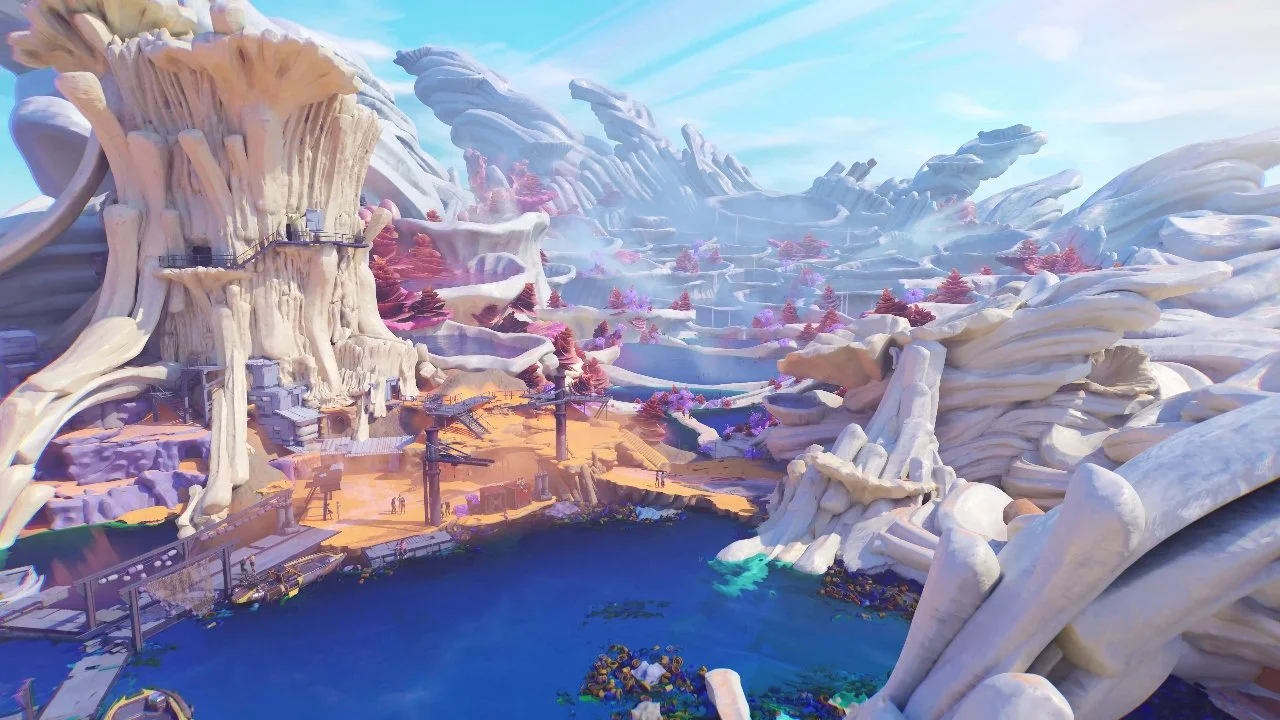
At the same time, much of the game takes place in murkier industrial spaces, especially oil-rig-like environments full of rust, grime, and muted metallic tones. The art direction is effective and fits the setting, but it also means the game is not especially vibrant for most of its runtime. There is beauty in the world design, but not a lot of visual variety that makes each area feel distinct in a memorable way.
The same can be said for some of the voice performances. While the main premise and overall atmosphere do a lot of the heavy lifting, many of the side character performances are fairly forgettable. None of them are bad enough to pull the experience down in a major way, but they also do not add much personality or emotional weight to the journey. In a game that relies so much on story and character interaction, stronger side performances could have made a real difference.
Feedback
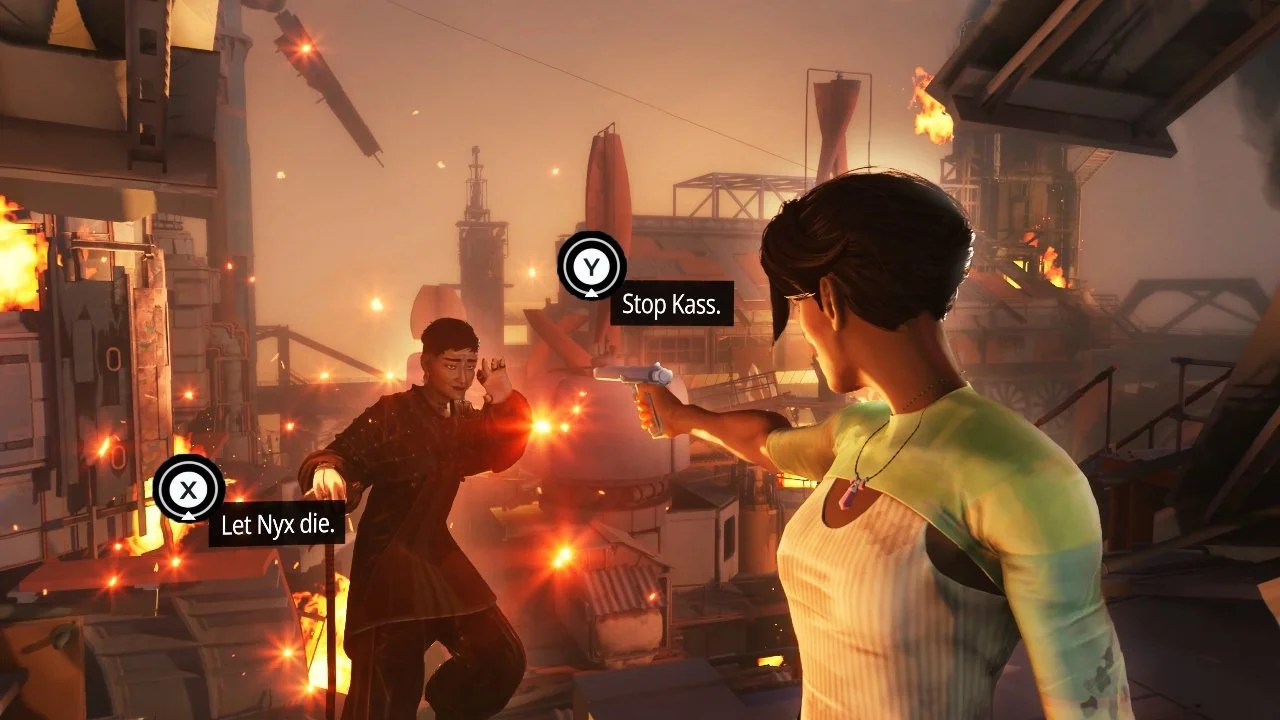
What Tides of Tomorrow does well is give players a genuinely fresh idea and place it inside a world that feels timely and unsettling. The community-driven structure is clever, and seeing how differently events can play out depending on who you follow is easily the most memorable part of the game.
That said, I wish there were more truly difficult decisions to make. For a game centered on choice, I wanted more moments that really forced me to sit with the consequences of what I was doing. I also wish there had been a bit more gameplay variety. There are a few sneaking sections, but I would have loved more chase sequences, more involved stealth, or even some form of stealth combat to make the experience feel more engaging from one sequence to the next.
Still, one thing that works in the game’s favor is its length. Because Tides of Tomorrow is relatively short, it never becomes daunting to finish. Even when the pacing slows or the story is more interesting than engrossing, the game is short enough that it remains easy to stick with. That makes it easier to appreciate the ideas it brings to the table without feeling worn down by its limitations.
Final Verdict
Tides of Tomorrow is an inventive narrative adventure with a smart community-driven concept and a world that feels unsettling in the best way. Its environmental themes, branching player influence, and unique Tidewalker perspective make it stand out, even when the story itself is not always as captivating as it is interesting. Add in some forgettable side character voice acting and limited gameplay variety, and this becomes a game that feels more admirable than unforgettable.
Still, its shorter length works to its advantage, keeping the experience approachable and never overly demanding. It also has some replay value for players who want to experience different playstyles and see how alternate decisions can shape the world around them. Tides of Tomorrow may not completely deliver on the full potential of its premise, but it does enough with its ideas to be worth experiencing for players who enjoy narrative-focused games with unusual structures.
Tides of Tomorrow is available on PC via Steam, Xbox Series X|S, and PlayStation 5.
For more upcoming releases, previews, reviews, and major launch dates, be sure to check out our 2026 Video Game and Tech Release Calendar. We keep it updated throughout the year so you can stay on top of the biggest games, hardware, and industry releases still on the way.