Video games and casinos now share more design language than many players would have expected a decade ago. That overlap sits inside reward systems rather than theme or setting. Random drops, paid chests, limited time bonuses, streak rewards, near misses, and rotating offers all push on the same part of the brain: anticipation. The scale of the audience explains why this gets attention. The average video game player in the US is 36, and Newzoo says the global games market will reach $188.8 billion in 2025, so small shifts in how rewards get packaged can shape habits across a very large public.
Games still sell skill, mastery, story, social play, and creative freedom. Yet the commercial layer around many modern titles often leans on the same logic that casinos have used for years. A player pays, or grinds, for a chance at something desirable whose value stays uncertain until the reveal. Researchers keep returning to that structure because it resembles gambling in one specific way: the reward arrives on a variable schedule, and variable schedules keep people engaged longer than fixed ones.
The same logic shows up in how offers get judged. Readers looking for expert insights about Irish casino bonuses can see that on Casino.org, where its comparison service ranks options by bonus size, free spins, payout speed, win rate, and overall player experience. That gives you a clear way to think about game rewards as well, since players tend to judge them by the headline promise and the actual chance of getting something useful rather than something forgettable.

Random Rewards Sell Possibility
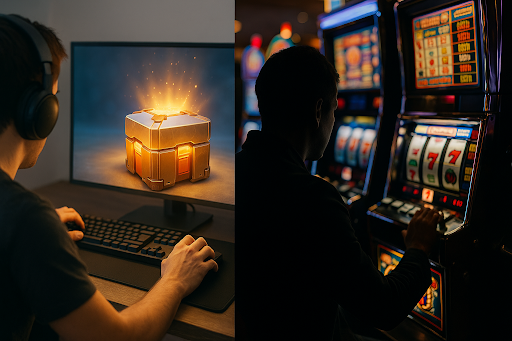
Loot boxes turned that casino style logic into a familiar game mechanic. You pay for a container, the contents stay hidden, and the reveal carries more force than the item itself. A 2025 study in Cyberpsychology, Behavior, and Social Networking said loot boxes incorporate randomized rewards that mimic gambling behaviour and can help introduce players to uncertain outcomes as a rewarding event. A 2024 cross sectional study from the Journal of Public Health found loot box purchasing was associated with greater odds of financial problems and low mental wellbeing, even when researchers accounted for gambling behaviours.
The numbers around exposure add more weight. The UK Gambling Commission reported in 2024 that 63 percent of young people aged 11 to 17 knew they could pay to open loot boxes, packs, or chests, and 27 percent said they had done so. The same report found 37 percent knew in game items could be used for betting outside the game, while 4 percent said they had gambled with such items on external sites. Those figures show how early the vocabulary of odds, value, and chance enters digital play.
Games Rarely Copy Casinos Exactly, Yet the Family Resemblance Holds
Minecraft offers a useful example once you move from the core boxed game into the wider server economy around it. Mojang’s usage guidelines and later EULA updates exist partly because community servers can turn play into commerce, and commerce tends to invent ways of selling surprise. That has often meant crate keys, mystery rewards, and tiered chances inside privately run ecosystems. The game itself remains a sandbox famous for giving players control, yet many commercial layers built around it have pulled in the opposite direction by selling uncertainty. That shift feels familiar to anyone who has watched a casino package chance as entertainment first and odds later.
A different route can be seen in Fortnite. Epic used to sell random Loot Llamas in Save the World, then replaced them with X Ray Llamas that show contents before purchase in 2019. Epic later said players who bought the earlier random Loot Llamas before discontinuation would receive 1,000 V Bucks, and in 2022 it said Llamas would stop being bought with V Bucks and would instead use X Ray Tickets earned in game. That sequence tells its own story. One of the biggest games in the world moved away from hidden paid randomness toward a more visible system.
Bonus Logic Has Moved Beyond the Box
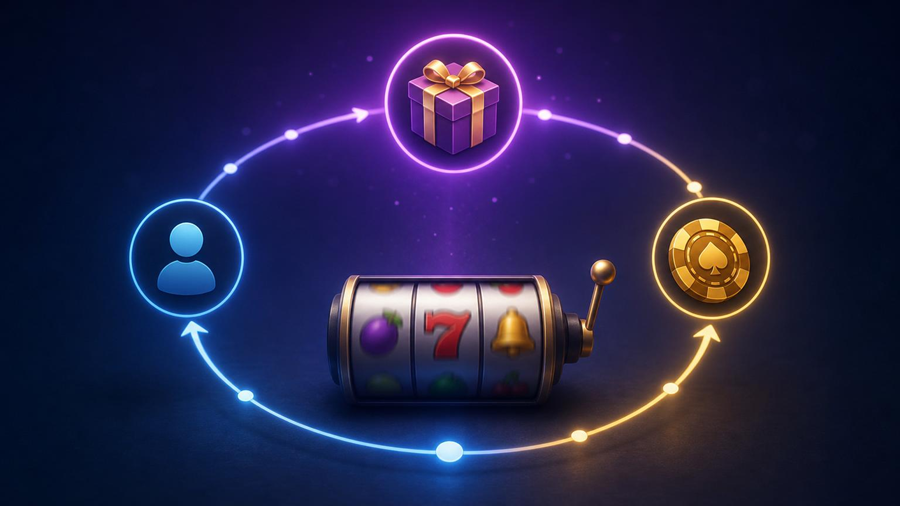
The deeper similarity sits beyond loot boxes. Many live service games now use layered reward design that looks a lot like casino bonus architecture. A welcome pack gets you through the door. Daily rewards keep you checking in. Limited windows create urgency. Progress bars suggest that one more session will unlock the good part. Season passes add a premium track so each action carries two possible payouts at once. None of this equals gambling by default, because you often know what the reward pool contains and skill still shapes the wider experience. Even so, the structure borrows heavily from promotional design that casinos know very well: keep the player feeling close to value, then make the next step feel cheap.
That is where disclosure becomes more than a box ticking exercise. A 2023 PLOS ONE study found loot boxes appeared in 77 percent of the 100 highest grossing UK iPhone games in mid 2021, while compliance with UK probability disclosure self regulation sat at 64 percent. Only 1 of 75 UK games in that sample used the most prominent disclosure format by automatically showing probabilities on the in-game purchase page. If a player can buy chance, then a player deserves to see the odds without digging through menus to find it.
What you are seeing, then, is less a merger of games and casinos than a transfer of useful commercial ideas. Game makers learned that random rewards can sharpen excitement, bonuses can increase retention, and friction can be hidden behind bright packaging. Casino operators learned those lessons long ago. The strongest games still offer enough craft, agency, and social life to keep that machinery in proportion. The weaker ones lean too hard on reward loops and start to feel like a shop with a game attached. Players, critics, and studios already understand the difference. The current argument turns on where that line sits, who draws it, and how visible the odds stay when real money enters the picture.