Too many options, too little time, and real money on the line. Reviews have become the filter players rely on to avoid bad calls and find something that actually holds up once the screen loads.
There’s too much to play now. New releases drop every week, live service games keep pulling players back in, and digital entertainment doesn’t really have an off switch anymore. Money goes out faster as well. Picking the wrong game or platform used to be annoying; now it feels like a waste of time and cash. That’s why most people don’t jump in blind anymore. They check what others are saying first, and that habit has become part of the experience itself.
When Everything Looks Good Reviews Start Doing the Heavy Lifting
Choice used to be simple. A handful of releases, maybe a recommendation from a friend, and that was enough. Now the scale is completely different. The global entertainment and media market hit $2.9 trillion in 2024 and is expected to reach $3.5 trillion by 2029. That kind of growth doesn’t just mean more content; it also means more noise.
Everything looks polished at first glance. Trailers are slick, storefronts are curated, and marketing rarely shows the rough edges. Reviews step in where that surface-level polish stops being useful. They cut through presentation and get into what something actually feels like once you’re in it.
That filtering role has become essential. A player isn’t just deciding what looks interesting anymore; they’re trying to avoid wasting a weekend on something that doesn’t hold up past the first hour. Reviews do that sorting upfront.
From Trial and Error to Pattern Recognition
Trying things out blindly used to be part of the fun. Download it, play it, see what happens. That still exists, but it’s no longer the default approach. Most players look for patterns first. They want to know how a game behaves before they commit.
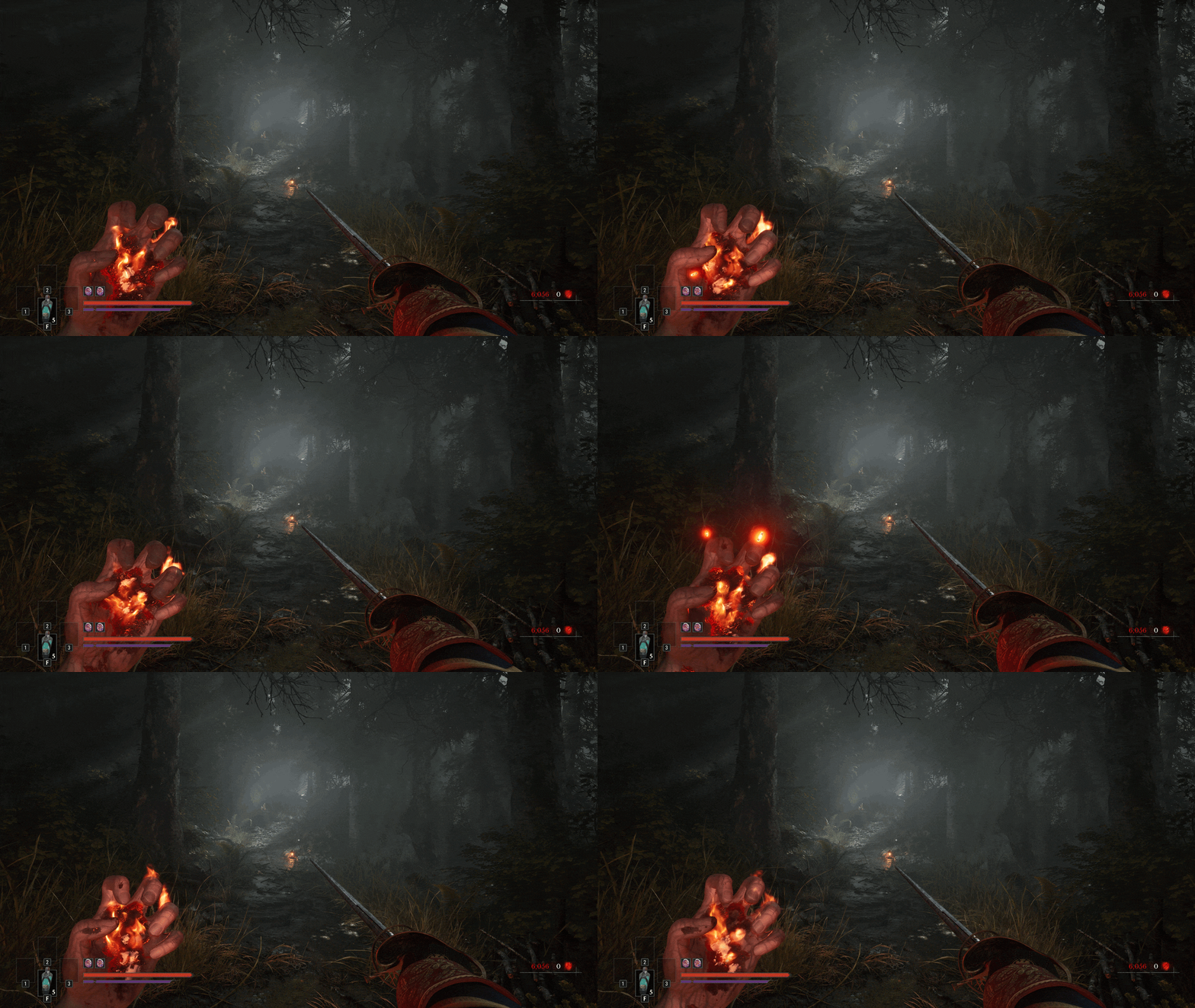
Detailed breakdowns make that possible. Movement feel, level design, difficulty spikes, all of it gets translated into something readable. The Super Meat Boy 3D review doesn’t just say whether the game is good or bad. It shows what playing it actually involves, right down to how many attempts it takes to clear a section or how responsive the controls feel.
That kind of detail changes how decisions are made. Instead of guessing, players start recognising patterns. They know what tends to click for them, and reviews help confirm whether a new release fits that profile.
Likewise, numbers used to feel straightforward. A high score meant a good game, and that was the end of it. That simplicity doesn’t hold up anymore. The same game can land differently depending on where it’s played or how it’s reviewed.
Research into game review systems shows measurable differences in scores across platforms and contexts, which affects how people interpret quality. A rating isn’t a fixed truth; it’s shaped by the environment around it.
Where Comparison Starts To Carry More Weight Than Opinion
When real money is involved, choices tend to shift from being opinion-driven to more practical and comparison-based. Personal preferences still matter, but players increasingly look for information they can evaluate side by side rather than relying on individual viewpoints alone.
This is why structured overviews have become more relevant. By bringing together key factors like welcome offers, payout rates, withdrawal speeds, and game variety, real money casinos rated by Canadian gambling experts on Onlinecasino.ca make it easier to assess what’s available without sorting through countless separate reviews.
The advantage lies in the clarity. Instead of piecing together scattered insights, everything is presented in a way that allows for quick comparison, helping players make more informed decisions when actual money is at stake.
Reviews Are No Longer Just About Games
Gaming doesn’t sit in isolation anymore. It blends into broader digital entertainment, where experiences stretch beyond a controller and a screen. Reviews have followed that change in perspective and now cover more than just gameplay.
Illenium’s Odyssey at the Sphere reads more like stepping into an environment than assessing a product. It focuses on immersion, scale, and how the experience feels in real time.
That crossover is important; the same way a game gets judged on how it plays, an event gets judged on how it lands. Reviews have become a shared language across formats, helping people understand what they’re stepping into before they commit.
Why Players Trust the Process More Than the Pitch
Trust has become harder to earn. There’s more content, more marketing, and more noise than ever before. Reviews step in as a way to make sense of it, but only when they feel grounded in real experience. That’s why the process matters more than the pitch. Players look for consistency, not just enthusiasm. They pay attention to how something is evaluated, not just what the final verdict says.
It comes back to time and money. Both are limited, and neither gets spent lightly anymore. Reviews help reduce that risk, turning guesswork into something closer to an informed call.