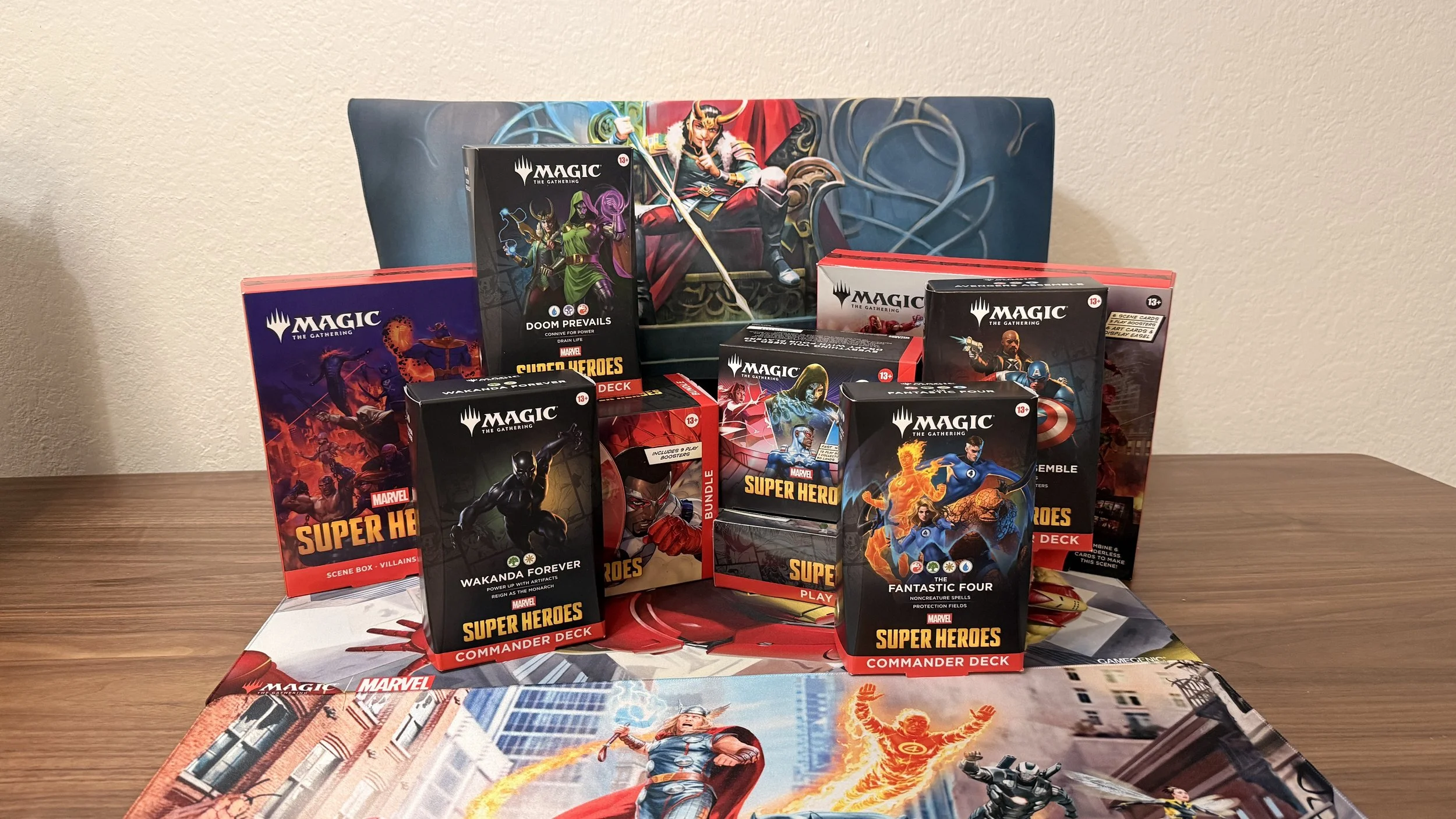
Prerelease was a ton of fun for Marvel Super Heroes. Playing a set with 10 Limited archetypes really makes you realize what you’re missing when a set only has five. With prerelease behind us, though, it’s time to start looking ahead to Constructed formats.
Commander will likely be one of the most popular ways to experience the set. Marvel Super Heroes is packed with recognizable characters, flavorful mechanics, and legendary creatures that support everything from straightforward typal decks to complicated engines and ridiculous combo builds.
The mono-colored legends deserve a list of their own, so this article focuses on the best multicolored Commanders in Marvel Super Heroes. From two-color engines and a Temur Hulk deck to the five-color menace that is Thanos, these are the Commanders I expect players to build around the most.
Best Two-Color Commanders in Marvel Super Heroes
Starting with the most common color combinations in Commander, let’s look at the best two-color legends from the set.
Captain America, Living Legend
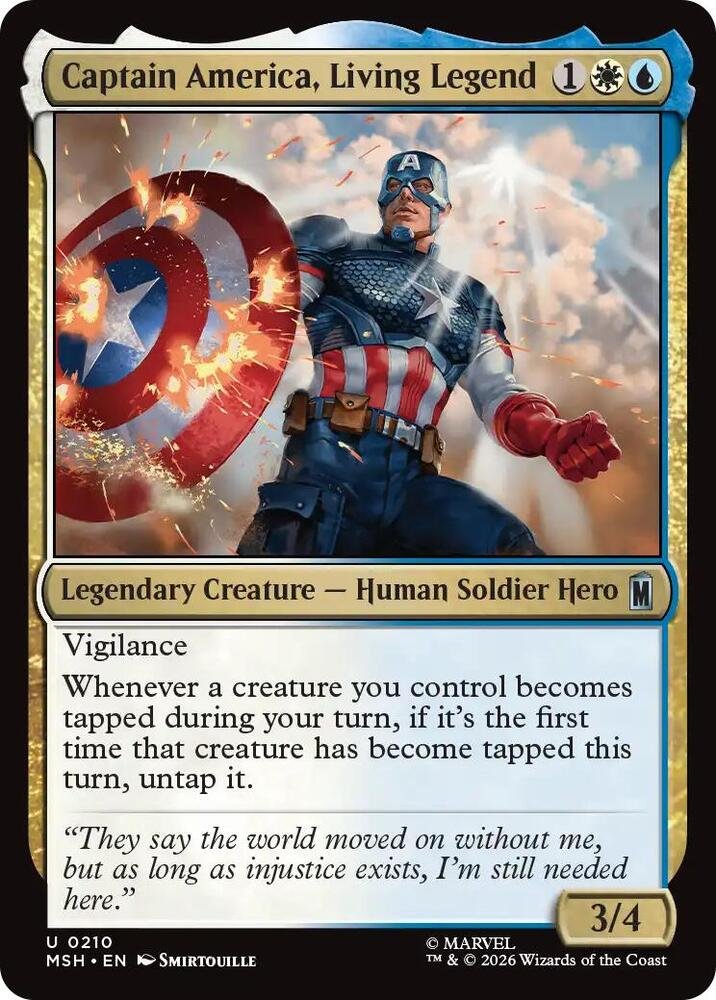
Captain America, Living Legend has a completely different playstyle from Wings of Freedom. While Wings of Freedom was a toughness-matters Voltron Commander, Living Legend is essentially a self-tapping engine that wants your entire board to remain in motion.
Captain America can untap a creature when it becomes tapped for the first time each turn. It is an interesting and incredibly flavorful design for Cap. Captain America is all about teamwork and uplifting the people fighting beside him, so his ability feels like he is constantly pushing his team to keep going.
My only complaint is that this card isn’t Namor.
Why? Because this ability fits almost perfectly with many of the Merfolk we recently received in Lorwyn Eclipsed. That is neither here nor there, though, because Living Legend is still an interesting Commander in his own right.
When building this deck, I would focus heavily on Teamwork, convoke, Waterbending, and even a few cards with the Inspired mechanic. You want as many reasons as possible to tap your creatures outside of simply attacking. Every creature that can activate an ability, help cast a spell, or contribute to another mechanic gives Captain America another opportunity to untap something and generate additional value.
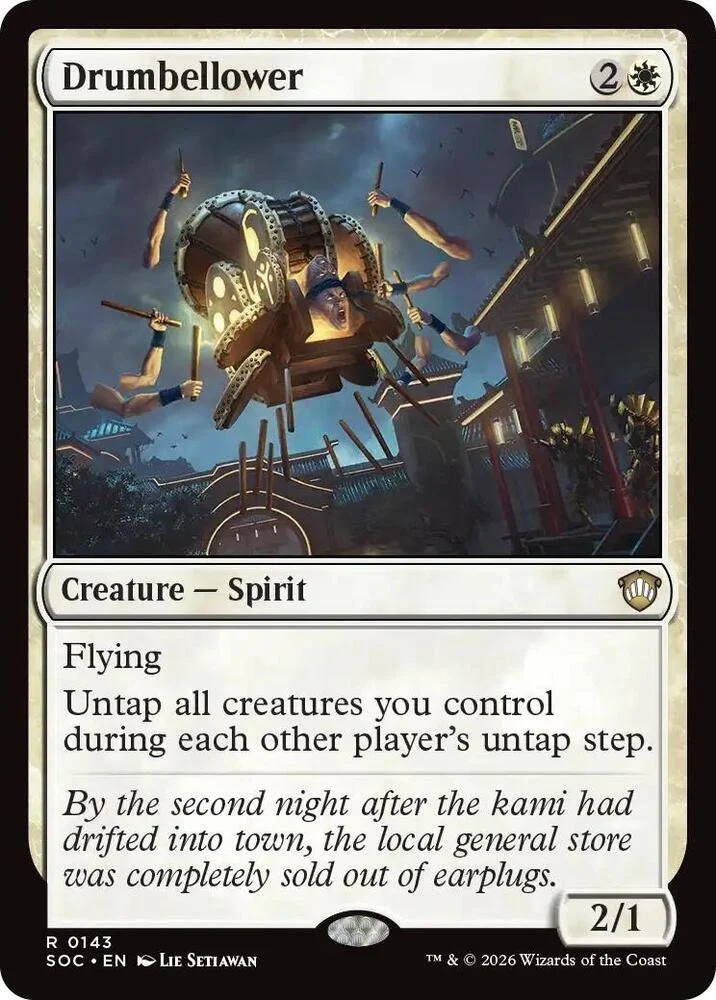
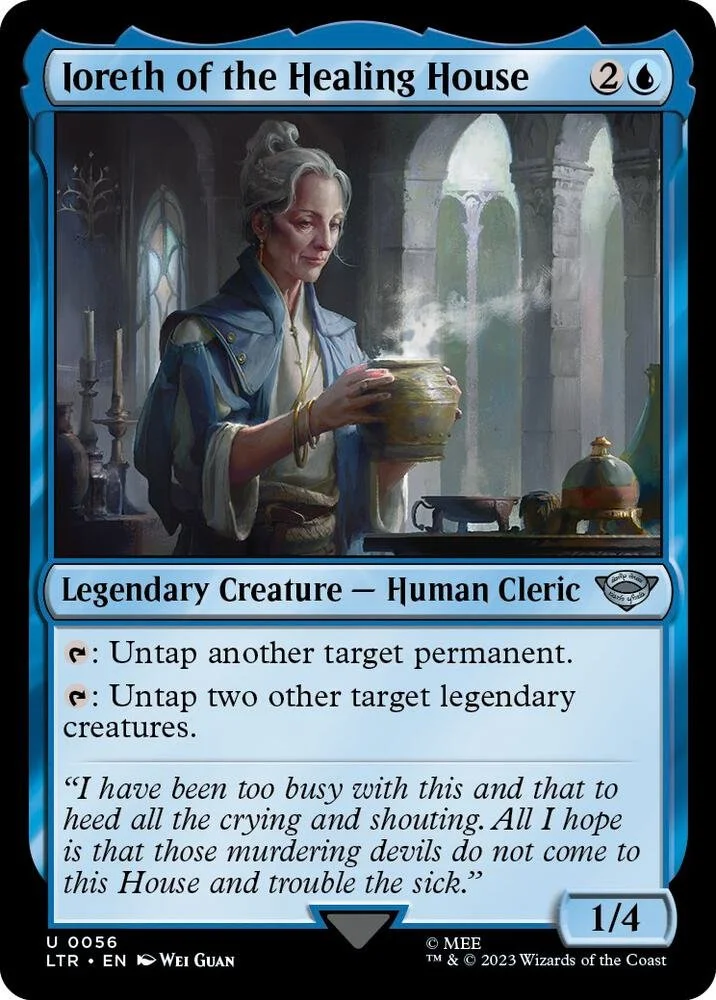
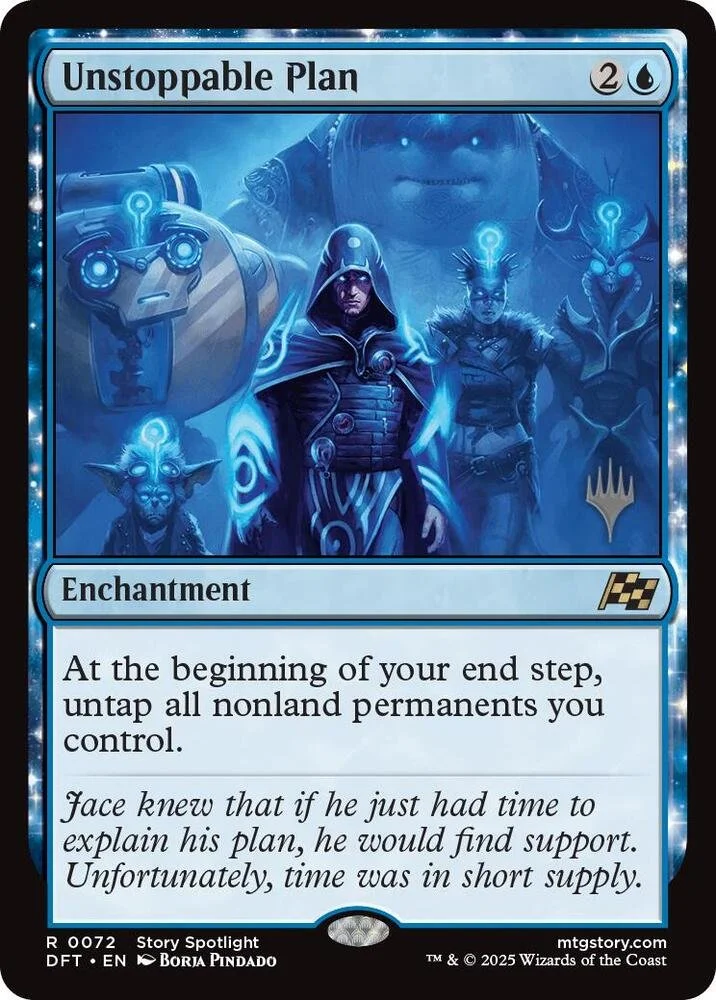
Cards like Drumbellower, Ioreth of the Healing House, and Unstoppable Plan give you even more ways to repeatedly untap your creatures. Attacking and traditional tap abilities will still be important, but I think the best version of this deck focuses primarily on Teamwork and Waterbending.
Repeatable Waterbending is probably one of the strongest things you can do with Living Legend. Tapping creatures for value, untapping them with Captain America, and then finding another way to tap them opens the deck up to some incredibly interesting turns.
Because of that, I would include a healthy mix of cards that reward creatures becoming tapped and cards that care about creatures untapping. You do not need every card in the deck to trigger from both, but you want enough overlapping effects that each tap and untap generates some kind of advantage.
This is the type of Commander where your turns can look relatively innocent at first. You tap a creature for Teamwork, Captain America untaps something, another card triggers, and suddenly you have created an entire chain of abilities while trying to cast one spell.
For higher-bracket games or larger budgets, I would begin by improving the mana base. This is a strategic Azorius deck that wants to hold up interaction while progressing its board, so premium lands like Tundra and Flooded Strand will make the deck significantly smoother.
From there, I would add traditional Azorius staples. Fierce Guardianship and Force of Will can protect your engine without interrupting your tap-and-untap sequences, while Rhystic Study and Esper Sentinel keep your hand full. Intruder Alarm is another intriguing option that can quickly turn an already complicated engine into something your opponents desperately need to remove.
Example decklist available here: Captain America Double-Tap
Taskmaster, Mercenary Mimic
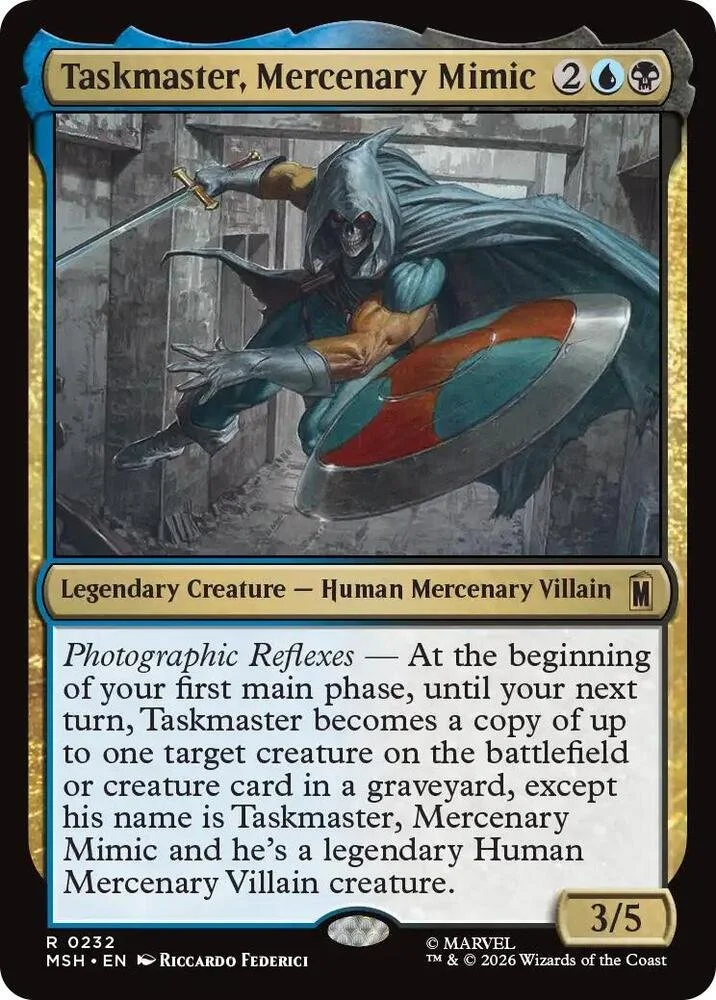
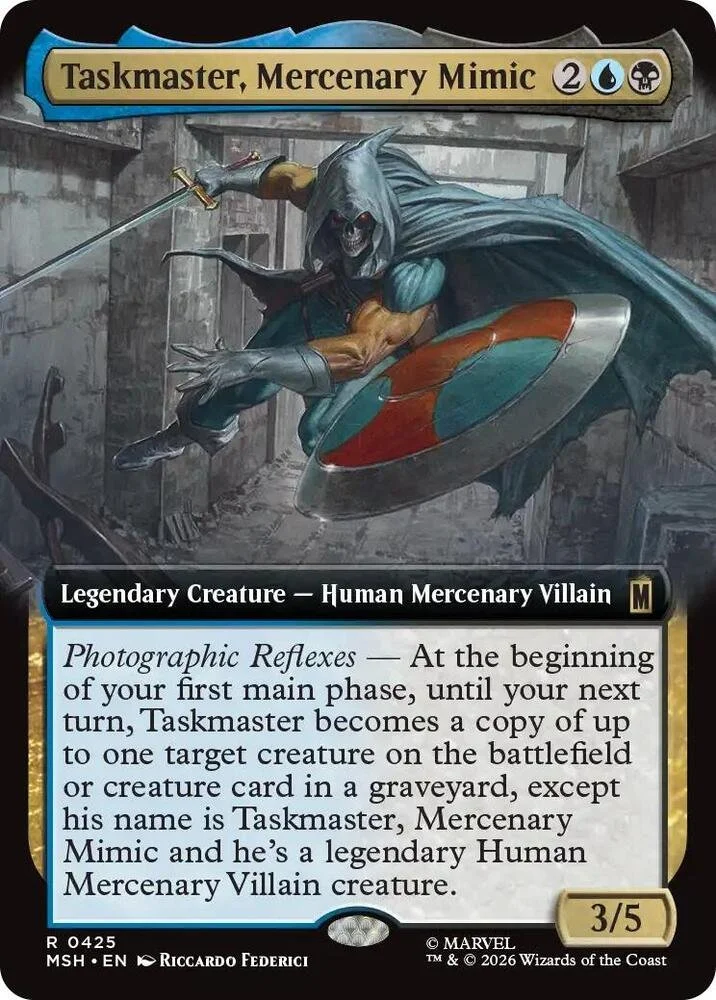
Taskmaster, Mercenary Mimic is a powerful Commander that should lead to some incredibly fun and unique deck builds. Taskmaster essentially does what he does best: borrows someone else’s abilities and uses them as his own.
At the beginning of your first main phase, Taskmaster becomes a copy of a target creature on the battlefield or in a graveyard. That opens an absurd number of deck-building possibilities because you are not limited to copying your own creatures. Anything your opponents play, mill, or lose can suddenly become Taskmaster’s next identity.
There are several ways to approach this deck. You could load it with powerful creatures and lean heavily into self-mill, filling your graveyard with premium copy targets. Cards like Archon of Cruelty, Consuming Aberration, and The Mindskinner give Taskmaster some extremely strong abilities and bodies to borrow once they reach the graveyard.
You could also take the meaner route and build Taskmaster as a dedicated mill Commander.
Cards like Ruin Crab, Maddening Cacophony, Fractured Sanity, and Mesmeric Orb quickly fill your opponents’ graveyards. Mill normally aims to eliminate an opponent’s library, but Taskmaster gains additional value from every creature you put into a graveyard. You are essentially digging through your opponents’ decks to find new tools for your Commander to steal.
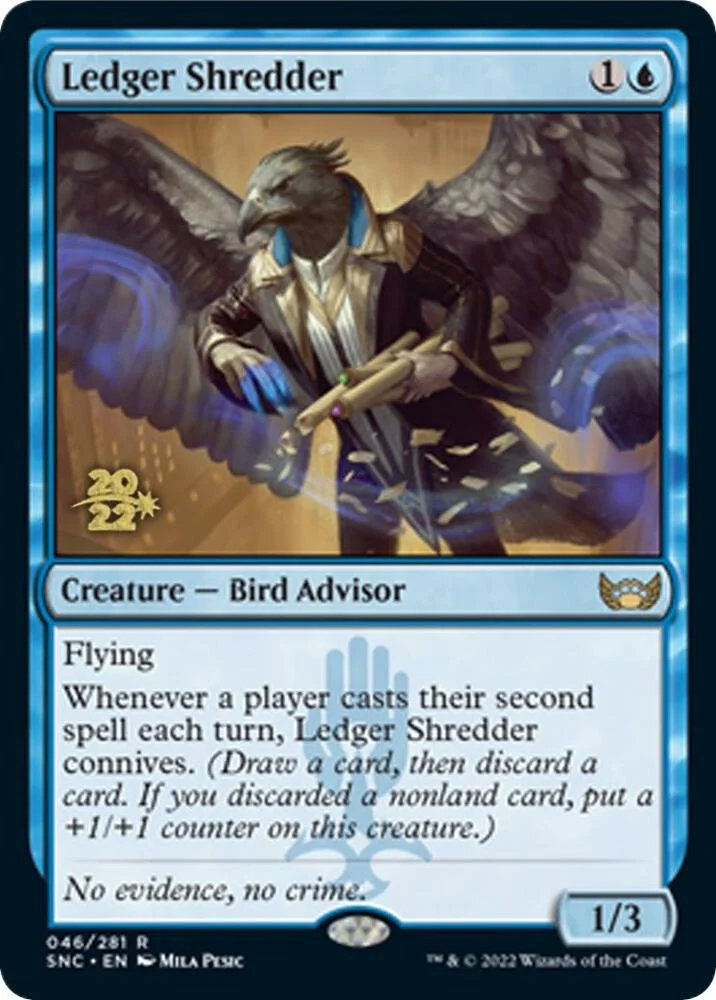
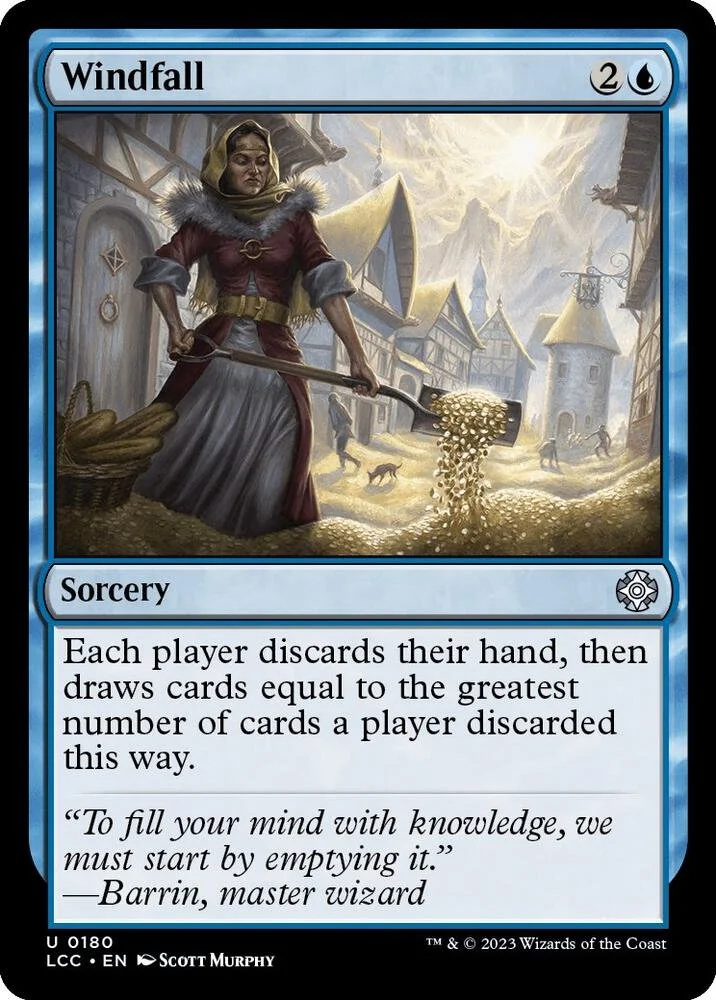
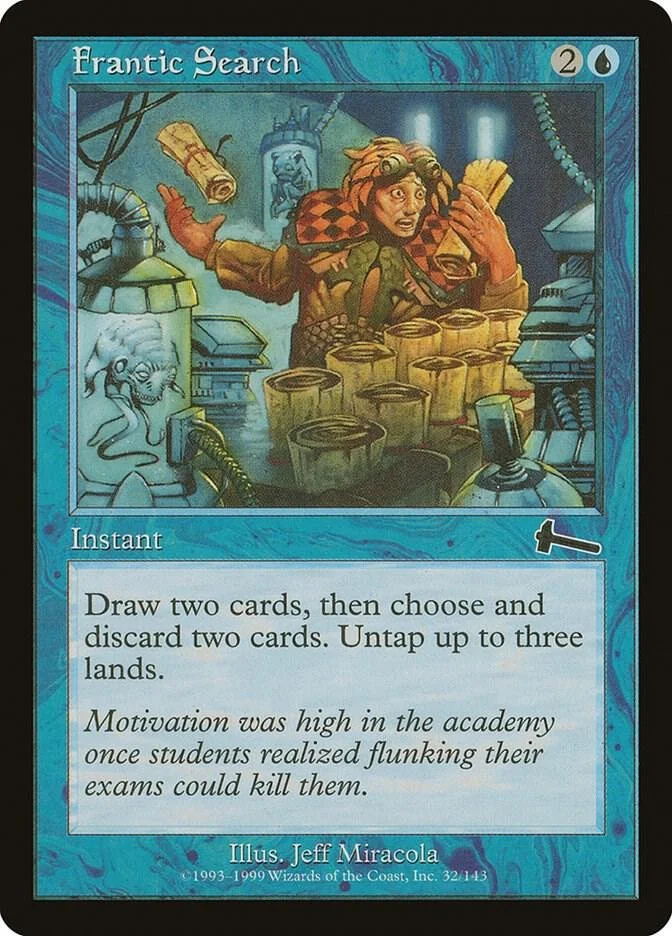
Connive and discard effects also fit the strategy well. Ledger Shredder, Windfall, and Frantic Search let you churn through your library while placing desirable creatures exactly where Taskmaster can reach them. Instead of being disappointed when you draw an expensive creature like Archon of Cruelty without enough mana to cast it, you can discard it and potentially turn Taskmaster into it during your next turn.
Cards like Reanimate, Animate Dead, Victimize, and Too Evil to Stay Dead give the deck a secondary reanimator strategy. Taskmaster may borrow abilities from your graveyard, but that does not mean those creatures need to remain dead. You can copy a creature with Taskmaster and then bring the original back, giving you access to both.
You could also build a traditional Dimir control deck, although that is the direction I would personally avoid because it feels the most limiting for Taskmaster. If that is how you prefer to play, Counterspell, Arcane Denial, Drown in the Loch, Pongify, Toxic Deluge, and Feed the Swarm will help you control the battlefield as the graveyards slowly fill.
Removal is particularly interesting with Taskmaster because killing an opponent’s best creature is not necessarily the end of that creature. You can remove a threat and then have Taskmaster copy it on your next turn. That is such a mean and flavorful way to play this character.
Cards like Syr Konrad, the Grim and Mindcrank reward you for constantly moving cards into graveyards, while Consuming Aberration can become enormous as the game progresses. There are enough overlapping mill and graveyard synergies that you do not need to commit entirely to one strategy.
For higher-bracket games, Entomb is one of the first cards I would add. Putting the exact creature you want into your graveyard before your first main phase essentially lets you choose Taskmaster’s next form. Undercity Sewers is an easy mana-base upgrade that supports the graveyard strategy, while Mesmeric Orb can rapidly fill every graveyard at the table.
Breach the Multiverse is expensive, but it can completely take over a game by milling every player and giving you access to even more creatures. If you really want to push Taskmaster, I would focus less on generic mill and more on efficient self-mill, tutors like Entomb, and premium creatures with devastating abilities.
Taskmaster is one of those Commanders where no two games should feel exactly the same. Sometimes you will copy your Archon of Cruelty, sometimes you will steal the strongest creature in an opponent’s graveyard, and sometimes Taskmaster will simply become whatever creature is currently causing the most problems.
Honestly, that is exactly how a Taskmaster Commander should play.
Example decklist available here: Taskmaster Mill
Ares, God of War
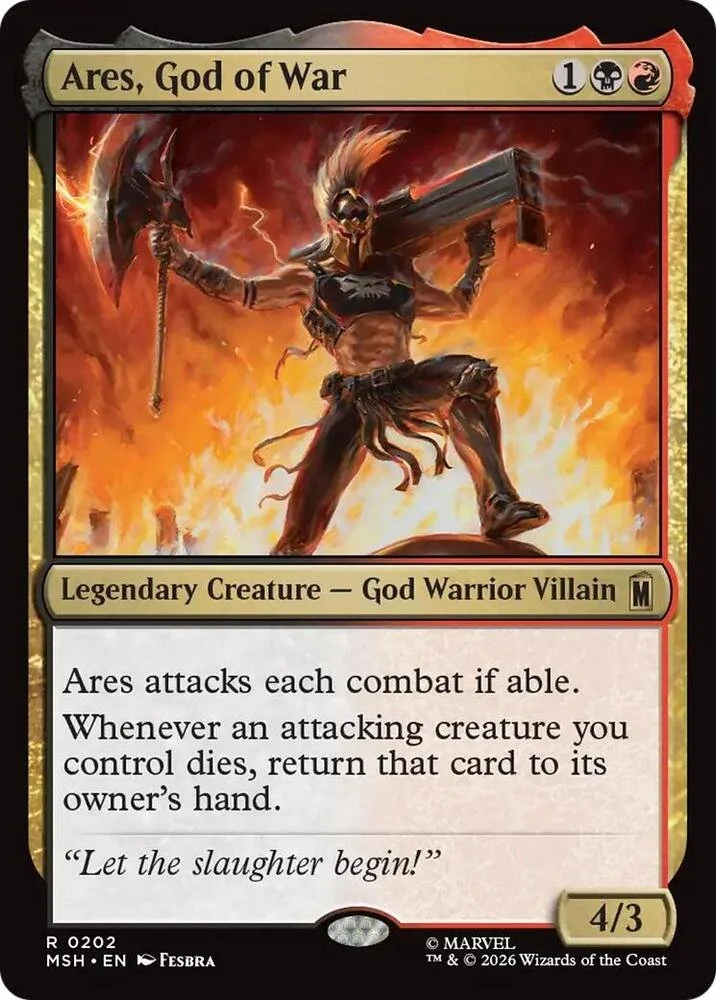
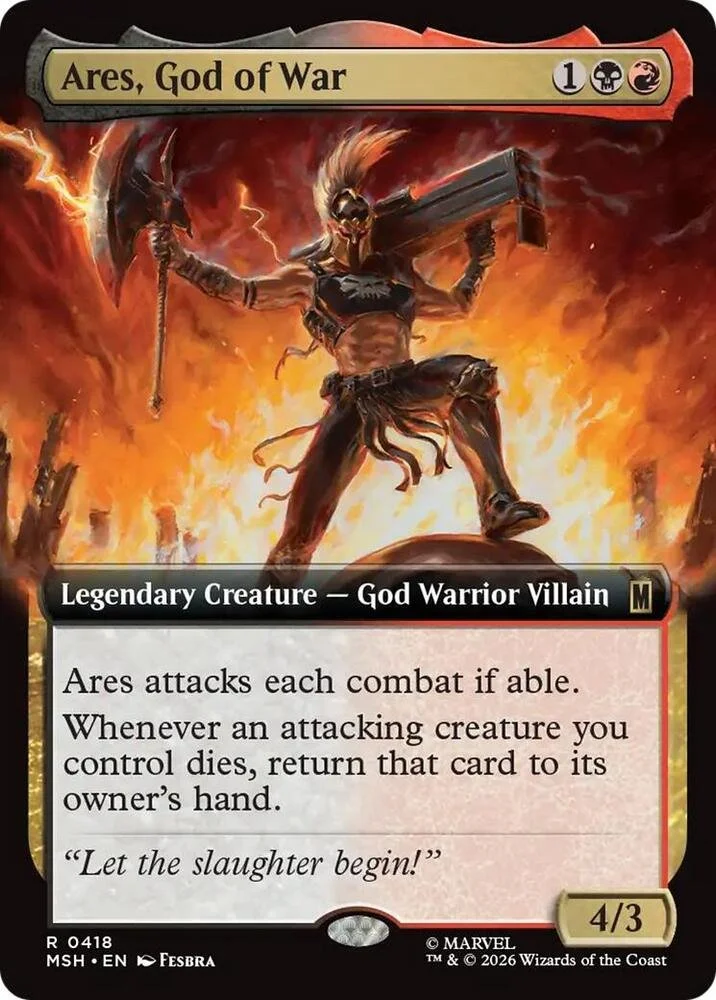
Ares, God of War is, surprise surprise, a Rakdos aggro Commander.
With Ares, you are at war, and you should be attacking as often as physically possible. This is not a deck where you sit back, build a massive board, and wait for the perfect opportunity. You want to apply pressure early, force bad blocks, and constantly make your opponents deal with your creatures.
Ares go brrrrrrrrrrr.
When building this deck, I would focus heavily on attack triggers and mechanics like Raid. You want creatures and spells that reward you for doing what Ares already wants: turning creatures sideways every turn.
Alesha, Who Laughs at Fate is fantastic in this deck and almost functions as a backup Commander. Many of the creatures I would play with Ares are aggressive bodies that sacrifice themselves, die naturally, or are not expected to survive for long. Alesha gives those creatures another opportunity to return and cause problems.
Creatures like Ball Lightning, Blistering Firecat, Lightning Skelemental, Hellspark Elemental, and Spark Elemental are exactly what I want here. They come down, hit hard, and do not care if they survive combat. Ares wants power on the battlefield, and these creatures provide plenty of it for very little mana.
Ball Lightning may only be around for one turn, but does Ares really look like the kind of guy who cares about long-term job security?
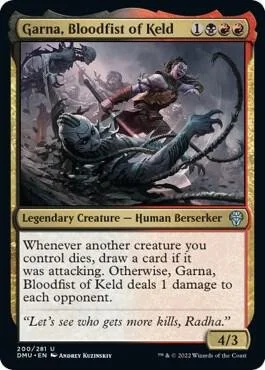
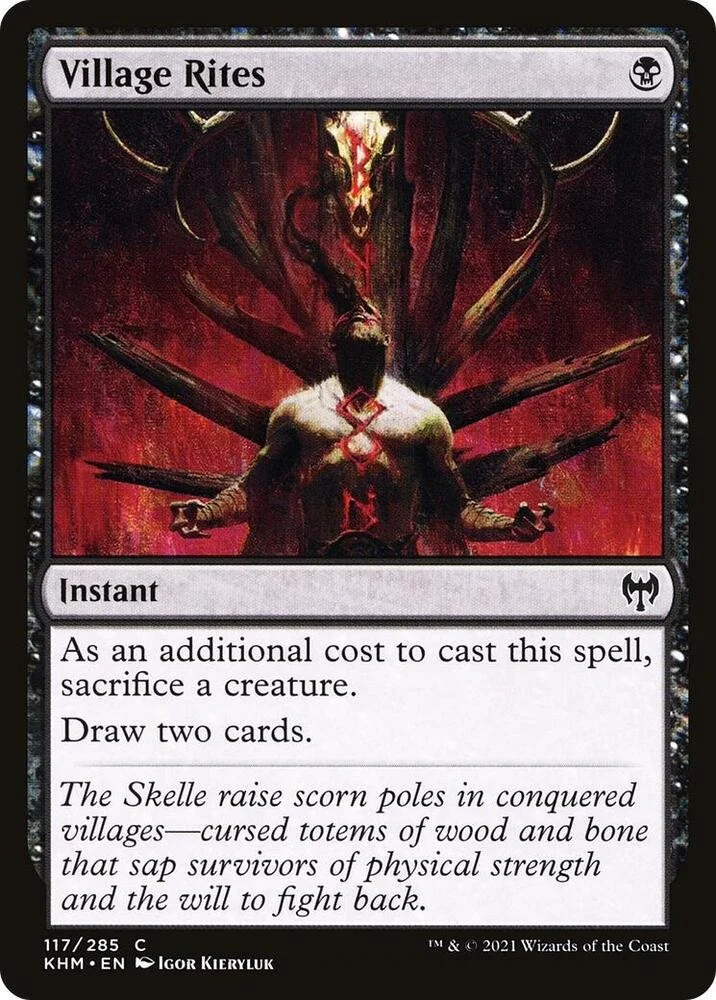
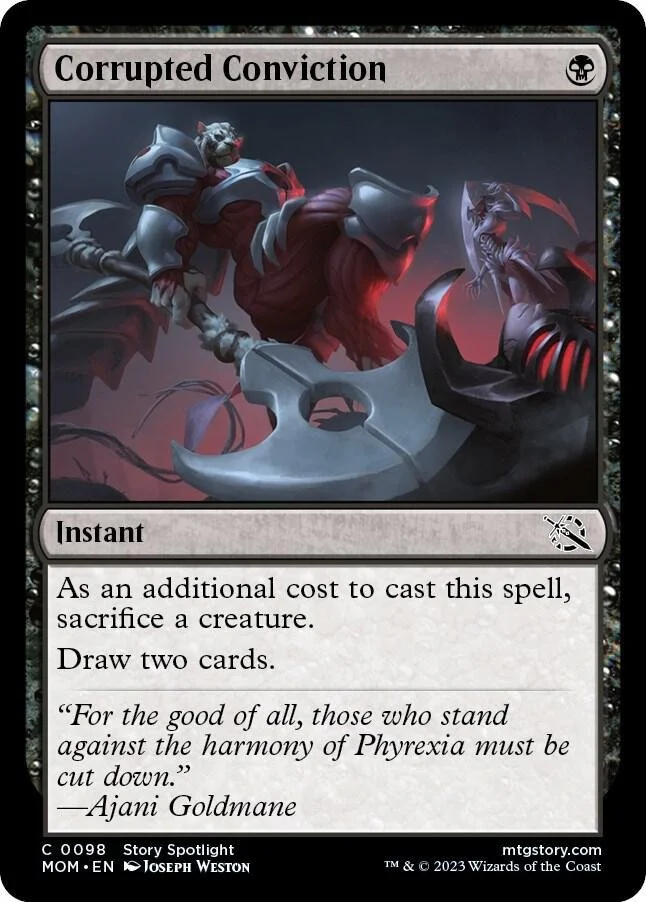
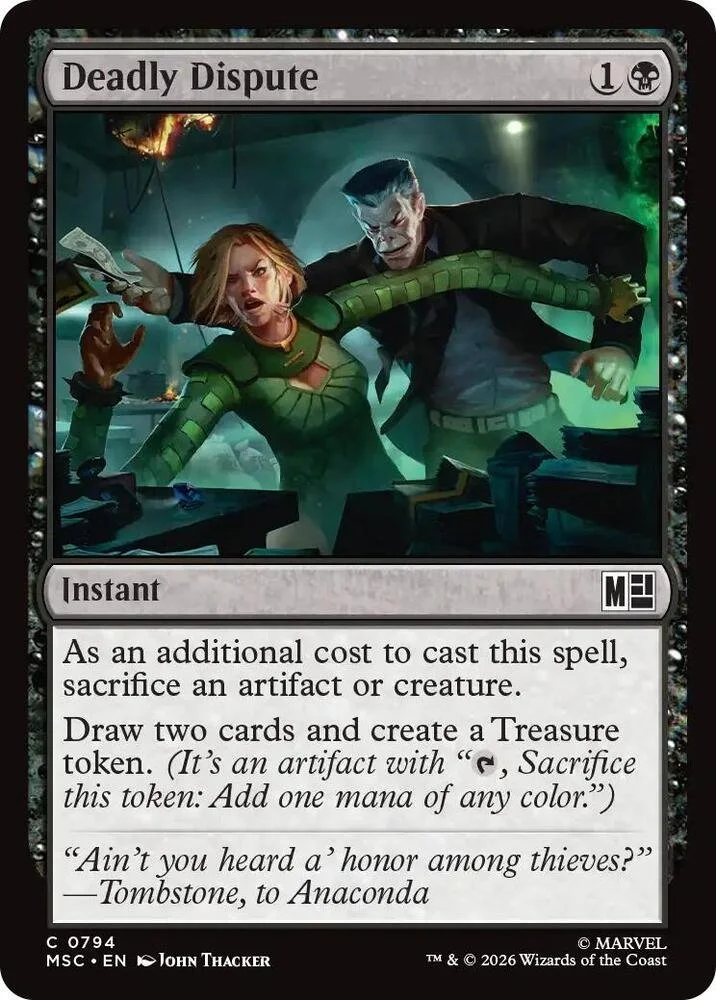
There are also plenty of ways to make sure your dying creatures do not go to waste. Garna, Bloodfist of Keld rewards your aggressive strategy, while Village Rites, Corrupted Conviction, and Deadly Dispute let you sacrifice creatures for additional cards.
Goblin Bombardment and Viscera Seer provide repeatable sacrifice outlets, which are especially useful with creatures that were going to die at the end of the turn anyway. If my Ball Lightning is disappearing in a few seconds, I might as well throw it at someone on the way out.
That also makes Mayhem Devil extremely dangerous. Your creatures will attack, die, and be sacrificed constantly, allowing you to pick apart smaller creatures or deal additional damage around the table.
Sneak Attack may be one of my favorite cards in the deck. Ares already wants large, aggressive creatures entering the battlefield and attacking immediately, so paying one red mana to throw something massive into combat is perfect. You will have to sacrifice it at the beginning of the next end step, but this deck is not particularly concerned with creature longevity.
Breaker of Armies can also force terrible combat situations. Making an opponent put their entire board in front of one creature opens the way for the rest of your army. Sometimes clearing out blockers is more important than dealing damage with the creature itself.
Professional Face-Breaker and Mahadi, Emporium Master are also excellent inclusions. Treasure is incredibly valuable in a deck that constantly deploys new attackers, especially when many of your creatures will not remain on the battlefield for long. You need to keep refilling the war machine.
For higher-bracket games, I would add Grave Pact almost immediately. You are already sacrificing creatures constantly, so forcing each opponent to sacrifice a creature whenever one of yours dies can completely tear apart the battlefield.
Ancient Tomb and Jeska’s Will can accelerate the deck and help you unload multiple threats during the same turn. You could also lean into premium extra-combat effects. The more combat steps you receive, the more opportunities you have to trigger Ares and every other attack-based ability in the deck.
Ares is not complicated, and I do not think he should be. Play creatures with unnecessarily high power, attack constantly, sacrifice anything that is not going to survive, and then find another creature to throw into battle.
This is a war, after all.
Example decklist available here: Ares Raid
The Serpent Society
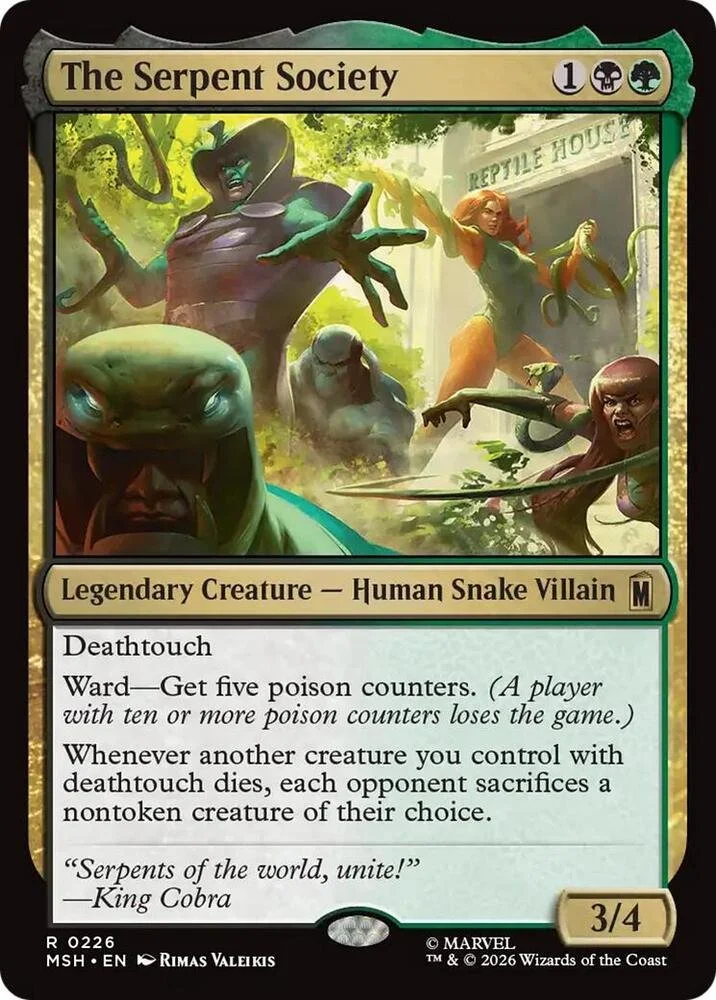
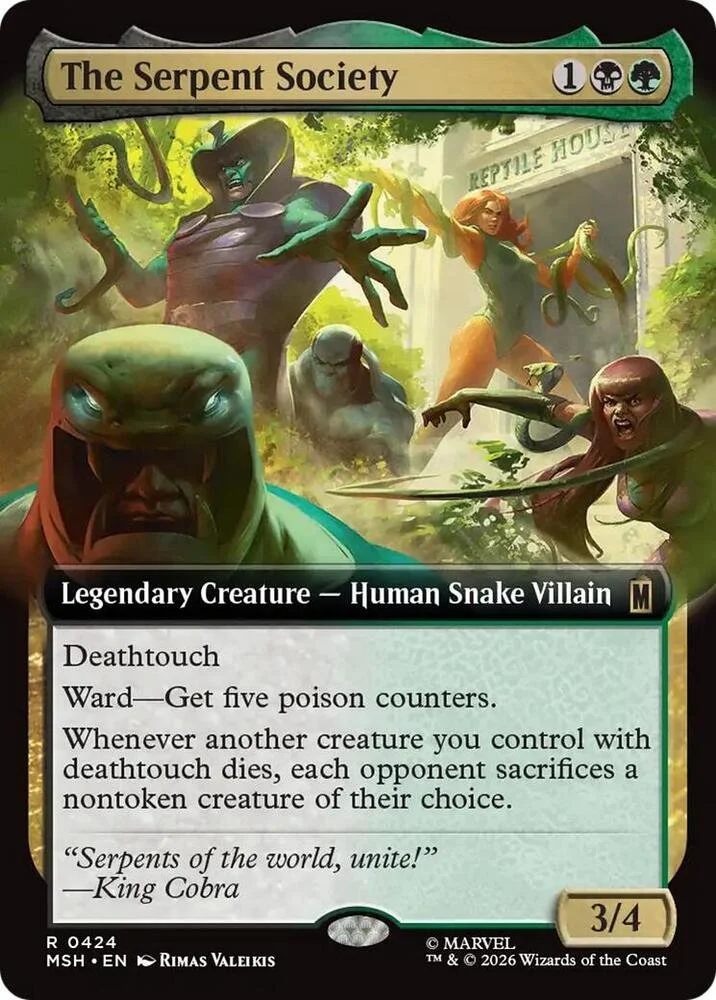
If you are playing The Serpent Society as your Commander, I assume you are not sitting down with the cleanest, most optimized win condition possible. You are here to be funky, annoying, and just a little bit mean.
Honestly, I respect it.
One thing that pushes this Commander over the top is its Ward ability: Ward—five poison counters. That is an absurd payment to demand from your opponents. Most players cannot afford to take five poison counters just to remove your Commander, especially when your deck is already built to hand out poison like candy.
It creates an awkward tension where your Commander sits there daring people to deal with it while quietly enabling everything else you are doing.
My example deck is a creature-heavy Golgari list filled with deathtouch creatures, ways to grant deathtouch, poison synergies, and proliferate effects. The goal is simple: make combat miserable for everyone else.
Opponents will not want to attack you, block you, or let your creatures connect. Even your smallest creatures become problems when they have deathtouch, poison synergies, or death triggers attached to them.
Ambush Viper, Moss Viper, Fang of Shigeki, Bilious Skulldweller, and Ankle Biter are exactly the cheap, annoying creatures this deck wants. They may not look scary individually, but cards like Fynn, the Fangbearer, Hooded Blightfang, and Ohran Frostfang turn every tiny Snake or Rat into a legitimate threat.
Fynn is one of the most important cards in the deck. If your deathtouch creatures connect with players, Fynn quickly turns those small hits into poison counters. You do not need to deal 40 damage when you can sneak through a few creatures and place the entire table on a poison clock.
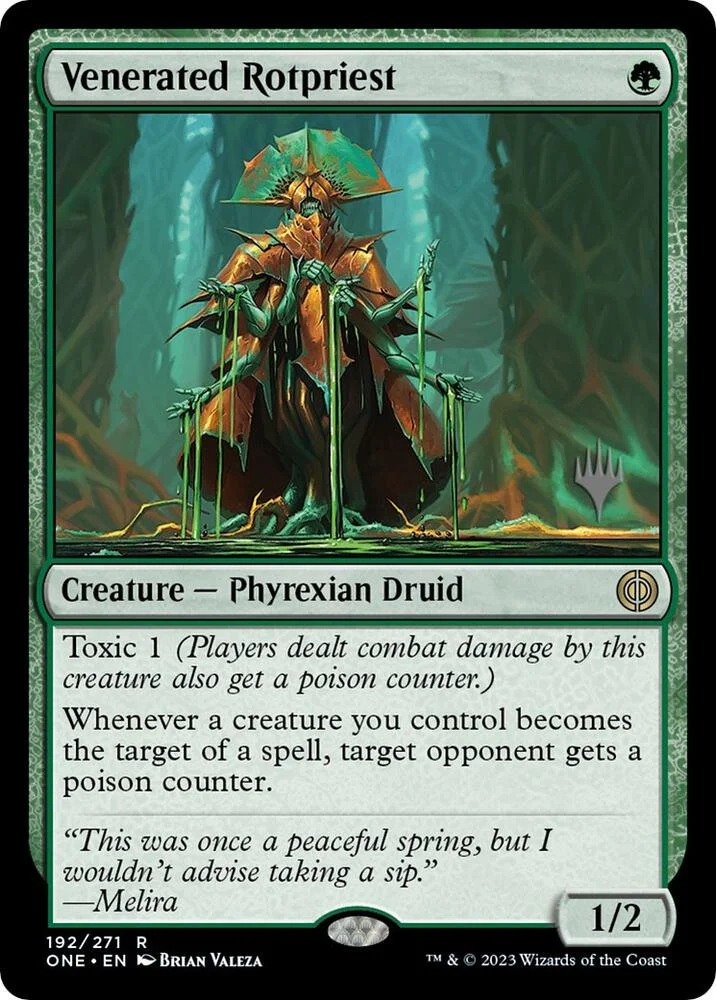
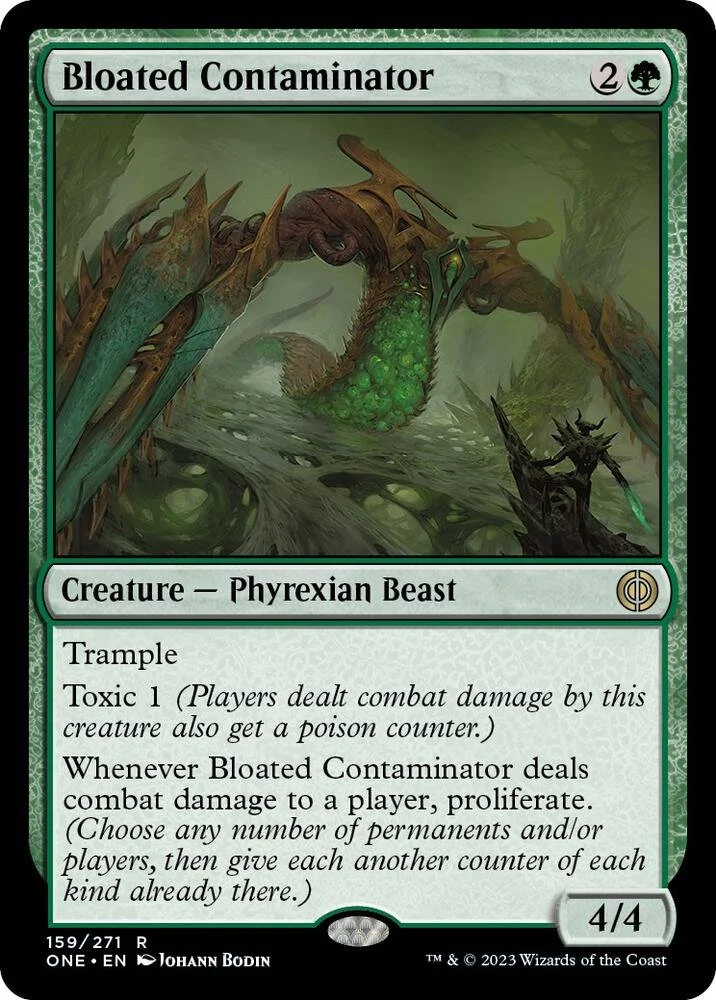
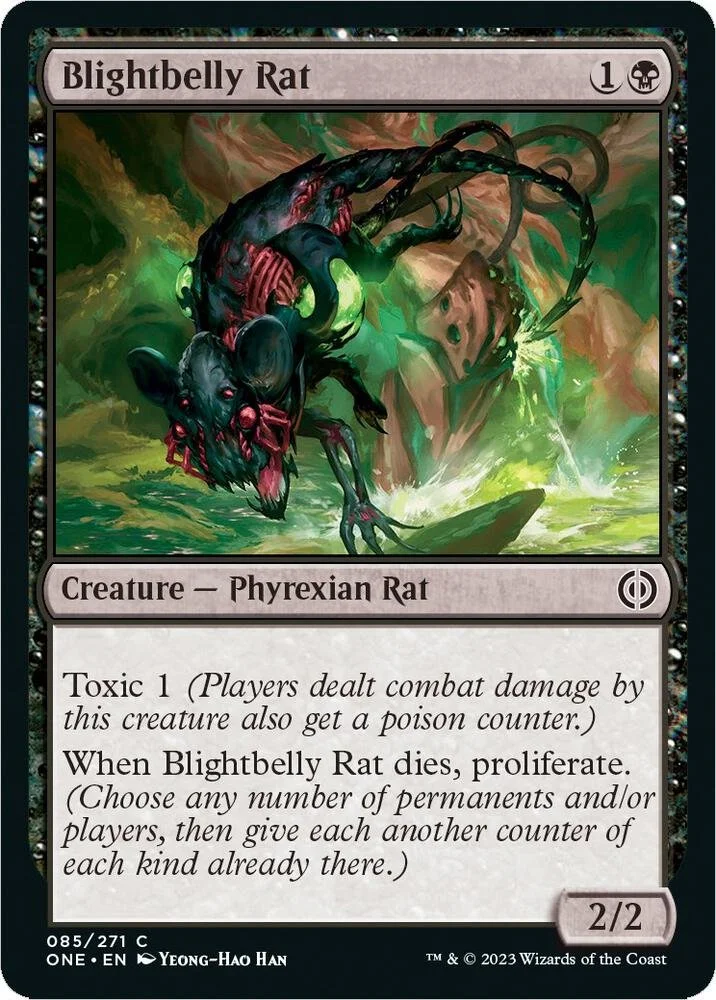
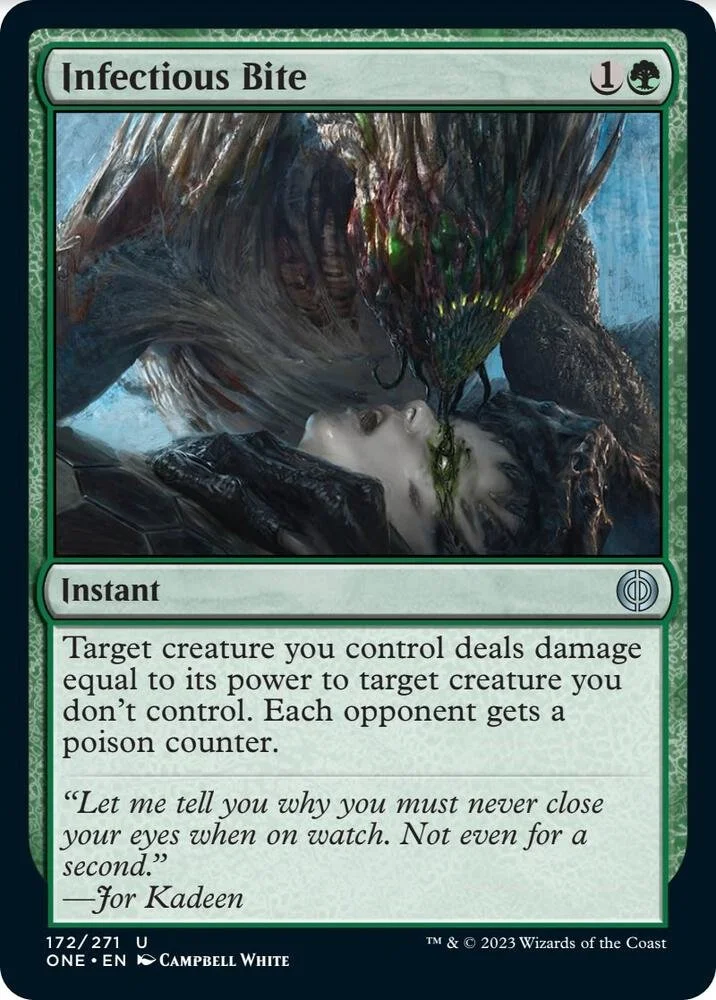
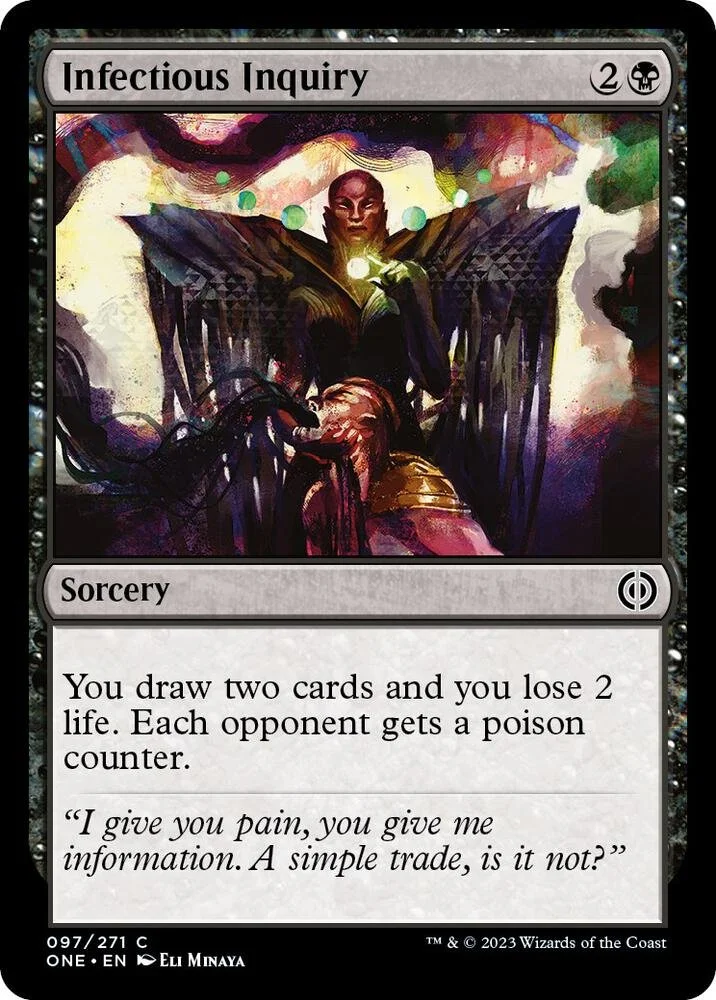
Venerated Rotpriest, Bloated Contaminator, Blightbelly Rat, Infectious Bite, and Infectious Inquiry push the poison strategy even further. This does not necessarily need to be a full Infect deck, but it has enough poison support that your opponents will need to respect it.
Once those poison counters are on the table, proliferate becomes your best friend.
Evolution Sage, Karn’s Bastion, Staff of Compleation, Courage in Crisis, Smell Fear, and several Vraska cards can increase poison counters, +1/+1 counters, and loyalty counters across the battlefield. You will not always need to continue connecting in combat once the counters are in place. Sometimes you can sit back and let proliferate do the dirty work.
The deathtouch theme also gives you plenty of control over combat. Archetype of Finality, Saryth, the Viper’s Fang, Basilisk Collar, Gorgon’s Head, and Mirror Shield spread deathtouch to creatures that normally would not have it. Hornet Nest and Hornet Queen are especially fun because they fill the battlefield with flying deathtouch bodies that make attacking you incredibly awkward.
Skullclamp, Village Rites, Victimize, and Cauldron of Souls help ensure your creatures remain useful when they die. This deck expects its creatures to enter messy combat, so drawing cards, recurring creatures, and benefiting from their deaths will keep everything moving.
The Vraska package fits perfectly as well. Vraska, Swarm’s Eminence loves deathtouch creatures, Vraska, Betrayal’s Sting provides another proliferate angle, and Vraska, the Silencer can transform opposing creatures into Treasure when they die. If you are already playing Golgari deathtouch poison nonsense, you might as well bring every version of Vraska that makes sense.
For stronger tables, Contagion Engine is one of the first cards I would add. It provides removal and repeatable proliferate, which is exactly what the deck wants. Grave Pact is equally disgusting because your creatures will already die in combat or to sacrifice effects.
Phyrexian Tower provides another premium sacrifice outlet while helping with mana. Of course, Triumph of the Hordes is the big finisher. With a wide enough board, it can transform your collection of tiny, annoying creatures into a sudden game-ending threat.
The Serpent Society may not be the most straightforward Commander in Marvel Super Heroes, but it might be one of the most irritating in the best way possible. It turns combat into a nightmare, slowly poisons the table, and gives you numerous ways to turn tiny creatures into genuine problems.
You are not here to win cleanly. You are here to make everyone read every single one of your creatures before deciding whether attacking you is worth it.
Example decklist available here: Serpent Society Poison
Tony Stark // The Invincible Iron Man
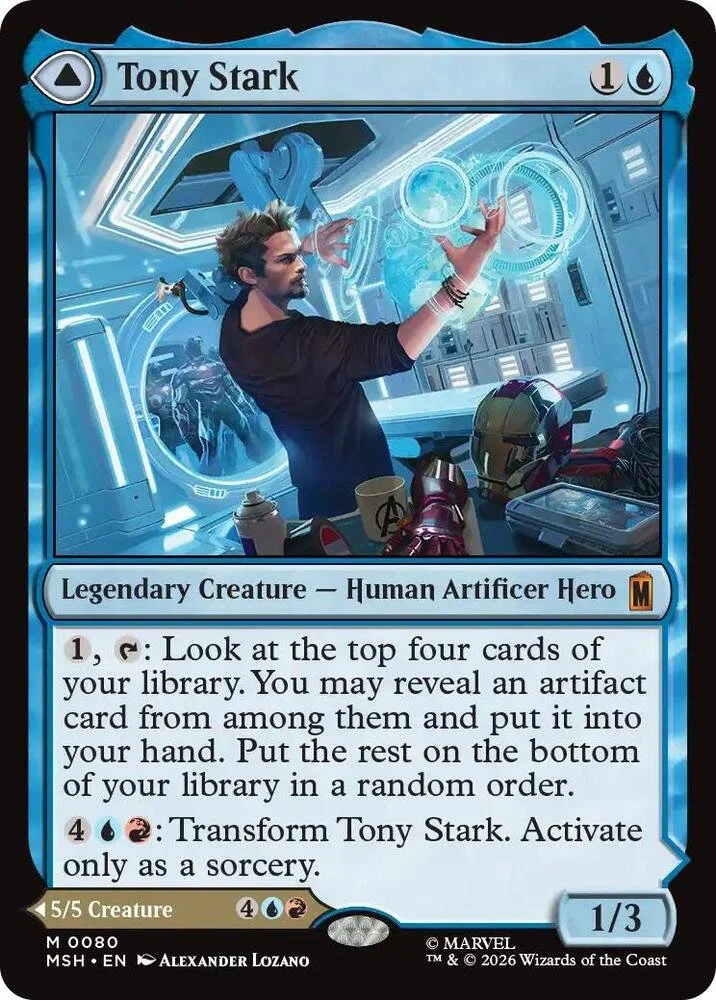
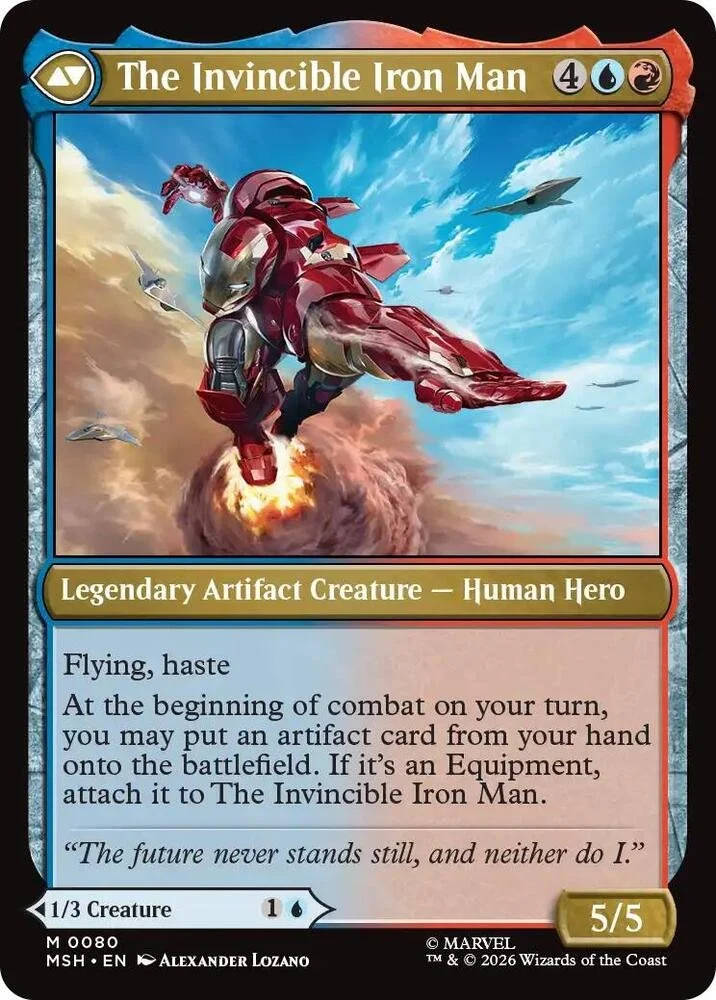
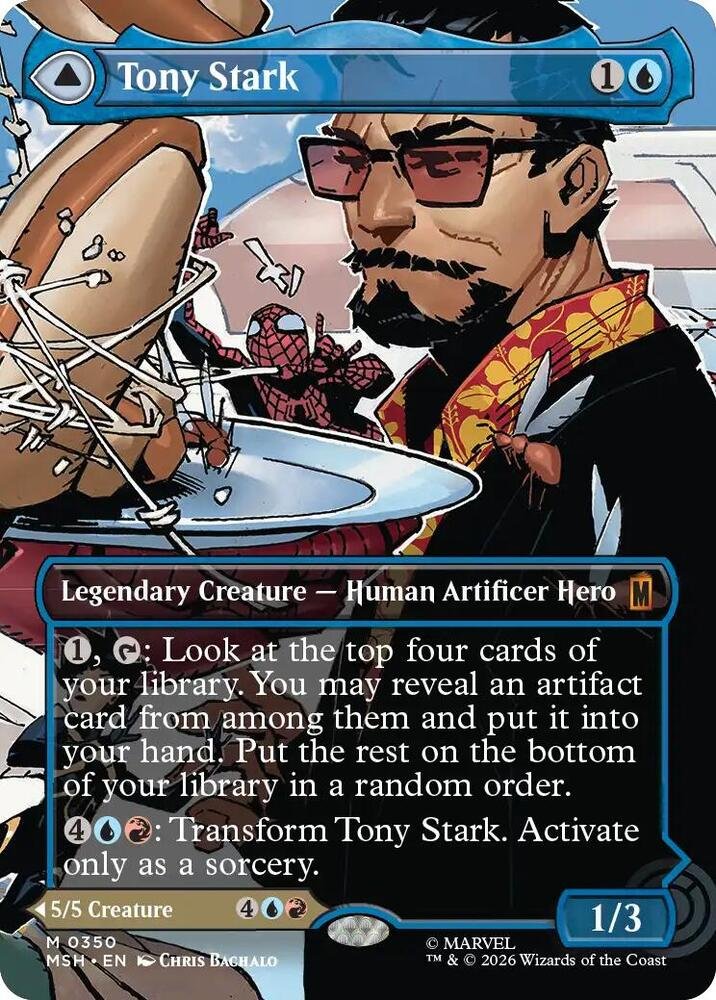
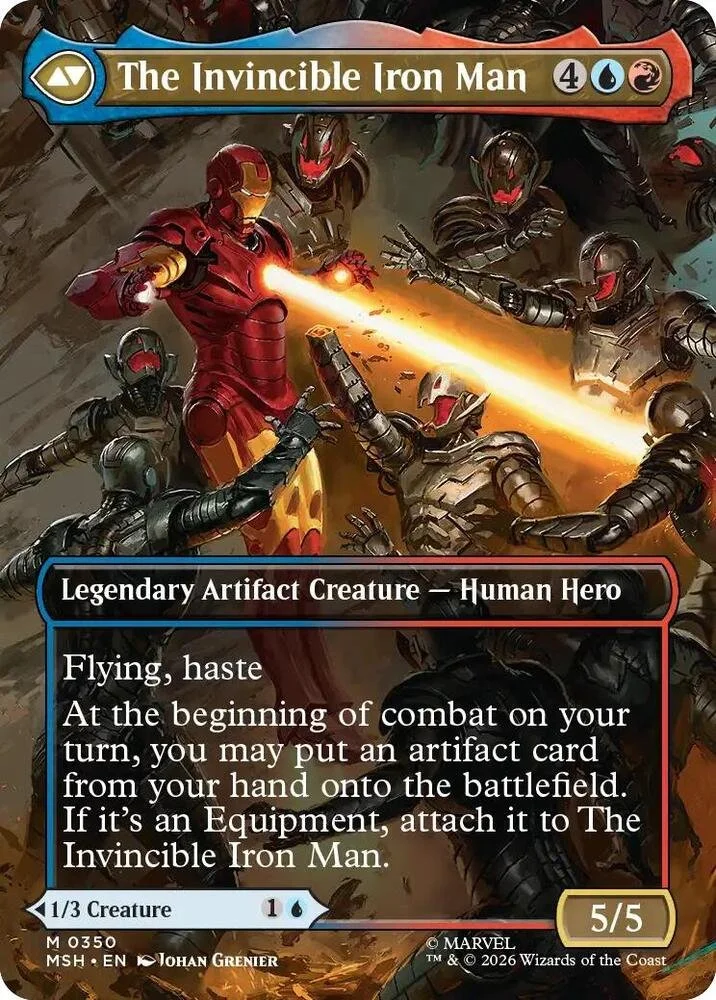
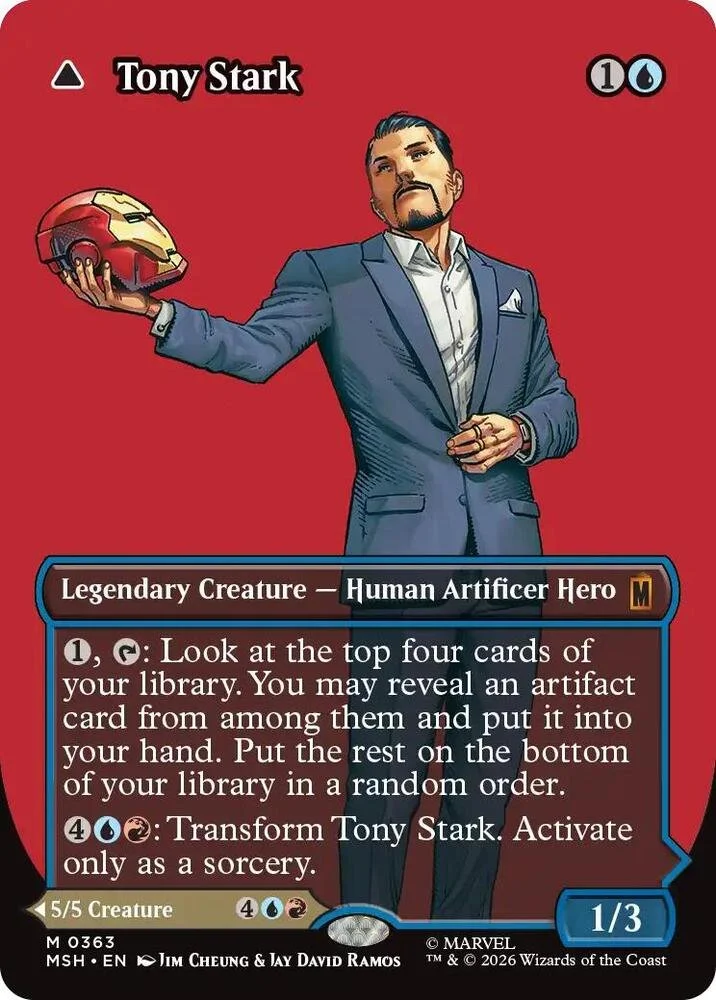
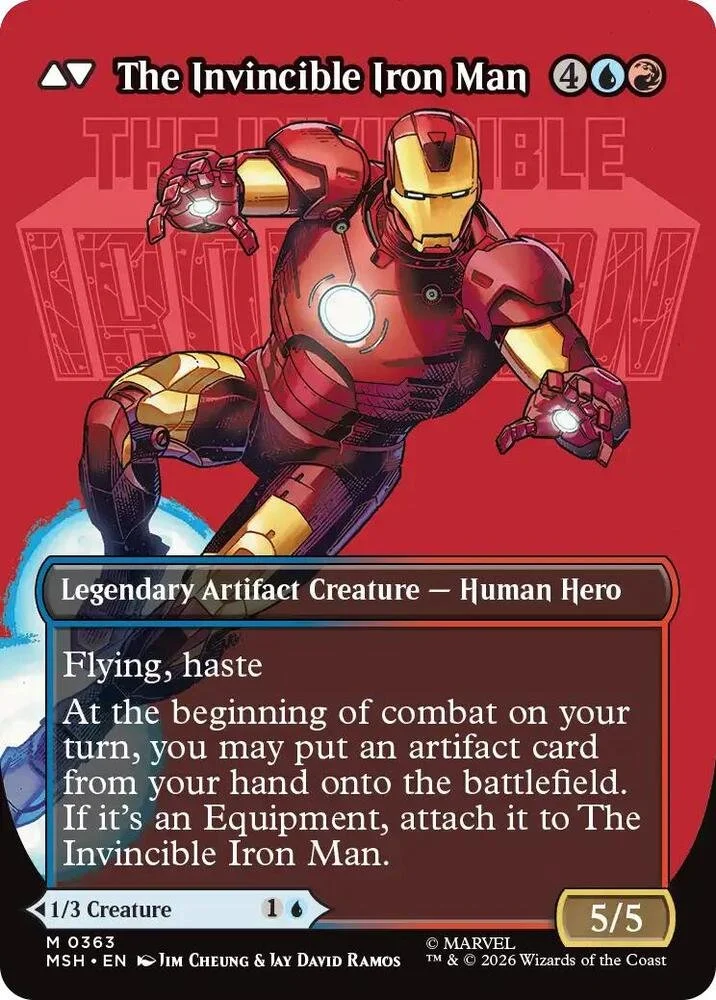
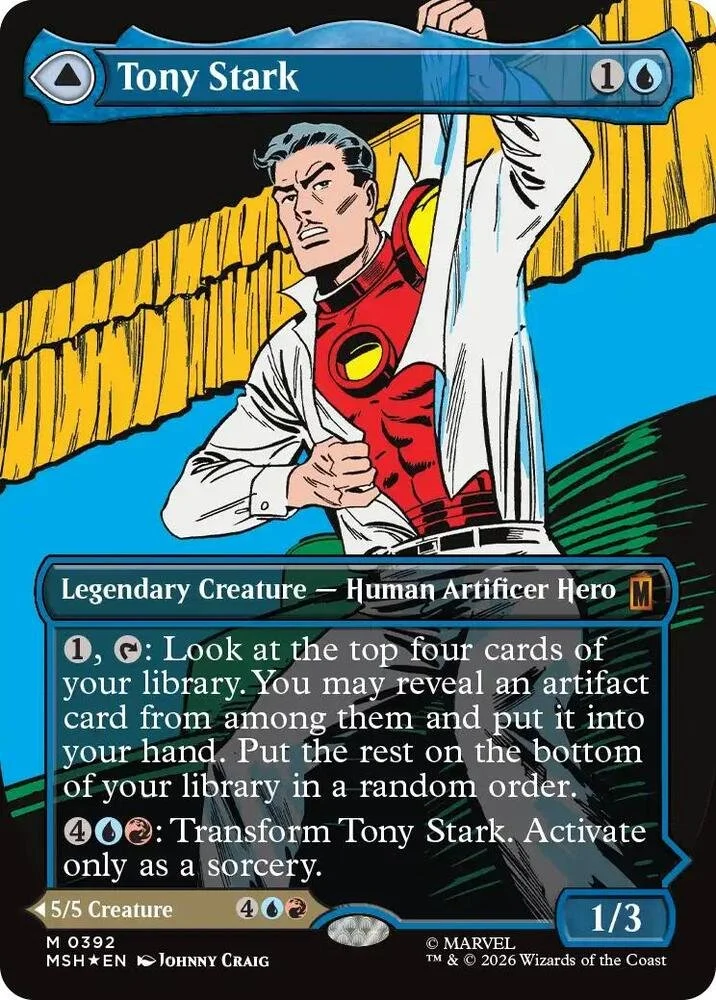
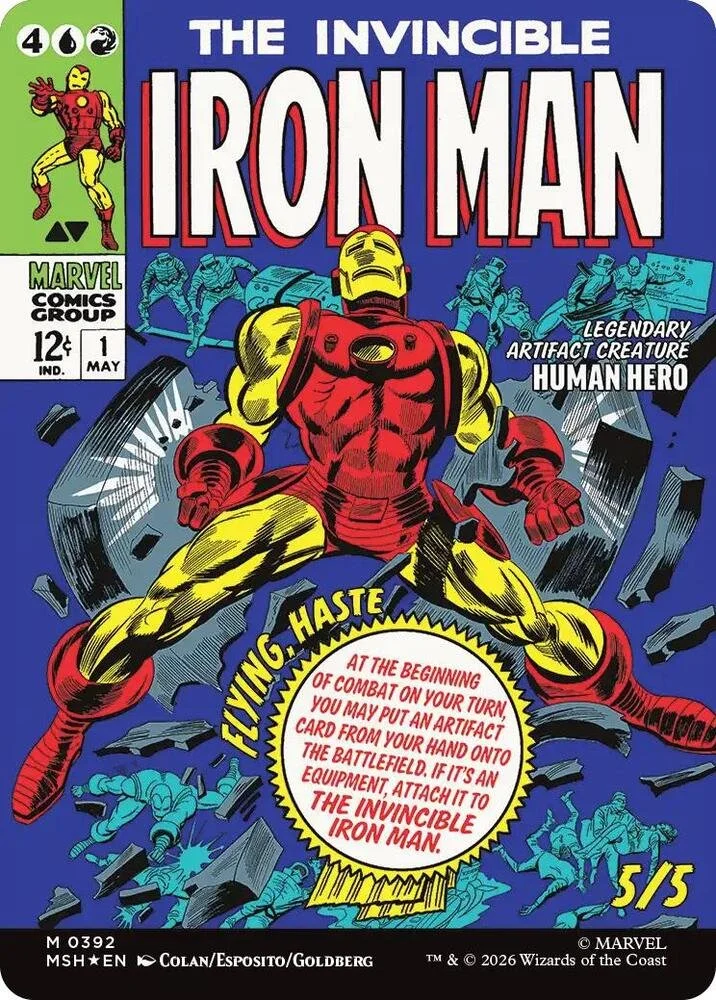
Tony Stark might have been the easiest deck to build on this entire list.
Include every Iron Man, every Stark card, War Machine, Ironheart, a pile of artifact creatures, and as many ridiculous pieces of technology as possible. This deck should feel like the ending of Iron Man 3, with Tony calling in every suit, gadget, backup plan, and mildly dangerous invention he has lying around.
That is exactly what an Izzet Tony Stark Commander deck should be.
Tony wants to flood the battlefield with machines, suits, and utility pieces while using blue and red to protect the engine, remove problems, and occasionally blow something up in the most dramatic way possible.
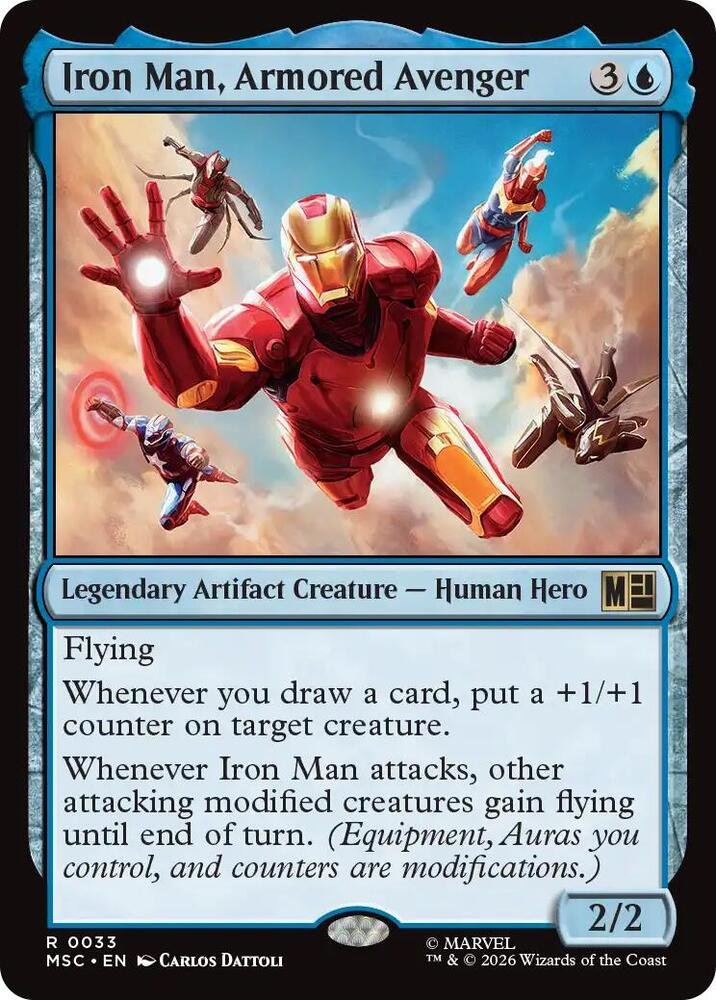
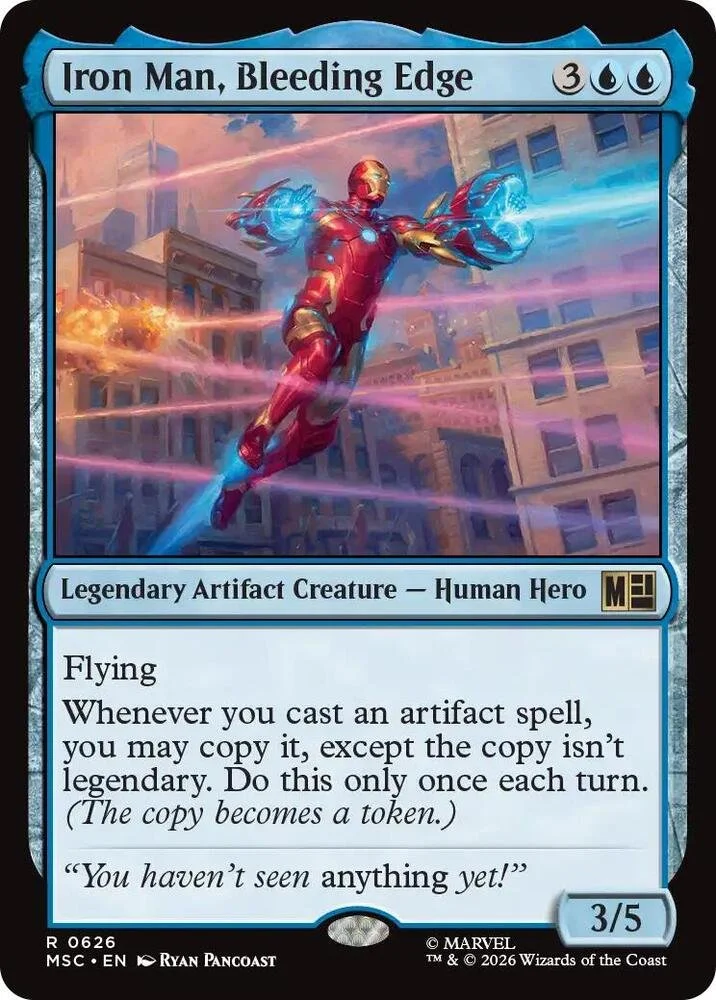
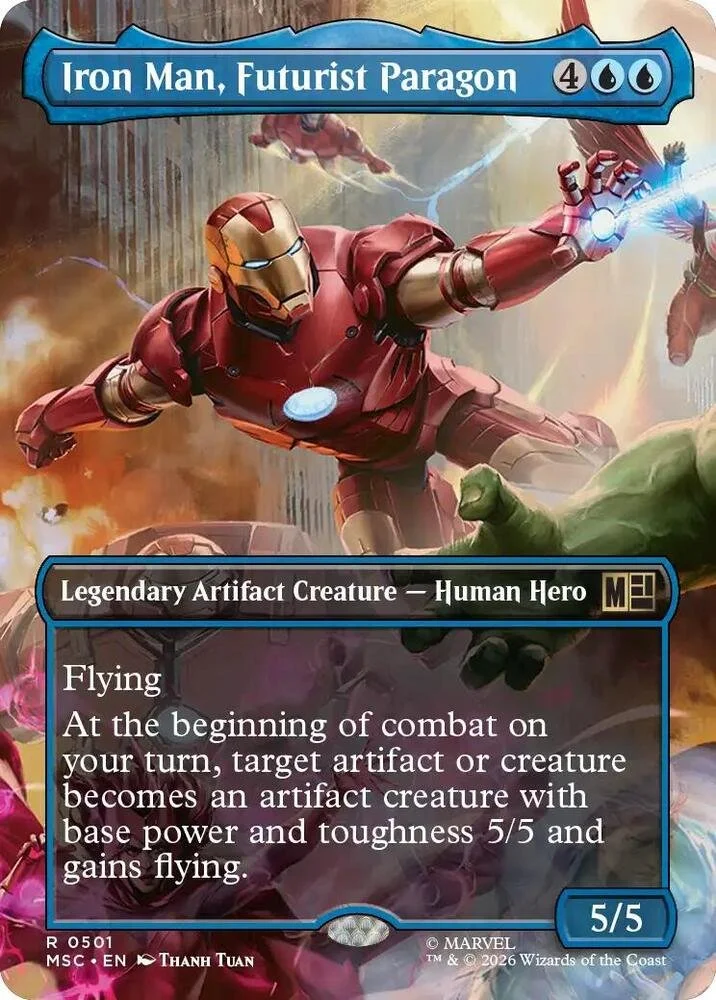
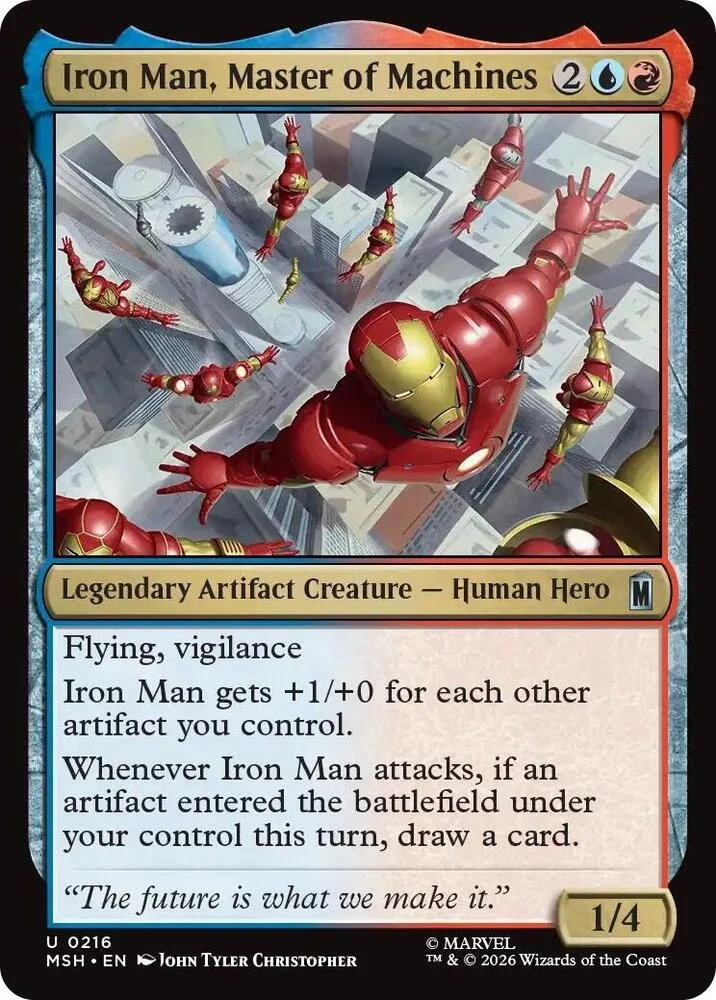
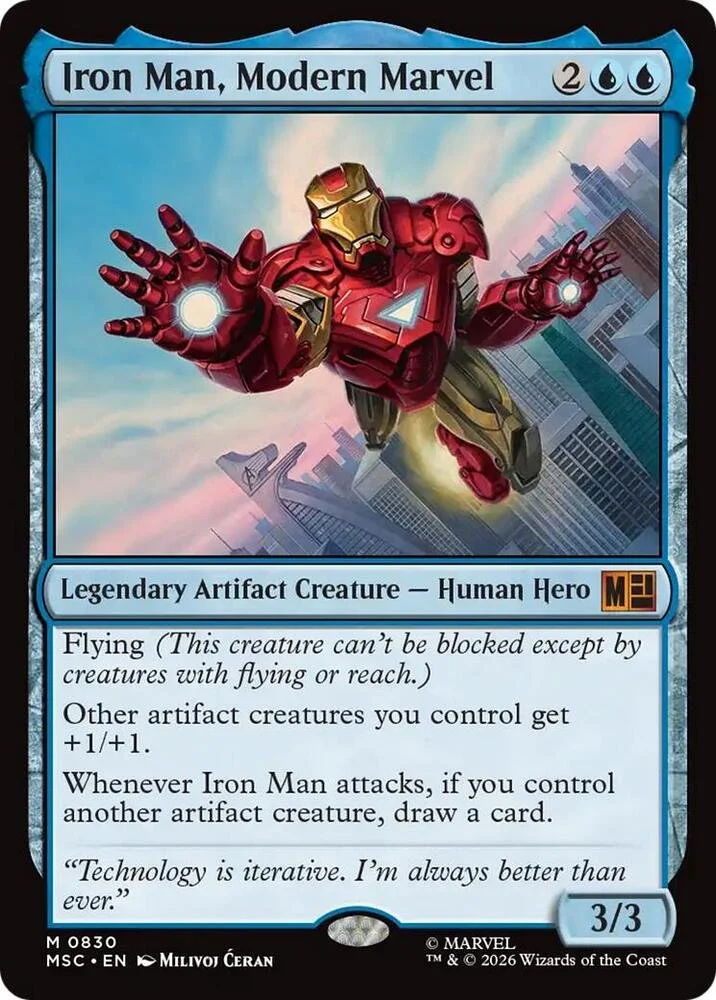
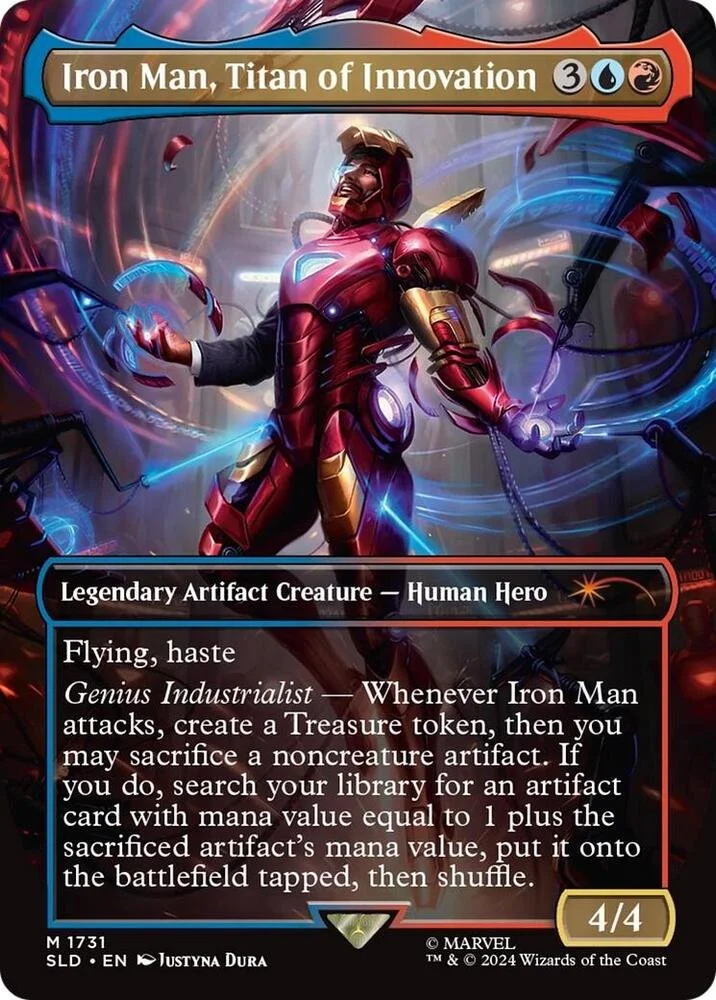
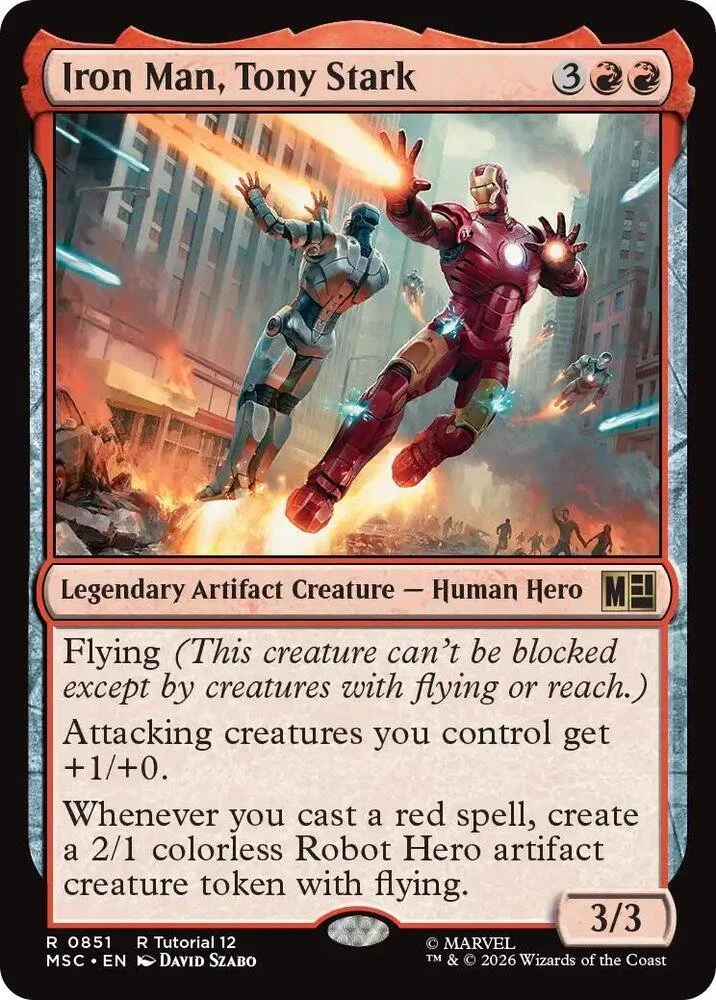
Iron Man, Armored Avenger; Iron Man, Bleeding Edge; Iron Man, Futurist Paragon; Iron Man, Master of Machines; Iron Man, Modern Marvel; Iron Man, Titan of Innovation; and Iron Man, Tony Stark make this feel like a true Stark Industries pile. You are not playing one version of Iron Man. You are playing the entire armory.
That is the fun of this Commander. You can build an incredibly flavorful deck that still has a strong mechanical identity.
Arc Reactor, Hulkbuster Armor, Iron Man Armor, Iron Spider, Stark Upgrade, Iron Suitcase, Experimental Armor, Captain America’s Shield, The Ten Rings, and Pym Particles all contribute to the “genius billionaire inventor” feeling while building up your board.
Artifact cost reducers like Enthusiastic Mechanaut, Etherium Sculptor, and Foundry Inspector are incredibly important. This deck wants to cast numerous artifacts, and reducing each of their costs by even one or two mana makes an enormous difference over the course of a game.
Emry, Lurker of the Loch gives the deck additional staying power by allowing you to replay important artifacts from your graveyard. Padeem, Consul of Innovation protects your inventions while potentially drawing additional cards.
Fabricate, Thoughtcast, Stark’s Ingenuity, I Am Iron Man, and Origin of Iron Man help you find pieces, draw cards, and keep your artifact engine moving. The deck should feel like Tony always has one more tool ready, and these cards make sure you do not run out of gas.
Cyberdrive Awakener is an excellent finisher. Your battlefield may be filled with random artifacts, utility pieces, and small machines that do not look threatening on their own. Then Cyberdrive Awakener arrives and suddenly every piece of technology in the room is ready to attack.
War Machine, Avenging Arsenal also fits perfectly. The deck is already full of artifacts and combat-ready machines, making War Machine another payoff for doing what Tony already wants.
The Vision, Vision, Spectral Synthezoid, and Viv Vision, Teen Synthezoid introduce a fun synthetic-life subtheme. They may not be Iron Man suits, but they still fit Tony Stark’s world of machines and advanced technology.
Izzet also provides a useful mix of counterspells and removal. An Offer You Can’t Refuse, Arcane Denial, Counterspell, Negate, Chaos Warp, Blasphemous Act, and We Say Thee Nay! can protect your board and keep dangerous threats under control.
For higher-bracket games, Simulacrum Synthesizer is one of the best upgrades you can make. Turning your artifact casts into even more artifact creatures can cause your board to snowball quickly.
Unwinding Clock is another significant upgrade. Untapping all your artifacts during every player’s untap step gets out of hand fast, especially when you have mana rocks, utility artifacts, and repeatable activated abilities.
Inventors’ Fair is an easy land upgrade that provides life gain and a way to find an important artifact. Urza, Lord High Artificer is another extremely powerful inclusion that turns your artifacts into mana and gives the deck a much more explosive ceiling.
Tony Stark is one of those Commanders where the deck practically builds itself from a flavor perspective, but there is still plenty of room to adjust the power level. You can build a fun Iron Man armory, a serious artifact-synergy deck, or a high-powered Izzet engine with frightening combo potential.
At its best, this deck should feel like Tony hitting the panic button and calling in every suit at once.
If that does not sound fun, I do not know what does.
Example decklist available here: Tony Stark Iron Man 3
Best Three-Color Commander in Marvel Super Heroes
I honestly expected Marvel Super Heroes to include more three-color Commanders. With so many enormous teams, alliances, villains, and cosmic characters in the set, I thought this section would be more crowded.
Instead, the set leans much harder into two-color and five-color legends. However, there is one three-color Commander that immediately stood out to me.
Bruce Banner // The Incredible Hulk
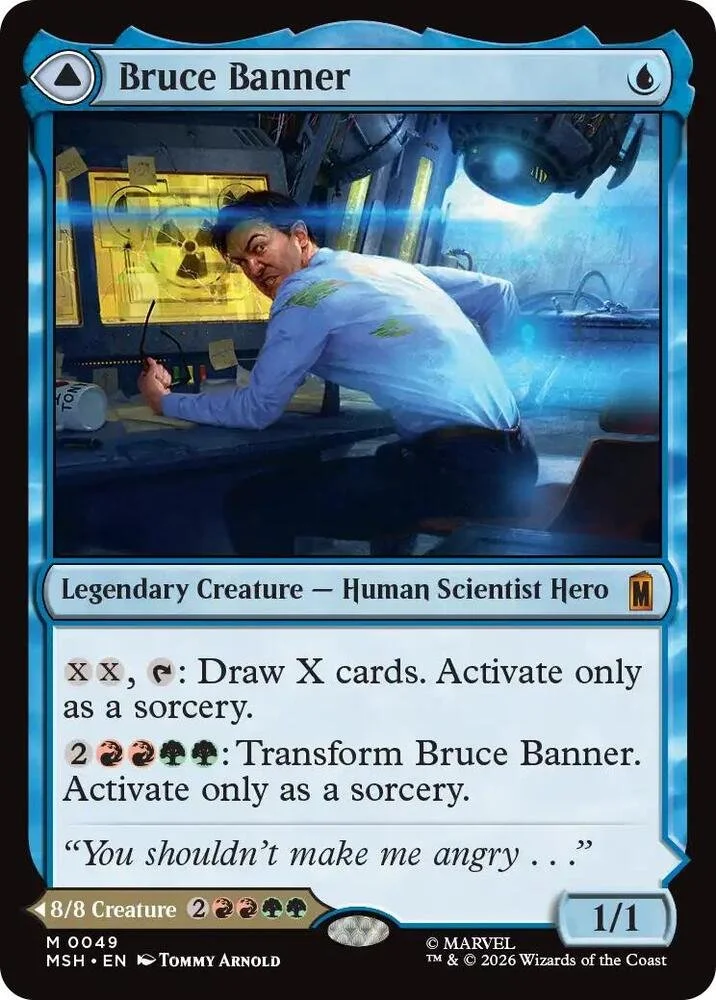
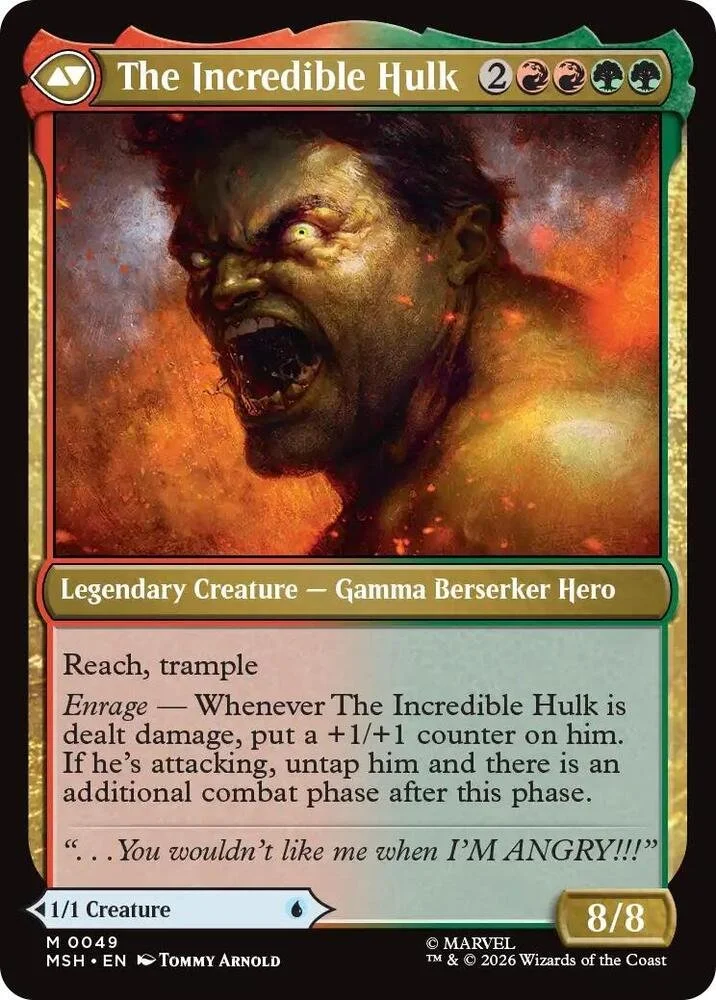
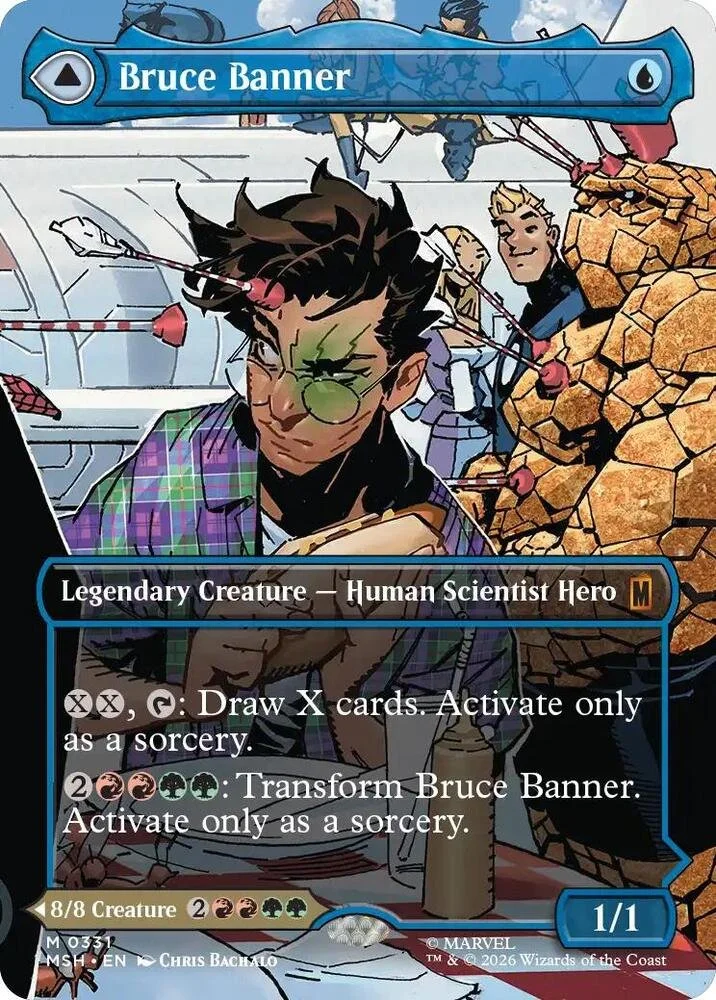
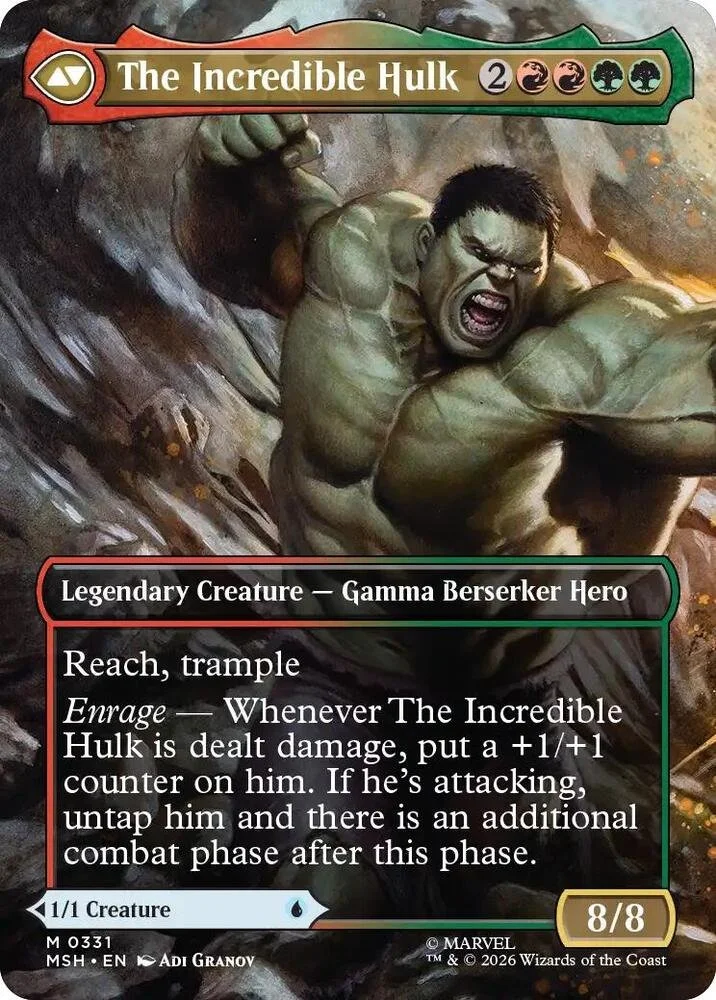
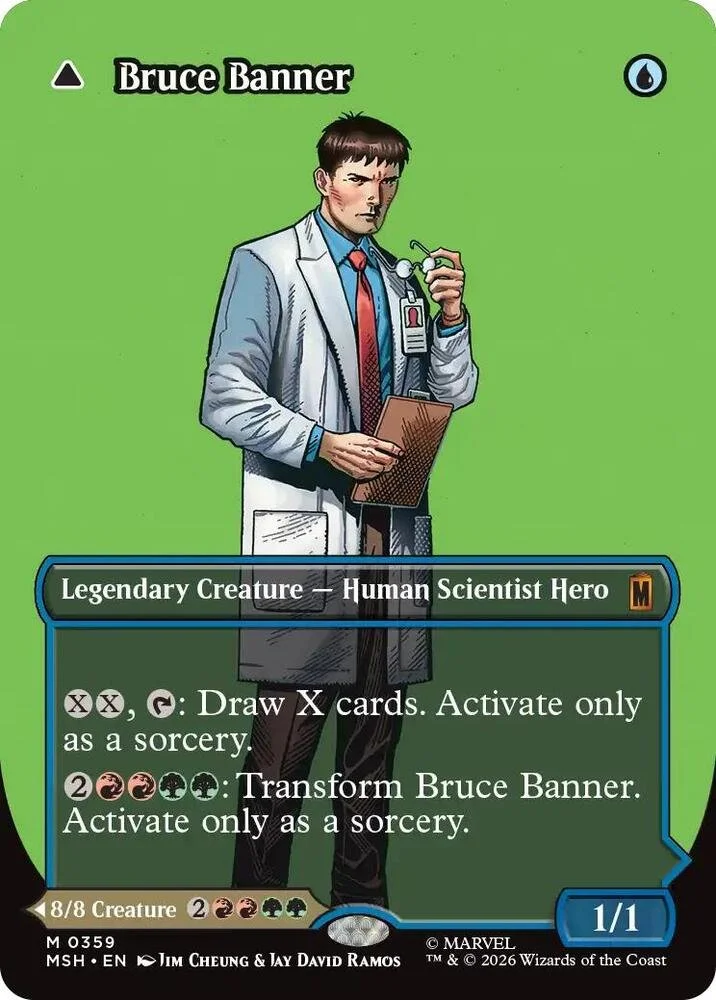
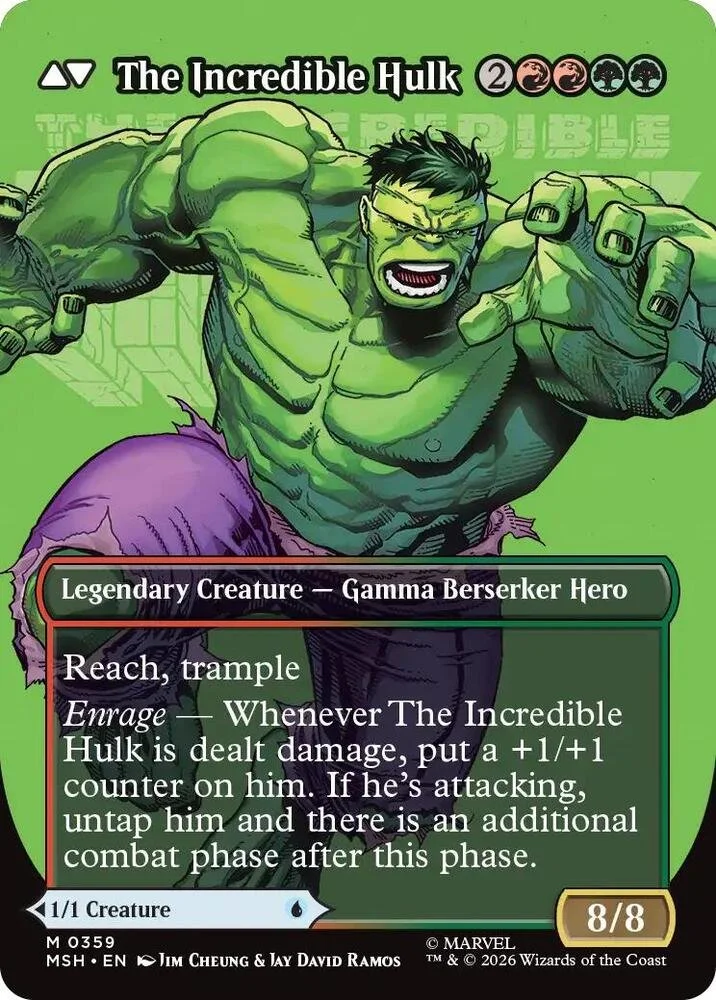
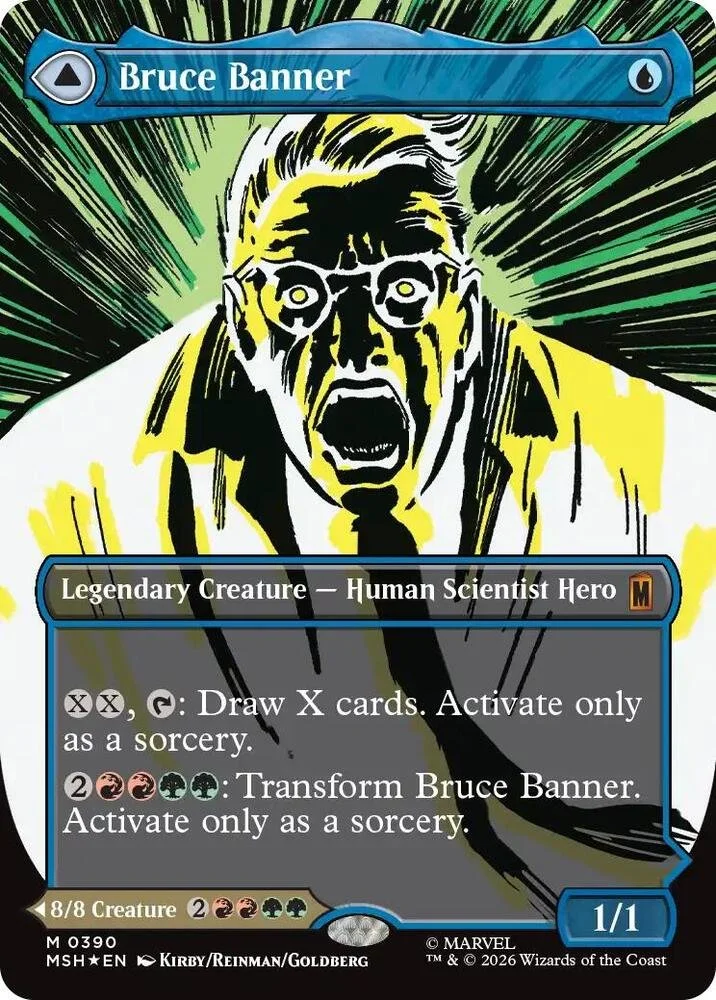
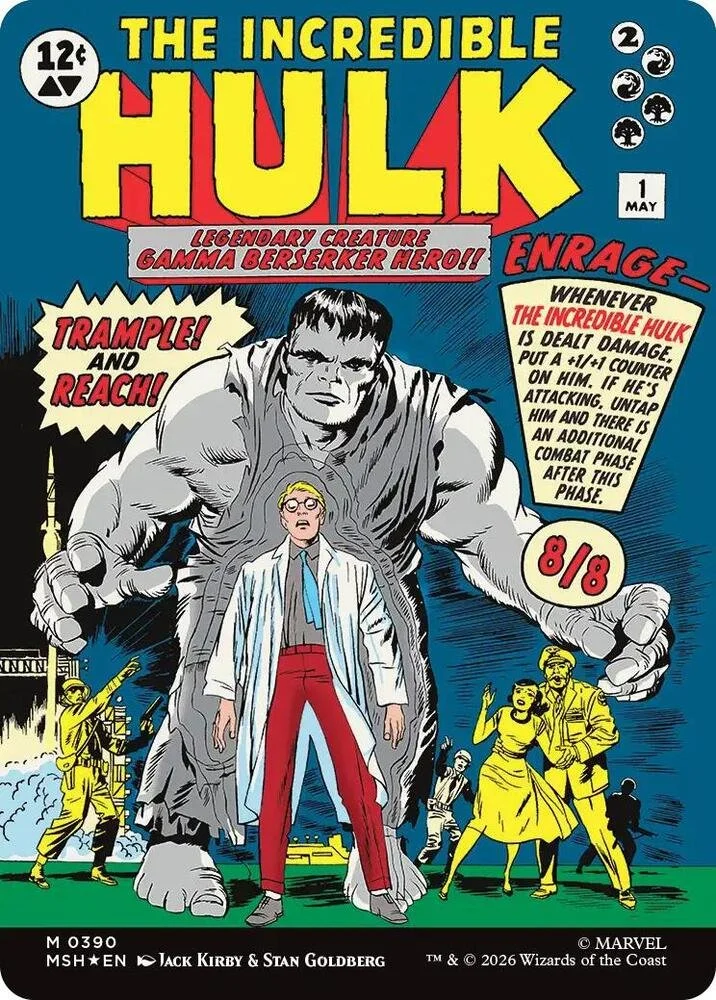
Bruce Banner // The Incredible Hulk is an incredibly strong Commander. I will be honest: I chose this one less because I think it looks fun and more because I can absolutely see players selecting it to win games.
There are plenty of ways to break this Commander. Temur gives you ramp, protection, counterspells, fight effects, extra combat steps, and some enormous creatures. Once Bruce Banner transforms into The Incredible Hulk, the deck can get out of hand very quickly.
Yes, there is also the obvious infinite combo everyone will discuss involving Caltrops.
That is not really my preferred playstyle, though. I struggled with this deck because the competitive side of my brain knew there were cleaner combo routes, while the fun side simply wanted to play large green creatures, fill the deck with Hulk cards, and smash people into the floor.
So that is the direction I took.
This version is a Temur stompy deck built around enormous creatures, fight spells, damage effects, and explosive combat phases. You can still combo or do some deeply unfair things, but the heart of the deck is simple: transform Bruce into Hulk, make Hulk enormous, and start hitting people.
Hulk, Always Angry; Hulk, Bruce Banner; Hulk, Gamma Goliath; Hulk, Strongest There Is; Professor Hulk; and Origin of the Hulk make the list feel like a genuine Hulk Commander deck rather than a generic Temur value pile.
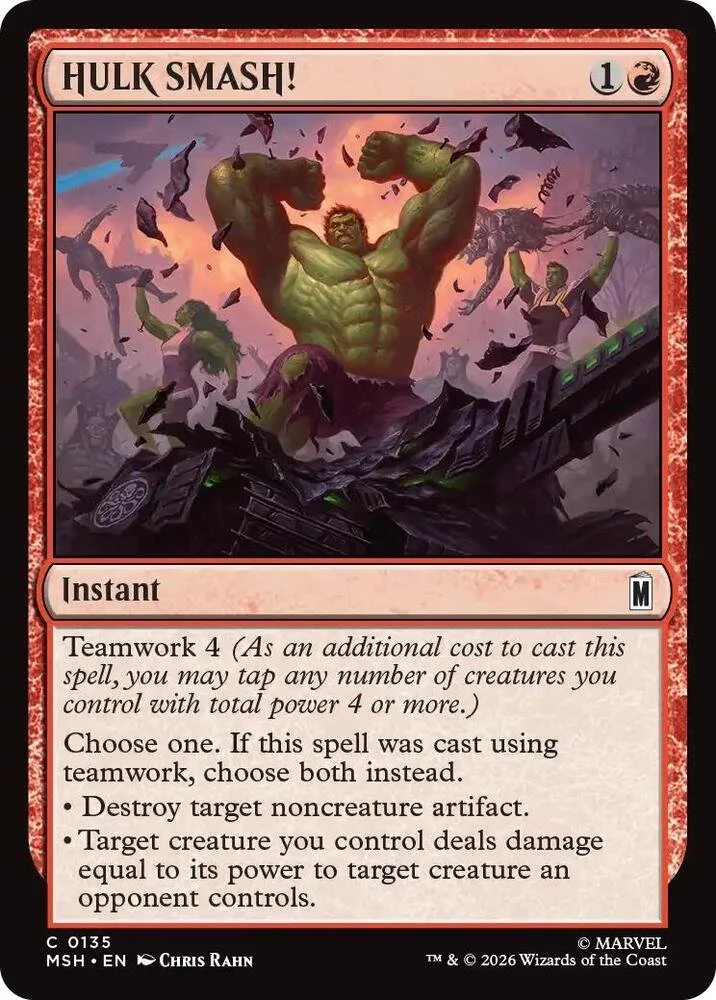
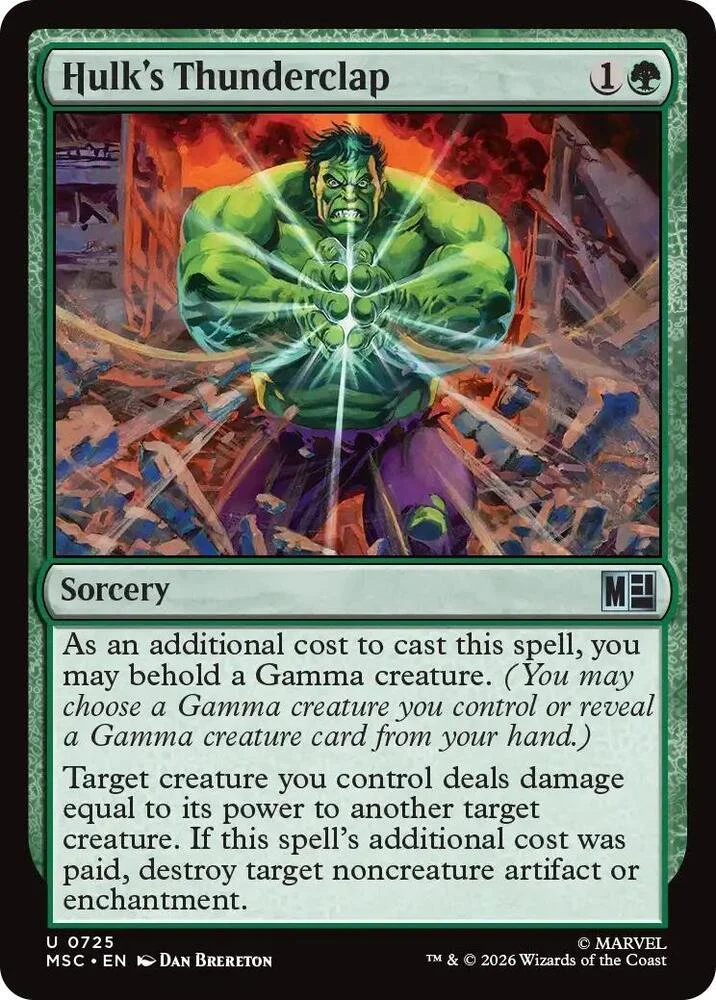
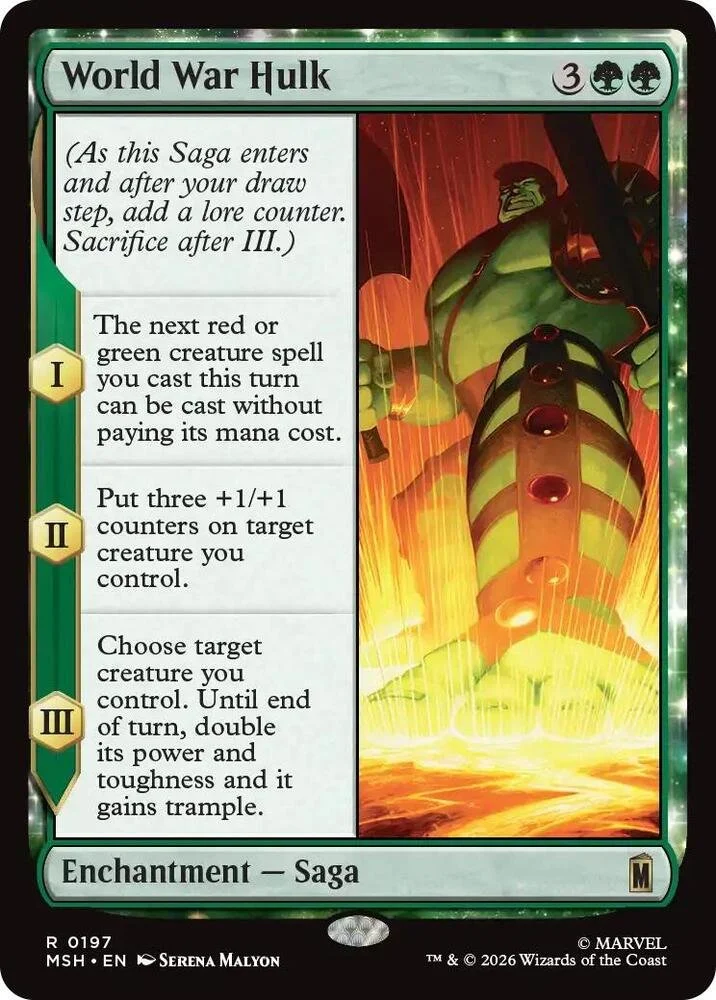
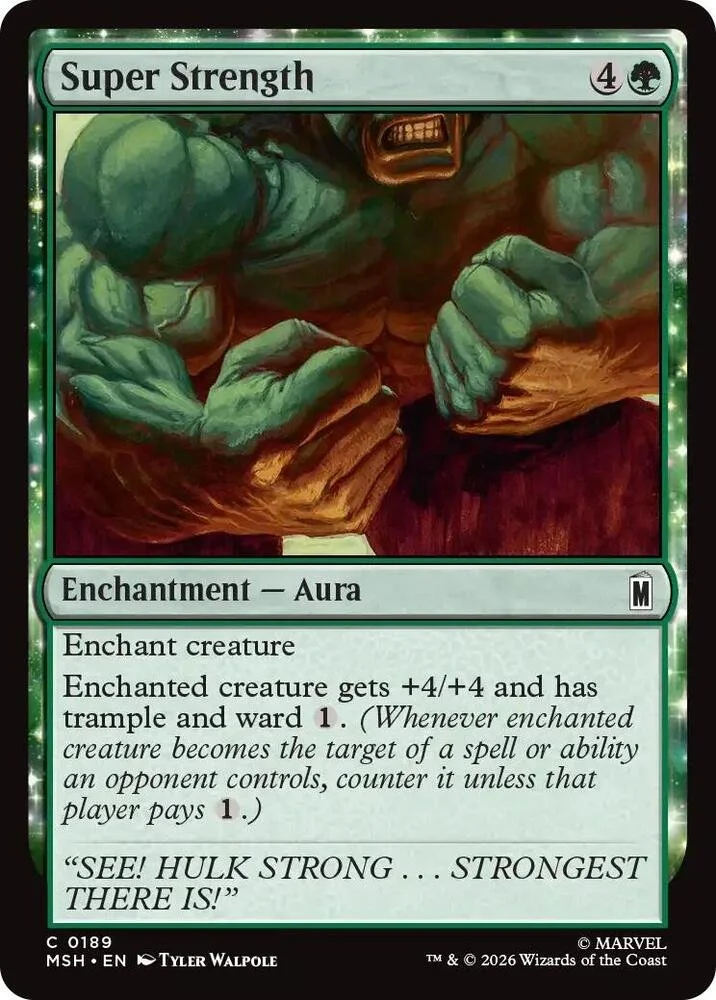
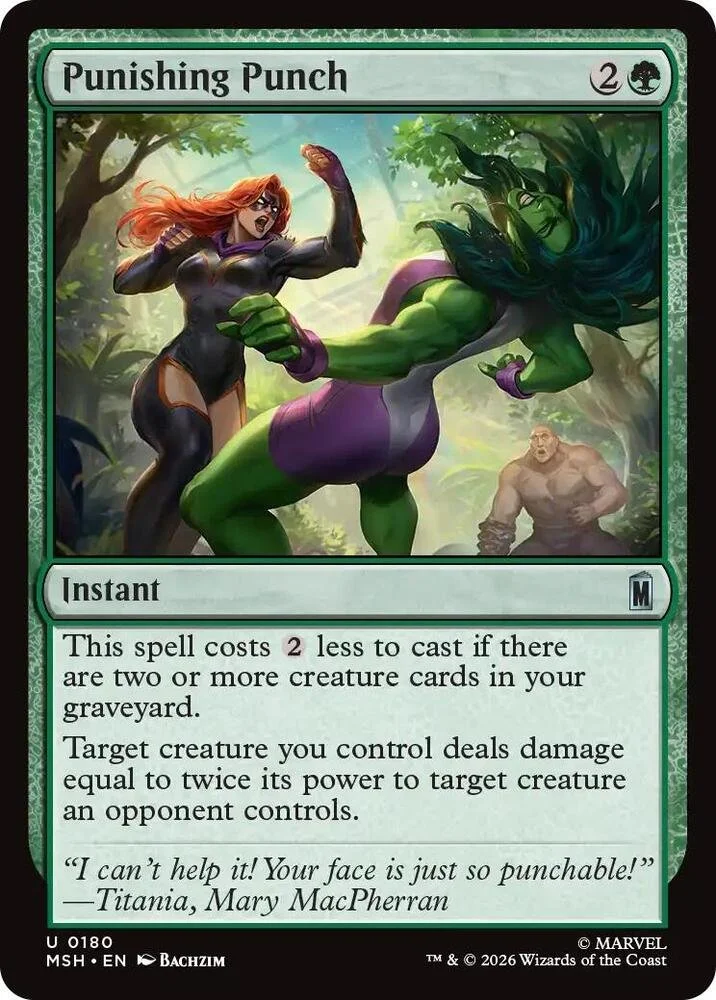
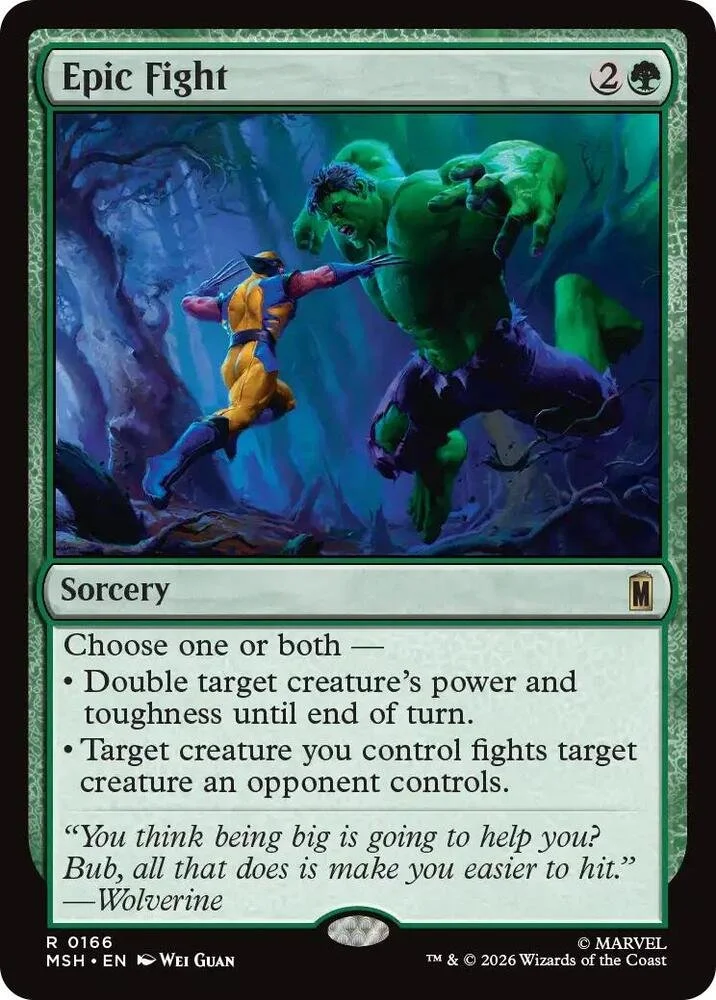
You also get HULK SMASH!, Hulk’s Thunderclap, World War Hulk, Super Strength, Punishing Punch, and Epic Fight. The names do half the work, but these cards also encourage the deck to do what Hulk does best: fight things, break things, and hit extremely hard.
Fight effects allow Hulk and your other massive creatures to control the battlefield without relying entirely on traditional removal. Ancient Animus, Epic Fight, Punishing Punch, Blood Feud, and The Last Agni Kai all let your creatures eliminate opposing threats while remaining on theme.
Brash Taunter and Pyrohemia introduce some particularly interesting possibilities. Brash Taunter loves taking damage and throwing it back at opponents, while Pyrohemia can repeatedly damage the battlefield and enable some of the deck’s more explosive lines.
Darksteel Plate, Swiftfoot Boots, Tamiyo’s Safekeeping, Heroic Intervention, and Anara, Wolvid Familiar can then make your largest threats much harder to remove.
The deck also has an impressive combat package. Xenagos, God of Revels is one of the scariest cards in the list because doubling a Hulk creature’s power and giving it haste can end games without warning. Unnatural Growth similarly makes every combat phase terrifying.
Moraug, Fury of Akoum; Fury of the Horde; Full Throttle; and Éomer, Marshal of Rohan add even more combat pressure. One combat phase with an enormous Hulk is already scary. Multiple combat phases can be game-ending.
The smaller support pieces keep everything running smoothly. Goblin Anarchomancer reduces costs, Cultivate and Farseek fix your mana, and Llanowar Elves provides early acceleration. This deck wants to reach its larger cards quickly, making ramp essential.
Blue also gives you enough interaction to protect your plan. An Offer You Can’t Refuse, Arcane Denial, Counterspell, and Beast Within help ensure your most important turns do not completely fall apart.
The Abomination cards are another fun inclusion. Abomination, Irradiated Brute; Abomination, Terrifying Titan; and Abomination, World Ravager provide even more massive bodies while supporting the gamma-monster theme. If you are building Hulk, you might as well include the other terrifying science experiments.
This is where things can become much more dangerous at stronger tables. Caltrops is the obvious combo piece everyone will consider, while Aggravated Assault can transform a threatening board into a lethal one.
Mithril Coat is another excellent protection upgrade for a Commander that opponents will immediately want to remove. Hulk, Brutal Brawler is also a strong inclusion if you want to push the deck further toward massive-creature combat.
Bruce Banner // The Incredible Hulk is probably one of the easiest Commanders from Marvel Super Heroes to make unfair. If you want combos, the tools are there. If you want a high-powered Temur deck with protection, extra combats, and explosive finishers, the colors support that easily.
Personally, I think the most enjoyable version is the one that remembers what Hulk is supposed to do.
Big creatures. Big fights. Big damage.
Sometimes Commander does not need to be complicated. Sometimes Hulk just needs to smash.
Example decklist available here: HULK(S) SMASH!!
Best WUBRG Commander in Marvel Super Heroes
Five-color Commanders have appeared more frequently in recent Magic sets. They are one of the easiest ways to support a typal strategy, especially when a set features a huge cast of characters spread across every color.
We saw it with the Lorwyn Eclipsed Commander precon, Cosmic Spider-Man in the previous Marvel set, and even the WUBRG Space Station from Edge of Eternities. Honestly, I am not mad about it. I enjoy goofy five-color Commanders, especially when they give you the freedom to build something flavorful, powerful, or completely ridiculous.
In Marvel Super Heroes, that Commander is Thanos, the Mad Titan.
Thanos, The Mad Titan
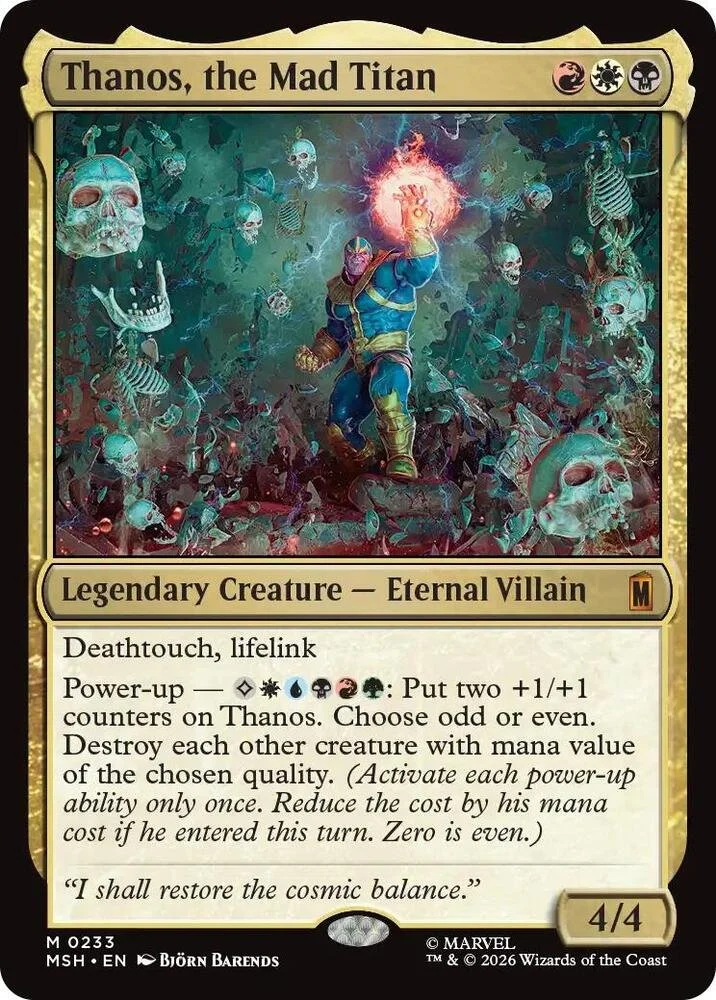
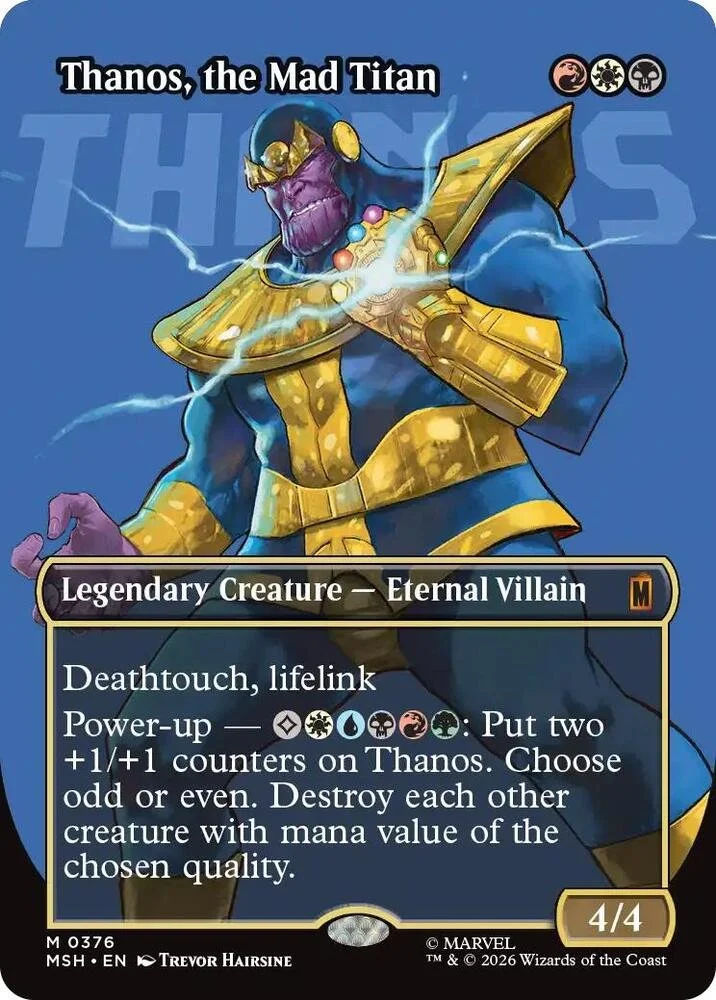
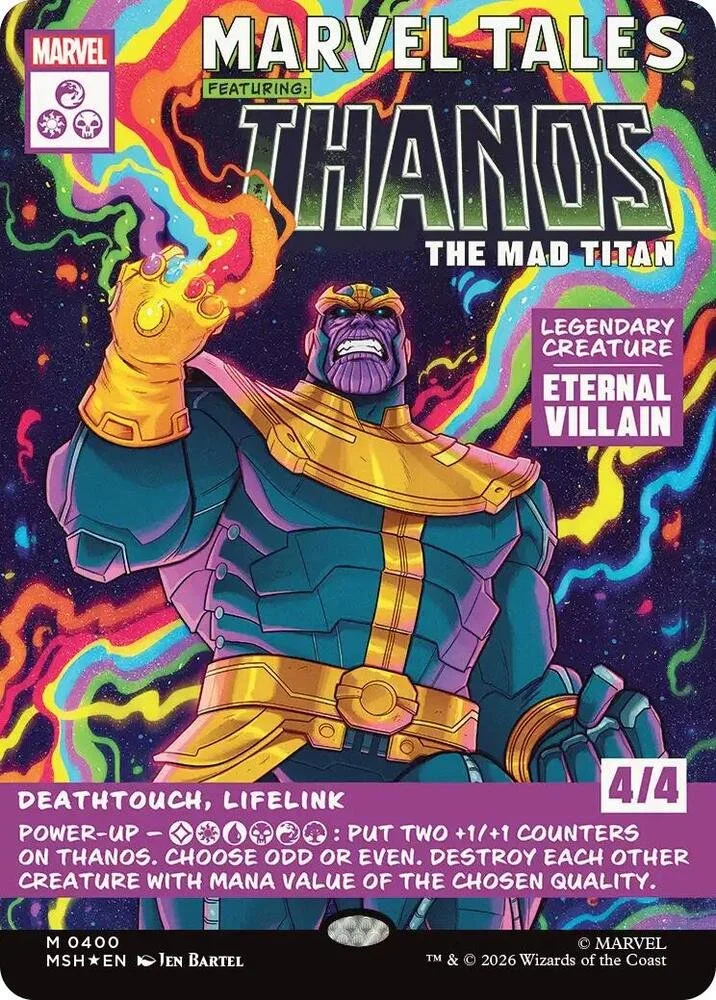
I have been excited about Thanos, the Mad Titan since he was revealed during spoiler season. This is the kind of Commander that makes me want to perform the Skeletor laugh and run away mischievously.
Thanos can be built in several completely different directions. You can make him a legitimate five-color Villain typal Commander, a powerful WUBRG value engine, or something much sillier and more evil.
My personal dream build?
Oops, All Board Wipes.
I know that probably is not viable at most levels of play because you still need to win eventually. You cannot destroy everything forever and expect your opponents to politely concede because you committed to the bit.
Still, it is an incredibly funny idea.
Thanos’ Power-Up ability already destroys half the board, so why shouldn’t the cards in your hand destroy the other half?
That is what immediately stands out about Thanos. He creates chaos and forces the table to deal with enormous swings in board presence. If you are playing Thanos, you probably are not trying to be subtle. You want to make everyone nervous whenever you untap.
The Villain package gives the deck plenty of personality. Ares, God of War; Baron Strucker, HYDRA Overlord; Doctor Octopus, Master Planner; Loki, the Deceiver; Madame Hydra; Taskmaster, Mercenary Mimic; Super-Skrull; and The Squadron Sinister make the deck feel like a genuine supervillain team-up.
Five-color Villains gives you access to practically every evil plan, strange hideout, and powerful villain payoff you could want. If you want Thanos to feel like he is gathering the worst people in the multiverse to cause problems, this is the cleanest way to build him.
Then there is the funnier route: board-wipe Thanos.
Akroma’s Vengeance, Austere Command, Cleansing Nova, Depopulate, Devastating Mastery, Doomskar, Elspeth Tirel, Elspeth, Sun’s Champion, The Coming of Galactus, Blot Out the Sky, Boompile, and Doom Reigns Supreme all support the “nobody gets to keep anything” plan.
It is mean, absolutely, but it is also very Thanos.
If you build around repeatedly destroying the board, you need two important things: protection and recovery.
Protection prevents your plan from falling apart whenever the battlefield gets wiped. Darksteel Plate, Lightning Greaves, Heroic Intervention, Flawless Maneuver, and T’Challa’s Protection are incredibly valuable here. If Thanos survives the destruction, you will be in a much stronger position than everyone else.
Recovery matters because board wipes are only useful when you can rebuild faster than your opponents. Cultivate, Kodama’s Reach, Arcane Signet, Chromatic Lantern, Timeless Lotus, Faeburrow Elder, Leyline of the Guildpact, and Cascading Cataracts will help you continue casting spells after everything explodes.
I also like blink effects with Thanos. Teleportation Circle can reuse his abilities and generate additional value. If your Commander makes an enormous impact when he enters or Powers Up, finding ways to repeat that effect is where the deck starts getting gross.
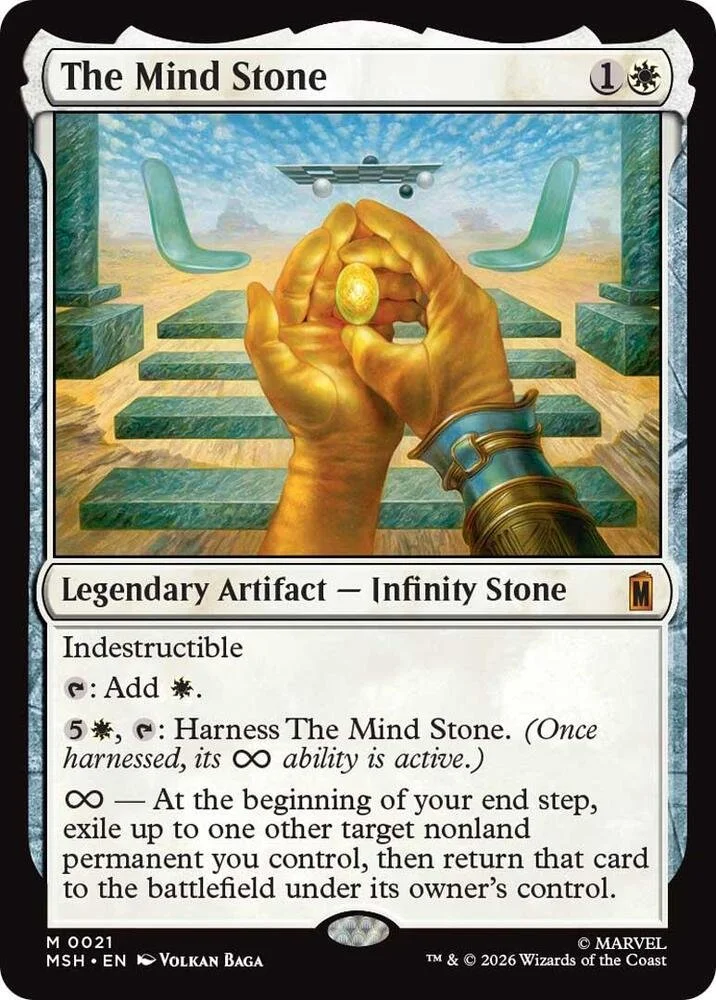
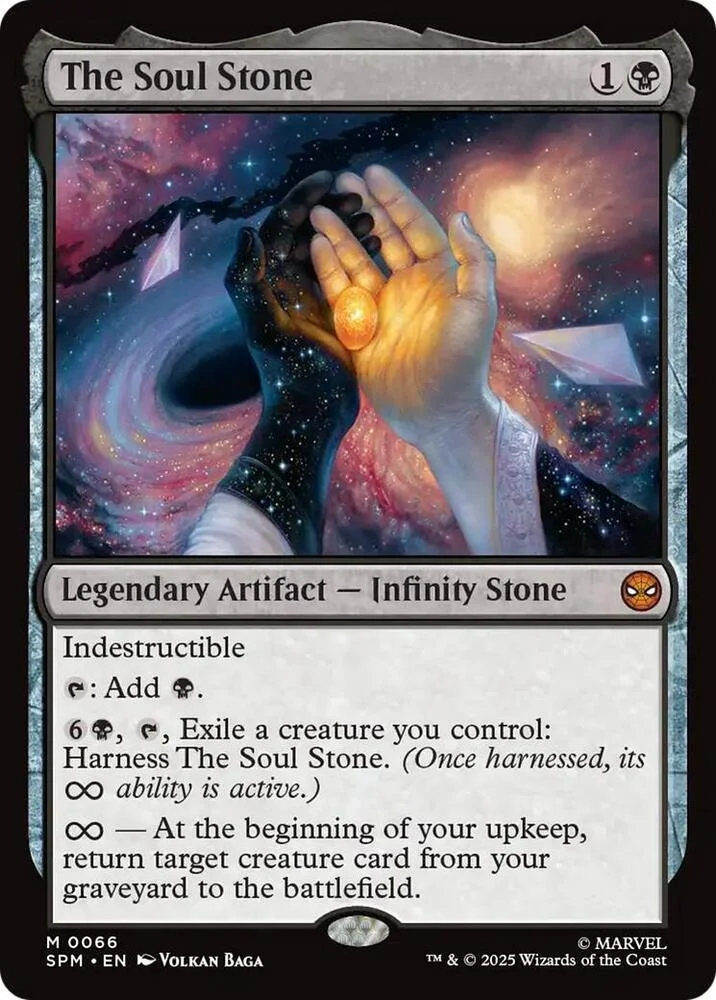
The Infinity Stone angle is worth exploring in higher-budget builds. The Mind Stone and The Soul Stone are natural upgrades if you want to embrace the Thanos flavor. Construct a Cosmic Cube also fits perfectly because, let’s be honest, if anyone will build a strange cosmic artifact and use it irresponsibly, it is Thanos.
The first upgrades I would consider are Flawless Maneuver, T’Challa’s Protection, and premium five-color mana fixing. Five-color decks live and die by their mana bases, so shock lands, fetch lands, triomes, and better rainbow lands will immediately make the deck smoother.
From there, decide which version of Thanos you want to play. For Villain typal, lean further into Villain payoffs and protection. For high-powered WUBRG goodstuff, add stronger tutors, more efficient interaction, and cleaner win conditions. For Oops, All Board Wipes, accept that your friends may hate you and commit to the bit.
Thanos, the Mad Titan is exactly what I want from a five-color Commander in a Marvel set. He is huge, dramatic, flavorful, flexible, and potentially very annoying.
You can build him as the final boss of the table. You can make him the leader of a Villain army. Or you can turn him into a walking board wipe with a dream.
Either way, Thanos will make the table pay attention.
Example decklist available here: Thanos Villains + Board Wipes
Final Thoughts
Marvel Super Heroes has an excellent selection of multicolored Commanders, and the best part is how differently they play. Captain America rewards elaborate tap-and-untap turns, Taskmaster transforms every graveyard into a toolbox, Ares demands nonstop aggression, The Serpent Society makes combat miserable, and Tony Stark brings an entire armory onto the battlefield.
Bruce Banner // The Incredible Hulk may have one of the highest ceilings in the set, especially for players interested in combos or explosive Temur turns. Thanos, meanwhile, offers the most freedom. He can lead Villain typal, five-color goodstuff, or the deeply irresponsible Oops, All Board Wipes deck of my dreams.
Whether you want a flavorful Marvel deck or a Commander capable of competing at stronger tables, this set has plenty of legends worth building. Personally, I am still most excited to make everyone nervously watch Thanos and wonder how much of the battlefield will survive my next turn.
Want to explore even more ways to command Earth’s Mightiest Heroes and Villains? Check out our Best Mono-Color Commanders in Marvel Super Heroes for the strongest multicolored options from the set. You can also visit our 2026 TCG and Tabletop Release Calendar to keep up with every major Magic: The Gathering set, trading card game expansion, and tabletop release coming this year.
 Marvel Super Heroes Limited Draft and Sealed Guide
 Best Mono-Color Commanders in Magic: The Gathering - Marvel Super Heroes
 Magic: The Gathering Marvel Super Heroes Horde Mode: Choose Your Side
 Wakanda Forever Precon Upgrade Guide
 Magic: The Gathering Marvel Super Heroes Set Review
 Best Commanders From Reality Fracture