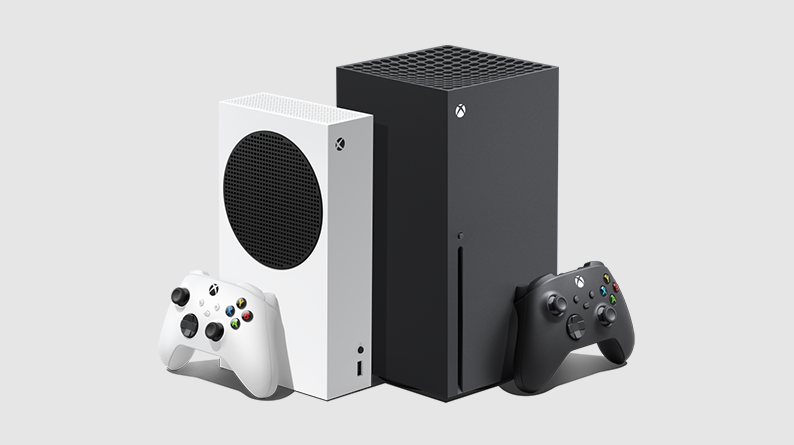
It is no secret that Microsoft is struggling to keep up with Sony and Nintendo as the complexion of player gaming changes. But the company just made a move that signals real urgency when it comes to preserving the Xbox brand.
Heck, if we are being honest, “preserving” isn’t even the right word. This feels more like a matter of survival—of avoiding extinction in a virtual arms race.
The very notion is counterintuitive when zooming out. Gaming is a more popular industry than ever. Not everything should be measured in the rise of esports, but first-person shooter games, in particular, have started raking in big money and attention at their events. Every one of the most popular sportsbooks online offer esports odds. Traditional sports leagues have started joining the party, creating their own separate esports spinoffs. The NFL, NBA, MLB and FIFA are all at the forefront of that transition.
This says nothing of the remote-gaming boom that began during the COVID-19 pandemic and has, by and large, continued on a growth trajectory ever since. Theoretically, then, Xbox should be just as well positioned to succeed as its counterparts responsible for the PlayStation (Sony) and Switch (Nintendo). Yet, as the numbers show, this isn’t the case. And as Microsoft just proved with their latest hire, they know it.
Microsoft Hired a Researcher to Reinvent Xbox Gaming
On Wednesday, May 20, Microsoft announced that they were naming Matthew Ball to be their Chief Strategy Officer. Ball comes over from the research specialist Epyllion, where he is the CEO and has become notorious for his data-driven deep dives and studies of the gaming industry, as well as the metaverse.
Nobody is attempting to hide this decision for what it is: an urgent attempt to, what Ball said in an interview, “return Xbox to its former glory.” That is so dire-sounding it almost feels like it has to be hyperbole. Except, it’s not.
Look no further than the sales of the three gaming and console providers. William De’Angelo took a look at the first 50 months of sales data for each of the three companies’ premier offerings. Here is what he found:
“Through the first 50 months available worldwide the Nintendo Switch is ahead of the PlayStation 5 and Xbox Series X|S. The Switch is ahead of the PS5 by 13.49 million units and is 52.35 million units ahead of the Xbox Series X|S. The PS5 is ahead of the Xbox Series X|S by 38.86 million units.”
These are monster margins. And it says nothing of the Game Pass service struggles.
Xbox Must Figure Out What It’s Trying to Be
Microsoft leaned into alternative offerings beyond its home console years ago, investing a ton of money and resources into Game Pass subscriptions. At the outset, this was considered avant garde. They were ahead of the curve, properly reacting to a gaming industry that would follow in the footsteps of cord-cutting. Consumers would gravitate toward on-the-go options rather than physical consoles.
This shift for Xbox erred on two fronts. First and foremost, everybody who shared their thoughts misread the market. Gaming consoles are still wildly popular. Much like a baseball player won’t want to rent a bat by the month, there is something to having your physical console that’s non-negotiable. The youngest generations aren’t moving away from it either—at least not as the rate Xbox and others presumed.
Beyond that, though, Xbox has failed to make a noticeable difference with its Game Pass subscription even after adjusting expectations. As Cecilia D’Anastasio wrote for The Spokeman-Review, the metrics don’t use that subscriptions to Game Pass drive user engagement:
“Microsoft has invested heavily in expanding the reach of its Xbox brand and services beyond its home console, but those efforts have not meaningfully improved the key metrics of player time and engagement. Its push of the Game Pass subscription service contributed to cannibalization of sales of the company’s marquee $70 games, according to former employees interviewed by Bloomberg. Sony’s PlayStation 5 still holds the crown for most popular home entertainment machine, while Nintendo’s Switch 2 has dominated sales charts since its debut last year.”
Xbox detracting from its own market share with Game Pass is a huge blow. It is arguably the primary reason why Ball has identified one of his top priorities as “strengthening Xbox’s console business.”
Though this is a logical next step under the circumstances, it will not be easy. Shifting consumer behavior is difficult. Even if people are still purchasing home and mobile consoles, they are more likely to have Sony and Nintendo products on their radar.
Complicated still, the means to produce these physical consoles is harder and more expensive to come by. As many outlets have reported, AI has heightened the demand for memory. Hardware and storage is more expensive to purchase as a result.
Despite the enduring uncertainty for Xbox, the company and its fans can at least take solace in knowing a concrete vision appears to be in place. High-level employees other than Ball continue to discuss how they’re focused on the return of Xbox, in addition to catering to the rising demand for games that require active participation and collaboration.
Whether this vision amounts to anything depends on the execution. It hasn’t been there of late for Xbox and Microsoft at large. Perhaps this latest shift can change that.