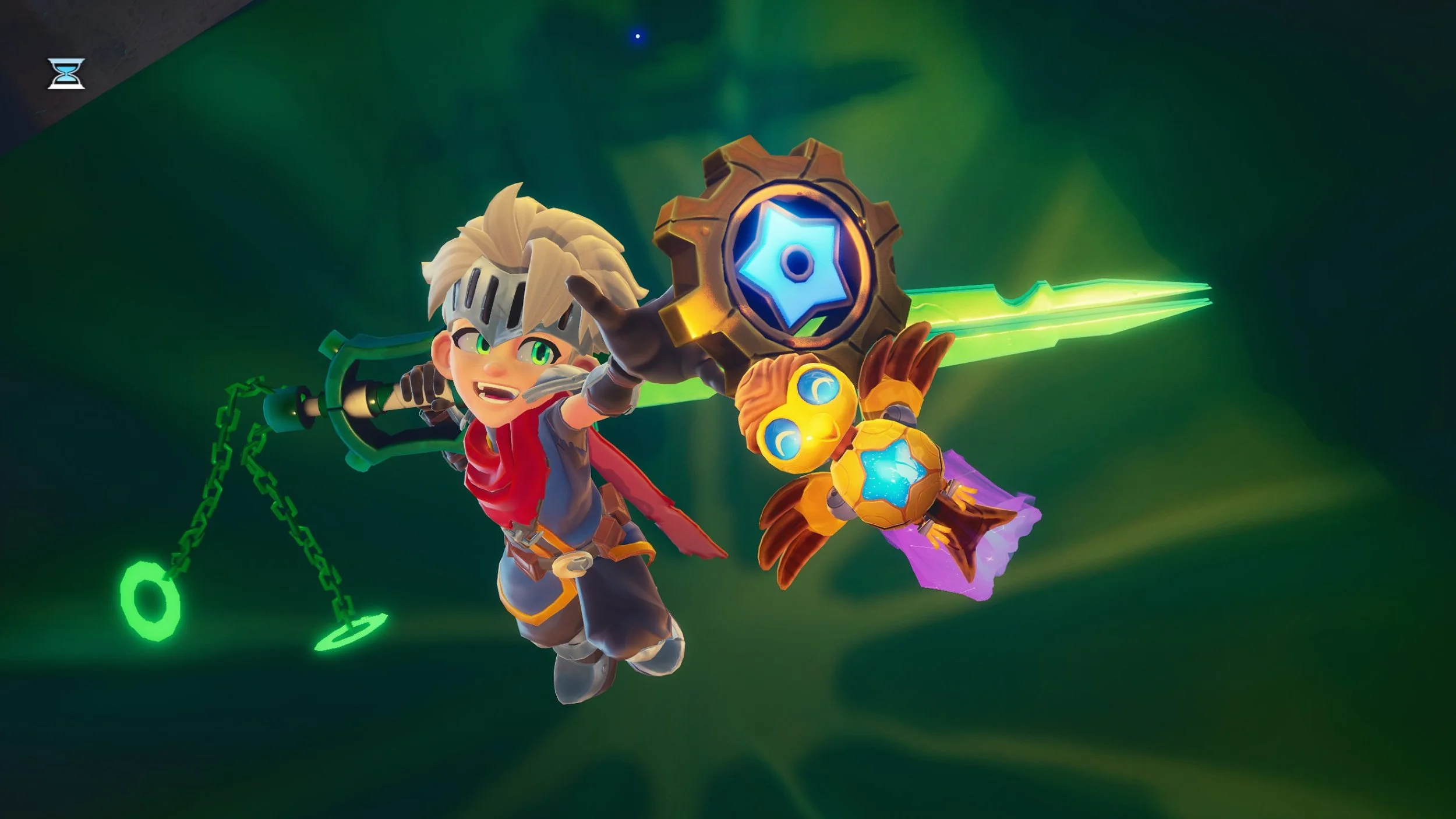
I’m willing to try any 3D platformer. Add in backtracking to use newly found abilities to find power-ups and it’ll shoot right up to the top of my list. Duskfade has both of these in spades, and it mostly nails its platforming and level design — but an underwhelming story and some poor design choices hold it back from greatness.
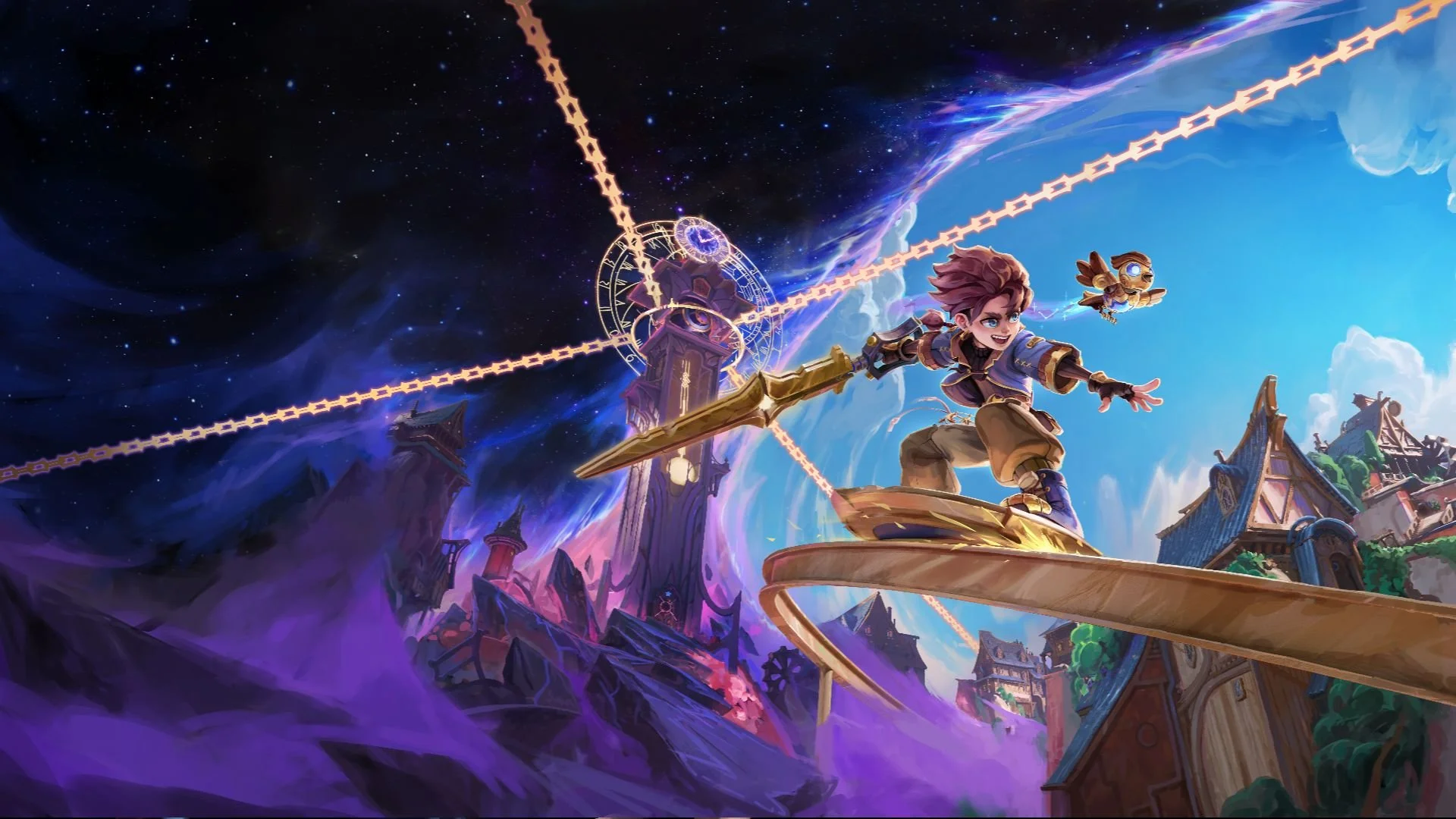
It’s incredibly uncommon for me to skip dialogue in games, but I was bored during cutscenes here, and I found myself mashing buttons through discussions. Duskfade is about an incredibly generic boy named Zirian (who is clearly modeled after Sora from Kingdom Hearts) as he tries to find his sister, whose name I can’t even remember now.
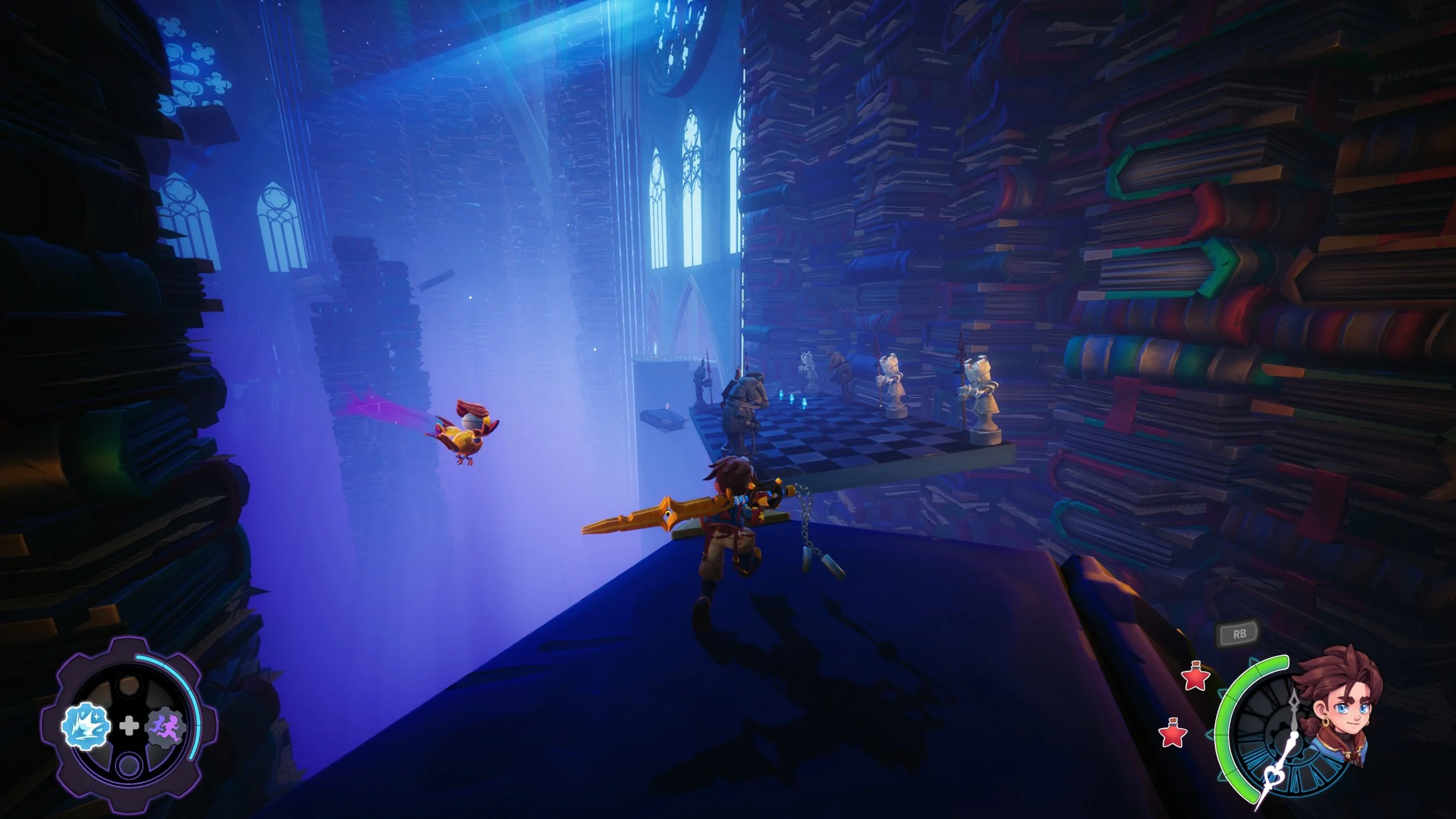
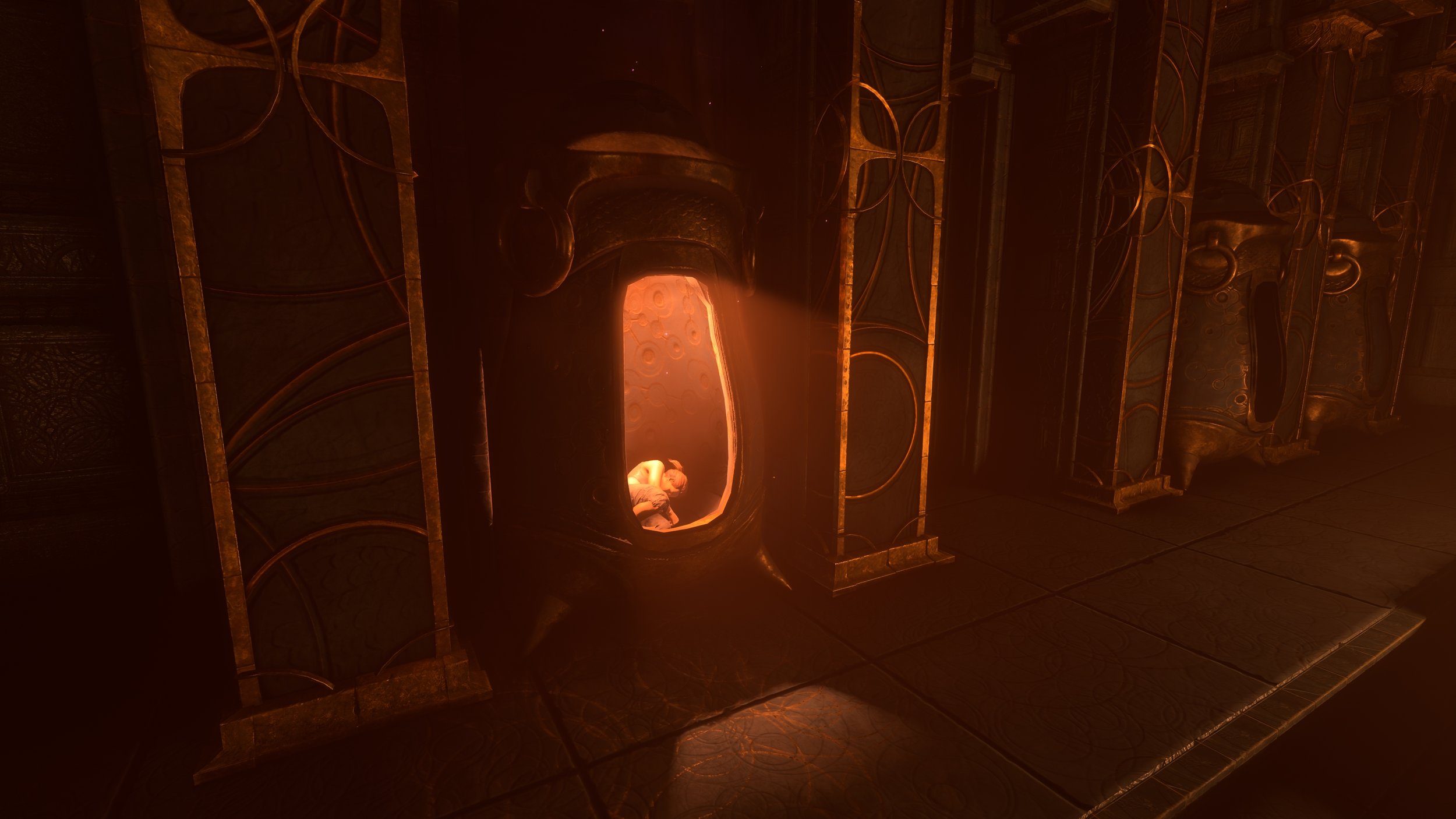
His sister ends up trapped in a big tower locked by four chains, so it’s up to Zirian and his annoyingly snarky robot bird pal to go through four biomes and break the locks barring entrance to the tower. Along the way you find out that he and his sister’s grandfather has passed away, so the story is basically an incredibly surface-level examination of grief. Meanwhile, Zirian might as well be a mannequin given that he has no personality or heart to speak of.
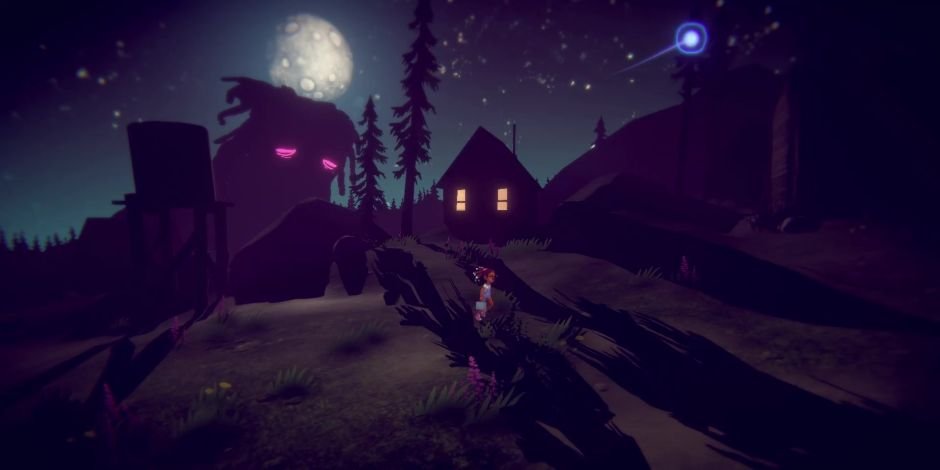
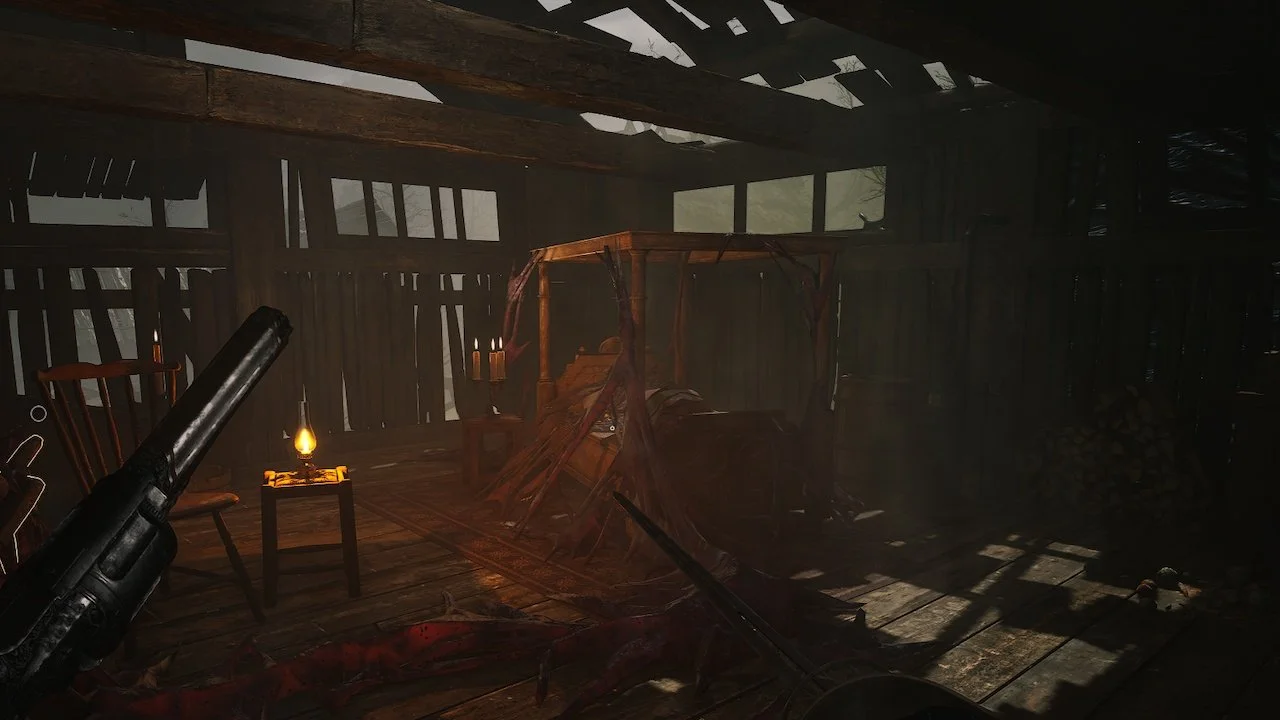
At least the presentation is terrific for a smaller-scale game, though. The areas are all colorful and have a sense of place, and they frequently have an open-ended feel that offers diversions to find off the beaten path. Still, its aesthetic reminds me somewhat of a modern version of Nights: Journey of Dreams, for better or worse.
Zirian can jump, double jump, dodge, air dodge, plus he gets a couple more movement abilities as Duskfade progresses. The general platforming doesn’t really change, though, which can cause a lot of the gameplay to feel very samey as things progress. That being said, he controls very well, with lots of tight, responsive platforming that scratched my ever-present, insatiable 3D platformer cravings.
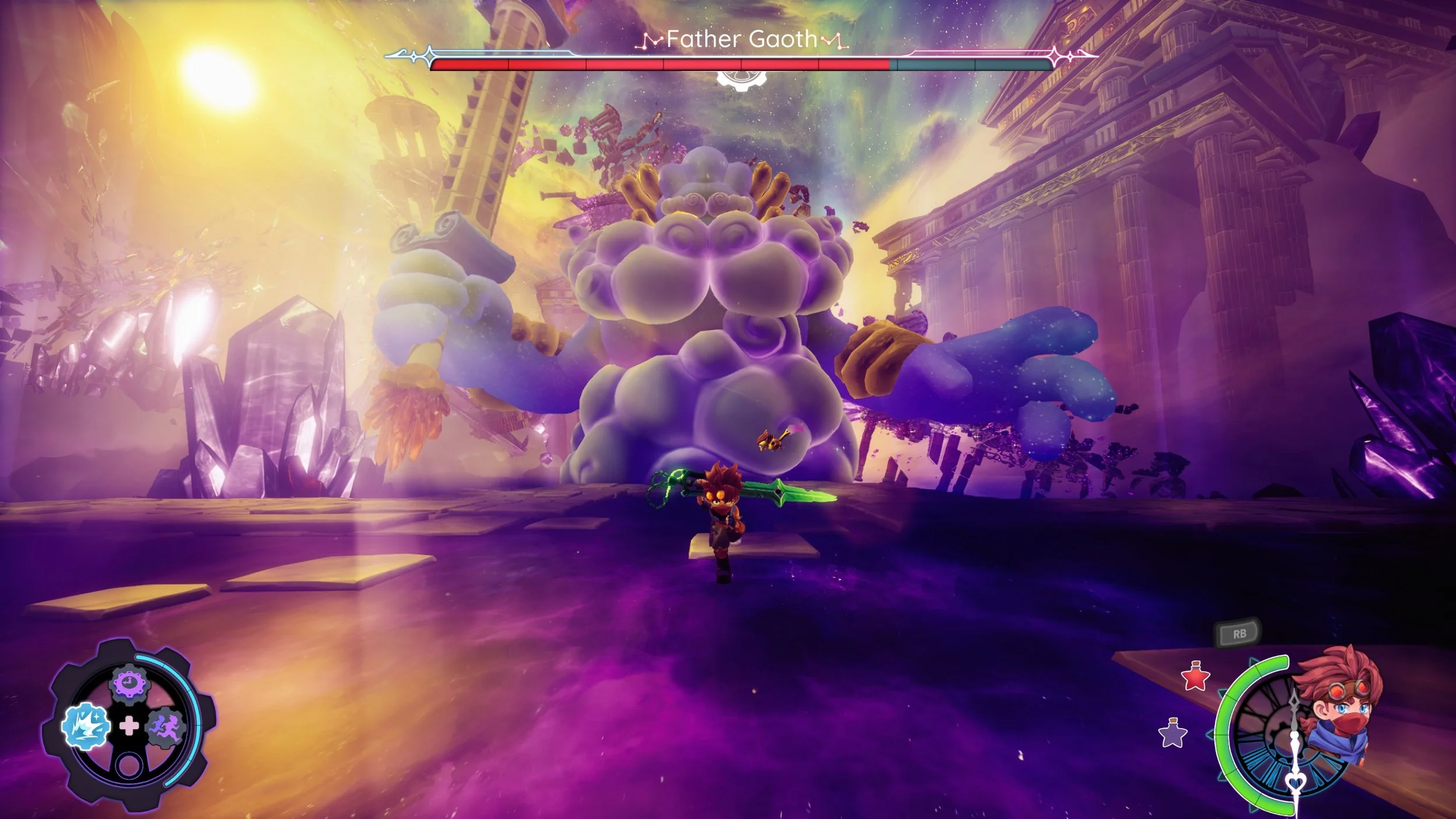
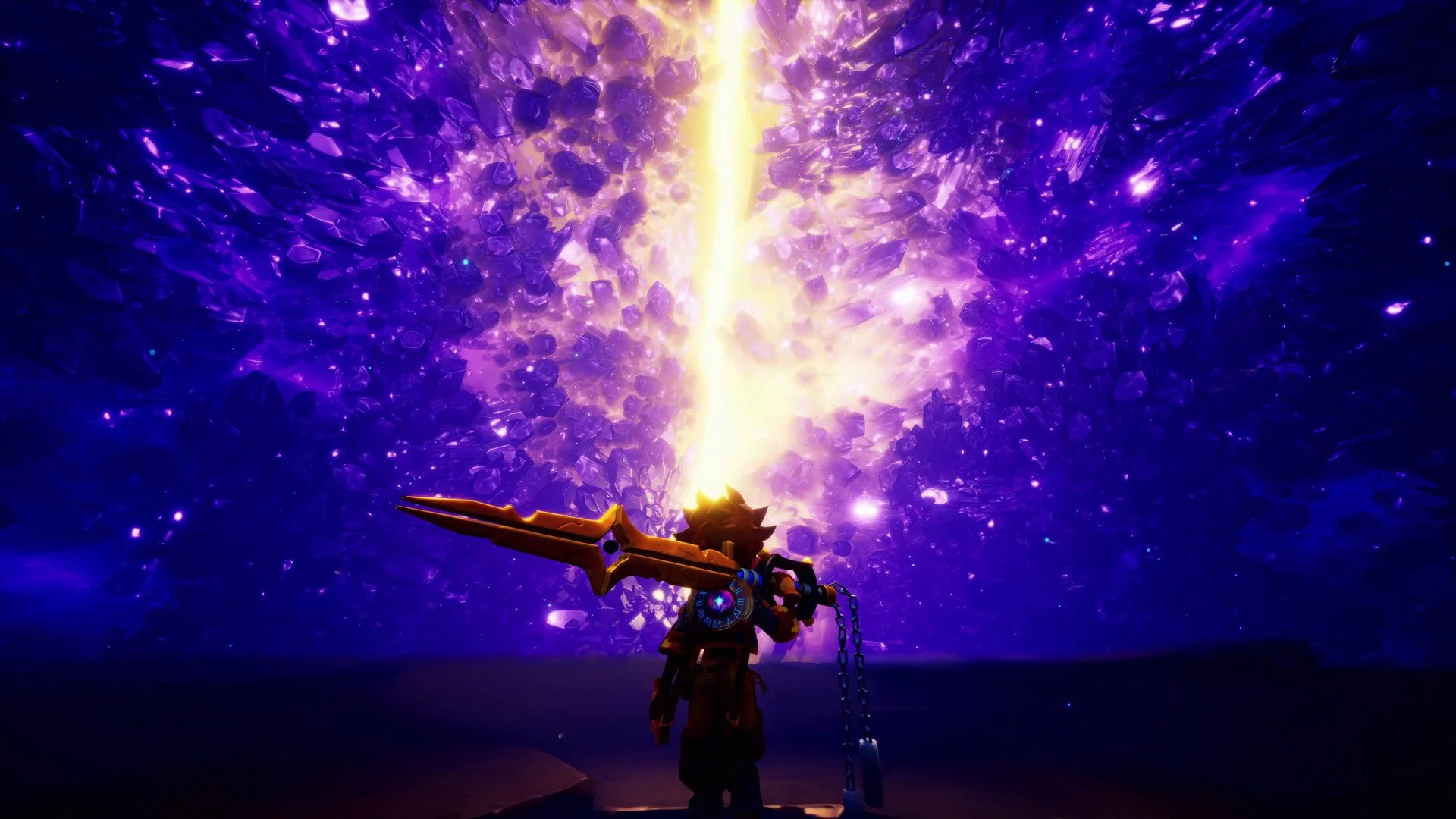
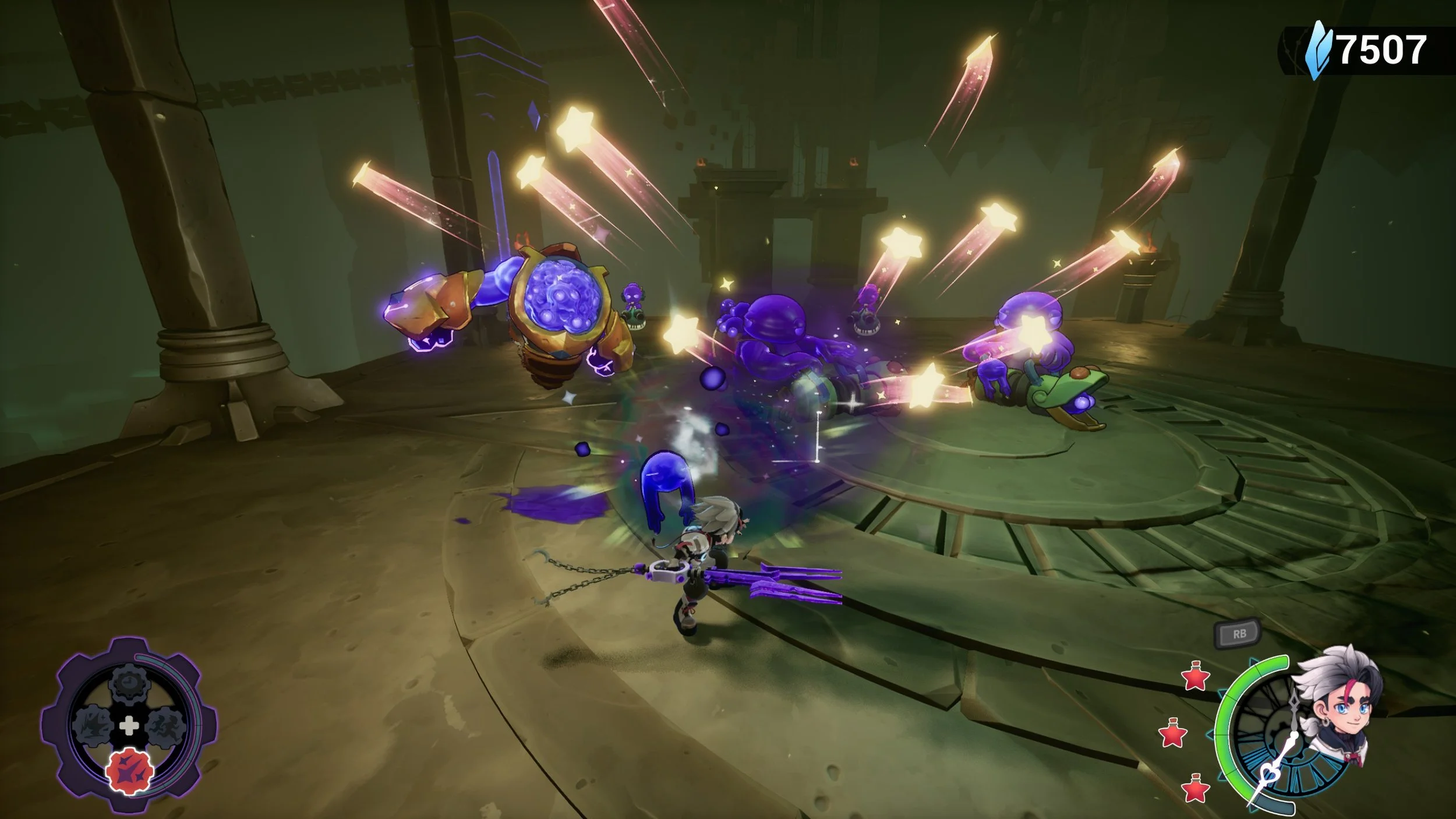
There’s a lot of combat, usually in arenas that require you to pass them before moving forward. Despite how clearly the game wants to evoke Kingdom Hearts, fights don’t actually play out all that similarly at all. You have light and strong swings with a few combos, perfect dodges, and a handful of abilities that use energy obtained from landing hits, but the fighting can’t help but feel perfunctory. The enemy bestiary is surprisingly varied, though, as it continually introduces new foes to best.
Boss battles, meanwhile, offer enjoyable showdowns with some occasionally interesting mechanics, but they far too often fall back on repeating familiar patterns that have you stop after doing a certain amount of damage to complete a platforming section. Additionally, some later encounters turn up the artificial difficulty just a bit too much for my liking.
Duskfade’s areas are traversed in order and have warp points to teleport to. Plus, there’s a late-game ability that lets you warp to the nearest one no matter where you are. Unfortunately, there are no level maps and no way of telling where the game’s collectibles are aside from simply looking.
These include pieces that increase your health and special energy, gears that let you purchase upgrades, as well as a bunch of mostly pointless collectibles, such as coins that you can swap for trading cards or music boxes that let you listen to the game’s songs. You’ll regularly find chests which contain currency, but I was vexed upon opening a special chest and finding something useless instead of a power-up for the umpteenth time.
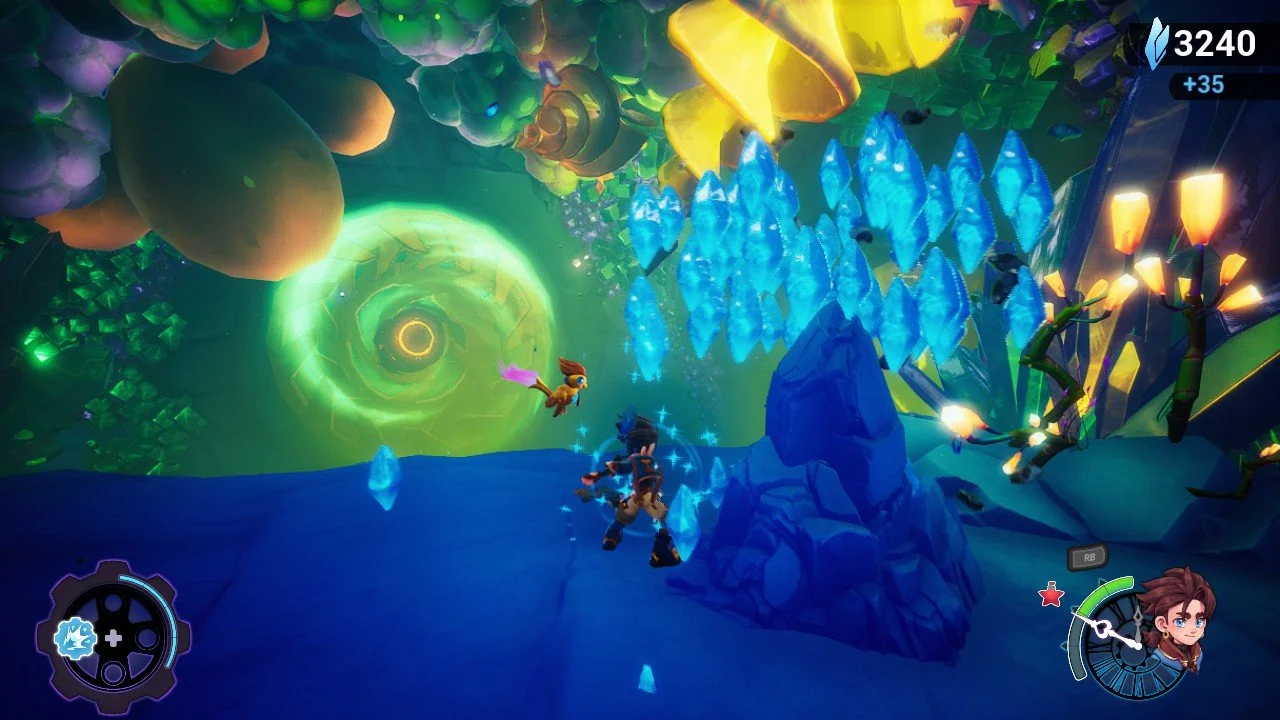
Since areas are large and they only have a single warp point, backtracking to find collectibles becomes tedious due to how difficult it can be to locate them. I wish that, at the very least, the power-ups and upgrades were easier to find, but it’s tough to recommend returning to hunt things down since you’ll basically just need to replay entire areas.
Verdict
Ultimately, I had a decent time Duskfade, but in its effort to mimic popular games from the PS2 era, it never quite finds an identity of its own. Even so, it’s a solid enough choice for platformer enthusiasts looking for a dozen hours of fun.