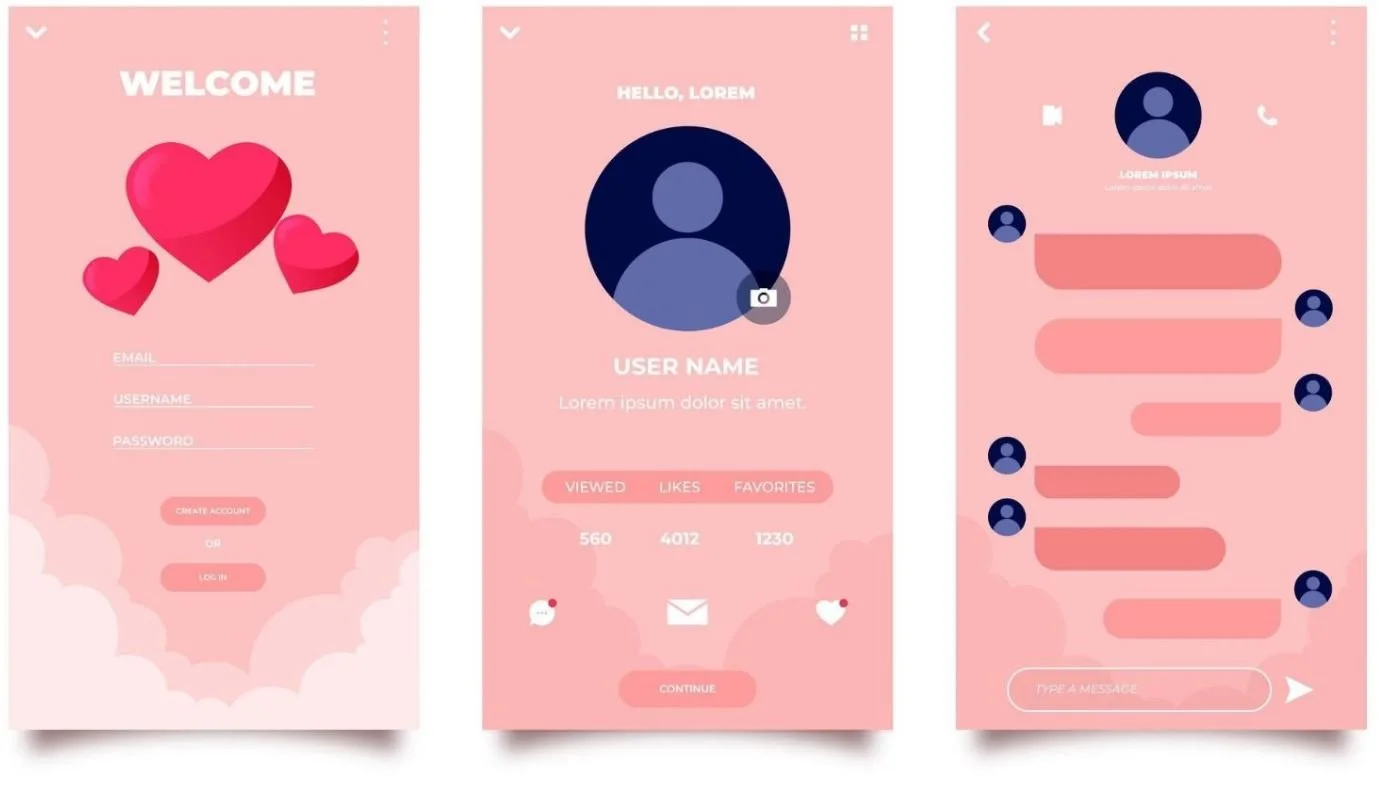
Online dating has evolved considerably over the years. What would have appeared like a fast game of swipes has become more intimate now, a hub where individuals hope to forge genuine ties. Nevertheless, not all people are equally welcomed in these online areas. This is where multi-hoop UX design comes in. It is about making an application that will be easy to use by those whose identities, backgrounds, and abilities differ. The moment it becomes so, a dating app will no longer be a matching platform, but will effectively become a community.
Why Inclusive UX Matters in Modern Dating Apps
Inclusivity in UX isn’t just a nice idea; it’s a wise design decision. Dating apps touch something deeply personal; users bring their background, culture, and identity into the experience. When an app’s layout or language feels one-sided, people immediately notice it and often leave.
Designers who focus on inclusion tend to build stronger trust and keep users engaged for longer. But true inclusivity goes far beyond adding a few gender options. It’s about empathy, understanding the many ways people connect, the different forms attraction can take, and the subtle sense of comfort that comes from being acknowledged.
Representation Begins with Design: Icons, Colors, and Language
Nothing can tell more than a visual design. The images, colors, and texts within a dating application silently influence how individuals will experience the service, who will feel a part of it, and who will not. That is why more design teams are looking more closely at their imagery and posing a very straightforward question: Does that design really welcome everyone?
These are some of the ways inclusive design may be implemented:
Put aside the aged-out blue-pink icons and use neutral icons.
Select images that show the true diversity, not stereotypes.
Write short text pieces and respect pronouns and other types of relationships.
Allow individuals to personalize language or tone to their way of identification.
All these options would appear minor, but when combined, they convey a strong message to users that they are one of them, matching. This would make an app more than just polished and genuinely human.
Inclusive Onboarding: Welcoming Every Identity
The onboarding experience is the first real conversation between an app and its user. It’s where trust begins, or ends. Apps that limit choices for gender or orientation instantly alienate parts of their audience.
A truly inclusive onboarding flow should invite users to express themselves, not force them into predefined categories. Allowing custom gender identities, open-text pronouns, and nuanced relationship goals gives people the freedom to define themselves.
For instance, platforms like the lesbian dating site Kismia are rethinking this process by allowing users to represent their identity authentically from the start. This is not just a feature; it’s a statement that love has no default setting.
Tips for inclusive onboarding design:
Ask, don’t assume. Let users define how they identify.
Avoid binary filters or exclusionary drop-downs.
Explain why data is collected — transparency builds trust.
Offer an easy way to edit identity fields later.
These steps may seem small, but they dramatically increase comfort and retention among diverse users.
Accessibility: Designing for All Abilities
The issue of accessibility is not only compliance but also a portal to involvement. Individuals with disabilities are also prone to invisible obstacles on dating apps, such as text that cannot be read or gestures that cannot be used. A mindful UX designer takes this into consideration.
Maybe the essential accessibility features that inclusive apps must have:
User voice navigation with limited mobility.
Dark and light modes for visually impaired users.
Optimization of the screen reader to aim at clear context reading.
Resizable font sizes and straightforward UI designs.
Thus, inclusivity refers to expanding the conversation to ensure that anyone can fall in love, not only people with clear eyes and unshaky hands.
Data Privacy and Emotional Safety as UX Elements
Dating applications are personal space. They deal with critical information and emotional weakness simultaneously. This is what causes the safety to be an important UX element, rather than an empty, legal box. Contemporary designers incorporate privacy controls into user interfaces: visibility, block and report, consent prompts, and feedback by design. Such design choices ensure the safety of not only user information but also the feelings. Users are more real in their interactions when they are comfortable to communicate because they feel safe exposing themselves.
The Future of Inclusive Dating UX
The next wave of UX innovation will focus on personalization through empathy. AI-driven moderation tools can filter toxic behavior, while adaptive onboarding can tailor interfaces based on how people communicate. Ethical design and prioritizing user dignity will shape how dating platforms evolve in the coming decade.
As relationships increasingly begin online, the responsibility of UX designers grows. They’re not just building screens. They’re shaping human interaction in one of the most vulnerable spaces of digital life.
Conclusion
Inclusive UX design isn’t a side project or a “nice-to-have” feature; it’s the foundation of meaningful digital connection. From icons that celebrate diversity to onboarding that welcomes all identities, every design choice speaks volumes about what a platform stands for. When people open a dating app, they’re not just seeking matches. They’re looking for acceptance, recognition, and safety. A truly inclusive UX gives them one thoughtful interaction at a time.