I love weird Magic formats, and Horde Mode has always been one of my favorites. Commander is already one of the most social ways to play the game, so turning it into a cooperative survival format just makes sense. Instead of battling each other, you and your friends team up to survive against an automated enemy deck that keeps flooding the board until you either stabilize or get completely overrun.
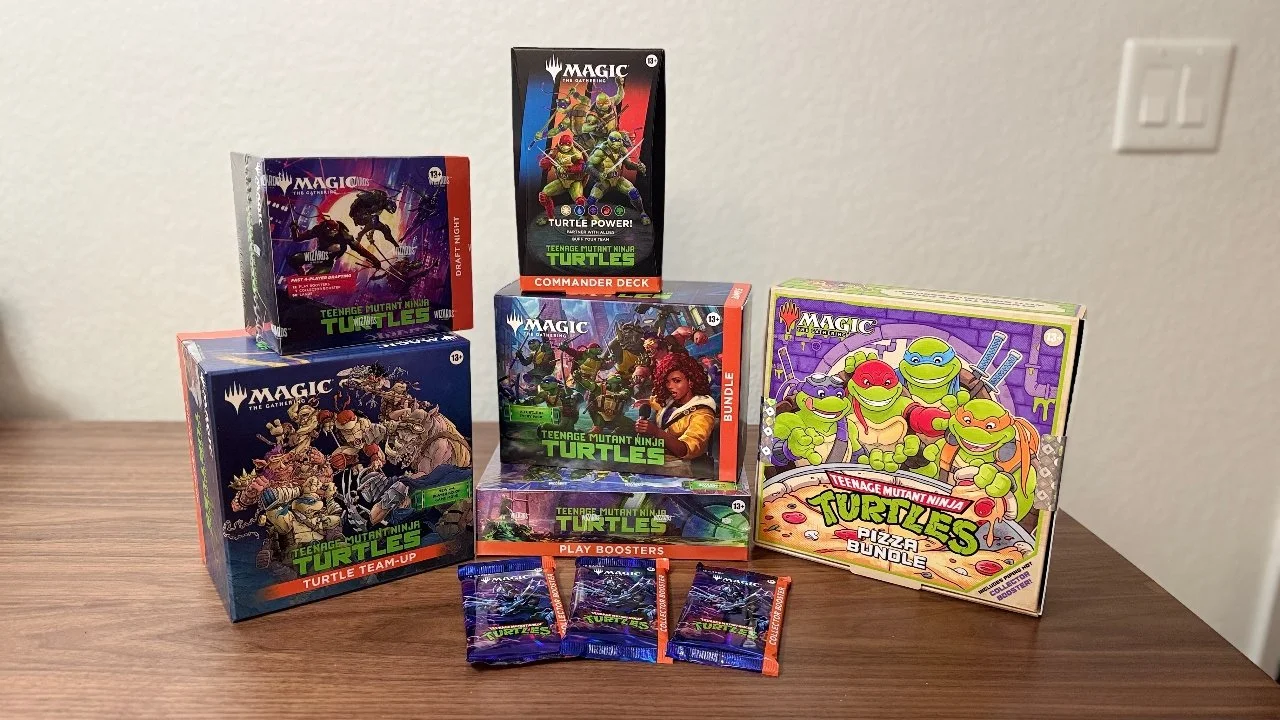
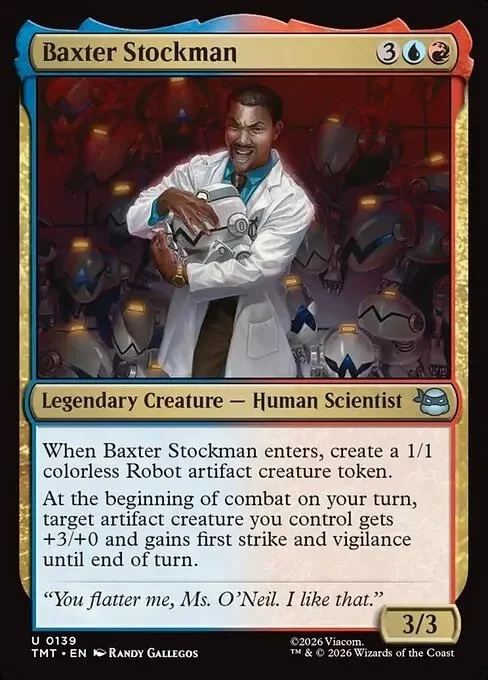
With Magic: The Gathering - Universes Beyond: Teenage Mutant Ninja Turtles, there was no way I was going to skip making a Horde deck for it. TMNT is packed with flavorful legends, iconic villains, and plenty of cards that feel perfect for a chaotic co-op setup. And when it came time to choose a villain for the deck, one option stood out immediately: Baxter Stockman.
He’s one of the most consistently dangerous threats in TMNT history, and more importantly, he brings exactly the kind of game plan Horde Mode wants: relentless mechanical bodies, swarming pressure, and the feeling that every fallen machine is just going to be replaced by another one. That made him the perfect centerpiece for a robot-themed Horde deck.
What is Horde Mode in MTG?
Horde Mode is a cooperative Magic format where players work together against a deck that runs itself. Instead of an opponent with a life total, the Horde has a library. When you deal damage to the Horde, that many cards are milled from the top of its deck. If you can exhaust the Horde’s deck, you win.
The format was originally designed as a way to simulate an overwhelming enemy force, usually a zombie horde, but it works incredibly well with custom themes too. That’s what makes it so fun to build around specific sets. You can turn a villain, faction, or mechanic into a full co-op encounter instead of just another deck.
A typical Horde deck is mostly tokens backed up by creatures and spells. The token density is what creates that constant sense of pressure. Even when players start to stabilize, the Horde usually has another wave ready.
How do you play Horde Mode in MTG?
Gameplay feels close to Commander, but the Horde follows automated rules.
Players take a few setup turns to develop their boards, then the Horde begins revealing cards from the top of its library until it hits a set number of non-token cards depending on the round. All token creatures and other valid permanents enter the battlefield with haste, and creatures attack immediately.
That structure works especially well for TMNT because it gives the game that arcade-style escalation. Round one feels manageable. Round two starts getting messy. By round three, Baxter’s machines should feel like they’re fully online and spiraling out of control.
Round One
Players get three full setup turns before the Horde activates. After that, the Horde reveals cards until it reveals one non-token card.
Round Two
The Horde reveals until it reveals two non-token cards.
Round Three
The Horde reveals until it reveals three non-token cards.
You can reset between rounds or carry over the board state if you want the game to feel harsher. Personally, I think carrying things over makes Horde Mode more satisfying because it rewards efficient play and makes survival feel earned.
The Horde Decklist & Theme
Teenage Mutant Ninja Turtles gives you a lot of villain options. You could build around the Foot Clan, Krang’s weird alien-tech invasions, or even a broader street-level chaos pile with mutants and mercenaries. But for this first Horde deck, I wanted something that would feel clean, fast, and immediately threatening on the table. Plus, the Foot Clan was kind of already taken by the Turtle Team-Up.
Baxter Stockman’s Robot Swarm
This Horde deck is built around Baxter Stockman and a constantly replenishing army of Robots. Instead of feeling like a shambling undead mass, this one is meant to feel engineered. It’s efficient, persistent, and irritating in exactly the way a Baxter Stockman deck should be. Every time players think they’ve made progress, more machines roll off the line.
The biggest strength of using Baxter as the centerpiece is that the deck naturally supports one of the core Horde fantasies: defeating enemies should still feel dangerous because every destroyed machine can feed the next wave. That makes the deck play less like a normal creature pile and more like an assembly line that refuses to shut down.
The Decklist
You can find the full deck here:
| Category | Card | Quantity |
|---|---|---|
| Creatures | Baxter Stockman | 4 |
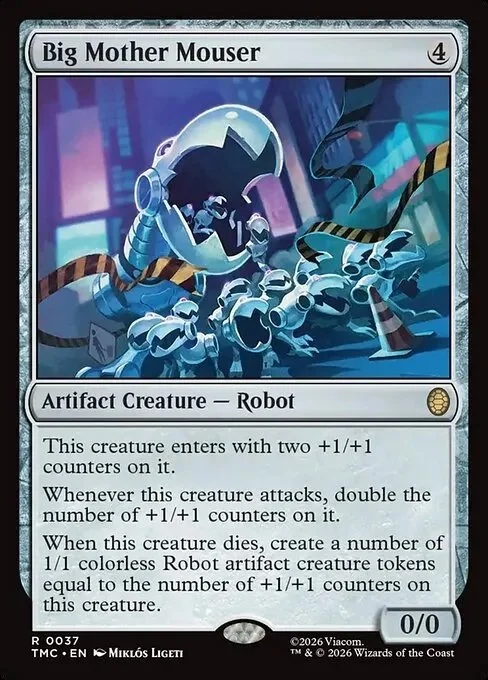
| Creatures | Big Mother Mouser | 2 |
| Creatures | Mechanized Ninja Cavalry | 4 |
| Creatures | Mouser Mark III | 4 |
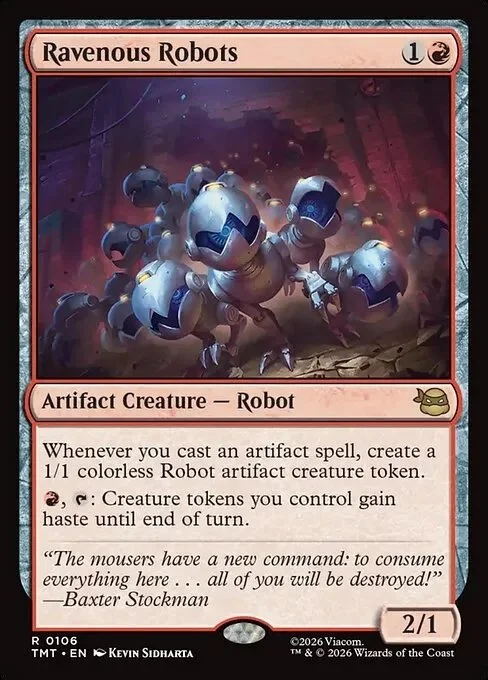
| Creatures | Ravenous Robots | 4 |
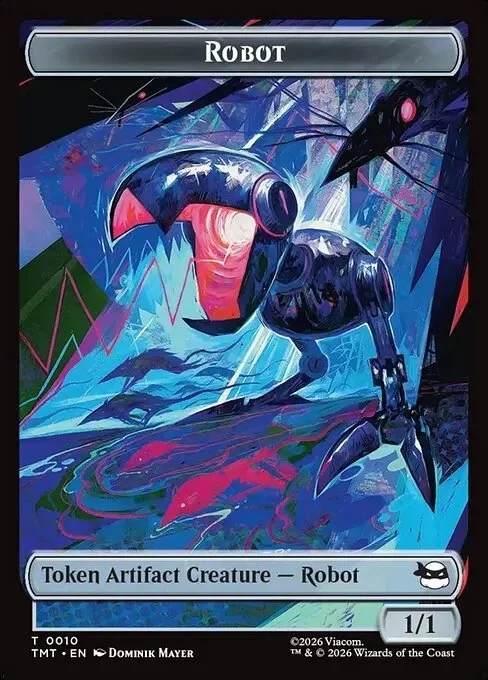
| Tokens | Robot | 70 |
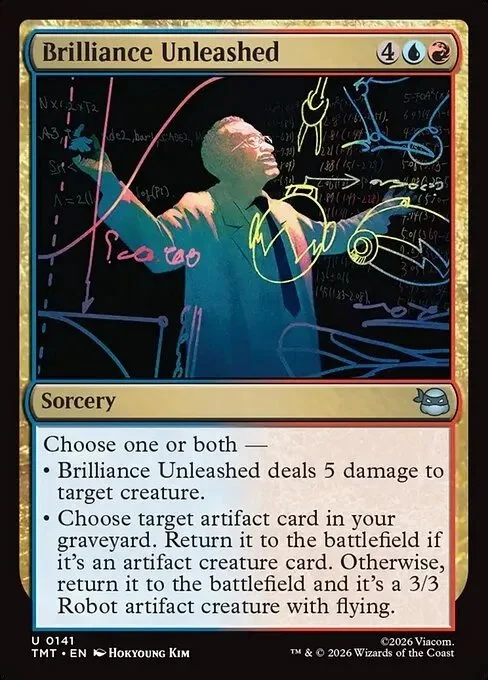
| Sorceries | Brilliance Unleashed | 4 |
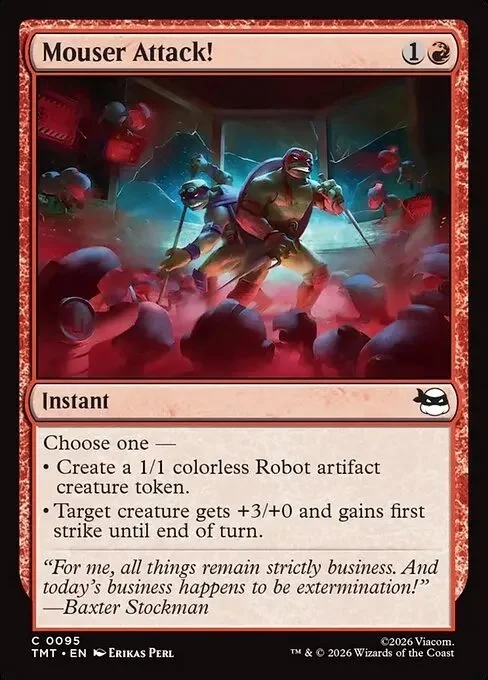
| Instants | Mouser Attack! | 4 |
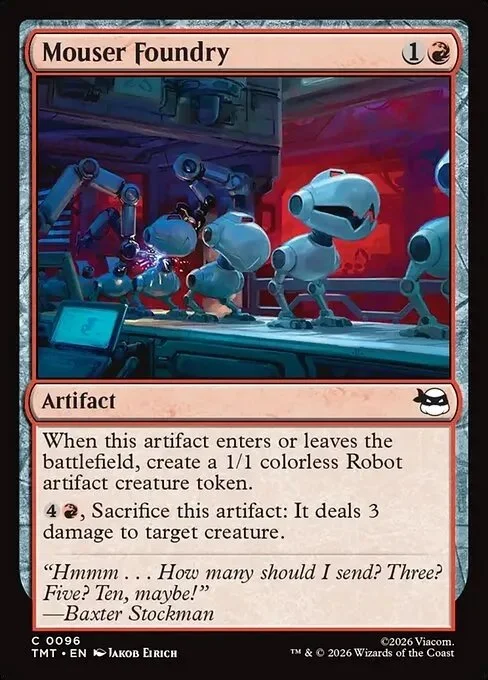
| Artifacts | Mouser Foundry | 4 |
This build is centered on Robot tokens, nontoken Robot payoffs, and Baxter Stockman as the boss unit tying the whole encounter together.
Special Rules
While you can play this deck as a classic Horde deck, I like giving each Horde build a small set of unique rules to create an extra layer of flavor and difficulty. That way each one feels like its own encounter instead of just another reskin.
Baxter’s Production Line
Whenever Baxter Stockman enters, create extra 1/1 Robot Artifact tokens depending on the round. In Round One, create one extra token. In Round Two, create two extra tokens. In Round Three, create three extra tokens.
This helps Baxter feel like a true escalation threat. If he shows up late, he should still matter immediately, and the later the game goes, the more dangerous his arrival becomes.
Scrap Becomes Reinforcements
Whenever a nontoken Robot is defeated, create a 1/1 Robot Artifact token.
This is the rule that really sells the deck. Players are rewarded for surviving and trading well, but Baxter’s machines always leave something behind. It keeps the pressure up and makes even successful combat feel a little uncomfortable.
Factory Overflow
If the Horde reveals three or more Robot tokens in a row, create an additional 1/1 Robot Artifact token.
This is a simple rule, but it adds a lot of personality. Sometimes the machine line just starts rolling, and when it does, the board should feel like it’s slipping away from the players.
Other special rules
There is one instant and one sorcery in this deck, and both require choices, which is always one of the trickier parts of keeping a Horde deck automated.
For Brilliance Unleashed, the Horde will always choose both modes. For the damage mode, it will always target the highest-power creature it can effectively kill. For the return mode, it will prioritize Big Mother Mouser, then Ravenous Robots, and then whatever creature has the highest power after that. It will never target Baxter Stockman.
For Mouser Attack!, the card says “choose one,” but under this custom ruling the Horde chooses both. However, instead of the Horde choosing another creature, the 1/1 Robot it creates will be the creature that gets the buff.
Win Condition
If the Horde library reaches 0 cards remaining and all Baxter Stockman creatures have been defeated, the players win.
I really like this extra condition because it makes Baxter matter beyond just being another threat in the 99. You can’t just survive the wave and call it a day. You have to actually shut the operation down.
Building a commander deck to fight the horde
When building decks to fight Baxter’s robot swarm, I’d avoid making them too tuned. Horde Mode works best when it feels challenging but still cinematic. You want decks that do cool things, not just lists designed to lock an automated opponent out of the game.
Against this Horde, the most valuable tools are going to be:
Board wipes, artifact hate, repeatable removal, token control, and creatures that can block efficiently without folding to a pile of 1/1s.
This is also a matchup where evasion can matter a lot. If Baxter’s side keeps clogging the ground with junk bodies, flying or trampling finishers can help players actually close the game before the token engine gets out of hand.
If you want to keep things thematic, this is the kind of Horde deck that begs for players to bring TMNT-flavored Commander decks to the table. Turtle-led hero decks, mutant synergy piles, or even villain decks repurposed as uneasy alliances would all fit the vibe really well.
Final Thoughts
This TMNT Horde deck captures one of the things I enjoy most about Universes Beyond in Magic: it gives you enough mechanical identity and flavor to turn a set into an actual encounter, not just a pile of cards. Baxter Stockman works especially well for that because his whole identity is built around technology, disposable machines, and inventions that keep causing problems long after they should have been dealt with.
That makes him perfect for Horde Mode. The players are not just fighting creatures, they’re fighting a production line. Every Robot feels replaceable, every wave feels intentional, and Baxter himself acts like the source of the problem that has to be fully shut down before the table can claim victory.
Horde Mode is at its best when it feels overwhelming, thematic, and just a little unfair in a fun way. A Baxter Stockman Robot swarm absolutely checks all of those boxes.
Looking for more upcoming card games, expansions, and tabletop releases to keep on your radar? Be sure to check out our 2026 TCG and Tabletop Release Calendar for a full look at the biggest trading card game sets, board games, and tabletop releases coming this year.