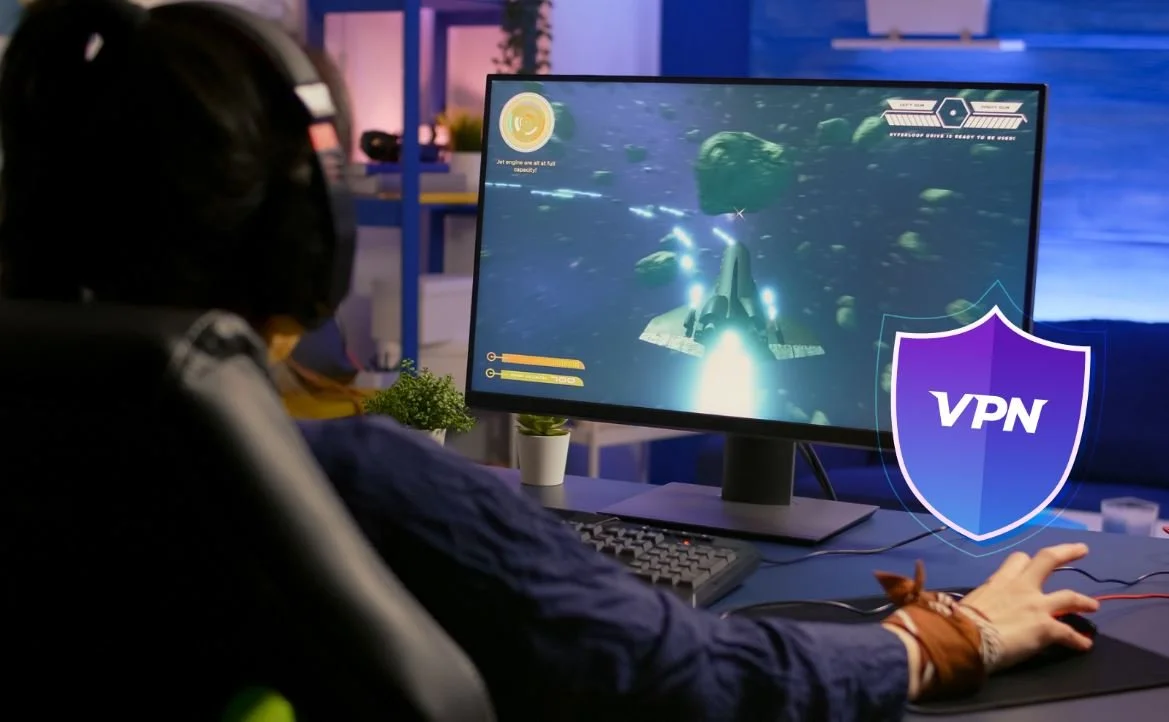
VPNs used to be something only paranoid streamers and traveling expats really cared about. That has shifted. Between the rise of cheap DDoS-for-hire services, more aggressive ISP traffic shaping, and the wave of regional restrictions hitting digital storefronts in 2025 and 2026, more players are asking whether a VPN belongs in their gaming setup at all.
The honest answer is: not for everyone. Most casual players logging into Fortnite or playing single-player on Steam will not notice a meaningful difference. But four specific situations make a VPN genuinely useful, and one of them probably applies to you.
When a Gaming VPN Is Genuinely Worth It
Protecting against DDoS attacks. This is the strongest case. Booter and stresser services have been priced as low as $5 a month for years, and the Federal Bureau of Investigation seized 13 of them in December 2022, only for new ones to spin up almost immediately. If your IP is exposed during a match, anyone who pulls it through a Discord lookup or a shady packet sniffer can flood your connection. A VPN routes your traffic through a server that absorbs the attack instead of your home router. Apex, Call of Duty and Rainbow Six Siege have all seen documented waves of player-targeted DDoS through 2024 and 2025.
Geo-restrictions that affect your library. Steam, PSN and Xbox storefronts behave differently depending on your IP. The UK Online Safety Act, which started enforcement in July 2025, has triggered region-specific removals on smaller storefronts and some console services. Players who travel for work or move countries find their accounts behaving in ways they did not expect. A VPN solves most of this cleanly.
ISP throttling on gaming traffic. Throttling is the use case players underestimate the most. Some ISPs deprioritize traffic to game servers during peak hours, and because the traffic is unencrypted, the ISP can easily identify it. A VPN encrypts the connection so your provider cannot tell whether you are gaming, streaming or browsing. The throttle becomes harder to apply.
Traveling and accessing your home region. If you are abroad and want your usual matchmaking pool, latency to your home server, or access to a game that has not launched in the country you are visiting, a VPN is the only legal solution. This is also where it matters whether the provider has servers physically close to where your real account region is registered.
Players who recognize themselves in one of these four cases usually want a concrete starting point rather than another generic top 10 list. For a focused breakdown of how one of the more popular options actually performs on these specific use cases, Gizmodo's NordVPN review goes through speed, server distribution and the router setup that consoles require. It is more useful than the marketing pages because it explains where the service struggles, not only where it shines.
What a VPN Won't Fix in Your Online Sessions
It is worth being clear about what a VPN cannot do, because the marketing tends to oversell. A VPN does not magically reduce latency in most cases. If your real ISP route to a game server is already efficient, adding a VPN hop will add a few milliseconds, not remove them. The only situation where a VPN reduces ping is when your ISP routes you through congested or geographically inefficient peers. In that case, a VPN can sometimes force a more direct path. It is the exception, not the rule.
A VPN also does not protect against in-game cheaters, account theft from phishing, or weak passwords. Those are separate problems with separate fixes. And a VPN will not let you cheat anti-cheat systems. Riot's Vanguard, Easy Anti-Cheat and BattlEye all detect VPN use and may flag accounts in competitive modes for some titles. Always check the terms of service of the specific game before connecting.
ISP Throttling: The Use Case Most Players Underestimate
Throttling deserves its own section because it is the situation where a VPN can deliver the most visible improvement, and where players notice it the least until they actually test the difference.
Net neutrality protections were rolled back in the United States in 2018 and reinstated briefly in 2024 before further legal challenges. The result is a patchwork where ISPs in some regions throttle gaming traffic during peak hours, particularly on cellular and fixed wireless connections. The pattern is usually invisible to the player. The game just feels worse between 7 and 11 PM, then mysteriously cleans up at midnight.
Running a VPN encrypts the traffic at the application layer, which means the ISP sees encrypted packets going to a single server rather than recognizable game traffic. They cannot apply a category-specific throttle to traffic they cannot identify. Some players report a 30 to 50 percent improvement in evening latency on throttled connections after switching.
Free vs Paid VPNs for Gaming
Free VPNs are not a real option for gaming. The economics do not work. A 2024 study by the Cybersecurity and Infrastructure Security Agency flagged that the majority of free Android VPN apps either log user data, inject ads, or sell traffic data to third parties. Beyond the privacy issue, free services almost always cap bandwidth, limit server selection and saturate during peak hours. None of those constraints are compatible with gaming.
Paid services usually run between $3 and $12 a month on annual plans. The price difference between providers is small enough that the decision should hinge on three things: server count near your physical location, support for router installation since consoles cannot run VPN apps natively, and an audited no-logs policy. The audit matters because anyone can claim a no-logs policy. Companies that have submitted to independent audits, such as PricewaterhouseCoopers reviews of NordVPN or Cure53 audits of others, have at least some external verification.
Where This Is All Heading
The VPN-for-gaming question used to feel niche. It is becoming a normal part of the conversation, partly because online gaming itself has changed. Cross-platform play means more exposed IPs. Cloud gaming services like GeForce NOW and PlayStation Plus Premium streaming add new layers of regional restrictions. And the booter-services market keeps mutating despite enforcement actions.
The players who get the most out of a VPN are not the ones chasing some imaginary speed boost. They are the ones who have already been hit by a problem the VPN actually solves: a DDoS that knocked them out of a tournament qualifier, an ISP throttle that ruined every Friday night raid, or a sudden region restriction on a game they already paid for. If none of that has happened to you yet, you can probably wait. If any of it has, the answer to whether you need one stops being theoretical.