The fastest way to spot a bad gothic engagement ring is to look at the metal, not the stone. A ring dipped in black plating looks dramatic in the listing photo and starts wearing back to bare silver at the knuckle within a year. The couples who stay happy with their darker rings are the ones who learned to judge them the way a jeweler does, and that turns out to be a short, useful course.
Gothic style is a mood more than a checklist: dark, romantic and a little theatrical. The best gothic engagement rings get there through three things working together, the stone, the metal treatment and the cut. Get all three right and the ring reads as intentional and elegant; get one wrong and it tips into costume. So it is worth taking each in turn.
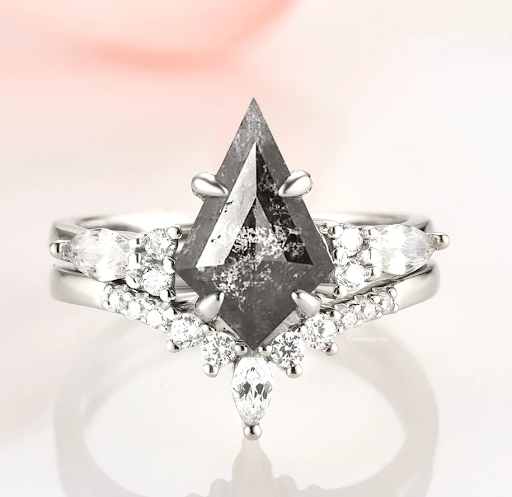
Skye Kite® Galaxy Raw Herkimer Diamond Ring Set in Sterling Silver (Salt & Pepper Diamond)
Start with the stone, because it decides how the ring ages. Black onyx (Mohs 6.5 to 7) is the classic, affordable choice, but it is a dyed chalcedony, so favor a bezel that protects its edges. Black spinel (8) is naturally black, tougher, and throws a livelier sparkle. Black diamond (10) is nearly indestructible and reads metallic rather than glassy. If you want color with the drama, salt-and-pepper diamonds bring a speckled, galaxy depth, while deep-red garnet or moody moss agate keep the gothic feeling without going fully black.
Metal is where most gothic rings quietly fail. Black plating, whether rhodium or ruthenium, sits on the surface and rubs through on high-contact points like the underside and the shoulders. Solid blackened or oxidized sterling silver holds its color far better, because the darkness runs deeper and it develops a lived-in patina instead of a bald patch. Ask what actually creates the black before you buy: a plated finish is fine for a fashion ring, less so for something meant to be worn every day for decades.
Cut is what gives a gothic ring its silhouette. Angular shapes suit the aesthetic best, which is why a coffin ring has become such a signature, its long, elongated hexagon reading like a forged blade. Kite, hexagon and marquise cuts do similar work. Whatever the shape, check that the setting truly protects it, tall claw prongs look dramatic but leave sharp corners exposed, so a partial bezel is often the smarter pick for daily wear.
A few quick tests separate a keeper from a letdown. Run a fingernail around the setting: any stone that rattles or a prong that snags is a repair waiting to happen. Check the inside of the band for a solid metal stamp such as 925 for sterling, rather than a vague "silver-tone". And look at the black itself in daylight, a genuinely blackened surface is even and slightly warm, while a cheap coating tends to look flat and gray at the edges where it has already started to thin.
Styling a dark ring is mostly restraint. Because it already makes a statement, let it lead and keep the rest quiet: a plain band stacked beside it, simple studs, nothing competing. A pairing worth copying is a coffin-cut onyx on one hand and a matching blackened band on the other, both in solid silver, both engraved inside with the same date, understated, unmistakably yours, and far cheaper to insure than a comparable diamond.
The reassuring part is that a well-chosen gothic ring is genuinely practical. Onyx, spinel and black diamond shrug off daily life, and solid blackened metal hides scratches better than any high-polish finish, so the ring keeps its brooding character instead of showing every knock. Softer colored stones simply want a protective setting and the sense not to wear them to the gym.
Choose the stone for how it wears, the metal for how the black is made, and the cut for the silhouette you love, and a gothic ring stops being a risky departure and becomes the most personal ring in the room. Exploring characterful, solidly made options from a maker like Aquamarise is the easiest way to see how romantic, and how durable, the darker end of the spectrum can be.