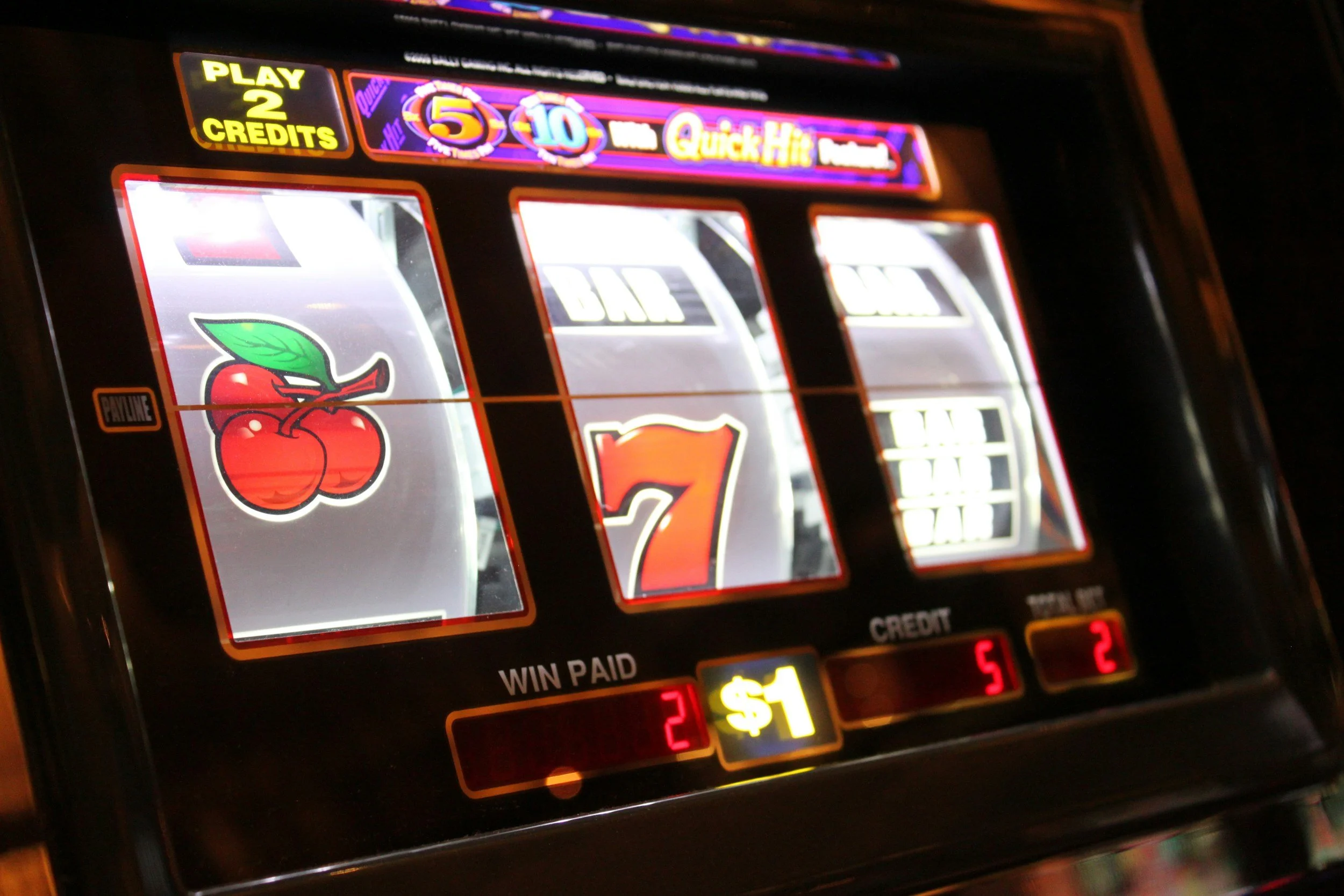
How Online Casinos with the Highest Payouts Determine Your Winnings

Mathematical parameters and technical algorithms are behind the high payouts at online casinos. The result is influenced by the return to player (RTP) coefficient, game volatility, and the work of the random number generator (RNG). They determine how often and how large the winnings can be.
Players who understand the mechanics realize that online casinos with highest payout do not guarantee instant profits, but create favorable conditions in the long run. At the same time, casino payout transparency is also important — honest platforms openly publish data on RTP and algorithms so that users can compare games and make informed choices.
Understanding RTP and How It Influences Payouts
The return to player (RTP) indicator shows what portion of bets is returned to users in the form of winnings over a long period of play. This is an average value calculated over millions of spins or games, so in the short term, the result may vary significantly. To correctly calculate casino winnings, several points should be taken into account:
RTP definition. If a slot has an RTP of 96%, this means that for every $100 wagered, approximately $96 will be returned to players, and $4 will remain with the casino as a mathematical advantage.
Long-term nature. RTP does not guarantee the outcome of a single session: one player may win big, while another may lose their entire bankroll, even though the theoretical probability is the same.
Slots. The average RTP ranges from 92% to 97%. The final result is influenced by volatility and bonus mechanics, which can increase payouts.
Table games. The indicators are usually higher and more stable than in slot machines. In blackjack, the RTP can reach 99% with an optimal strategy, and in roulette, it can reach about 94-98%, depending on the rules.
In other words, RTP allows you to assess how profitable a game is in the long run and what risks it carries.
The Role of Game Volatility in Winnings
Volatility shows how winnings are distributed in a game: frequently and in small amounts, or rarely but in large amounts. This is one of the factors that gives you an idea of what to expect from a particular slot machine or table game:
High volatility means rare but large winnings. A slot machine may hold the bet for a long time without paying out, and then pay out an amount that is many times greater than the initial amount. For example, a $1 bet with a multiplier of x200 can bring in $200, but the probability of hitting it is low.
Low volatility means frequent but small wins. The slot may return $0.80-$1.20 on a $1 bet on almost every second or third spin, which reduces the risk of losing quickly.
In practice, players at online casinos with the highest payouts choose the level of volatility based on their strategy. Those who are focused on long sessions are more likely to prefer low volatility. And those hunting for big rewards prefer models with high dispersion, even if it comes with risks.
The house edge in casino games should also be taken into account. For example, with an RTP of 96%, the establishment's advantage is 4%. This is what guarantees the casino's long-term profit. Understanding volatility helps to form realistic expectations. If the rules specify the payout range and frequency of wins, you can assess how well the game suits your own style.
Random Number Generators and Fair Casino Payouts
All online games are based on a random number generator (RNG). Its operation determines the fairness and transparency of the process. To understand how it affects payouts, it is worth highlighting a few points:
Fairness of results. Every fraction of a second, the RNG generates sequences of numbers that correspond to the results of the game. So it is impossible to predict the outcome, and each game is in no way connected to the results of the previous draw.
Frequency of combinations. Slot payout mechanics are determined by the RNG. The algorithm determines how small and large winnings are distributed.
Payout percentage comparison. With the same RTP, games demonstrate different payout dynamics. A slot with high dispersion gives rare but large wins, while another with the same payout percentage returns funds more often and in small amounts.
In summary, the RNG not only ensures fairness, but also affects the distribution of winnings, which should be taken into account when choosing a game and evaluating its capabilities.
How Online Casinos With Highest Payout Track and Calculate Your Wins
Each bet goes through a calculation system that takes into account the parameters of the game and records the result in an automated form. Players only see the result, but behind it lies a clear formula on which online casino payouts depend.
The mechanics are as follows:
Calculation formula. The result is determined based on the game coefficient, bet size, and current RTP. For example, a $10 bet at a coefficient of 2.5 brings $25 when you win, but the actual return is formed taking into account the RTP.
RNG algorithms. The algorithm sets the outcome—a combination in a slot, a card draw, or a roulette sector. The system then applies the odds and calculates the payout amount.
For example, in a slot machine, a $50 win may be the result of a multiplier of x100 on a $0.50 bet. In a table game, such as blackjack, a $20 bet with odds of 3:2 returns $30. Bonus features (free spins, multipliers) provide additional calculations and income.
Without understanding the principle of calculating winnings, it is difficult to realize that the payout depends on built-in formulas and software algorithms responsible for compiling combinations. Even with a high RTP, payouts may differ from theoretical expectations, as everything is determined by probability at the moment of play.
Tips for Maximizing Your Expected Casino Returns

Users cannot influence the operation of the RNG and RTP, but they can play according to a strategy and manage their bets. Use techniques that help maximize casino returns:
Study the RTP and its limitations. The return to player indicator reflects long-term statistics. If a slot claims a 97% RTP, this does not mean that every session will bring such a return. Take into account the spread of values and the time factor.
Look at volatility. Games with high variance give rare but large wins, while low-volatility games return funds more often but in smaller amounts. The choice depends on whether you want to play longer or take a risk for a big prize.
Keep an eye on payout tables and bonuses. Each slot and table game has clear odds. Sometimes a single symbol or bonus can increase the payout several times over, and this should be taken into account when calculating bets.
Use mathematical expectation. Understanding probabilities helps you calculate the long-term result and understand whether the game is worth the money spent.
Try demo modes. Risk-free testing allows you to evaluate the payout mechanics and frequency of wins before you start playing for money.
Assess the frequency and maximum winnings. A slot with frequent payouts of $5 and rare payouts of $500 requires a different approach to betting and bankroll management.
Don't rely solely on RTP. In practice, the actual return depends on many factors: the length of the session, bonus features, and the specifics of the game.
A strategy helps you to realistically assess your expectations and choose games that suit your style, rather than relying solely on statistics.
The Impact of Progressive Jackpots and Special Features
Payouts in online games are influenced not only by RTP and volatility, but also by additional elements:
Progressive jackpots. A portion of each bet goes into a common fund. The amount can reach millions, but the probability of winning is extremely low, and the base RTP is usually below average.
Bonus features. Free spins, multipliers, and expanded lines increase the potential winnings. But activation requires a higher bet, which increases the risks for the player.
Special bets. These open up additional chances for big combinations, but increase the cost of the game and the likelihood of losing your bankroll.
High RTP and random payouts. A slot machine with a 97% return may not pay out for a long time and then pay out a large amount. This is due to a combination of RTP, volatility, and bonus mechanics.
These features make the game unpredictable. Yes, games with progressive jackpots promise big payouts, but the probability of a successful spin is several times lower than in traditional slots.
Conclusion – Understanding Casino Payouts Makes You a Smarter Player
By understanding how casino payouts work, you can eliminate unrealistic expectations and gain valuable information for choosing a strategy. When you understand how RTP works, why the RNG determines the results, and how bonus features affect the outcome, the game is perceived realistically.
The same applies to table game odds. The odds in blackjack or roulette can always be expressed in numbers. Those who know them have no illusions and make informed decisions. Yes, this does not guarantee a win, but it helps you play consciously and without false hopes.
FAQ – Common Questions About Casino Payouts
Why Can Actual Payouts Differ from the Theoretical RTP?
Because RTP is a statistic based on millions of bets, and a single session always depends on chance.
How Do Bonuses and Special Features Change the Calculation of Winnings?
They increase possible payouts through multipliers, free spins, and additional bets, but at the same time reduce the predictability of the outcome.
Which is Better for the Player: High Volatility or Low Volatility?
It depends on your goals: high volatility is for rare but large wins, and low volatility is for stable, frequent, and small payouts.
Can Online Casinos Manipulate Payouts with a Fair RNG?
No, with a certified RNG, the casino cannot influence the results. Manipulation is ruled out by independent auditors and controlled by licensing authorities.