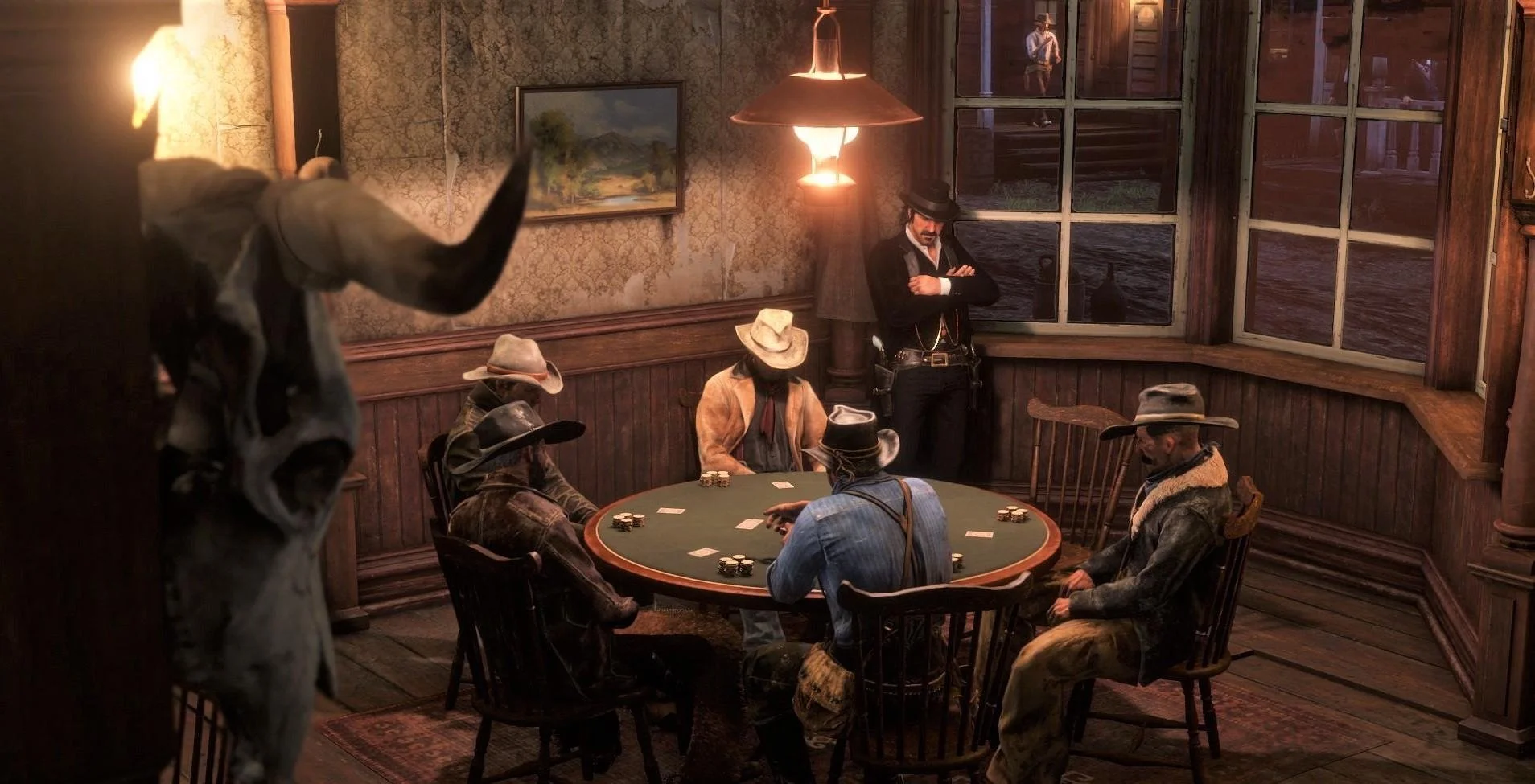
You ride into Saint Denis after a long mission, hitch the horse, and push through the saloon doors to a poker table already dealing. The bartender keeps pouring, a piano plays in the corner, and for the next half hour the open world falls away while you try to read the rancher across the felt. None of it advances the main story. That is the point. The poker table has become one of the quiet anchors of the open-world game, a place to sit down when the map has nothing left to demand.
The Frontier Card Table
Red Dead Redemption 2 set the standard most players now picture. Its Texas Hold'em is a full card game with real betting rounds, blind structure, and opponents who fold, raise, and bluff. The table is dressed to match the 1899 frontier, down to the worn chips and the chatter that fades when a big pot builds. A hand of cards in a smoky saloon does as much to place a player in that world as any cutscene.
What keeps the table interesting is that the game treats it as part of the world. The same towns that shape the main story shape the poker, so a game in a rough mining camp feels different from one in a moneyed city. The minigame borrows the setting's mood instead of floating above it, making it feel like a natural extension of the open world rather than a separate activity.
A Genre Built for Downtime
Open-world games live or die on what a player does between missions. A map that only rewards combat burns out fast, so designers fill the spaces with optional activities that ask for a different kind of attention. Poker fits that gap better than almost anything. It is social, it is slow, and it has a built-in arc of tension and release that needs no scripting from the writers.
A card game also scales to the player. Someone can sit for one hand or three hours, win a little money, lose a little, and walk away with the story untouched. That flexibility is rare. Most side content has a fixed length and a fixed reward, while a poker table simply waits and pays out according to how well the player reads the room.
Beyond the Virtual Table
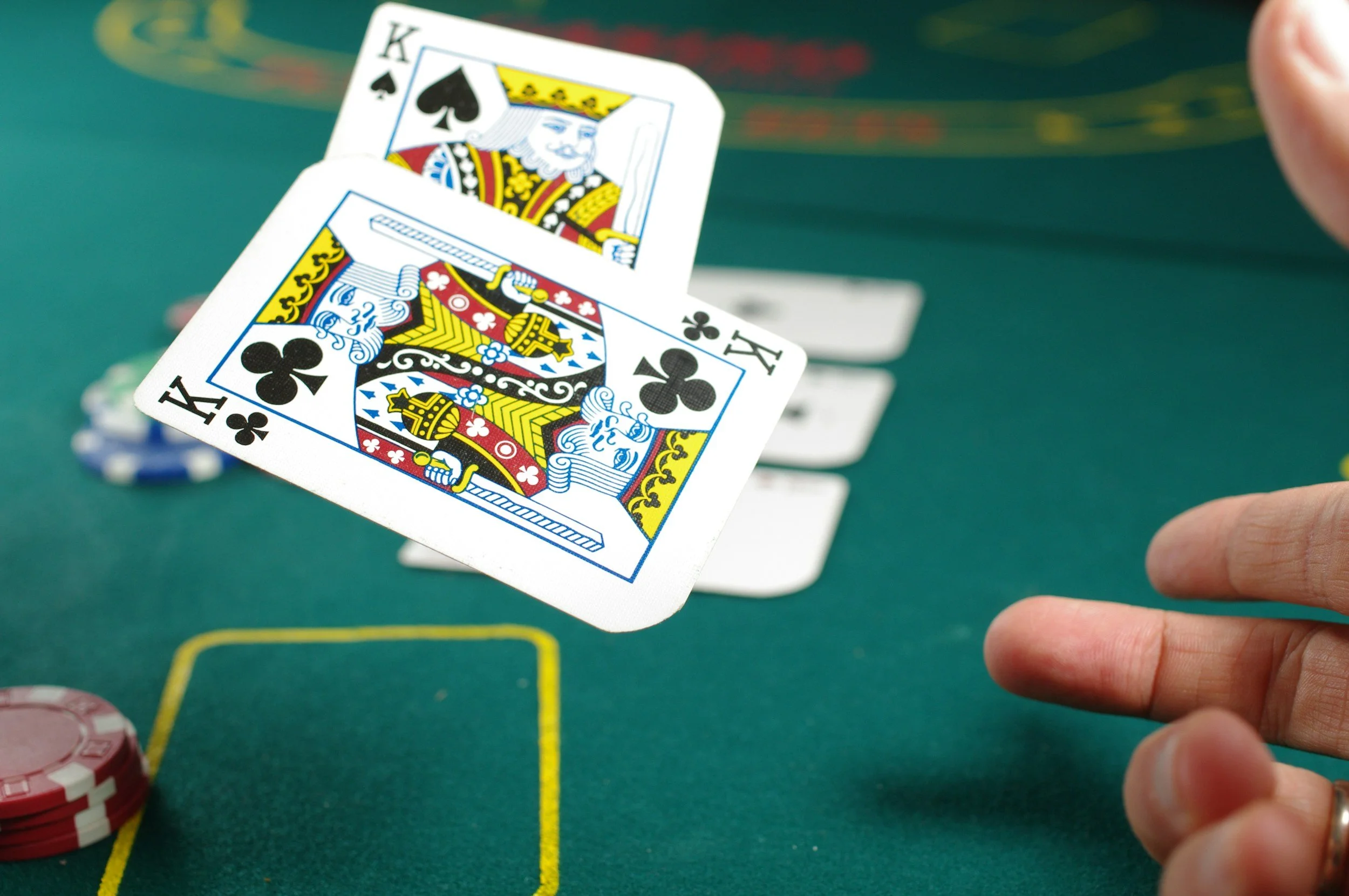
The pull of these minigames is that the skills are real. A player who learns to fold weak hands and price a bet inside a game is practicing the same judgment used at a kitchen-table game, a casino floor, or a session of online poker. The chips are pretend, and the decisions are real, which is why the better versions hold attention far longer than a slot machine ever could.
This is also why the minigame travels so well between settings. The cards play the same in a frontier saloon or a neon casino. The math stays the same, the bluffing stays the same, and a designer can drop the same core loop into any era and trust players to understand it on sight.
The Minigame's Inner Workings
The reason Red Dead Redemption 2's tables feel alive is the opponent design. Each character has a persistent profile that tracks how aggressive they are, how often they bluff, and how they react to specific bet sizes across a session. The tells are small—a lean forward before a confident bet or a bit of fidgeting under pressure—rather than the cartoon signals older games used. A player who pays attention can build a read the same way they would against a real person.
The audio design matters here too. When a large pot forms, the background chatter drops and the room seems to hold its breath, which presses on the player without a single note of music. These are the details that separate a card game built into a world from a card game bolted onto a menu.
Early Tables and a Long Tradition
The poker table is not a recent arrival. Grand Theft Auto: San Andreas let players into casinos for poker, blackjack, roulette, and slots back in 2004 and tied success at the table to the character's own skills.
Fallout: New Vegas leaned harder on the idea, filling its Strip with casinos where a high Perception stat could help a player catch an opponent bluffing, which turned a game of chance into a test of character build.
The first Red Dead Redemption, released in 2010, treated poker as one of several leisurely pastimes alongside blackjack, dominoes, and horseshoes. Each was a small invitation to stop chasing objectives and simply exist in the world for a while. That instinct—to give players somewhere to rest—is what the modern saloon table inherited. A designer can lean on poker to pace the whole game, dropping a table near a town so players have a reason to slow down before the next long stretch of road.
The Economy of Small Stakes
Good poker minigames keep the money small, and that restraint is deliberate. A $5 loss at a Saint Denis table will not dent a player carrying hundreds of dollars, yet it still stings enough to make the hand matter. The stakes stay believable for the people sitting at the table—the ranchers and laborers who would feel that loss in their week.
When a game ignores this and lets a player win fortunes at cards, the table stops feeling like part of the world and starts feeling like an exploit. The best designs resist that temptation. They keep the buy-ins modest so the poker stays woven into the economy around it rather than breaking it open.
A Fixture With Staying Power
The poker minigame has survived three console generations because it solves a problem every open-world game has. It gives players a reason to stop, a way to inhabit the setting, and a contest of judgment that never plays out the same way twice. The cards ask nothing of the plot and give the world somewhere to breathe.
The interesting question now is how far the idea can go. If opponents already track a player's habits across a session, how long before a saloon regular remembers being bluffed last week and plays differently the next time you sit down? The table has always been a place to read other people. The next step may be a table that reads you back.
Conclusion
Poker minigames have endured because they do more than offer a break from combat or exploration. They reinforce immersion, create memorable moments through strategy and social interaction, and make open-world games feel more believable by giving players meaningful choices beyond the main storyline. As developers continue to build richer and more responsive virtual worlds, poker remains one of the clearest examples of how a simple optional activity can deepen world-building, enrich player freedom, and keep an open-world adventure engaging long after the primary objectives are complete.