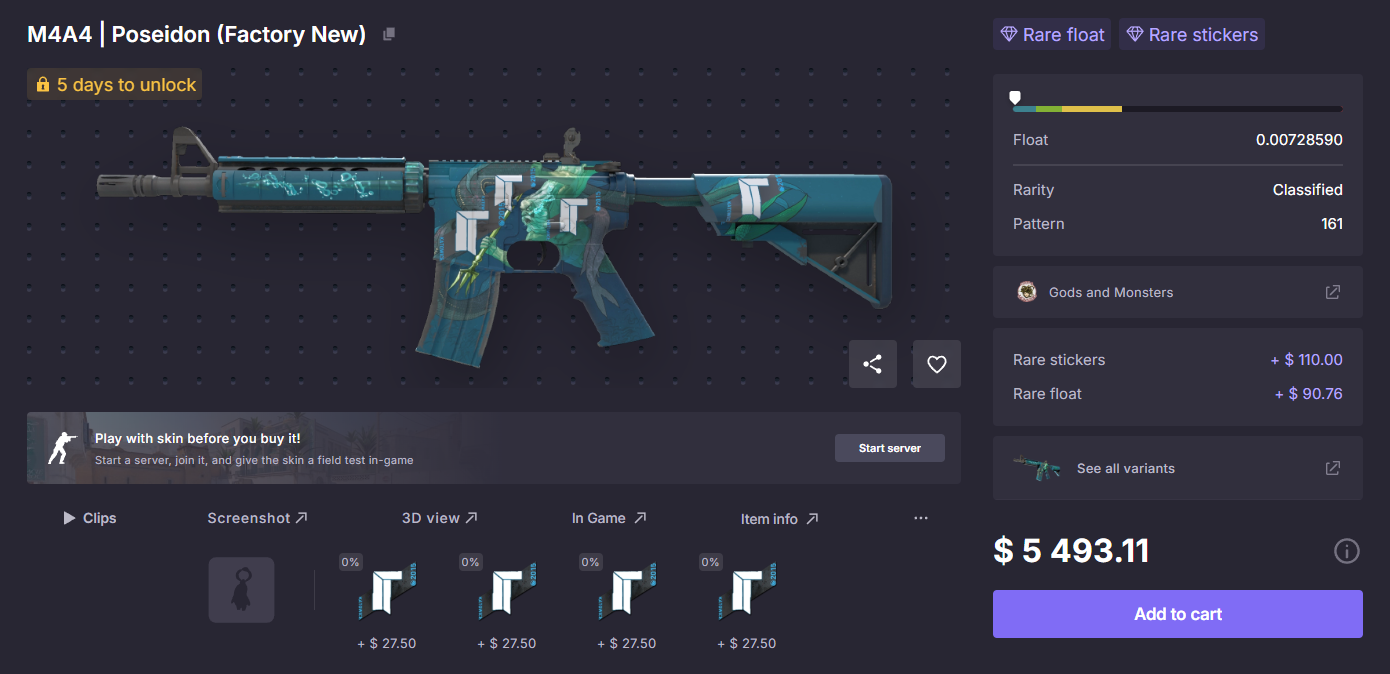
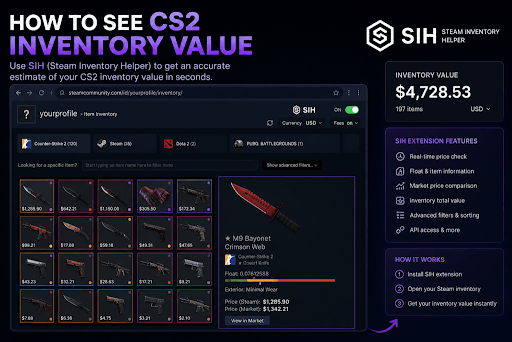
Some CS2 skins are worth up to $10,000 or even more than that. Your Steam account value might actually surprise you once you check what those digital items are really worth.
The worth of your Steam inventory varies wildly. Most players sit somewhere between $50-500, but serious collectors? They're looking at inventories worth several thousand dollars. Steam inventory value isn't just some random number either – knowing what your Steam inventory is worth helps with trading, selling, and investment decisions.
The CS2 economy is unpredictable though. Seemingly ordinary items can appreciate significantly over time, and rare skins have fluctuating prices based on demand, rarity, and condition. Market trends and game popularity also affect your Steam inventory value.
Checking your Steam account worth doesn't have to be complicated, thankfully. Whether you're a trader who needs inventory valuation tools or just a regular player curious about your collection's value, this guide will show you exactly how to see your Steam inventory value in 2025.
What Does Steam Account Value Mean in 2025?
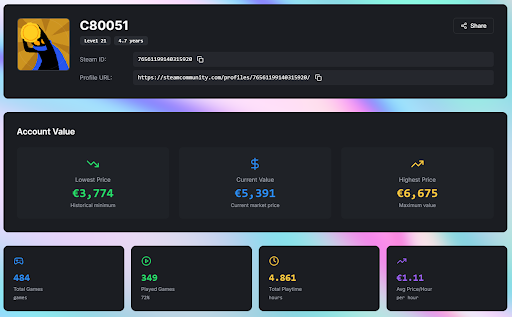
Your Steam account value goes way beyond just the games sitting in your library. When you check your Steam account value in 2025, you're looking at two distinct components that make up your digital worth.
Steam inventory vs. game library value
Steam account value breaks down into two parts that most people mix up. Your game library value represents all the games you've bought over the years. You can calculate this based on what you actually spent or the current market prices of those games.
Your Steam inventory value is different though. This covers CS2 skins, trading cards, and other collectibles that exist separately from your games. Rare CS2 skins like the M4A4 Howl or AWP Dragon Lore can add hundreds of dollars to your account's worth. Some extremely rare items like the Scar Pattern StatTrak AK47 Case Hardened #661 have sold for between $30,000 and $40,000. That's more than most people's cars.
Other factors bump up your account's overall valuation too:
Account age: Older accounts (10+ years) with limited profile badges are particularly valuable to collectors
Steam level: Accounts above Level 50 can be worth 5-10% more due to their elevated status
Badges and achievements: These cosmetic elements add prestige and demonstrate investment in specific games
Why knowing your account worth matters
Steam's Subscriber Agreement prohibits account selling, but understanding your Steam account's value still serves legitimate purposes.
Knowing your account worth gives you insight into your gaming investment. You can analyze cost-per-hour metrics and completion rates to figure out which games deliver the best entertainment value per dollar spent. This helps prioritize your gaming backlog and guides future purchases.
Many users also track their account value for insurance documentation. Digital assets are becoming increasingly valuable, so having a clear understanding of your Steam inventory can be crucial for protecting your investment against account compromise or technical issues.
Calculating your Steam account value might seem like curiosity, but it's actually an important step in managing your digital portfolio responsibly. The tools available in 2025 make this process straightforward, giving you detailed insights beyond simple totals.
How to Check Your Steam Inventory Value
Getting an accurate picture of what your Steam inventory is worth starts with one crucial step: making sure others can see it. This unlocks several valuation methods, from manual checking to automated calculators.
Make your inventory public
Before using any valuation tools, you need to set your inventory to public visibility:
Open Steam and log in to your account
Click on your username and select "View Profile"
Navigate to "Privacy Settings"
Locate the "Inventory" parameter
Change its status to "Public"
This setting lets third-party services access and evaluate your items. Once that's done, you can use any of the valuation methods below.
Use the Steam Community Market manually
For smaller inventories or checking specific items, the Steam Community Market works as a solid starting point.
Access your inventory through Steam, select the CS2 bookmark, and click on individual items to see their current market value. You'll need to check each item separately, but it gives you accurate, up-to-date pricing straight from Steam's marketplace.
Try third-party inventory calculators
Several specialized tools can calculate your entire inventory value instantly:
Steamcalculator.gg: Visit their website, enter your SteamID64, and scan your inventory
Profilerr: Paste your profile link or Steam ID into their search bar and click "Find"
Steam Inventory Helper: This browser extension automatically calculates total inventory worth based on current market prices
SteamDB Calculator: Looks up games on your profile using current prices
These tools save tons of time compared to manual checking, especially if you have an extensive collection.
Check value across multiple games
Most inventory calculators support value assessment beyond just CS2.
Steam.tools/itemvalue lets you select specific games (CS2, Dota 2, Team Fortress 2, etc.) after entering your profile link. Clash.gg provides itemized lists of all skins with their prices across different games.
Many services also offer historical tracking, showing how your inventory value changes over time. That's particularly useful if you're serious about monitoring your investments.
Factors That Influence Your Steam Inventory Worth
Several key elements determine your Steam inventory's true value beyond just owning the items. Understanding these factors helps you evaluate your collection more accurately.
Item rarity and condition
Skin rarity dramatically influences price. Covert (red) and Exceedingly Rare Special (gold) items command the highest values. Weapon condition plays an equally vital role—Factory New items typically fetch premium prices compared to Battle-Scarred versions.
Some skins break this rule though. The AWP Asiimov might be more valuable in worn conditions if players prefer certain visual effects, like the black scope in Well-Worn versions. It's one of those quirks that makes the market interesting.
Float value and pattern uniqueness
Float values range from 0.0 to 1.0 and represent wear precision beyond basic conditions. Certain "thresholds" create exponential price jumps—an item with 0.0001 float can be worth substantially more than one with 0.01.
Pattern uniqueness amplifies value even more. The AK-47 Case Hardened with the rare "Blue Gem" pattern #661 can sell for over $10,000, compared to $300 for standard versions. That's quite a difference for the same weapon.
Sticker placement and type
Stickers from rare events significantly increase skin value. Katowice 2014 stickers add 10-50% of their value to skins. Placement matters enormously—the best positions get 2-3x higher value than worst positions, with position 1 (closest to player) typically being most valuable.
Each scrape reduces value by 25-50%, making unscraped stickers worth substantially more. So don't go scraping those expensive stickers off.
Market demand and trends
Beyond technical specifications, market psychology drives inventory worth. Supply and demand fluctuations create pricing volatility. Tournament-related hype often inflates prices temporarily.
Collectors value older items from discontinued collections (like Cobblestone) significantly more. Regional preferences also impact value—Asian markets pay higher premiums for specific patterns than Western markets. The market never sleeps, and preferences change constantly.
Tips to Track and Maximize Your Inventory Value
Maximizing your Steam inventory value takes strategic monitoring and smart trading decisions. With the right techniques, you can potentially increase what your Steam account is worth over time.
Monitor price changes regularly
Price fluctuations are everything when it comes to successful trading. Tools like Hexowatch can send automated alerts whenever prices change on your watchlist. Services such as Visualping monitor specific sections of Steam pages and notify you through email or SMS when discounts appear. SteamDB tracks historical lows too, helping you identify optimal selling times.
Use trusted marketplaces for trading
Pick platforms based on reliability, not just convenience. Reputable marketplaces like Pricempire compare prices across 40+ marketplaces simultaneously. When selling, remember that Steam Community Market takes 10% commission, whereas sites like Marketplace.tf might offer better rates with similar security protections.
Diversify your inventory
Spreading investments across multiple games and item types reduces risk significantly. Don't focus solely on one game. Consider maintaining collections from various popular titles to protect against sudden market shifts or game-specific devaluations.
Avoid common pricing mistakes
Never trust displayed prices without verification—pricing errors happen frequently. Don't panic sell during market fluctuations either; patient traders typically secure better returns. Review your inventory value quarterly since market conditions change consistently.
Conclusion
Steam account value is more than just a number – it's your digital gaming investment across games and collectibles. Knowing what your Steam inventory is worth helps you make smarter decisions when trading, selling, or investing in the CS2 economy.
You now know the essential steps to check your Steam account value in 2025. Making your inventory public unlocks valuation tools, and you understand how factors like item rarity, float values, and patterns affect your collection's worth.
Steam item markets shift constantly based on demand, game popularity, and collector preferences. Regular monitoring through specialized calculators keeps you informed about price changes and trends. This vigilance helps you avoid missed opportunities and identify optimal trading times.
Diversification across multiple games protects your investment from sudden market shifts. Using trusted marketplaces for trading ensures fair value while avoiding common pricing mistakes.
Steam officially prohibits account selling, but knowing your account's worth still provides valuable insights into your gaming investment. The tools and knowledge shared here help you track, protect, and potentially grow your Steam inventory value in 2025 and beyond.