Once Upon a Katamari is the latest entry in the long-running, and strange Katamari series—a franchise famous for its colorful visuals, quirky humor, and utterly unique gameplay loop. As someone new to the series, I wasn’t quite sure what to expect going in. What I got was an experience that was both charming and chaotic in equal measure.
If you’re familiar with the Katamari games, you’ll feel right at home here. But if you’re not, be prepared—this one throws a lot at you all at once.
Gameplay & Story
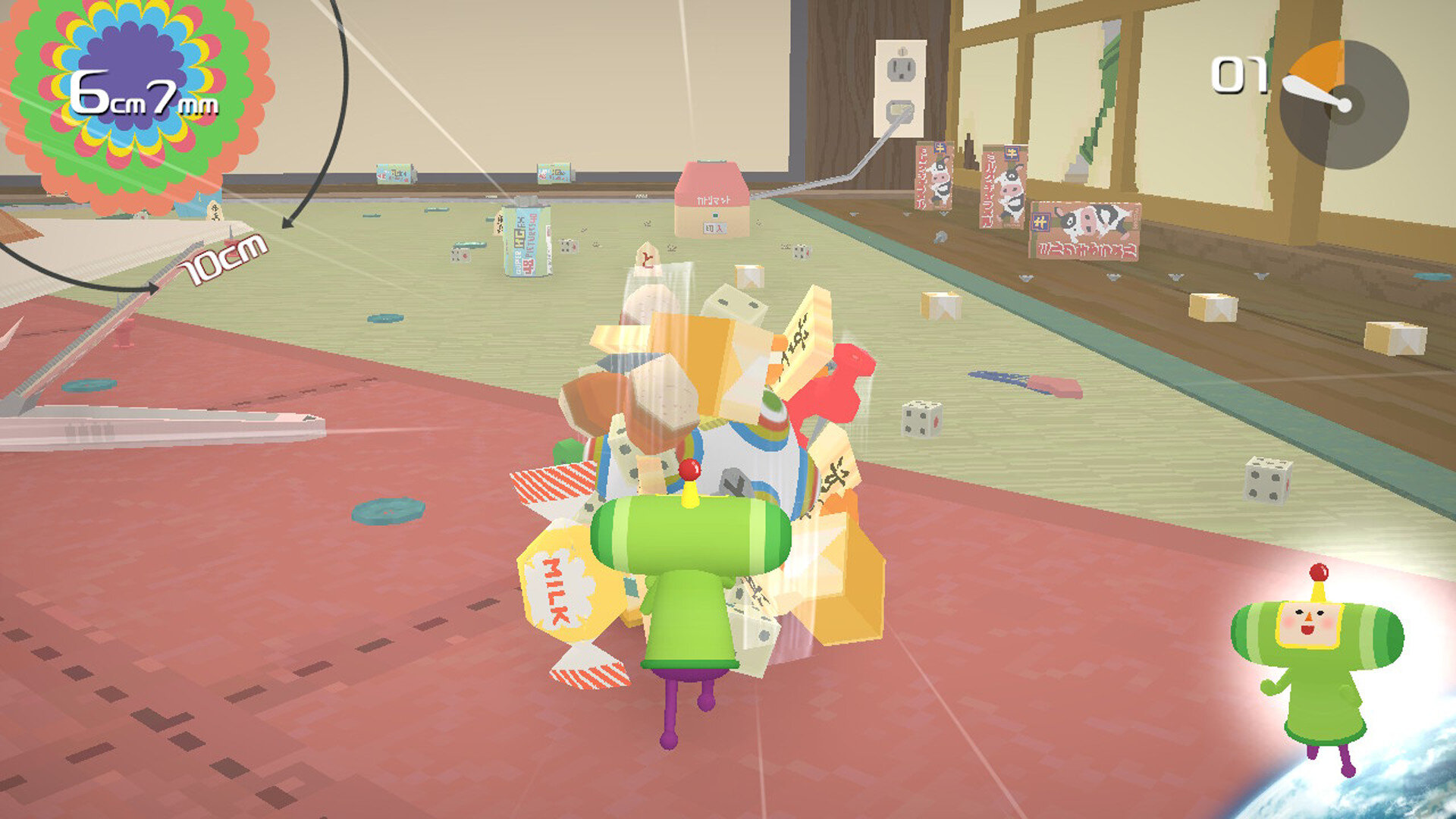
At its core, Once Upon a Katamari sticks to what made the franchise famous. You control a tiny royal character rolling around a sticky Katamari ball, picking up everything in sight to make it grow. Starting small—like collecting paperclips and candy—you’ll eventually roll up entire neighborhoods and cities. It’s absurd, but that’s the charm.

The controls are where the experience might lose some first-timers. Movement is handled by using both analog sticks to “push” the Katamari, and while that’s faithful to the original games, it’s definitely awkward at first. Luckily, Once Upon a Katamari does make some effort to ease new players in with helpful tutorials and a gentler introduction to its chaos. Once you get used to it, the satisfaction of watching your Katamari snowball out of control is unmatched.
The story keeps things light and comedic. The King of All Cosmos returns, full of ego and flair, and his royal family continues to bring their brand of weird, offbeat humor. It’s nonsensical, but in the best possible way—a perfect fit for this franchise’s quirky identity. It’s fun, creative, and satisfying once you adjust, but the controls will take patience for newcomers.

Design & Presentation
Once Upon a Katamari bursts with personality and color—sometimes too much of it. The game’s signature low-poly, toy-like visuals are undeniably charming, but they can also be overwhelming. Every environment feels packed to the brim with detail, objects, and bright colors vying for your attention. At times, it almost feels like being surrounded by pop-up ads—everything’s demanding your eyes at once.

While longtime fans will probably appreciate the trademark chaos, newcomers might find the visual clutter a bit much. It can be tough to focus on your Katamari’s path when the screen is filled with so many moving parts and competing colors. For players with shorter attention spans, this design can feel exhausting after longer sessions.
That said, the game does look great technically. It runs smoothly with no performance drops, and the upbeat soundtrack ties the experience together nicely. The presentation might be overwhelming, but it’s undeniably polished and full of heart.
Feedback & First-Time Impressions
Coming in without any prior Katamari experience, I found Once Upon a Katamari to be a lot to process. The chaotic visuals and unconventional controls can feel overwhelming if you’re not used to games like this. It’s easy to lose focus when so much is happening on screen, and I often felt like I was fighting the controls more than mastering them.
That said, I understand why fans adore this series. Beneath all the madness lies a unique and joyful experience. It’s unlike anything else in gaming—silly, creative, and oddly satisfying once it clicks.
Final Verdict
Once Upon a Katamari is a well-made, imaginative, and faithful addition to the Katamari legacy. It’s not the easiest game to jump into for first-time players, but once you embrace its weirdness, it’s a fun ride that rewards patience and curiosity. Longtime fans will find plenty to love here, while newcomers might walk away confused—but intrigued.
Once Upon a Katamari is available now on PC via Steam, Xbox Series X|S, PlayStation 5, and Nintendo Switch.