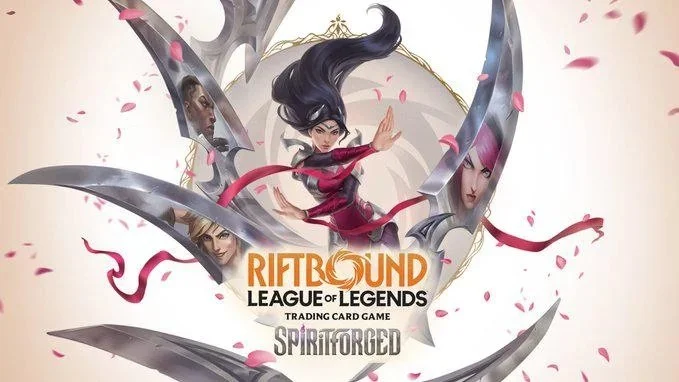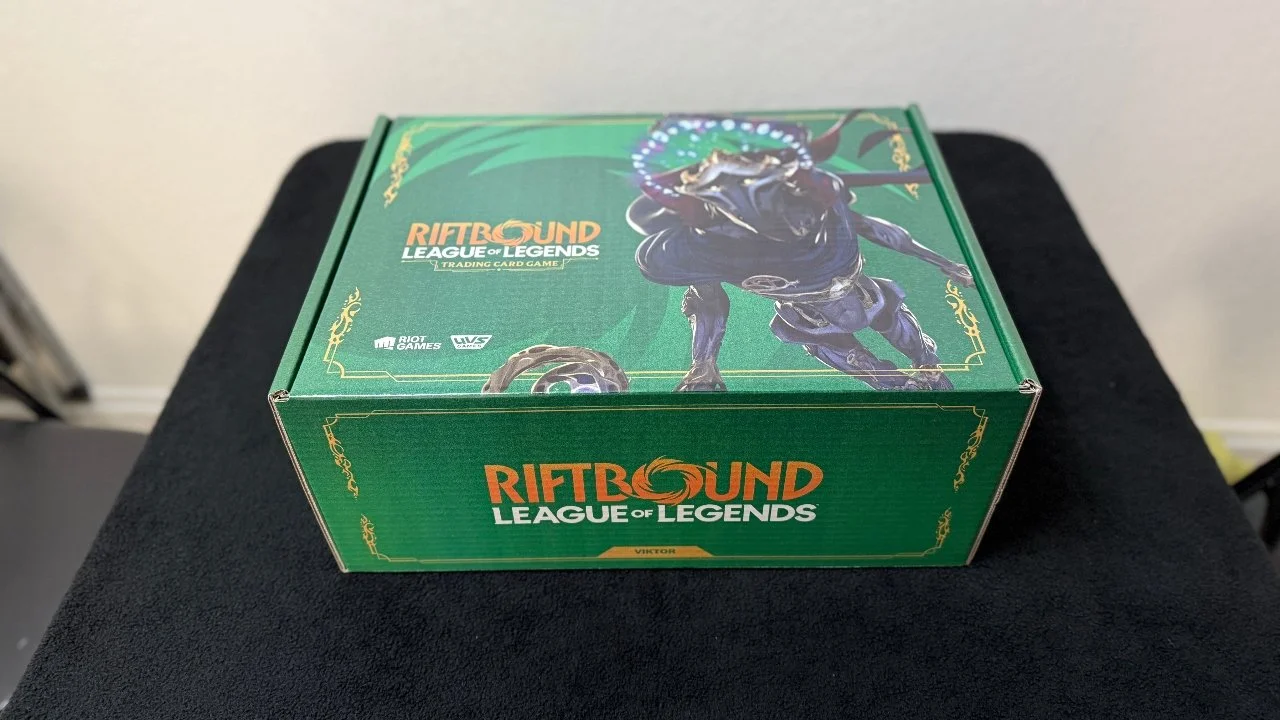
Riftbound is still early in its lifespan, and that makes every new set feel especially important. These first few releases are not just adding cards to the pool, they are shaping the identity of the game itself. That is part of what makes Riftbound: Spiritforged feel like such a meaningful release. It does not simply expand on what Origins started. It pushes the game forward with new mechanics, new strategies, and a stronger sense of what Riftbound wants to be.
Spiritforged feels like a confident second set. It introduces a wave of new tools while still respecting the archetypes and deck foundations that players have already started building. Some Legends clearly expand on existing strategies, while others open the door to entirely different play patterns. That balance is one of the biggest reasons this set works so well. It feels fresh without feeling disconnected.
What is Riftbound: Spiritforged?
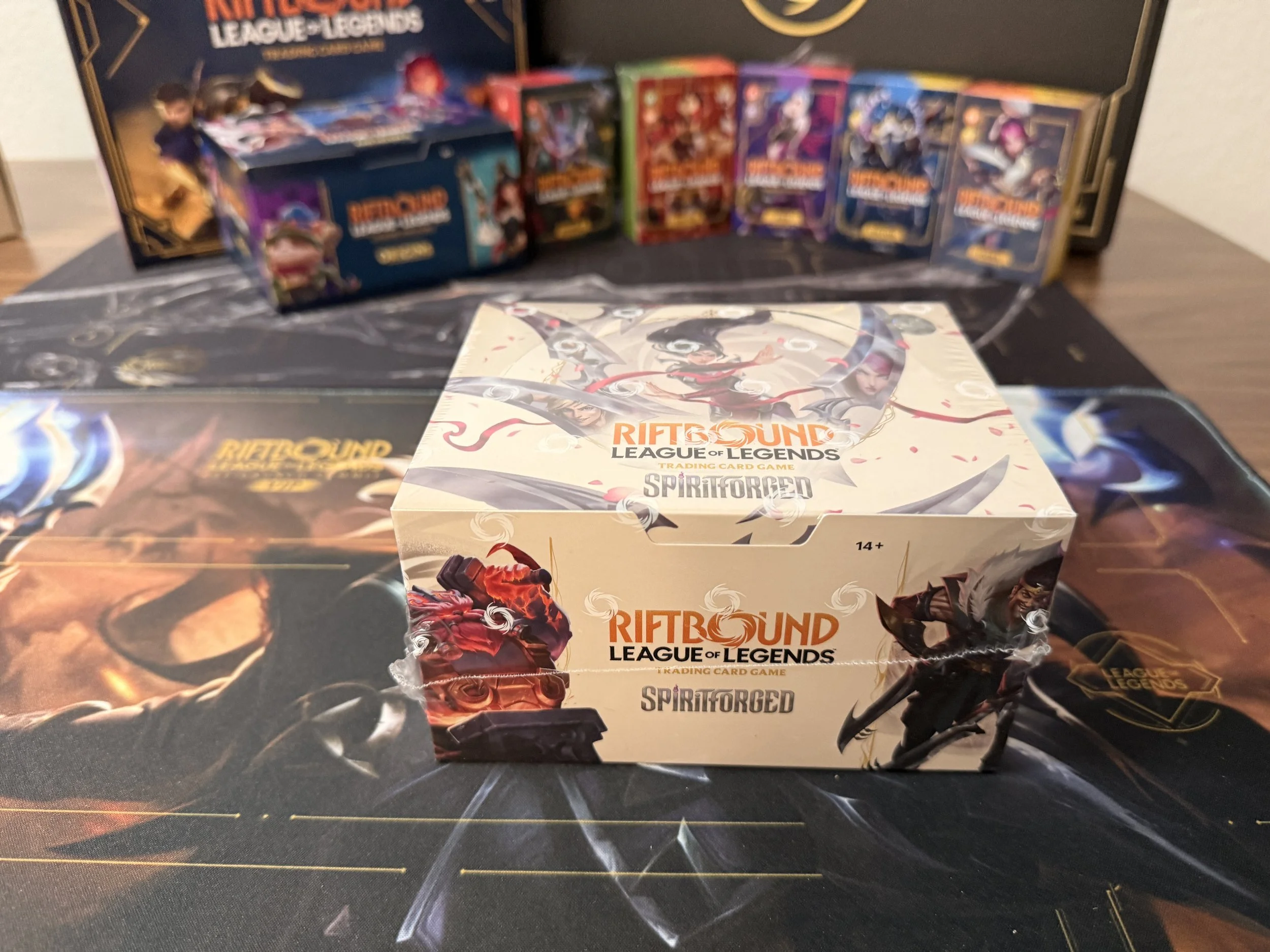
Spiritforged is the second main set in Riftbound, and even though that may not sound like much on paper, it is a big step for the game. A second set is where a card game starts proving whether it has depth, direction, and long-term potential. In that regard, Spiritforged is a strong showing.
Going into Riftbound’s early life, I expected the game to grow steadily and maybe even cautiously. Instead, Spiritforged feels like Riot and UVS making it clear that they want Riftbound to become a regular part of players’ weekly rotation. This is not a small follow-up set that quietly adds a few options. It feels like a real evolution.
The major thematic focus here is Ionia. While the Legends still represent multiple regions and playstyles, Spiritforged has a very clear flavor identity tied to Ionia, and that comes through especially well in the artwork, card themes, and the way certain colors receive stronger support.
New mechanics in Riftbound: Spiritforged
One of the biggest strengths of Spiritforged is how much it adds mechanically. The set introduces Equipment, Gold, and Repeat, and each of those mechanics does more than just add surface-level variety. They actively create new lines of play and reshape the way existing decks can be built.
Equipment
Equipment is the most impactful addition in the set. These Gear cards function as equipable weapons or armor that can be attached to units by paying an equip cost. On a basic level, some Gear cards simply provide stat boosts like extra Might, but others create much more dramatic gameplay shifts.
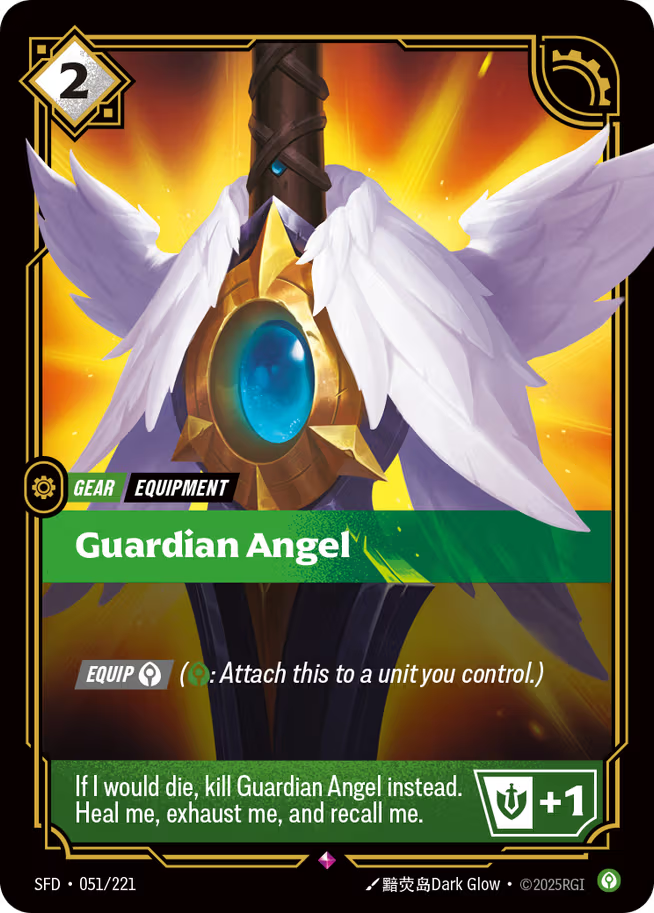
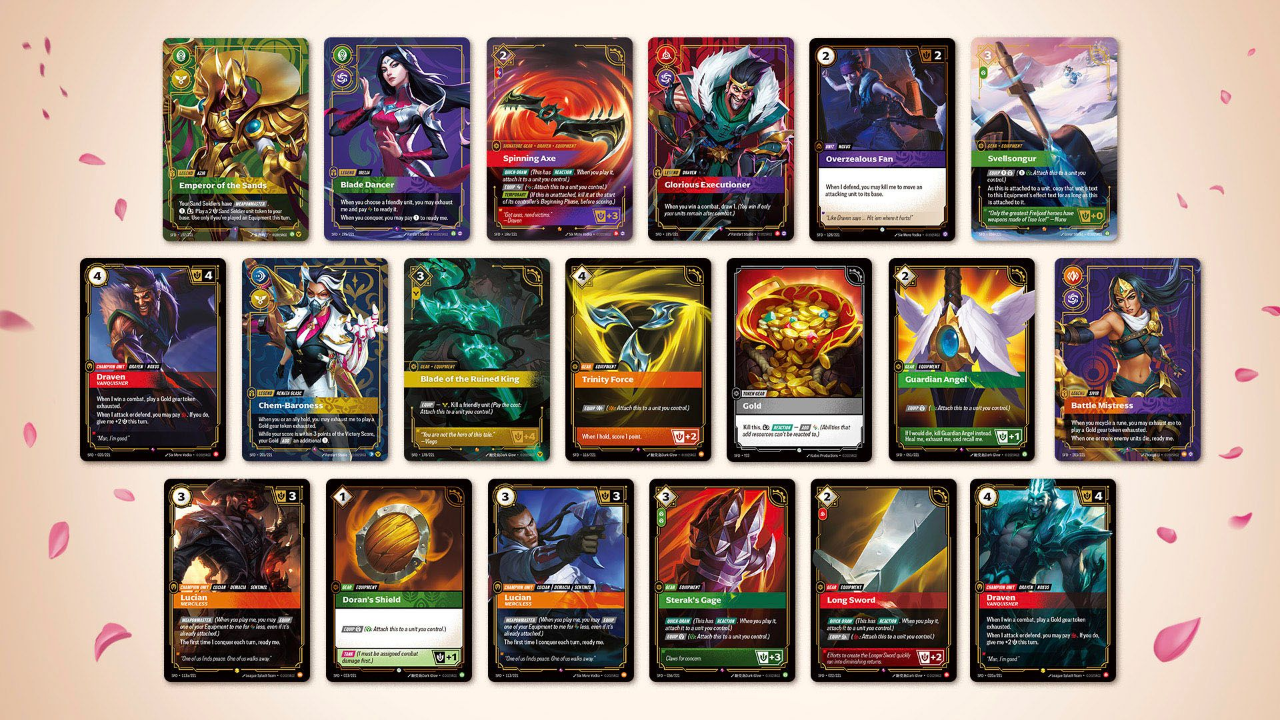
A card like Guardian Angel is a great example of why Equipment matters. It is not just a stat modifier. It changes combat math and can force opponents to rethink how they approach removal and battlefield pressure. That kind of effect gives Gear cards real strategic weight.
Spiritforged also adds Signature Gear, which is a great mechanical and flavor win. In the same way certain Legends have Signature Spells, some now come with iconic pieces of equipment tied directly to their identity. Draven’s Spinning Axe is an obvious standout, and Ornn having multiple Signature Gears like Forgefire Cape, Shurelya’s Requiem, and Rabadon’s Deathcrown helps make the mechanic feel immediately distinct.
There are also extra layers built around Equipment. Some Gear cards have Quick Draw, which allows them to be played at Reaction speed instead of normal speed. That alone makes combat and timing much trickier, because now a player can represent more than just a combat trick in hand. Spiritforged also introduces unit-based synergy like Weaponmaster, which reduces equip costs and makes certain units especially valuable in Gear-focused decks.
Altogether, Equipment is not just one new mechanic. It is a full package of support systems, timing tricks, and deckbuilding incentives. That is why it feels like the most important addition in the set.
Gold
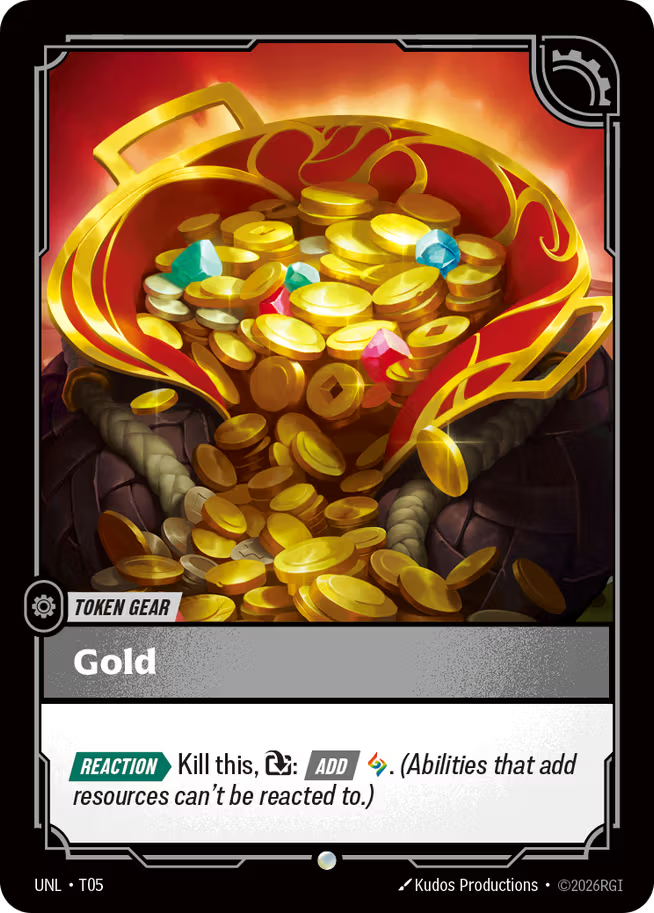
Gold Gear tokens are much simpler on the surface, but they still add an entirely new angle to Riftbound. Gold can be spent in place of power, which essentially gives the game another form of ramp. That is a big deal because resource acceleration opens up whole new deckbuilding directions.
Gold helps enable aggressive turns, fuels activated abilities, supports spell-heavy lines, and gives slower decks another way to bridge toward stronger turns. Even if the mechanic itself is easy to understand, the applications are broad. Gold may not feel as flashy as Equipment, but it adds a new layer of pacing and efficiency that the game did not really have before.
Repeat
Repeat is probably the most deceptive mechanic in Spiritforged. If a spell has a Repeat cost, it can be cast once for its normal cost and then again for that Repeat cost. That sounds straightforward, but in practice it creates a lot of pressure.
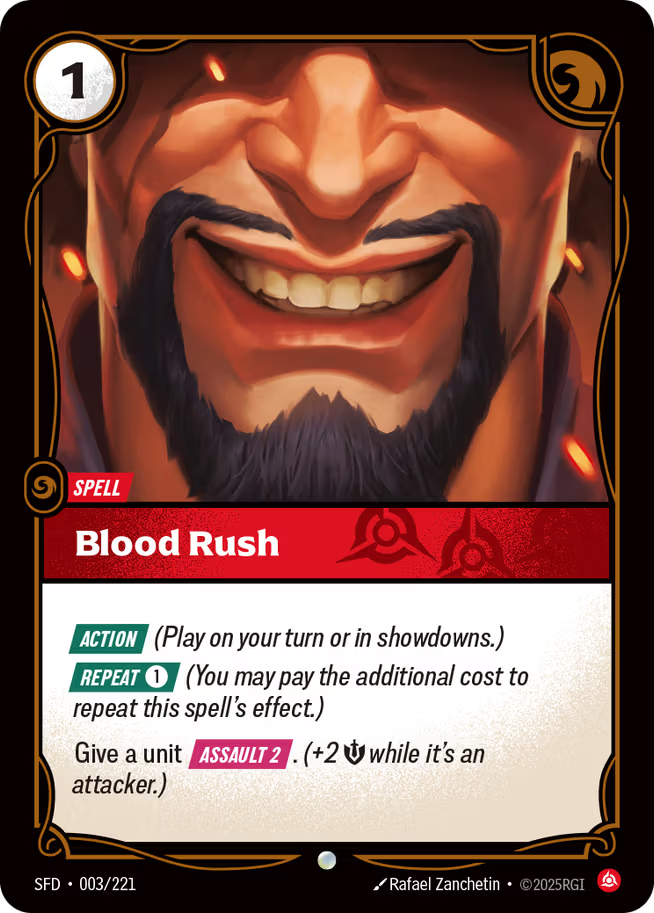
Repeat changes how opponents have to think about your available resources. A single card in hand no longer just represents one trick, one buff, or one burst of damage. It can represent a second copy of that effect in the same sequence. That makes Repeat feel very aggressive, very sneaky, and very capable of stealing combat steps or punishing defensive assumptions.
Of the three new mechanics, Repeat may be the most explosive in actual gameplay. It is the kind of mechanic that creates those “I thought I was safe” moments, and that makes it very appealing for players who like surprise factor and momentum swings.
Overall thoughts on the new mechanics
All three of these mechanics bring something meaningful to Riftbound. They strengthen preexisting archetypes, create new ones, and make deckbuilding feel more open rather than more restricted. Of the three, Equipment stands out the most because it offers the widest range of applications, but Gold and Repeat both add real value as well. Spiritforged does not feel like a set that added mechanics just for the sake of novelty. These mechanics matter.
Best cards in Riftbound: Spiritforged
Excluding Champions and Signature Spells, Spiritforged still offers a lot of strong deckbuilding pieces. This is one of the areas where the set shines most. It is not only giving players exciting Legends to build around; it is also filling the broader card pool with tools that can strengthen many different archetypes.
Best Equipment cards
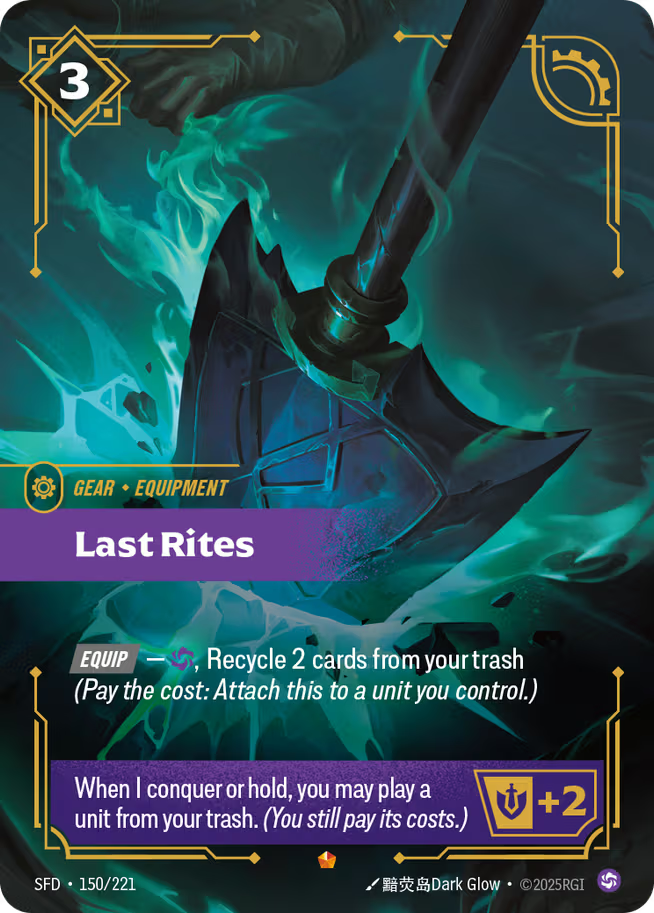
Last Rites is one of the coolest Equipment cards in the set. It gives +2 Might and grants the unit the ability to play a unit from your trash whenever it conquers or holds. In any deck that wants to use the graveyard as a resource, that is a very real payoff. I especially like the idea of this card in a Jinx discard shell where it can help convert graveyard value into battlefield pressure.
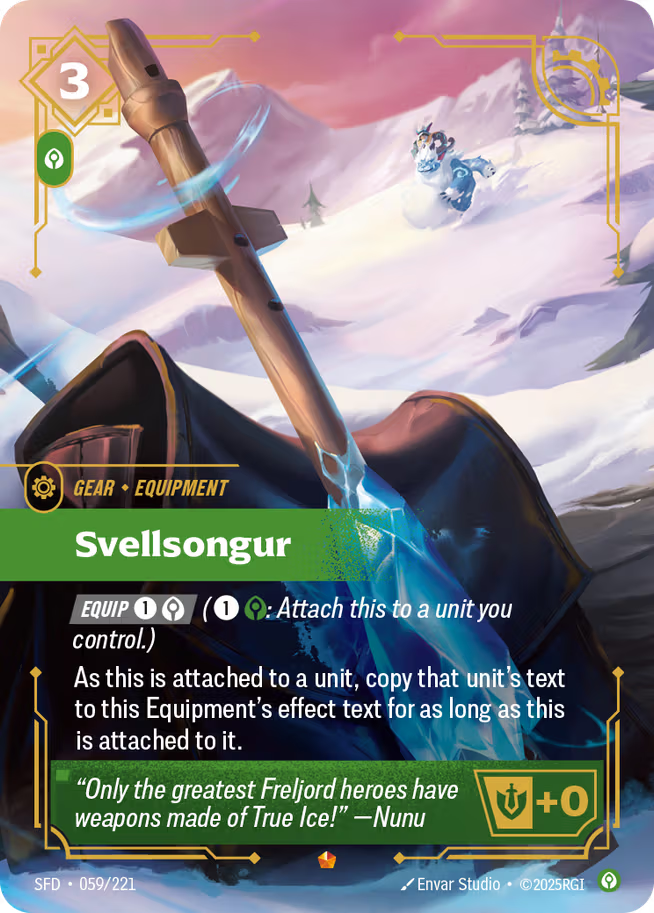
Svellsongur is another standout, especially for Calm decks. Copying a unit’s text onto the Equipment while it is attached opens up all sorts of possibilities. In the right shell, this card can become an engine piece or a value multiplier rather than just a support card. That makes it one of the more creative Gear designs in the set.
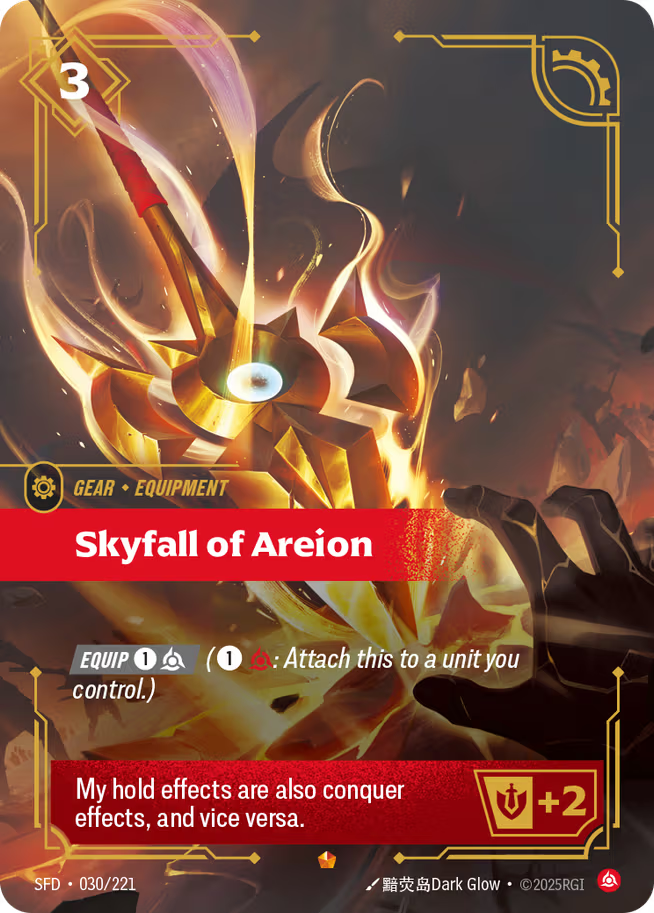
Skyfall of Areion is a great option for aggressive Rage decks that care about conquering and holding battlefields. It is one of those cards that feels built to keep pressure on the opponent and reward the player for staying proactive. Spiritforged does a good job giving Equipment meaningful identities, and this is one of the clearest examples.
Best spells and interaction pieces
Among spells and support cards, Chaos and Calm seem to receive some of the strongest overall help in Spiritforged, which makes sense given the set’s Ionian flavor. Those colors already had appealing play patterns, and Spiritforged gives them even more ways to stay flexible and threatening.
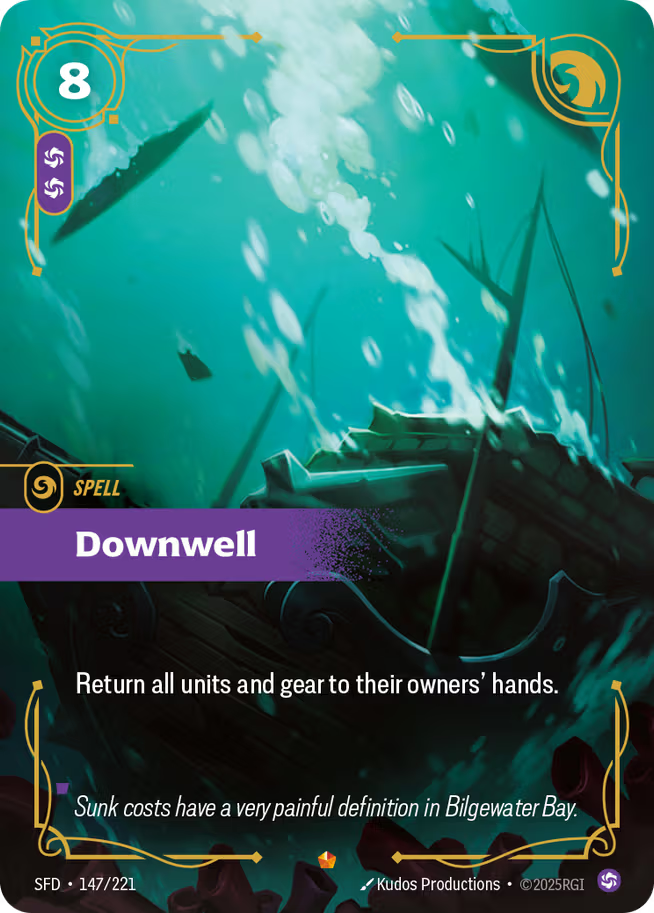
Downwell stands out as a strong interaction piece that can help reset a board state when you are falling behind. That type of card is especially important in a game where tempo and battlefield control matter so much.
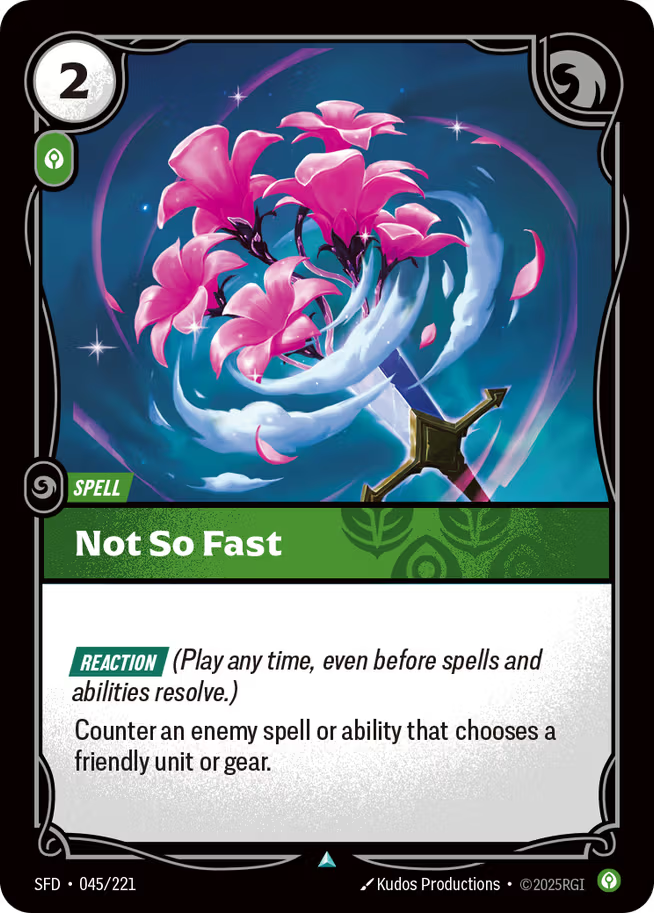
Not So Fast is another big addition, particularly for Calm players. Extra counterspell support makes the archetype even better at playing on your own terms and forcing opponents into awkward lines.
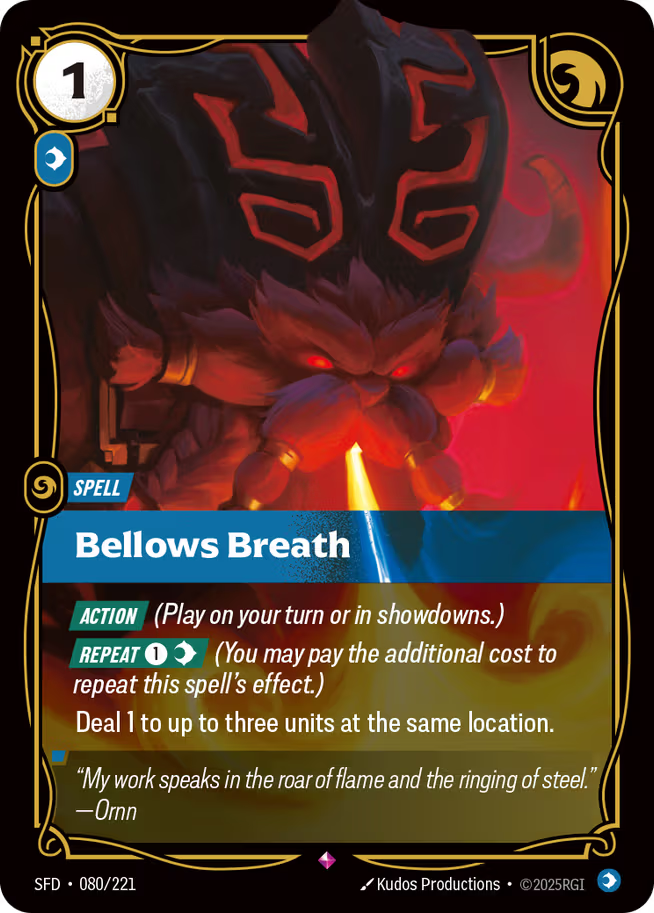
Bellows Breath is also impressive, especially because Repeat makes it scale so well. It is an efficient answer to token-heavy boards, and the ability to double it up can create some nasty blowouts. Against low-Might units, this card can completely swing the board.
Best non-Champion units
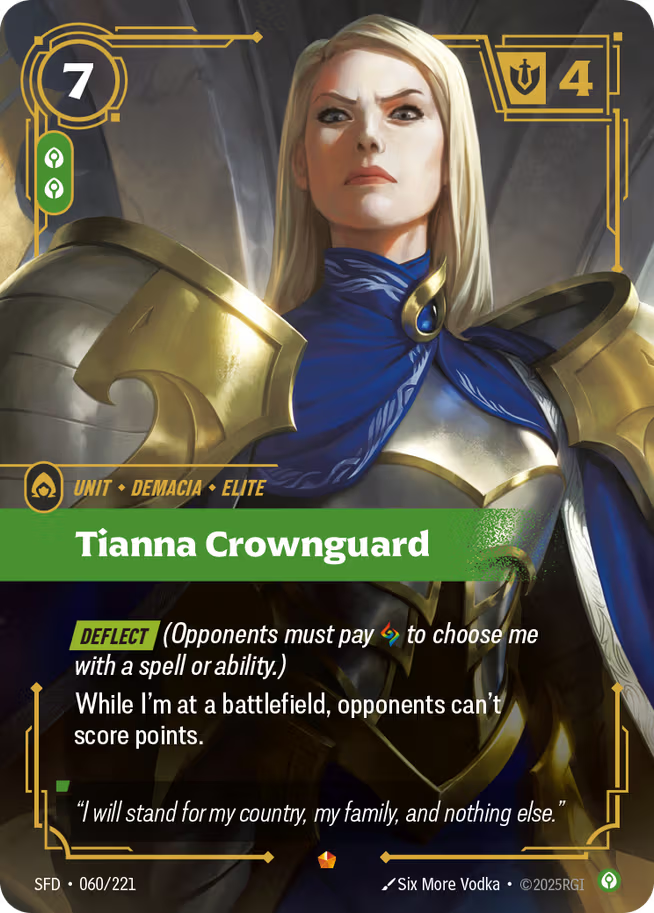
Tianna Crownguard might be the strongest non-Champion unit in the set. Preventing opponents from scoring points while she is at a battlefield is an enormous effect. That kind of control piece can completely shape how a game develops, especially in decks that want to slow the pace and force opponents to play awkwardly.
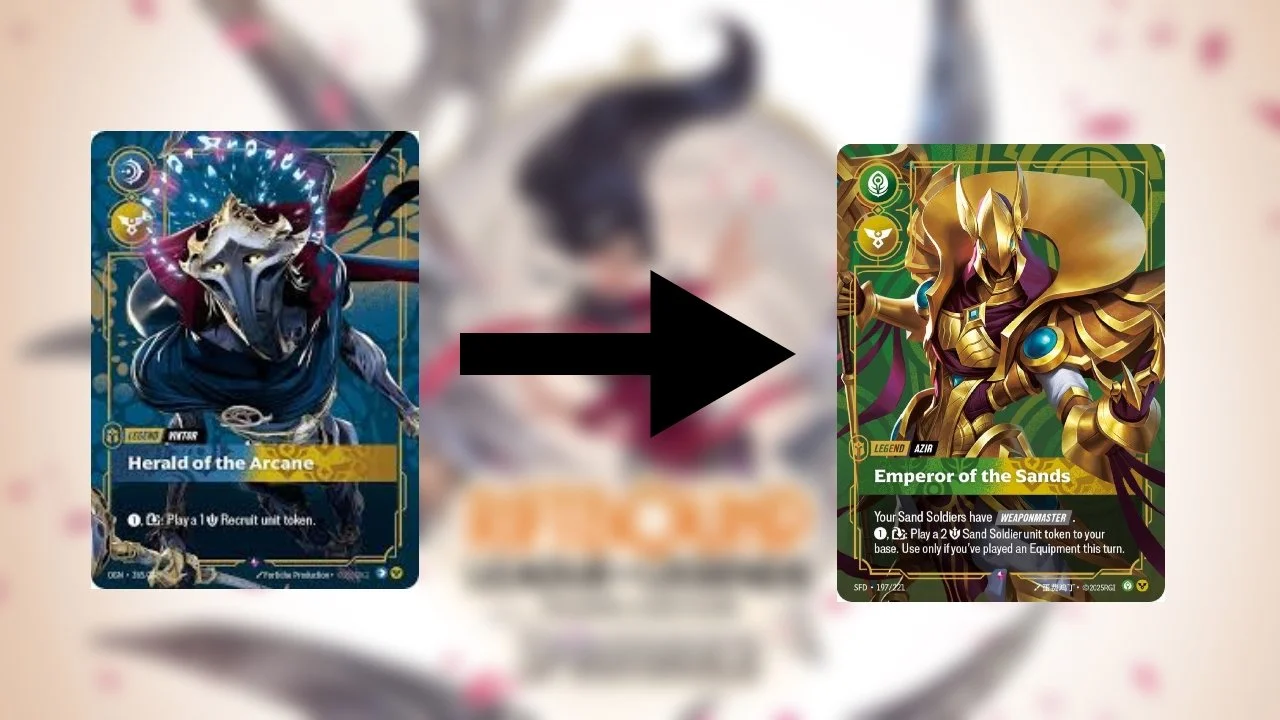
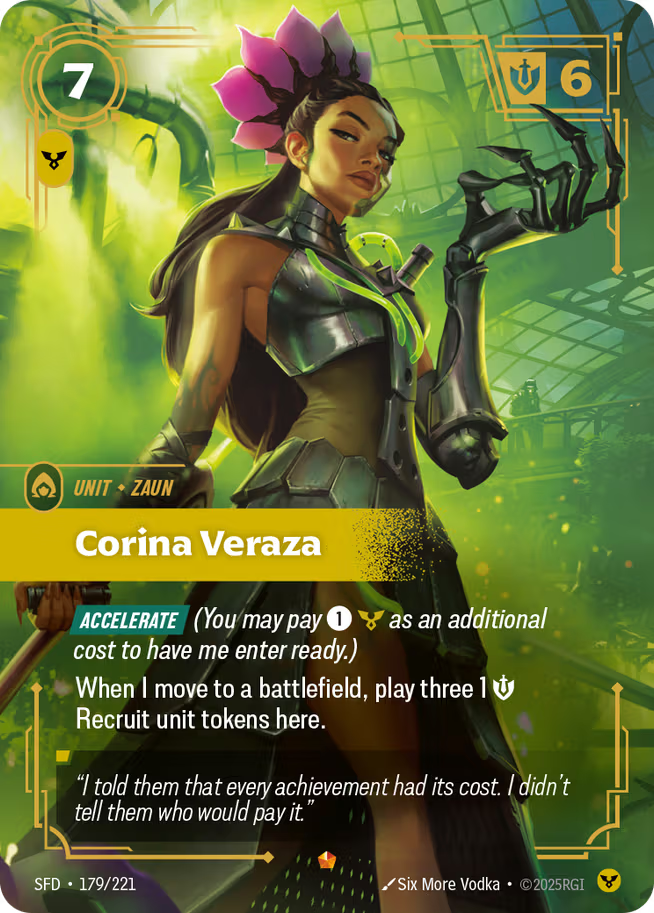
Corina Veraza is another card I am very high on, especially for token-focused builds. In an Order shell, creating three 1-Might Recruit tokens when she moves to a battlefield is immediate board presence and exactly the kind of effect my Viktor deck wants. She feels like one of the cleanest examples of Spiritforged supporting older archetypes with powerful new upgrades.
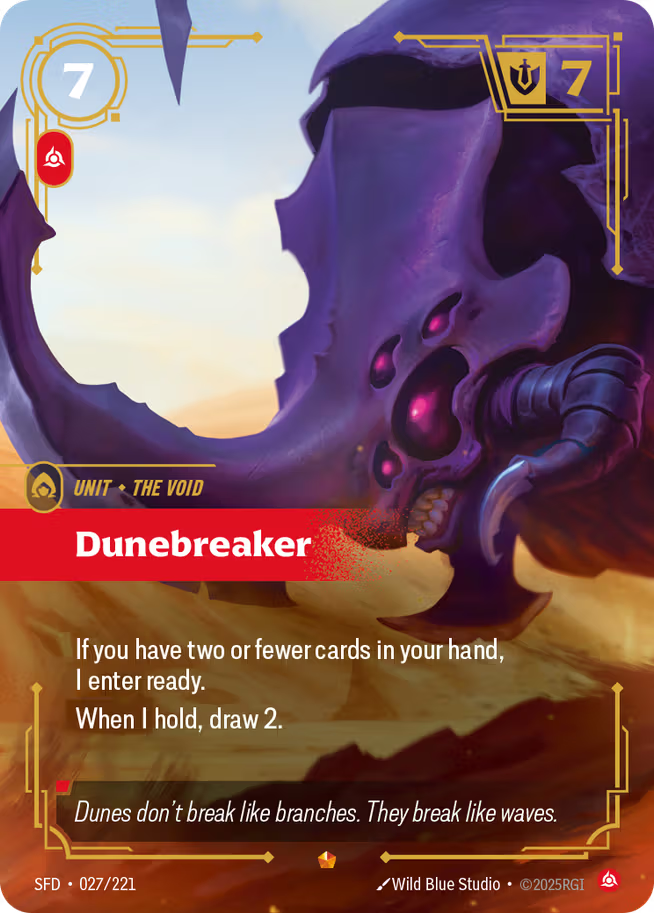
Dunebreaker feels a bit more archetype-specific, but the upside is real. Decks that want to cast aggressively, pitch cards, or play around the trash will absolutely appreciate the extra card flow it offers.
Top five legends in Riftbound: Spiritforged
Spiritforged includes 12 Legends, and one of the most impressive things about the set is how distinct they feel. Even when a Legend overlaps with an existing archetype, it usually approaches that archetype in a different way. That is exactly what Riftbound needs in its early life. The game does not just need powerful cards; it needs clearly defined identities that players can connect with.
Here are the five Legends that stand out most to me.
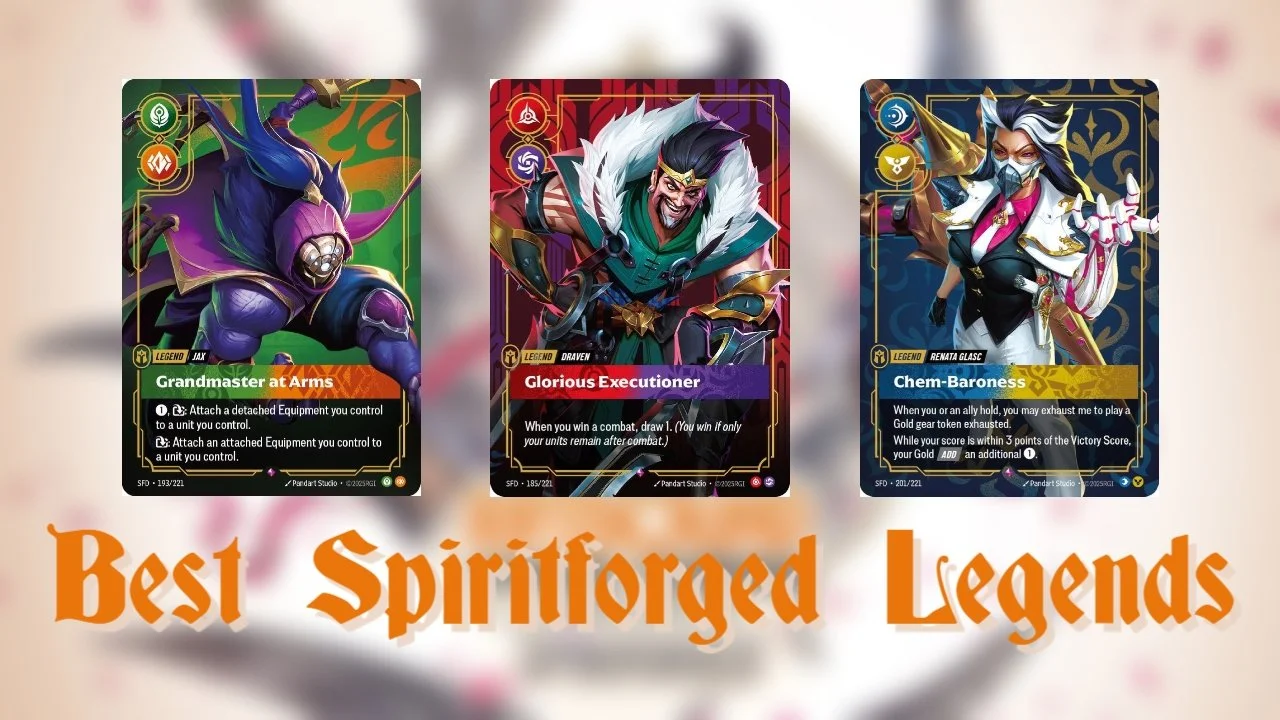
Draven – Glorious Executioner
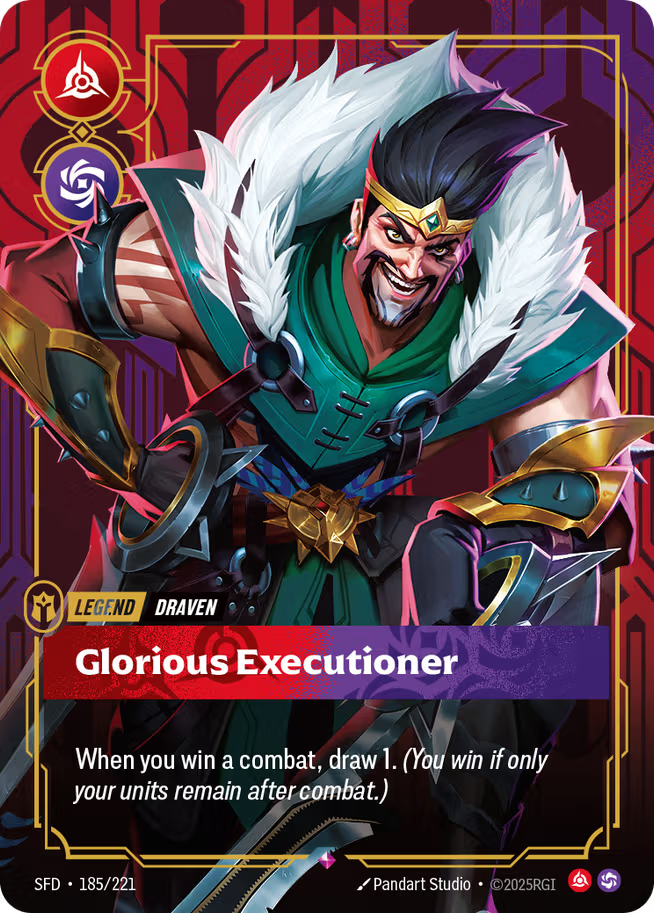
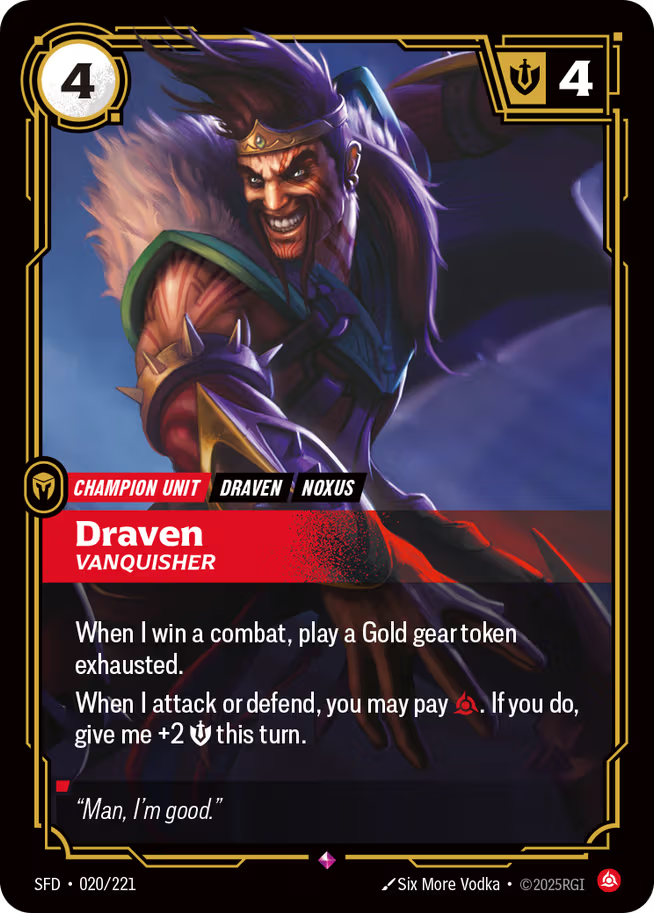
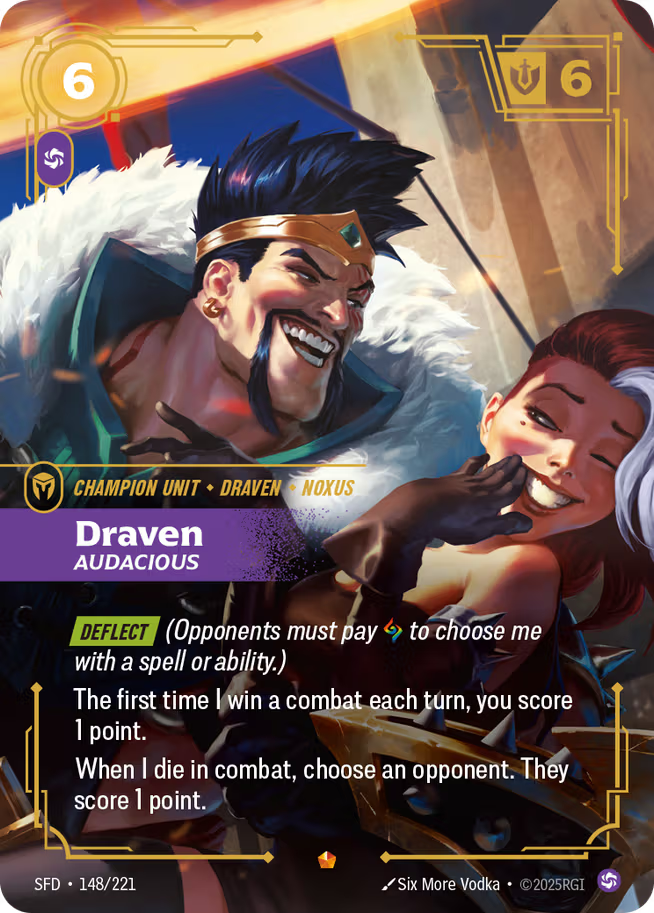
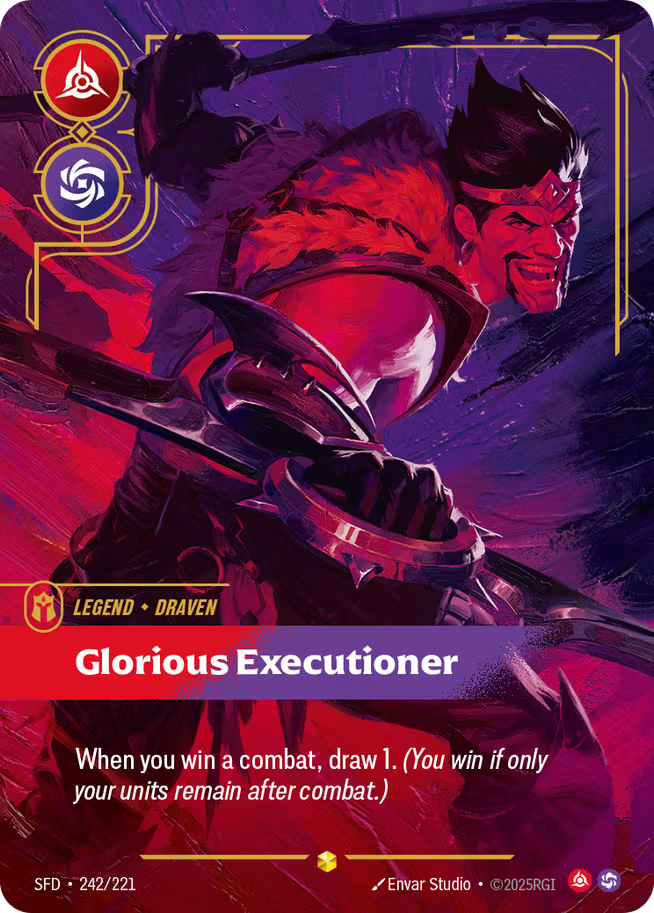
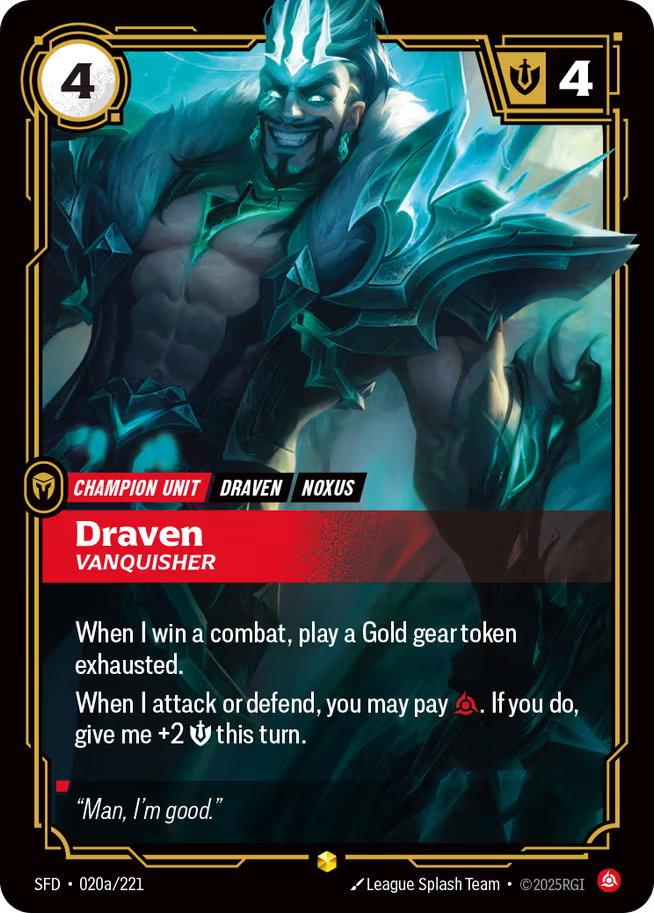
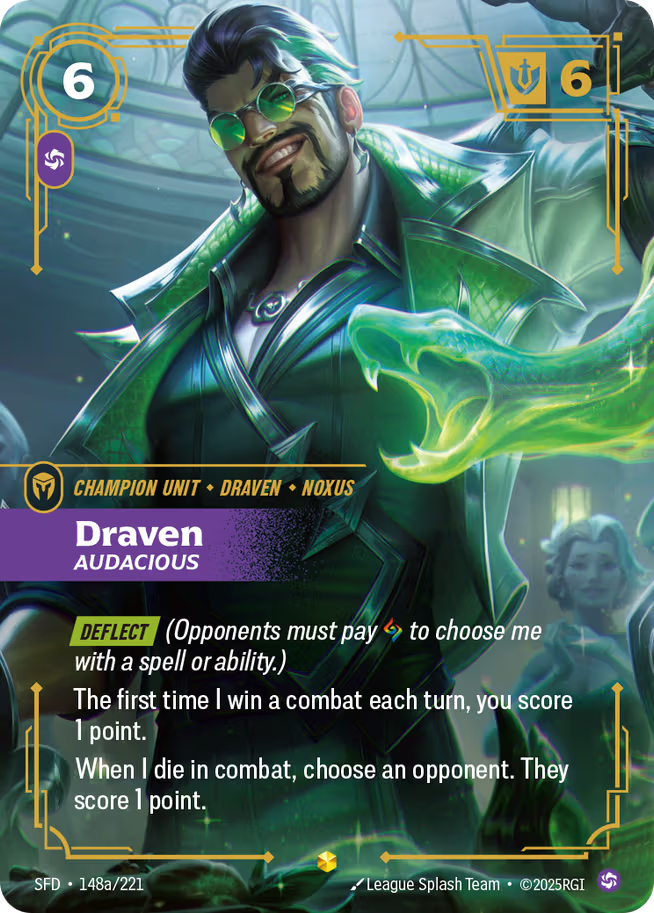
Draven feels like one of the most likely breakout competitive Legends from the set. He rewards winning combats by drawing cards, which means he naturally supports proactive gameplay without running out of gas. That is a scary combination.
What makes Draven especially appealing is that he does not force a single exact build path. You just need to be winning combats. Whether that happens through aggression, clever combat manipulation, or efficient battlefield pressure is up to the deckbuilder. That flexibility gives Draven a lot of room to grow.
Ezreal – Prodigal Explorer
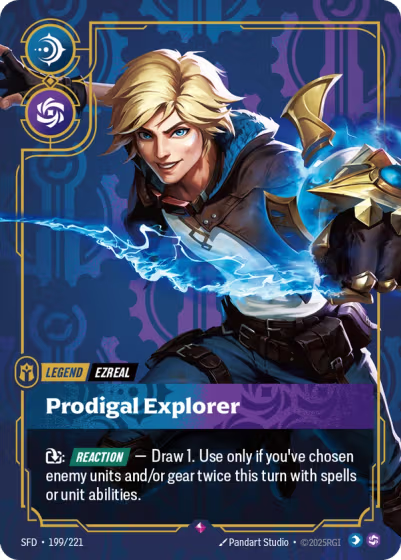
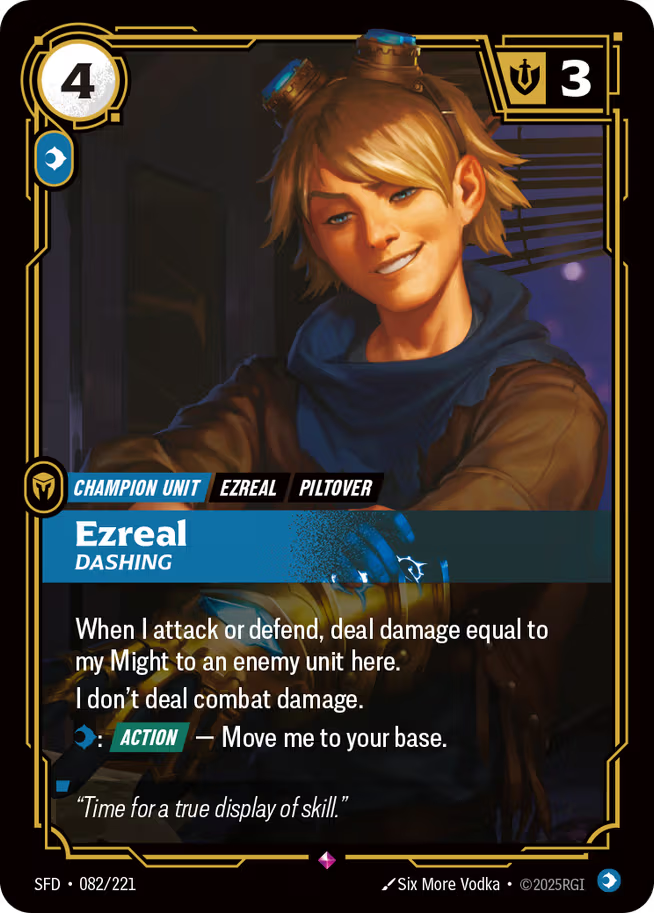
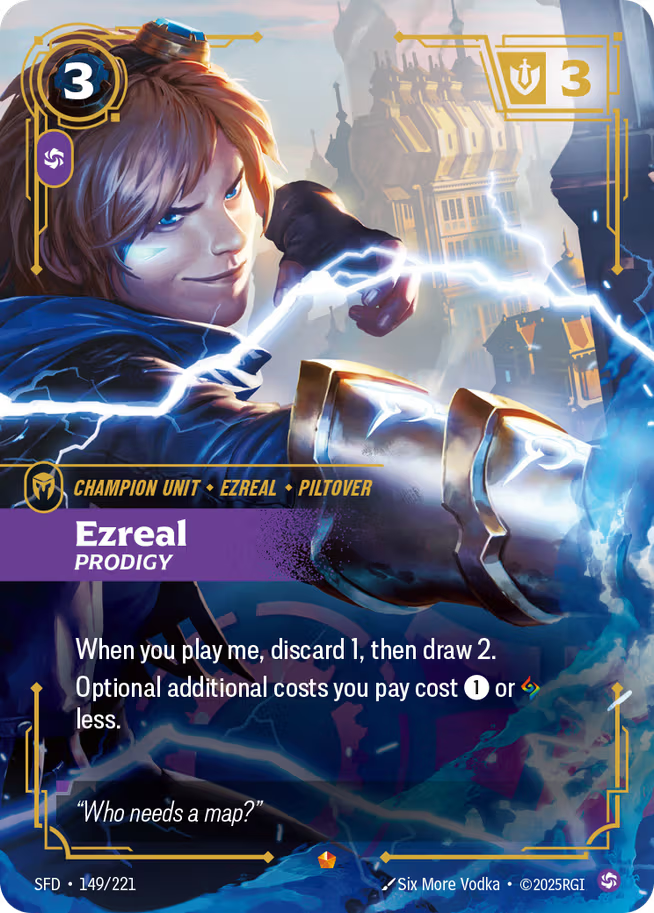
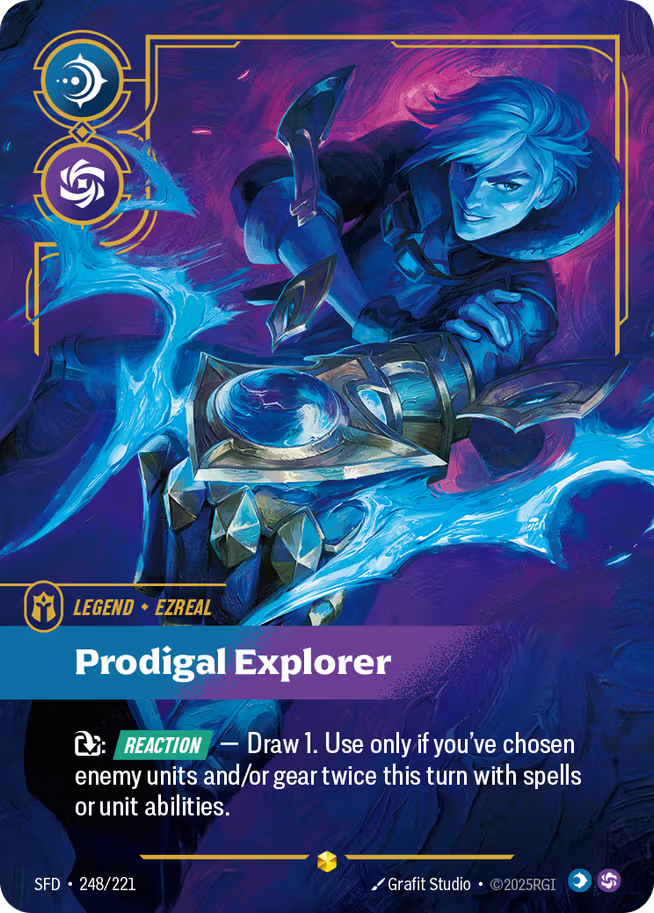
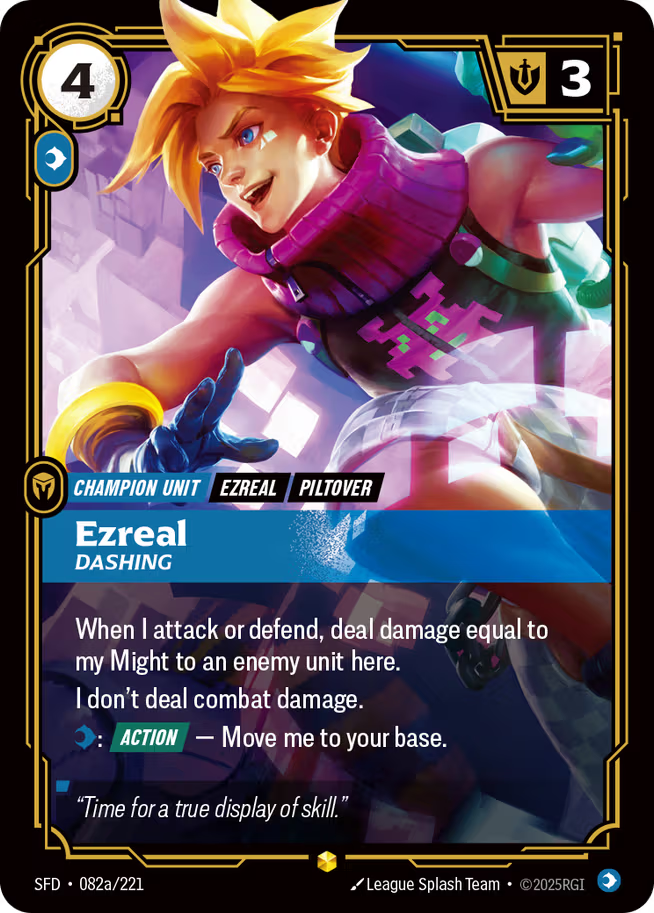
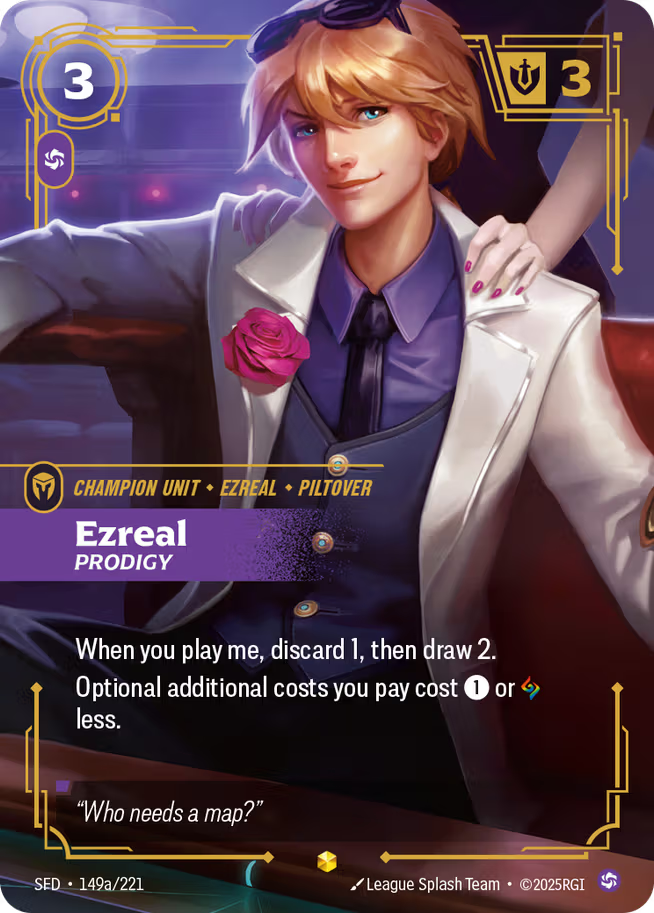
Ezreal is aggressive too, but in a more technical way. His playstyle leans on Gears and spells that target your own units, which means the deck can feel very timing-dependent. He is not just about swinging hard; he is about using the right tool at the right moment.
Compared to Draven, Ezreal offers less raw card advantage, but he makes up for that with layered sequencing and synergy potential. He feels like the kind of Legend that rewards tighter play and deeper familiarity with your deck.
Sivir – Battle Mistress
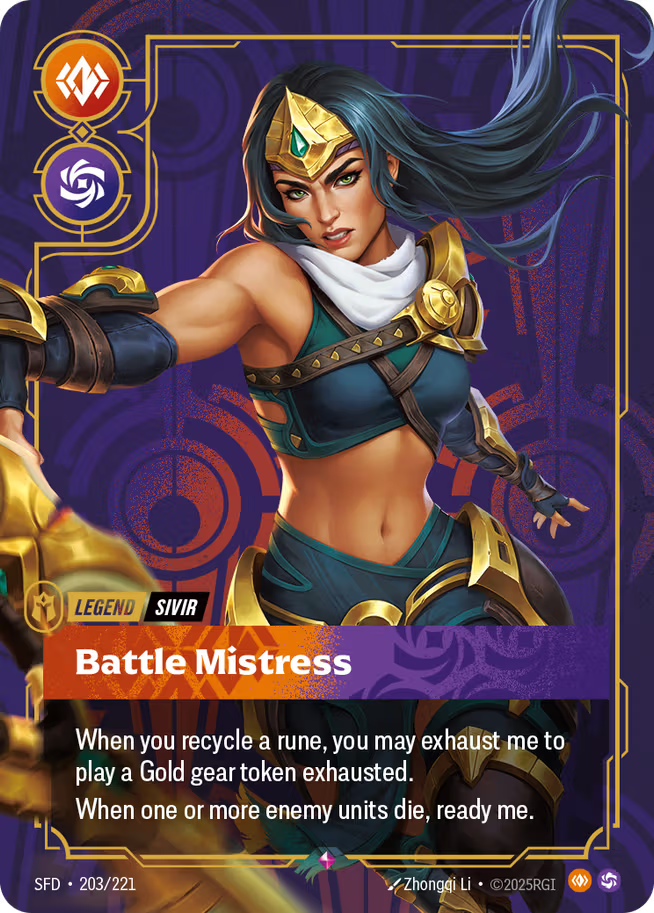
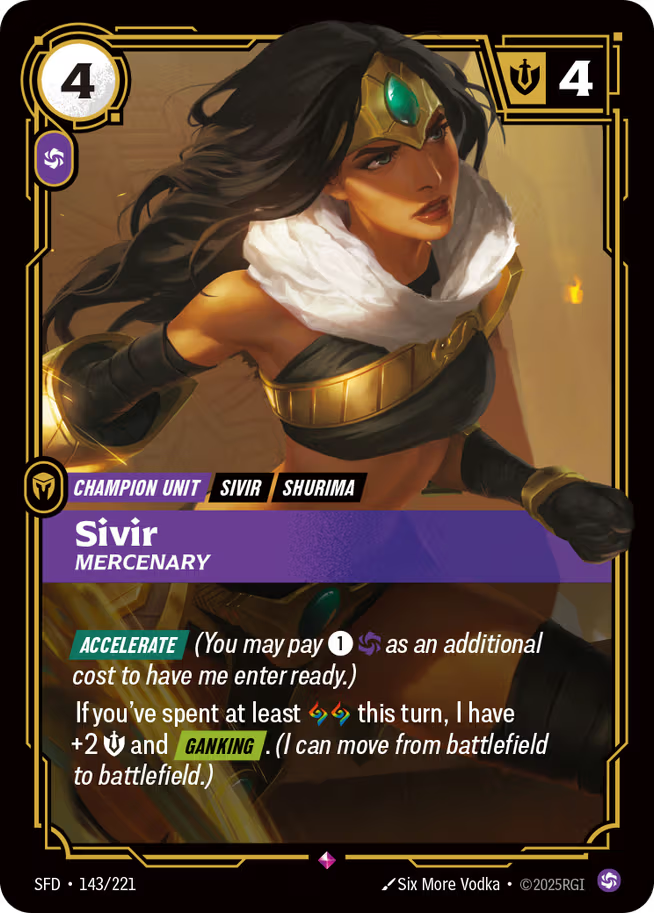
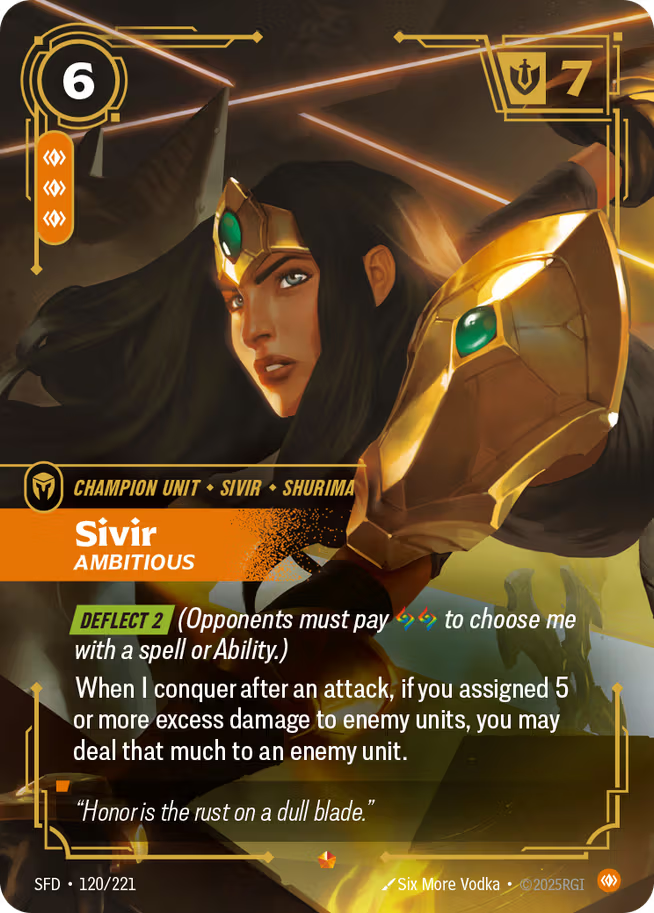
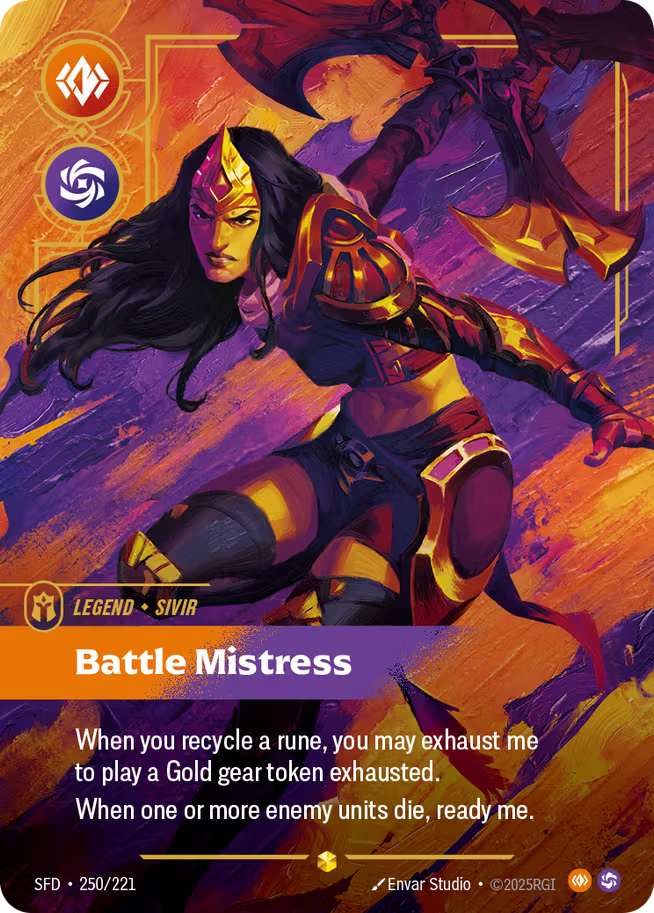
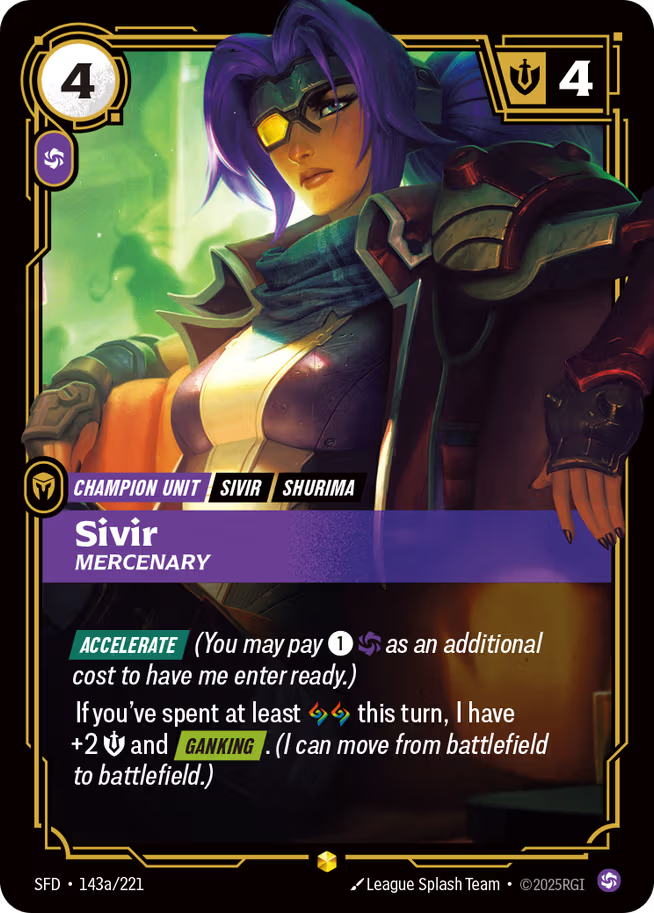
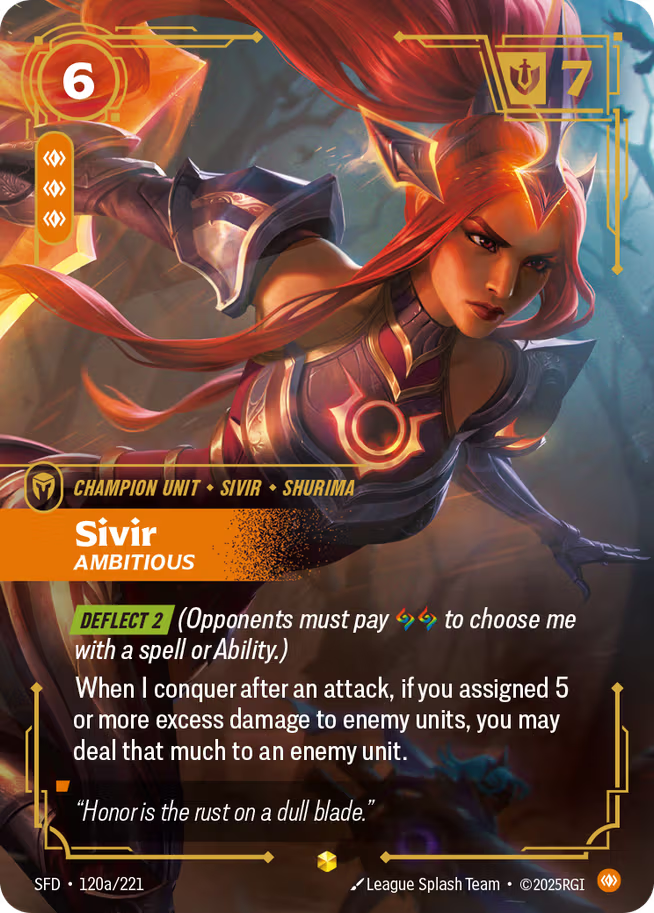
Sivir introduces one of the more interesting resource angles in the set thanks to her interaction with Gold. Being able to generate Gold through rune recycling and then ready herself when enemy units die creates a play pattern that feels active and rewarding.
She looks like a great fit for unit-heavy builds that want to keep pressure on the board while still benefiting from acceleration. Gold is one of the more exciting additions in Spiritforged, and Sivir feels like one of its best showcases.
Irelia – Blade Dancer
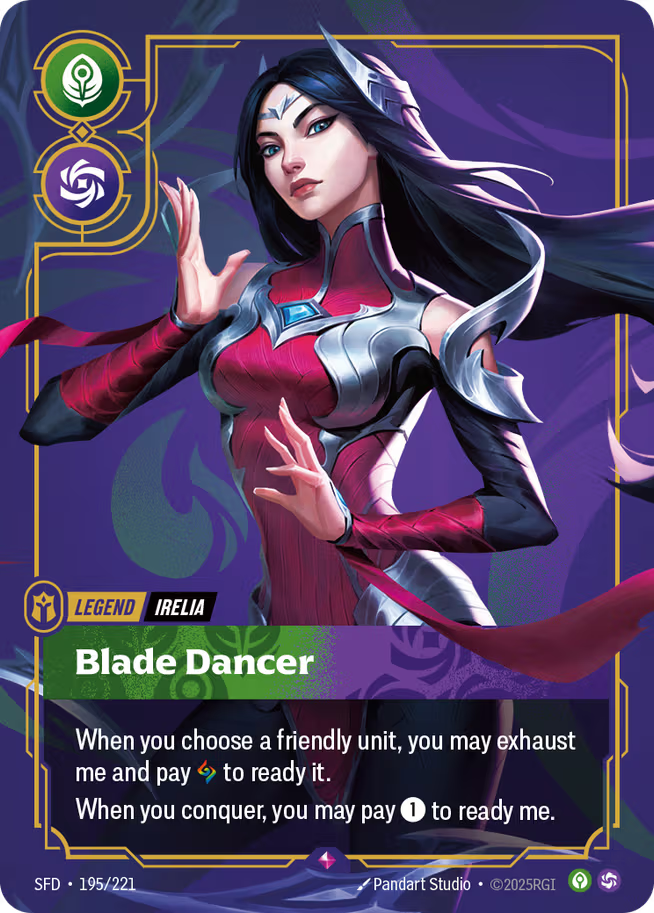
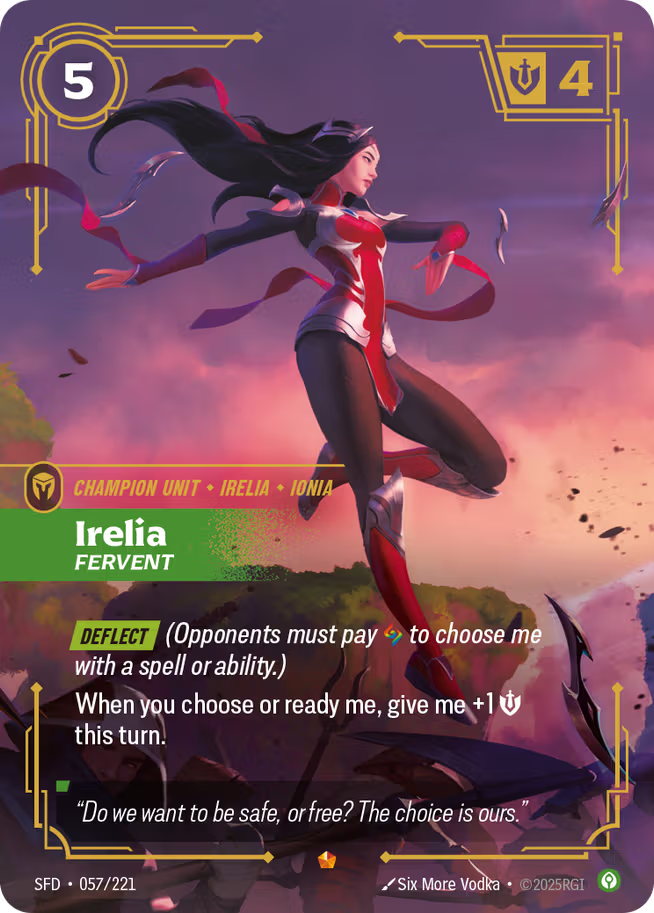
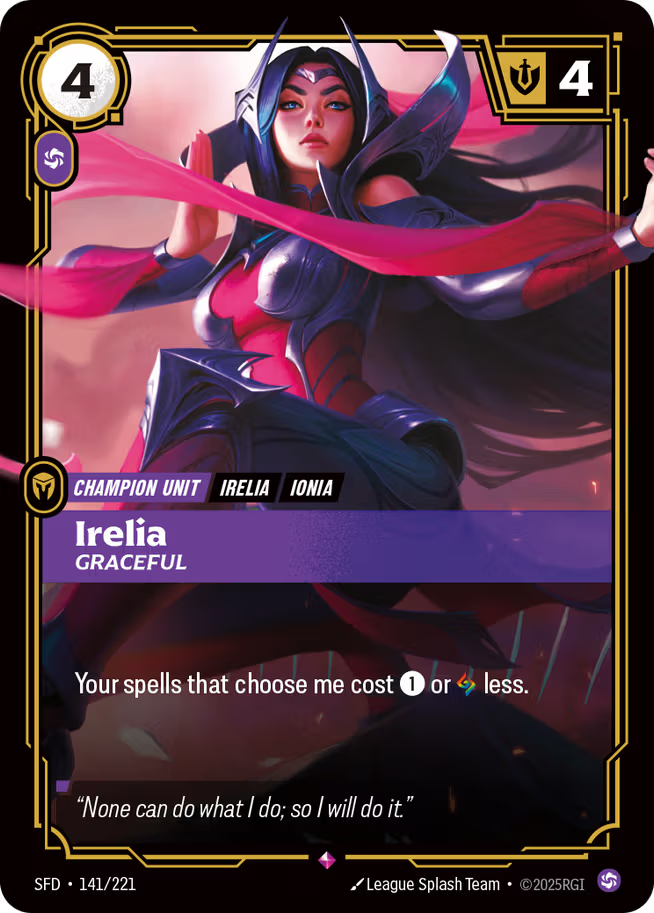
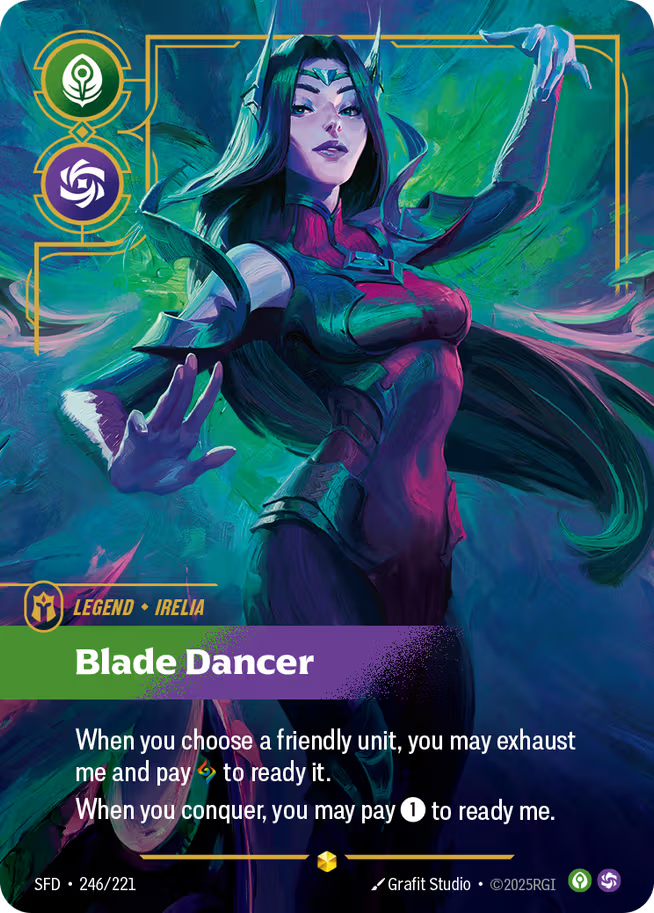
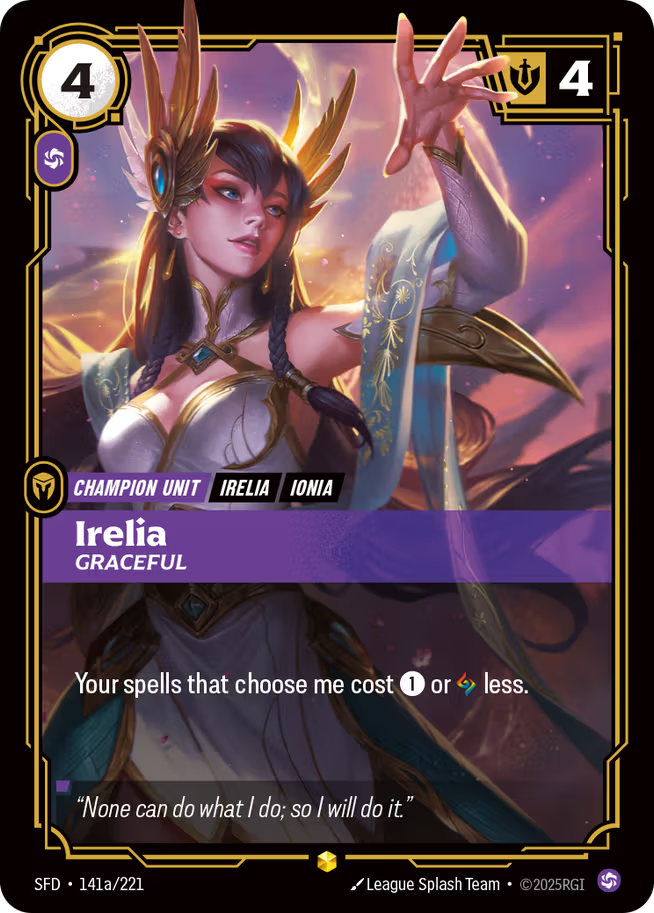
Irelia feels like a more aggressive cousin to Yasuo. Her ability to ready a unit when you target it with a spell creates powerful burst turns and lets her convert buffs or reactions into immediate battlefield impact.
That makes Irelia the kind of Legend who can steal games. If you need one more push to secure a battlefield or prevent an opponent from taking over, she can create those explosive momentum swings very quickly.
Rek’Sai – Void Burrower
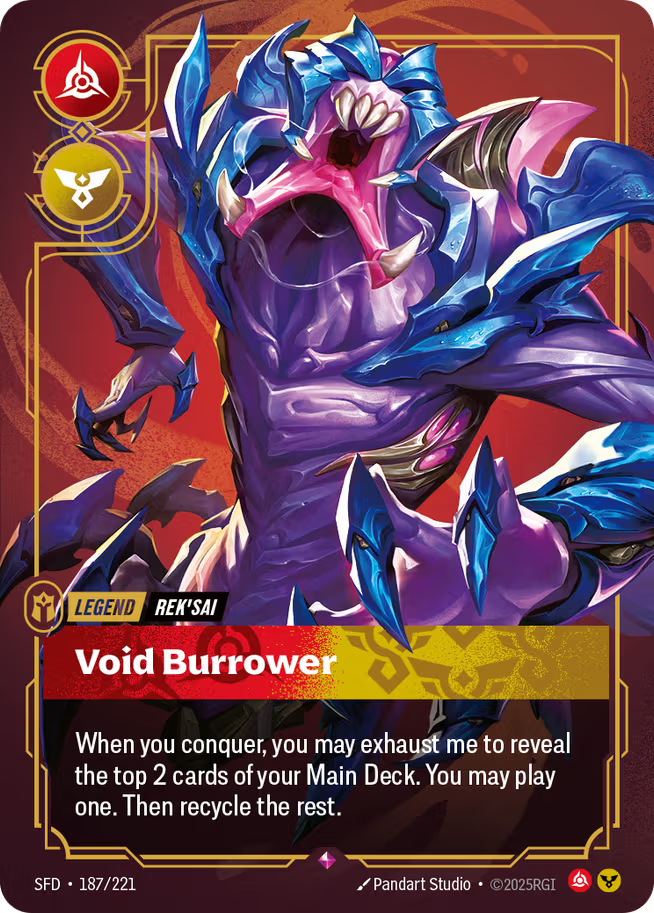
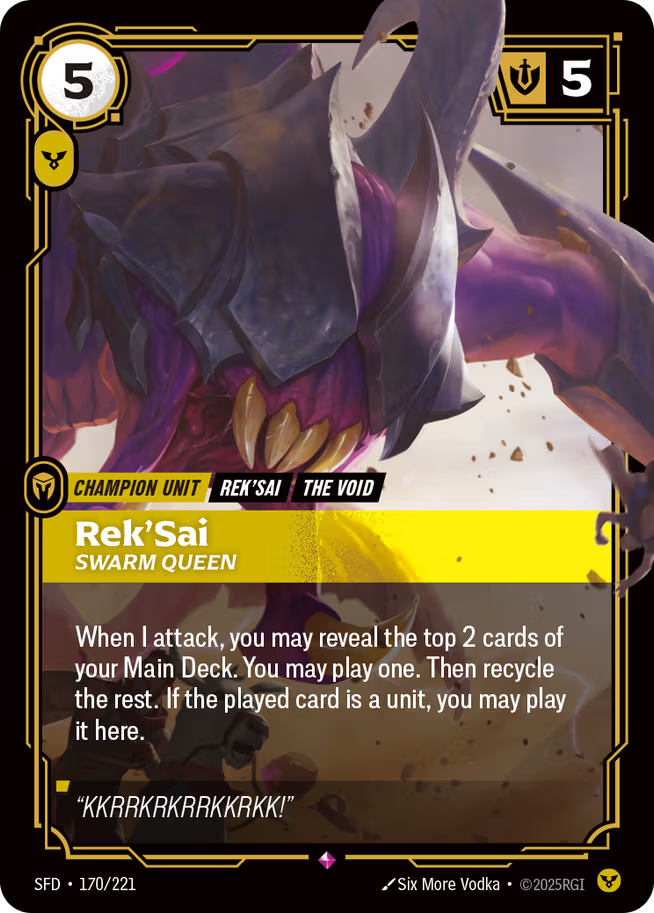
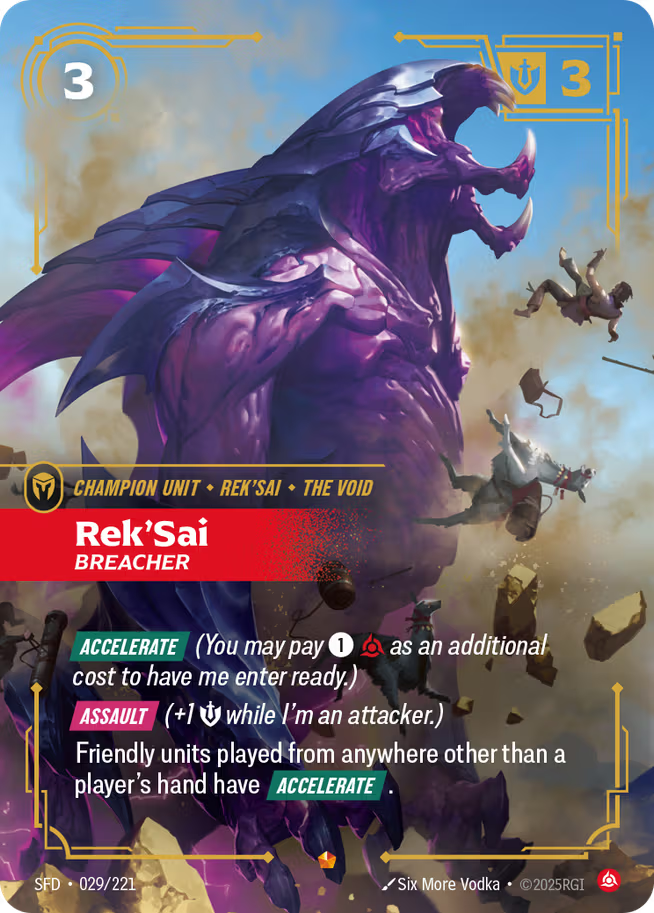
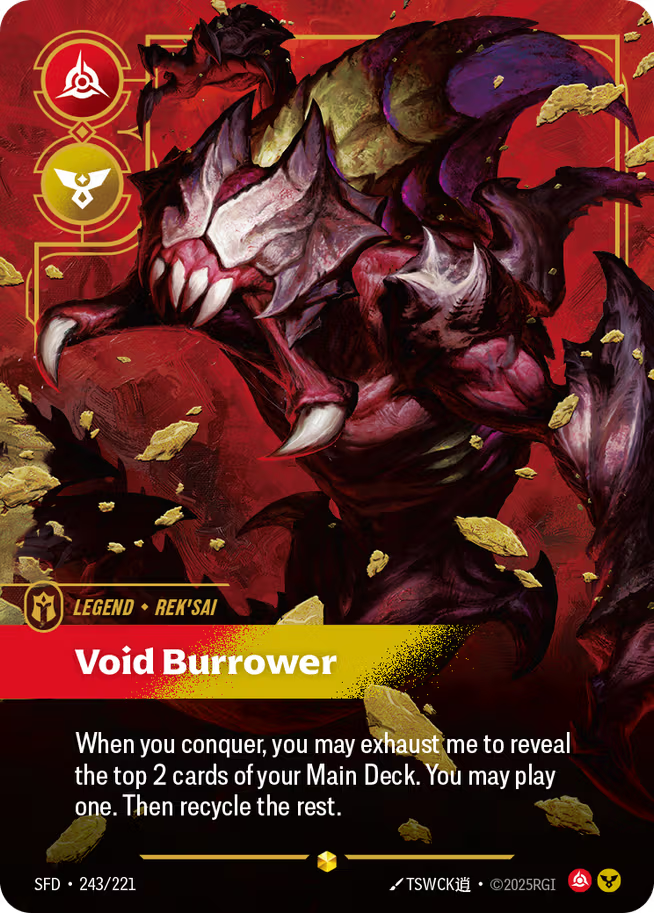
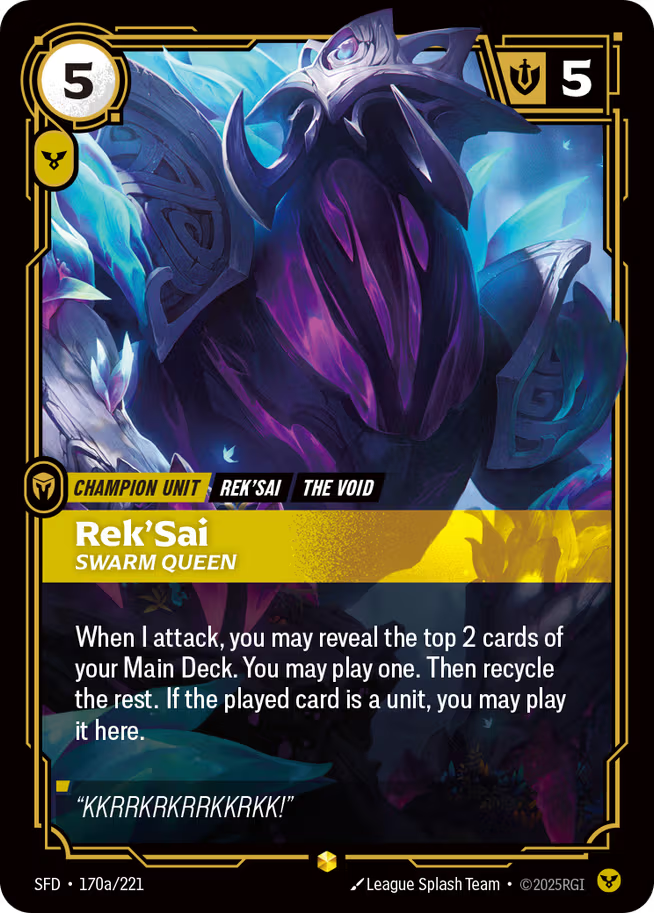
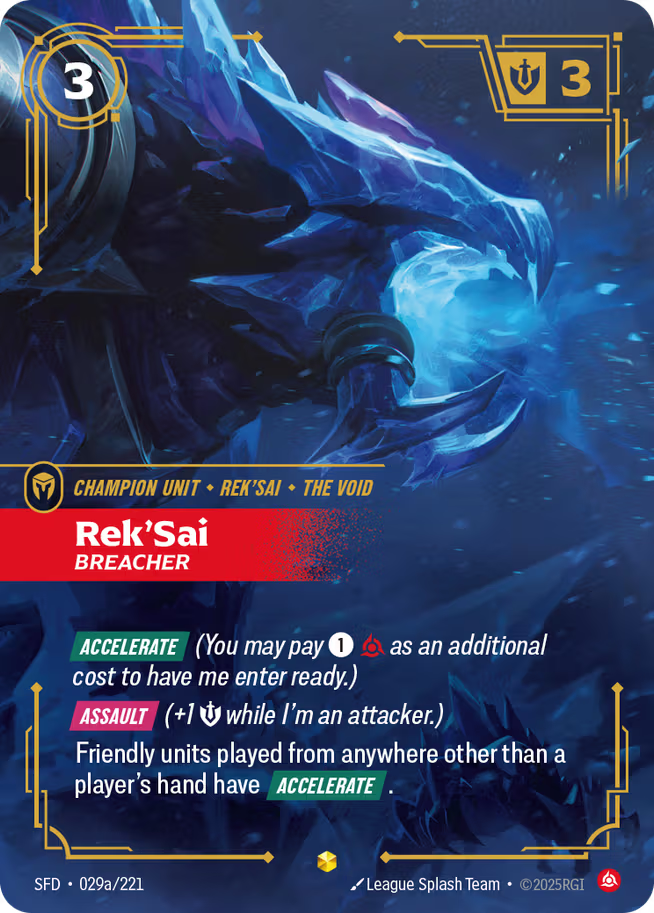
Rek’Sai may not be the consensus “best” Legend in Spiritforged, but she might be the most interesting. Her deck plays with deck manipulation and casting from unusual zones, which gives her a playstyle that feels very different from more straightforward aggression or control plans.
This is the kind of Legend that will really appeal to players who like niche strategies and strange value engines. Personally, she is one of the most exciting additions in the set. She may not be the safest or simplest option, but she looks incredibly fun.
Deckbuilding in Riftbound: Spiritforged
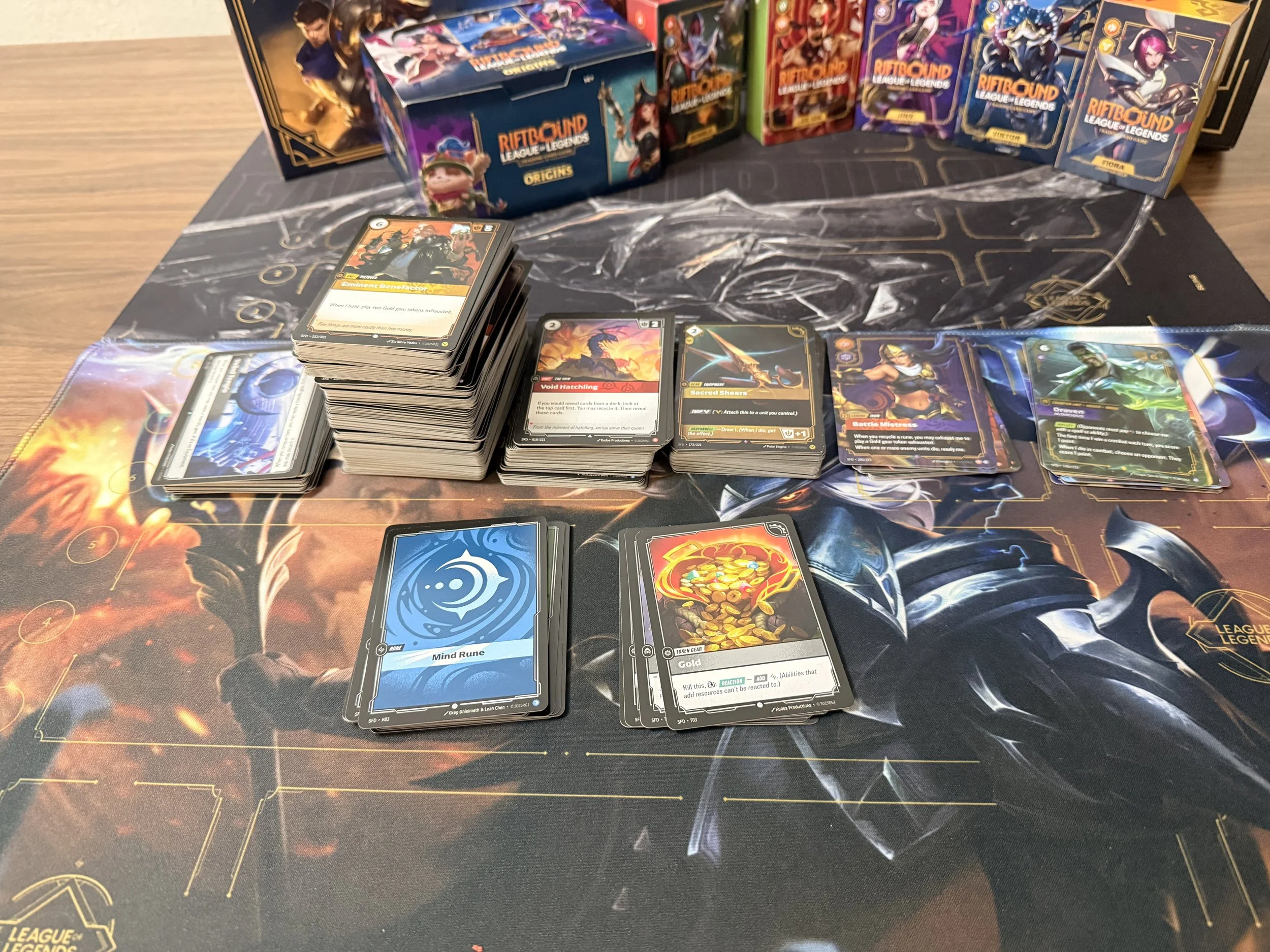
Deckbuilding around Spiritforged gets especially interesting because the set does not exist in isolation. Origins still matter a lot, and many of the new Legends feel strongest when you understand what tools already existed before this set arrived.
That means players should be careful not to evaluate Spiritforged cards too narrowly. Some cards may look like they are intended for one specific deck, but their wording can make them much broader in application than they first appear.
Renata Glasc is a great example. She is clearly a Gold-focused Legend, but one of her Champion units allows tokens to enter ready. At first glance, some players may assume that means Gold tokens specifically. In reality, that wording makes the card useful in token-centric decks more generally. That is the kind of nuance Riftbound players need to watch for.
Spiritforged also feels like a good set for experimentation. Riftbound is still young enough that players do not need to feel locked into one favorite archetype or color pair. In older games, a lot of players already know exactly what playstyle they prefer. Riftbound is still in that exciting stage where trying something off-meta can genuinely pay off. The Legends here feel designed to reward players who are willing to explore.
Spiritforged Champion decks: Rumble and Fiora
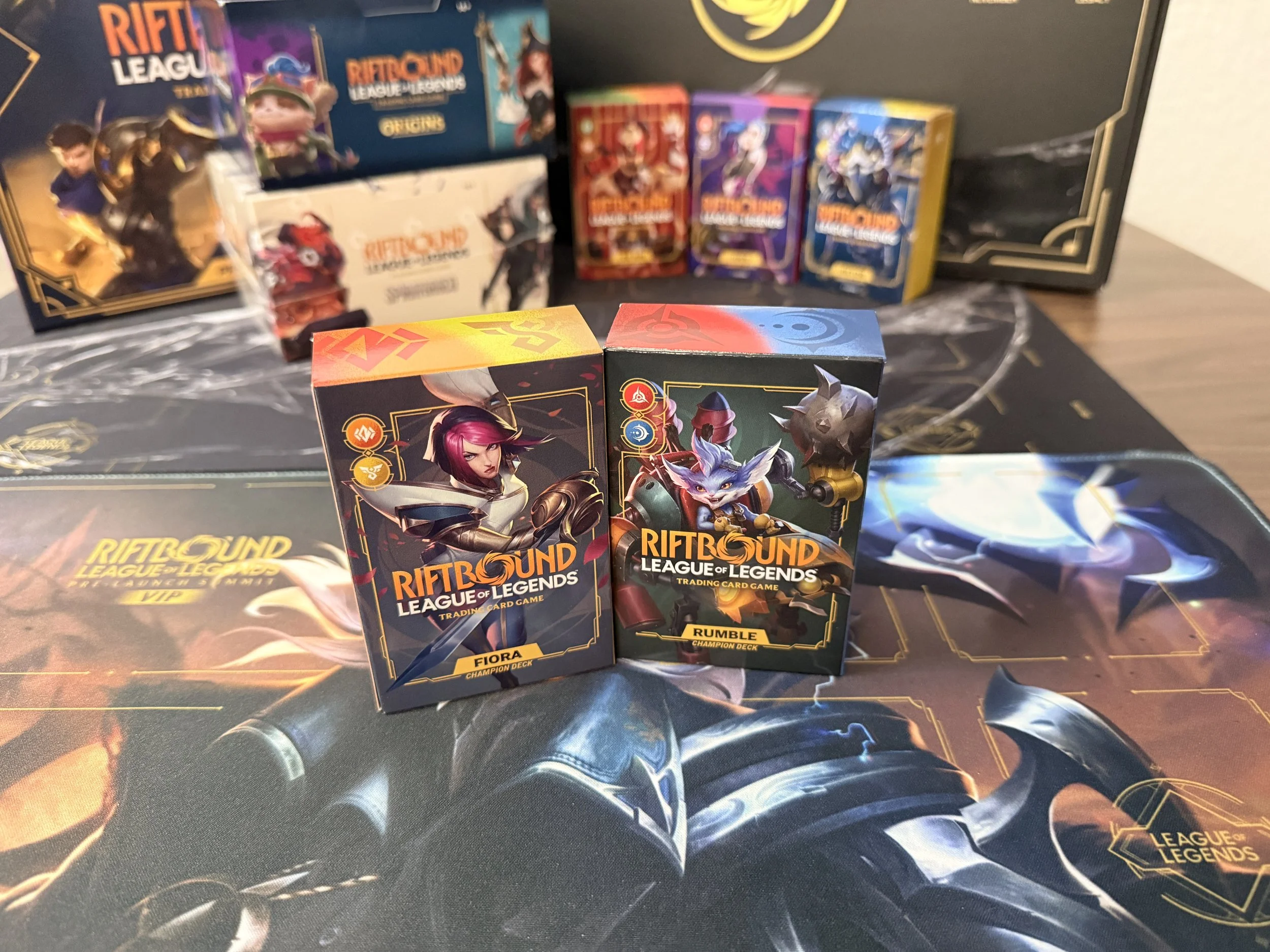
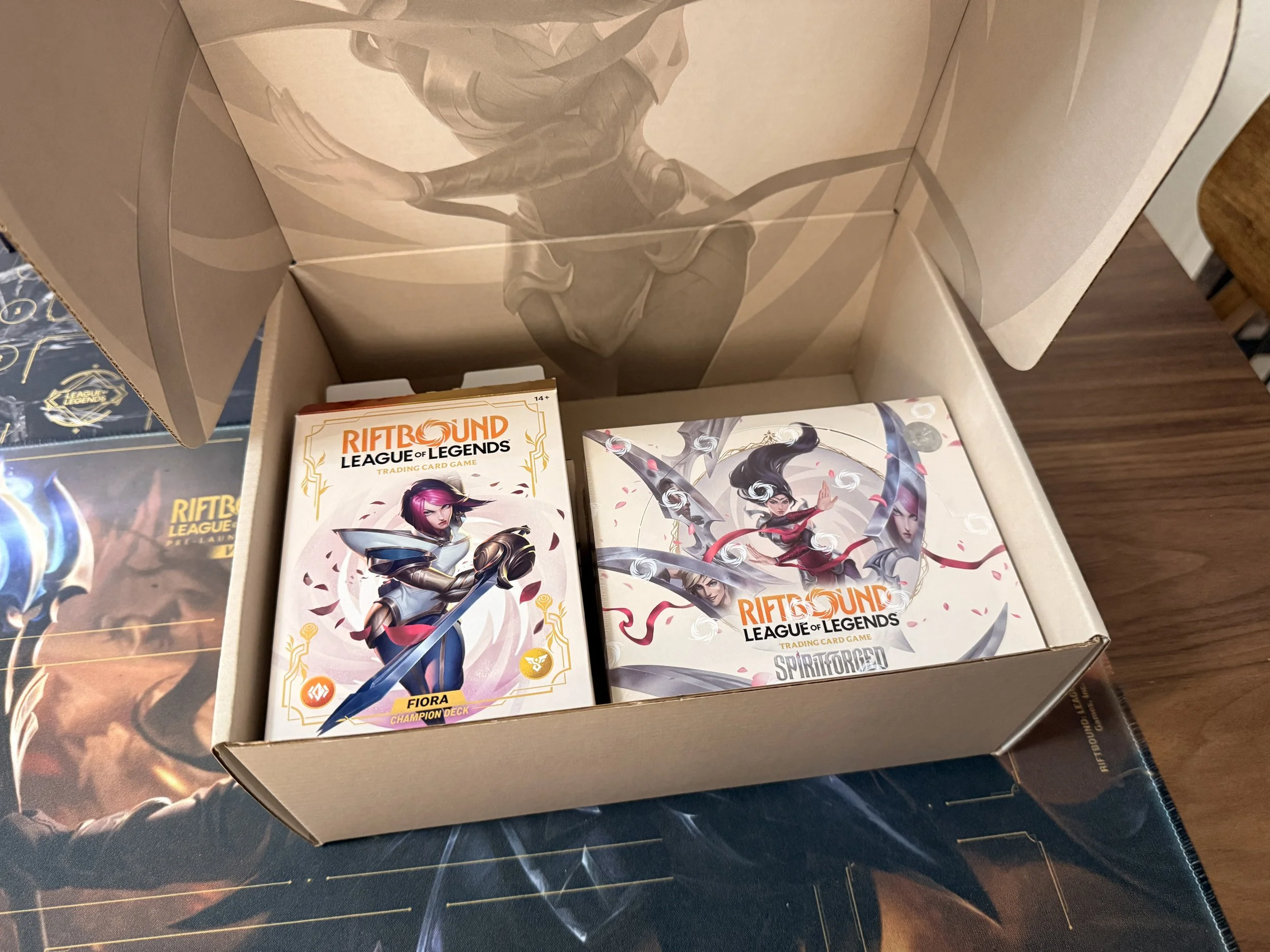
First and foremost, these Champion Decks are a huge improvement over the Origins Champion Decks. The synergy feels noticeably stronger, and they do a much better job of feeling like real starting points for the strategies they are built around. One of the biggest upgrades is that these decks include both copies of their Champion card instead of just the rare, which already makes them feel more complete right out of the box. Even better, each deck also includes a copy of its Signature Spell, which goes a long way toward making the experience feel more authentic and much closer to how you would actually want to begin building around that Legend.
Rumble’s Champion Deck is a Fury (Red) and Mind (Blue) token deck, but instead of leaning on more familiar token types like Recruits or Sand Soldiers, Spiritforged introduces yet another token style in the form of 3-Might Mech units. That gives the deck a pretty distinct identity right away. In a lot of ways, this feels like Riftbound’s first real step toward a tribal-style strategy, because the deck is very clearly built around Mechs as its core theme. With Rumble’s Legend ability giving all Mechs Shield, the deck has a fun and flavorful synergy that makes the whole package feel cohesive. That said, while it is definitely enjoyable and has a strong identity, it does not quite strike me as especially competitive. It feels more like a flavorful, thematic deck than one that is going to immediately push into higher-powered play.
Fiora’s Champion Deck, on the other hand, feels a bit more competitive and a little more refined overall. Her strategy revolves around Equipment, buff spells, and units becoming Mighty. That distinction is important, because Fiora’s Legend ability does not simply care about units that already have high stats. She specifically wants to see your units cross that 5-Might threshold. In other words, the deck is built around growing your board into that range rather than just starting there naturally.
That design makes Fiora’s deck feel more deliberate. There are plenty of tools here that help your units become Mighty, whether temporarily through spells and abilities or more permanently through Equipment. On top of that, the deck also has payoff cards that reward you for reaching that threshold, so the strategy feels layered in a way that Rumble’s does not quite match. As a result, Fiora’s deck feels more fleshed out and more focused as an actual game plan. It comes across less like a pile of cards built around a theme and more like a real strategy that already knows what it wants to do.
That is not to say Rumble is not fun, because I did enjoy playing it. But between the two, Fiora’s deck feels more complete, more competitive, and more representative of the kind of focused deckbuilding I want to see from these Champion Decks going forward.
Art and flavor identity
One of Riftbound’s biggest strengths continues to be flavor, and Spiritforged is another great example of that. The set has a clear identity, and even the gameplay support reflects that identity.
Because Spiritforged is rooted so strongly in Ionia, it makes sense that Mind and Calm receive especially notable support. Those colors align with the region’s themes, and the set uses that to build a mechanical identity that feels natural rather than forced.
For League of Legends fans, that makes the set especially easy to connect with. Even when a card is strong for gameplay reasons, it still tends to feel like it belongs in this world. That is a huge asset for any licensed or lore-driven card game, and Riftbound is doing a very good job with it.
Who is Riftbound: Spiritforged for?
Spiritforged honestly feels like a set for just about every kind of Riftbound player. Competitive players get new tools and strong Legends to test. Casual players get flashy mechanics and fun build-arounds. Deckbuilders get plenty of cards that open new possibilities. Even collectors benefit from the set’s strong visual identity and regional flavor.
More importantly, Spiritforged still feels like a player-first release. Yes, there is collectibility here, but the design focus feels centered on gameplay. This set wants to be played. It wants players to try new decks, upgrade old ones, and keep learning the game.
That is part of why it feels almost like a second core set. Just like Origins, Spiritforged helps define what Riftbound is for the people actually sitting down to play it.
Weaknesses in Riftbound: Spiritforged
Spiritforged is a strong set, so its weaknesses are relatively minor. The Legends are fun, the mechanics are meaningful, and the upgrades to existing decks are real. I have already found cards I want for my Viktor deck, and I am also very interested in building around Rek’Sai. From a gameplay perspective, there is a lot to like here.
The biggest issue still feels external rather than mechanical: availability. Riftbound is clearly going through the growing pains of a young game, and the secondary market continues to reflect that. The good news is that Riot and UVS do seem aware of the problem and appear to be making improvements from one set to the next.
That does not erase the issue, but it does make it feel more like a temporary hurdle than a long-term red flag. Right now, the biggest challenge for Riftbound is not whether the game is good enough. It is whether enough players can actually get access to it consistently.
Final Thoughts
Riftbound: Spiritforged is exactly what a second set should be. It expands the game in meaningful ways, deepens the strategy, and adds fresh mechanics without making Riftbound lose its identity. Equipment, Gold, and Repeat all bring something worthwhile to the table, and the new Legends do a great job of widening the game’s strategic range.
More than anything, Spiritforged makes Riftbound feel like a game with real momentum. It still has room to grow, and availability remains a concern, but the actual design work here is strong. This is a flavorful, mechanically interesting, and genuinely exciting set that improves the game rather than just enlarging it.
Looking for more upcoming card game and tabletop releases? Check out our 2026 TCG and Tabletop Release Calendar to stay on top of the biggest upcoming sets, board games, and tabletop launches.