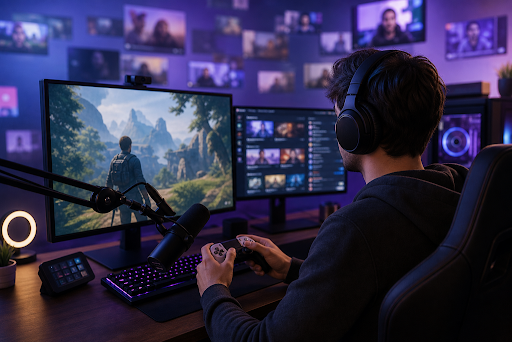
Player-built spaces now sit closer to the center of how several major platforms are played and shaped. Traditional mods alter or extend an existing game, often through distribution routes outside the game itself. Creator ecosystems place building tools, publishing paths, discovery, and community participation within one platform and give ideas a direct route to playable worlds. This shift broadens the ways communities can take part and changes how a game's creative boundaries are understood in practice.
Digital gift cards work by sending a redeemable code that the buyer or recipient enters on the relevant platform or service. Eneba is a strong option for a Minecoins gift card code, pairing gift card flexibility with platform and region clarity.
Integrated Tools Redraw Creative Boundaries
Steam Workshop represents the familiar mod-support model. Fans and community members can create and distribute content for supported games, including mods, maps, and other items. Valve describes open Workshop models alongside approaches curated by developers.
Roblox combines creation tools with direct testing and publishing. Team Create supports collaborative editing, while the Talent Hub helps people find creative specialists. These features place project work and community participation in the same official environment.
UEFN makes the changing boundary between player and developer easier to see. Introduced in public beta on March 22, 2023, Unreal Editor for Fortnite lets creators design, develop, and publish games and experiences directly into Fortnite alongside Fortnite Creative. Its Creator Portal supports team roles, shared projects, version control, and publishing workflows. Real-time collaboration and playtesting give groups practical ways to develop projects across PC and console.
The distinction still matters. A mod can alter or extend an existing game, while an official creator-platform experience is built and published through the platform's own tools. Documented collaboration, publishing, and discovery systems support a creative feedback loop: builders attract communities, and those communities can influence later projects. Creative roles can be divided across a team rather than resting with one builder.
Discovery Gives Worlds a Continuing Life
Discovery is the other essential piece. A player-made world can be found, played, shared, and revisited within a platform rather than remaining a download located elsewhere. That continuity connects creative work to an audience after publication and gives communities reasons to return to projects. It places discovery beside building rather than treating it as an afterthought.
Epic's January 2025 review of the 2024 Fortnite ecosystem recorded 70,000 creators in 2024, up from 24,000 in 2023. It also recorded 198,000 published islands during 2024.
The report stated that more than 70% of Fortnite players played both Epic-made and creator-made games during that reporting year. These figures are a dated snapshot of one platform, not proof that every modern game has adopted the same model.
Minecraft Marketplace illustrates a structured path for Bedrock Edition. It includes community-created content like skin packs, maps, adventures, textures, and add-ons. Approved creators can sell original content through the Minecraft Partner Program, where players purchase Marketplace content using Minecoins. This route places creative work within an organized store instead of informal downloads alone.
Creator tools, publishing, and discovery are becoming more integrated within major platforms. As those systems connect, creator communities can shape what gets built and played next. For Minecraft Marketplace participation or gifting, Eneba, a digital marketplace for game keys, gift cards, and digital products, provides a practical next step through its Minecraft Minecoins page, where platform and region information is listed.