In the last few years, modern video game journalism has changed fundamentally when compared to its treatment of Japanese role-playing games. What was previously considered a niche category of entertainment for passionate fans of the genre, has become a more general topic of critical discourse by 2026. Now, major publications are beginning to treat JRPG releases like their Western RPG releases, AAA action game releases, and major indie game releases. The rise in popularity of these games shows that the content of JRPG has evolved into something that deserves and requires serious critique, and that the audience has also matured to support this level of analysis.
This was not a sudden shift, however. During the 2010s, coverage of JRPGs in the mainstream gaming press felt more like a chore than anything else, and reviews were more dismissive than anything else when it came to the critical engagements with the philosophy of game design at play. The 2020s, however, marked a turning point, and the mainstream gaming press was finally beginning to engage with JRPGs on the level of their mechanics, narrative conventions, and appropriate socio-cultural frameworks. By 2026, coverage of JRPGs had become one of the more developed fields of video game journalism.
How Gaming Journalism Has Changed Toward JRPG Coverage
During the Mid-2010s, Gaming Journalism started to lose its sense of identity. Many traditional gaming magazines either closed down or made the switch to digital, while large independent gaming websites folded into corporate structures. Independent gaming journalism made its home on YouTube, Twitch, podcasts, and Substack, allowing them to explore new editorial styles that were particularly beneficial to niche genres like JRPGs.
The independent platform critics built a more extensive knowledge of JRPGs than any of the mainstream publications could justify spending time on during the 2010s. These voices built the editorial style that the mainstream publications came to adopt. Just prior to the release of Final Fantasy XVI, the larger publications were able to assign reviewers with a considerable depth of knowledge on JRPGs to critique the game on the level that it deserved to be critiqued.
The coverage changes were also driven by audience economics. JRPG fans were more than happy to engage with intricate criticism of the genre, especially in long-form formats. Substack newsletters dedicated to the critical analysis of JRPGs were able to establish sustainable subscription models. The YouTube analysts specializing in JRPGs were able to monetize their channels to the extent that they could make it their full-time jobs. When the independent gaming press shifted its focus to JRPGs, they created a space where serious criticism of the genre could thrive.
The Persona 5 Royal Moment That Changed Critical Reception
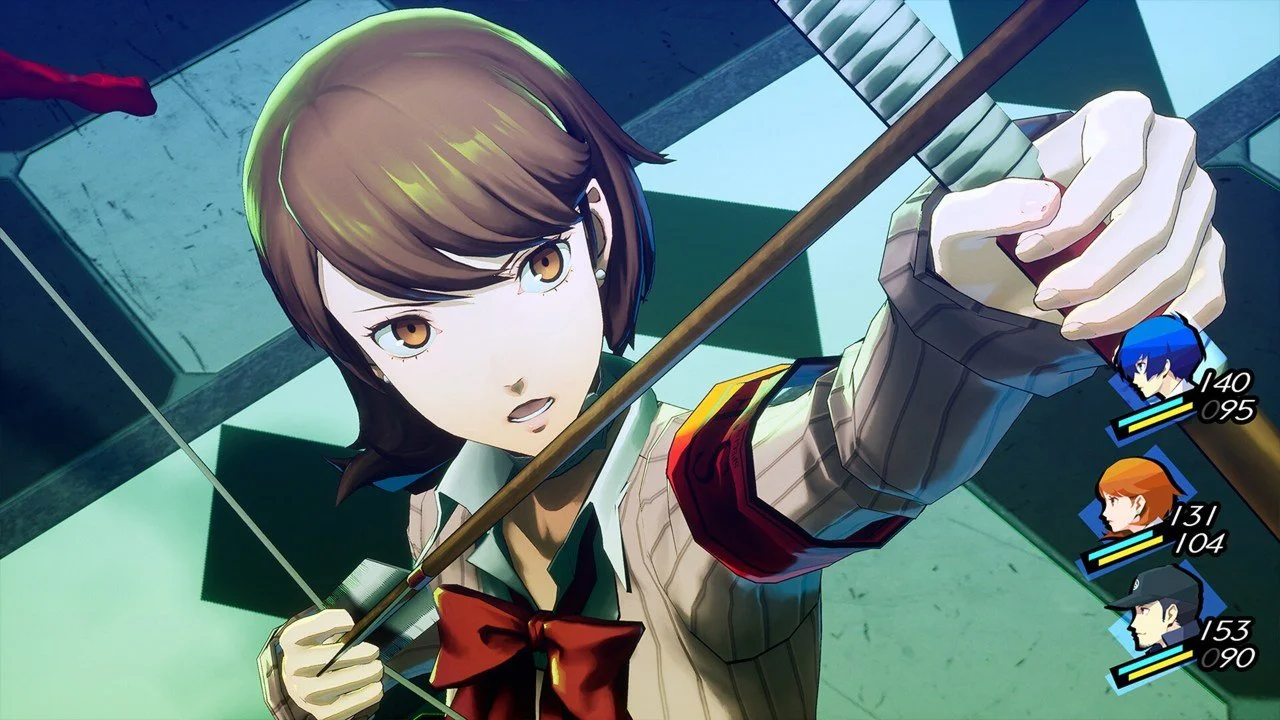
Persona 5 Royal was a pivotal moment in the critical reception of mainstream JRPGs. The reviews published in 2020 by the major gaming journals viewed the title as a potential blockbuster and worthy of multi-thousand-word reviews, most with in-depth discussions of the narrative, character arcs, social critique, and game mechanics. These publications devoted a level of analytical effort to the title that was previously reserved for Western RPGs only.
The reviews and articles on Persona 5 Royal did not end with the game's initial coverage. The analyses spanning 2020 and 2021 were particularly notable, with major journals covering specific characters, story arcs, or themes. Pods on the title were abundant and covered a variety of viewpoints, while video essayists on the game's themes and mechanics gained millions of views. The commercial and critical success of Persona 5 Royal sent a clear message that JRPGs are worthy of critical analysis and commentary.
The JRPG player base welcomed the release of Persona 5 Royal at a time of pandemic and social revolution; themes of injustice and rebellion prominent in the game's story. Reviewers of the title integrated these themes of social critique into their analyses and dismissed previous Western critiques of the game as irrelevant or Oriental.
Final Fantasy XVI and Mainstream JRPG Recognition
Final Fantasy XVI was a big title to launch in 2023 and a lot of attention was surrounding it because of its achievements in competition with persona 5 royal and its critical acclaim. A lot of critique top ten lists showed FF16 so clearly it was a game of the year nominee and it had a strong showing in the game of the year nominees. This showed a strong change from the past where not as much acclaim would be given to JRPG titles.
The critiques surrounding FF16 were focused on the mature themes and the ambition of the narrative. Many magazines and websites that were prestige covered the game and compared it to the level of coverage that was given to political discussion in the game and character morality with the gameplay and story relationship to the story. The depth of coverage was on the level of prestige covers of elden ring and cyberpunk 2077. This was good coverage for the game and showed that JRPGS were gaining coverage.
It was also recognized for its game awards. The Japanese role playing games were finally gaining the respect that the western games had. They received multiple nominations and awards in specific categories. The game awards for 2023 recognized the game and recognized its contributions to gaming as an artform.
How Indie JRPGs Earned Critical Respect
Indie titles like Sea of Stars, Chained Echoes, and Crystal Project are changing how critics perceive JRPGs. Indie titles show that the genre can not only be accessible, but also popular, without the need of large budgets like those of AAA studios. This Engaging with indie titles has led some critics to appreciate the underlying philosophies of JRPGs that they have carried over to other critiques of the genre.
Sea of Stars also demonstrates the beginning of a shift as it received a lot of praise for its newer mechanics and its respect for older, traditional JRPG mechanics. This game also showed that indie studio JRPGs can compete with AAA studios for press coverage.
Chained Echoes also reinforced this shift as it received a lot of praise for its depth in its combat system, praise for its narrative and character development, and for its 35-hour adventure. After this, the consensus on indie JRPGs was raised to the same level as that of AAA studios. This also created a shift in the conversation towards lesser known franchises, as it showed that indie JRPGs could be just as valuable as the AAA studio titles.
The Mainstream Press Discovery of JRPG Narrative Depth
Gaming journalism has been recognizing JRPGs for the narrative focus that goes into their games. This contrasts with the gameplay focus that has traditionally been assigned to them. When comparing JRPG games to Western RPG games, the former have the advantage by having massively multiplayer online games (MMOs) spanning hundreds of hours as part of the main quest. This gives the developers the opportunity to implement several character development arcs, build the game world, and explore different themes. This is something that shorter Western RPG games do not have the capacity to do. Gaming journalism in 2026 is expected to be better at describing that difference.
The _Trails Of Cold Steel_ series is a stark example of what the extended JRPG tradition can do. It allows the player to achieve 200+ hours of character development, political subterfuge, and world building. Critics who finished all four games consider it gaming's greatest narrative achievement. They equate the scope and depth to what is found in high quality television. The recognition put to rest the argument for people for not investing time in JRPGs.
Another sample that demonstrated the need for serious engagement with JRPGs was _Tales of Arise_. Released in 2021, it received positive reviews for its characters, story, and plitical themes. It was noted that the story was a departure from previous iterations of the story found in the _Tales_ series. Because of the reception, critics were expected to analyze future games in the _Tales_ series.
10 JRPGs That Defined Critical Conversation in 2025-2026
The 2024-2025 JRPG conversation was dominated by Final Fantasy VII Rebirth. As the middle installment in the Final Fantasy VII Remake Trilogy, critics noted positive reviews for the expanded world, character development, and combat improvements. The title was a highly spoken about contender for Game of The Year 2024 amongst critics, solidifying it's place as a notable installment within the franchise.
Metaphor ReFantazio, released by Atlus in late 2024, received a lot of positive critcisim due to its incorporation of various aspects from the Persona series while maintaining an innovative fantasy world, unlike any other of the series. This title's thematic content, character arcs, and it's political commentary received attention from multiple reviewers. Metaphor ReFantazio also proved that Atlus can expand beyond the Persona series while still maintaining the critcial respect that they have earned over the years.
The Yakuza franchise's transition into turn-based combat JRPG mechanics received quite an upheaval as it showcased its new narrative ambitions in its 2024 critic's favorite, Yakuza Like a Dragon Infinite Wealth. With its overwhelming depth and praise of the combat system, and an adequate amount of social commentary, character development, and the distinct tone that encompasses the Yakuza franchise, the title was well received by the critics.
Star Ocean The Second Story R brought much needed attention to a timeless classic, and for its high quality remake, it was richly deserved. The modernized remake proved that timeless retro JRPG gameplay can still attract critical acclaim if paired with high production values, and critics noted that the modernized quality of life improvements were well appreciated.
The Trails through Daybreak series, to be released over 2024 to 2026, has kept the Trails series as a critical darling in coverage of JRPGs. Falcom's promise to longer narrative arcs is arguably still earning ongoing critical praise from publications and creators that analyze JRPGs. \s
Where Modern JRPG Reviews Live Online
The modern events in the JRPG online community are happening on all kinds of platforms and through all sorts of types of content. The classic gaming media still does JRPGs reviews, however, the independent media, the Substack newsletters, the YouTube channels, and the genre-specific media of the detailed criticism about JRPGs, the independent media is where deeper focused reviews are available. The players looking for in-depth reviews about JRPGs have to figure out how to use the different types of content to find the reviewer that fits what they are looking for.
Icicle Disaster has the level of focused coverage on JRPGs that is simply not available from the general gaming media, and for that they provide the most extensive and complete coverage of JRPGs across all mediums, all generations, and all styles of gameplay. The editorial team covers each separate subsystem of the genre and offers deep reviews of the subsystem to provide contextual information on all of the sub-modules and to show the player how the subsystem fits in the overall ecology of the sub-modules of the genre and its evolution.
Aside from release reviews, extensive and detailed reviews are becoming more common on JRPGs. They are grouped in specific subcategories by game type, console, and style of play for more advanced and detailed game criticism. https://icicledisaster.com/reviews/ has a distinct JRPG review repository that is sub-categorized by game playing style to help the players locate the specific JRPG that they want and to locate the detailed criticism of the game. Given the massive number of game releases in the JRPG category, the focused criticism is particularly valuable.
A significant portion of the critical ecosystem of JRPGs is podcast content. There are several weekly JRPG analytical podcasts that have been able to generate a large number of listeners and they have been able to cover all aspects of the game from the most recently released JRPGs to cover all of the deep mechanics, or the themes contained within the JRPG and create full episodes. The JRPG content audience is ideal for the podcasting format since the long dialogue style of the podcasts balances well with the width and depth of the material contained in the JRPG.
The Audience Driving JRPG Critical Coverage
The audience for JRPG literature has also developed into a highly engaged demographic. JRPG players spend more time on the games they play. They also develop a familiarity with the genre and its conventions. Additionally, they create demand for criticism to the level they are engaged, which casual audiences do not.
This audience also covers a wide demographic geographically and culturally. Across Southeast Asia and into the rest of Asia, JRPG audiences are strong in China, Korea, Japan, and Indonesia. In Europe, there is strong JRPG audience engagement in the UK, Germany, France, and Italy. In North America there has been a rapidly growing audience for JRPG literature since the 2010s as the genre became more mainstream.
The younger audience in gaming has been a large factor in the increased engagement with JRPG literature. In Generation Z, gamers have moved from mobile JRPG games like Genshin Impact and then moved on to the deeper parts of the genre. This audience expansion will provide demand for JRPG criticism well into 2026 and possibly beyond.
International JRPG Reception Patterns Across Markets
There are significant differences when it comes to how JRPG video games are received in different parts of the world. Each market has developed unique ways to engage with JRPG video games, driven by differences in gaming culture. The North American market is making JRPG games with more focus on action gameplay, while also considering franchises that have high marketing budgets from Frank companies. For Europe, there seems to be more of a focus on story and narrative driven games, as well as games from smaller studios. When it comes to Asia, they engage across the full spectrum of JRPG video games, with a specific focus on franchises and their sequels.
There is a noticeable increase for the JRPG market in Indonesia and Southeast Asia from 2024-2026. When it comes to Indonesia, they engage with both major and indie JRPG games, while also being supported by a large number of YouTubers and social media influencers who create gaming content and promote JRPG games through online communities. There are also many content creators who cover JRPG games in the Indonesian language, and this has been supportive of the content creator economy.
During this time period, audiences from the UK gaming community have become one of the most mature audiences when it comes to engaging with JRPG games. Major British gaming publications, like Eurogamer, have begun to cover JRPG games as important editorial updates, and this has expanded JRPG coverage significantly. British gaming podcasts and YouTube channels have been able to develop audiences who appreciate British criticism on JRPG games.
The Critical Framework Modern JRPG Reviews Use
With the evolution of JRPG scrutiny comes the development of sophisticated frameworks of analysis that were unavailable to earlier forms of coverage. Present day reviewers can assess the depth of combat systems, narrative structure, character development, themes, and cultural context all at once. This type of analysis is what allows a modern JRPG critique to fully capture the intricacies of today's games instead of narrowing their focus on individual gameplay components.
One area that has seen a lot of improvement is the analysis of combat systems. In the JRPG genre, combat differs quite a bit from game to game; from classic, turn-based systems, to real time action systems, to tactical grids. Contemporary reviewers develop the ability to differentiate between the various types of combat systems, and to critique each one on its own merits. As a result, JRPG reviews can address the mechanical complexity of many different systems.
Analyses of narrative structure have also improved. Modern critiques of JRPGs examine the pacing of character arcs, the development of themes during gameplay, the progression of the narrative in relationship to the gameplay, and the overall structure of chapters. All this analysis allows readers to understand how JRPGs manage long form narrative structures, which is something that is very different from how Western RPG's manage their short, concise narratives.
Looking Ahead to JRPG Critical Coverage Through 2027
Future Engagement with the Current State of JRPGs
Current JRPG coverage is likely to grow and become more in-depth, instead of stagnating or lessening. The major Japanese RPGs set for release in 2026-2027 will gain traction based on the analytic framework from recent years. There are ongoing industry discussions regarding the release timeframe for the developed title, Final Fantasy XVII, alongside much anticipated critical coverage for Persona 6. Significant RPG franchises, including the Tales series, will continue to be critically analyzed by notable publications.
More devs with significant vision are entering the space, which means coverage of indie JRPGs will most likely grow. Sea of Stars and Chained Echoes showed that indie JRPGs are commercially successful, drawing further interest from more developers. Existing frameworks for critical analysis will benefit future indie JRPGs.
Coverage of mobile JRPGs will grow up to 2026-2027. Genshin Impact, Honkai Star Rail, and Wuthering Waves all have large user bases, and they perform well in areas that mobile gaming usually doesn't. Analysts of mobile JRPGs have built large audiences and will continue to do so as content matures.
JRPG coverage will continue to grow internationally as global audiences grow through 2026-2027. Coverage in languages other than English has been growing, particularly in Indonesian, Spanish, Portuguese, German, and French. This ensures JRPG coverage will continue diversifying instead of consolidating into one perspective.
The JRPG critical renaissance shows one of the biggest changes in video game journalism throughout the 2020s. This sustained audience engagement and serious editorial investment shows growth in the rest of the decade. For gamers interested in the Japanese role-playing game content in 2026, the focused critical coverage enables them to make informed decisions about titles and engage more deeply with each release.