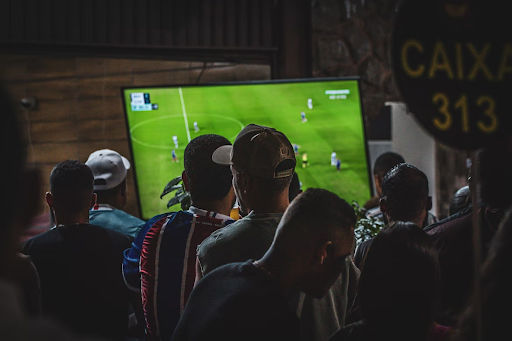
There's a particular kind of energy in a Mogadishu café on a Friday afternoon. Young men huddled around phones, earphones in, fingers moving fast. Some are watching football highlights. Others are deep into mobile games. And more than a few are navigating the 1xbet app - pulling up the 1xbet login Somalia page to check live odds between matches - because in this part of the world, sports betting, gaming, and community have become so tangled together that separating them almost feels pointless. This is not a story about addiction or distraction. It's a story about an economy growing from the ground up, built by people the mainstream gaming industry barely acknowledged five years ago.
How "Emerging Markets" Became the Gaming Industry's Blind Spot - And Then Its Biggest Opportunity
For years, the global gaming conversation centered on three places: North America, Western Europe, and East Asia. Publishers built for those audiences. Payment processors optimized for those currencies. Internet infrastructure investments followed the money westward.
The rest of the world - which, if you count heads, is most of the world - got the leftovers.
What nobody properly accounted for was how quickly mobile would change everything. When a teenager in Hargeisa doesn't need a gaming PC or a PlayStation, when all she needs is a mid-range Android phone and a data connection, the calculus shifts entirely. Suddenly, the barrier to entry becomes low enough that hundreds of millions of people who were priced out of gaming permanently can participate.
That shift didn't happen slowly. It happened fast, and the communities that formed around it happened even faster.
What Gaming Communities Actually Look Like on the Ground
Walk through any urban center in Somalia, Ethiopia, Kenya, or Nigeria and you'll encounter gaming culture - but it probably won't look like what you'd expect if your mental image comes from YouTube gaming channels or Twitch streams.
Here's what you'll actually find:
Shared-device gaming - One phone, three friends, rotating turns. The community is built around the device, not the individual player.
Betting integration - Sports gaming and traditional betting platforms have blurred together. Platforms offering the 1xbet application are used almost like social hubs, with groups discussing odds the same way others discuss match tactics.
WhatsApp clans and group chats - Formal game guilds exist, but the real organizing happens on messaging apps. Tips, strategies, and payment links circulate in the same thread.
YouTube tutorial culture - Because localized game support often doesn't exist, communities create their own content. Somali-language walkthroughs for popular games get thousands of views.
Informal coaching economies - Older or more experienced players charge small fees to coach newer ones through difficult game levels or betting strategies.
This last point matters more than it might seem. It's not just people playing games. It's people building micro-economies around games.
The Numbers That Should Make the Industry Pay Attention
Let's put some concrete shape around this.
| Region | Mobile Gaming Revenue (2023) |
YoY Growth |
Smartphone Penetration |
|---|---|---|---|
| Sub-Saharan Africa |
$1.02 billion | 11.4% | 51% |
| Southeast Asia | $5.3 billion | 9.7% | 74% |
| South Asia | $2.8 billion | 14.1% | 62% |
| MENA | $4.1 billion | 12.3% | 78% |
| Latin America | $3.6 billion | 10.9% | 71% |
These aren't small numbers. And critically, the growth rates in Sub-Saharan Africa and South Asia are outpacing nearly every mature market. The region that was an afterthought is becoming a priority - because the math now demands it.
What's also striking is where the money comes from. Unlike Western markets where a small percentage of "whale" spenders drive disproportionate revenue, emerging market monetization tends to be broader and more distributed. Smaller amounts, more users. That changes how you have to think about community.
The Economic Ripple Effects Nobody Talks About
Here's where this story gets genuinely interesting - and genuinely underreported.
Gaming communities in places like Somalia aren't just consuming a product. They're generating economic activity that radiates outward in ways that are difficult to fully map.
Direct economic effects include:
Revenue to mobile data providers (gaming is a significant driver of data consumption)
Income for content creators producing local-language gaming content
Revenue flowing through digital payment platforms and mobile wallets
Employment in cybercafés and shared gaming spaces that have re-emerged in mobile form
Indirect economic effects include:
Development of digital literacy skills that transfer to other employment
Growth of local tech freelance markets, as gaming-adjacent skills (graphic design, video editing, community management) become marketable
Increased demand for affordable smartphones, driving competitive hardware pricing
Remittance-linked spending patterns - diaspora communities send money specifically to support gaming habits of relatives, creating cross-border digital economies
That last point is specific to Somalia in ways that most economic analysis completely misses. Somalia has one of the most sophisticated informal remittance systems in the world - the hawala network. Some of that money, increasingly, flows into digital economies that include gaming platforms. The process is often simpler than people outside the country assume: a young man in Mogadishu completes his registration at 1xbet in Somalia, links a mobile wallet, and within minutes he's part of a global betting and gaming ecosystem funded partly by a relative working overseas. When you download the 1xbet app or any other digital gaming platform, you're often spending money that originated in Minneapolis or London or Stockholm and was sent home. The gaming industry is embedded in migration economics in ways it hasn't yet begun to properly understand.
What the Youth Are Actually Building
It would be a mistake to look at gaming communities purely through an economic lens, as though young people in Mogadishu are consciously constructing markets. They're not. They're doing what young people everywhere do - they're looking for entertainment, community, status, and belonging.
But those things, when they happen at scale, create economies.
A few things are worth naming specifically:
Identity formation - Gaming gives young Somalis a global cultural reference point that connects them to peers across the world. That has social and economic implications for how they see themselves and what they believe is possible.
English and digital language acquisition - Many popular games are in English, and communities built around them develop English fluency as a byproduct. This is not trivial. Language access is economic access.
Financial behavior patterns - Managing in-game currencies, understanding odds on betting platforms, budgeting for data and gaming expenses - these are real financial literacy skills, learned through play.
Entrepreneurial thinking - The informal coaching economy, the content creation economy, the resale of in-game items - these are businesses, even when they don't look like businesses.
Getting Started on Betting Platforms - How Somali Players Navigate Onboarding
One of the most underappreciated stories in this space is just how streamlined the onboarding process has become for users in markets like Somalia. A few years ago, creating an account on an international betting or gaming platform was genuinely difficult - confusing ID requirements, payment methods that didn't work locally, interfaces not designed for slower connections.
That friction has reduced dramatically. Today, the typical journey looks something like this:
A friend shares a referral link in a WhatsApp group
The new user taps through to 1xBet sign up, filling in basic personal details
Mobile number verification replaces the email confirmation loops that frustrated users on slower connections
A 1xbet account in Somalia gets linked immediately to EVC Plus or Zaad - the dominant mobile money services - rather than requiring a bank card
Within ten minutes of hearing about the platform, someone can be placing their first bet
This smoothness is not accidental. It reflects years of the platform learning that the old onboarding model was built for a different kind of user in a different kind of market. The Somali user doesn't want to wait three days for account verification. He wants to watch the match with his friends and participate in the same conversation they're having about odds and outcomes. Speed and simplicity aren't nice-to-haves in this context. They're the entire product.
The Platforms That Are Getting This Right (And the Ones That Aren't)
Not every platform has adapted to emerging market realities. The ones that have done it well share a few common characteristics:
What works:
Mobile-first design (not mobile-adapted, mobile-first)
Low data consumption modes
Local payment method integration
Reduced friction for account creation
Multilingual support or at minimum, clear visual UI that transcends language barriers
What fails:
Desktop-first experiences ported to mobile
Credit card–only payment processing
High minimum deposit or withdrawal thresholds
No offline or low-connectivity modes
Assumption that users have stable internet access
Platforms that understand this - including betting and gaming hybrids that allow you to download 1xbet app and interact with the platform in a lightweight, mobile-optimized way - have seen significant uptake precisely because they didn't assume their users looked like a user in Berlin or Chicago.
This is worth saying plainly: the platforms winning in emerging markets are not winning because they have the best product. They're winning because they have the most realistic understanding of their users.
Where This Is Heading
Projections for gaming revenue growth in Sub-Saharan Africa suggest the market could cross $2 billion by 2027. That's still small by global standards - but the trajectory is more important than the current number.
More significantly, the communities forming now are building habits, preferences, and loyalties that will shape purchasing decisions for the next decade. Young Somali gamers who come of age in a mobile-first, community-led gaming environment will be a substantially different kind of consumer than any previous gaming audience.
The industry that pays attention to this now will have meaningful advantages over the industry that waits until the numbers are too large to ignore.
A Final Thought
It's tempting to frame stories about emerging market gaming as charity cases or development narratives - look at what these communities are overcoming, look at the infrastructure challenges, look at the economic poverty.
That framing misses everything important.
What's happening in Mogadishu's cafés, Nairobi's shared apartments, Lagos's street-side phone repair shops - it's not a story about overcoming adversity. It's a story about an ingenious meeting opportunity. Young people build something real, on their own terms, with the tools available to them.
The gaming industry didn't create this. It's just lucky enough to be part of it - if it's paying attention.