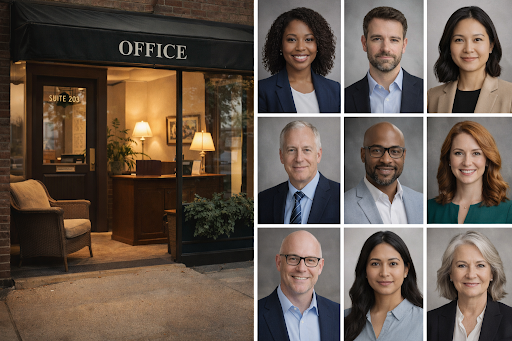
Walk down Main Street in any mid-sized American city and count the portrait studios. Ten years ago, you'd find three or four. Today, you might find one. Maybe none.
The photography studios didn't all close because people stopped needing professional photos. They closed because the definition of "professional photo" changed, and most local businesses didn't see it coming.
Something interesting is happening in the professional photography market right now, and it's playing out most visibly at the local level. Real estate agents, attorneys, financial advisors, therapists, dentists: the professionals who rely on headshots for their websites, business cards, and online profiles are quietly shifting how they get those photos taken. The shift isn't dramatic. There's no industry crisis. But the pattern is consistent enough to pay attention to.
And it tells us something important about how technology adoption actually works in small, local markets.
The $300 Problem Nobody Talks About
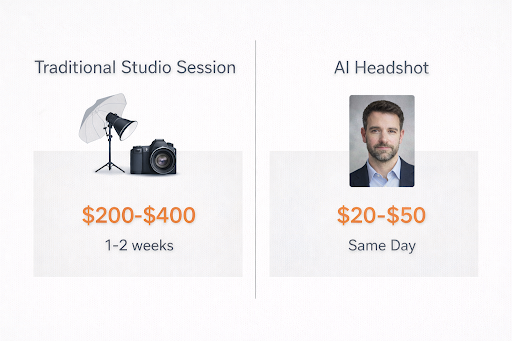
Here's a scenario that plays out thousands of times a week across the country. A new real estate agent joins a brokerage. The office manager tells them they need a professional headshot for the website, business cards, and MLS listings. The agent Googles "professional headshots near me" and discovers that a decent session costs $200 to $400 in most cities. More in major metros.
For an established professional, that's a minor expense. For someone just starting out, it's one more cost on a growing list: licensing fees, marketing materials, CRM subscriptions, association dues. The headshot isn't optional (try listing a property without a photo and see what happens), but it's also not the most urgent expense.
So what do they do? Many postpone it. They use a cropped photo from a family event. They ask a friend with a decent camera. They take a selfie against a blank wall and hope for the best.
The result is predictable. Their online presence looks unprofessional before they've had a chance to prove otherwise. First impressions form in milliseconds, and a blurry, poorly lit photo communicates something about credibility whether we like it or not.
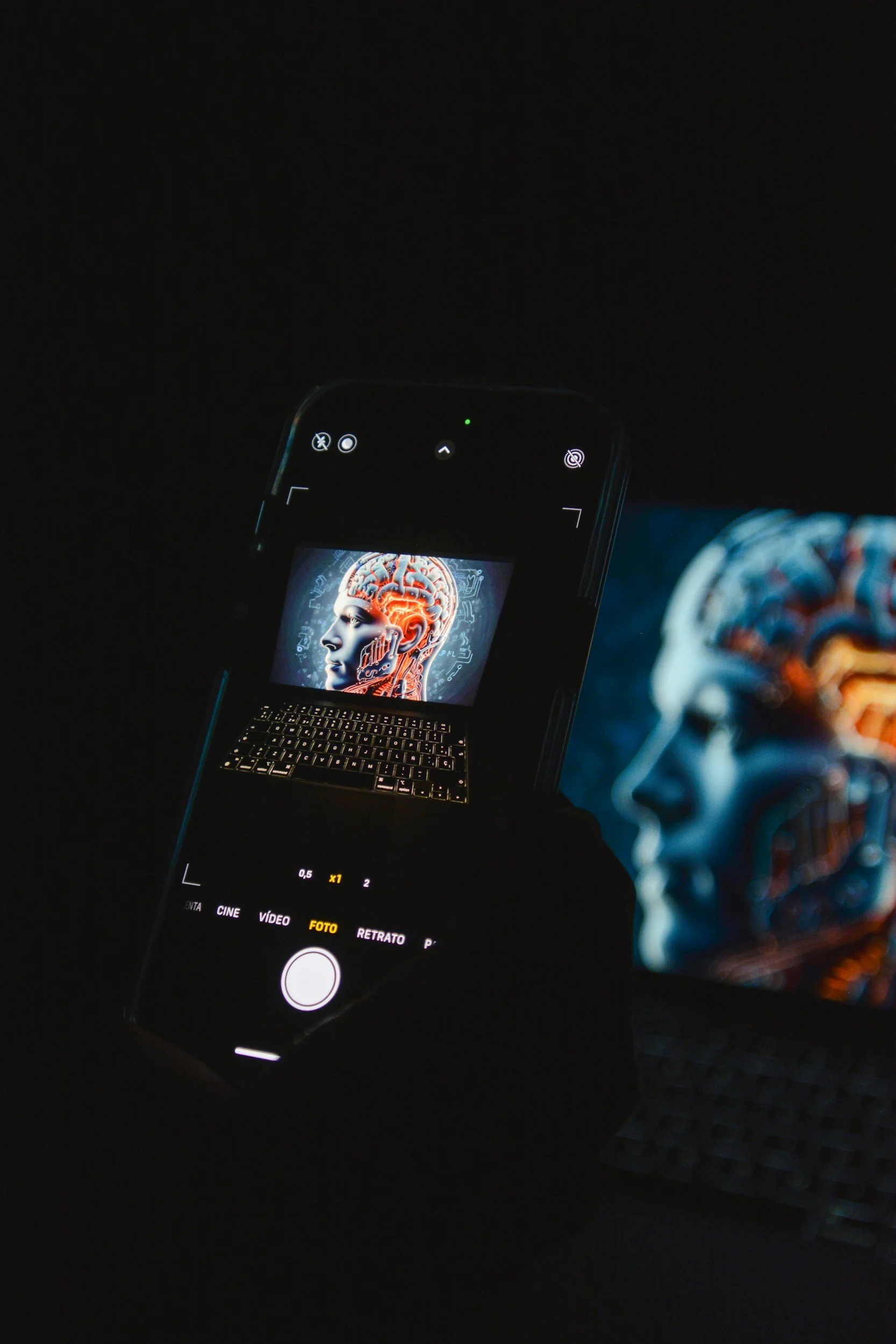
This gap between "I need a professional photo" and "I can justify the expense and time right now" is exactly where AI photography tools have found their market. Services like Headshot Photo generate studio-quality portraits from smartphone photos, typically for a fraction of what a traditional session costs. No scheduling, no driving across town, no awkward posing in front of a stranger.
The technology didn't create demand. It served demand that was already there but going unmet.
How the Adoption Curve Actually Works in Local Markets
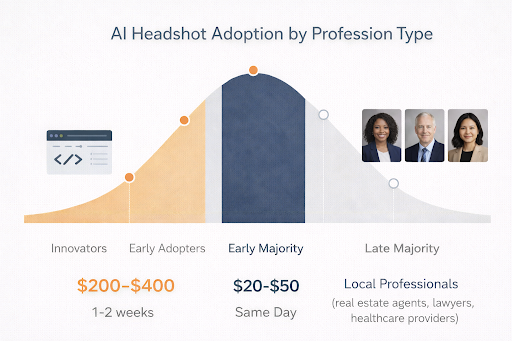
The interesting thing about AI headshots isn't the technology itself. It's the adoption pattern among local professionals.
In tech circles, AI photography tools got attention early. Software engineers and startup founders were the first wave of users, which makes sense: they're comfortable with new technology and tend to have LinkedIn-heavy professional identities.
But that's not the whole story. The fastest-growing user segment right now is exactly the kind of professionals you'd find in any local chamber of commerce: real estate agents, insurance brokers, financial planners, healthcare practitioners.
Why? Because these professionals share three characteristics that make AI headshots particularly compelling.
First, they need photos frequently. A real estate agent might update their headshot every year or two. A growing practice might onboard several new associates annually. The cumulative cost of traditional photography sessions adds up.
Second, they operate on tight schedules. A family law attorney doesn't have a free afternoon to spend at a studio. A dentist can't close the practice for half a day so everyone can get their photos taken. The time cost of traditional headshots is often a bigger barrier than the financial cost.
Third, their photo needs are standardized. They don't need artistic portraits. They need clean, professional, trustworthy-looking headshots that work on a website, a business card, and a directory listing. This is precisely the kind of photography where AI excels: producing consistent, high-quality results within well-defined parameters.
If you're curious about what the actual cost breakdown looks like between traditional studios and AI alternatives, the difference is substantial enough to explain why adoption is accelerating in cost-conscious local markets.
What This Means for Local Photography Studios
Here's where I want to be careful, because the easy narrative is "AI kills photography studios" and that's not quite right.
What's actually happening is market segmentation. The headshot market is splitting into two distinct tiers, and the split benefits both consumers and photographers who adapt.
Tier one: commodity headshots. Clean background, professional lighting, standard framing. This is what most local professionals need for their day-to-day business presence. AI handles this category well and will continue to get better at it.
Tier two: premium portrait work. Environmental portraits, creative direction, personal branding shoots with multiple locations and outfit changes, editorial-quality work for publications or speaking profiles. This is where a skilled photographer's eye, artistic judgment, and interpersonal ability create value that AI can't replicate.
The photographers who are struggling aren't losing to AI. They're losing because they're competing on price for commodity work instead of competing on quality for premium work. The smartest local photographers I've spoken with have actually welcomed AI headshot tools because it's pushed them to focus on the higher-margin, higher-skill work they enjoy more.
One portrait photographer in Austin told me she stopped offering basic headshot sessions entirely. She raised her starting price, repositioned as a personal branding photographer, and now books fewer sessions at three times the revenue. Her clients come to her because they've outgrown what AI can provide. The existence of a $30 AI alternative actually strengthened her pitch for $800 sessions.
The Trust Question: Do Clients Care If a Photo Is AI-Generated?
This is where it gets interesting. You might expect clients, especially in trust-heavy industries like law, medicine, and financial services, to resist AI-generated photos. The assumption would be that authenticity matters, that clients want to know the photo represents the "real" person.
In practice, the reaction has been more nuanced. Most clients care about one thing: does the photo look professional and does the person in it look like the person I'm meeting?
AI headshot tools have gotten remarkably good at maintaining likeness while improving lighting, composition, and background. The output looks like a version of you shot by a skilled photographer on a good day. Not a fabricated face. Not a deepfake. Just a better-lit, better-framed version of the real you.
That said, there are reasonable boundaries. A photo that makes you look 15 years younger, or significantly changes your features, is going to create a disconnect when clients meet you in person. The best practice for any professional, whether using AI or a traditional photographer, is to aim for a photo that represents how you actually look on a normal workday. Slightly polished, appropriately professional, genuinely recognizable.
The professionals who run into trouble are the ones who treat their headshot as aspiration rather than representation. That's true regardless of whether a human or an algorithm took the photo.
What Local Professionals Should Actually Do
If you're a local professional evaluating your current headshot situation, here's a practical framework.
Start by auditing your existing photos across all platforms. Your website, your LinkedIn, your Google Business profile, your industry directory listings, your email signature. Are they consistent? Are they current? Do they look professional when viewed on a phone screen (where most people will see them)?
If the answer to any of those is no, you have two solid options. For a quick, cost-effective solution that handles the basics well, AI headshot tools are worth exploring. For a more comprehensive personal branding effort with creative direction and multiple uses, invest in a skilled local photographer.
The worst option is doing nothing. An outdated or unprofessional photo isn't just a missed opportunity. It's an active signal to potential clients and referral partners that your attention to detail might not be where it needs to be.
And if you're a local business owner managing a team, the math gets even simpler. Coordinating headshot sessions for 10 or 20 employees with a traditional photographer involves scheduling logistics that can drag on for months. AI tools can standardize the process and deliver consistent results across your entire team in days.
The Bigger Picture
The shift toward AI photography in local professional markets isn't really a story about technology. It's a story about accessibility.
For decades, looking "professional" in your online presence required a certain minimum investment of time and money. That investment was small enough for established professionals to absorb without thinking about it, and just large enough to create a visible gap between those who could afford it and those who couldn't.
That gap is closing. A first-year real estate agent in rural Kansas now has access to the same quality of professional headshot as a senior partner at a Manhattan law firm. Whether they get it from a photographer or an AI tool matters less than the fact that the barrier has dropped.
In local markets, where reputation and first impressions drive a disproportionate share of business, that's not a small thing. It's a quiet equalization, and it's happening one headshot at a time.