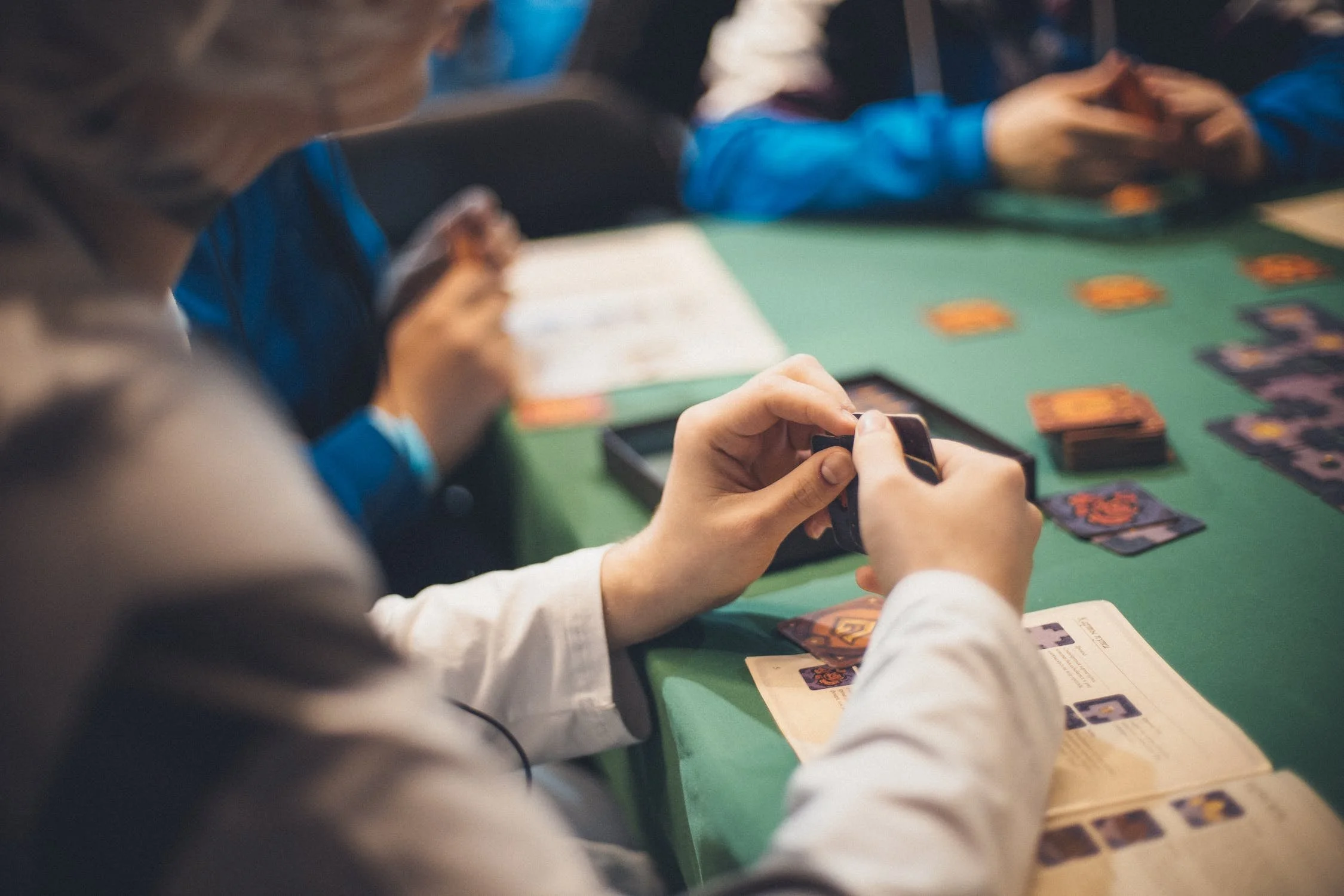
People who love chess, Go, and deep board games tend to share a particular taste. They enjoy systems where a small set of rules produces an enormous space of possibilities, where every decision branches into further decisions, and where the player who calculates more carefully usually comes out ahead. Poker attracts some of these people, but the variant that seems to hold them most firmly is Omaha. On the surface it looks like a minor tweak to Texas Hold'em — you get four hole cards instead of two — yet that single change transforms the game into something far more demanding, and far more rewarding for the kind of mind that enjoys untangling complexity.
Six Combinations Instead of One
Start with the arithmetic. In Hold'em, your two hole cards form exactly one two-card combination. In Omaha, four hole cards create six distinct two-card combinations. Before the flop has even arrived, you are not evaluating one starting hand; you are evaluating six overlapping ones, each interacting differently with whatever the community cards might bring.
This is precisely the kind of multiplication that strategy gamers recognize from other contexts. A chess position does not become interesting because the rules are complicated — the rules are simple — but because the pieces interact combinatorially. Omaha works the same way. The rule change is tiny. The consequence is a pre-flop landscape several times richer than Hold'em's, where hands are strong not because they contain one good pair but because their six combinations work together, covering multiple possible futures at once.
The Elegance of the Two-Card Constraint
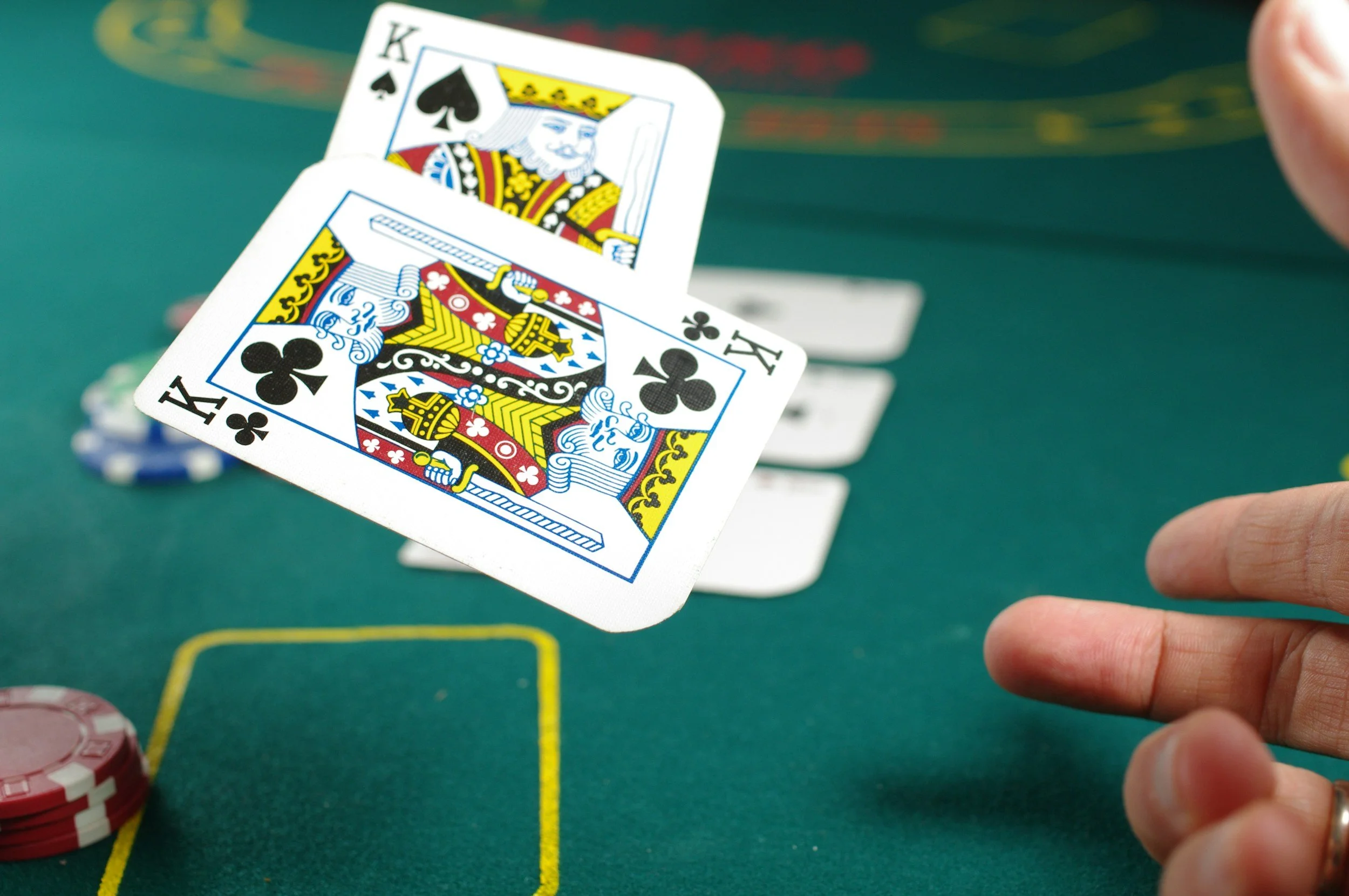
The rule that gives Omaha its character is deceptively simple: your final hand must use exactly two of your hole cards and exactly three of the community cards. Not one, not three — exactly two. Newcomers routinely misread their own hands because of this constraint, and experienced players will tell you that internalizing it is the first real milestone in learning the game.
Consider one concrete case. If only one of your four hole cards is a spade, you cannot make a flush even when three spades sit on the board. In Hold'em, one spade in your hand plus a fourth on the board would complete the flush. In Omaha, the two-card requirement forbids it: you must contribute two cards to your final five, and a flush needs both of them to be spades.
Strategy game enthusiasts tend to find this constraint beautiful rather than annoying. It resembles the elegant restrictions that define great abstract games — rules that cost one sentence to state and years to fully absorb. The constraint does not limit the game's depth; it creates the depth, because every hand must now be read through a filter that beginners forget and experts apply instantly.
Reading the Board Like a Position
Because of the two-card rule, board reading in Omaha is a genuine skill in its own right. Looking at three, four, or five community cards, a strong player runs through the possible two-card holdings that connect with them: which combinations complete a straight, which make the flush possible, which pairings of the board open the door to a full house. It is closer to reading a board-game position than to the quicker pattern-matching Hold'em allows, and it rewards the same habits of systematic enumeration.
This is also where structured learning materials help enormously, because the reading process can be taught step by step rather than absorbed through expensive trial and error. GGPoker, which runs Omaha tables alongside its Hold'em offerings, publishes rules material for exactly this reason. Players who prefer studying in Chinese can work through the GG扑克奥马哈玩法 guide, a Chinese-language resource that walks through how Omaha plays, from the four-card deal to the two-card requirement at showdown, mirroring the ground covered in the Omaha rules GGPoker itself publishes. Reading a clear explanation of the mechanics before sitting down saves a newcomer from the classic mistake of announcing a flush that the rules do not actually permit.
Once the mechanics are internalized, board reading becomes a continuous background process, the way a chess player never stops tracking which squares are defended. Every new community card redraws the map of what is possible, and the player who redraws it fastest holds a quiet but persistent edge.
More Information, Harder Decisions
Here is the paradox that fascinates analytical players. Four hole cards give you twice the private information of Hold'em, and intuition says more information should make decisions easier. The opposite happens. More cards mean more combinations to weigh — yours and, crucially, everyone else's. Each opponent also holds six two-card combinations, so the space of hands you must consider when facing a bet expands dramatically.
Complexity theorists would recognize the pattern: the difficulty of a decision grows with the size of the possibility space, not the amount of data in your hand. Go players know this instinctively — a wider board does not simplify the game just because you can see all of it. Omaha players face the same effect every hand. The information is abundant; the challenge is processing it under uncertainty, which is exactly the challenge deep-strategy enthusiasts seek out on purpose.
Structure, Closer Values, and the Long Game
Two structural details round out the picture. Omaha is most commonly played pot-limit, meaning the maximum bet is tied to the current size of the pot, which keeps the betting mathematically anchored and adds a layer of calculation to every aggressive move. And the flow of action follows a fixed geometry: before the flop, action begins with the player to the left of the big blind; after the flop, it begins to the left of the button. Position, as in most strategic games, is part of the terrain.
The subtler point is that hand values in Omaha run much closer together than in Hold'em. With six combinations per player, strong holdings collide constantly, and the gap between a good hand and a slightly better one narrows. A player cannot coast on a single strong pairing; they must track how many combinations beat them, how many they beat, and how the next card shifts the ledger. This is why patience and calculation are the rewarded skills. The impulsive player who overvalues a pretty-looking four-card hand loses ground steadily to the one who counts combinations and waits for genuinely coordinated holdings — the poker equivalent of the chess player who develops pieces methodically rather than launching a premature attack.
Platforms have noticed the audience this creates. GGPoker's Omaha tables draw players who arrive from exactly this background: people who enjoyed the calculation-heavy side of Hold'em and wanted more of it, and people from board-game communities discovering poker through its most combinatorial mainstream variant.
Omaha will never displace Hold'em as poker's introductory game, and it does not need to. Its appeal is narrower and deeper. For players who light up at branching possibility trees, elegant constraints, and positions that demand honest calculation, the four-card game offers what chess and Go offer: a simple rulebook concealing a lifetime of study. That is not an accident of design — it is the design, one exact-two-cards rule doing the same quiet work that a handful of movement rules do on a chessboard. Anyone who has ever lost an evening happily analyzing a board game position already understands why people fall for it.