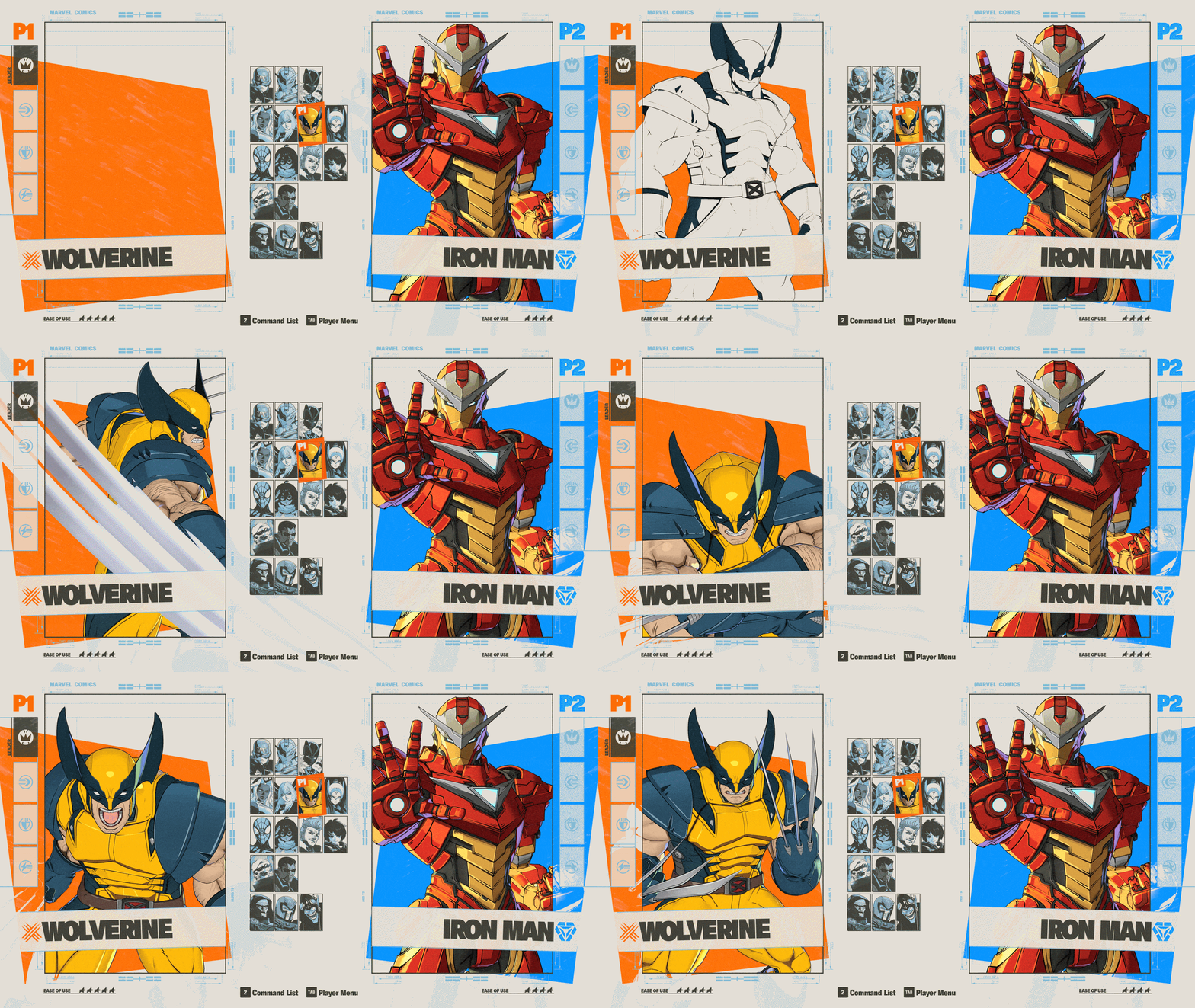
There was a time when “free” in gaming meant a demo with one level or a weekend trial. Today, some of the biggest games in the world don't charge anything to start playing.
Fortnite, Counter-Strike 2, League of Legends and Valorant have helped turn free-to-play into a mainstream business model. The scale is huge. There were around 3.6 billion players worldwide in 2025, while the global games market generated more than $200 billion.
Free-to-play isn't responsible for all of that growth, but it has changed what players expect. Instead of paying $60 or $70 before playing, you can now spend dozens of hours with a game before deciding whether it's worth spending anything at all.
Gaming Learned That Free Can Be Extremely Valuable
“Free” doesn't mean developers aren't making money. It means the purchase happens later.
Once players are invested, games can generate revenue through:
Battle passes with seasonal progression and rewards.
Cosmetic skins for characters, weapons and equipment.
Virtual currencies such as V-Bucks and Valorant Points.
Characters and content that can be unlocked or purchased.
Limited-time items tied to events and collaborations.
In 2025, free-to-play titles represented 44% of PC playtime, 41% on PlayStation and 34% on Xbox across major Western markets. PC microtransactions alone generated around $20.6 billion.
The model works because developers remove the first barrier. Players can get invested in the game, build an account and play with friends before they're ever asked to spend money.
From Game Demos to Fortnite and Free to Play
The basic idea isn't new. Demo discs once gave PC and PlayStation players a small piece of a game in the hope they'd eventually buy the full version.
Free-to-play flipped that model around. Instead of giving away one level, developers could give away the entire core experience and monetize everything around it.
Fortnite became one of the clearest examples after Battle Royale launched for free in 2017. Epic Games didn't need to charge players for every match. V-Bucks, skins, collaborations and the Battle Pass gave millions of players optional reasons to spend.
Counter-Strike 2, Valorant, League of Legends and Apex Legends now follow variations of the same principle. Getting into the game costs nothing. What happens after that is where the business model begins.
Why Giving Players Something First Works
Free-to-play works because players can experience the product before deciding whether it deserves their money. Once someone has spent hours building an account, playing with friends or progressing through a season, optional purchases have more context.
Games also make sure there is usually another small reason to return. That might be a daily login reward, a new challenge or an item waiting at the next level.
Starter Packs, Daily Rewards and Virtual Currency
Modern games use several ways to turn free players into long-term players:
Starter packs offer useful items or currency early in the game.
Daily rewards give players a reason to log in regularly.
Battle passes provide a visible path of rewards across a season.
Virtual currency lets players purchase items without making a separate card payment every time.
Limited-time rewards create an incentive to play during particular events.
Virtual currency has become especially common. Fortnite has V-Bucks, Roblox has Robux and Valorant uses Valorant Points. The names change, but the principle is similar: players enter for free and decide later whether the extras are worth paying for.
The Free to Play Model Has Spread Beyond Video Games
Gaming isn't the only industry that has learned the value of removing the initial price barrier. Free trials are everywhere from streaming and software to mobile apps, while gambling platforms have developed their own version through welcome rewards and no-deposit bonuses.
The products are obviously different, but the customer-acquisition idea is familiar: give someone a limited experience first instead of immediately asking them to pay.
From Gaming Rewards to Casino Bonuses
This is where the comparison becomes particularly interesting.
A game might give a new player currency, items or a starter pack. An online casino can instead offer free spins or a small amount of bonus money before requiring an initial deposit.
In Canada, for example, Pokcas tracks $10 free no deposit casino bonus Canada offers that give eligible new players a small starting balance without funding the account first.
The important difference is what happens after receiving it. A free Fortnite item is simply something you can use in the game. Casino bonus money can have wagering requirements, withdrawal conditions or limits attached before winnings become cashable.
So while gaming and casino offers can use the same basic “try something first” approach, what the player receives and what they can do with it are very different.
Free Doesn't Always Mean No Strings Attached
Free offers work because they remove the initial commitment, but that doesn't mean everything that follows is free.
In gaming, the base experience might cost nothing while the most desirable skins, characters or battle pass rewards require payment. Some games also use multiple virtual currencies, making it less obvious how much an item costs in real money.
Casino bonuses take this a step further because there can be conditions attached to the reward itself. A no-deposit bonus might genuinely require $0 upfront, but winnings can still be subject to wagering requirements, maximum cashouts or expiry periods.
What Players Should Check Before Spending
Whether it's a free-to-play game or another form of online entertainment, it pays to look beyond the word “free.”
Players should check:
What is actually free and what requires a later purchase.
How virtual currency converts into real money.
Whether rewards expire or are tied to a season.
What conditions apply before rewards can be used or withdrawn.
Whether spending is optional or effectively required to progress.
For casino offers specifically, Pokcas provides Canadian players with comparisons of bonuses, casino games, payment options and the conditions attached to them at https://pokcas.com/ca/.
Why the Model Isn't Going Away
Free-to-play has lasted because it solves one of the biggest challenges any online platform faces: getting people to try something new.
For developers, a free entry point can create a much larger potential audience. For players, it means they can decide whether a game deserves their time before deciding whether it deserves their money.
The model has changed significantly since the days of demo discs, but the underlying idea hasn't. Give people something useful first, make the full experience appealing enough to keep them around and let spending happen later.
Fortnite, Valorant and countless mobile games have shown how powerful that can be. The fact that similar strategies now appear across apps, subscriptions and online casinos suggests the idea has moved well beyond gaming.
Free isn't necessarily the product anymore. Increasingly, it's the invitation.