Life simulation games have long invited players to step into gentler parallel lives—raise a farm, befriend townsfolk, and build rhythms that feel restorative. What makes this phenomenon different is not just the satisfaction of growing parsnips or upgrading a rustic cabin. It is a surprising way that daily alternatives - where to spend your time, like greeting the road, when to get into the mines - locks to create an authentic human loop with purpose, relationship, and discovery. In this connection, Stardy Valley shows how a careful routine can support both reflection and progress without feeling like a checklist.
Early on, most players learn the value of routine: water the fields, tend the animals, and stop by community hubs where social threads begin to flourish. A central landmark is Pierre’s General Store, a place to buy seeds, check the notice board, and bump into neighbors on their own daily rounds. This tube surrounds the ethos of the store's design: Personal goals are always nested in a vibrant, breathable city, where plan, festival and personality shape your day as much as you can have water.
Table of Contents
How Stardew Breaks the Mold
The Design Pillars
Crops, Seasons, and Flow
Relationships That Matter
Economy Without Exhaustion
Exploration and Surprise
Community, Mods, and Co-op
Accessibility and Long-Term Play
Play Smarter: Quick Tips
Conclusion: The Quiet Revolution
FAQs
How Stardew Breaks the Mold
Before this entry, many life sims tied progress to prescriptive task lists and rigid unlocks. Here, the game establishes a gentle pact with the player: you choose the day’s priorities and accept natural trade-offs—energy limits, daylight hours, seasonal cycles—rather than scripted gates. The result is a loop that respects your time. There are better choices and timing windows, sure, but there are rarely “wrong” choices. You can push deep into the mines, pivot to artisan goods, focus entirely on friendships, or dabble in all of the above. That freedom reframes “progress” as a personal story rather than a bar to fill.
Why it matters
Agency over agenda: Goals feel self-directed, so motivation stays intrinsic.
Soft constraints: Stamina, time, and seasons shape smart decisions without punishing experimentation.
Human scale: Progress accrues through modest, meaningful routines that never drown you in chores.
The Design Pillars
Three conceptual pillars explain the game’s staying power:
1) Intentional friction
Energy, time, and tool effectiveness impose light friction that creates satisfying planning puzzles. Do you clear the southern field or trek north to forage? Small constraints protect pacing.
2) Interwoven systems
Farming, relationships, mining, crafting, and festivals interlock. Advancing in one sphere subtly benefits others: better tools free time for friendships; gifting improves access to recipes; community bundles unlock travel options.
3) Emotional economy
The reward loop isn’t just coin and crops. It’s smiles, letters, cutscenes, and shared rituals. Emotional payoffs—birthdays remembered, festivals attended, communities rebuilt—anchor the grind in warmth.
Crops, Seasons, and Flow
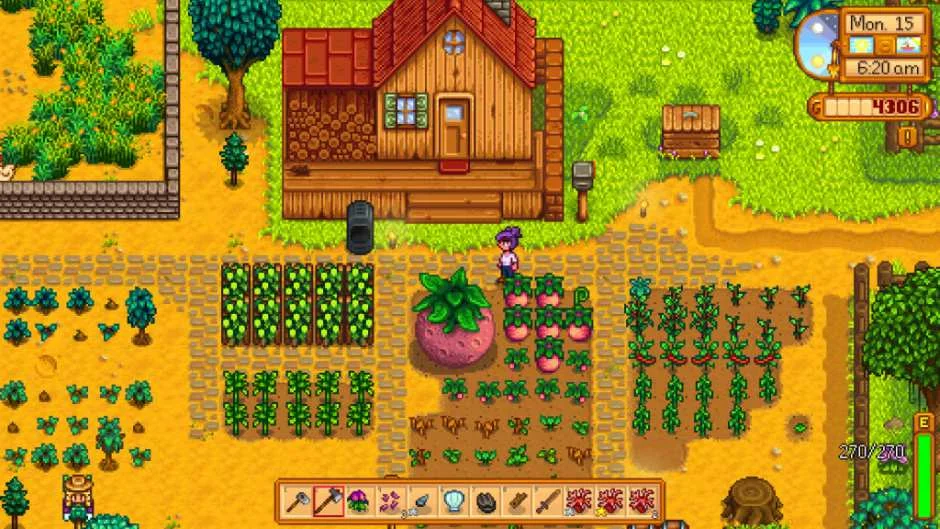
Farming sets your cadence. Each crop has maturity times, regrowth patterns, and market value that interact with season length. Early on, fast-maturing spring staples teach the rhythms of planting and harvest; later, you’ll stagger plantings to smooth cash flow and protect against rainy-day disruptions.
Key farming insights
Seasonal strategy: Plan plantings backward from season end to avoid withered fields.
Stagger the harvest: Mix quick growers with regrowers to reduce empty days and maximize income.
Soil and sprinklers: Fertilizers nudge yields upward; sprinklers transform time into free hours for mining or social visits.
Artisan value: Kegs and preserves jars convert produce into higher-margin goods, rewriting your revenue curve.
Relationships That Matter
Townsfolk aren’t background scenery; they’re a second skill tree. Gifts, chats, and shared events unlock scenes that make the valley feel lived-in. Friendships open recipes, story fragments, and community milestones while providing a different “progress bar” than money or gear. It’s a multiplayer story you play solo: one where knowing someone’s schedule is as valuable as a gold-star pumpkin.
Relationship rhythms
Learn routines: Each villager keeps hours; catching them “on the way” saves trips and energy.
Meaningful gifts: Universal likes help early; personal favorites seal bonds faster.
Festivals as catalysts: Shared rituals compress social progress and break the daily loop in memorable ways.
Narrative dividends: Heart events deepen the setting, rewarding patience and curiosity.
Economy Without Exhaustion
Money matters, but burnout doesn’t. The economy invites strategy without demanding spreadsheets. Prices are consistent, yields are predictable, and upgrades serve lifestyle design—less watering, more wandering—rather than raw accumulation.
Balanced progression
Tool upgrades as freedom: Better tools buy time, not just speed; time funds friendships.
Diversify gently: Foraging, fishing, and artisan goods stabilize income while fields scale up.
Upgrades with purpose: Storage, barns, and sheds reflect your chosen play style, not a universal meta.
Sustainable pacing: Rainy days, lucky days, and festivals naturally re-mix your to-do list.
Exploration and Surprise
Beneath the pastoral calm is a world of secrets. Mines layer combat and resource risk; the desert, islands, and hidden notes sprinkle wonder across mid- to late-game. That sense of discovery combats routine fatigue: just when you’ve mastered a loop, a new recipe or region reshapes your priorities.
Discovery drivers
Risk-reward calculus: Deeper floors trade safety for resources, shaping gear and food prep.
Collections that teach: Museums, fish tanks, and cooking catalogs nudge breadth over grind.
Subtle breadcrumbs: Letters, statues, and locked doors signal goals without over-explaining.
Community, Mods, and Co-op
Another secret engine is the ecosystem around the game. Modding expands everything from visual flavor to late-game systems, while co-op invites collaborative farms with fluid roles—one player mines, another tends animals, a third optimizes artisan lines. That social layer keeps the experience current year after year and sparks new goals each save file.
What the wider world adds
Endless personalization: UI tweaks, visual remasters, and quality-of-life mods tailor pacing.
Fresh challenges: Community events and themed runs rekindle the early-game magic.
Shared purpose: Co-op farms reinforce the central thesis—relationships are end-game content.
Accessibility and Long-Term Play
The warm art, readable interface, and forgiving fail states broaden the audience. Short sessions still feel productive; long sessions reward planning. The calendar anchors expectations—birthdays, markets, festivals—so you always have something to anticipate without fear of missing out forever.
Why it endures
Flexible depth: You can finish the day in ten minutes or ten tasks—both feel valid.
Gentle mastery curve: Systems reveal themselves over weeks, not minutes, reducing overwhelm.
Meaningful goals: Restoring community spaces and improving the town give purpose beyond profit.
Play Smarter: Quick Tips
Plant a mix of quick and regrowing crops to smooth cash flow across each season.
Prioritize tool upgrades that save daily time, not only raw resource throughput.
Map out social routes that overlap with errands to minimize back-tracking and fatigue.
Use rainy days for mines, house upgrades, crafting bursts, or relationship catch-ups.
Schedule artisan production so kegs and jars finish overnight, freeing mornings for chores.
Track birthdays with a simple list; a well-timed gift doubles social progress per day.
Place chests near activity hubs—mines, docks, barns—to reduce inventory juggling time.
Treat festivals as “soft goals”—prepare outfits, gifts, and inventory space a day ahead.
The Quiet Revolution
Life sim players often chase a simple fantasy: a place where effort compounds and neighbors know your name. This title refines that fantasy by weaving routine, discovery, and relationships into a single, humane loop—one that prizes autonomy over obligation and companionship over conquest. In practical terms, it’s a masterclass in interlocking systems, natural pacing, and emotional payoffs that never feel manipulative. In cultural terms, Stardew Valley reminded the industry that cozy does not mean shallow; it means considered. That’s why new farms still spring to life, old saves get revisited, and town squares feel like home. When your day ends with a good harvest, a heartfelt cutscene, and a quick visit to Pierre’s General Store, you realize the real win isn’t profit—it’s connection.
FAQs
What makes this game different from other life sims?
It blends gentle constraints—time, stamina, seasons—with flexible goals you set yourself. Systems connect elegantly, so progress in one area meaningfully helps another, and emotional rewards matter as much as currency.
How important is farming compared to relationships?
Farming shapes your calendar and funds upgrades; relationships shape your story. Advancing both in parallel yields the richest playthroughs, but either path can lead to satisfying progress.
Is combat required to enjoy the game?
Combat opens resources and recipes but isn’t mandatory for fulfillment. You can emphasize farming, artisan goods, fishing, or social goals and still feel you’re “beating” the game on your own terms.
Do I need mods to have a good time?
Not at all. The base experience is polished and complete. Mods and co-op simply extend longevity and tailor pacing once you’ve learned the loops.
How does the economy avoid burnout?
Predictable prices and soft constraints keep planning satisfying without becoming a spreadsheet grind. Tool upgrades, sprinklers, and artisan lines convert effort into more free time, not just more chores.