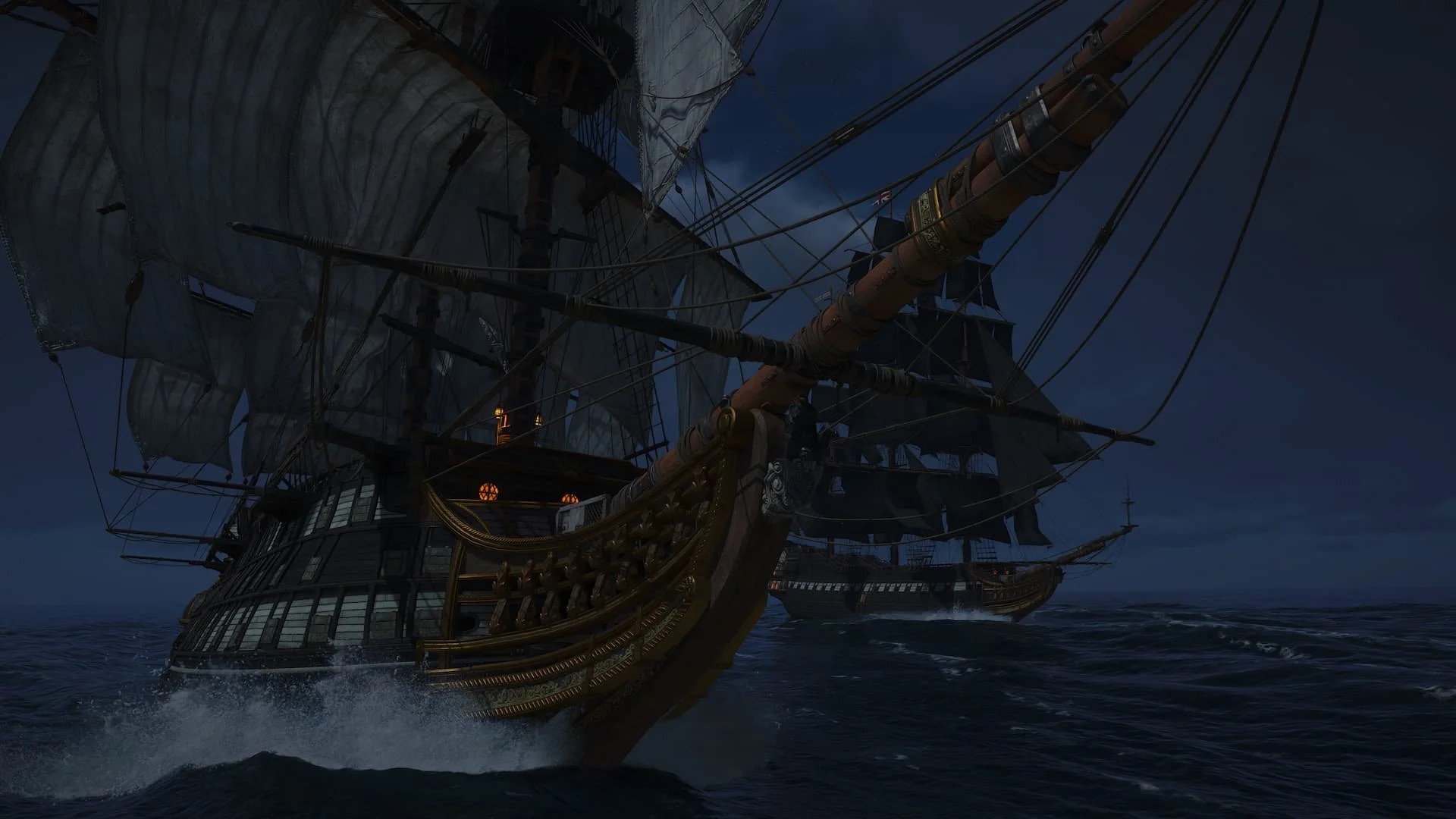
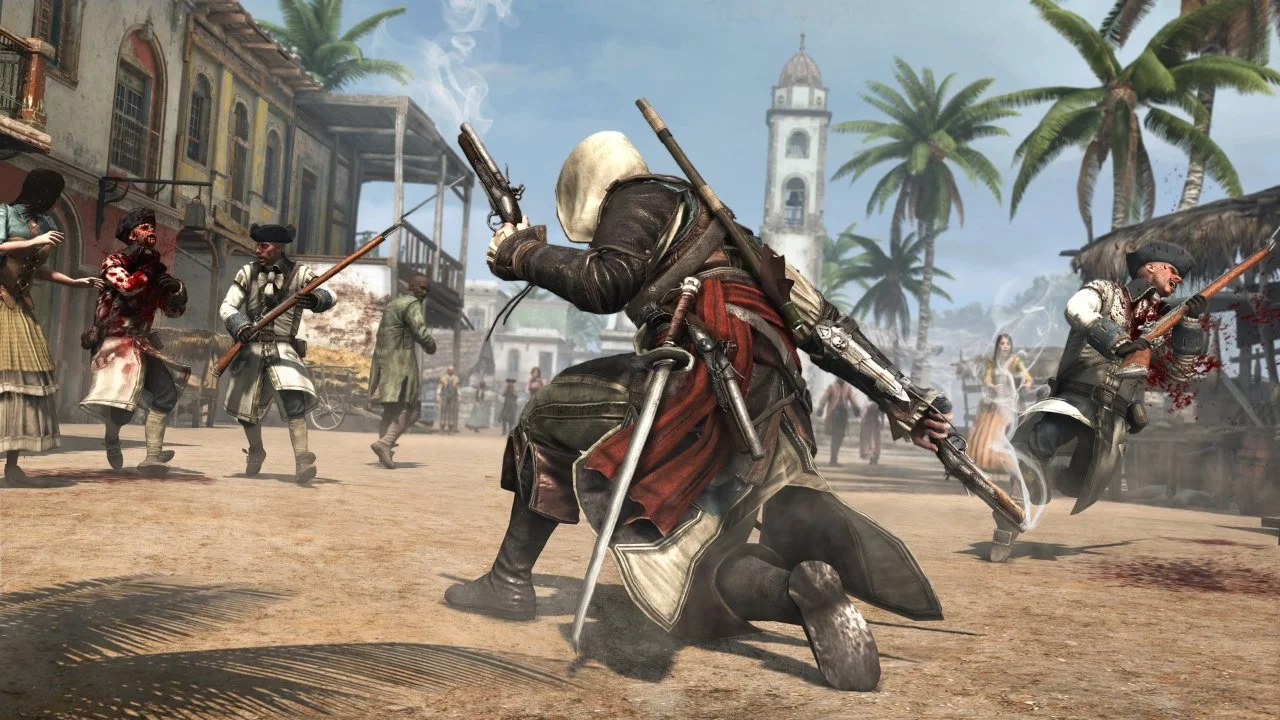
Edward Kenway doesn't ask permission. He spots a Spanish galleon riding low in the water, loaded, slow, vulnerable, and calculates the distance between his cannons and its hull before he commits. No safety net. Either the Jackdaw survives the broadside exchange and the hold fills with sugar and rum, or you're swimming back to Nassau with nothing.
That's the core of Black Flag Resynced, not the parkour, not the hidden blade, not the Assassin mythology layered on top. The game lives in that five-second window before you fire.
Ubisoft released Resynced on July 9, 2026, and within 24 hours it had moved 2 million copies and cracked 99,000 concurrent players on Steam, a franchise record (per Ubisoft's launch figures). Predictably, GameTyrant's guides section lit up with searches for the best ship upgrades to buy first and how to take down the legendary ships without losing everything you'd earned. People are deep in the economy. They're making decisions, and those decisions feel genuinely consequential, which is rarer than it should be in 2026.
So let's talk about why, and more importantly, what other games keep getting wrong.
The Plunder Economy Is Built on Real Scarcity
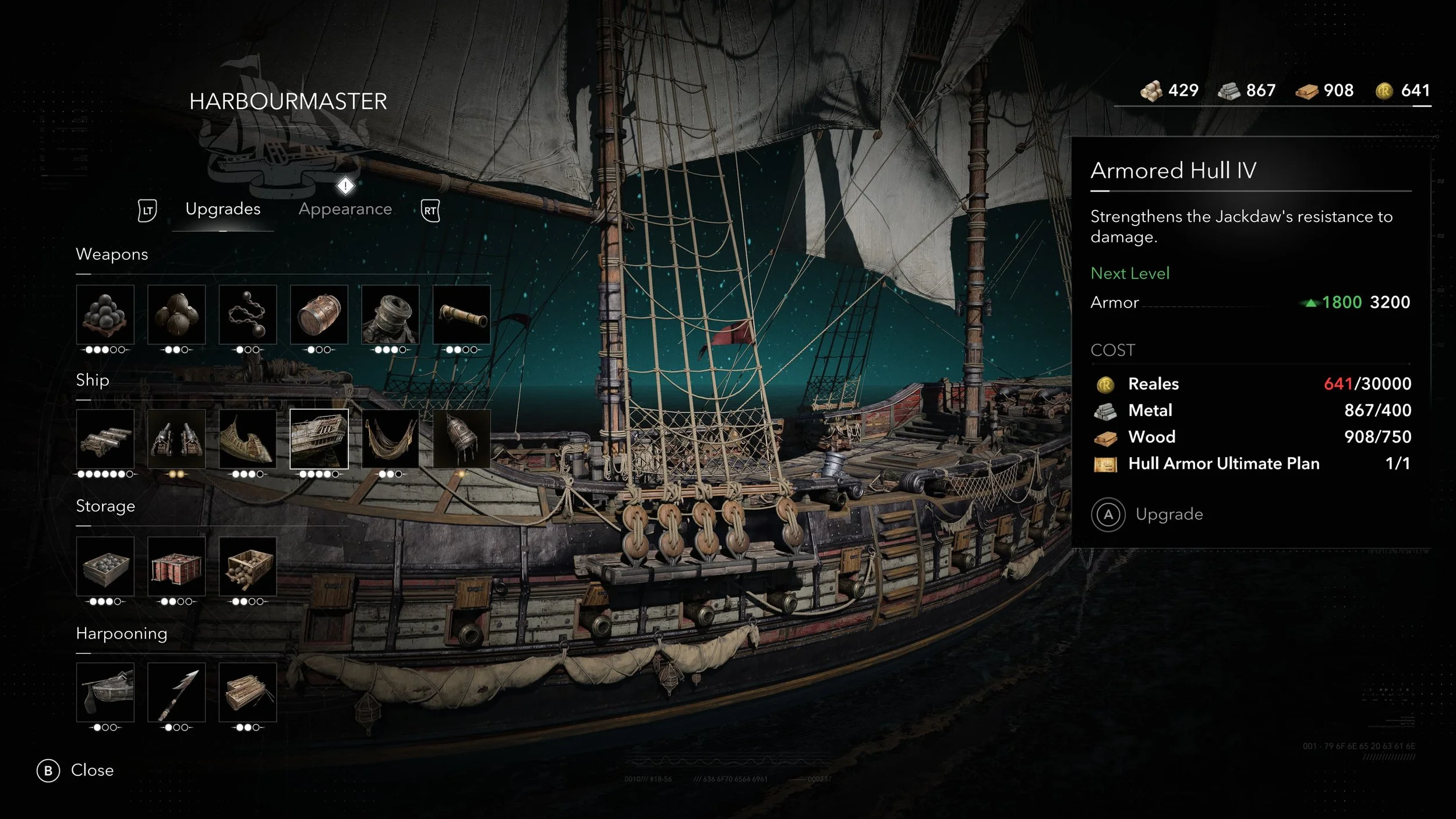
Black Flag's ship combat works because the rewards are yours. You fire chain shot to shred sails, close the gap under fire, board in the chaos, and fight through the enemy crew hand-to-hand before you can claim the cargo. Every step of that sequence carries risk of losing crew members, hull integrity, or time you could've spent elsewhere. The sugar, rum, and metal you pull from that hold are direct currency for ship upgrades, and ship upgrades determine whether your next fight goes the same way or worse.
This is a closed loop. Scarcity is real. Spending in the wrong order actually sets you back.
PC Gamer's review of Resynced called it out directly: the naval systems remain the game's strongest element, precisely because the original design tied player progression to player behavior rather than to a currency shop. You got better by learning how to fight smarter, not by spending longer.
The problem? Ubisoft added a cash shop and weekly challenge system on top of that original design. GamesRadar flagged it in their launch coverage as exactly the kind of addition that dulls the loop's edges. When you can short-circuit scarcity with a credit card, the five-second calculation before you fire matters a little less. The tension bleeds out.
That tension is everything.
High Variance Is a Feature, Not a Bug
The legendary ship fights, El Impoluto, La Dama Negra, and El Toro, are the clearest expression of Black Flag's design philosophy. They're optional. The game doesn't push you toward them. But they offer the highest-tier rewards in the game: elite hull upgrades, the heavy shot upgrade, materials you can't find anywhere else.
To reach them you need a Jackdaw that's already been upgraded considerably, which means you've already been taking smaller risks, collecting, building. The legendary ships are the final exam.
I spent about three hours getting destroyed by El Impoluto on my first proper playthrough of the original back in 2013. On Resynced, the new parrying mechanics, one of the genuine improvements Ubisoft layered in, make the boarding phase more readable, but the ship-to-ship phase is still brutal if you come underprepared. The first time I sank in the attempt, I'd lost a solid 40 minutes of plundering. That hurt. It was supposed to hurt.
High variance with real stakes creates memorable outcomes. Low variance with padded stakes creates forgettable ones. Most modern open-world games have drifted toward the latter. Death is a fast travel, resources respawn on a timer, and the game wants you to feel productive at all times. Black Flag Resynced, at least in its core systems, resists that.
Why Legible Odds Matter, In and Out of Games
There's a reason Black Flag's economy grips people who normally don't care about numbers: the odds are readable. You can see roughly what a fight will cost you and what it might return before you commit. That legibility is the appeal, and it's the same thing careful players look for in any system built on variance, whether that's poker, trading, or the RTP and house-edge math behind online casino games.
The difference is disclosure. Black Flag never prints a number; you learn its odds by feel. Real-money formats are supposed to publish theirs, and the people who get the most out of them are the ones who actually read the figures. Pokerology's rundown of everything about online casinos works through RTP percentages, house edges, and how different game formats are structured, the same analytical lens a good design breakdown brings to a naval combat loop. If what you like about the Jackdaw is understanding a system before you commit to it, that's the instinct worth carrying over.
What Other Games Get Wrong
The biggest failure mode in modern game design isn't bad mechanics. It's disconnected consequences.
Loot boxes are the obvious example. You spend currency, a chest opens, and items appear with no relationship to what you just did in the game world. There's a dopamine spike from the animation, the rarity reveal, the sound design, but no narrative context for why you received what you received. Compare that to pulling cargo from a galleon you boarded by shooting the captain off the deck yourself. It's the same randomness in one sense, since you don't always know what's in the hold, but it carries completely different emotional weight.
The randomness in Black Flag is legible. You know why you're getting rewarded. You can point to the specific decisions that earned this outcome.
Games like Sea of Thieves understood this at launch and then gradually wandered away from it as seasonal cosmetics started to detach rewards from gameplay actions. Skull and Bones, which had every structural advantage to learn from Black Flag, built its entire economy around menus and contracts rather than emergent combat, and the loop collapsed accordingly. Even Zelda: Tears of the Kingdom's Depths resource system, as inventive as it was, didn't produce the same sustained tension, because death cost you almost nothing.
Black Flag costs you something. That's the design lesson.
The Parry System and Why Small Changes Matter
Resynced's most substantive mechanical addition is the expanded parry window during boarding sequences. In the original game, combat aboard enemy ships was loose and chaotic by design. In Resynced, you can interrupt enemy attack animations with a precise counter, which rewards attentive players with faster clears and fewer crew casualties.
Small change. Significant impact on the feel of the loop.
It sharpens the skill ceiling without removing accessibility. Players who learn to parry consistently will preserve more crew heading into legendary ship fights, and that matters, because crew strength directly affects your boarding success rate. The feedback is clean: action, consequence, outcome, all readable.
This is what GamesRadar's more critical review actually underscored despite its headline skepticism: the bones of the original design are so solid that even the additions Ubisoft got wrong couldn't break it. That's a testament to how precise the 2013 loop was to begin with. Ubisoft's 2013 team, largely different from the one that shipped Resynced, built something that has survived twelve years of scrutiny and a full remake without the core ever needing to change.
The Lesson Is Simple, Even If Following It Isn't
Risk-reward loops work when three conditions are met: the player understands what they're risking, the outcome is legible, and success requires a real decision rather than just time investment.
Black Flag Resynced, despite the cash shop bolted on top, still satisfies all three at its core. Most games satisfy one, sometimes two. Almost none get all three consistently across an entire playthrough.
If you're forty hours into the Jackdaw upgrades right now, you already know this instinctively. The reason you're still playing after the story ends is the loop. It's worth understanding why the loop works, because once you see it clearly, you'll start noticing everywhere else it's broken.