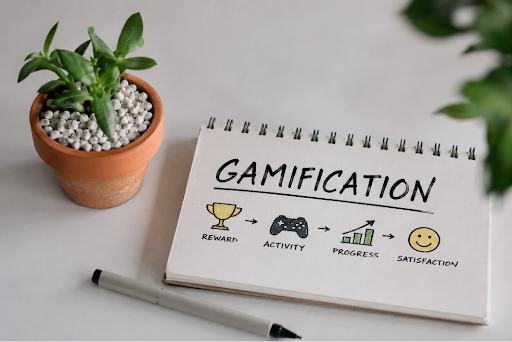
Gamification is the use of game-inspired mechanics in products and experiences that are not necessarily games. Points, progress bars, challenges, rankings, badges and reward systems are now common across entertainment platforms, mobile applications, streaming services and online casinos.
Its importance has grown because digital businesses no longer compete only for registrations or purchases. They compete for attention, repeat visits and long-term user relationships. Gamification helps platforms transform routine actions into visible progress, making users feel that every interaction has a purpose.
As a result, everyday digital experiences are increasingly structured like games. Viewers maintain activity streaks, casino players complete missions, subscribers unlock rewards, and app users progress through levels. The boundary between entertainment, participation and competition is becoming less distinct.
What Is Gamification? A Quick Overview
Gamification applies selected game-design principles to digital environments in order to influence motivation and behaviour. Unlike a traditional game, a gamified platform does not need fictional characters, complex gameplay or a defined winning condition.
Its core elements usually include:
Points, levels and leaderboards that measure activity or status.
Rewards and achievements that recognise completed actions.
Progress tracking that shows how close a user is to a goal.
Challenges that provide clear short-term objectives.
Social mechanics that allow users to compare results.
The main difference between games and gamified systems lies in their primary purpose. A game is designed mainly to deliver gameplay, while a gamified system uses game mechanics to support another activity, such as watching content, learning, shopping, betting or maintaining a subscription.
Effective gamification is not simply a collection of badges. Each mechanic should reinforce the platform’s value proposition and provide users with understandable reasons to continue participating.
Why Gamification Is Growing So Fast
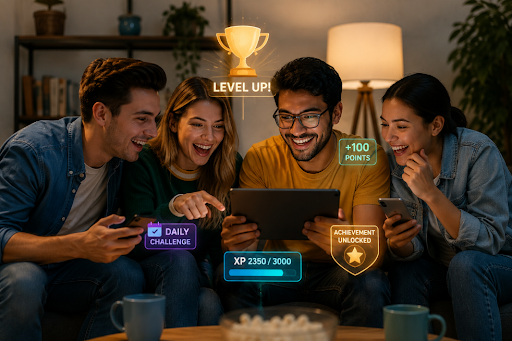
Gamification works because it connects digital products with fundamental psychological drivers. Completing a task and receiving an immediate reward creates a feedback loop that encourages repetition. Progress bars and achievement notifications provide visible evidence that effort has produced a result.
Competition also plays an important role. Leaderboards, rankings and public badges create social validation, particularly when users can compare their progress with friends or members of the same community. Limited-time challenges add urgency through fear of missing out, encouraging users to act before a reward disappears.
Technology has made these systems easier to implement. Mobile-first platforms enable frequent short interactions, while real-time tracking records almost every click, purchase, viewing session or completed challenge. Artificial intelligence can then use this behavioural data to determine which incentives, difficulty levels and rewards are most relevant to each user.
Gamification in Gaming: Beyond Traditional Gameplay
Modern games increasingly operate as long-term entertainment services rather than one-time products. Battle passes, daily quests, seasonal events and limited-edition rewards encourage players to return after the main gameplay experience becomes familiar.
Live-service titles such as Fortnite and Call of Duty regularly introduce new objectives, progression tracks and cosmetic items. These systems create overlapping engagement cycles. A player may return to complete a daily mission, progress through a seasonal pass and unlock an achievement during the same session.
Progression systems also provide continuity. Even when a player loses a match, they may still earn experience points or move closer to an unlockable reward. This reduces the emotional impact of failure and gives each session a sense of value.
For publishers, the model supports longer player lifecycles and recurring monetisation. However, it also requires continuous content development, careful reward balancing and clear communication about which items are free, earned or purchased.
The Rise of Gamification in Online Casinos
Online casinos increasingly use gamification to create a more structured player journey. Traditional loyalty schemes are being replaced or supplemented by VIP levels, missions, tournaments, achievement systems and personalised reward paths.
Regional comparison platforms also help users understand how these mechanics differ between operators and markets. Resources such as CasinoHEX w Polsce can provide Polish players with additional context about loyalty systems, promotional conditions, VIP structures and other engagement features used by online casino platforms.
A wagering progress bar, for example, turns an abstract bonus condition into a visible objective. Players can see how much progress they have made and what remains before a reward becomes available. Missions may encourage users to try particular game categories, place a certain number of bets or participate during a specific promotional period.
Slot tournaments are a particularly effective example. Players compete for leaderboard positions based on wins, multipliers, points or qualifying spins. The casino benefits from increased session frequency and stronger competitive involvement, while the player receives an additional objective beyond the outcome of individual spins.
From a commercial perspective, gamification can increase player lifetime value by improving retention, encouraging exploration and strengthening loyalty. Nevertheless, casino operators must ensure that challenges do not promote uncontrolled spending or disguise important wagering requirements.
Gamification in Streaming and Digital Media
Streaming platforms are gradually moving from passive viewing towards interactive participation. Netflix has experimented with interactive productions in which viewers make decisions that affect the story, demonstrating how choice can become part of the entertainment itself.
Twitch uses channel points, subscriptions, badges, polls and chat-based rewards to connect viewers with creators. A viewer is no longer simply watching a broadcast; they are earning status, influencing content and participating in a community.
Social platforms use similar mechanics through activity streaks, reactions, follower counts and achievement-style notifications. These systems reward consistency and make user identity partly dependent on visible platform activity.
The strongest media gamification does not interrupt the content. Instead, it gives audiences meaningful ways to influence, discuss or extend the experience.
How Gamification Improves User Engagement and Retention
Gamification improves engagement by providing users with clear goals and frequent feedback. A non-gamified platform may ask a user to browse content without direction. A gamified platform can recommend a challenge, display progress and offer a reward for completing the next step.
This structure often increases session duration because users have an immediate reason to continue. It can also improve return rates when progress is saved and new objectives appear regularly.
Consider two identical entertainment platforms. The first presents a standard catalogue. The second adds personalised collections, weekly viewing goals and rewards for exploring new categories. Both platforms offer the same core content, but the second creates stronger emotional investment by making the user’s history and progress visible.
Retention improves when users feel that leaving a platform would mean losing status, momentum or access to an established reward ecosystem.
Personalization and AI in Gamified Experiences
Artificial intelligence is turning gamification from a fixed system into an adaptive one. Instead of offering every user the same challenge, platforms can adjust objectives according to behaviour, experience level and predicted preferences.
Localization is another important part of personalization. Platforms need to adapt challenges, rewards, payment options and communication styles to the expectations of individual markets. Czech users researching these differences through resources such as HEX Česko, for example, may encounter casino experiences tailored to local language preferences, payment habits and regulatory conditions.
A new user may receive simple introductory missions, while an experienced user is offered more complex challenges. Rewards can also change dynamically depending on which incentives are most likely to generate meaningful engagement.
Predictive models can identify declining activity and trigger an appropriate intervention, such as a content recommendation, loyalty reward or personalised challenge. Casino platforms may use this approach to tailor tournaments or VIP benefits, while streaming services can create viewing journeys around individual interests.
Personalisation should remain explainable and proportionate. Users should understand why they are receiving an offer and have control over notifications, recommendations and data settings.
Risks and Ethical Considerations
The same mechanics that increase engagement can also create over-engagement. Streaks, limited-time rewards and repeated notifications may pressure users to remain active even when they no longer enjoy the experience.
Transparency is therefore essential. Platforms should clearly explain how points are calculated, when rewards expire and whether participation requires spending money. Reward systems should not create misleading expectations or make paid mechanics appear unavoidable.
The risks are particularly significant in gambling. Gamified features must comply with advertising, bonus and responsible gambling regulations. Operators should avoid challenges that encourage players to chase losses, deposit beyond their means or continue playing during periods of harmful behaviour.
Responsible design may include spending limits, reality checks, voluntary pauses and the exclusion of vulnerable users from promotional campaigns.
Future Trends in Gamification
The next stage of gamification will be more immersive and interconnected. Augmented and virtual reality could place progression systems inside spatial environments where users interact with content, brands and other participants.
Blockchain-based rewards may support verifiable ownership and transferability, although NFT systems must provide genuine utility rather than speculative value. Cross-platform progression is also likely to become more common, allowing users to maintain status and rewards across mobile apps, games, streaming services and connected devices.
The most important trend will be hyper-personalised gamification. AI systems will continuously adjust challenges, interfaces and rewards according to context. The challenge for platforms will be creating personal relevance without becoming intrusive or manipulative.
What This Means for Digital Entertainment Platforms
Gamification is accelerating the shift from passive consumption to active participation. Users increasingly expect to make choices, track progress, earn recognition and interact with communities.
For entertainment businesses, this creates several monetisation opportunities. Microtransactions can support cosmetic upgrades and optional content. Subscription gamification can reward continued membership, while loyalty ecosystems can connect multiple products under a shared progression system.
Early adopters can gain a competitive advantage, but only when gamification supports the core experience. Poorly designed mechanics may feel repetitive, artificial or excessively commercial. Successful platforms begin with user value and then select mechanics that make this value more visible.
Conclusion
Gamification is becoming a core pillar of digital entertainment because it transforms isolated interactions into continuous user journeys. Across gaming, online casinos, streaming platforms and mobile applications, it helps users understand progress, experience achievement and participate more actively.
Its influence will continue to grow as artificial intelligence, immersive technology and cross-platform systems become more advanced. At the same time, companies will face increasing pressure to design reward systems transparently and responsibly.
The future of gamification will not be defined by adding more points or badges. It will depend on creating personalised, meaningful and ethical experiences in which participation feels valuable rather than forced.