Disclosure: This is a paid guest post. The author or an affiliated third party paid for its publication, and the article may contain promotional links. The views and opinions expressed are those of the author and do not necessarily reflect those of GameTyrant or its editorial staff.
Disclaimer: The following content contains references to gambling, casinos, and related topics.
A full basic strategy chart covers more than 250 separate decisions. Seen for the first time, it looks like a dense, colour coded grid, and it's easy to assume you'll never remember it all.
Luckily, nobody learns it square by square. The chart is full of repeating patterns, and once you spot them, the number of things you actually need to memorise shrinks dramatically. With a sensible approach and a little regular practice, most people can learn it in a matter of weeks.
Start With the Hands You'll See Most Often
Hard totals are hands without an ace that can count as 11, and they make up the bulk of what you'll be dealt. Begin there. Totals of 8 or less are easy, because the chart always says take another card. At the other end, 17 or more is just as simple, since you always stand.
That leaves the middle ground, where most of the real decisions sit. Spend your first few sessions on hard 9 to 11, the classic doubling hands, before moving on to the awkward totals from 12 to 16. Get those right and you've covered a large share of the hands that come up in a typical session.
Learn the Patterns, Not Every Square
The single most useful pattern splits the dealer's upcards into two groups. A 2 to 6 is a weak card for the dealer, while a 7 to an ace is a strong one. Once that idea clicks, large parts of the chart start to make sense on their own.
Take a stiff hand of 12 to 16. Against a strong dealer card, you generally hit. Against a weak one, you generally stand and let the dealer risk going bust. There's one small exception worth learning early: 12 against a dealer 2 or 3 is a hit. Grasp that and you've effectively learned dozens of squares in one go.
Tackle Soft Hands and Pairs Next
Soft hands contain an ace counted as 11, such as an ace and a 6. They feel unfamiliar at first because you can't bust by taking one more card. A helpful starting rule is that you never stand on soft 17 or lower. You either take a card or, against some weak dealer cards, double down.
Pairs have a couple of rules that almost everyone remembers once they've heard them. Always split aces and eights. Never split tens or fives. Learn those first, then fill in the remaining pairs one at a time. Splitting decisions come up less often than hard totals, so it's fine if this part takes a little longer to stick.
Practise Without Spending a Penny
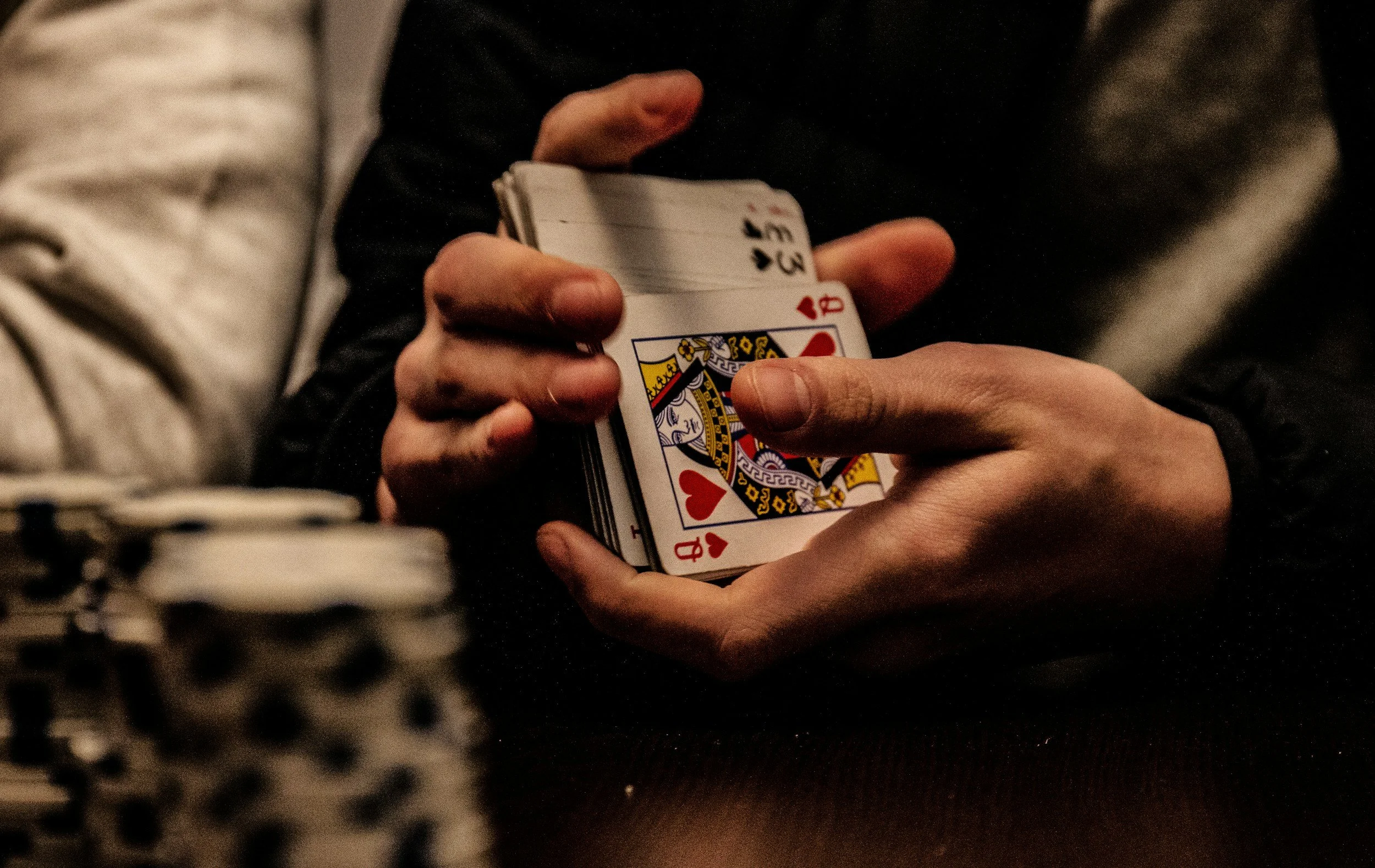
You don't need to sit at a table to learn this. Homemade flashcards work brilliantly, with your hand and the dealer's upcard on the front and the correct play on the back. A real deck of cards at the kitchen table is just as good. Deal yourself a hand and a dealer card, decide what you'd do, then check the chart.
There are also free strategy trainer apps that deal hands on screen and flag any decision that doesn't match the chart. They use no real money and exist purely for learning. In the UK, any free play version of a casino game on a gambling site requires age verification first, so trainer apps and a physical deck are often the simpler option.
Ten Minutes a Day Beats a Weekend of Cramming
Memory research consistently shows that short, spaced sessions work better than one long push. Ten or fifteen minutes each day will get you further than three hours on a Sunday. Keep a note of the hands you get wrong and start each session by testing yourself on those. You'll find the difficult squares gradually become as automatic as the easy ones.
Make Sure Your Chart Matches the Game
A chart is only accurate for the rules it was built around. Change the number of decks, or switch from a game where the dealer stands on soft 17 to one where the dealer hits, and a handful of decisions change with it. European style games, where the dealer doesn't take a second card until the players have finished, also call for a slightly more cautious approach to doubling and splitting.
Before you commit a chart to memory, check which rules it assumes. Independent resources on blackjack strategy explain the reasoning behind each decision and how the chart shifts with different rule sets. Understanding why a play is correct makes it far easier to remember than learning it by rote.
Responsible Gambling
Knowing basic strategy perfectly is a satisfying mental challenge, but it doesn't turn blackjack into a way of making money. Even flawless play leaves the house with a small built in edge, and over time that edge wins out. Learning the chart at home costs nothing, and there's no need to play for real money at all. Anyone who does choose to play should decide on a budget beforehand and stick to it.