Ryan K. | Games culture writer and fintech observer, 6 years covering tabletop and digital entertainment convergence. Tested July 2026.
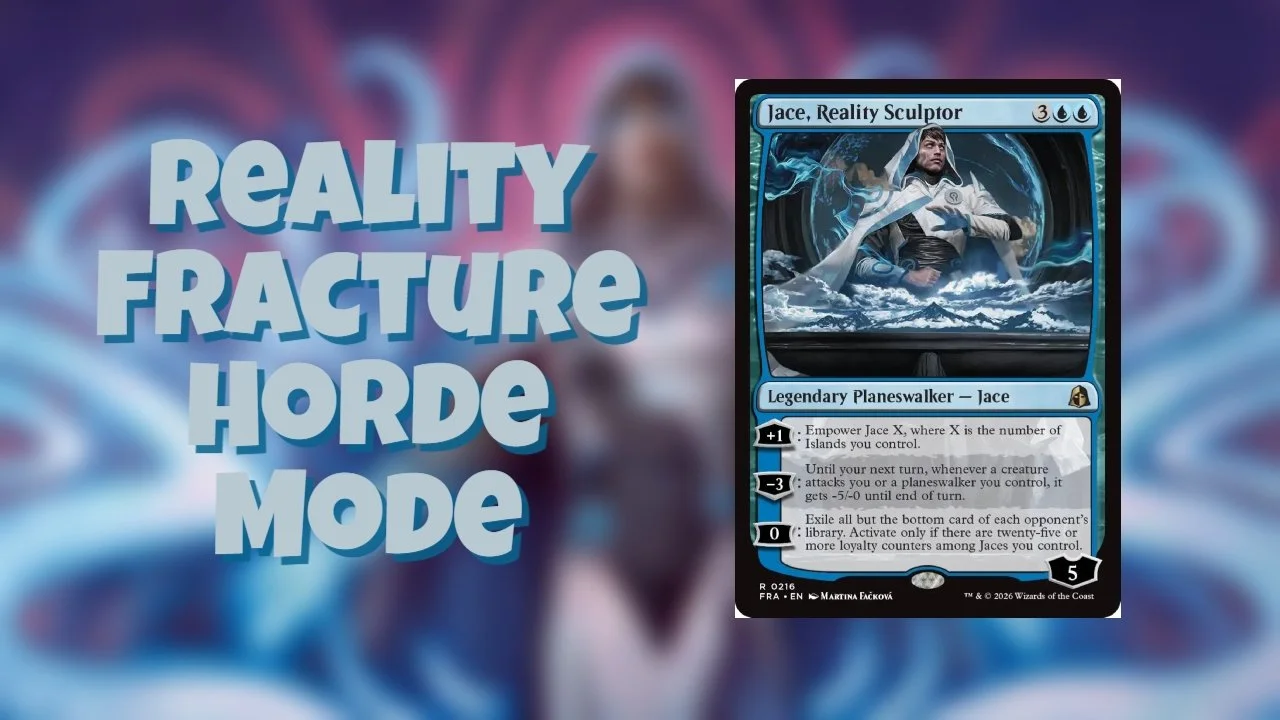
The MTG Universes Beyond announcement for The Hobbit Dropping August 14, 2026. Barely had time to breathe before collector prices on sealed product started moving. Star Trek arrives later this year. Marvel Super Heroes Prerelease just wrapped. Wizards of the Coast has turned a 30-year-old card game into an IP licensing machine, and the secondary market is responding exactly the way you'd expect from any asset class where supply is capped and demand is not.
Some people find that exciting. Some find it exhausting. Most just find it confusing: why does a Gandalf card cost $80 before anyone's even cracked a box?
The answer has almost nothing to do with Magic. It has everything to do with how humans price scarcity.
The Universes Beyond Business Model Is Not a Card Game Strategy
Wizards of the Coast didn't develop Universes Beyond because the game needed Frodo or Spider-Man. They developed it because licensed IP is a proven demand multiplier. A player who doesn't care about a Norse mythology set cares deeplyabout a Tolkien one. Different IP, different buyers, same product architecture.
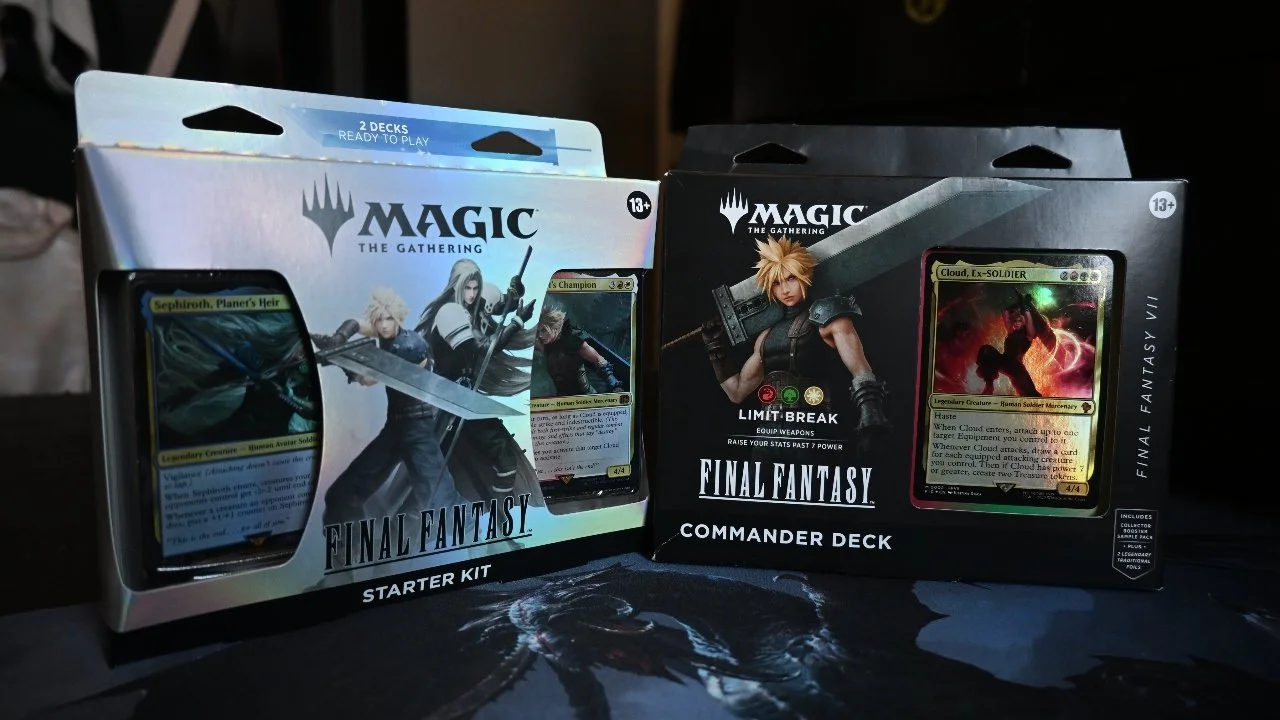
According to Hasbro's FY2025 annual filing with the SEC, Universes Beyond sets including Final Fantasy, Spider-Man, and Avatar drove a 62% surge in tabletop gaming revenue in the fiscal year ending December 2025. That's not a card game metric. That's a content licensing metric. Exactly what you'd see from a streaming platform announcing a new franchise deal.
This is the first thing Universes Beyond has in common with crypto: the underlying logic isn't about the product's intrinsic function. It's about the value of controlled access to something people want.
Scarcity, Tokenization, and Why Bitcoin Adoption in Entertainment Rhymes
Crypto, at its core, is a technology for enforcing scarcity on digital objects. Bitcoin has 21 million coins. A Universes Beyond Collector Booster has a fixed print run with serialized cards numbered out of 500. Both systems generate value through the same mechanism: manufactured rarity inside a system people trust enough to trade in.
That same logic has spread into digital entertainment verticals well beyond card games. Online gaming platforms, streaming services, and digital leisure categories are all experimenting with crypto-native payment rails. Not because crypto is cool, but because it removes the friction between a player and their money. Nowhere is this more mature than in the Canadian market, where blockchain-based platforms have built a fully functional payment layer that processes deposits and withdrawals without a bank in the loop. According to a detailed breakdown of the space, bitcoin casinos canada represent a category where the Bitcoin payment layer is genuinely production-ready: provably fair odds, crypto-fast settlement, and the same kind of transparent transaction record that blockchain evangelists have been promising since 2013.
Gambling involves risk. Play responsibly and only wager what you can afford to lose. If gambling feels like a problem, visit BeGambleAware.org.
What both MTG's secondary market and Bitcoin-based platforms share is this: they rely on participants trusting a ledger. In MTG, that ledger is TCGPlayer price data and set print-run announcements. In crypto, it's the blockchain. Different implementations of the same social contract.
The Licensing Fee Gets Passed Down. Always
Here's where the comparison stops being flattering for both sides.
Wargamer ran a sharp piece on the real cost problem with Universes Beyond that most coverage missed: WotC's licensing fees for external IP are absorbed by the product's price point, not by WotC's margin. Collector Boosters for Universes Beyond sets now routinely land at $35, $45 per pack at MSRP. Draft Boosters disappear from some sets entirely. The cost of acquiring the Tolkien license. Or the Marvel license, or the Final Fantasy one. Doesn't evaporate. It becomes your problem at the register.
Crypto has the same structural honesty problem. Gas fees, network congestion charges, and exchange spreads all sit between you and the transaction you wanted to make. The technology is transparent about what happenedon the ledger. It's less transparent about what it cost you to put it there
This is a real friction point. Not a reason to dismiss either ecosystem, but a reason to read the fine print before you crack a box or fund a wallet.
IP Crossovers as a Demand Funnel. And What Happens Next
The MTG Universes Beyond roadmap for 2026 is basically a wishlist of cultural touchstones: The Hobbit Star Trek, and likely several unannounced properties before December. Each set opens a new demand funnel. A Trekkie who has never held an MTG card buys a Collector Booster for the Kirk and Spock cards. They don't need to understand the metagame. The IP does the work.
Crypto has run the same play. NFT projects in 2021 and 2022 didn't market blockchain mechanics to buyers. They marketed Bored Apes and CryptoPunks and, yes, eventually Magic cards. PC Gamer documented the mtgDAO incident, where a crypto project tried to layer blockchain ownership onto MTG cards before WotC's legal team shut it down. The logic was identical to Universes Beyond's own licensing strategy: take IP people trust, attach it to an asset class, and watch demand migrate.
WotC understood this before the crypto crowd did. They just executed it with cardboard instead of tokens.
For collectors sitting on a stack of Universes Beyond foils right now, that's a useful frame. The Hobbit set's value isn't set at the point of purchase. It's set by how many people still want a Gandalf card in five years. And whether WotC keeps the print run tight enough to matter. That's speculation on a ledger. The ledger just looks like a spreadsheet on MTGGoldfish.
What Collectors Can Actually Learn From Crypto Investors
Crypto's bear cycles have produced genuinely useful thinking about speculative asset behavior. The volatility is more visible in crypto because prices update in real time. MTG's secondary market moves slower, but the underlying dynamics. Hype cycles on new releases, floor price collapse when reprint announcements hit, long-term holds on iconic cards outperforming short-term flips. Map almost perfectly onto how Bitcoin cycles have played out over the past decade.
A few things experienced crypto investors learned the hard way that MTG collectors are still working out:
Liquidity matters more than price. A card worth $200 that nobody wants to buy is worth nothing when you need to sell. Same as a small-cap altcoin at 3 AM.
Reprint announcements are the equivalent of a supply expansion. When WotC says a card is getting a reprint, price collapses fast. When a blockchain protocol changes its supply mechanics, same story.
The licensing deal driving today's price can disappear. If the Tolkien estate ever had a dispute with Hasbro, The Hobbitset's speculative premium would unwind overnight. External IP dependency is counterparty risk by another name.
None of this makes either hobby a bad investment. It makes them assets that reward people who understand what they're actually buying.
GameTyrant's own coverage of the MTG Marvel Super Heroes Commander picks is a good starting point if you want to understand which Universes Beyond cards are actually being built around for competitive play. Because utility in the game is one variable that pure speculation ignores, and it's often the one that holds floor price when hype fades.
The broader Canadian online gaming market is worth watching as a test case for how crypto payment rails mature inside entertainment ecosystems. Alberta launched a competitive regulated online gambling market on July 13, 2026, and the question of which payment rails win in that newly competitive environment is genuinely interesting to anyone tracking crypto adoption in digital leisure categories. Not as gambling coverage, but as fintech adoption data. For a look at how provincial versus offshore platforms are already splitting the Canadian player base on payment preferences, GameTyrant's breakdown of real money online casino Canada in 2026 covers that regulatory and payments split in detail.
FAQ
What is Magic: The Gathering's Universes Beyond? Universes Beyond is WotC's ongoing program of licensed crossover sets, bringing external IP. Tolkien, Marvel, Star Trek, Final Fantasy, and others. Into the MTG card game. Each set functions as a standalone product aimed partly at existing players and partly at fans of the licensed property who may be new to Magic.
Why are Universes Beyond cards so expensive compared to standard MTG sets? Licensing fees for external IP are baked into the product's price point rather than absorbed by Wizards of the Coast. Collector Booster boxes for licensed sets routinely cost more than mainline releases, and some formats like Draft Boosters are eliminated entirely to push buyers toward premium product.
How does artificial scarcity work in MTG's secondary market? WotC controls print runs and reprint decisions centrally. Cards from Universes Beyond Collector Boosters have serialized variants numbered out of 500 or fewer, creating a fixed supply ceiling. Secondary market prices are then driven by demand among both players and collectors, with floor prices collapsing if WotC announces a reprint.
How does blockchain tokenization compare to MTG's collectible card model? Both use enforced scarcity to generate value. Blockchain tokens have a supply cap written into their protocol; MTG cards have a supply cap determined by WotC's print decisions. In both cases, the value proposition depends on participants trusting that the scarcity is real and that demand will persist.
What happened when a crypto project tried to tokenize MTG cards? In the mtgDAO incident, a group attempted to create blockchain-based ownership tokens tied to physical MTG cards. Wizards of the Coast intervened legally, arguing this violated their IP rights. The project dissolved. It demonstrated both how naturally the two economies' logic overlaps and where the legal boundary sits between physical IP ownership and digital tokenization.