There is a moment in Fallout: New Vegas that most players remember better than half the main quest. You walk into The Tops, cash a fistful of caps into chips, and start pulling a slot lever that has no business being as compelling as it is. The payouts are meaningless — you can trivially out-earn them by looting two raider camps — and yet people spend real hours there. Ask around and you will hear the same thing about the Sotenbori casino in Yakuza 0, about the Blackjack tables in Red Dead Redemption 2, about the Gold Saucer in Final Fantasy VII.
Developers figured out a long time ago that a casino floor is one of the most reliable side-activities you can bolt onto a game. What is far more interesting — and far less discussed by the people who put those minigames in — is how thoroughly casino design has escaped the casino level and colonised the rest of the medium. The lever is no longer in the corner of a Vegas strip map. It is in your loot screen, your battle pass, your daily login prompt, and your gacha banner.
This is not a hit piece on monetisation. It is an attempt to name the mechanics honestly, because once you can see them, you play better.
Games have always loved the casino floor
Before we get to the uncomfortable part, credit where it is due: in-game casinos are great level design. They are self-contained, they generate stories, and they give a game somewhere to be slow.
The best ones understand that the gambling itself is a delivery system for something else. The Gold Saucer works because it is a burst of neon in an otherwise grim world. Yakuza's gambling dens work because Kiryu playing cee-lo with local hustlers is characterisation. New Vegas works because the house edge is thematically identical to the game's whole argument about the New California Republic. In each case the minigame is doing narrative labour.
There is also a purely mechanical reason they stick: a casino minigame is the only part of most games where the player genuinely does not know what happens next. Combat encounters are systems you learn. A roulette wheel is not. That flicker of true uncertainty is a rare texture, and games are starved for it.
The problem starts when designers extract that flicker, strip away the neon and the characterisation, and wire it directly into the progression loop.
The three mechanics that made the jump
Three specific pieces of casino design are now standard equipment in games that have nothing to do with gambling.
Variable-ratio reward schedules. This is the big one. If a reward arrives every tenth kill, your brain treats it as a wage and gets bored. If it arrives on an unpredictable average of every tenth kill, your brain treats it as a hunt and keeps going. Slot machines run on this. So does every loot table in every ARPG since Diablo, every crate in every hero shooter, and every "chance to drop" line in every MMO. It is the single most efficient engagement mechanic ever discovered, and it was discovered in a behavioural psychology lab decades before anyone put it in a video game.
The near miss. Slot cabinets are deliberately built so that two jackpot symbols land and the third stops just above or below the line. Physiologically, a near miss reads closer to a win than to a loss. Games do this constantly and rarely get called on it: the gacha banner that shows a gold flash before revealing a 4-star, the crate animation that slows down as it passes the rare item, the "1 more fragment needed" notification. None of these change the odds. All of them change how the odds feel.
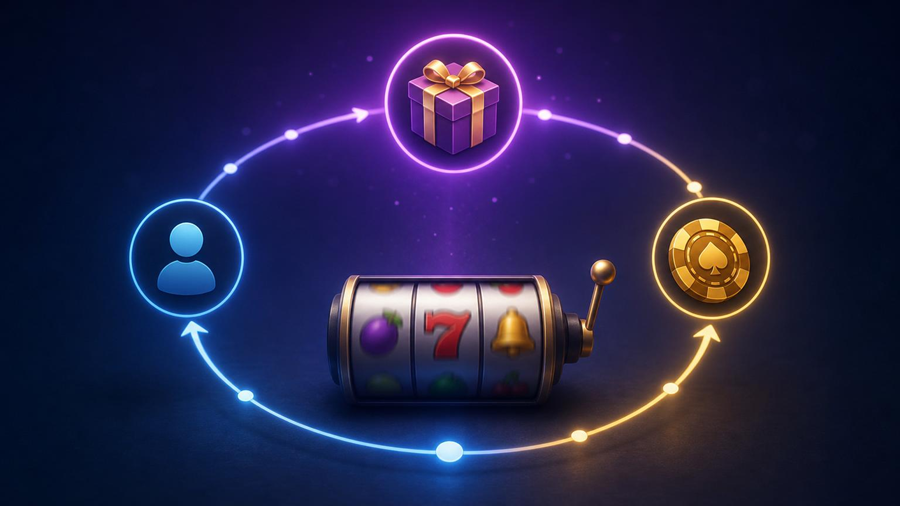
Sunk-cost architecture. Pity timers, streak counters, daily-login chains, battle passes with a visible unclaimed tail. Every one of these converts "I could stop now" into "I would be throwing away what I already put in." Casinos build this with player cards and comp points. Games build it with a red notification badge.
Put those three together and you have a machine that does not need a single dollar of microtransaction revenue to be extremely good at keeping you in the app. The monetisation is a separate decision layered on top.
The genre that stopped pretending
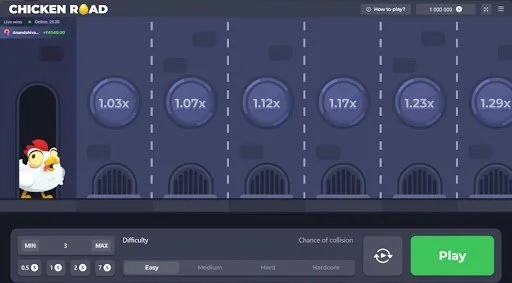
Somewhere along the way, a slice of the industry decided to drop the fantasy skin entirely and just build the slot machine. That slice became one of the largest revenue categories in mobile gaming, and it operates under a name most console players have never had a reason to learn: the social casino.
The model is worth understanding on its own terms, because it is genuinely a different product from online gambling. Social casino titles run on virtual currency. You get a daily allotment of coins, you play slots or blackjack or poker with them, and — this is the part that defines the category legally — you cannot cash anything out. There is no withdrawal button. Coins go in, entertainment comes out, and the loop ends there. Platforms in this space typically hold thousands of titles, hand out timed coin refills so that a session always ends and a new one always begins, and lean on leaderboards and gifting to supply the social layer that a physical casino floor supplies for free.
For a lot of players that is exactly the appeal: the tactile satisfaction of the reels without the possibility of losing rent money. It is closer in spirit to New Vegas' slot machines than it is to a sportsbook — a themed toy that produces variance on demand.
It is also where the honest conversation about the genre lives. Because there is no cash-out, the design pressure moves entirely onto retention and optional coin purchases, which means social casino products are usually the most refined implementations of those three mechanics above that exist anywhere in games. If you want to see variable-ratio scheduling executed by people who have A/B tested it ten thousand times, this is the category. Whether that makes it a harmless arcade or a very effective training ground depends a lot on who is holding the phone.
Where the regulatory line actually sits
Here is what trips people up: "gambling" is a legal category, not a design category, and the two do not overlap the way you would expect.
A loot box with a 0.6% legendary rate, bought with real money, in a game rated for teenagers, is in most jurisdictions not gambling — because the item you receive has no officially sanctioned cash value. Belgium and the Netherlands pushed back on that reasoning years ago and forced changes to specific titles. The UK opted for industry self-regulation and age controls instead of a ban. Various EU consumer-protection efforts have converged on disclosure: publish the drop rates, price things in real currency rather than in obfuscating premium tokens, do not let a purchase flow hide behind three layers of soft currency. In the US, the approach has been consumer-protection enforcement and platform policy rather than dedicated federal law.
Meanwhile a licensed online casino — where money genuinely goes in and can genuinely come out — is regulated to the hilt, and has been for years. Spain is a clean example of the contrast. Real-money play there sits under a national licensing regime with mandatory operator registration, advertising restrictions, deposit-limit tooling and self-exclusion registers, and a whole comparison ecosystem has grown up around helping players check which operators actually hold that licence before depositing — sites like revizorro.es exist specifically to audit terms, payout speeds and bonus conditions in that market. Reviewing a licensed casino is a documented, rules-bound activity.
The irony is hard to miss. The most heavily supervised product in this space is the one that is openly a casino. The least supervised is the one shipped inside a PEGI 12 hero shooter.
Why designers keep reaching for it
It would be easy to end here with "publishers are greedy," and sometimes that is the whole story. But the more useful read is that randomness solves real design problems.
Random rewards let a small content team stretch a large amount of playtime — an economy of variance instead of an economy of handcrafted assets. They flatten skill gaps, because a lucky drop can hand a casual player a highlight moment that a difficulty curve never would. They create the conversation layer that keeps communities alive; nobody screenshots a guaranteed reward. And in live-service, where the content pipeline can never outrun player consumption, variance is the only tool that reliably fills the gap between updates.
The good implementations lean on that and keep the pressure valves open: published rates, hard pity, direct-purchase options for anything cosmetically important, no timers designed to catch you at 11pm. Deep Rock Galactic and Helldivers 2 have both been held up as examples of live-service games that generate long tails without weaponising the loop. It is demonstrably possible.
What to actually watch for
If you take one practical thing from this, make it a short internal checklist. Before you spend, ask whether the game shows you real odds, whether the price is denominated in actual money or in a currency invented to make the price unreadable, whether the offer has a countdown attached, and whether you would want the item at all if it were simply on sale for a fixed price. Ask whether you are opening the crate because you want what is inside, or because the animation feels good. Those are different motivations and only one of them is worth money.
And notice when a game has started scheduling you. A daily quest that you resent but complete is not entertainment, it is a shift. The clearest signal that a loop has stopped serving you is the moment logging in becomes an obligation to a streak counter.
None of this means the slot machine has no place in games. New Vegas would be poorer without The Tops, and there is a legitimate audience for a product that offers reels with no financial stakes attached. The mechanic is not the problem. The problem is a mechanic that has quietly migrated out of the casino level, into the pause menu, without anyone announcing the move.
Once you see the lever, you get to decide whether to pull it. That is a meaningfully better position than not seeing it at all.