Disclosure: This is a paid guest post. The author or an affiliated third party paid for its publication, and the article may contain promotional links. The views and opinions expressed are those of the author and do not necessarily reflect those of GameTyrant or its editorial staff.
Disclaimer: The following content contains references to gambling, casinos, and related topics.
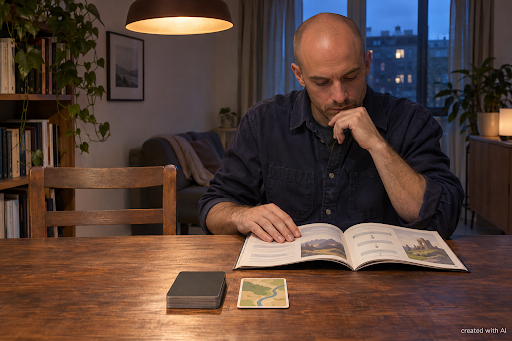
Some board games come with an opponent in the box. One person sits down to play, makes their own decisions, and draws cards to find out what the other side does. The cards might tell the player to move an opposing piece, take a card off the table, or add points to the opponent’s score. This kind of opponent is often called an Automa.
In Dune: Imperium, an automated rival can claim a board space before the player gets there. In Wingspan Pocket, it can take a bird the player was planning to add to their flock. One turn in each game shows how these systems work and why it feels different to play against them than to simply try to beat a personal best.
What the Cards Decide
At a multiplayer table, another person can block a move simply by doing something that suits them. A solo game needs a way to make that happen while leaving the player in charge of their own decisions. Shuffling the opponent’s instructions makes the timing uncertain. A card can take a shared option away just as it becomes useful.
The card decides what the opponent attempts. The player carries out the instruction, then figures out what to do on their own turn. Moving the other side’s piece might take a few seconds. Finding a new use for the card already in hand can take considerably longer.
The order in which a game applies its rules also matters in casino slots. Someone comparing online pokies can check how each game reads the symbols on screen. NetEnt’s Starburst checks ten paylines, with winning combinations counting in either direction. Play’n GO’s Reactoonz checks for clusters of at least five matching symbols.
It clears a winning cluster and drops new symbols into the gaps, so the game can check the new grid during the same round. The paytable and game rules explain what counts in each layout.
House Hagal Takes a Space
The solo mode in Dune: Imperium sets one person against two Rivals. Each takes turns placing Agents on the shared board. The House Hagal rules give the Rivals a shared deck that tells them where to send those Agents and what to do when they arrive.
Suppose the player is waiting to send an Agent to Carthag, where they can recruit a troop and draw an Intrigue card. Before they get the chance, one of the Rivals takes a turn.
Reveal the top card. If it names Carthag and the space is free, the Rival takes it.
Draw again if the space is occupied. Keep revealing cards until the Rival has an available destination.
Apply the card’s effects. A Rival sent to a Combat space can also deploy troops already in its garrison.
If the Rival takes Carthag first, the player needs another use for their Agent. The Rival may also have added troops to the current Conflict. A single draw has changed both the options on the board and the strength of the opposition in combat.
The Rivals can win the solo game, too. If one reaches ten victory points, it triggers the end of the game. That gives the player a reason to watch the score as well as the board. An open space might offer a useful resource, but the current Conflict may matter more if a Rival is close to ending the game.
An Automa Builds a Flock
In Wingspan Pocket, the competition happens around a shared display of cards. The publisher’s component list includes 11 Automa cards, a solo Nest card, and a separate solo rulebook. The opponent builds a flock of its own and gets a score at the end.

On a turn, an Automa card can direct the opponent to take food and tuck a card for points. It can also add a bird from the display when it has the resources to do so. That’s the moment the human player feels the competition most clearly. A bird that would have fit neatly into their row can end up in the Automa’s flock.
There’s a quieter kind of pressure, too. An egg added to the Automa’s side may have little bearing on the player’s next move, but it contributes to the final score. The player has to decide how much time to spend building a flock and when to start turning those birds into points.
What Makes the Extra Turn Worth It
The two systems are easiest to tell apart by the choice they leave the player.
In Dune: Imperium, the question is where to go next. A player may put off gathering spice to claim a board space that matters to the round.
In Wingspan Pocket, the question is what to take now. A player may pick up a useful bird before they have the food to play it, knowing the display can change before their next turn.
Every automated turn adds a little work for the person at the table. It earns its place when moving a piece or taking a card leaves that person with a decision worth thinking about. Sometimes the whole difference between a solo puzzle and a contest is one bird disappearing before it can be picked up