Video game competitions are just like ordinary soccer or obstacle course races, the same thing in the real world – just simulated on a screen, right? Not in the slightest. As a lifelong sports fan and bettor on your favorite club, take all of your little study tactics, ability to notice head-to-head matchups, star injuries, and past experiences watching nasty weather games and throw it out the window. Esports are a completely different world – literally. They are played in a digital game state with frequent updates, patches, and fast data transmission. They ride on the speed and efficiency of technology.
Physical athletes need time for breaks, and the winner is decided based on a predictable progression. That may be quarters, periods, innings, or frames. Odds update little by little, as it’s easy to track how much of the game is left and how good of chances the team that’s down has of coming back. Esports don’t work that way. In a game like Counter-Strike, it’s more based on capturing the maps, modes, bomb planting, or defusals.
These can be:
CS2: best-of-three
LoL: best-of-five
CoD: hardpoints, search & destroy, control, etc.
Rrounds
Conquering maps
On Odds96, these are often blowouts or take longer if it’s close. Finally, it caters wonderfully to the young generation of under-30s who conduct many areas of their lives digitally, enjoy playing the same games themselves, and often enjoy more instant access and outcomes – as their fondness for crash games can attest.
The Suddenness of Esports
In traditional sports, information is easy to come by. You get regular practice updates for the NFL and NHL. There are advanced statistic sensors all over the field showing how fast players are running, and you can see in players’ faces when they’re getting flustered. There are a lot fewer slow-developing signs to rely on in virtual worlds, until suddenly – everything has shifted direction.
So bettors have to watch out instead for shifts in strategy, how mentally sharp the player appears, and how much ammo they have, how many shots they’ve taken, and how much they’ve conquered so far. However, all of that gets turned on its head when suddenly a new patch is released, or a rule change is announced.
Live Betting
In-game betting is a big hit in traditional sports too, as many of those bettors like to see their bets play out right now. However, live bets in Esports are hugely popular and awfully hetic.
Consider a League of Legends match. A team securing a major objective such as the Baron Nashor does more than simply add another stat to the scoreboard. It can give the team a temporary power boost, make it easier to push enemy structures, force the opposing team to defend, and potentially create an opportunity to take additional objectives.
So just one event can change several variables simultaneously:
Map control
Resources
Pressure
Future opportunities
Match winner probability
Faster Data Updating
Despite the vast wealth of data being tracked in today’s sports stadiums housing 30,000 fans, there is little-to-no transition necessary between video games and the statistics rendered. Structured in-game data can be rendered on the video game screens and through automated odds feeds with low latency from many providers. So typically, fans are betting on what the next kill, flag, or conquest will be. They can easily bet on how soon it will take place too.
By contrast, when it comes to niche sports like tennis, darts, and pool, there are occasions when odds don’t update quicker than some people can bet, like in FIDE chess tournaments and lower-level IFT Futures. For this reason, a lot of die-hard fans of these sports like to beat the odds markets and place bets once news comes out before they’re able to update.
How Technology Makes Esports Odds More Responsive
Technology is one of the biggest reasons Esports odds can react so quickly. In conventional sports, information often has to pass through several stages before it reaches the betting markets.
Several factors make this possible in the case of gaming:
Automated data feeds
Algorithmic odds calculations
Low latency
Automatic market suspension
Highly granular markets
A New Breed of Sports Bettors
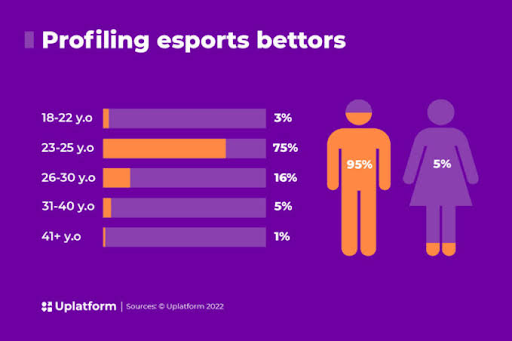
Traditional bettors in many sports have only childhood memories of playing their favorite sport to wager on, or perhaps may engage in some recreational neighborhood soccer outside. The Zoomers who make up a huge swathe of Esports themselves spend a substantial portion of their days duking it out in those same shooters or strategy games. They have an intimate understanding of how the games work firsthand. That fuels their desire to bet as a way of proving their expertise and skill.
Playing Direct Roles
What they’re looking for isn’t casino-style perks but rather the ability to be part of the community, enjoy camaraderie, gain the juiciest insights, and avoid being cheated. Team announcements, tournament operators, publish patch notes, and verified roster updates come out frequently on forums and social media. For many, Esports betting is another outlet for their generational exuberance and pride for the background they come from.
Competitor Streaming and Active Social Media
When it comes to Esports, many stars like to perform their practices on live feeds, answer every message sent to them, and broadcast what they do every day.
So people don’t just pull for pro players that draw star power from racking up the most wins or kills. Instead, fans are more attracted to them the way they’re enamored by influencers – based on cult followings and personal qualities. The volatility of this personal loyalty is yet another monkey wrench contributing to Esports’ odds’ volatility.
Worldwide Viewership
Since it is completely online, Esports has no trouble revving up fans, whatever continent and time zone they reside in. Everything is streamed live and bet on all over the world. The matches that are bet on are games that are super popular in many countries, since games are highly international and anything but traditional.
The Still Latent Potential of Esports
Right now, the amount being bet in the industry has long been in the billions. This is in spite of some challenges holding it back – first and foremost, regulatory risks.
Hurdles
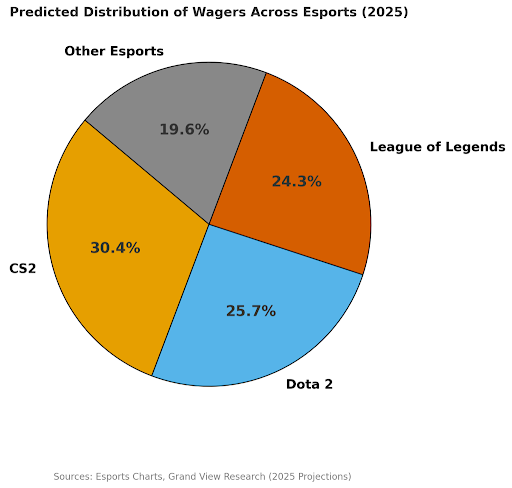
Since it is such an international sport, governments interpret gambling and betting scenarios in such dramatically different ways. So every organization has to take on that complexity. On top of that, different leagues and tournaments have dramatically different rules. There’s also a big match-fixing risk in Esports. The total Esports betting market ($2.96 billion in 2025) is massive compared to the actual winnable cash given out at the end of tournaments.
So it can be particularly tempting for a player or club to throw a match for profit. The Esports Integrity Commission has taken a large number of measures to prevent corruption, cheating, and doping.
Growing Maturity
This betting market is so new that just over ten years ago it was still unregulated. A lot of bigger bettors for that reason have avoided it. Markets like the UK Gambling Commission have formalized a stance toward it, treating it like other live events. In the United States, only 16 states regulate it. The future largest Esports markets are thus projected to be in Europe. To help manage this fragmentation, the World Esports Association works with state authorities and team stakeholders to bridge these gaps by creating standardized tournament regulations and predictable operating schedules.