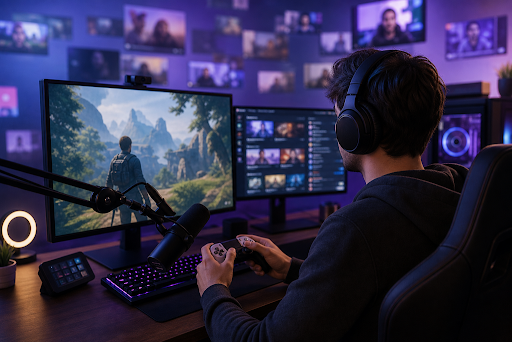
Gaming discovery has changed. A player might still find a game through a trailer, review, showcase, or release calendar, but many first impressions now happen somewhere less formal: a Twitch stream, a YouTube video, a TikTok clip, a Discord conversation, or a creator reacting to a game in real time.
That shift matters because games are not easy to judge from screenshots alone. A trailer can show polish, tone, and features, but a creator actually playing the game shows something different. It shows pacing. It shows frustration. It shows surprise. It shows whether a game creates the kind of moments people want to talk about afterward.
For developers, publishers, and gaming brands, creators are no longer just extra promotion after launch. They are becoming part of how players understand a game before they decide to buy, wishlist, download, or ignore it.
Game Discovery Has Become More Personal
Players often discover games through people they already trust. That trust is hard to fake.
When a creator spends time with a game, the audience gets a more human version of the experience. They see the first boss attempt, the awkward tutorial moment, the unexpected laugh, the confusing menu, the clever mechanic, or the point where everything finally clicks.
That kind of discovery feels different from traditional marketing. It is less polished, but often more convincing.
This is especially true for games that are hard to explain quickly. Survival games, roguelikes, cozy games, strategy titles, simulators, extraction shooters, and indie experiments often make more sense once someone plays them naturally. The viewer can see the loop, the rhythm, the tension, and the little details that make the game worth trying.
Creators have become a living preview system. They help players understand not only what a game is, but how it feels to spend time inside it.
Why One Creator Moment Can Change a Launch
For many games, early momentum matters. A launch window can move fast, and players are constantly being pulled toward the next release, the next update, or the next viral clip.
A single creator moment can sometimes do more than a polished campaign asset. It might be a streamer getting genuinely scared during a horror demo. It might be a YouTuber discovering a broken strategy in a sim. It might be a group of friends turning a co-op game into chaos. It might be a short clip that makes a small indie game suddenly look impossible to ignore.
The moment does not always need to be planned. In gaming, authentic reactions often travel further than perfect messaging.
That is why creator fit matters so much. The best creator for a game is not always the biggest name. It is the person whose audience understands the genre, trusts their taste, and will actually care about the experience being shown.
Smaller Creators Can Have the Strongest Communities
Large creators can bring huge reach, but smaller creators often have something just as valuable: a close relationship with their audience.
A mid-sized horror streamer, fighting game commentator, cozy gaming creator, or indie-focused YouTuber may have a community that listens carefully. Their viewers are not just watching passively. They ask questions, join Discord discussions, try demos, wishlist games, and recommend titles to friends.
For developers, especially indie teams, that can be powerful.
When choosing creators, gaming brands should look beyond follower count and ask better questions:
• Does this creator already play similar games?
• Does their audience trust their recommendations?
• Would this game feel natural on their channel?
• Do they create livestreams, reviews, guides, clips, or long-form videos?
• Are they good at explaining why a game works?
• Does their community actually act on what they share?
The real question is not “Who has the biggest audience?” It is “Who can make this game matter to the right players?”
Gaming Creators Need to Look Ready for Opportunities
The relationship goes both ways. Developers and publishers need creators, but creators also need to present themselves clearly if they want better opportunities.
A gaming creator might have strong content, loyal viewers, and a recognizable voice, but if their information is scattered across old bios, social profiles, outdated stats, and messy email threads, brands have to work harder to understand what they offer.
That can make a difference when studios are sending review codes, planning sponsored streams, inviting creators to preview events, or choosing who gets early access.
Creators do not need to make themselves feel corporate. But they do need a clear way to show their value.
For gaming creators who are starting to receive brand interest, having a clean page that explains who they are and what they can offer can make conversations easier. It gives studios and agencies a faster way to understand their audience, platforms, content style, past collaborations, and partnership ideas.
The Best Partnerships Still Feel Like Real Gameplay
Gaming audiences notice when a partnership feels forced. If a creator suddenly covers a game that does not match their usual taste, viewers can usually tell. If the sponsored segment feels disconnected from the channel, it becomes noise.
The best gaming partnerships feel like something the creator might have played anyway.
A horror creator testing a new survival horror demo makes sense. A cozy gaming channel covering a farming sim makes sense. A fighting game commentator breaking down a competitive title makes sense. A hardware reviewer testing a headset during actual gameplay makes sense.
Good partnerships respect both sides: the creator’s identity and the audience’s intelligence.
Strong gaming collaborations usually have three things:
• A game or product that fits the creator’s normal content
• A format that feels natural for the channel
• A reason the audience would actually care
When those pieces line up, the content does not feel like an interruption. It feels like a useful first look, a recommendation, or a shared gaming moment.
Developers Need Better Creator Organization
As creator marketing becomes more important, the work behind it gets more complicated.
A studio might be tracking Twitch streamers, YouTubers, TikTok creators, Discord community leaders, reviewers, esports personalities, and niche genre experts at the same time. Some need game keys. Some need embargo details. Some need press assets, event invites, campaign briefs, or follow-up reminders.
That can get messy quickly.
For gaming teams working with many creators, a system that keeps creator outreach from turning into a spreadsheet hunt can make the process easier to manage. It helps teams keep track of creator profiles, campaign details, outreach history, and follow-ups without losing important conversations.
This is useful for large publishers, but it can matter just as much for indie teams preparing a demo, festival campaign, Kickstarter push, early access release, or full launch.
Creator Content Can Keep a Game Alive After Launch
A game’s launch is important, but creator content can keep attention moving long after release day.
Updates, patches, expansions, balance changes, speedruns, challenge runs, mods, tournaments, and community discoveries can all bring a game back into conversation. Some games build their strongest audiences months or even years after launch because creators keep finding new ways to play them.
This is where gaming differs from many other entertainment categories. A game is not only something people watch once. It can become a place where creators return, experiment, compete, teach, and build inside jokes with their audience.
A creator might turn a game into a series, a guide, a ranked climb, a challenge run, a build breakdown, or a community event. That repeat content can help a game stay visible without relying only on official marketing beats.
In gaming, attention is not just about release day. It is about giving players reasons to keep watching, sharing, and coming back.
The Future of Game Discovery Is More Human
Gaming creators are not replacing trailers, reviews, showcases, or games journalism. Those still matter. But creators have changed the path between a game and its potential audience.
Players want to see games in motion. They want personality, reaction, context, and proof that the experience is worth their time. They want to know how a game feels when someone actually plays it, not only how it looks in a polished announcement.
For developers and publishers, creator relationships should not be treated as an afterthought. They are now part of how games are discovered, understood, and remembered.
For creators, professionalism matters too. The more serious the gaming creator economy becomes, the more valuable it is to have a clear identity, a loyal audience, and a simple way to show brands where they fit.
The strongest creator partnerships are not just about promotion. They are about helping the right players find the right games.