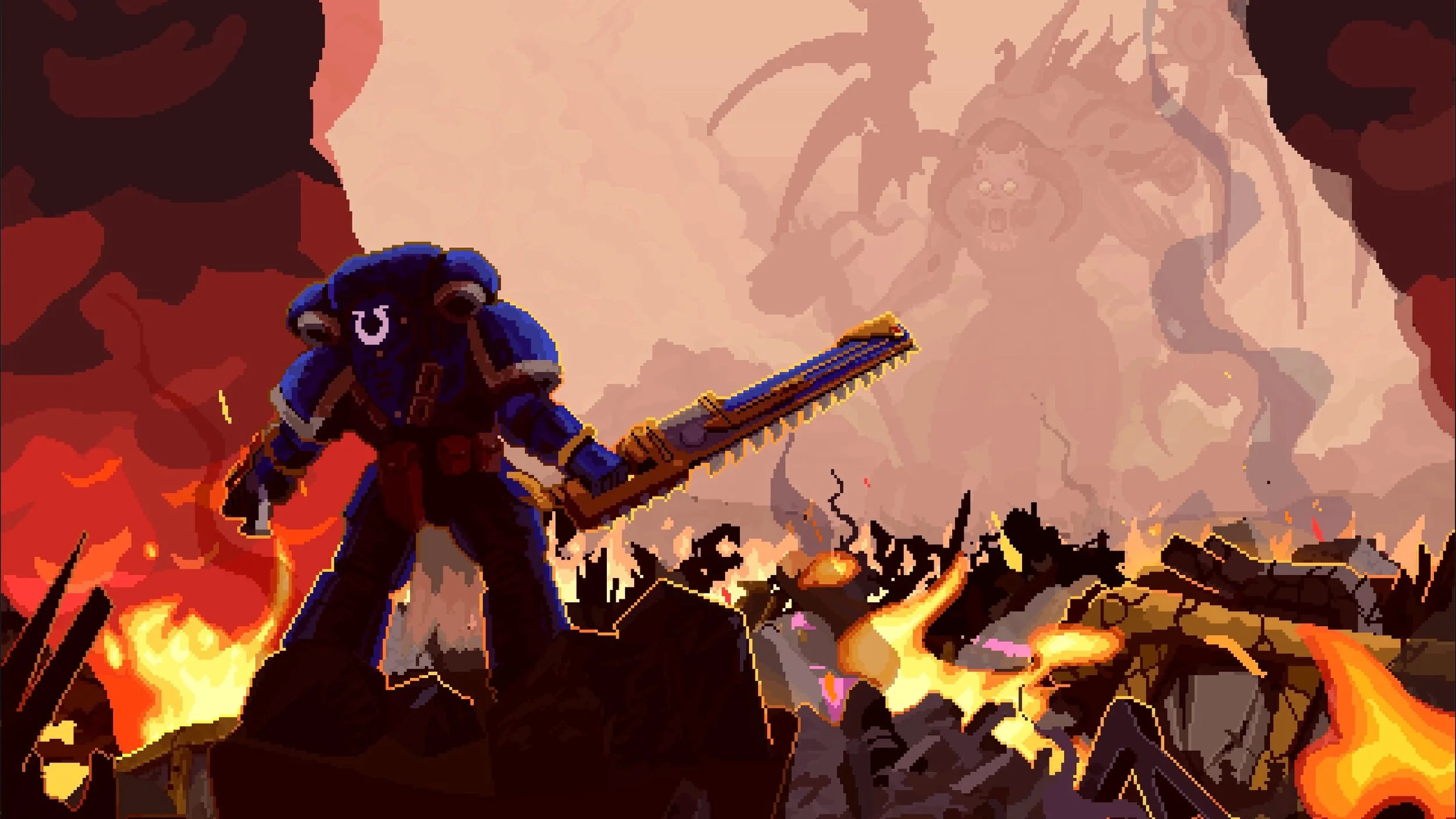
The most memorable video game monsters do not need a close-up to make an impression. Players can often identify them from a silhouette, a distant movement, or a brief appearance in poor lighting.
The short explanation is that strong creature design communicates before the player has time to study it. Shape suggests behavior, posture implies intent, and proportion creates expectations about speed, strength, or vulnerability. Fine details may enrich the model, but the overall form is what reaches the player first.
That distinction matters in every genre, from survival horror to action RPGs. A creature can be beautifully modeled and still disappear into the background if its design does not communicate clearly during actual gameplay.
Silhouette Comes Before Surface Detail
Imagine filling a creature model with solid black and removing every texture, color, and facial feature. Would it still look distinct?
This silhouette test remains useful because players rarely encounter enemies under ideal viewing conditions. Monsters appear behind environmental objects, at the edge of the screen, in fog, or during fast combat. If the creature only becomes interesting when viewed from the front in a well-lit render, much of that work may be lost in motion.
A successful silhouette usually contains one or two dominant ideas. A hunched spine can suggest something predatory. Long arms may imply climbing or wide-reaching attacks. A heavy upper body supported by thin legs creates an unstable, unsettling impression.
Adding more horns, spikes, armor plates, or tentacles does not automatically make a monster more memorable. Too many similarly sized details can weaken the main shape and turn the design into visual noise.
Proportions Quietly Explain the Threat
Players begin making assumptions as soon as they see an enemy.
A broad torso and thick limbs suggest weight and impact. A narrow frame with long legs suggests speed. An oversized jaw naturally draws attention toward biting attacks, while protected shoulders and an exposed abdomen may quietly communicate where the player should aim.
These expectations do not need to be completely accurate. Designers can deliberately mislead the player. A massive creature might move with surprising speed, or a fragile-looking enemy might be exceptionally dangerous. However, breaking an expectation works best when the original visual message is clear.
This is why proportions should be explored before a team commits to polished textures and animation. Independent developers can use tools such as Meshy AI to produce rough three-dimensional variations of an early creature idea, then compare body mass, limb length, and overall readability. These generated models should be treated as exploratory material rather than finished game assets, with artists reviewing topology, anatomy, style, and technical requirements.
Movement Becomes Part of the Design
A monster is not truly defined by its neutral pose.
The way it occupies space can change the player’s entire interpretation of its body. A long-limbed creature might look awkward in a concept image but become terrifying when it crawls through a narrow corridor. A large enemy can feel strangely harmless if its movement lacks weight, while a simple design may become memorable through an unusual rhythm or posture.
Animation should therefore be considered while the shape is still flexible. Designers can ask practical questions early:
Which part of the body leads when the creature moves?
Can players recognize its attack preparation?
Does its recovery animation communicate a safe opening?
Is its movement readable from the expected camera distance?
Does the creature still look distinctive when partially hidden?
These questions connect visual identity with gameplay fairness. A monster can be frightening without making its attacks impossible to understand.
Contrast Gives Enemies Their Own Visual Territory
Memorable monsters are often designed in relation to their surroundings.
A pale figure becomes more visible in a dark environment. A creature with a vertical shape stands out in a level dominated by low, horizontal architecture. Even texture density matters: a highly detailed enemy may disappear against an equally busy background.
Contrast can also distinguish enemy roles. Basic enemies might share a common visual language, while dangerous variants introduce a stronger color, altered posture, or larger dominant feature. Players then learn the enemy hierarchy without needing an interface label.
This does not mean every creature must be brightly colored or exaggerated. In horror games, uncertainty may be intentional. The goal is to control what the player can read and when they can read it. Hiding information is effective when it creates tension; hiding it accidentally only creates confusion.
The Gameplay Camera Is the Real Test
A sculpting viewport can make almost any model look impressive. The gameplay camera is less forgiving.
Third-person games may reduce a towering enemy to a relatively small figure on screen. Top-down games compress shapes even further, making shoulders, head size, and ground footprint more important than facial detail. First-person horror can place the player extremely close to a monster, but lighting and rapid camera movement may still obscure much of its design.
A creature should therefore be reviewed at the distance, angle, resolution, and lighting conditions players will actually experience. Screenshots from the game camera often reveal problems that are invisible in a presentation render.
This review may show that a signature weapon is hidden behind the body, two limbs overlap into one shape, or the creature’s head blends into its torso. Fixing these issues can require surprisingly simple changes, such as adjusting the resting pose or increasing the gap between major forms.
Turning Concept Art Into Something Testable
Two-dimensional concept art is excellent for establishing mood, but it can conceal unresolved spatial decisions. A dramatic front view does not explain what the creature looks like from behind or whether its anatomy remains convincing from the side.
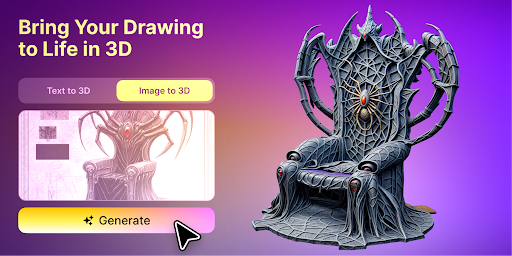
One way to expose those questions earlier is to turn a selected drawing into a rough model. Meshy image to 3D workflow can provide a rotatable starting point for evaluating volume and silhouette before a team invests in final production. The result will still need artistic and technical refinement, but it can make missing information easier to identify.
The most useful review is not simply “Does this model match the picture?” Better questions include:
Does the creature remain recognizable from every important angle?
Is its center of gravity believable?
Can its limbs perform the required actions?
Which features disappear when viewed from gameplay distance?
Does the model fit the visual language of the surrounding world?
A quick failure at this stage is valuable. It costs less than discovering the same problem after retopology, rigging, texturing, and animation.
Memorable Does Not Mean Complicated
Some of gaming’s strongest monsters are built around a surprisingly simple idea. Their power comes from consistency between shape, motion, sound, environment, and gameplay behavior.
A recognizable outline catches the player’s attention. Proportions establish an expectation. Movement confirms or challenges it. The environment controls when the creature can be read. Gameplay then gives every visual choice a consequence.
Technology can help teams explore more variations and evaluate ideas earlier, but it cannot decide what a monster should make the player feel. That judgment still belongs to designers and artists.
The monsters players remember are not necessarily those with the most details. They are the ones that communicate a clear identity before the player has enough time to feel safe.